Image
AEC investors
Special Report

Six Priorities for AEC Investors

April 15, 2025

America’s infrastructure is under pressure — and that’s creating a surge of opportunity. The architectural, engineering and construction (AEC) sector is at the center of transformative shifts driven by federal investment, the clean energy transition, rising regulatory complexity and rapid population movement. With billions in long-term funding being deployed, the market is primed for growth.

But opportunity requires focus. Investors must prioritize understanding where funding is truly durable, identifying operational upside and pursuing growth that aligns with core capabilities. In a highly fragmented landscape, differentiation, local relationships and scalability are critical advantages.

Talent is also a defining factor. Recruiting, retaining and developing the right people is essential in a sector where expertise drives value. Meanwhile, AI is emerging as a powerful lever to improve efficiency, manage risk and unlock new potential — but only with the right strategic and organizational approach.

Download our report for further analysis into this dynamic investment landscape.

L.E.K. Consulting is a registered trademark of L.E.K. Consulting LLC. All other products and brands mentioned in this document are properties of their respective owners. © 2025 L.E.K. Consulting LLC

English
Executive Insights

Removing Barriers to Healthcare Growth: Leveraging Strategic Review to Address Constraints

April 14, 2025

Key takeaways

An organisation-wide review, encompassing clinical services and support functions, often reveals key inefficiencies and missed opportunities for expansion.  

Strong cooperation between clinical leaders and operational/financial stakeholders is key to successfully implementing any necessary changes.  

Activity-based costing (ABC) and zero-based budgeting (ZBB) provide the granular insights needed to differentiate between essential and expendable services.  

Underperforming services can be restructured through partnerships, consolidation or rightsizing to maintain patient access while reallocating resources for core growth. 

Healthcare organisations face increasing pressure to optimise operations, expand access and enhance patient outcomes against a backdrop of changing regulations, tariff pressures and evolving patient needs. For multi-service healthcare providers — often juggling multiple specialties, facilities and care delivery models — identifying and resolving constraints that hinder core service growth is critical to clinical excellence, operational performance and financial sustainability.

This Executive Insights draws on L.E.K. Consulting’s recent project experience to illustrate how a structured strategic review can uncover underperforming or non-contributory services and streamline clinical support functions and overheads.  

Beyond merely cutting costs, a strategic review lets healthcare organisations redeploy resources where they are needed most, improve care pathways and deliver a better patient experience.

Context and analysis

For many healthcare providers, constrained resources — clinical workforce shortages, insufficient facility space and tight budgets — can hamper the development of core services. This was especially true for one large healthcare network we advised, where loss-making service lines eroded profitability and impeded much-needed investments in higher-value clinical areas.

A comprehensive strategic review uncovered multiple non-contributory or underperforming service lines and under-optimised support functions. Taken together, these areas diverted resources away from promising growth segments, leading to inefficiencies and hindered patient outcomes.

Approach

A structured methodology — tailored to the complexities of both clinical operations and administrative services — is critical for sustainable improvements. This involves establishing clear financial visibility, identifying underperforming areas and aligning resources with the organisation’s strategic priorities.

Care delivery

A key first step is to establish a financial baseline using activity-based costing (ABC). Shared cost centres — such as pharmacy, imaging, operating theatres and wards — often obscure the financial contribution of individual services. ABC clarifies how each service line contributes to overall margins, helping to identify high-impact areas for strategic reallocation or redesign.

Once financial clarity is established, the next step is to review improvement potential by assessing demand, patient needs, market opportunities and performance gaps. This holistic perspective allows organisations to determine which service lines should be repositioned, reinvested in or discontinued. Making these data-driven decisions ensures that brand equity is preserved while strengthening the hospital’s long-term market position.

Some further steps healthcare providers can take to improve care delivery include:

1. Strengthening revenue streams

  • Enhancing scheduling, patient experience and follow-up processes to improve patient throughput
  • Addressing inefficiencies in internal and external referrals to reduce patient leakage and improve resource utilisation
  • Reviewing physician incentives to align with quality, productivity and patient experience objectives

2. Optimising resource allocation

  • Assessing potential volume reallocation, specialisation and efficiency improvements
  • Optimising theatre utilisation, reducing average surgical times and shifting minor surgeries to procedure rooms to enhance efficiency.
  • Improving inpatient ward organisation through better coordination with operating theatre and admissions teams, aligning staffing levels with demand, and actively managing patient length of stay.

Care support

Beyond clinical operations, optimising administrative and support functions is essential to reducing inefficiencies and reallocating resources effectively. A zero-based budgeting (ZBB) review provides a structured approach to evaluating support services from the ground up. This method helps eliminate redundant processes, redeploy staff and identify opportunities for outsourcing non-core functions.

A ZBB review should address key questions such as:  

  • Are we doing the right thing?
  • Are we using the right resources?
  • Do we need to evolve our ways of working and care models?  

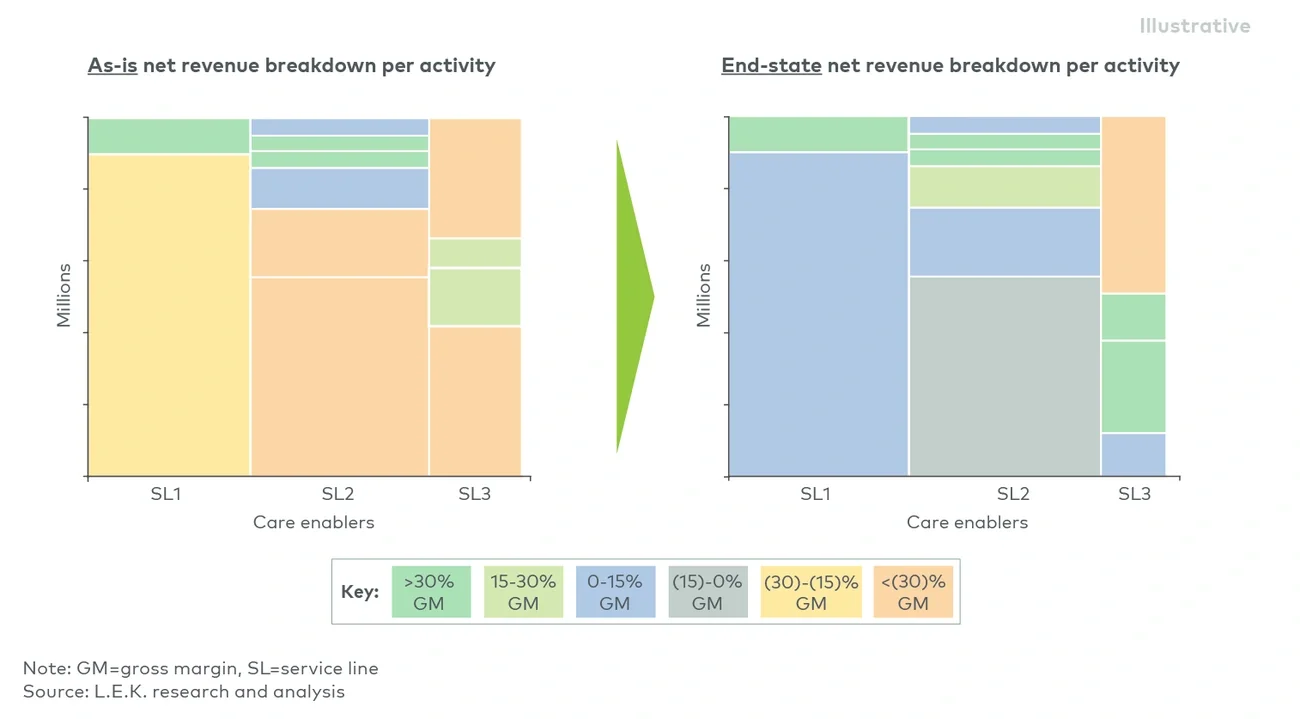
By systematically reviewing these areas, organisations can streamline administrative tasks, increase utilisation of critical staff and reduce non-value-adding expenses (see Figure 1). 

Figure 1

 Zero-based budgeting enables a clear view of your as-is state and the impact of improvements 

Image
 Zero-based budgeting enables a clear view of your as-is state and the impact of improvements

Figure 1

 Zero-based budgeting enables a clear view of your as-is state and the impact of improvements 

Image
 Zero-based budgeting enables a clear view of your as-is state and the impact of improvements

Some growth opportunities include:

  • Optimising group vs site-level overheads: Centralising support functions such as finance, HR and administrative tasks helps reduce duplication and frees on-site teams to focus on activities that add value.
  • Embracing digital and AI-driven solutions: Quick wins include implementing generative AI for call-centre interactions (automating scheduling and routine enquiries), AI-enabled physician scribes to handle documentation and mobile platforms for real-time data capture.
  • Supply chain management: Consolidating procurement and centralising stock management can cut costs, reduce on-site storage needs and improve overall resource utilisation.
  • Outsourcing non-core functions: Third parties can often handle facilities management, biomedical equipment maintenance and transaction services (e.g. call centres, billing) more cost effectively.
  • Simplifying, standardising and digitising medical records: Reducing reliance on paper records minimises workload for administrative teams, consolidates storage needs and improves retrieval times, ultimately enhancing patient care and operational efficiency.
     

Success factors

Achieving meaningful improvements requires balancing financial, operational and clinical considerations.  

A dual approach is essential for aligning with stakeholder priorities. Findings and recommendations should be tailored to different audiences — financial stakeholders, for instance, may focus on ward workforce optimisation, while clinical leaders prioritise nurse-to-bed ratios. Effective communication across these groups fosters acceptance and smoother project execution.  

Strong clinical buy-in is also crucial to ensure alignment. While increasing outpatient and inpatient volume may be straightforward, operational changes require deeper collaboration. Additionally, success should be measured not just through financial outcomes but also through improvements in the patient pathway.  

Enhancements such as streamlining reception and pre-registration processes, optimising bed discharge procedures and expediting admissions contribute to improved patient experience and higher throughput.  

To take a holistic view of each service line, you must consider the following:  

  • Market potential: Our client had a renowned service line that had recently become loss-making due to regulatory changes. Rather than cutting back, we reviewed market potential and rethought the care model to improve patient throughput and patient mix to preserve core capabilities and enhance profitability.
  • Core capabilities: Certain services are essential for maintaining the hospital’s overall appeal and capabilities, even if their standalone profitability is questionable.
  • Indirect contributions: Even a non-core loss-making service can still bolster walk-ins or diversify payer exposure, contributing positively to overhead coverage. It can also support fixed-cost structures (e.g. specialty clinics). A thorough evaluation is required to understand the direct and indirect benefits of specific services and their overall contribution.
  • Transfers, not closures: If an activity truly cannot be optimised or sustained, consider transferring it (via partnerships or network consolidation) rather than eliminating it altogether.

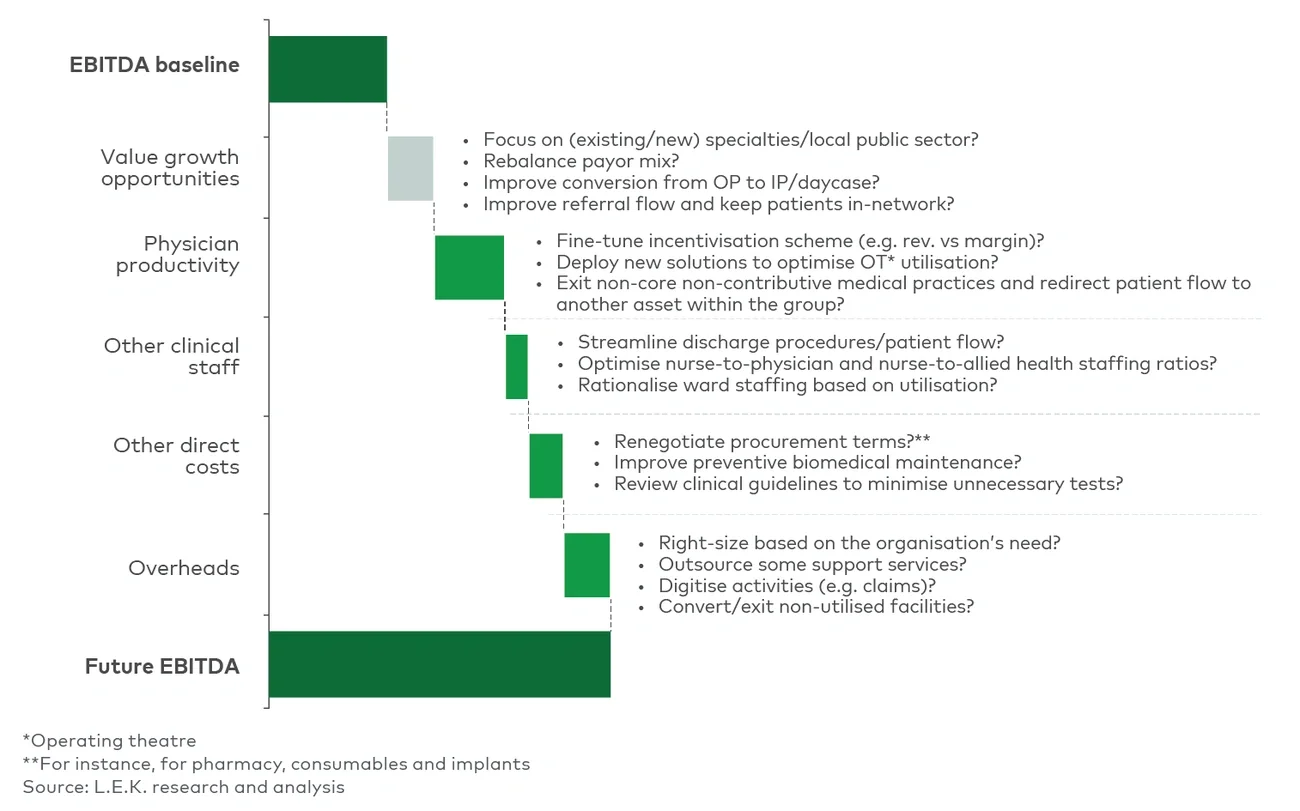
L.E.K.'s strategic review not only eliminates barriers to healthcare growth but also empowers management teams to thrive (see Figure 2). 

Figure 2

Key themes and questions to address at the hospital level

Image
Key themes and questions to address at the hospital level

Figure 2

Key themes and questions to address at the hospital level

Image
Key themes and questions to address at the hospital level

Conclusion

Reviewing and realigning your strategy is more than a cost-cutting exercise, as it enables you to focus on ensuring long-term sustainability and enhancing care delivery. By systematically addressing constraints, healthcare organisations can seize new growth opportunities, optimise operational efficiencies and ultimately deliver superior patient care.

At L.E.K., we specialise in helping healthcare organisations define their optimal service portfolios and implement growth strategies tailored to their unique challenges. Contact us to explore how our structured approach and industry expertise can help you succeed.

L.E.K. Consulting is a registered trademark of L.E.K. Consulting. All other products and brands mentioned in this document are properties of their respective owners. © 2025 L.E.K. Consulting

Questions about our latest thinking?

English

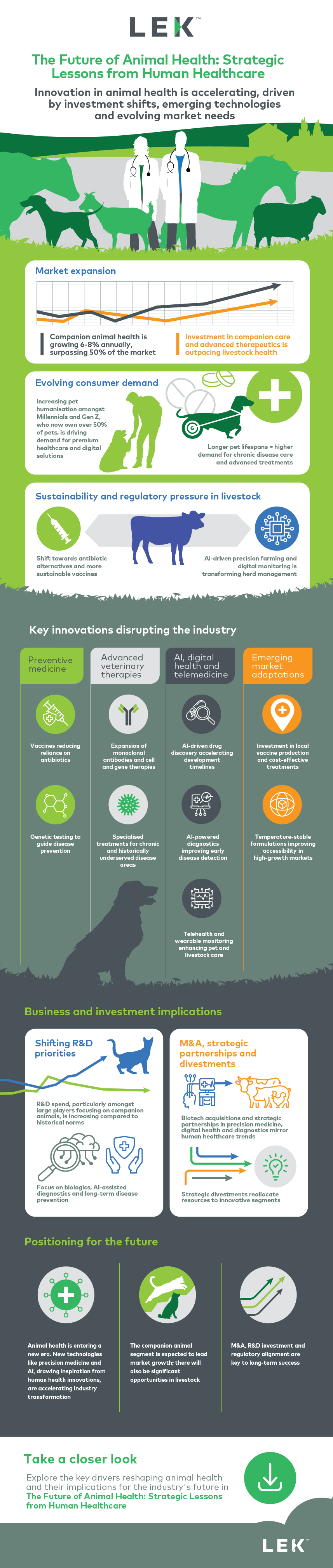
The Future of Animal Health: At a Glance

April 14, 2025

Animal health is entering a period of accelerated transformation. Inspired by developments in human healthcare, the sector is being reshaped by emerging technologies, evolving consumer expectations and shifting investment strategies. Growth is being driven by the companion animal segment, which now accounts for more than half of the market, while demand for advanced therapies, AI-enabled diagnostics and preventive care is rising across both pet and livestock populations.

This infographic highlights the most significant forces disrupting the industry, from innovation in vaccines and monoclonal antibodies to the impact of telemedicine and regulatory change. It also outlines the commercial implications for companies across the value chain, as strategic partnerships, R&D investment and targeted divestments reshape the competitive landscape.

Download the infographic for a visual overview of these changes and access our full Executive Insights for deeper strategic guidance on where the market is heading and how to respond. 

The Future of Animal Health: Infographic


L.E.K. Consulting is a registered trademark of L.E.K. Consulting. All other products and brands mentioned in this document are properties of their respective owners. © 2025 L.E.K. Consulting

English

Annual Mobility Study 2025: Recording (North America)

April 17, 2025

The US mobility market is at a turning point, with innovation and global factors reshaping consumer choices and industry direction. Drawing from the 9th Annual Global Mobility Study, this session unpacks the key themes shaping the transportation landscape in the US.

In this recording, the following speakers discuss shifting preferences, EV trends, the future of autonomous vehicles and the influence of geopolitics on the industry:

Complete the form to watch the recording.

L.E.K. Consulting is a registered trademark of L.E.K. Consulting LLC. All other products and brands mentioned in this document are properties of their respective owners. © 2025 L.E.K. Consulting LLC

English

Annual Mobility Study 2025: Recording (Europe)

April 17, 2025

The mobility landscape is being reshaped by shifting consumer attitudes, emerging technologies and evolving geopolitical dynamics. Drawing on findings from L.E.K. Consulting’s 9th Annual Global Mobility Study, this webinar explores how regional market trends in Europe are influencing the future of transportation.

Listen to Becrom Basu (L.E.K. Consulting), James Carter (Vision Mobility) and Will Chamberlain (L.E.K. Consulting) explore key developments, including changes in car ownership preferences, electric vehicle adoption and the evolving role of autonomous mobility solutions.

Complete the form to watch the recording.

 L.E.K. Consulting is a registered trademark of L.E.K. Consulting LLC. All other products and brands mentioned in this document are properties of their respective owners. © 2025 L.E.K. Consulting LLC

English
Executive Insights

Transitioning to EU-Wide Health Technology Assessments: Implications for Pharma

April 14, 2025

Key takeaways

The Joint Clinical Assessment (JCA) is now mandatory for oncology and advanced therapies, signalling a major shift in EU health technology assessment processes.

Early alignment of clinical trial design with PICO requirements and JCA timelines is essential for streamlined market access.

Pharma companies can expect faster access to more EU markets, but must balance this with increased complexity and resource demands. 

Success under the new framework requires stronger cross-functional collaboration and earlier involvement of market access teams. 

Introduction

2025 is seeing the gradual implementation of the Joint Clinical Assessment (JCA) as part of the EU Health Technology Assessment (HTA) regulation, which will allow European member states to jointly assess the clinical evidence for new health technologies, with the goal of harmonising clinical assessments across member states and ultimately achieving the timely availability of new therapies across Europe.

From 12 January 2025, JCAs have become mandatory for all oncology drugs and advanced therapeutic medicinal products. This will be extended to orphan drugs in 2028 and to all centrally registered products in 2030.1 

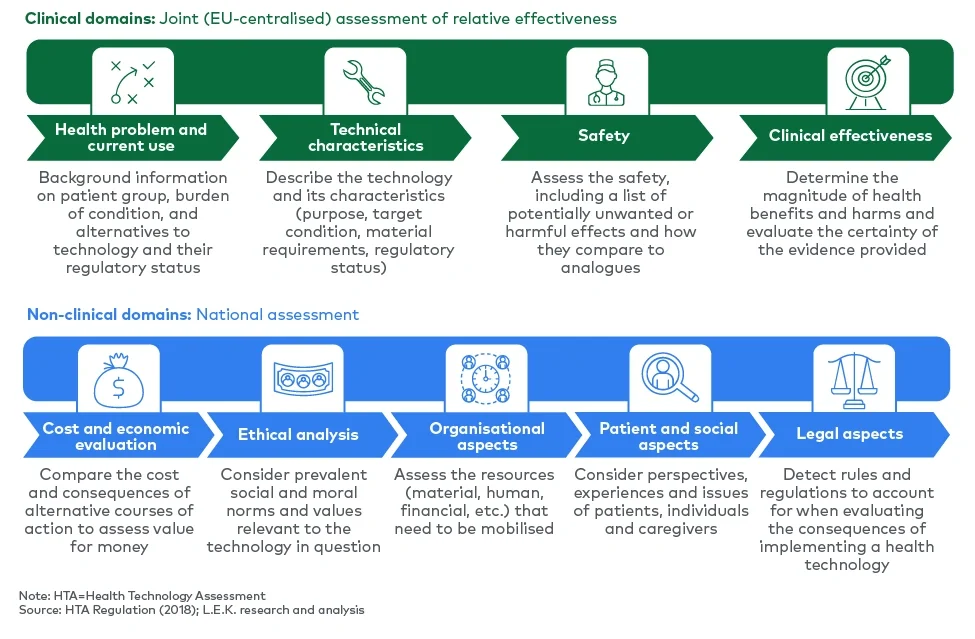
Under the EU HTA regulation, four clinical domains will be assessed centrally as part of the JCA, while the remaining (non-clinical) domains will remain part of national assessments (see Figure 1). Reimbursement and pricing decisions informed by the JCA and by national HTAs will continue to be made at the national level.

Figure 1

Domains of the HTA Core Model

Image
Domains of the HTA Core Model

Figure 1

Domains of the HTA Core Model

Image
Domains of the HTA Core Model

While the JCA should replace the national assessment on clinical domains, national HTA bodies will remain free to demand additional analyses on clinical domains that were not evaluated in the JCA if deemed necessary to inform reimbursement and pricing decisions. However, countries are not allowed to request a study that would yield the same data as what has already been submitted as part of a JCA.  

By introducing a central assessment on clinical domains, the EU HTA regulation will substantially disrupt established HTA processes for member states and health technology developers alike.

Building on our previous analysis of the transition to EU-wide HTAs, this Executive Insights further explores the implications of JCAs for pharma companies along three dimensions: strategic, procedural and organisational.  

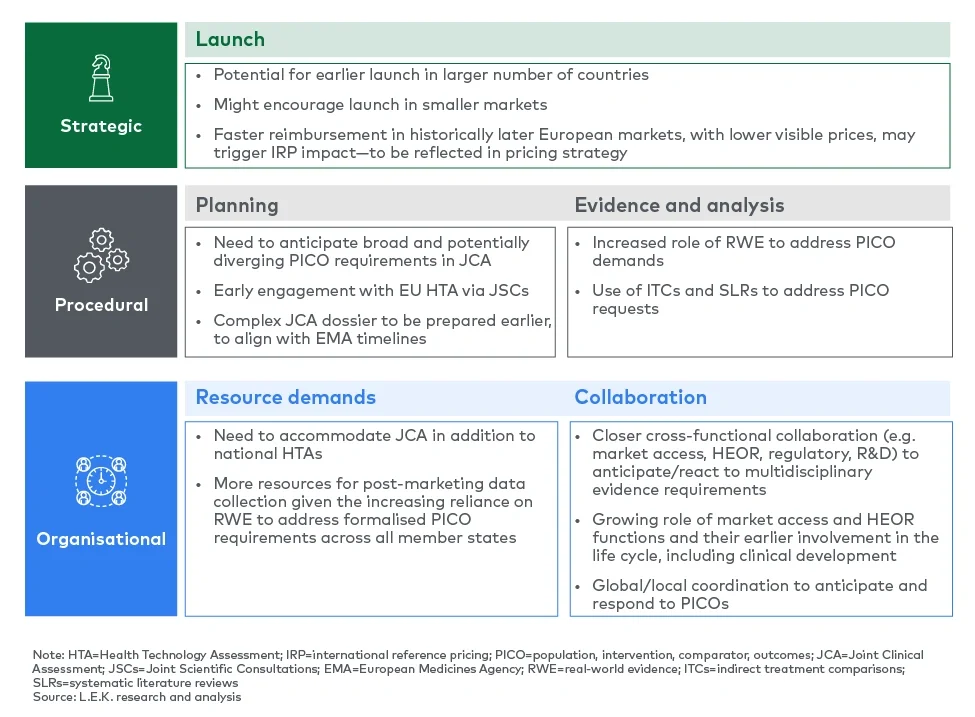
We anticipate that the JCA will impact pharma companies’ launch strategies in Europe by enabling faster access to a larger number of markets. From a procedural point of view, we expect changes to evidence collection and analysis as well as to pharma companies’ engagement with HTA bodies. Finally, the JCA will affect pharma’s resource requirements and drive the need for a more access-oriented cross-functional collaboration (see Figure 2). 

Figure 2

JCA implications for pharma

Image
JCA implications for pharma

Figure 2

JCA implications for pharma

Image
JCA implications for pharma

Implications for pharma: Strategic launch priorities

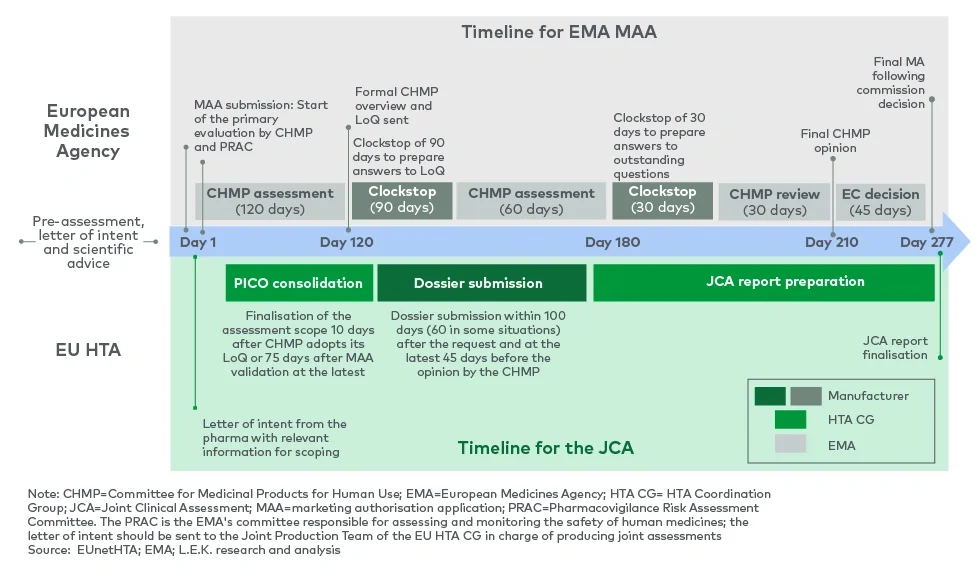
A central tenet of the EU HTA regulation is the alignment of the JCA process with the European Medicines Agency’s (EMA) marketing authorisation application (MAA) timeline.  

While national HTA processes tend to follow the regulatory procedure, the JCA is performed in parallel: The JCA report is intended to be finalised by the JCA subgroup at the latest on the day when the marketing authorisation is granted (see Figure 3). As a result, the JCA has the potential to accelerate HTA decision-making relative to the established national process.  

Further, the availability of central harmonised guidance on clinical domains might eventually make national reimbursement and pricing decisions more efficient, thus shortening the time to reimbursed access.  

Figure 3

Timelines of EMA MAA and JCA processes

Image
Timelines of EMA MAA and JCA processes

Figure 3

Timelines of EMA MAA and JCA processes

Image
Timelines of EMA MAA and JCA processes

Pharma companies need to keep these accelerated timelines in mind in their launch decision-making as this, together with the coverage of all member states in a joint assessment, will facilitate earlier reimbursed access in a larger number of countries, including smaller markets which have traditionally been deprioritised for launch preparations. Launch readiness and tracking will be more important than ever, given the shortened time frame from regulatory submission to market access.  

In this context, pharma companies will have to review their EU launch cadence, with the potential for earlier launch waves in a greater number of markets. However, the opportunity for earlier access needs to be balanced with associated launch costs and pricing implications, as faster reimbursement in historically later European markets, with often lower visible prices, may accelerate price erosion driven by international reference pricing.


“Most companies have traditional launch waves, going by size of market, but I think [the JCA] will expedite the waves and make midsized markets more attractive. … It will help to prioritise and sharpen the launch sequencing efforts within Europe. I expect that midsized markets will get pulled higher up the launch sequence because a certain amount of the market access work will already be done [via the JCA].” 

— Global head of market access, midsized pharma company


While the JCA might bring smaller markets into closer reach, interviewed experts fear that it will add complexity, which will be challenging, particularly for smaller companies, and might prompt these to reconsider their European launch approaches altogether. This might include deferring European launches or seeking an experienced licensing partner familiar with regional market access requirements.


“The biggest challenge is to ensure that the process does not hold back smaller pharma/biotech companies from coming to Europe. It could turn out to be so cumbersome and costly that they may just decide not to come.” 

— Head of European market access, midsized pharma company


Implications for pharma: Procedural changes will impact evidence generation and analysis

Submission process and timelines 

The JCA process will trigger procedural changes in multiple dimensions, including in the way evidence requirements are specified and submitted, as well as in the HTA timeline.

The JCA starts with the scoping process. To this purpose, a population, intervention, comparator, outcomes (PICO)2 survey is set up to provide each member state with the opportunity to communicate PICO parameters. Disparities between countries in terms of expected endpoints and comparators may initially result in a high number of PICO parameters, but answers will be consolidated and condensed as much as possible.  

The consolidated PICO requirements will be transmitted to pharma companies to allow them to gather the necessary data. Assessors and co-assessors will then evaluate the evidence provided and draft the JCA for publication by the European Commission.

A challenge of the PICO scoping process is that it occurs after the pharma company has applied for EMA approval, meaning that requests from the survey cannot be reflected in the clinical trial design. Further, the need to amalgamate PICO requests from 27 member states will bring complexity, particularly in therapeutic areas with significant differences in clinical practice across markets, and could result in requests for analyses which were not specified as part of the trial design.  

Pharma will need to anticipate PICO needs and seek guidance on PICO requirements as early as possible. This highlights the importance of joint scientific consultations (JSCs), which can occur ahead of clinical trials to make sure that inputs from national HTA bodies are considered during the design process.  

Companies must be prepared to prove eligibility for the JSC in the selection phase. This includes demonstrating unmet medical need, highlighting the expected positive impact on patients and healthcare systems, aligning with major EU clinical priorities, and applying for the JSC while phase II and III studies are still in the planning stage.  

However, concerns remain about meeting the growing demand for scientific consultations given the limited availability of slots. To address this, simulating PICO requirements through other routes — such as early engagement with national HTA agencies, medical organisations and patient associations — will be critical.


“The JSC in itself is not enough. The JCA isn’t binding, and it is on the local HTA body to interpret the data in the JCA as it sees fit and also to request any extra data to meet the national requirements. So I think that even if you get a JSC slot you will still have to take local early advice as well. For example, the German G-BA recently highlighted that a separate consultation at [the] national level is recommended, in addition to the JSC.” 

— Head of European market access, midsized pharma company


Pharma companies will need to plan their submission strategies and processes carefully to align with both EMA and HTA timelines, taking into account that the new JCA timeline creates a short window of time from receipt of the scoping document to develop a comprehensive dossier.


“The JCA is running concurrently with the regulatory process and hence comes way earlier than the national HTA submissions. This means that market access teams need to start their planning much earlier.” 

— Head of European market access, midsized pharma company


Evidence collection and analysis

The multitude of scoping requests from member states may create evidence-generation challenges, particularly considering the timing of the scoping process after the initiation of clinical trials. This might strengthen the role of real-world evidence in supplementing the JCA evidence base and meeting PICO demands (e.g. as an external comparator group for single-arm trials).  

Further, it is expected that indirect treatment comparisons (ITCs) will play a major role in addressing the evidence needs specified by member states, supported by the methodological guidance on ITCs provided by the Member State Coordination Group on HTA (HTA CG).3 Planning the necessary systematic literature reviews to feed into the ITCs will be key to addressing diverse PICO requirements across member states.  

Implications for pharma: Organisational demands on resourcing and collaboration

Increased resource demands

Pharma companies must allocate resources to meet the EU HTA regulation requirements in the context of tight timelines. This will increase operational demands, particularly for those preparing for assessments in 2025. Companies need to consider how to secure and deploy resources in a cost-efficient manner. If external expertise and/or additional internal resources are used, the budget for this needs to be secured early to avoid delays in accessing support ahead of critical inflexion points.  


“Having the JCA run in parallel with the EMA submission is the biggest change. For local dossiers, the pharma company decides when to submit and where. The JCA is mandatory; you need to prepare it in parallel with the MAA and there are very clear timelines for the submission, so there is less control. This has the potential to increase resource needs at least during peak times.” 

— Head of European market access, small pharma company


For smaller companies building up European infrastructure, this means having affiliate market access resources in place earlier to accommodate the JCA timeline.


“Affiliates need to engage with access stakeholders earlier. They have work to do at a local level much earlier to collect information and feed [it] into the JCA dossier; this is one of the fundamental changes I see. Smaller companies launching in Europe for the first time need to be aware that they can’t postpone the local head counts — they need them earlier, no longer just six months before approval.” 

— Head of market access, small pharma company


“The timeline is so crunched for the JCA it means we will need extra staff. Although the JCA and local dossiers should be non-duplicative, I think there is definitely more work, just due to the fact that we need to submit two dossiers — the JCA and then the local one. This means you need local experts who know the country-level HTAs well and then you need a set of experts at the European level. This is almost like adding another large country to your market access organisation.”

— Head of European market access, midsized pharma company


Cross-functional collaboration

The complexity and timing of JCA preparation will require closer coordination between functions, most notably market access, health economics and outcomes research (HEOR), clinical R&D and regulatory. Breaking down silos will be essential for early scientific consultations and for planning the evidence generation, including the anticipation of PICO demands, and in order to develop the dossier.  

Companies will need to adapt governance structures to integrate EU HTA regulation capabilities and ensure its strategic importance is clearly communicated across the organisation.


“We need close collaboration across regulatory, access [and] HEOR at a minimum during the entire process. Any changes in regulatory need to immediately feed into access because the processes are happening in tandem.” 

— Head of market access, small pharma company


Further, the EU HTA regulation is expected to shift the market access and HEOR functions into focus and emphasise its centrality for successful launch and commercialisation. Closer collaboration between access and other functions, and in particular the increasing need to consider HTA requirements in clinical development planning, will strengthen the role of market access and reinforce the shift towards an integrated value-and-access function for more effective engagement with HTA bodies.


“In general, the idea that clinical development will be tailored more to the requirements of HTA bodies is an old one, but I think [the JCA] will put more emphasis on the importance of HTA demands. You need cross-functional teams — access, regulatory and clinical at a minimum — for discussions on trial design early on as part of the scientific consultation.” 

— Head of market access, small pharma company


“I think it will motivate clinical development to involve market access earlier and follow their recommendations more closely to ensure that we don’t have trial designs that don’t meet payer needs.”

— Head of European market access, small pharma company


Conclusions and implications

The EU HTA regulation offers valuable opportunities for harmonising clinical assessments across EU member states, facilitating and accelerating market access in a larger number of countries, and potentially improving HTA outcomes by forcing market access to be a central part of the clinical planning process (via JSCs).  

This will come with significant procedural and organisational implications for pharma companies, adding timeline, resource and commercial pressures. Most notably, the alignment of the regulatory and JCA timelines, the need for early scientific consultations and for simulating PICO requirements across member states, and the requirement to accommodate both the JCA and local HTA submissions will add workload and complexity for market access teams and other functions. This requires capacity building, particularly among smaller companies, as well as closer cross-functional collaboration and coordination between local and global teams.

Procedural and organisational changes might present challenges, but they will also create opportunities for a more central, effective and impactful market access function. Earlier and closer integration of market access considerations into the drug development and commercialisation processes might ultimately lead to better reimbursement and pricing outcomes and, hence, improved access for patients.


“The JCA will be difficult in the beginning because companies aren’t used to it and don’t have processes in place, but I think it will be a positive in the mid and long term. Some colleagues who have worked in more siloed companies think that it will give market access more power to input into the process earlier, and other functions are more likely to listen. It should lead to better HTA outcomes, as pharma companies are more likely to deliver what is valued by payers.” 

— Head of European market access, midsized pharma company


How L.E.K. Consulting can help

The EU HTA regulation will bring significant changes to EU market access processes. Pharmaceutical companies need to prepare by adapting internal submission processes and templates to meet JCA requirements and timelines, anticipating PICO needs, and engaging in consultations with regional and local stakeholders to embed HTA requirements into evidence generation.  

L.E.K. can provide tailored perspectives on the implications of the EU HTA regulation for pharma companies, covering market access strategy, launch preparation and monitoring, and organisational readiness.  

To discuss the topic in more detail, please reach out to the authors.

The authors would like to thank Daniel Secker and Charlotte Barthen for their support in writing this Executive Insights.

L.E.K. Consulting is a registered trademark of L.E.K. Consulting. All other products and brands mentioned in this document are properties of their respective owners. © 2025 L.E.K. Consulting

Endnotes
1Health technologies subject to a JCA include those undergoing a centralised marketing authorisation that are medicinal products containing a new active substance and/or biotechnology products, class IIb or III medical devices, and class D in vitro diagnostic devices.

2The PICO parameters include: population: identification of the relevant population(s) for the assessment scope, based on the claimed indication; intervention: a combination of the intervention to be assessed and the indication or intended use; comparator: pharmacotherapies and/or nondrug interventions that are relevant for the HTA for each of the populations of interest and that serve to determine the relative effectiveness of the health technology assessed; and outcomes: the choice of endpoints of interest and relative improvement necessary to demonstrate the relative effectiveness of the health technology assessed. 

3HTA CG, “Methodological Guideline for Quantitative Evidence Synthesis: Direct and Indirect Comparisons” (adopted on 8 March 2024).


Questions about our latest thinking?

English
Executive Insights

Radiotherapeutics on the Rise: Addressing Supply Chain Complexity

April 7, 2025

Key takeaways

Manufacturing of radiotherapeutics requires complex supply chain management, with unique challenges across isotope production, radiolabelling, dose production and distribution.

CDMOs and other providers considering entry in radiotherapeutics need to understand and assess which part of the supply chain is most attractive and how they can differentiate.

As radiotherapeutics gain momentum, supply chain is increasingly front of mind for biopharma to ensure security of supply, whether through in-house supply or CDMOs. 

While the supply chain is fragmented today, this is likely to consolidate as players start to expand across the value chain. 

No one-size-fits-all approach

Radiopharmaceuticals are a rapidly advancing class of radioactive compounds with diagnostic and therapeutic applications. We discussed the drivers for market growth in our previous Executive Insights, “From Niche to Widespread Use: The Turning Point for Radiotherapeutics.” In this instalment, we focus on the supply chain and how players, current and emergent, should prepare for these complexities.  

The supply chain for radiodiagnostics is relatively well established and may rely on cyclotron production of radioisotopes close to the site of administration. By contrast, radiotherapeutics manufacturing is likely to be more centralised relative to diagnostics, but it is less established and therefore likely to remain a consistent topic of discussion and focus of investment diligence. This Executive Insights focuses on radiotherapeutics.

Indeed, the optimal choice of radioisotope is not only dependent on clinical considerations; challenges related to supply chain, which vary depending on the radioisotope, bring with them optionality for biopharma considering in-house or outsourced manufacturing, as well as opportunities for contract development and manufacturing organisations (CDMOs) and other providers to participate and differentiate.

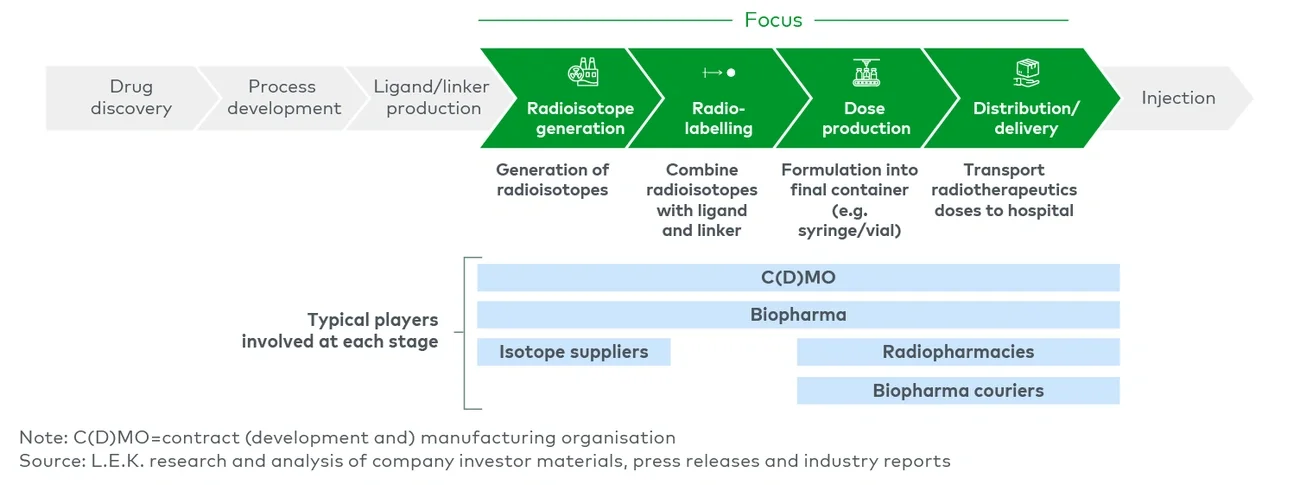
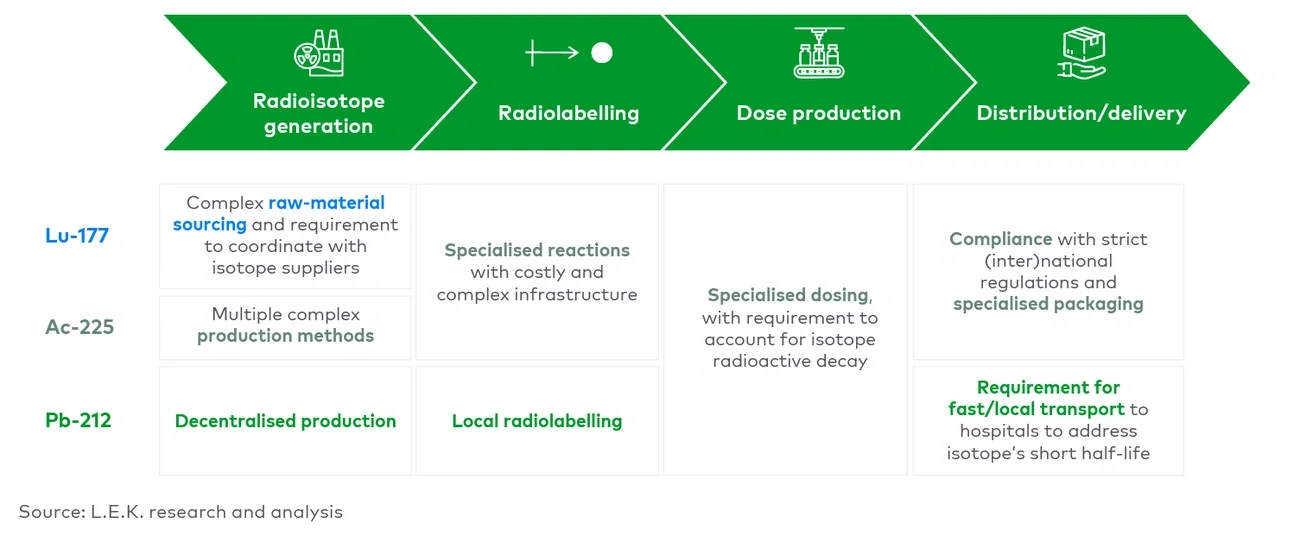
The radiotherapeutics value chain can be broken down into multiple steps. Here, we focus on four key manufacturing stages: radioisotope generation, radiolabelling of the radioisotope to the ligand, dose production into ready-to-administer doses and distribution/delivery. Each step involves specialised expertise and infrastructure, with different stakeholders playing critical roles (see Figure 1). 

Figure 1

Radiotherapeutics value chain

Image
Radiotherapeutics value chain

Figure 1

Radiotherapeutics value chain

Image
Radiotherapeutics value chain

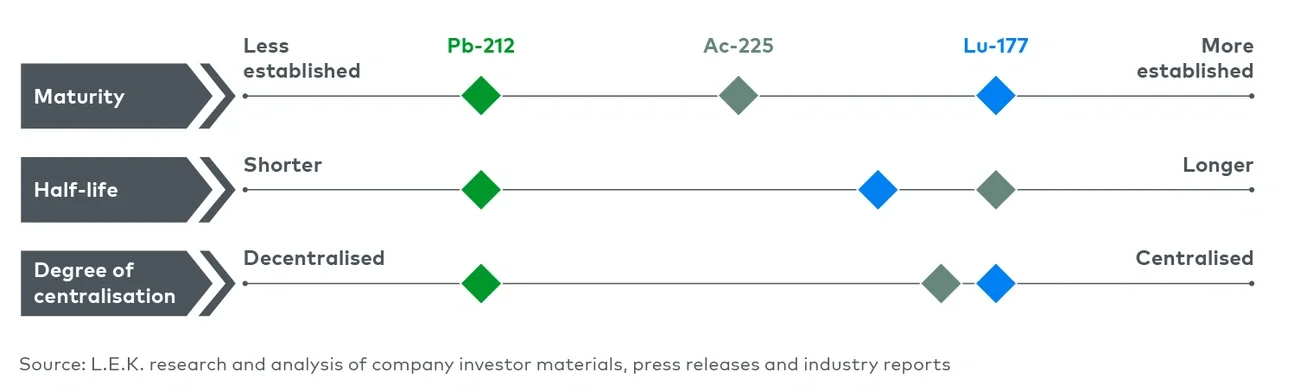
To illustrate how isotope-specific nuances impact supply chain considerations, we highlight how each step may vary for three isotopes enjoying industry interest and with varying degrees of maturity, half-life and manufacturing centralisation (see Figure 2):  

  • Lu-177 (half-life approximately 6.7 days), a beta-emitting isotope which has been the driver behind the radiotherapeutics resurgence through recent commercial launch successes of Novartis’ Pluvicto (mCRPC, 2022) and Lutathera (GEP-NET, 2017).
  • Ac-225 (half-life approximately 10 days), an alpha-emitting isotope towards which the research community had initially gravitated as the ‘next wave’ behind Lu-177 beta-therapies.
  • Pb-212 (half-life approximately 10.6 hours), an alternative alpha-emitting isotope which has more recently been gaining development traction alongside Ac-225. 

Figure 2

Comparison of key radiotherapeutic isotopes

Image
Comparison of key radiotherapeutic isotopes

Figure 2

Comparison of key radiotherapeutic isotopes

Image
Comparison of key radiotherapeutic isotopes

External supplier participation in radioisotope generation to de-bottleneck supply

Arguably, the step historically limiting growth of the radiotherapeutics sector is radioisotope generation. Isotopes are typically provided by isotope suppliers, even to biopharma manufacturing radiotherapeutics in-house, though integrated CDMOs can produce isotopes where production does not rely on nuclear reactor processes.  

Lu-177 is typically generated through nuclear reactors, led by key commercial isotope suppliers including Shine, Nusano, ITM and NRG. The industry is transitioning to non-carrier methods, which come with fewer drawbacks. These methods use Yb-176 as starting material, historically sourced from Russia. There is a push towards alternatives that are not located in Russia, including those produced by isotope suppliers such as Shine and Nusano in the US.

To ensure consistent supply, pharma needs to coordinate with these third-party suppliers for Lu-177 generation. As Lu-177 isotope suppliers do not typically handle subsequent radiolabelling and final dose formulation, this creates an opportunity for CDMOs to offer such services by partnering with isotope producers.

Ac-225’s complex raw material sourcing relates to limitations of its potential production methods. Ac-225 production through separation from Th-229 comes with scalability limitations due to supply scarcity. Cyclotron production using Ra-226 requires stringent handling procedures due to safety concerns around exposure to both Ac-225 and Ra-226. Methods like Th-232 spallation require high-energy accelerators and create side reactions.  

Production complexity creates opportunities for both Ac-225 isotope suppliers and CDMOs to compete and increase integration along the value chain. Some isotope suppliers (e.g. NorthStar, SpectronRx, Eckert & Ziegler) are exploring alternative scalable options such as electron accelerator photonuclear transmutation of Ra-226. These players also provide subsequent radiolabelling services, acting as CDMOs.  

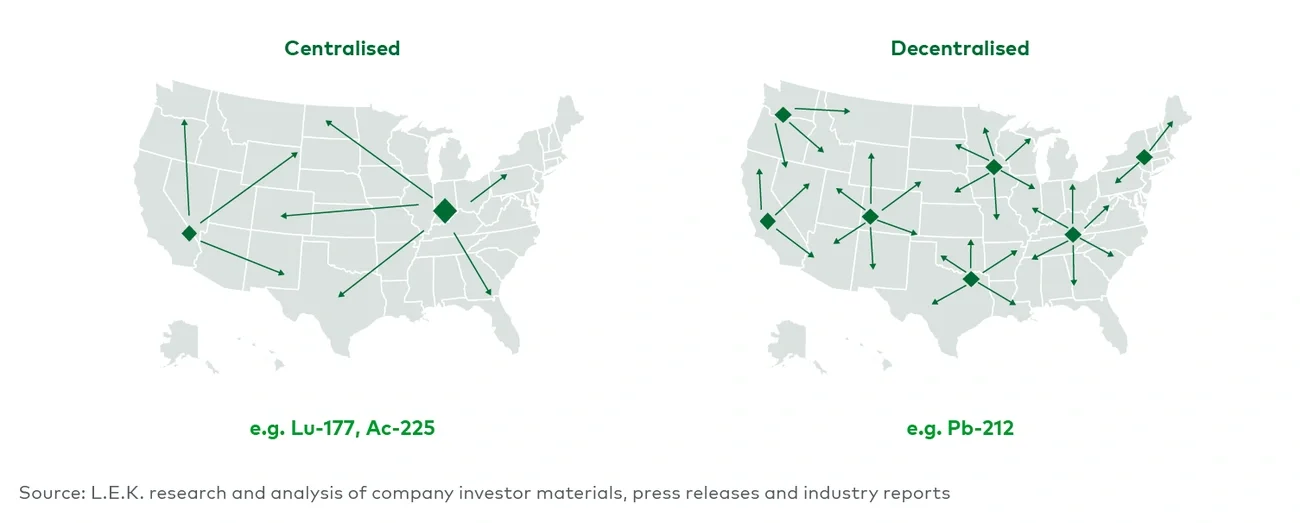
Pb-212 faces fewer supply constraints on its raw materials Th-228 and Ra-224, but it comes with a shorter half-life (approximately 10.6 hours), requiring production in decentralised generators close to the patient. To solve for this, some biotechs have chosen to become more involved in radioisotope generation.  

Indeed, select companies developing Pb-212-based assets — such as ArtBio, AdvanCell, Perspective Therapeutics and Orano Med — have developed their own Pb-212 generator production capabilities. Orano Med, together with RadioMedix, have recently signed an agreement with Sanofi as part of a licensing agreement to assume manufacturing responsibility, suggesting that biopharma companies with Pb-212 generator production expertise can also act as contract manufacturers in this area.  

Depending on the commercial success of Pb-212, opportunity may exist for CDMOs to position themselves as regional Pb-212 bases in a hub-and-spoke setup with large generators to be installed on-site at the CDMO, reducing the need for complex shipping logistics (see Figure 3). 

Figure 3

Centralised vs decentralised manufacturing

Image
Centralised vs decentralised manufacturing

Figure 3

Centralised vs decentralised manufacturing

Image
Centralised vs decentralised manufacturing

Radiolabelling at the core of CDMO offerings

Subsequent radiolabelling connects the radioisotope to the targeting ligand via chelation. For Lu-117 and Ac-225, radiolabelling can be performed in centralised facilities owing to their relatively long half-lives. The specific conditions vary based on chelator and isotope, but labelling may require high temperature and pressure requirements alongside radioactive compound handling precautions.  

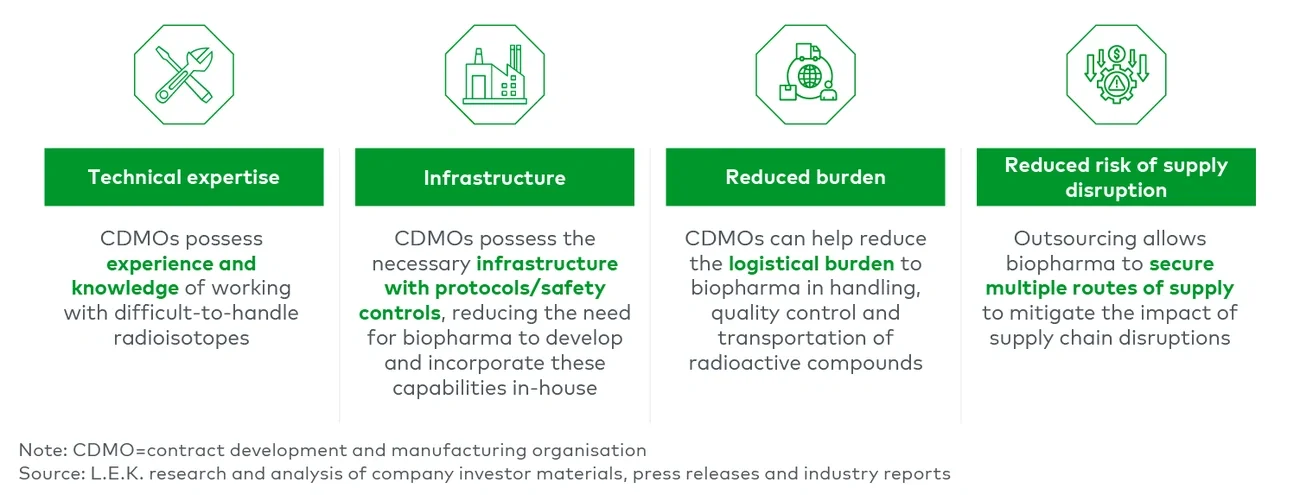
Whilst biopharma may want to consider in-house labelling for supply security and quality control, CDMOs can play a key role to avoid costly investment as well as complexity in infrastructure (e.g. shielded laboratories, handling systems such as hot cells, glove boxes) and procedures for biopharma. CDMOs can also bring substantial expertise in chelation and ultimate linking of targeting compound and radioisotope that are difficult to establish for new entrants (see Figure 4). Example CDMOs currently in the field include SpectronRx and NorthStar.

Pb-212’s shorter half-life necessitates local radiolabelling and therefore a more widespread geographical footprint. CDMOs can play a key role in accommodating local needs for radiolabelling due to the isotope’s shorter half-life.

More broadly, radioactive decay drives the need for radiopharma CDMOs to more frequently produce (smaller) batches throughout the year in contrast to the potential for larger, more infrequent batch sizes for other therapeutic modalities. The more continuous nature of production drives higher utilisation rates, which could lead to different operations and levels of profitability when compared to other therapeutic-modality CDMOs.  

Extending CDMO capabilities into dose formulation and logistics

Following radiolabelling, the compound is formulated into ready-to-administer syringes or vials. This stage is specialised, as the therapeutic dose needs to be accurately measured to maximise efficacy while minimising toxicity. Dosing is complicated by the radioactive decay of isotopes, which must be accounted for in the production process to ensure that patients receive the intended radiation dose.  

CDMOs can oversee this process for companies without in-house capabilities. Radiopharmacies are another player that can perform this step, though some facilities operate as both a CDMO and a radiopharmacy.  

Distribution and delivery represent the final step prior to patient administration. Due to radioisotope decay, this process must be carefully managed. Shipping requires compliance with strict (inter)national regulations, and specialised packaging is essential to ensure safety during transport. Depending on the isotope and capabilities of the players in the value chain, there could be anywhere between one and three players exchanging radioactive intermediates or final dose product prior to final delivery for patient administration.  

The short-half-life of the radioisotope is a key parameter to consider for logistics and reinforces the importance of integrated providers, as evidenced by Orano Med’s specialised logistics for Pb-212. In North America, for example, Orano Med’s ATLab, leveraged for large-scale production, is strategically located in Indiana next to major national and international distribution hubs and delivery companies (e.g. FedEx) to ensure fast transport to hospitals and address the 10.6-hour half-life of the isotope.  

Challenges in this step may result in potential for more biopharma courier services to expand their offering into radiotherapeutics and leverage the optimisation and speed of their logistics. Companies such as Life Couriers provide logistics services for radiopharmaceuticals and may also cover other sensitive biopharma products, such as live cells, as adjacent services. Once the radioisotope is received, hospitals and treatment centres play a critical role in final correct handling, storage and patient administration. 

Figure 4

Summary of value-chain complexities

Image
Summary of value-chain complexities

Figure 4

Summary of value-chain complexities

Image
Summary of value-chain complexities

Implications for radiopharmaceutical supply chain participants

As radiotherapeutics move from niche to widespread use, an increasing number and range of players can participate in the supply chain. Some early-stage radiopharma biotechs have built manufacturing capabilities, pioneering new processes.  

As the field of radiotherapeutics matures, CDMOs and other providers can play an increasingly important role; they can offer biopharma their expertise, infrastructure, logistical control and supply-risk mitigation (see Figure 5). This could be through offering radiolabelling capabilities, or infrastructure and expertise to accommodate high-temperature/pressure chelation processes, whilst adhering to stringent requirements for radiation safety, regulatory compliance and isotope handling.

Figure 5

Value proposition of CDMOs in radiotherapeutics manufacturing

Image
Value proposition of CDMOs in radiotherapeutics manufacturing

Figure 5

Value proposition of CDMOs in radiotherapeutics manufacturing

Image
Value proposition of CDMOs in radiotherapeutics manufacturing

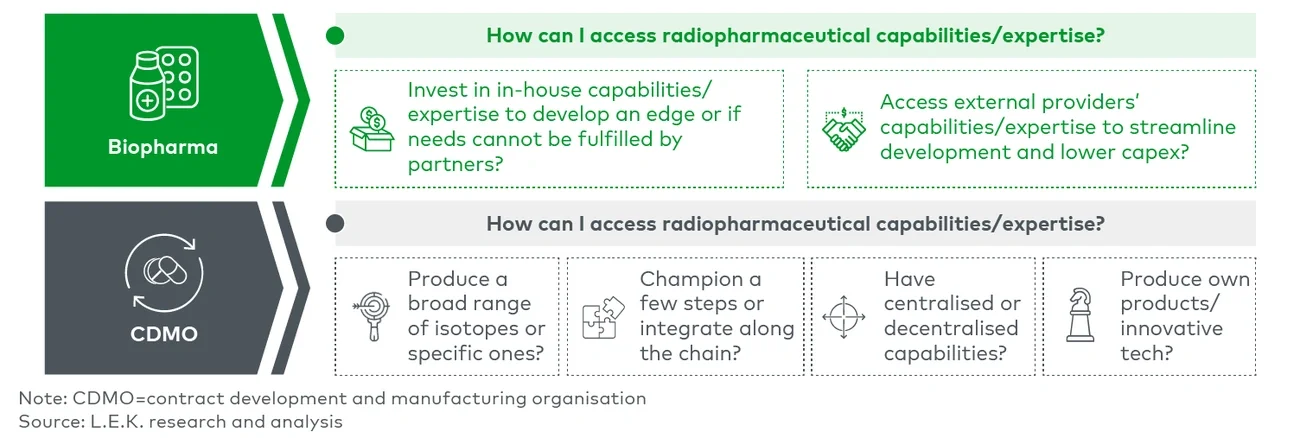
In the growing radiotherapeutics market, the supply chain is a significant complexity that companies should aim to carefully address. Biopharma exploring radiotherapeutics need to decide between investing in developing in-house capabilities and expertise or partnering with external providers to leverage their infrastructure and expertise to lower capital expenditure and focus on their own core competencies of drug discovery and development.  

External providers — including CDMOs, isotope suppliers and biopharma couriers — can simplify this complex value chain, but they will need to carefully think through how they can differentiate and evolve to ensure they maintain a unique position in this fluid ecosystem where processes and technologies are not yet fully set (see Figure 6).  

Over time, we anticipate that some providers will extend their offering along the value chain as consolidation takes place and as investment allows them to target adjacent areas. 

Figure 6

Key radiotherapeutics chain considerations for biopharma and CDMOs

Image
Key radiotherapeutics chain considerations for biopharma and CDMOs

Figure 6

Key radiotherapeutics chain considerations for biopharma and CDMOs

Image
Key radiotherapeutics chain considerations for biopharma and CDMOs

How L.E.K. can help

As radiotherapeutics grow, securing a reliable supply chain is key. Whether you're a biopharma company or a CDMO, L.E.K. can help you identify opportunities, mitigate risks and build a strategy for success.

Get in touch today to find out how to stay ahead in this evolving market. 

L.E.K. Consulting is a registered trademark of L.E.K. Consulting. All other products and brands mentioned in this document are properties of their respective owners. © 2025 L.E.K. Consulting

Questions about our latest thinking?

English

Brand Owners Shift Innovation Approach to Fewer, Bigger Bets to Drive Growth

April 4, 2025

Starting in 2017, many brands began slowing the pace of new product introductions, with some brand owners streamlining the stock-keeping units (SKUs) in their portfolios to minimize operational complexity and drive margin improvement. But such streamlining is not being done at the expense of innovation. On the contrary, to spur growth, some 80% of brand owners expect to increase investment in innovation over the next four years in the form of packaging redesigns and pack size changes, among others — an opportunity that packaging converters should be ready to leverage.  

That’s according to L.E.K. Consulting’s proprietary U.S. Brand Owner Packaging study, now in its seventh year, for which we surveyed 400 U.S. brand managers and packaging stakeholders in the fourth quarter of 2024 and the first quarter of 2025.  

Streamlining while innovating

Leading consumer packaged goods brands are streamlining their existing SKUs to reduce costs, improve operational efficiency, elevate margin and focus on their core products while leading with innovation as a critical activity to drive above-market growth.  

Unilever, for example, in 2024 announced a goal of cutting SKU counts by approximately 20% in combination with a reduction in raw materials and number of suppliers. The plan was to propel higher-volume orders of fast-moving SKUs — which presented an opportunity for packaging suppliers in the form of more standardized business.  

Meanwhile, Hain Celestial said it was shrinking its SKU counts by an incremental 6% on top of its 2023 goal of cutting SKU counts by 50%. In doing so, the natural food company hopes to increase shelf space and brand awareness for its core SKUs and to consolidate its operating footprint in order to spur savings and generate operating cash flow that it could use to pay down debt, all while increasing margins.

But just because brand owners are streamlining SKUs doesn’t mean they’ve stopped innovating. In contrast, they are simultaneously embracing more-disciplined R&D strategies and focusing on fewer, higher-impact launches along with category innovation to propel growth. Nestlé, for example, announced in October 2024 that it would be taking a “fewer, bigger, better” approach to innovation and any resulting SKU introductions.  

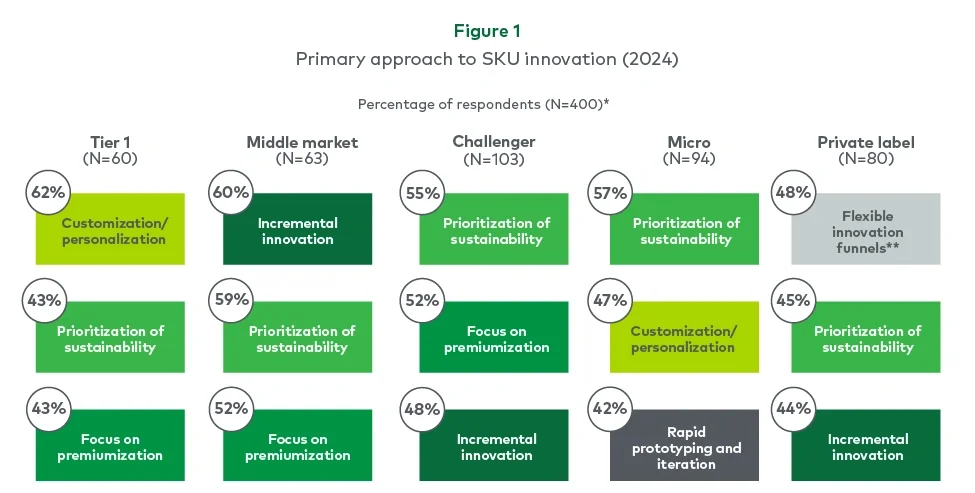
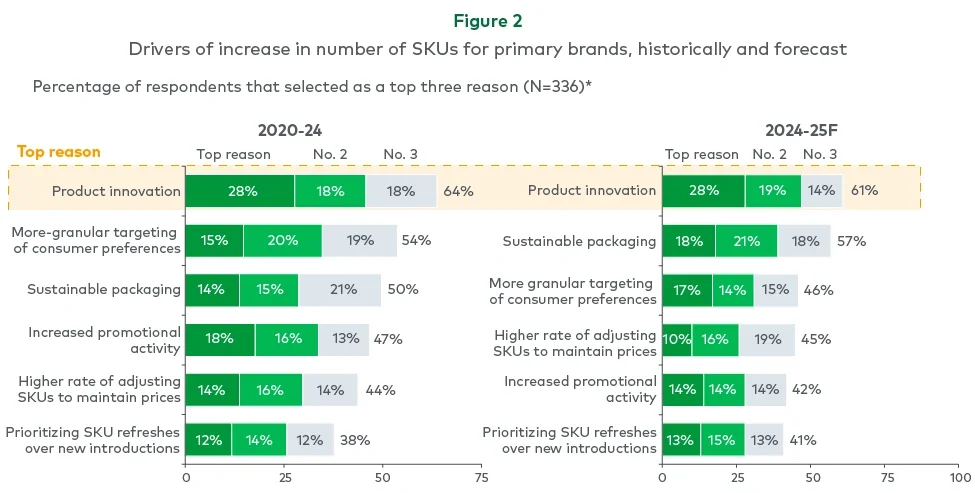
Indeed, when brands introduce SKUs, more often than not they are the result of product innovation (see Figure 1).  

Image
Figure 1. Primary approach to SKU innovation (2024)
Image
Figure 1. Primary approach to SKU innovation (2024)

With that in mind, approximately 80% of respondents to our survey indicated they expect to increase investment in SKU innovation — via packaging redesigns, price adjustments and pack size changes — over the next four years, up from roughly 73% over the prior four years.

To leverage this opportunity, packaging converters must align with these SKU optimization strategies by offering scalable, customizable and sustainable packaging solutions that cater to innovation-driven growth and brand-specific priorities.  

SKU innovation approaches vary by brand size

When it comes to SKU innovation, one size does not fit all. Approximately 62% of Tier 1 brand owners focus their investments on customization and personalization, for example, whereas middle market brands prioritize incremental innovation (e.g., small improvements on existing products). Challenger and micro brands prioritize sustainability, while private-label brands prefer to take a broader approach to innovation that includes multiple pilot launches and agile iterations (see Figure 2).  

Image
Figure 2. Drivers of increase in number of SKUs for primary brands, historically and forecasted
Image
Figure 2. Drivers of increase in number of SKUs for primary brands, historically and forecasted

Such a range of approaches is why packaging converters cannot take a one-size-fits all approach to serving their customers, but must instead understand the variety of divergent needs by customer segment and end market and offer a range of solutions to satisfy them. Making investments to get involved earlier in the brand owner innovation process also has myriad additional benefits for converters, including positioning the converter as a solution partner, increasing customer intimacy and creating greater customer stickiness.

To learn more from our four-part series of articles, be sure to read about the degree of importance brand owners place on packaging, how brand owners plan to respond to an expected increase in packaging costs in 2025 and how the performance on sustainability goals is evolving.

For more information, please contact us.

L.E.K. Consulting is a registered trademark of L.E.K. Consulting LLC. All other products and brands mentioned in this document are properties of their respective owners. © 2025 L.E.K. Consulting LLC

English

Brand Owners to Embrace Packaging Changes to Meet Sustainability Goals

April 3, 2025

A desire to move to sustainable packaging has been a core reason that brand owners have changed their packaging materials over the past four years, and to reach that goal, they expect to continue changing their packaging designs, formats and substrates going forward. Notably, that’s irrespective of how a particular brand owner defines sustainability. Indeed, brand owners consider sustainability in packaging to be a multifaceted issue, and one whose very definition is continuously evolving.

That’s according to L.E.K. Consulting’s seventh annual proprietary U.S. Brand Owner Packaging study, which we ran in the fourth quarter of 2024 and the first quarter of 2025, and which offers actionable insights for packaging converters when it comes to the importance that brand owners place on sustainability — and the steps they plan to take in the future.

Sustainability drives packaging changes

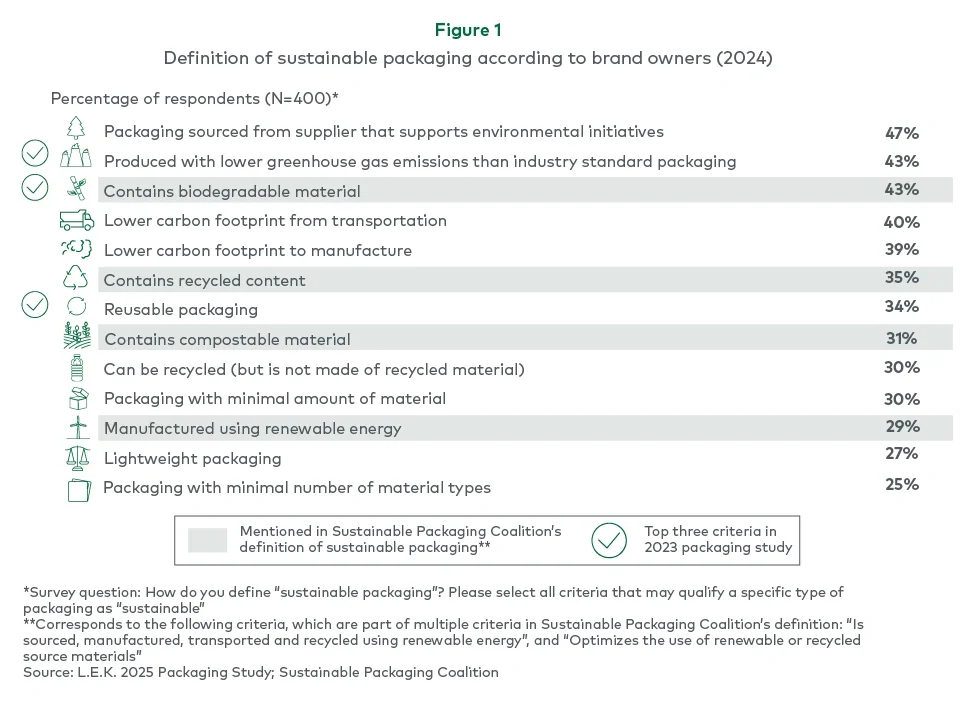
Brand owners have varying definitions of sustainable packaging, but as per our study, “packaging sourced from supplier that supports environmental initiatives,” “produced with lower greenhouse gas emissions than industry standard packaging” and “contains bio-degradable material” are the top three criteria for inclusion — and the latter two were in the top three last year as well (see Figure 1). 

Image
Figure 1. Definition of sustainable packaging according to brand owners (2024)
Image
Figure 1. Definition of sustainable packaging according to brand owners (2024)

Notably, regardless of how those brand owners define sustainable packaging, over the past four years, a desire to use more sustainable materials was the top reason (cited by 42% of respondents) they made changes to their packaging materials. It beat out other key drivers of change in packaging materials, such as product shelf life extension, end user/consumer preferences, aesthetic appearance and materials cost savings. Indeed, making changes to packaging in support of sustainability is broadly seen across brand tiers.

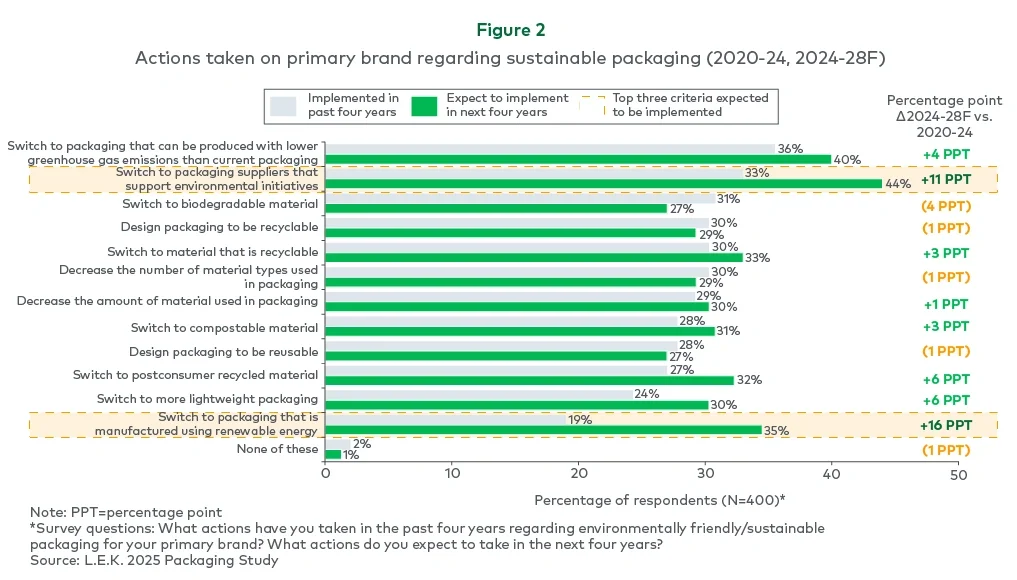
Over the next four years, brand owners expect to switch to packaging suppliers that support environmental initiatives (about 44% of respondents), to packaging that can be produced with lower greenhouse emissions than current packaging (about 40% of respondents) and to packaging that is manufactured using renewable energy (about 35% of respondents).

That said, a lower percentage of brand owners indicate they expect to implement actions to switch to biodegradable materials, design packaging to be recyclable, decrease the amount of material types used in packaging, and design packaging to be reusable over the next four years than they were during the prior four years (see Figure 2).

Image
Figure 2. Actions taken on primary brand regarding sustainable packaging (2020-24, 2024-28F)
Image
Figure 2. Actions taken on primary brand regarding sustainable packaging (2020-24, 2024-28F)

This reflects a continued shift in brand owner sustainability focus, from “packaging product” attributes toward a broader “life cycle” approach to driving sustainability improvements. So as brand owners look to change their packaging solutions in order to help meet their sustainability goals, converters that support and/or offer sustainable packaging solutions that are aligned with these behaviors will be especially well positioned in the market.  

Don’t miss our next and final summary of survey results from our four-part series of articles, about how brand owners are focusing on innovation to drive growth. Be sure as well to read our earlier articles in the series, about the degree of importance brand owners place on packaging as well as how brand owners plan to respond to an expected increase in packaging costs in 2025.

For more information, please contact us.

L.E.K. Consulting is a registered trademark of L.E.K. Consulting LLC. All other products and brands mentioned in this document are properties of their respective owners. © 2025 L.E.K. Consulting LLC  

English
Subscribe to