

Four Trends Shaping US Specialty Chemicals in 2026

May 29, 2026

Key takeaways

U.S. specialty chemicals companies entered 2026 in a more disciplined operating environment, with differentiated products supporting resilience despite uneven demand and margin pressure.

Supply chain and distribution strategies are becoming more targeted, and companies are prioritizing reliability, tariff risk management and technically capable regional partners.

Sustainability investment is shifting toward initiatives with measurable returns, while safety concerns and reformulation remain ongoing requirements driven by customer expectations.

Digital adoption is accelerating as labor constraints intensify, pushing companies to focus on productivity, efficiency and execution against core strategic priorities.

U.S. specialty chemicals companies entered 2026 facing a more disciplined and selective operating environment. Against a backdrop of uneven volume growth and margin pressure in the broader chemical market, specialty players remain comparatively resilient due to differentiated products and exposure to higher-value end markets. At the same time, specialty chemicals firms are navigating four important trends:

  1. Persistent supply chain complexity
  2. Evolving sustainability and safety considerations
  3. Ongoing digital transformation
  4. Rising labor constraints

In this edition of L.E.K. Consulting’s Executive Insights, we take a closer look at each of these trends and how they’re influencing specialty chemicals executives’ strategic priorities and investments. Along the way, we highlight quantitative findings from our latest U.S. Specialty Chemicals Executive Survey to provide a clearer picture of where the industry stands as companies position themselves for the next phase of growth.

1. Supply chain and distribution strategies are becoming more targeted

Supply chain stability remains a central focus for specialty chemicals companies as they refine their strategies following several years of pressure. While supply and demand have largely rebalanced across chemicals supply chains, executives remain focused on shoring up reliability and mitigating risk.

Many companies have acted to reduce supplier risk in recent years. Now that supply chains have normalized somewhat, chemical industry executives are taking fewer mitigation measures. This shift reflects the distinction between measures taken during periods of heightened disruption and the needs companies prioritize in a more stable environment (see Figure 1).
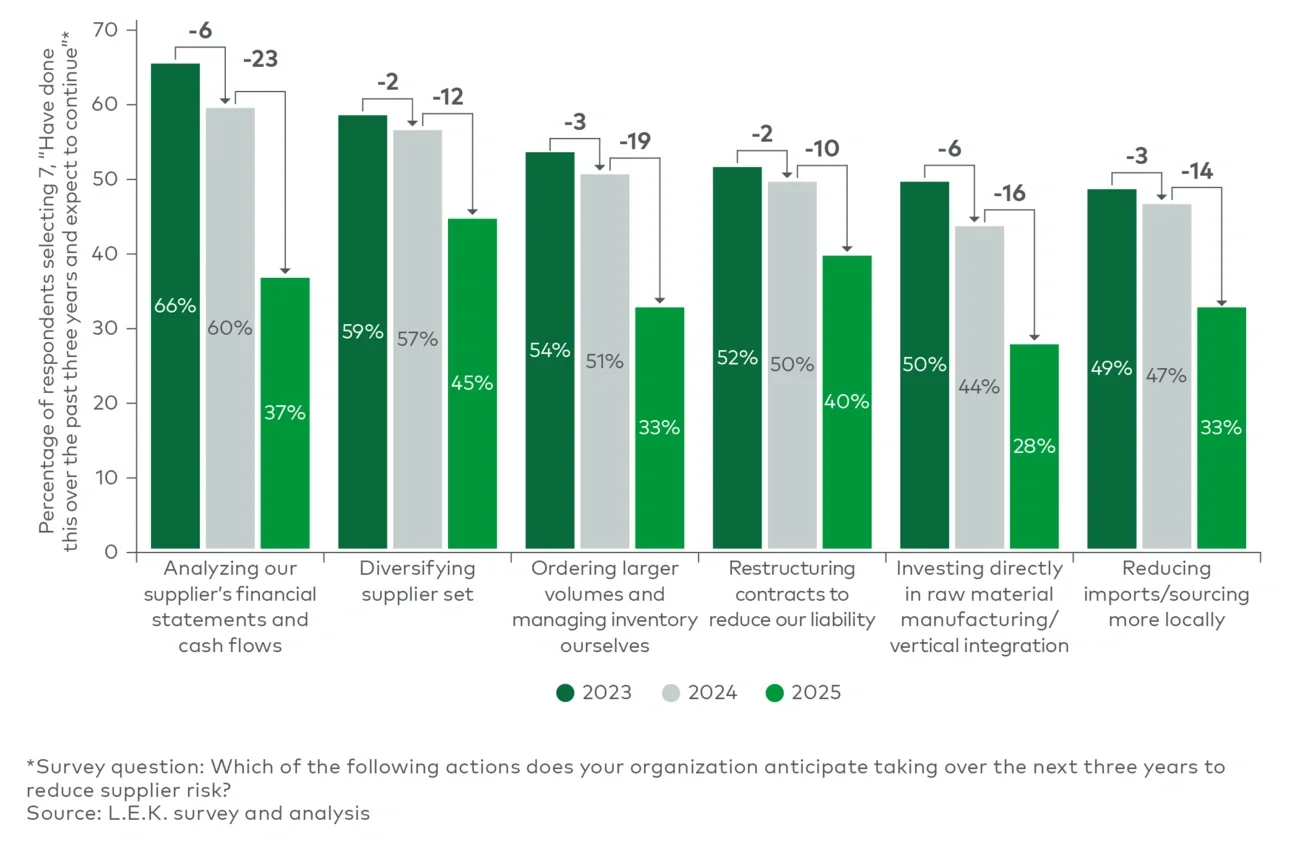
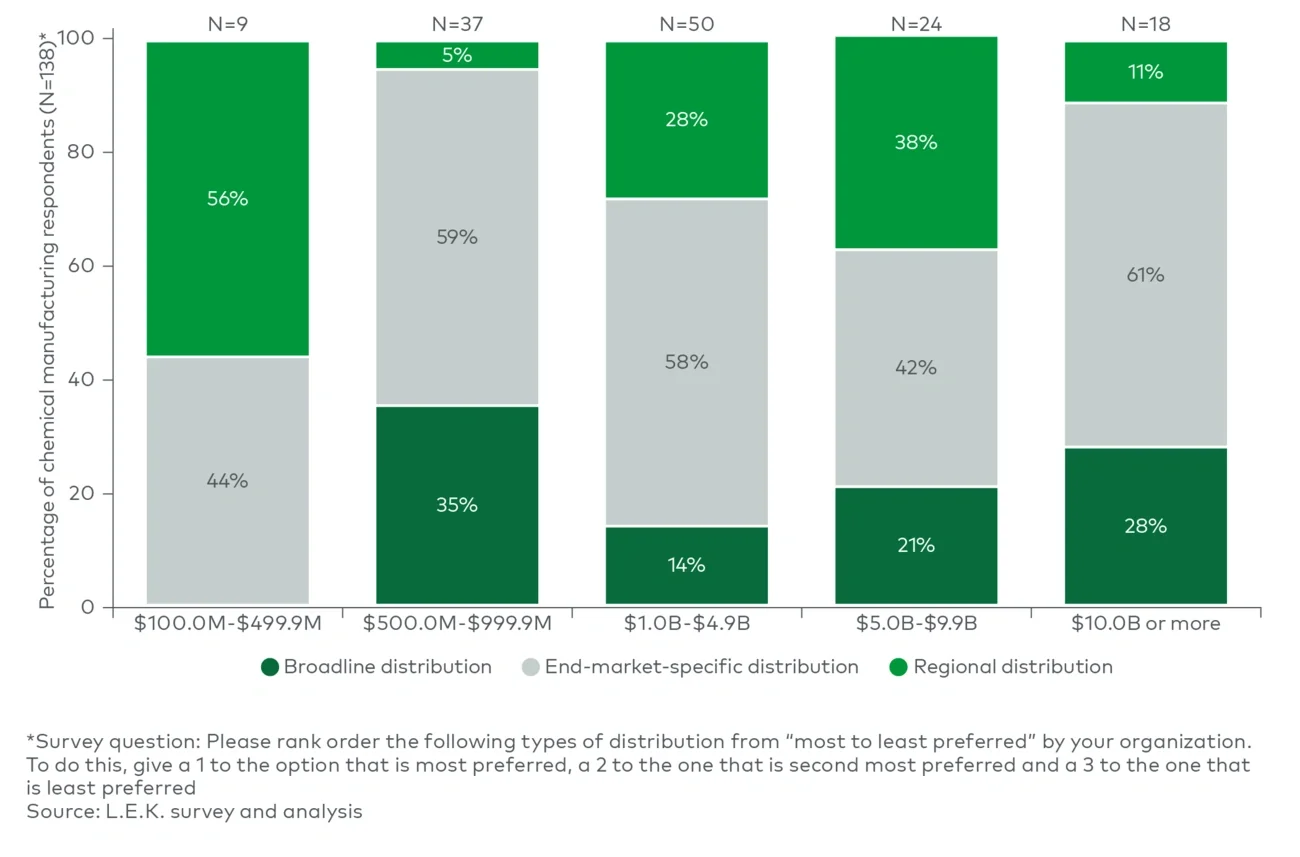
Figure 1

Chemical manufacturer organization continuation of supplier risk mitigation actions (2023, 2024, 2025)

Image
Figure 1 Chemical manufacturer organization continuation of supplier risk mitigation actions (2023, 2024, 2025)

Figure 1

Chemical manufacturer organization continuation of supplier risk mitigation actions (2023, 2024, 2025)

Image
Figure 1 Chemical manufacturer organization continuation of supplier risk mitigation actions (2023, 2024, 2025)

Trade policy is another factor shaping supply chain decisions. Distributors report broader and more persistent tariff-related disruptions than do manufacturers. These disruptions show up in several areas that include sourcing difficulty, changes in product availability, delivery delays, competitiveness pressures and impacts on customer demand. Survey responses highlight how tariff exposure varies across the value chain and how downstream players often experience these effects more directly.

Distribution strategy is evolving as a result. Manufacturers show a stronger preference for end-market-specific distributors and regional partners, while broadline distributors receive less emphasis. The survey indicates that companies value distribution relationships that offer technical knowledge, formulation support and local insight that align with the needs of their customers (see Figure 2).

Figure 2

Specialty chemicals manufacturers’ channel shifts, by company revenue (2025)

Image
Figure 2 Specialty chemicals manufacturers’ channel shifts, by company revenue (2025)

Figure 2

Specialty chemicals manufacturers’ channel shifts, by company revenue (2025)

Image
Figure 2 Specialty chemicals manufacturers’ channel shifts, by company revenue (2025)

Together, these findings show an industry adjusting its supply chain approach with greater focus and clarity. Companies continue to strengthen resilience, elevate technical support in distribution and refine the actions that will help create more predictable and customer-aligned supply networks moving forward.

2. Sustainability investment is becoming more selective, while safety stays nonnegotiable

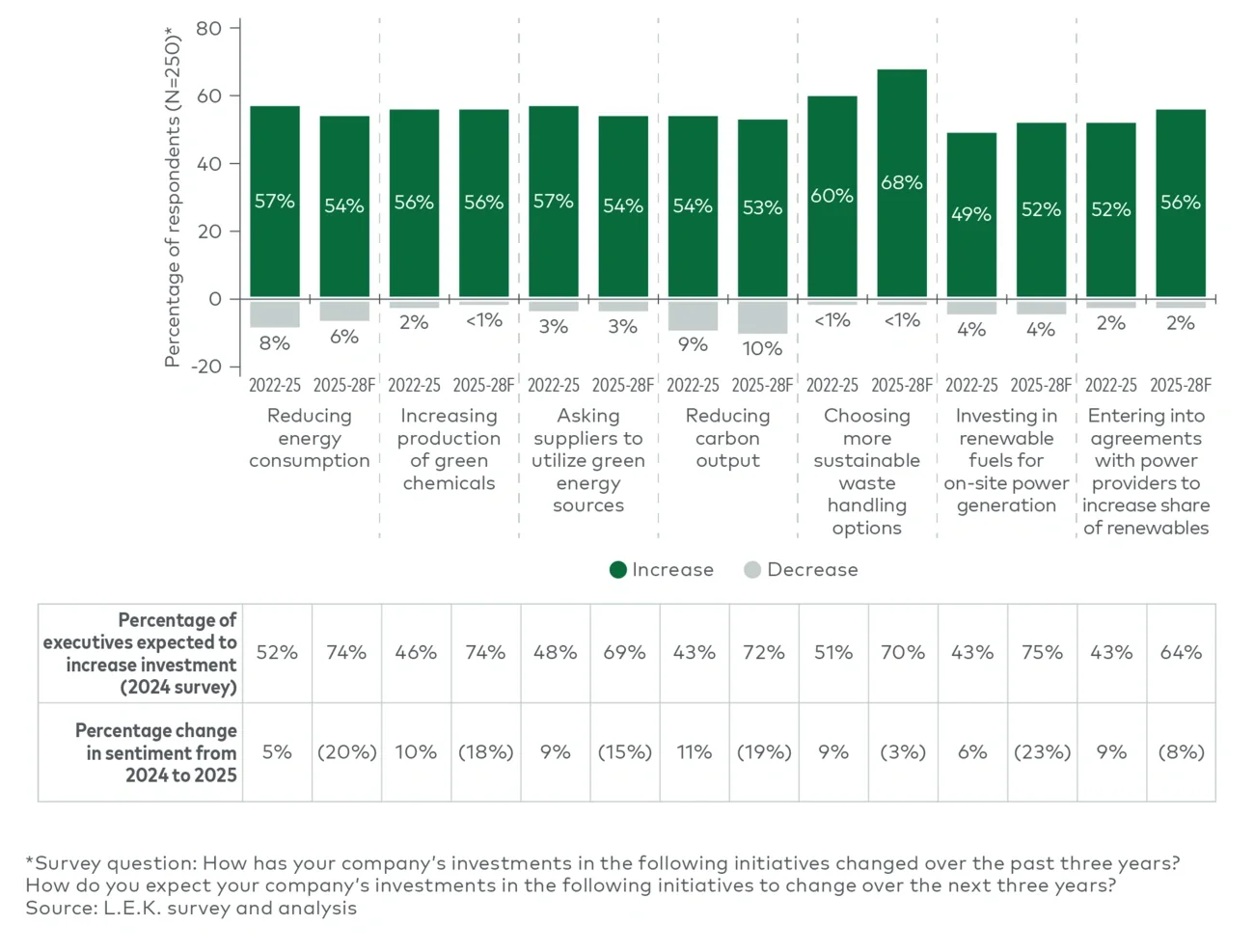
Sustainability remains an important area of focus for specialty chemicals companies. However, it’s becoming more pointed, as survey respondents reveal. Instead of broad increases, companies expect to concentrate spending on initiatives with clear operational or cost benefits. These include waste handling, renewable energy and supplier engagement (see Figure 3).

Figure 3

Specialty chemicals firms’ expected change in investment in sustainability (2022-25, 2025-28F)

Image
Figure 3 Specialty chemicals firms’ expected change in investment in sustainability (2022-25, 2025-28F)

Figure 3

Specialty chemicals firms’ expected change in investment in sustainability (2022-25, 2025-28F)

Image
Figure 3 Specialty chemicals firms’ expected change in investment in sustainability (2022-25, 2025-28F)

Safety considerations also continue to shape decisions on where to invest. Executives report high levels of customer concern across multiple substance types, such as pesticides, microplastics and bisphenol A. These concerns reflect a strong focus on chemical composition and health-related attributes in customer discussions.

Reformulation activity aligns with these expectations. Roughly half of companies report that they have reformulated or phased out products containing chemicals of concern over the past three years. A similar share expect to continue these efforts in the next three years. Reformulation is becoming a consistent part of product strategy rather than an isolated response.

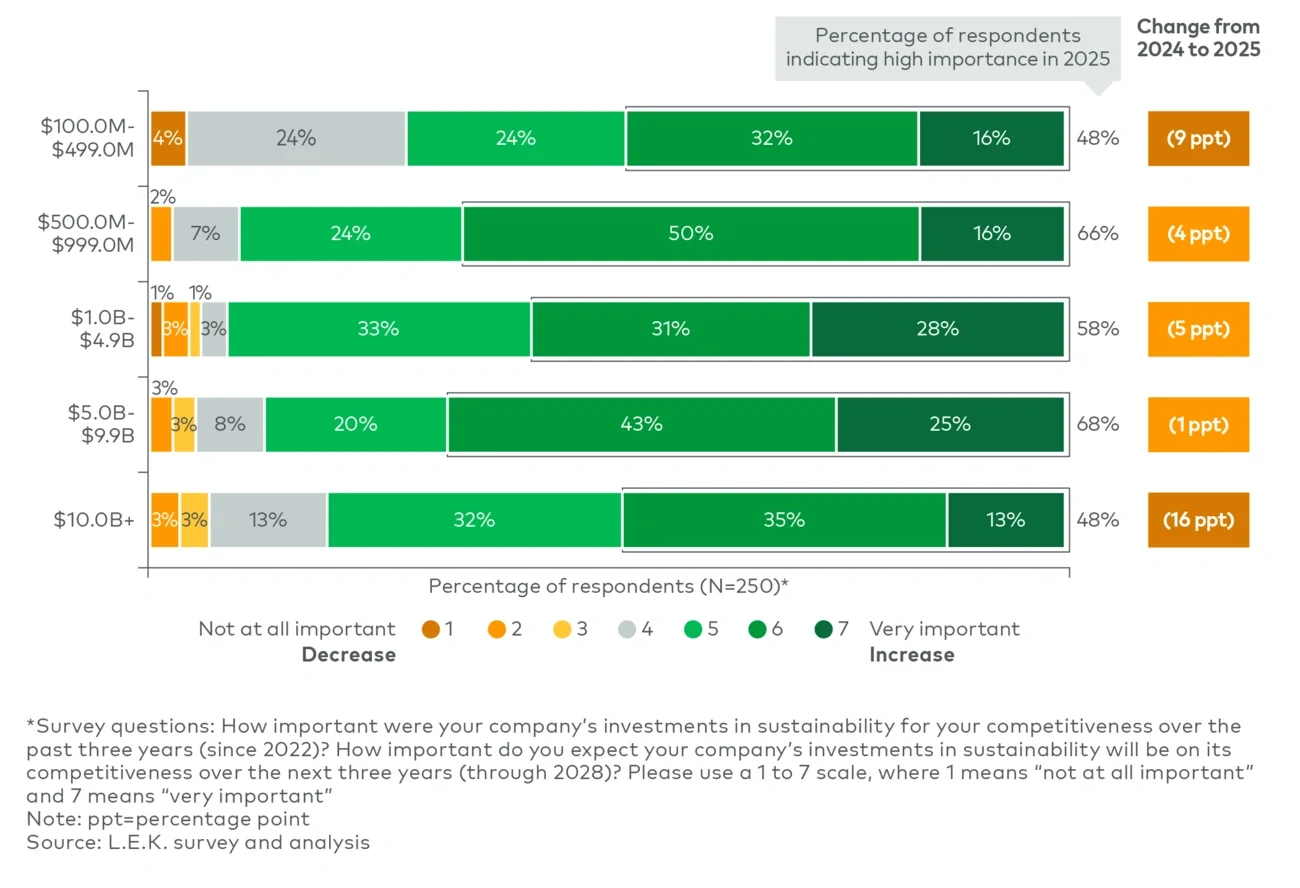
At the same time, the perceived importance of sustainability investment has decreased compared with 2025 across all company sizes. The largest and smallest firms show the most notable declines. This shift indicates that while sustainability remains relevant, companies are assessing how these investments contribute to competitiveness and long-term performance (see Figure 4).

Figure 4

Importance of sustainability investment, by company size (2025)

Image
Figure 4 Importance of sustainability investment, by company size (2025)

Figure 4

Importance of sustainability investment, by company size (2025)

Image
Figure 4 Importance of sustainability investment, by company size (2025)

Overall, sustainability remains important, though it was less often ranked as a top strategic priority as in 2024. Companies are focusing on areas that deliver measurable results while maintaining attention to safety and customer expectations. Together, these shifts illustrate a more deliberate and outcome-focused approach to sustainability across the specialty chemicals sector.

3. Digital transformation is accelerating and moving toward value creation

Digital transformation continues to gain traction across the specialty chemicals sector, and survey results show how rapidly this shift is taking hold. Companies are moving from experimenting with individual tools to integrating digital capabilities across more parts of the organization. As businesses look for ways to improve efficiency, strengthen decision-making and enhance customer engagement, digital adoption is becoming more of a practical lever rather than an aspirational goal.

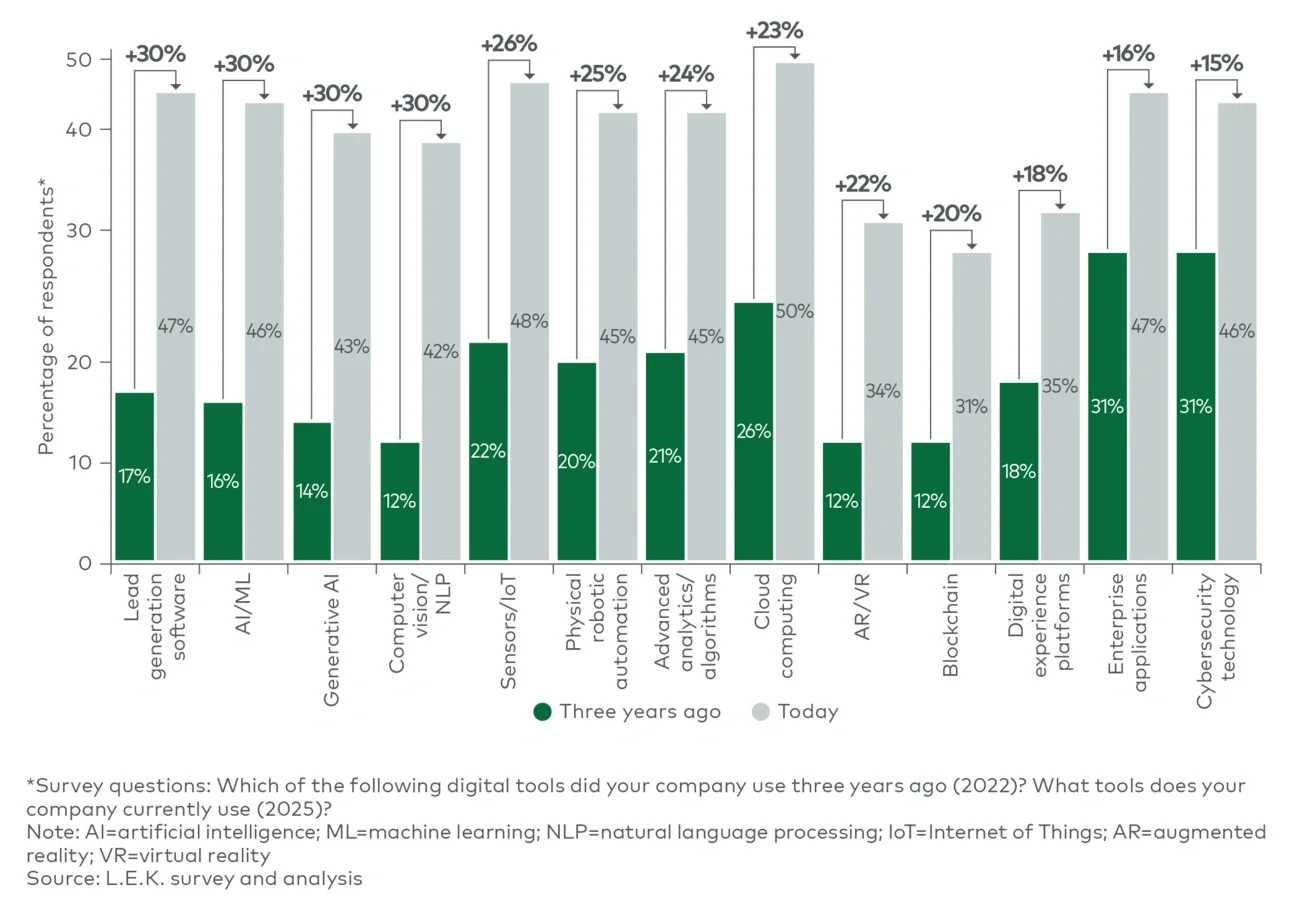
One of the clearest signs of this momentum is the rise in tool usage since 2022. Executives report significant increases in the adoption of artificial intelligence (AI), machine learning, generative AI and lead generation software. These technologies support a wide range of applications that include forecasting, automation, marketing outreach and data-driven planning. The expansion reflects not only the growing availability of tools but also stronger organizational readiness to put them to work in everyday processes (see Figure 5).

Figure 5

Usage of digital tools among chemical companies, past and present (2022, 2025)

Image
Figure 5 Usage of digital tools among chemical companies, past and present (2022, 2025)

Figure 5

Usage of digital tools among chemical companies, past and present (2022, 2025)

Image
Figure 5 Usage of digital tools among chemical companies, past and present (2022, 2025)

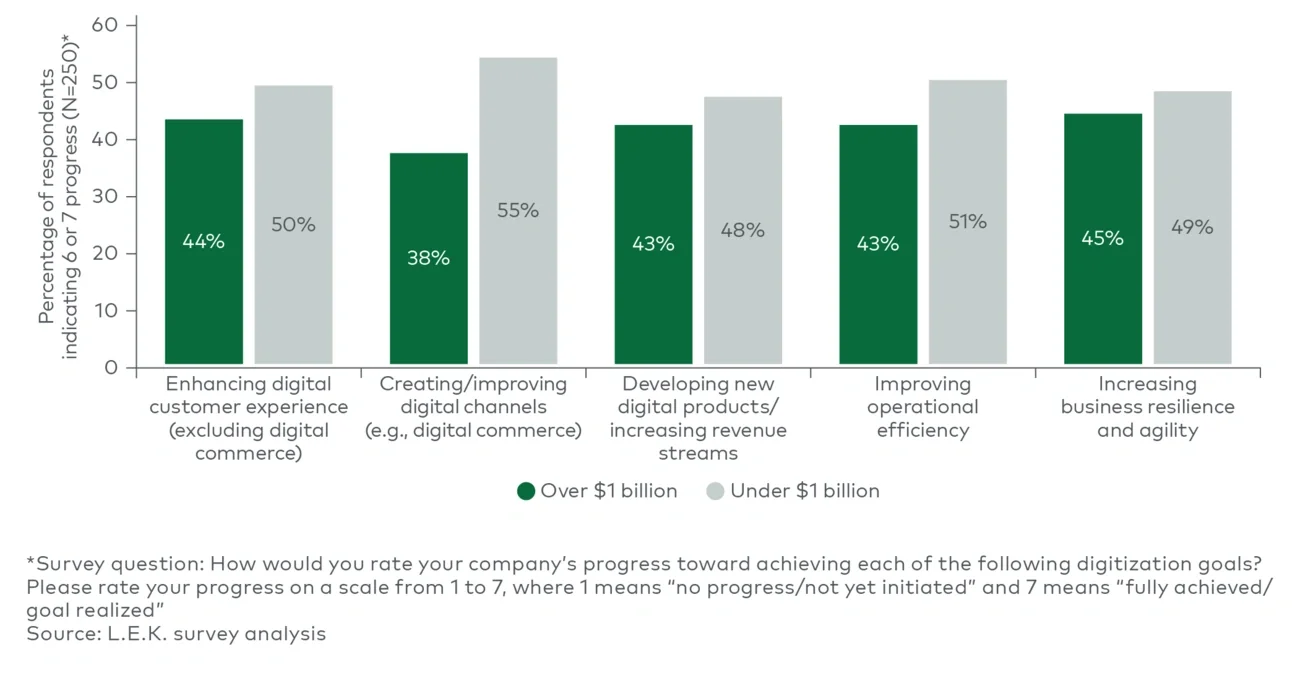
While adoption is increasing across the board, progress isn’t uniform. Smaller companies report stronger movement toward achieving their digital goals than do larger firms. The survey indicates that smaller organizations show higher levels of progress across areas such as digital channels, improved customer interactions and operational efficiency. This difference may stem from the agility and shorter decision cycles common in smaller organizations, which can make it easier to roll out new tools or refine existing systems (see Figure 6).

Figure 6

Chemical company digital tool progress toward achieving goal, by company size (2025)

Image
Figure 6 Chemical company digital tool progress toward achieving goal, by company size (2025)

Figure 6

Chemical company digital tool progress toward achieving goal, by company size (2025)

Image
Figure 6 Chemical company digital tool progress toward achieving goal, by company size (2025)

Digital progress is also shaping how companies think about future priorities. Many firms are shifting their focus from building foundational systems to applying digital capabilities in ways that create measurable value. For example, stronger use of analytics helps teams refine planning processes, while automated workflows can improve speed and reduce variability in routine tasks. These types of improvements support goals that include efficiency, reliability and better customer experience.

In addition, digital investments appear to be influencing how companies coordinate across functions. As tools evolve, teams are using shared data more consistently, which enhances collaboration between commercial, operational and customer-facing groups. This growing alignment supports clearer decision-making and helps companies move toward more streamlined processes.

The survey doesn’t suggest that digital transformation is complete, but it does show steady progress. Companies are building on foundations set in recent years and increasingly applying digital capabilities to support both near-term goals and longer-term performance.

4. Labor pressures are reemerging as a major constraint

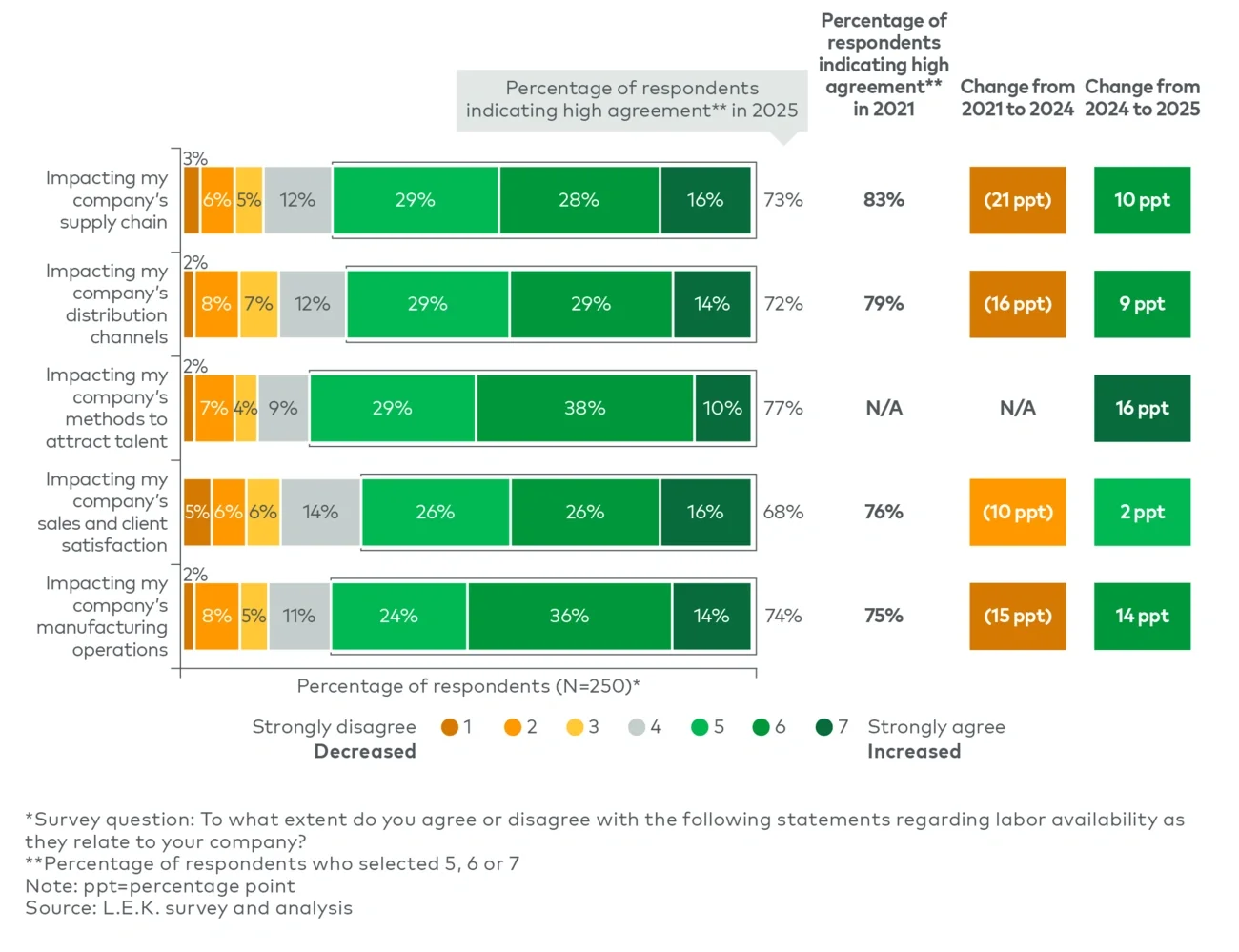
Labor concerns are resurfacing across the specialty chemicals sector. After a period of easing challenges, companies now report rising difficulty in attracting and retaining qualified talent. According to the survey, 75% of chemical industry executives express high concern about labor availability, especially in manufacturing and supply chain roles (see Figure 7).

Figure 7

Degree of labor supply concerns among chemical companies (2025)

Image
Figure 7 Degree of labor supply concerns among chemical companies (2025)

Figure 7

Degree of labor supply concerns among chemical companies (2025)

Image
Figure 7 Degree of labor supply concerns among chemical companies (2025)

These concerns extend into areas such as operational continuity, cost efficiency and production planning. The need for skilled workers who understand complex processes and safety requirements makes hiring more difficult, particularly for roles that require technical depth or hands-on production expertise.

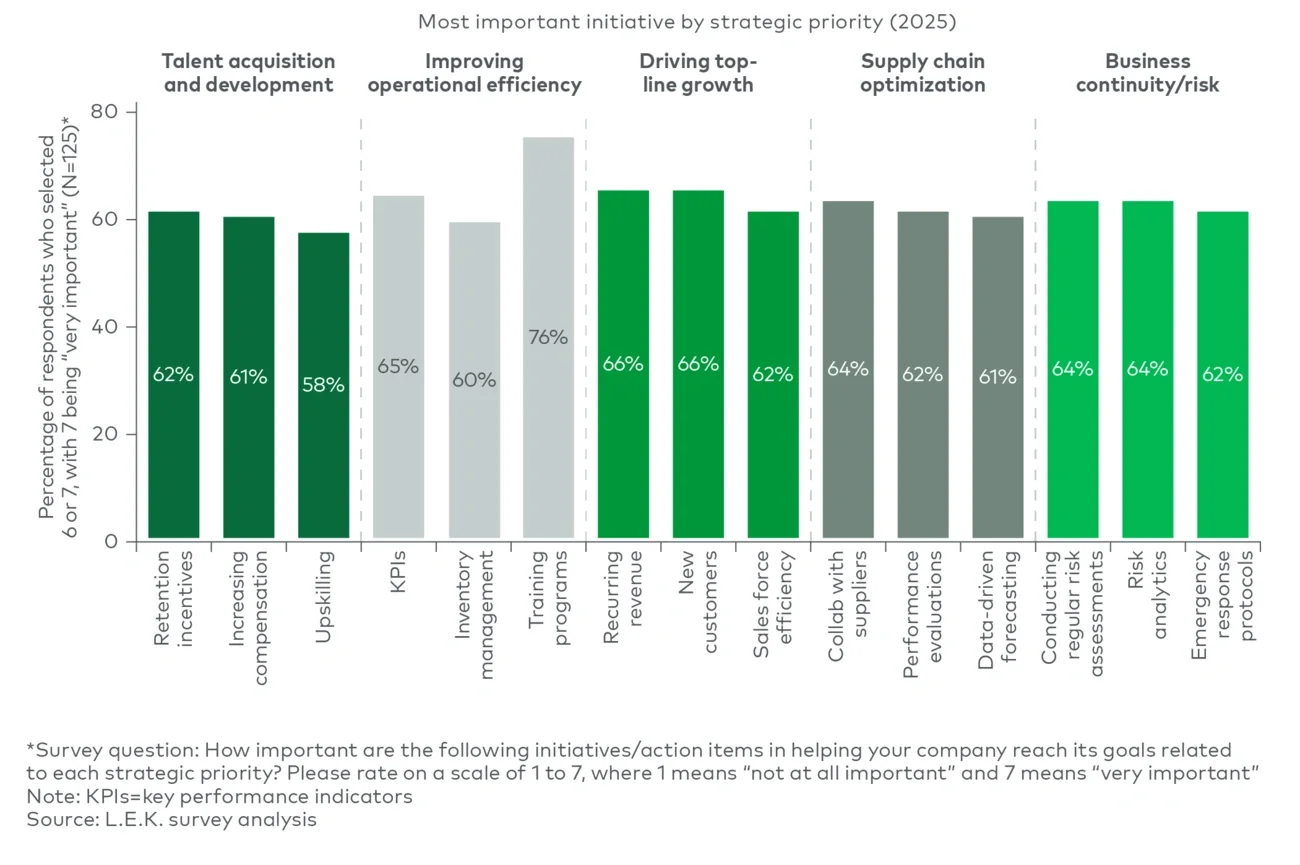
As companies adjust to these pressures, many are expanding initiatives that support talent acquisition and retention. These include training programs (76% of respondents), clearer career pathways and strengthened internal capabilities. Although the survey doesn’t prescribe specific solutions, responses suggest that firms view workforce stability as essential to meeting operational goals.

Labor availability will remain an important factor as companies manage growth plans, maintain service levels and respond to shifting demand. The renewed emphasis on talent mirrors broader industry priorities that tie organizational performance directly to the capabilities of the workforce.

Adopting a more deliberate operating posture

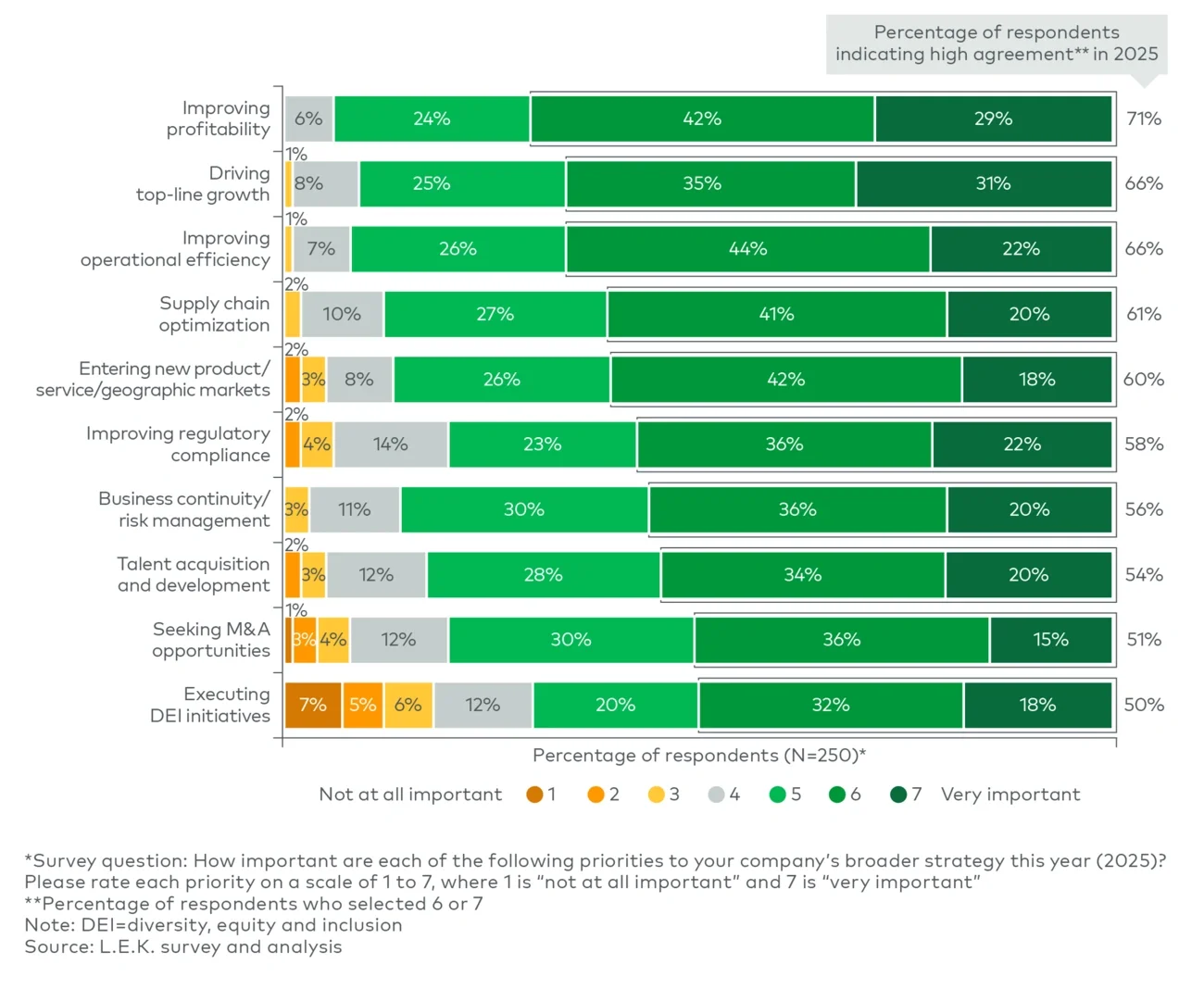
So how will executives respond to these trends? The priorities that guided decision-making in 2025 offer a clear signal of where organizations are headed. In our survey, chemical industry executives rank profitability, operational efficiency and top-line growth as having been their most important strategic areas. These themes shaped much of the work across the sector in 2025 and remain closely tied to operational and market conditions (see Figure 8).

Figure 8

Importance of strategic initiatives among chemical companies (2025)

Image
Figure 8 Importance of strategic initiatives among chemical companies (2025)

Figure 8

Importance of strategic initiatives among chemical companies (2025)

Image
Figure 8 Importance of strategic initiatives among chemical companies (2025)

Profitability held the top position for many companies. This focus aligns with the continued effort to manage costs and streamline operations in an environment where pressures on performance remain present. Operational efficiency also played a central role. Companies invested in strengthening internal processes that support reliability, consistency and margin stability. Top-line growth rounded out the leading priorities, with companies looking to drive commercial performance through more targeted actions.

The initiatives companies leaned on show how these priorities translated into daily execution. Targeting new customers (66% of respondents) was one of the most common ways companies pursued growth. Building workforce capability also played an important part, with many organizations emphasizing training and upskilling to support both efficiency and customer engagement. Recurring revenue models gained attention as well, offering companies a steadier base for planning and performance (see Figure 9).

Figure 9

Chemical company initiatives’ importance in addressing top priorities

Image
Figure 9 Chemical company initiatives’ importance in addressing top priorities

Figure 9

Chemical company initiatives’ importance in addressing top priorities

Image
Figure 9 Chemical company initiatives’ importance in addressing top priorities

Together, these initiatives demonstrate how companies approached their 2025 goals with practical, measurable actions. Rather than spreading efforts across many areas, companies concentrated on the levers that connect most directly to their strategic objectives.

The focus areas established in 2025 create a foundation on which companies can continue to build. The survey doesn’t identify new forward trends, but the patterns already in motion help explain how companies are positioning themselves for what comes next. The emphasis on profitability, efficiency and customer-focused growth remains aligned with the broader issues specialty chemicals companies are working to navigate.

This edition of Executives Insights includes updates from a previously published article.

For more information, please contact us.

L.E.K. Consulting is a registered trademark of L.E.K. Consulting LLC. All other products and brands mentioned in this document are properties of their respective owners. © 2026 L.E.K. Consulting LLC

English