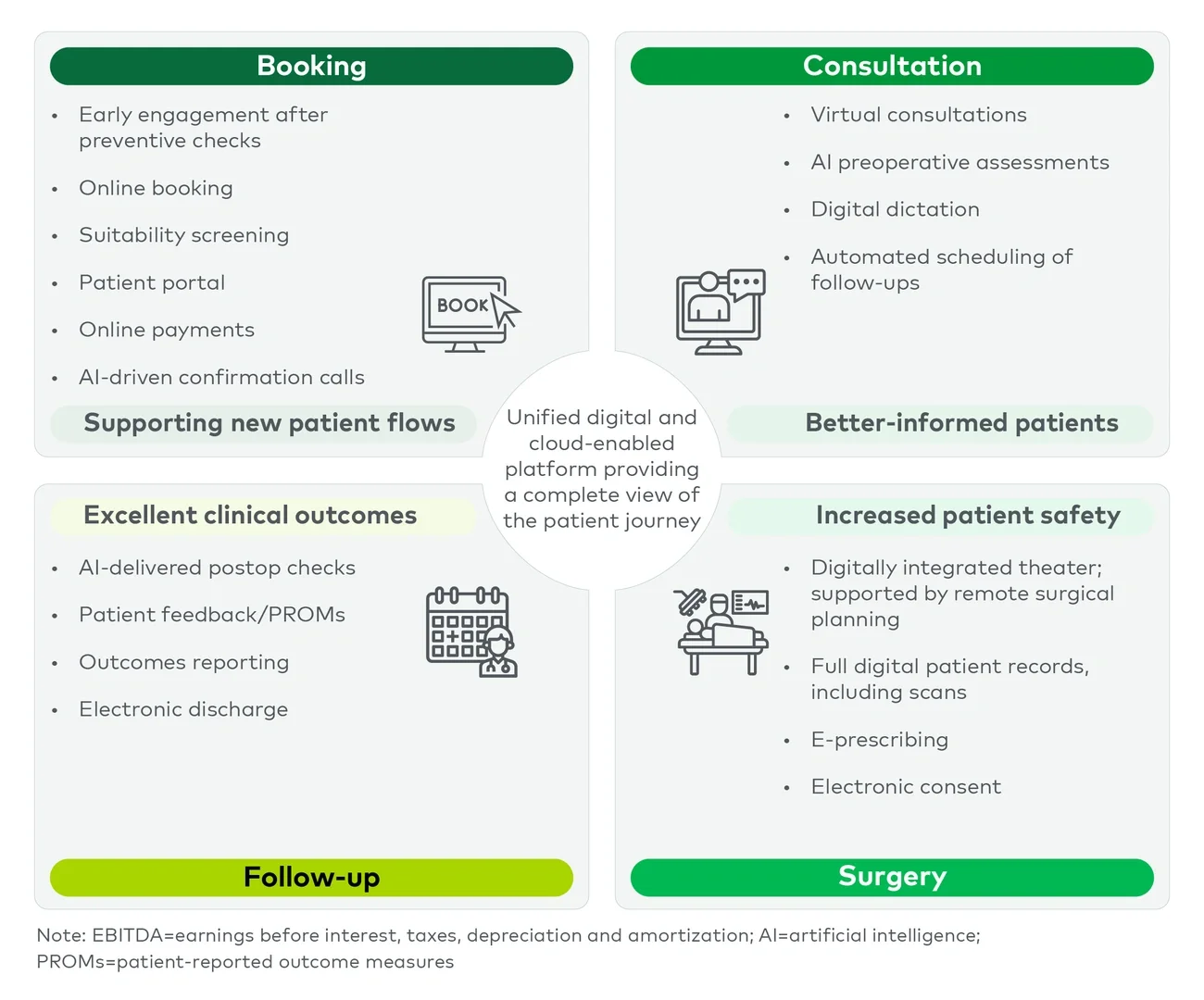
Image
LEK Lincoln logo

The Renaissance of Healthcare Logistics Part 1

Introduction and Overview
April 24, 2026

The renaissance of healthcare logistics

Healthcare logistics sits at the intersection of three durable forces: structural healthcare demand, rising therapy complexity and rapid digital enablement. Regulatory intensity, specialized infrastructure and high consequence of failure create defensible barriers to entry, while fragmentation creates consolidation opportunity and AI creates disruptive growth and value creation potential.

For strategics, the imperative is capability acquisition before valuation multiples and competitive intensity rise further. For private equity, healthcare logistics offers recurring revenue, margin durability and clear buy-and-build pathways. For founders, the market presents a generational opportunity to institutionalize and scale highly attractive, mission-critical businesses.

As healthcare logistics becomes not merely a delivery mechanism but a determinant of clinical success, the segment should be on the radar for strategics and investors across the ecosystem.

The next phase of value creation will be defined by those who recognize this shift and act on it decisively.

Healthcare logistics at an inflection point

Healthcare represents approximately 10% of global gross domestic product with spending growing at 5%-plus annually in many markets. It has long attracted investment due to its structural resilience, regulatory barriers and persistent inefficiencies. As urgency from the ballooning costs of an aging global population is paired with technological advances, many segments of the healthcare market are seeing significant investment and transformation. Historically, healthcare logistics has been relatively overlooked by investors, but no longer.

The healthcare supply chain is an extremely demanding logistics environment. Precision, compliance and speed are nonnegotiable. Billions of dollars in life-critical products move daily across manufacturers, distributors, 3PLs (third-party logistics providers), freight forwarders and last-mile specialists, under strict service levels and regulatory oversight. A variety of factors have accelerated the need for maturation of the healthcare logistics ecosystem, including supply chain shocks from COVID-19; ongoing geopolitical volatility; margin pressure in pharmaceuticals, medical devises and diagnostics manufacturers; and the consolidation of healthcare providers into larger, more sophisticated customers.

Furthermore, technology advances are unlocking new operating models to transform logistics from an asset-heavy service function into a data-driven, insight-led platform opportunity. Consequently, what was once viewed as a niche extension of general freight is increasingly recognized as a high-margin, defensible and strategically critical vertical.

This report is one of three total pieces co-authored by L.E.K. Consulting and Lincoln International, delves into why we believe the market is witnessing an inflection point in the evolution of the healthcare logistics market, which provides a unique opportunity for investment.

A mapping of the healthcare logistics ecosystem

Healthcare logistics is not a single market but rather an interconnected set of market sub-segments with specialized operators managing the flow of products and information between manufacturers and providers (see Figures 1 and 2).

Figure 1

Overview of medtech logistics ecosystem

Image
Figure 1 Overview of medtech logistics ecosystem

Figure 1

Overview of medtech logistics ecosystem

Image
Figure 1 Overview of medtech logistics ecosystem

Figure 2

Overview of pharmaceutical logistics ecosystem

Image
Figure 2 Overview of pharmaceutical logistics ecosystem

Figure 2

Overview of pharmaceutical logistics ecosystem

Image
Figure 2 Overview of pharmaceutical logistics ecosystem

Upstream, pharmaceutical, medical device and diagnostics manufacturers produce a wide variety of products under tightly regulated quality systems and a distributed global manufacturing footprint. Their labeling, serialization, temperature and service-level requirements cascade downstream, shaping the operational burden for all logistics partners.

Large broadline logistics providers, such as UPS, FedEx and DHL, play a critical role in moving bulk and parcel volumes from manufacturing plants and distribution centers to distributors and providers. Their value proposition centers on balancing speed, cost and temperature integrity at scale, often leveraging global networks and standardized operating models.

Distributors — both broadline and specialty — aggregate supply, manage inventory, provide last-mile replenishment and provide a growing list of supply chain services to hospitals, labs and nonacute sites of care. They act as buffers during shortages and differentiate through fill rates, cold-chain reliability, and integration into provider procurement and track-and-trace systems. In addition, distributors have increasingly begun to sell their own self-manufactured or private-label products, especially in the medical devices segment. Distributors may work with repackagers like Safecor that take devices or medicines from manufacturers and repackage them to meet customer needs (e.g., unit dose prescriptions).

A growing layer of cold-chain specialists supports temperature-sensitive therapies through validated packaging, cryogenic handling, sensors and real-time condition monitoring. As biologics, cell and gene therapies, and personalized medicine expand, these capabilities are moving from premium add-ons to mission-critical infrastructure.

On the reverse-flow side of the ecosystem, device reprocessors collect eligible single-use devices, reprocess and/or repair them to approved standards, and return them to use, reducing waste and total cost of care. Their operating models depend on reliable reverse logistics, documented chain of custody, and consistent provider adherence to segregation and collection protocols.

Healthcare-specialized 3PLs and couriers focus on orchestration rather than scale, managing warehousing, cross-dock operations and temperature-controlled last-mile delivery, including STAT, OR-direct and specimen movements. These providers win business based on standard operating procedure discipline, validated equipment, auditable chain of custody and time-definite performance for clinically critical moves.

A distinct but closely related role is played by freight forwarders, particularly for international product flows. These players coordinate cross-border transportation across air, ocean and ground, managing carrier selection, customs clearance, trade compliance and hand-offs across jurisdictions. In healthcare, forwarders differentiate through validated lane management, temperature-controlled air freight capabilities, regulatory expertise and the ability to dynamically reroute shipments during disruptions. These capabilities have become increasingly valuable amid geopolitical volatility and capacity constraints.

Finally, a set of reverse logistics and waste management providers handles returns, recalls, refurbishment, and compliant destruction of regulated or hazardous. These services create value by accelerating credit and replacement cycles, minimizing write-offs, and maintaining rigorous regulatory documentation — capabilities that providers prioritize for risk control and audit readiness.

Overlaying the physical logistics network is a growing layer of software and data platforms that support planning, visibility and execution across the healthcare supply chain. Technology-enabled players such as Altana, Flexport and other logistics software providers aggregate data across shippers, carriers and geographies to improve end-to-end visibility and predict disruptions. In healthcare-specific applications, these platforms are increasingly tailored to regulated workflows, incorporating serialization data, temperature and condition monitoring, and compliance documentation. Their asset-light, data-centric models offer scalable growth potential and the opportunity to become system-of-record or system-of-insight layers across a fragmented logistics ecosystem.

Overlaying the physical network is an increasingly important digital layer: logistics software, data visibility platforms and AI-enabled orchestration tools. These asset-light players aggregate data across shippers and carriers, predict disruptions, and enable proactive intervention. As fragmentation persists across the ecosystem, these platforms are well positioned to become system-of-record or system-of-insight layers.

The result is a fragmented but high-barrier ecosystem where specialization, compliance credibility and data integration drive competitive advantage.

For more information, please contact us.

L.E.K. Consulting is a registered trademark of L.E.K. Consulting LLC. All other products and brands mentioned in this document are properties of their respective owners. © 2026 L.E.K. Consulting LLC

English

US Education Focus: The State of Higher Education

April 21, 2026

As Higher Education faces mounting changes from demographic shifts, changing workforce needs and the growth of alternative credentials, leadership priorities have become increasingly clear: attract students and support them through graduation. This video explores how these dynamics are redefining institutional priorities and driving changes in budget strategy.

L.E.K. Consulting is a registered trademark of L.E.K. Consulting LLC. All other products and brands mentioned in this document are properties of their respective owners. © 2026 L.E.K. Consulting LLC

English

US Education Focus: The K-12 Agenda

April 21, 2026

Student mental health and well-being, teacher recruitment and retention, and academic outcomes are growing focus areas for K-12 district leaders. In this video, Laura Brookhiser explores how district leaders across the U.S. are prioritizing their spend, and how shifting priorities are influencing investment decisions.

For more insights into K-12 priorities, read our report here.

L.E.K. Consulting is a registered trademark of L.E.K. Consulting LLC. All other products and brands mentioned in this document are properties of their respective owners. © 2026 L.E.K. Consulting LLC

English

Delivering Strategic Value Through AI

April 21, 2026

AI is rapidly moving from experimentation to a source of real competitive advantage in healthcare. While early applications have focused on efficiency and productivity, the opportunity now extends across the entire patient journey – from diagnostics and triage through to clinical decision support and proactive health management.

In this discussion, we explore how organisations can capture this “AI delta,” the growing gap in value between those effectively deploying AI and those that are not. We also highlight the common barriers – from fragmented, bottom-up innovation to uncertainty around investment – and why a leadership-led, portfolio-based approach is critical to unlocking sustained impact.

L.E.K. Consulting is a registered trademark of L.E.K. Consulting LLC. All other products and brands mentioned in this document are properties of their respective owners. © 2026 L.E.K. Consulting LLC
English
Executive Insights

How AI Is Reshaping Advertising

April 23, 2026

Key takeaways

Artificial intelligence (AI) is compressing the consumer journey from multistep funnels into fewer, faster interactions, increasing zero-click behavior, reducing measurable touchpoints and shifting brand visibility from search rankings to algorithmic curation.

Performance transparency is becoming increasingly important as advertisers demand closed-loop attribution and demonstrable return on investment (ROI), raising the bar for channels that cannot clearly demonstrate impact.

Commerce, content and community are converging inside platforms, with discovery and transaction happening without external site visits, fundamentally changing where advertising spend flows.

Ad spend is reallocating across the ecosystem: Channels with strong first-party data, effective targeting, contextual relevance or direct conversion capabilities gain share, while legacy models dependent on high-volume traffic face structural decline.

The advertising industry is facing its most fundamental shift since the rise of digital media. Generative AI has fundamentally changed content economics. What was once expensive and time-consuming to produce can now be generated at scale in seconds. Content scarcity, which has shaped advertising strategy for decades, has been replaced by content abundance.

AI tools such as ChatGPT are also becoming the first stop for product discovery: Over 4 in 10 U.S. adults say they are likely to use an AI tool to research potential purchases. This is pulling traffic away from the open web and search, putting search engine marketing (SEM) spend under immediate pressure. Nearly 30% of marketers already report decreased search traffic as consumers turn to AI tools.

Even as AI disrupts traditional discovery channels, social commerce and influencer marketing have built something it cannot replicate: a direct path from trusted recommendation to purchase. 58% of consumers have made a purchase because of an influencer endorsement, and U.S. influencer spend is on track to reach $13.7 billion by 2027.

AI is collapsing the consumer journey

Before AI, the online customer journey followed a predictable path: Consumers discovered products, considered options, decided what to buy and took action. Advertisers paid for each interaction along the way.

AI interfaces compress that sequence. Every purchase stage, from initial awareness to final checkout, shifts from high-friction browsing to high-velocity prompting (see Figure 1). The funnel that advertisers relied on to structure campaigns and measure performance is shrinking into fewer, faster and more opaque moments.

Figure 1

The AI-accelerated purchase journey

Image
Figure 1 represents the AI-accelerated purchase journey

Figure 1

The AI-accelerated purchase journey

Image
Figure 1 represents the AI-accelerated purchase journey

For advertisers, this creates a visibility problem. As consumers stay inside AI-generated responses instead of clicking through in zero-click interactions, attribution breaks and key touchpoints disappear. Brands need to show up directly in AI-generated answers, recommendations and product comparisons, instead of relying on search rankings or display ads.

Measurement shifts from impressions to outcomes

Performance-based advertising has already been gaining ground as marketers prioritize measurable outcomes over reach. AI accelerates this shift by compressing the consumer journey into fewer, platform-contained interactions, leaving less signal to measure and optimize.

Advertisers now expect platforms and partners to prove impact, not just deliver reach. Sales or ROI is now the most commonly cited measure of marketing success, raising that expectation further.

This raises the bar across the ecosystem. Channels that cannot tie spend to conversion face cuts, and intermediaries that generate volume without proving incrementality get deprioritized.

Content, commerce and community converge

The boundaries between media, creators and transactions are dissolving. Consumers increasingly discover and buy products without leaving social or video platforms, as TikTok, Instagram and YouTube offer native commerce layers that turn influencers into storefronts and communities into purchasing engines.

In 2025, 45% of U.S. TikTok users purchased directly within the platform, where conversion rates can reach 8%-12% versus roughly 2%-4% for traditional ecommerce.

This convergence redirects advertising spend toward platforms that can integrate discovery, engagement and checkout within a single experience. Creators who drive direct conversion command premium rates, while brands that still route consumers to external websites face friction that their competitors avoid.

Spend and power reallocated across the ecosystem

As AI reshapes discovery and attribution, every stakeholder in the advertising value chain faces pressure to adapt. The implications vary by position:

Advertisers

Brand visibility will increasingly depend on appearing in AI-generated recommendations, requiring structured product data, platform integrations and investment in generative engine optimization (GEO), alongside traditional search engine optimization (SEO). Advertisers will reallocate spend away from SEM, where AI-driven discovery is reducing click-through volume, toward platforms and formats with direct conversion potential. Budget decisions will sharpen around customer acquisition cost, lifetime value and incrementality.

Platforms and inventory owners

Search and content-driven platforms face pressure as consumers rely on AI-generated summaries instead of clicking through. While remaining traffic may be higher intent, it may not compensate for the decline in overall volume. Platforms must adapt as inventory that cannot tie to outcomes faces deprioritization and pricing pressure.

Intermediaries and affiliates

Traditional SEO and arbitrage-driven models are structurally disadvantaged as AI reduces reliance on click-driven discovery. In contrast, models built on trusted recommendations and direct conversion, particularly influencer and creator-led commerce, are more resilient, with 60% of consumers trusting what a creator says about a brand more than the brand itself. The gap is widening between models that can tie spend to outcomes and those that cannot.

Direction of travel for advertising models

AI introduces varying degrees of disruption. The most extreme scenarios, where traditional ad models collapse entirely or marketing becomes fully automated and AI-driven, remain unlikely in the near term (see Figure 2). But moderate disruption is already underway.

Figure 2

Five scenarios for AI's impact on advertising

Image
Figure 2 represents five scenarios for AI's impact on advertising

Figure 2

Five scenarios for AI's impact on advertising

Image
Figure 2 represents five scenarios for AI's impact on advertising

Power is shifting toward platforms that control both discovery and conversion. Channels that lose visibility or fail to demonstrate performance will see spend reallocated. Winners will be those that control high-intent discovery or direct conversion and can clearly demonstrate their impact.

Example: Travel planning in the AI era

To understand the impact, consider how a consumer books a family trip to Tokyo.

  • The Old Way (Search and Scroll): The user searches “family-friendly hotels Tokyo.” They browse 10 blue links, click through to TripAdvisor, read a travel blog and visit Expedia. Along the way, they generate impressions for display ads and click data for multiple intermediaries.
  • The AI Way (Prompt and Answer): The user prompts an AI agent: “Plan a 5-day trip to Tokyo for a family of 4 under $400/night.” The AI agent analyzes the options and returns a single curated recommendation: “I suggest the Mimaru Tokyo Ueno North. It fits your budget and has apartment-style rooms.” The user clicks directly to the hotel site and completes the booking.

Implication: The hotel wins the booking not because it bought a banner ad or ranked first in SEO but because it invested in making its data accessible and legible to AI systems through structured content, integrations and GEO. The intermediaries (the travel blog, the search engine, the aggregator) are bypassed entirely, losing both the traffic and the attribution visibility.


The same forces reshaping travel bookings are reshaping every advertising channel, but the impact varies dramatically. Channels that lose visibility or fail to demonstrate performance will see spend shift elsewhere. Those controlling first-party data and direct conversion paths are gaining share (see Figure 3). The resulting hierarchy reflects a fundamental reordering of advertising value.

Figure 3

Ad spend hierarchy: gaining vs. losing share

Image
Figure 3 represents ad spend hierarchy: gaining vs. losing share

Figure 3

Ad spend hierarchy: gaining vs. losing share

Image
Figure 3 represents ad spend hierarchy: gaining vs. losing share

The advertising landscape is evolving unevenly. Channels that combine strong first-party data, precise targeting, contextual relevance or direct conversion capabilities will strengthen, while those reliant on intermediary traffic and proxy metrics face structural decline.

What’s clear is that the models built for the last generation of digital media no longer fit the system taking shape. Advertisers, platforms and intermediaries that recognize this early and reposition accordingly will be better positioned for what comes next.

Navigating the AI transformation in advertising

Navigating AI’s impact on advertising requires both strategic perspective and operational experience. L.E.K. Consulting’s Technology, Media & Telecommunications practice works with leading advertisers, platforms and agencies to assess market shifts, evaluate investment opportunities and build strategies that account for AI-driven disruption.

Learn more about our media industry expertise or contact us to discuss how we can help.

L.E.K. Consulting is a registered trademark of L.E.K. Consulting LLC. All other products and brands mentioned in this document are properties of their respective owners. © 2026 L.E.K. Consulting LLC
English
Executive Insights

Clinical Diagnostic Testing Trends Across Key Modalities: Insights From L.E.K.’s US Diagnostic Lab Survey (2025)

April 23, 2026

Key takeaways

Lab experts anticipate meaningful volume growth across major test modalities over the next three years, supporting a constructive demand outlook.

Molecular testing (NGS, PCR) leads the growth profile, with anatomic pathology advanced staining also expanding; growth is expected to remain concentrated in established disease areas, with oncology being the most consistent driver across modalities.

While many labs will continue to outsource advanced modalities (e.g., NGS, mass spectrometry), a meaningful share of labs, concentrated among AMCs and large community hospitals, anticipates establishing at least partial in-house capabilities over the next three years.

Vendor-switching intent is higher in emerging or advanced modalities (e.g., digital pathology slide scanners), suggesting greater share-shift potential for suppliers that combine differentiated clinical performance with operational efficiency.

Which diagnostic modalities are poised to see the highest volume growth? Which modalities are labs most likely to bring in-house versus continue to outsource? And where is vendor loyalty most likely to shift as the next refresh cycle approaches?

To answer these questions, L.E.K. Consulting surveyed 100-plus executives and directors across hospital and reference labs in our 2025 U.S. Diagnostic Lab Survey. This edition of Executive Insights summarizes expected volume growth, insourcing/outsourcing shifts, and purchasing and switching intent across diagnostic modalities.

Key trends

Test volume growth is expected across modalities, led by molecular and pathology advanced staining

More than 90% of respondents expect in-house test volumes to increase over the next three years, with the strongest momentum in molecular — next-generation sequencing (NGS), polymerase chain reaction (PCR) — and anatomic pathology advanced staining (see Figure 1). Among labs currently running NGS in-house, approximately 65% anticipate double-digit volume growth over the next three years, including 35% projecting growth above 30%, driven by expanding clinical utility in oncology and continued declines in sequencing costs. PCR also shows a strong growth outlook, with around 50% expecting more than 10% growth by 2028, reflecting continued demand and menu expansion in infectious disease (e.g., multiplex gastrointestinal and genitourinary panels).

Figure 1

Expected three-year test volume growth by modality

Image
Figure 1 represents expected three-year test volume growth by modality

Figure 1

Expected three-year test volume growth by modality

Image
Figure 1 represents expected three-year test volume growth by modality

Anatomic pathology, especially advanced staining — i.e., immunohistochemistry (IHC), in situ hybridization (ISH), special stains — is also expected to grow, with a meaningful share of experts projecting double-digit growth over the next three years. Growth is supported by expanding use of IHC/ISH in biomarker-driven treatment decisions, including companion diagnostics, with digital pathology and workflow automation enabling greater scalability.

Other modalities are also expected to grow, but more modestly. Core clinical chemistry, hematology/hemostasis and immunoassay are projected by most experts to grow by 1%-10%, reflecting sustained testing demand and rising chronic disease burden requiring ongoing monitoring.

Oncology remains a key growth driver across modalities, with additional modality-specific growth coming from other therapeutic areas

Across modalities, including higher-growth areas, oncology remains the most consistent growth theme (see Figure 2). Respondents rank oncology among the top three growth areas across major modalities, especially anatomic pathology, NGS, cytology and flow cytometry, reflecting the breadth of testing capabilities needed to support the continued evolution of precision oncology.

Figure 2

Disease areas expected to drive growth in the fastest-growing modalities

Image
Figure 2 represents disease areas expected to drive growth in the fastest-growing modalities

Figure 2

Disease areas expected to drive growth in the fastest-growing modalities

Image
Figure 2 represents disease areas expected to drive growth in the fastest-growing modalities

Outside oncology, respondents identify additional disease areas expected to drive growth within specific modalities.

  • NGS: Growth is expected in genetic and hereditary disorders, driven by expanding germline/ somatic testing and hereditary risk assessment, and autoimmune/inflammation (including transplant), to identify disease etiology and phenotypic gene signatures
  • PCR: Infectious disease is the primary growth driver, reflecting sustained demand for rapid pathogen detection and identification to guide antimicrobial use
  • Anatomic pathology: Alongside oncology, gastrointestinal pathology is cited as a key growth area for both basic and advanced staining, consistent with sustained procedure volumes to diagnose and monitor chronic inflammatory or premalignant conditions

Overall, labs do not anticipate a meaningful shift in the core disease areas served by each modality, with oncology continuing to be the primary growth engine across most modalities.

Expanding across protein-, molecular- and tissue-based oncology solutions can allow suppliers to play a more integrated role in meeting clinical needs across the testing continuum.

Insourcing is expected to increase in select advanced modalities

Operational and workflow complexities continue to shape which modalities are performed in-house versus outsourced. Highly automated, high-throughput modalities (e.g., immunoassay, core clinical chemistry/hematology, PCR) are typically run in-house, whereas a greater share of labs outsource more technically complex modalities such as flow cytometry (35% outsourced), NGS (roughly 45%) and mass spectrometry (around 55%) (see Figure 3). This reflects the need for specialized instrumentation, technical expertise and informatics, which can be challenging for smaller labs to fund and sustain.

Figure 3

Current and three-year outlook for in-house versus outsourced testing

Image
Figure 3 represents current and three-year outlook for in-house versus outsourced testing

Figure 3

Current and three-year outlook for in-house versus outsourced testing

Image
Figure 3 represents current and three-year outlook for in-house versus outsourced testing

Limited shifts toward additional insourcing are expected over the next three years for modalities that are already predominantly performed in-house (e.g., immunoassay, core clinical chemistry and hematology, anatomic pathology). In contrast, greater movement toward insourcing is expected in advanced modalities, particularly NGS: Approximately 20% of labs that currently fully outsource NGS anticipate establishing at least some in-house NGS capabilities in the next three years.

Academic medical centers (AMCs) and large community hospitals account for the majority of planned shifts toward insourcing in advanced modalities (60% for flow cytometry, 59% for NGS and 85% for mass spectrometry), reflecting their scale, technical expertise and investment capacity.

Vendor-switching intent in the upcoming instrument refresh cycles varies by modality, with advanced modalities showing greater potential for share shifts

Across major instrument categories, 60%-80% of surveyed labs expected to purchase a new instrument within the next five years. In high-throughput core platforms, purchasing skews toward replacement and consolidation, with decisions anchored in uptime, service coverage, cost per reportable result and workflow efficiency. In contrast, advanced platforms such as pathology slide scanners, NGS sequencers and mass spectrometry systems are more often intended to expand capacity as labs scale testing volumes.

Current users of advanced modalities report materially higher willingness to switch vendors at their next purchase (see Figure 4), indicating a more competitive installed base relative to mature core platforms. Among current users, approximately 50% of pathology slide scanner users rate themselves “very likely” to switch vendors (6-7 on a 7-point scale), with around 25% for mass spectrometry and NGS sequencers.

Figure 4

Vendor-switching intent by instrument type

Image
Figure 4 represents vendor-switching intent by instrument type

Figure 4

Vendor-switching intent by instrument type

Image
Figure 4 represents vendor-switching intent by instrument type

Elevated switching intent in advanced platforms may reflect evolving needs as labs refine workflows and scale testing volumes, placing greater emphasis on scalability, informatics integration and service support in purchasing decisions. In this context, suppliers that demonstrate both technical differentiation and clear operational impact (e.g., turnaround time, throughput per full-time equivalent, rework reduction) are better positioned in upcoming purchasing evaluations.

Implications for manufacturers and lab suppliers

Strong demand expectations signal positive market momentum for diagnostics suppliers; however, success will require modality- and customer-segment-specific go-to-market strategies.

  • Strong in-house NGS growth expectation; tailor to the adoption and scaling journey

    • For established users: While clinical track record remains central, some labs are open to evaluating emerging platforms that can offer comparable performance with compelling economics and throughput aligned to volume demands.
    • For new adopters (still concentrated among AMCs and large community hospitals): End-to-end enablement plays a key role in reducing implementation friction, including validated workflows and standard operating procedures, applications support, bioinformatics integration, and reimbursement/reporting guidance. This support is increasingly offered by sample-to-answer platforms (e.g., Genexus, forthcoming Axelios) or through service and partnership models that facilitate clinical NGS build-out and ongoing operations.

    Stay tuned for an upcoming edition of Executive Insights discussing NGS testing demand and instrument purchasing trends, including sample-to-answer solutions.

  • Anatomic pathology: Operational efficiency and interoperability shape refresh decisions

    Rising test volumes and workflow complexity, amid continued reimbursement pressure, are placing greater demand on labs to improve operational efficiency. As digital pathology adoption accelerates and slide scanner refresh cycles create switching opportunities, vendors that demonstrate operational efficiency gains and deliver interoperability across the pathology stack (e.g., scanner, IMS, viewer, computational pathology applications) will be better positioned.


    Stay tuned for an upcoming Executive Insights edition discussing digital pathology adoption and instrument purchasing trends.

  • In core modalities, reliability and economics largely drive purchasing decisions

    In high-volume core modalities, limited greenfield adoption means most purchasing is replacement driven. While assay menu breadth and performance can be important differentiators, decisions are largely anchored in operational reliability and sustainable economics, with suppliers competing on uptime guarantees, service level agreements and transparent total cost of ownership.

To discuss these findings and translate modality-level growth into commercial actions across products, services and informatics, please contact us.

A special thank-you to the Healthcare Insights Center for their contributions to this Executive Insights.

Note: Artificial intelligence was used to support the drafting of this article.

L.E.K. Consulting is a registered trademark of L.E.K. Consulting LLC. All other products and brands mentioned in this document are properties of their respective owners. © 2026 L.E.K. Consulting LLC

English
Executive Insights

The Emergence of Direct-to-Consumer Pharmaceutical Platforms: Strategic Implications for Biopharma

April 20, 2026

Key takeaways

Anti-obesity medicines have demonstrated both the viability of novel commercial channels and the scale of self-directed care.

As a result, this dynamic warrants a reevaluation of pricing, access and channel strategy.

The DTC model for prescription pharmaceuticals has moved rapidly from experimentation to mainstream adoption.

Biopharma leaders are increasingly treating DTC as a durable commercialization component rather than a tactical add-on.

When a growing share of new-to-brand prescriptions in select therapeutic classes originates outside traditional channels, brand strategy itself must evolve. Obesity illustrates this shift. Anti-obesity medicines have demonstrated both the viability of novel commercial channels and the scale of self-directed care: Patients know the therapy they want, actively direct treatment decisions and engage outside traditional pharmaceutical pathways.

This dynamic warrants a reevaluation of pricing, access and channel strategy. In this emerging model, direct-to-consumer (DTC) and cash-pay pathways are not peripheral tactics; they shape affordability anchors and demand generation. Companies that fail to adapt risk ceding influence over both the patient experience and the economic logic of their most important assets.

A changing demand landscape and the rise of DTC and self-pay pathways

The DTC model for prescription pharmaceuticals has moved rapidly from experimentation to mainstream adoption. Digitally enabled, patient-initiated pathways reduce friction, compress time to therapy, and offer flexibility between reimbursement and cash-pay access.

In high-demand categories such as obesity, migraine and metabolic disease, coverage gaps and prior authorization barriers have created meaningful access friction. At the same time, patient comfort with virtual care and consumer-grade digital platforms has raised expectations for speed, transparency and convenience. Together, these forces make DTC a credible channel for conditions characterized by high patient activation and relatively standardized clinical decision-making.

Biopharma leaders are increasingly treating DTC as a durable commercialization component rather than a tactical add-on. Platforms such as LillyDirect, NovoCare and PfizerForAll reflect this shift toward more direct, digitally coordinated engagement (see Figure 1).

Figure 1

Pharma DTC platform trend

Image
Figure 1 represents pharma DTC platform trend

Figure 1

Pharma DTC platform trend

Image
Figure 1 represents pharma DTC platform trend

Obesity has been the clearest catalyst. Strong demand combined with uneven coverage has produced a sizable self-pay segment, large enough to sustain manufacturer-led pathways outside traditional benefit structures. A growing share of new-to-brand Zepbound prescriptions now originates through LillyDirect, underscoring DTC’s role in therapy initiation. What began as a niche workaround is evolving into a broader model for engaging, initiating and retaining patients in chronic care (see Figure 2).

Figure 2

Consumer digital experience journey: Pain points and opportunities

Image
Figure 2 represents consumer digital experience journey: Pain points and opportunities

Figure 2

Consumer digital experience journey: Pain points and opportunities

Image
Figure 2 represents consumer digital experience journey: Pain points and opportunities

The evolving DTC value chain: A new commercial architecture

Early DTC efforts were largely promotional or transactional. Today’s models more closely resemble coordinated access architectures that integrate capabilities across the patient experience. Manufacturers increasingly rely on ecosystems of specialized partners spanning telehealth, payments, pharmacy and logistics. No single organization can deliver all capabilities at scale, making thoughtful ecosystem design essential.

Across leading platforms, the DTC journey can be distilled into several core modules:

Digital intake and triage

Consumer-facing onboarding portals, eligibility screening and telehealth scheduling

Clinical evaluation and prescribing

Independent virtual medical groups and e-prescribing systems

Coverage navigation and payment

Benefits verification, cash-pay calculators, affordability programs and payment processing

Pharmacy routing and fulfillment

Specialized mail-order or hybrid pharmacies supporting insured and self-pay flows

Delivery, refills and support

Home delivery or retail pickup, refill automation and adherence support

By bypassing pharmacy benefit managers (PBMs) and wholesalers in self-pay scenarios, these models reduce administrative complexity while enabling multiple engagement pathways. Increasingly, they support both insured and cash-pay patients through a unified experience, expanding choice without adding friction.

Learning from digital health: User experience (UX) lessons from non-biopharma entrants 

Consumer-focused digital health companies such as Hims & Hers, Ro and Noom have set clear expectations for frictionless user experience. Their success reflects a focus on intuitive design, up-front pricing clarity and tightly integrated care models that resonate with patients and increasingly compete with manufacturer-led approaches (see Figure 3).
 

Figure 3

Best-in-class digital customer experience pillars for obesity care

Image
Figure 3 represents best-in-class digital customer experience pillars for obesity care

Figure 3

Best-in-class digital customer experience pillars for obesity care

Image
Figure 3 represents best-in-class digital customer experience pillars for obesity care

Key non-biopharma UX learnings:

  • Consumer-first onboarding framed around goals rather than diagnoses
  • Streamlined, linear journeys with minimal handoffs
  • Clear self-pay pricing and subscription options
  • Integrated telehealth, pharmacy and support
  • Retail-grade fulfillment and proactive refill flows
  • Ongoing behavioral engagement to reinforce adherence

As biopharma scales DTC platforms, matching or exceeding these experience standards will be essential to sustaining patient engagement and trust.

Imperative for biopharma leaders

As DTC and digitally coordinated models mature, the question for commercial executives is no longer whether to participate, but whether they are actively shaping patient engagement for the right assets. These models are not universally applicable. Highly complex, provider-anchored therapies, such as oncology, will remain rooted in traditional care settings. In contrast, medicines characterized by high patient activation, standardized clinical decision-making and meaningful access friction are being increasingly influenced by digital pathways.

For those assets, DTC cannot remain a pilot or side initiative. It requires deliberate executive action across three imperatives:

View DTC as a catalyst for brand strategy, not an add-on

Be explicit about what DTC is meant to unlock. It may require breaking from legacy pricing logic and elevating accessibility and affordability over price maximization. DTC should not sit adjacent to the brand strategy. It may redefine it.

Commit to an operating model, not just a platform

Decide where control is essential and where partnerships are sufficient. Clarify which parts of the patient experience must be closely governed to ensure clinical integrity and compliance, and which can scale through external partners.

Activate demand with intent

Be deliberate about how patients are discovered, guided and supported. Focus digital activation on points in the engagement journey where early intervention changes outcomes, and prioritize assets where shaping engagement creates lasting advantage.

Competitive advantage will not come from launching a DTC presence alone. It will accrue to organizations that make intentional choices about how they engage patients digitally, where DTC fits within the portfolio and which brands are allowed to meaningfully shape the patient experience.

For more information, please contact us.

L.E.K. Consulting is a registered trademark of L.E.K. Consulting LLC. All other products and brands mentioned in this document are properties of their respective owners. © 2026 L.E.K. Consulting LLC

English
Subscribe to