

Executive Insights

Systemic Lupus Erythematosus Real-World Evidence: Patient Treatment Dynamics and Implications for Biopharma R&D

June 8, 2026

Key takeaways

The complex, heterogeneous nature of systemic lupus erythematosus (SLE) often results in early misdiagnosis and diverse comorbidity profiles, complicating treatment as well as drug development efforts.

An analysis of approximately 270,000 SLE patients in the Komodo Healthcare Map® claims database indicates that over half receive alternative diagnoses during their journey, and nearly all face comorbidities over their lifetime, with patterns varying by gender.

Monotherapy with either a DMARD/immunosuppressant or biologic remains the common treatment approach in SLE, but as the disease progresses, an increasing number of patients are treated with combination therapies using both drug types.

Use of this real-world data provides insights on specific patient profiles and treatment journey trends that should be leveraged to better develop differentiated trials and launch plans that align with current treatment gaps and patient unmet needs, particularly in a crowded R&D pipeline with over 40 Phase II+ assets.

SLE disease complexity

Systemic lupus erythematosus (SLE) is a complex multisystem immune condition where a patient’s immune system becomes dysregulated and produces autoantibodies, leading to widespread inflammation and innate immune activity. The impact of the disease is profound, with the vast majority of patients developing complex symptomatology and facing reduced life expectancy.

Diagnosing and treating SLE continues to present substantial challenges due to its unpredictable natural history and broad range of clinical manifestations. Symptoms can vary drastically between patients — ranging from joint pain and fatigue to severe organ failure. Symptoms often overlap with other diseases as well. Along with current limitations in diagnostic tests, disease mischaracterization can delay diagnosis and lead to varied patient management and suboptimal care. Today, it can take almost six years between initial SLE symptom onset and formal diagnosis. On top of the difficulty with diagnosis, the disease’s heterogeneity also means no single treatment plan will fit all patients, and therapeutic effectiveness may vary greatly based on disease severity and comorbidities. If untreated or managed incorrectly (including delayed treatment), SLE patients can experience organ failure, such as kidney failure (commonly beginning as lupus nephritis) and heart failure.

Utilization of real-world data — such as healthcare claims — can provide greater clarity on current SLE management practices across diverse patient groups and provide SLE-focused drug manufacturers with a set of data-driven outputs that can support strategic planning. Ultimately, better characterization of treatment dynamics enables manufacturers to align their strategies with unmet needs in a way that enhances both patient outcomes and commercial success.

Patient natural history, SLE diagnosis and comorbidity presence

Recent SLE patient diagnosis and treatment dynamics were evaluated through the Komodo Healthcare Map® claims database from 2016 to 2024. To evaluate the differential diagnosis dynamics among SLE patients, a cohort of SLE patients from the Komodo dataset was defined as individuals who had multiple SLE claims at least four years apart (i.e., patients with a higher likelihood of “true’’ SLE diagnosis). This identified roughly 270,000 unique individuals, with a 9:1 distribution of women to men. Approximately 30% of these SLE patients were identified as having a misdiagnosed illness at some point during their SLE diagnosis journey. Almost half of these misdiagnoses were for common diseases with overlapping SLE symptoms.

Both autoimmune diseases and non-autoimmune diseases with prominent SLE symptom overlap were identified as the most frequent misdiagnoses claims codes in the SLE patient cohort (see Figure 1). Overlapping symptoms such as joint pain, dry mouth and fatigue appear to contribute to misdiagnosis. In select cases, these overlapping symptoms can be indicative of a combined manifestation of both diseases (e.g., secondary manifestation of Raynaud’s syndrome in SLE patients).

The range of possible misdiagnoses likely contributes to the longer diagnostic journey and treatment mismanagement commonly experienced by SLE patients, as healthcare providers must decipher and treat symptoms without being able to determine the underlying cause. In cases such as fibromyalgia and fatigue, treatment options may vary drastically from what is prescribed to SLE patients — as healthcare providers focus on treating the pain and fatigue instead of the underlying inflammation. In autoimmune misdiagnosis situations, there may be overlap in initial nonspecific immunosuppressant treatments (e.g., disease-modifying anti-rheumatic drugs (DMARDs)) but no overlap in more specific treatment options targeting the underlying biology of SLE.
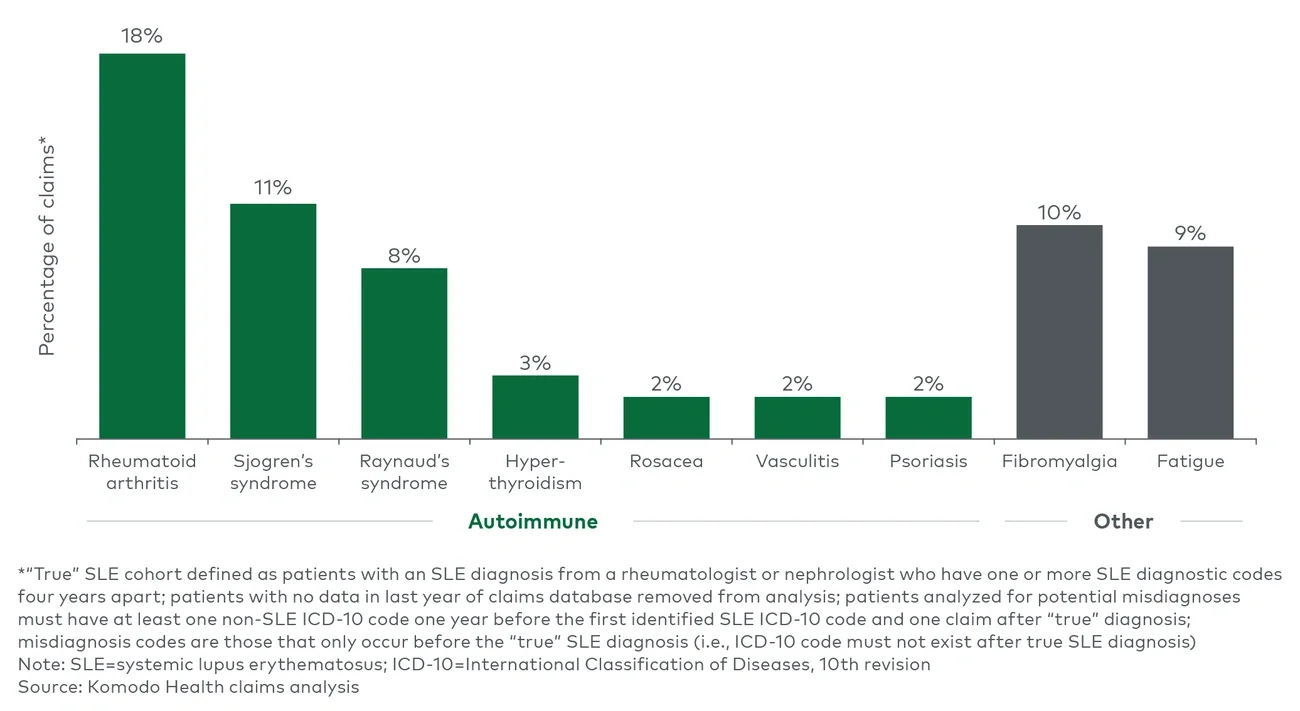
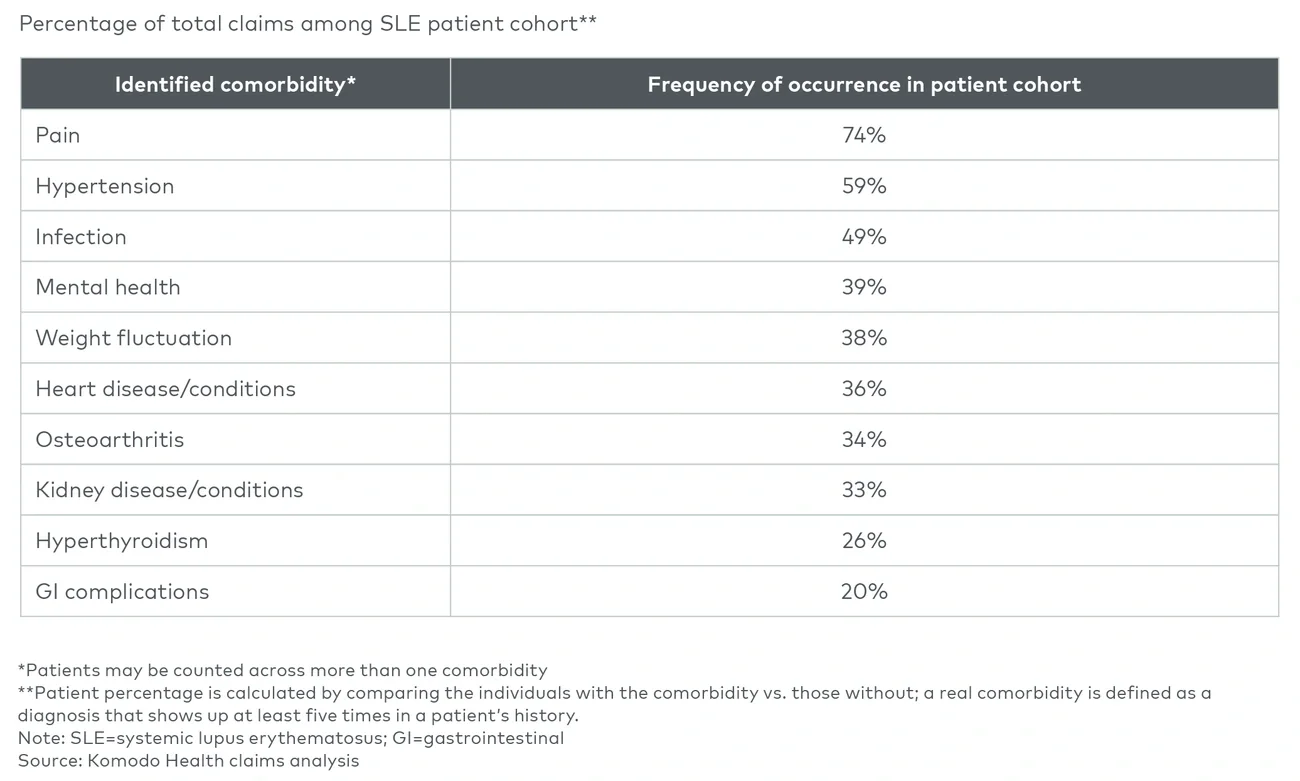
Figure 1

Alternative diagnoses associated with SLE patients

Image
Figure 1 Alternative diagnoses associated with SLE patients

Figure 1

Alternative diagnoses associated with SLE patients

Image
Figure 1 Alternative diagnoses associated with SLE patients

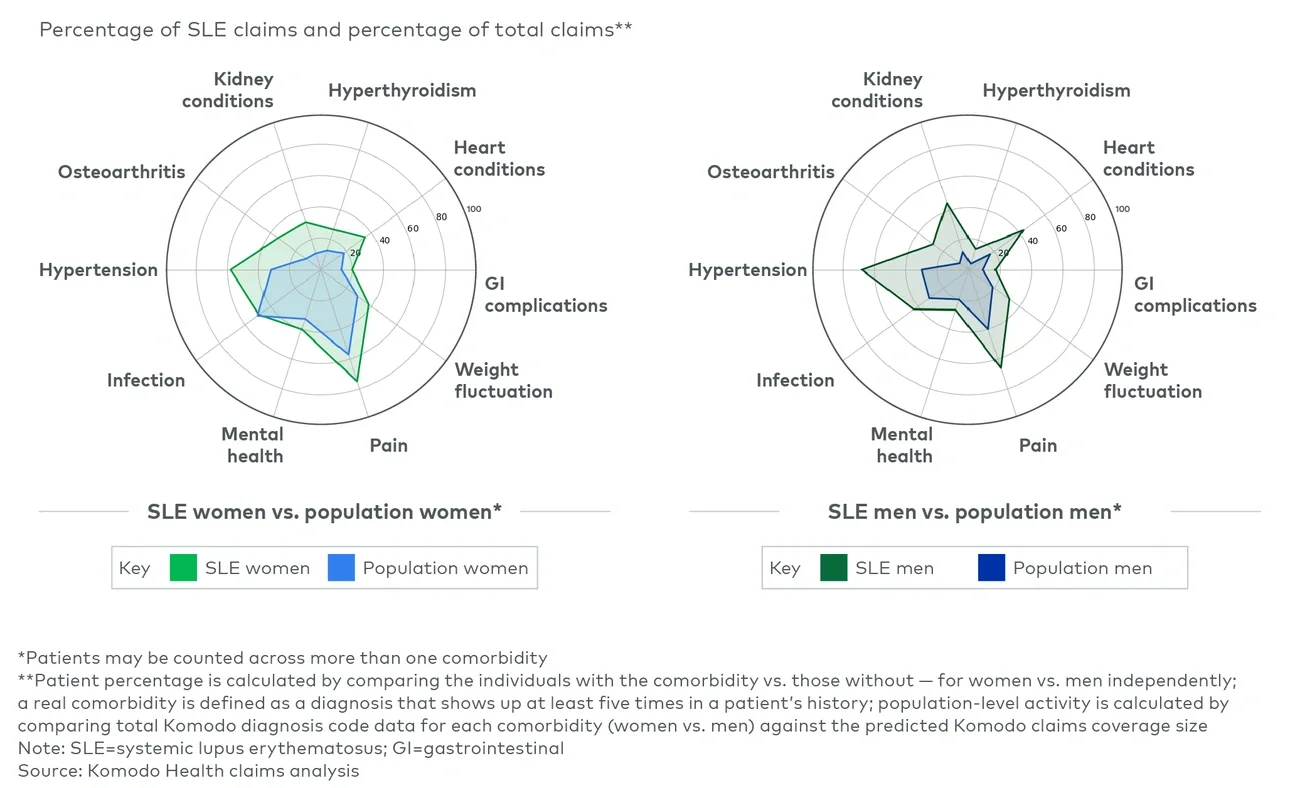
SLE is further complicated by the range of nonimmune comorbidities and organ failures that can appear over time, with comorbidities such as pain, hypertension and infections commonly beginning earlier in a patient’s SLE journey. The top comorbidities among SLE patients were identified based on claims (see Table 1), with approximately 3 in 4 SLE patients having a chance of the highest occurring comorbidity and 1 in 5 SLE patients having a chance of the lowest occurring comorbidity. The distribution of comorbidities was also different between women and men. Additionally, almost all comorbidities occurred at a higher rate in SLE patients relative to the general population.

Table 1

Top SLE comorbidity occurrences

Image
Table 1 Top SLE comorbidity occurrences

Table 1

Top SLE comorbidity occurrences

Image
Table 1 Top SLE comorbidity occurrences

Men with SLE primarily show increased rates of hypertension, heart conditions and kidney conditions. In parallel, women with SLE primarily show pain and mental health (e.g., depression) comorbidities (see Figure 2). This comorbidity burden in SLE can muddle treatment plans as healthcare providers evaluate polypharmacy approaches to treat individuals.

Figure 2

SLE patients by comorbidity, women vs. men

Image
Figure 2 SLE patients by comorbidity, women vs. men

Figure 2

SLE patients by comorbidity, women vs. men

Image
Figure 2 SLE patients by comorbidity, women vs. men

Differential drug treatment trends among SLE patients

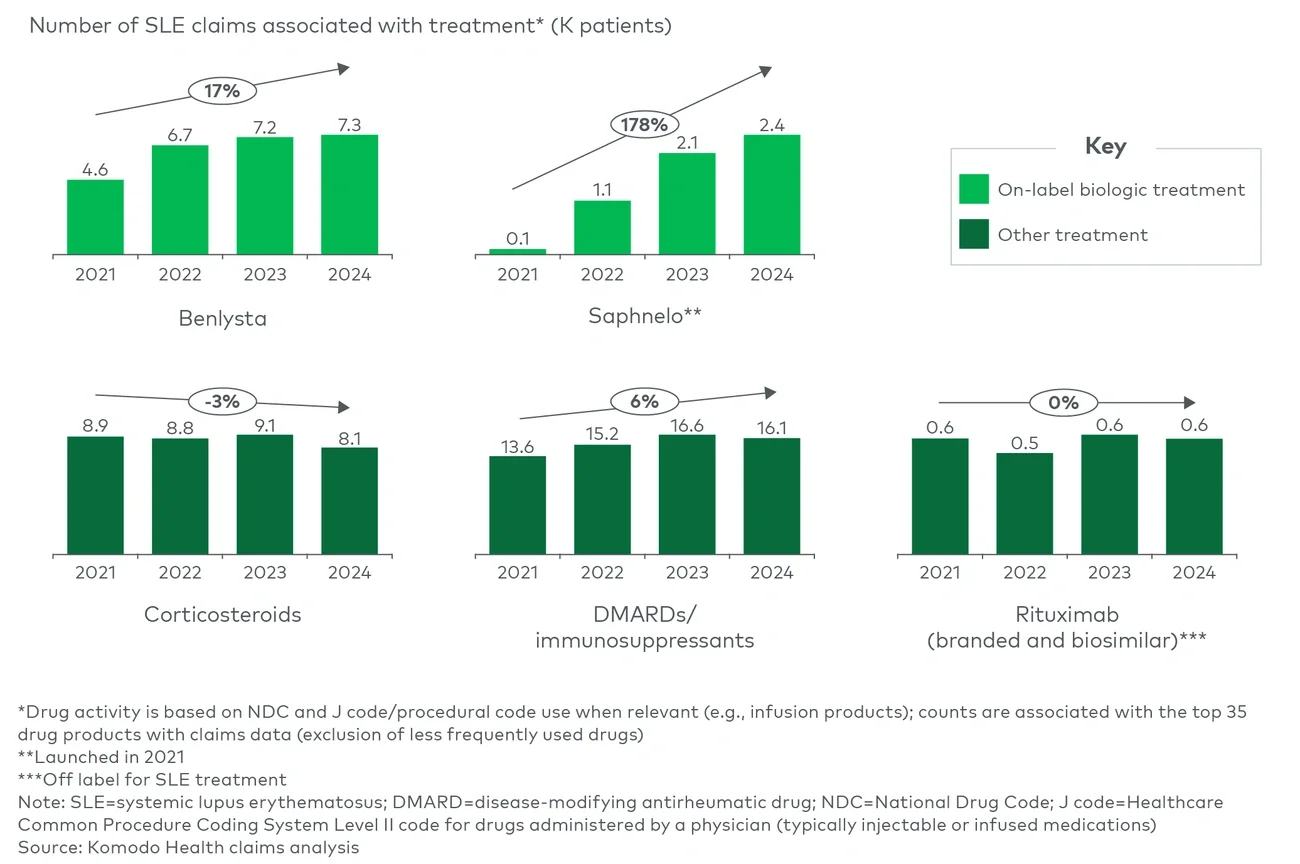
Treatment of SLE is managed with both nonspecified therapies like corticosteroids and DMARDs/immunosuppressants and specified, targeted biologics Benlysta and Saphnelo (the only approved biologic treatments). Patients are normally started on nonspecified therapies (potentially prediagnosis) before moving to targeted biologics, depending on disease severity. However, given the wide immunosuppression caused by treatments like DMARDs, targeted therapies are increasing in use as newer generations are developed to suppress only SLE-related immune activity. For example, within the first half of this decade (2021-24), the rate of on-label biologic use substantially increased compared to other treatment options. Over a five-year period following an SLE diagnosis, use of biologic monotherapies increased roughly four times in patients. In parallel, DMARD/immunosuppressant use grew only slightly over the past four years, while corticosteroid use and rituximab (off label) remained relatively stagnant (see Figure 3).

Figure 3

SLE drug dynamics (2021-24)

Image
Figure 3 SLE drug dynamics (2021-24)

Figure 3

SLE drug dynamics (2021-24)

Image
Figure 3 SLE drug dynamics (2021-24)

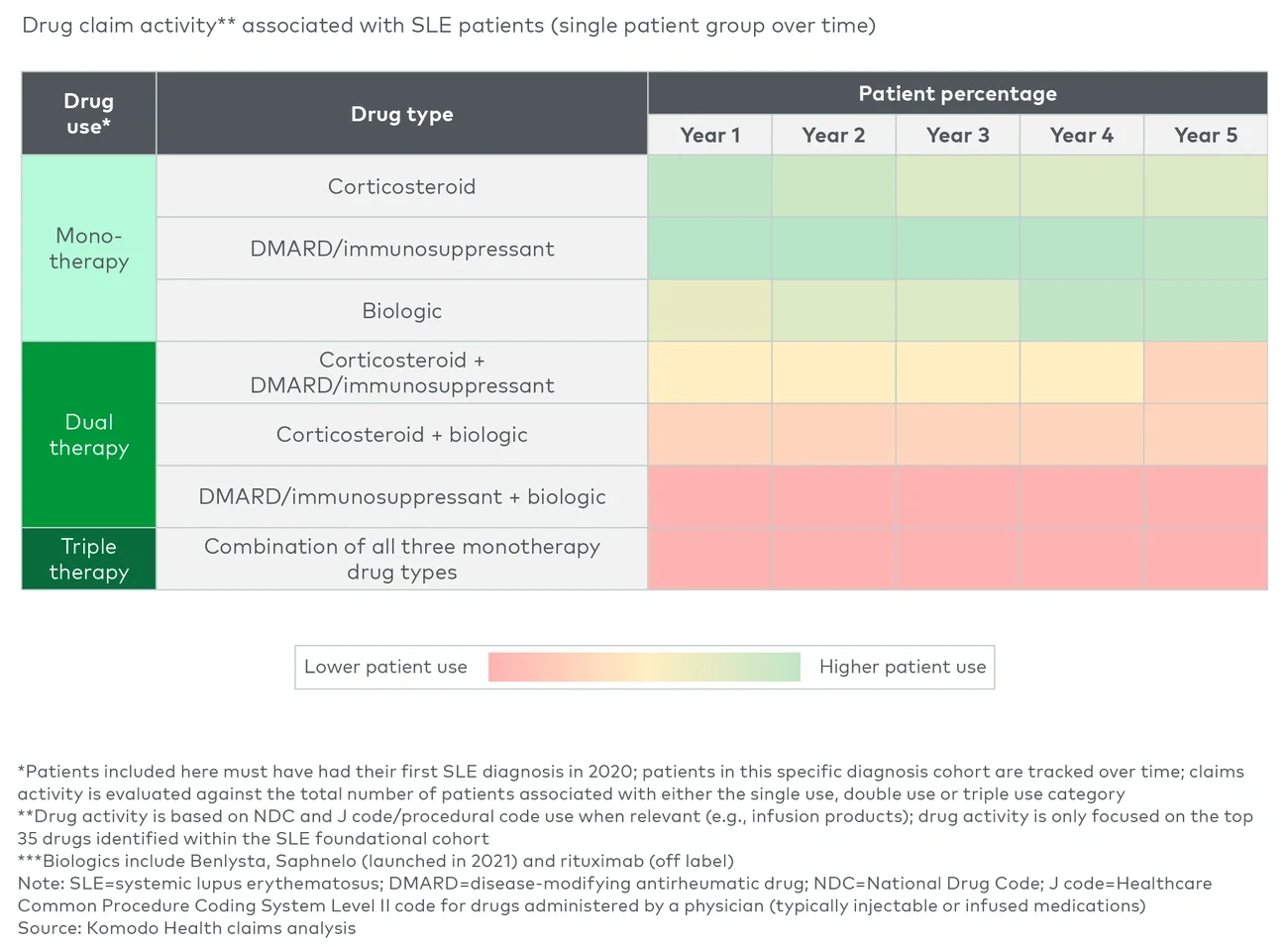
Monotherapy drug strategies continue to remain the most utilized approach to treating SLE by total claims volume. DMARD/immunosuppressant use is the primary treatment plan at initial diagnosis and during the years following (around 50% of tracked patients use DMARD/ immunosuppressant monotherapies across a five-year period). Biologic adoption commonly occurs in the years following SLE diagnosis and following patient use of a standard (DMARDs/ immunosuppressants, corticosteroids) SLE treatment regimen, aligning with Food and Drug Administration labels and drug utilization plans. In more recent years, patients who progress are increasingly using DMARDs/immunosuppressants and biologics in combination rather than just as monotherapies. Unlike DMARDs/immunosuppressants and biologics, corticosteroid usage, which was higher in early years following diagnosis, was reduced by half within the first three years after diagnosis in line with the need to taper steroid use to limit longer-term side effects (see Figure 4).

Figure 4

SLE drug use following 2020 SLE diagnosis

Image
Figure 4 SLE drug use following 2020 SLE diagnosis

Figure 4

SLE drug use following 2020 SLE diagnosis

Image
Figure 4 SLE drug use following 2020 SLE diagnosis

Implications for treating SLE and beyond

Today’s SLE R&D pipeline is comprised of over 100 assets, of which roughly 40 assets are in Phase II or further. Key mechanisms in development include APRIL/BAFF inhibitors (approved in China), B cell targets (e.g., CD20, CD19), kinase inhibitors (TYK2, JAK1) and interferon targets (e.g., IFN gamma, BDCA2). Beyond replacing or augmenting the standard of care, novel therapies may be able to achieve earlier adoption in the patient journey through novel precision medicine strategies or by clearing current clinical thresholds. While these treatments will further the tool kit, the real-world evidence analyzed here suggests that additional investment in better SLE diagnostics and precision medicine strategies will be imperative to limit the elongated diagnosis timeline and better characterize SLE in a heterogeneous patient population.

For organizations looking to market more targeted treatments for SLE, it will be imperative to invest in strategies that align with the different patient comorbidities (e.g., early hypertension presentation, susceptibility to infections) and appropriately design trials with primary and surrogate endpoints that validate the use of a novel asset over or in combination with approved therapies in SLE patient populations. For commercialization, organizations must also both optimize pricing models that best reflect the specific benefits being delivered to patients and implement customer-facing field strategies that ensure the right patients find the right treatments given diverse symptoms and treatment journeys. The implications of the data shown here are relevant for not just SLE but also other autoimmune diseases (e.g., rheumatoid arthritis) and other complex diseases (e.g., neurodegeneration) with high patient heterogeneity, diverse patient journeys and varying treatment plans or lines of therapy.

L.E.K. Consulting can help R&D and commercial organizations assess complex patient and disease dynamics to inform strategic planning, including:

  • Evaluating a patient journey and discovering nuances that may exist to drive different subpopulations that may require different treatment support
  • Characterizing disease progression to develop a more complete picture of disease complexity and heterogeneity to better understand downstream implications on treatment dynamics, informing clinical development strategies
  • Identifying areas where organizations could improve customer-facing efforts to drive greater treatment adoption, treatment adherence, patient support opportunities and patient outcomes

All real-world claims data was provided by the Komodo Healthcare Map®. The Komodo Healthcare Map® is a database of de-identified real-world patient data representing the individual healthcare experiences of more than 330 million de-identified U.S. patients.

For more information, please contact us.

L.E.K. Consulting is a registered trademark of L.E.K. Consulting LLC. All other products and brands mentioned in this document are properties of their respective owners. © 2026 L.E.K. Consulting LLC

English