Radiotherapeutics on the Rise: Cracking the Supply Chain Code

May 16, 2025

Radiotherapeutics are gaining momentum, but delivering at scale hinges on mastering a uniquely complex supply chain. From isotope generation to final dose distribution, each step demands precise coordination, specialist infrastructure and time-sensitive execution.

Download our infographic to discover where the pressure points lie. 

Want to find out more?

For a deeper dive into how businesses can prepare for these complexities, read our Executive Insights, “Radiotherapeutics on the Rise: Addressing Supply Chain Complexity,” or reach out to the team. 


Infographic: Radiotherapeutics on the Rise: Cracking the Supply Chain Code


L.E.K. Consulting is a registered trademark of L.E.K. Consulting LLC. All other products and brands mentioned in this document are properties of their respective owners. © 2025 L.E.K. Consulting LLC


English
Executive Insights

The Race Is On: Winning Smart in the Intensifying GLP-1 Market in China

May 15, 2025

Key takeaways

China’s GLP-1 market is booming, driven by rising diabetes and obesity prevalence, expanded indications (e.g., MASH, CKD, Alzheimer’s), policy support and momentum from global leaders and innovative local players.

Strategic differentiation beyond efficacy and pricing is essential as GLP-1 shifts from class-based to brand-based competition, requiring companies to refine positioning, branding (e.g., dual vs. single-brand) and patient engagement.

The competitive landscape is intensifying with over 60 late-stage pipeline assets in China and looming semaglutide biosimilars, escalating pressure on pricing, differentiation and market access.

To win in China’s dual-track market (self-pay weight loss vs. reimbursed chronic disease), GLP-1 stakeholders must recalibrate go-to-market models by balancing reimbursement strategy, innovation, brand equity and execution speed before competition closes the window.

The global glucagon-like peptide-1 receptor agonist (GLP-1) market has experienced significant growth and is projected to expand further. China’s GLP-1 market is similarly expected to grow substantially, with analysts estimating it could reach RMB 100 billion (US$14 billion) by 2030. GLP-1 therapies, which effectively regulate blood glucose levels and support weight loss, have gained widespread acceptance among healthcare providers (HCPs) and patients. 

In 2024, leading GLP-1 molecules reached top positions in global pharmaceutical revenues. Semaglutide (including Ozempic, Wegovy and Rybelsus) ranked second globally with sales of $29.3 billion, while t irzepatide (including Mounjaro and Zepbound) ranked fourth with $16.4 billion in sales. 

Leading players such as Novo Nordisk and Eli Lilly are expanding production capacity through acquisitions and outsourcing to meet rising GLP-1 demand. Other multinational corporations (MNCs) are also active; for example, Roche has strengthened its pipeline through the acquisition of Carmot Therapeutics and a partnership with Zealand Pharma. Meanwhile, Chinese companies are rapidly advancing through fast following, innovation and licensing, with key developments including Innovent’s mazdutide, Innogen’s supaglutide, Hengrui’s oral candidate HRS-7535, United Laboratories’ licensing of its first-in-class “triple-G” (GLP-1, gastric inhibitory polypeptide (GIP) and glucagon) a gonist to Novo Nordisk and Ascletis’ positive Phase 1 results for its “oral + injection” candidate, ASC30. 

China — the world’s second-largest pharmaceutical market and home to the largest diabetic (164 million by 2030) and overweight (200 million to 250 million by 2030) populations — has become a critical strategic battleground for both global pharmaceutical giants and local players. Consequently, competition in the Chinese GLP-1 market is expected to become increasingly intense.

1.1 Expanded indications and increasing disease prevalence 

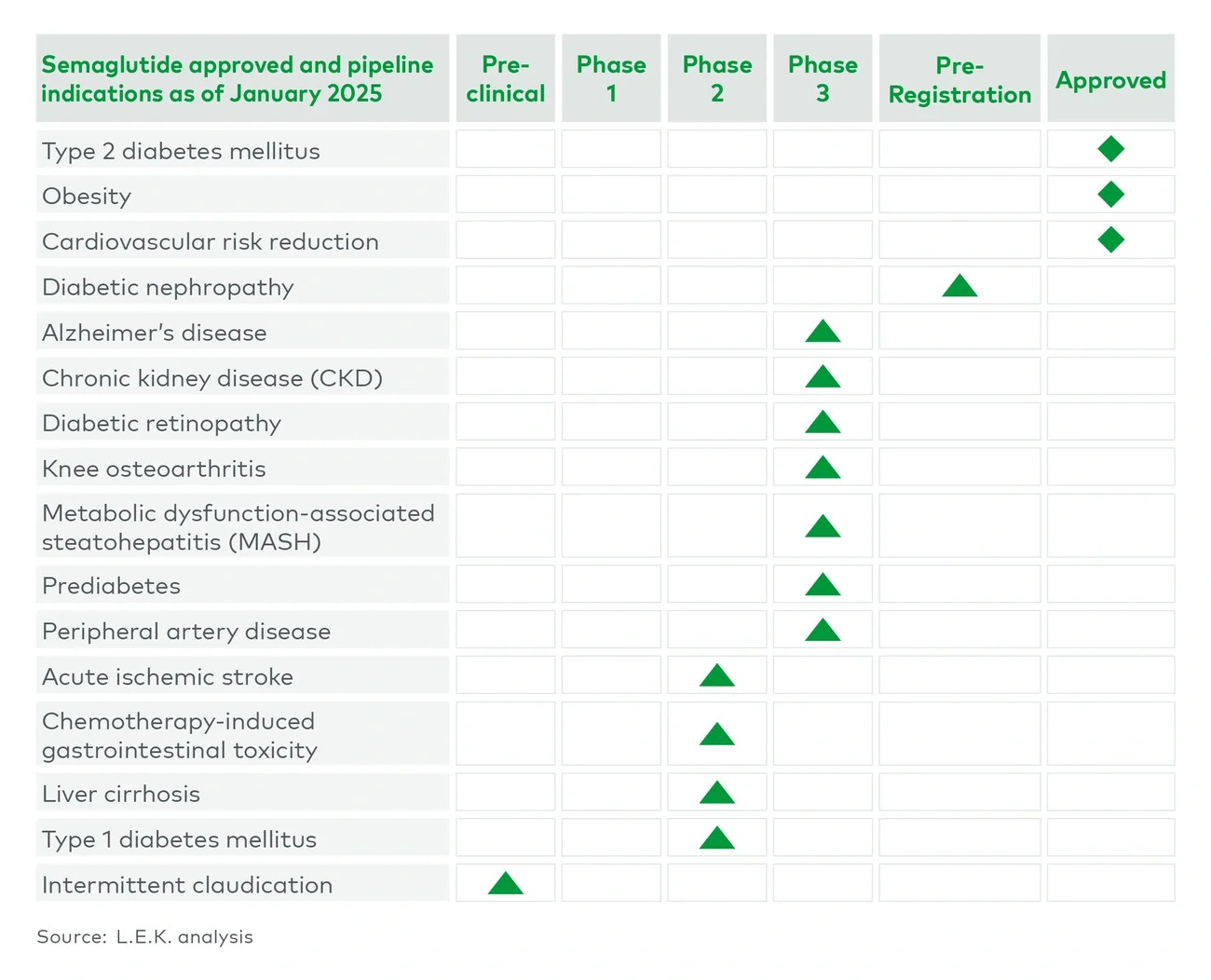
In addition to type 2 diabetes and weight management as key battlegrounds today, GLP-1 therapies have shown clinical promise in treating a wider array of conditions, including Alzheimer’s disease, cardiovascular risk reduction , MASH (metabolic dysfunction-associated steatohepatitis) and chronic kidney disease (CKD). (F or example, see in Table 1 the status of indications for semaglutide.) This broadening of indications has opened new patient segments and strengthened clinical appeal. Simultaneously, the rising global prevalence of obesity, diabetes and associated conditions has fueled growing demand for effective therapeutic solutions.

Among emerging indications, MASH represents a particularly promising opportunity. As of March 2025, the U.S. Food and Drug Administration has approved only one pharmacologic treatment (i.e., resmetirom) specifically for MASH or its precursor, NASH (nonalcoholic steatohepatitis), while the European Medicines Agency and China’s National Medical Products Administration have approved none. GLP-1 agents — the leading candidates being studied in advanced clinical trials — show substantial potential in this area. Additionally, GLP-1 therapies are gaining recognition as a novel approach to Alzheimer’s disease due to their anti-inflammatory and neuroprotective characteristics. 
 

Table 1

Indication status of Novo Nordisk’s semaglutide in the US

Image
Indication status of Novo Nordisk’s semaglutide in the US

Table 1

Indication status of Novo Nordisk’s semaglutide in the US

Image
Indication status of Novo Nordisk’s semaglutide in the US

China’s massive and growing population of individuals with type 2 diabetes and overweight conditions further elevates the relevance of GLP-1s. In 2021, China had 141 million people with diabetes, projected to rise to 164 million by 2030 — the highest globally, according to the International Diabetes Federation. Furthermore, 200 million to 250 million Chinese are expected to be overweight (body mass index >27) by 2030, according to the World Obesity Atlas and the Chinese Center for Disease Control and Prevention, positioning the country as the largest potential patient base for overweight treatment. China also has the largest patient base for the expanded indications such as MASH and Alzheimer’s disease, most of which are currently under investigational studies in China.

1.2 Rising awareness through education and word of mouth

Historically, obesity has been viewed as a behavioral issue. This perception is gradually shifting due to the government’s increasing attention to and emphasis on public weight management and the increasing visibility and efficacy of GLP-1 therapies. 

In June 2024, the National Health Commission (NHC) and 16 government ministries jointly released the “Implementation Plan for the Year of Weight Management Initiative” (《“体重管理年”  活动实施方案》), calling for a scientific understanding of weight management and appropriate medical intervention. As of April 2025, the NHC had further issued the “Notice on the Establishment and Management of Weight Management Clinics,” (《关于做好体重管理门诊设置与管理工作的通知》). In the same month, the commission officially included weight management as one of the key actions under the Healthy China initiative, marking the elevation of weight loss to a national strategic priority. These efforts are reframing public understanding, highlighting obesity as a treatable chronic illness rather than a perceived failure of individual willpower.

In China, public and clinical awareness of GLP-1 therapies for overweight and obesity had emerged prior to the approval of Wegovy and Mounjaro and was further strengthened following the drugs’ mid-2024 approvals for chronic weight management. The publication of standardized treatment guidelines in 2024 — i.e., the “2024 Edition of the Clinical Guidelines for the Diagnosis and Treatment of Obesity ” (《肥胖症诊疗指南(2024年版)》) — formally endorsed GLP-1 therapies as a recommended option for weight management. With these official approvals and guideline recommendations, pharmaceutical companies are now able to conduct legitimate direct-to-consumer (DTC) education and outreach campaigns, accelerating the expansion of public awareness, acceptance and adoption of GLP-1 treatments in China.

1.3 Evolving GLP-1 therapeutic development 

Innovation in molecular structure and delivery methods is another key driver of growth. Currently approved GLP-1 therapies are primarily peptide-based injectables, with once-weekly administration being the main  approach. Although these therapies provide significant clinical benefits, substantial unmet needs remain, creating opportunities for further innovation. The emergence of oral GLP-1s, once-monthly injectables, dual- and triple-receptor targets and combination therapies has enhanced patient convenience, improved adherence and broadened clinical utility, bringing healthcare practitioners more options for individualized treatment. In China, domestic companies are closely aligning with these global trends, and leading players are actively advancing in this direction. For example, Hengrui is developing the oral GLP-1 HRS-7535 alongside dual- and triple-receptor targeted therapies, focusing on the GIP/GLP-1 and GCGR /GIP/GLP-1 pathways. Similarly, Gan & Lee is progressing GZR18, a biweekly injectable, as well as GLP-1 + insulin candidates.

As R&D investment continues, next-generation GLP-1 products will reinforce the class’s role as a transformative force in the treatment of metabolic diseases, including diabetes, obesity and related conditions. 

2.1 Brand differentiation beyond GLP-1 class

The molecules landscape in China is expected to become even more competitive than in developed markets, where the GLP-1 category is primarily dominated by leading multinational pharmaceutical companies. As of February 2025, China already had 60-70 late-stage (Phase 2 or later) pipeline assets, directly competing with semaglutide, tirzepatide and other candidates in diabetes and weight loss. Additional early-stage pipeline assets and global candidates that have not started clinical trials in China yet can further intensify the competition in the future. 

Within the late-stage pipeline assets (around half of which are targeting weight management), eight are oral ones, aiming to solve the inconvenience of injections, and approximately 20 are dual-target or triple-target, aiming to achieve superiority in clinical effectiveness.

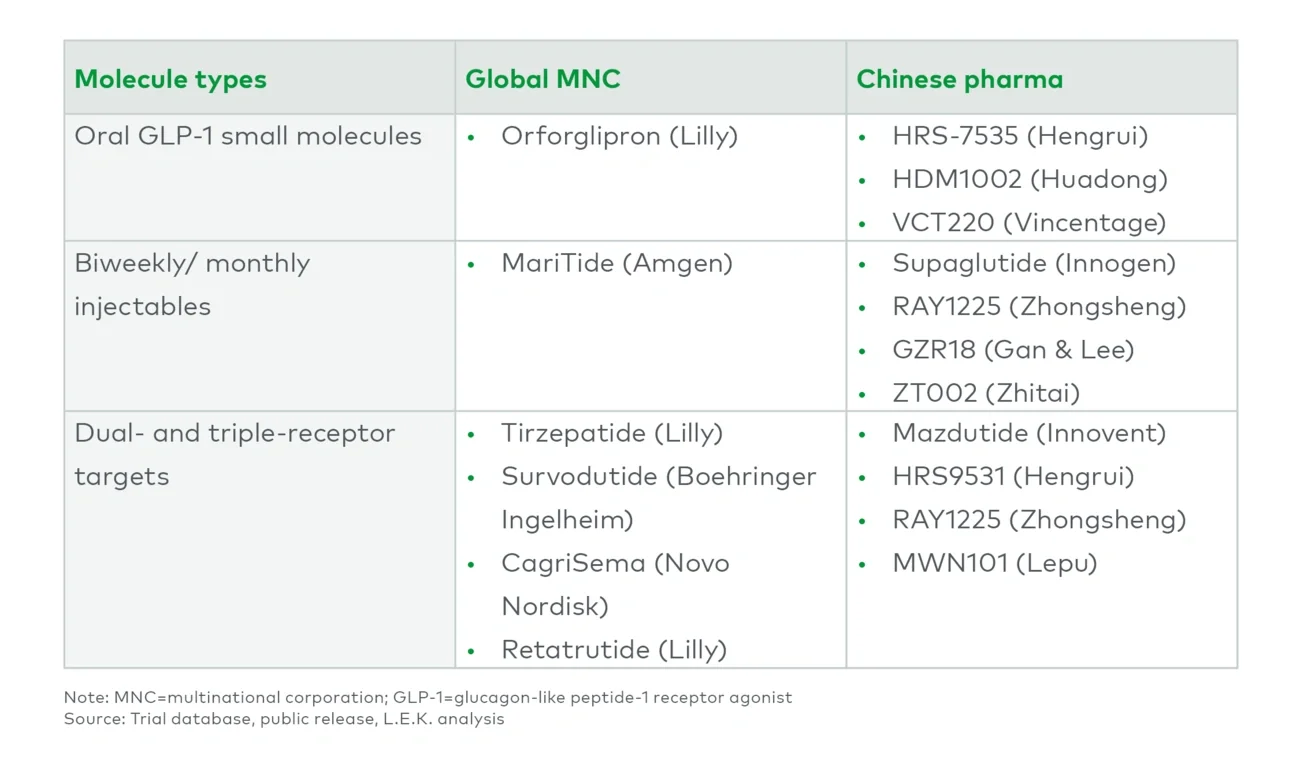
In China, beyond the in-market products such as semaglutide and tirzepatide and promising global pipeline assets including orforglipron (oral), MariTide (monthly injectable) and retatrutide (triple agonist), a range of China-only molecules is also emerging with strong competitiveness (see Table 2). These candidates demonstrate clinical differentiation and innovation, moving beyond traditional biosimilar or fast-follower strategies. 

Table 2

Examples of in-market and pipeline molecules in China (nonexhaustive)

Image
Examples of in-market and pipeline molecules in China (nonexhaustive)

Table 2

Examples of in-market and pipeline molecules in China (nonexhaustive)

Image
Examples of in-market and pipeline molecules in China (nonexhaustive)

This rapidly diversifying market will shift the focus from general awareness of the GLP-1 class to the evaluation and selection of dozens of differentiated options. Pharmaceutical companies must clearly define and articulate their advantages in efficacy, safety, delivery and overall value to earn patient and HCP trust in an increasingly crowded market.

2.2 Imminent generics entry 

Semaglutide, the biggest blockbuster product in the GLP-1 market today, is expected to lose patent protection in China in 2026, earlier than in most developed markets. Given its popularity and clinical reputation, interest from biosimilar manufacturers is already high. Some 15-20 semaglutide biosimilar/generic pipeline assets are already racing for the first abbreviated new drug application approval. 

The introduction of biosimilars will increase pricing pressure and challenge the market share of originator brands. Additionally, semaglutide may be subject to volume-based procurement (VBP) as the biosimilars/generics entry could be as early as 2026, potentially impacting the pricing of Ozempic and Wegovy. This will force other GLP-1 originators, such as tirzepatide and mazdutide, to reevaluate their pricing and market entry strategies and compel pipeline developers to recalibrate their China launch plans accordingly.

In China, the national reimbursement system typically covers treatments for chronic diseases such as diabetes, cardiovascular conditions and kidney disorders, reflecting both the long-term health burden of these illnesses and their priority in public policy. In contrast, weight management therapies — including GLP-1–based treatments for obesity — are explicitly excluded from reimbursement. This regulatory divide creates a dual-track market for GLP-1 therapies that compels the careful calibration of branding, pricing and access strategies.

To participate in a fast-growing but competitive and complicated market, GLP-1 originators will need to adopt a differentiated patient- and customer-centric strategy — leveraging both internal and external resources to optimize product positioning, building brand equity, integrating software and device solutions beyond the drug itself, and exploring innovative channels. New-indication exploration ahead of competitors is the best way to work around direct competition in a crowded market.

3.1 Optimizing product positioning in competition

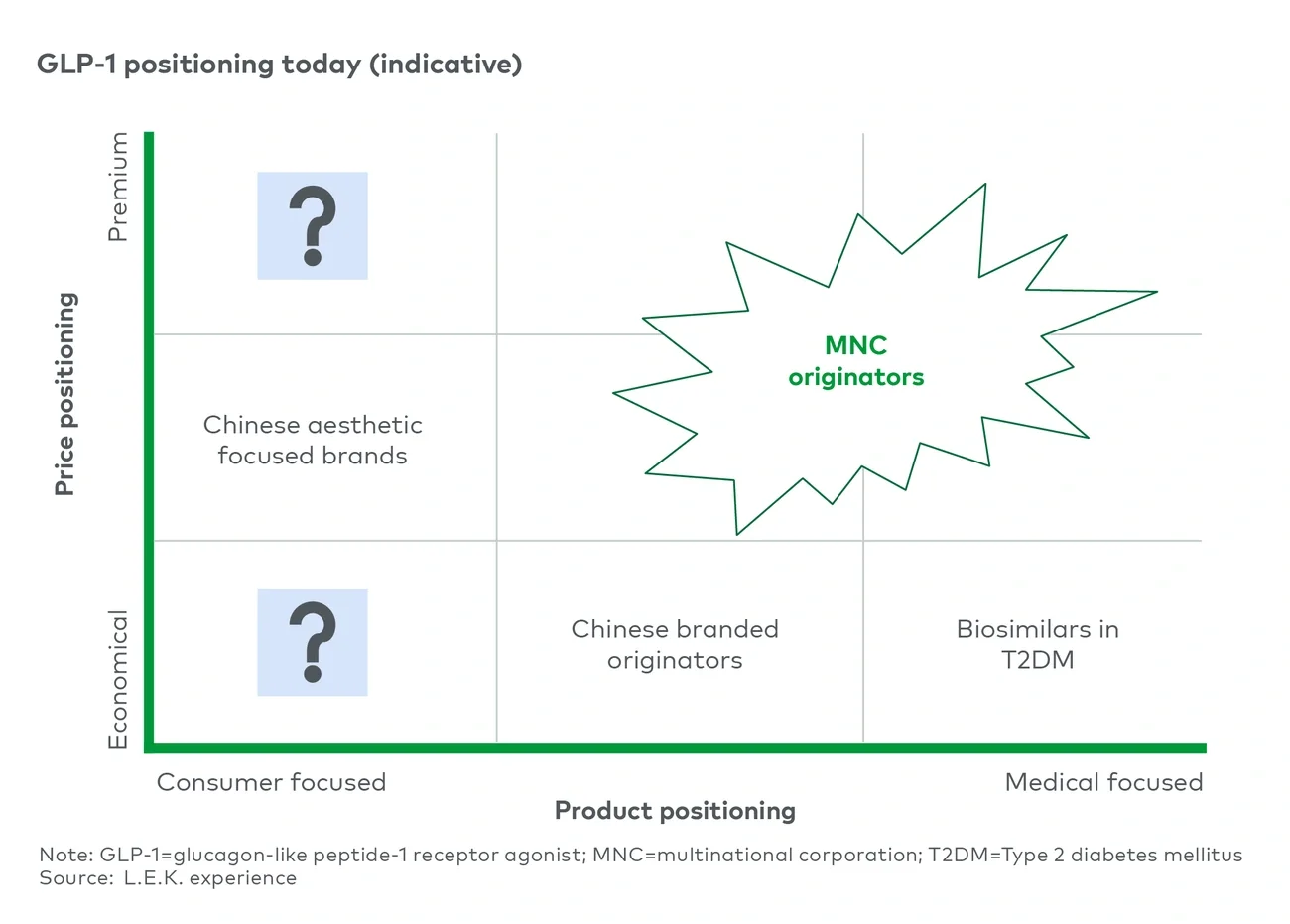
In this increasingly crowded environment, direct price competition is inevitable — particularly in the self-pay weight management segment. For GLP-1 players looking to sustain market position and capture long-term value, strategic differentiation beyond pricing thus becomes essential. A simplified framework based on price and product positioning can help originators map out their direct competition and tailor value propositions accordingly. For companies with broader ambitions in GLP-1s, a multibrand portfolio strategy may enhance overall competitiveness (see Figure 1). 

Figure 1

GLP-1 price x product positioning

Image
GLP-1 price x product positioning

Figure 1

GLP-1 price x product positioning

Image
GLP-1 price x product positioning

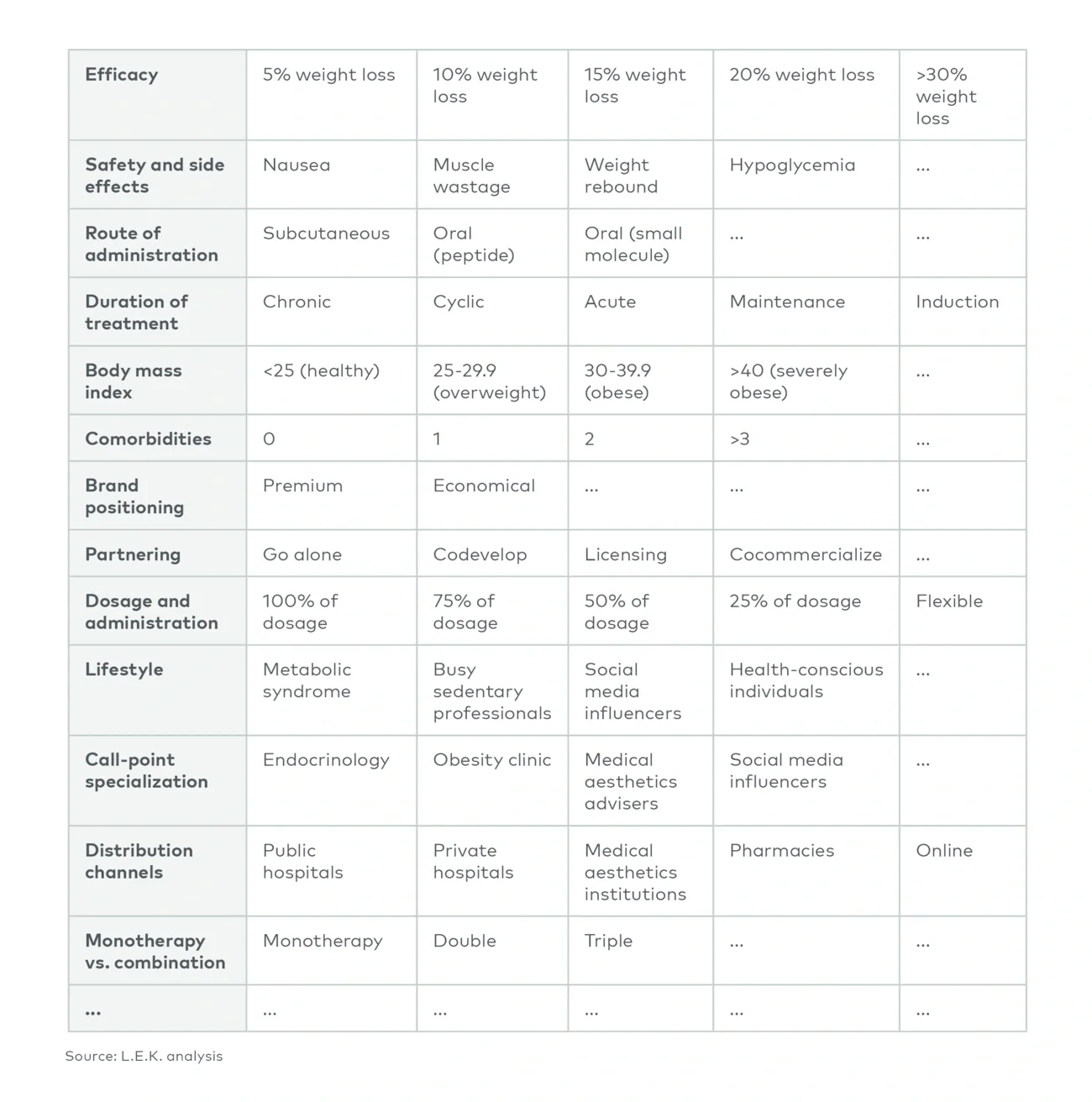
When considering product positioning of each brand, a wide range of dimensions can be considered to fit the positioning within a company’s portfolio and the competition (see Table 3).

Table 3

GLP-1 product positioning dimensions

Image
GLP-1 product positioning dimensions

Table 3

GLP-1 product positioning dimensions

Image
GLP-1 product positioning dimensions

3.2 Branding as a competitive edge 

GLP-1s’ consumer-oriented  nature makes branding unusually important for such prescription therapy. For example, despite superior efficacy in head-to-head trials, tirzepatide lags semaglutide in public awareness today in China. Moreover, the public often struggles to distinguish between Ozempic and Wegovy and between GLP-1 monotherapy and combination agents.

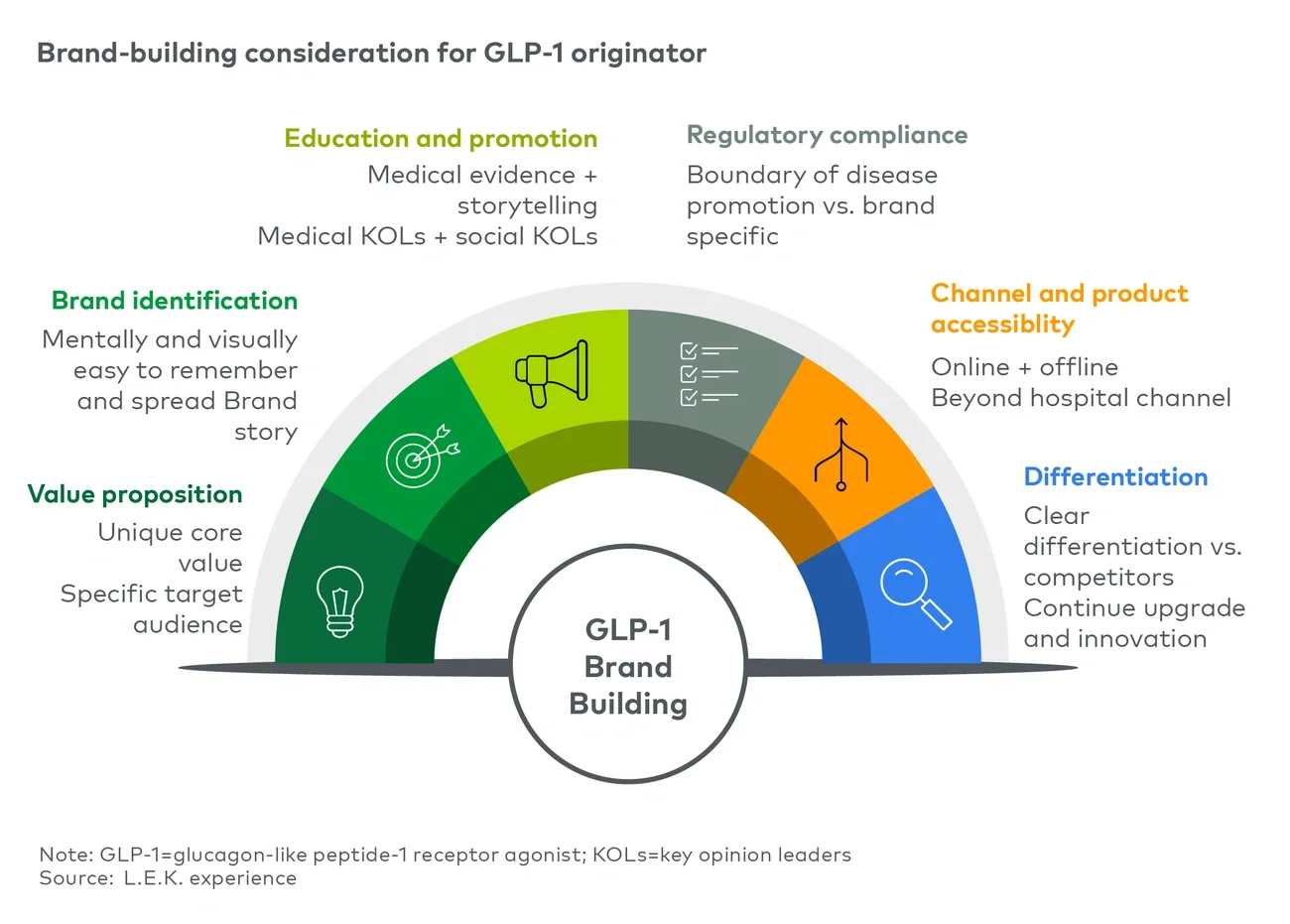
L.E.K. Consulting has developed a proprietary branding framework for prescription products — highly applicable to GLP-1 therapies — emphasizing value propositions that are identifiable, memorable, sensible and shareable (see Figure 2). A DTC model with sustained innovation is critical to communicate this effectively. 

Figure 2

GLP-1 branding framework

Image
GLP-1 branding framework

Figure 2

GLP-1 branding framework

Image
GLP-1 branding framework

In addition, GLP-1 players in China often face a complex strategic decision between a single-brand approach (such as Mounjaro for tirzepatide) and a dual-brand approach (such as Ozempic and Wegovy for semaglutide) across different indications. 

The choice is clear: Should GLP-1 originators maintain a dual-brand strategy, which allows for premium pricing in the self-pay weight management segment while enabling reimbursement for Type 2 diabetes, but also requires greater investment in brand differentiation and market education? Or should GLP-1 originators pursue a single-brand strategy, which may support broader hospital access and unified brand equity but comes with the trade-off of lower reimbursement pricing across all indications? These are critical, nuanced decision points for all GLP-1 players operating in China to consider.

3.3 ‘Beyond drug’ integration

GLP-1 therapies offer a unique opportunity to build ecosystems beyond the drug itself. Integrating software and smart devices for personalized monitoring and adherence can increase loyalty and improve outcomes especially in self-pay contexts. 

These digital ecosystems are emerging as a key differentiator, fueled by excellent integration with the following examples of software and smart devices.

  • Software: telehealth (including artificial intelligence chatbots and virtual assistants), digital engagement, personalized patient treatment and management, gamification , and big data and predictive analytics for drug usage, etc.
  • Smart devices: fitness and medication trackers, continuous biometric monitoring, medication reminders, smart pens and evidence generation (with compliance restrictions to be considered)
     

3.4 Innovative channel strategy

The patient journey is no longer confined to hospitals, especially for self-pay weight management patients. A multiple-touchpoint omnichannel approach is essential for broad market penetration. Companies should identify the most influential stakeholders for their brand — whether HCPs, influencers and / or  digital platforms — and build partnerships that enable scalable awareness and adherence.

Examples of potential influencers along a consumer-oriented patient journey: 

  • A wareness and interests: health checkup  centers, wellness clubs, social platforms
  • Research and consultation: aesthetics hospitals, medical social platforms and internet hospitals
  • Diagnosis and treatment selection: hospitals, private clinics, internet hospitals, online-to-offline  testing service providers
  • Follow-up purchase: retail pharmacies, online pharmacies
  • Chronic management and behavior change: commercial insurance companies and third-party administrators, digital patient management platforms

3.5 Horizontal and vertical partnership 

No single company can succeed alone. Pharma players should explore both horizontal (e.g., biotech in-licensing, M&A) and vertical (e.g., contract development and manufacturing organizations (CDMOs), device suppliers) partnerships to enhance capabilities.

  • Horizontal: Late-stage GLP-1 assets from Chinese biotechs may complement global portfolios; companies specialized in GLP-1s/endocrinology can also be potential acquisition targets for large pharmas with ambitions in such therapeutic areas 
  • Vertical: Collaborations with local active pharmaceutical ingredient/CDMO providers, injection pen manufacturers and injection needle suppliers can improve cost-efficiency and user experience
     

With rising innovation and increasingly sophisticated stakeholder behavior, China’s GLP-1 space has become both high potential and highly contested. Success will depend on a combination of strategic vision and flawless execution. 

As you are continuously refining and evolving your China GLP-1 strategy, consider the following critical questions:

Pharma companies

  • How can we differentiate our GLP-1 product beyond clinical efficacy — through branding, patient experience or ecosystem solutions?
  • How can we sufficiently prepare for the upcoming pricing pressures from other innovative pipelines and from VBP with semaglutide biosimilars?
  • What is our strategy to expand indications (e.g., obesity, MASH, CKD) ahead of the competition?
  • How can we build a sustainable omnichannel presence, efficiently reaching patients beyond traditional hospital settings?
  • Should we pursue horizontal (pipeline acquisition) or vertical (supply chain) partnerships to enhance our GLP-1 competitiveness?

Investors

  • Which GLP-1 assets or innovators are best positioned to defend or grow market share in an increasingly crowded Chinese market?
  • What pricing and reimbursement risks (e.g., VBP, biosimilar entry) could impact revenue forecasts after 2026?
  • Are China-originated assets (oral GLP-1s, multitarget agonists) positioned for regional or global expansion opportunities?
  • What postacquisition initiatives (e.g., development, go to market) are required to accelerate the realization of full potential?

Channel players

  • With what capabilities (e.g., digital engagement, adherence programs) can we differentiate ourselves as the key enabling partner for leading GLP-1 players? 
  • What types of partnerships with which pharma or healthtech  companies should we pursue now to secure a leadership position?

In a GLP-1 market poised for rapid expansion and fierce competition, now is the critical moment for every stakeholder — from pharma companies to investors to channel players — to rethink their strategies, partnerships and competitive edge.
 

English
Executive Insights

Is Biopharma Doing Enough to Advance Novel Targets?

May 15, 2025

Key takeaways

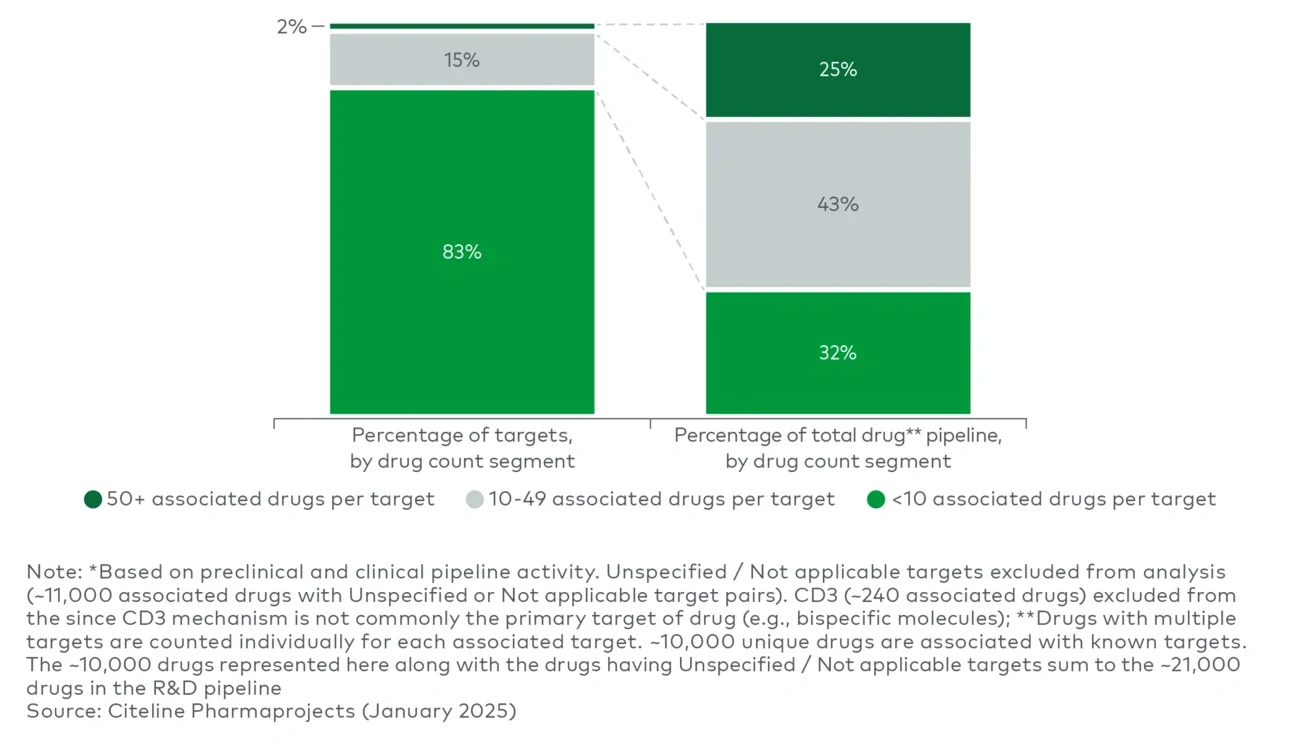
About a quarter of the approximately 13,600 drug-target pairs in the current preclinical and clinical R&D pipeline are concentrated around just 38 unique biological targets — highlighting significant crowding around select mechanisms.

While novel target R&D remains active in key therapeutic areas such as oncology, immunology, neuroscience and metabolism, there may still be room for more novel target investment across therapeutic areas given the level of pipeline crowding, the reduction in new pipeline target entry and the volume of unexplored biology.

Despite a threefold increase in early- and midstage venture capital investment over the past decade and a growing overall R&D pipeline, the number of novel biological targets being tested each year has declined sharply — from around 100 prepandemic to just 30 in 2024. This trend suggests a shift in biopharma’s risk appetite and more stringent investment criteria for novel target exploration.
 

To enable the discovery of more innovative therapies with the potential for significant clinical impact, the biopharma industry needs to rebalance investment priorities toward underexplored novel targets that could drive greater clinical outcomes.

R&D leaders devote substantial effort to selecting therapeutic targets, carefully assessing their associated risk profiles. A key strategic trade-off often emerges: develop drugs against well-established targets — with typically lower risk in early development but potentially higher commercial risk due to crowded competition — or pursue novel biological targets, which carry greater scientific uncertainty but offer stronger differentiation and the potential for first-to-market advantage.

In recent years, the biopharma industry appears to have leaned toward known targets, limiting investment in novel mechanisms. In this edition of Executive Insights, L.E.K. Consulting examines whether the industry is striking the right balance between refining known pathways and exploring uncharted biology to address unmet patient needs. We share findings that point to target crowding, outline limitations in recent target innovation and assess the strategic implications for future pipeline planning.

By the end of 2024, approximately 10,000 drugs with known target activity were in the preclinical and clinical R&D pipeline. Accounting for drugs with multiple targets (e.g., bispecifics), this corresponded to around 13,600 unique drug-target pairs. To understand how these biological targets shape pharmaceutical R&D activity, all unique targets were extracted and categorized based on underlying drug activity.

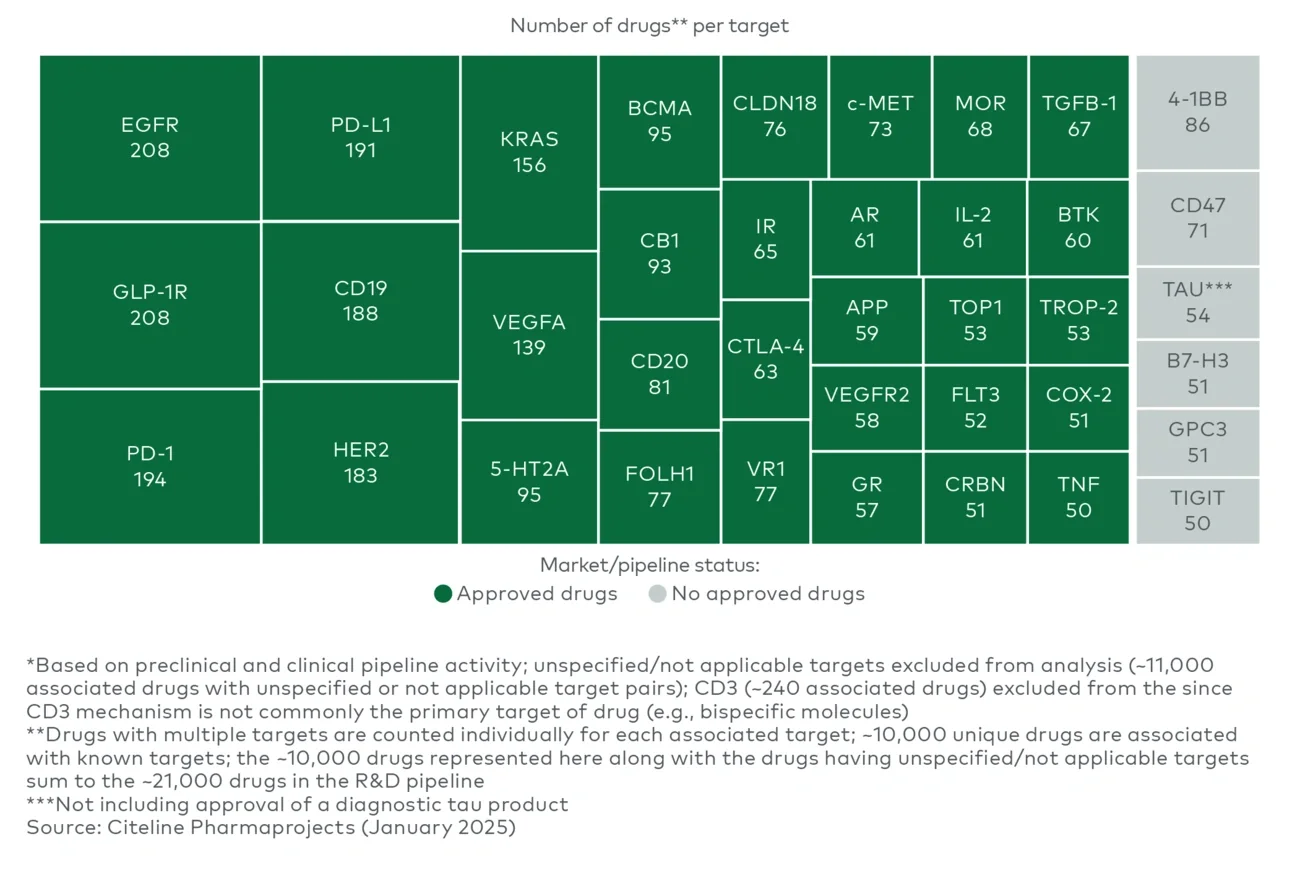
About 2% of active R&D targets — 38 targets in total — were associated with 50 or more drugs. Despite representing a small number of total targets, the 38 highly developed targets account for roughly one quarter of the entire preclinical and clinical R&D pipeline — highlighting substantial crowding among a limited set of biological mechanisms (see Figures 1a and 1b).

The concentration of drug development around a small number of established targets is likely driven by the high scientific risk of pursuing novel targets, coupled with the lower risk and greater clinical familiarity of known targets. These well-characterized targets serve as a foundation for continued innovation through scientific and clinical enhancements. As a result, the ecosystem around known targets has become increasingly crowded through various entry and expansion strategies, including:

  1. Alternative target modulation
    Using similar compounds to engage different regions of a protein (e.g., targeting distinct epitopes or developing allosteric vs. competitive inhibitors) to optimize efficacy and safety
  2. New modalities or delivery systems
    Developing a new therapeutic agent to more successfully modulate a disease target, leading to a stronger clinical outcome (e.g., using a new modality to perturb a disease target or pathology at a different macromolecular or cellular stage, developing a more patient-friendly route of administration, or developing a fixed-dose combination that reaches multiple targets in one therapy)
  3. Precision medicine approaches
    Applying detailed patient stratification based on genetic or biomarker profiles to match therapies with those most likely to benefit, increasing efficacy and reducing risk
  4. Indication and therapeutic area expansion
    Extending known targets into new indications or disease areas to meet additional unmet needs, whether through life cycle management of existing drugs or development of new ones in novel settings
     

Figure 1a

Worldwide preclinical and clinical R&D pipeline activity* (2024)

Image
Worldwide preclinical and clinical R&D pipeline activity* (2024)

Figure 1a

Worldwide preclinical and clinical R&D pipeline activity* (2024)

Image
Worldwide preclinical and clinical R&D pipeline activity* (2024)

Figure 1b

Worldwide preclinical and clinical R&D pipeline targets with 50+ associated drugs* (2024)

Image
Worldwide preclinical and clinical R&D pipeline targets in with 50+ associated drugs* (2024)

Figure 1b

Worldwide preclinical and clinical R&D pipeline targets with 50+ associated drugs* (2024)

Image
Worldwide preclinical and clinical R&D pipeline targets in with 50+ associated drugs* (2024)

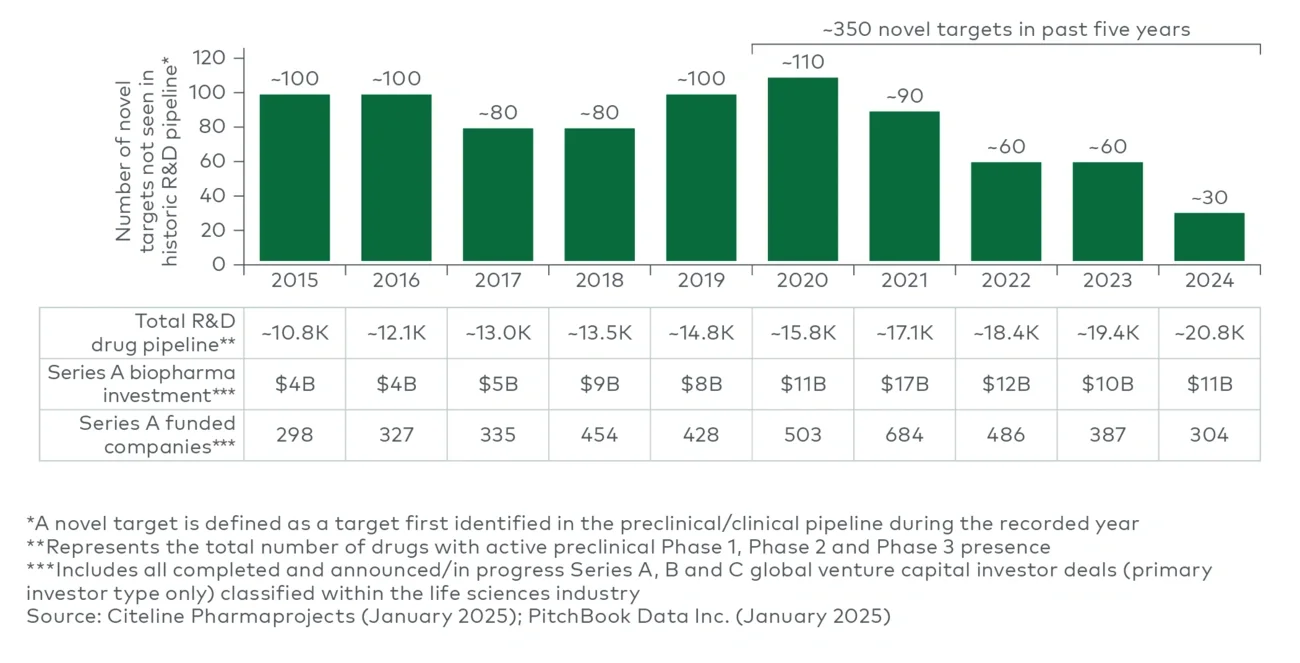
The annual rate at which novel targets enter the pipeline has dropped significantly — from around 100 a decade ago to just 30 in 2024. This decline in early-stage innovation isn’t due to a lack of new drugs in development or reduced early-stage venture capital funding. In fact, the overall R&D pipeline has nearly doubled in size, growing from approximately 11,000 active drug programs in 2015 to about 21,000 by the end of 2024, even after accounting for product launches, program pauses and terminations.

At the same time, Series A investment in early-stage life sciences companies has grown steadily, averaging around 18% annual growth over the past 10 years, with increasing average investment across a smaller number of companies being funded (see Figure 2).
 

Figure 2

Worldwide preclinical and clinical R&D pipeline and life sciences Series A VC investment (2015-24)

Image
Worldwide preclinical and clinical R&D pipeline and life sciences Series A VC investment (2015-24)

Figure 2

Worldwide preclinical and clinical R&D pipeline and life sciences Series A VC investment (2015-24)

Image
Worldwide preclinical and clinical R&D pipeline and life sciences Series A VC investment (2015-24)

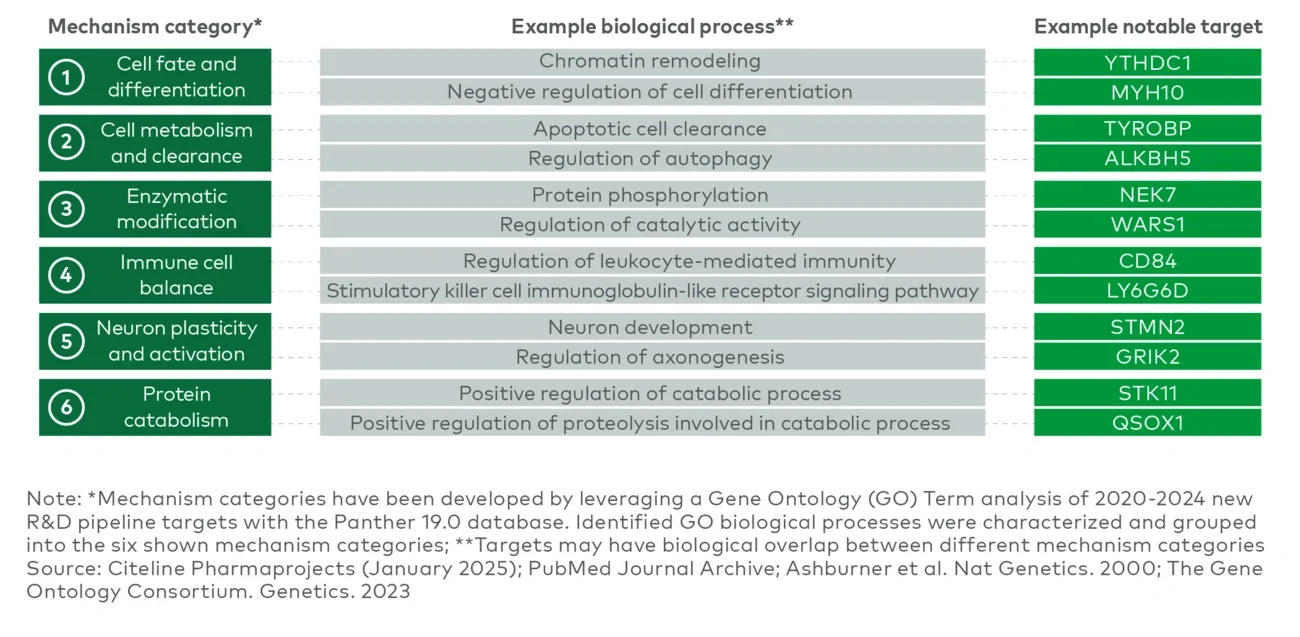
Roughly 350 novel targets entered the R&D pipeline between 2020 and 2024, with most being pursued in oncology, immunology, metabolism and neuroscience. A closer look reveals six core mechanistic categories driving this wave of biological innovation:

  1. Cell fate and differentiation
  2. Cell metabolism and clearance
  3. Enzymatic modification
  4. Immune cell balance
  5. Neuron plasticity and activation
  6. Protein catabolism

These mechanisms span diverse biological functions, but the targets associated with them remain largely early-stage — about 70% are still in preclinical development, including examples such as ALKBH5 and YTHDC1. The remaining approximately 30% have advanced to the clinic, primarily in Phase 1 trials, with targets such as LY6G6D and NEK7. As this biology continues to mature, deeper scientific assessment of these mechanistic areas is warranted to uncover high-potential innovation opportunities (see Figure 3).

Figure 3

Novel R&D targets by mechanism category (2020-24)

Image
Novel R&D targets by mechanism category (2020-24)

Figure 3

Novel R&D targets by mechanism category (2020-24)

Image
Novel R&D targets by mechanism category (2020-24)

Our data shows that the biopharma industry is becoming increasingly cautious in its clinical target selection. While refining known biology remains valuable, the current focus on a narrow set of well-characterized targets is leading to inefficient capital deployment. This crowding signals a broader imbalance — prioritizing familiar, lower-risk mechanisms over novel approaches that may offer greater long-term potential. As a result, even technically strong programs often struggle to differentiate clinically or commercially, with true differentiation emerging only after significant late-stage investment — raising the risk of redundancy.

The upside? There’s still significant untapped potential in novel and underexplored targets. Despite persistent unmet needs, around 55% of the 4,500 druggable proteins in the human genome remain untouched by drug development (Finan et al., 2017). While not all will prove viable, scientific advances are steadily expanding the boundaries of druggable space.

Realizing this potential will require rigorous scientific vetting and targeted investment. Emerging technologies — such as artificial intelligence-driven discovery and in silico experimentation — provide powerful tools for derisking novel biology earlier and more cost-effectively. Equally critical is strategic collaboration among leading biopharma companies, emerging biotechs and academic institutions to foster smarter risk-taking and increase pipeline momentum around novel, first-in-class targets.

To remain competitive and deliver meaningful innovation, the industry must rebalance its approach — embracing bold science, advanced technologies and collaborative models that unlock the next wave of high-impact targets and transformative therapies.
 

For more information, please contact us.

L.E.K. Consulting is a registered trademark of L.E.K. Consulting LLC. All other products and brands mentioned in this document are properties of their respective owners. © 2025 L.E.K. Consulting LLC

English

How European Brands Are Rethinking Packaging Strategy

May 16, 2025

With rising costs, shifting regulations and growing sustainability demands, packaging is becoming a key area of focus for European brands. In this video, L.E.K. Partner Karin von Kienlin shares insights from our latest survey and explores how companies are adapting their strategies.

Watch the full video to find out what’s changing — and what it means for your business.

Looking for more detail? Read the first article in our 2025 European Brand Owner Survey series here.

 L.E.K. Consulting is a registered trademark of L.E.K. Consulting LLC. All other products and brands mentioned in this document are properties of their respective owners. © 2025 L.E.K. Consulting LLC

English
Executive Insights

Materials Suppliers, Get the Most Out of the Road-Building Boom

May 13, 2025

Key takeaways

Continued growth in road and highway construction is creating opportunities for industries that supply materials into road-building.

Success in heavy materials (asphalt, aggregates, concrete products) will be dependent on understanding evolving supply/demand dynamics, identifying pricing opportunities and driving innovation.

The total dollar opportunity within the overall budget will vary depending on the type of project, the direction of demand and the key decision-maker for a given product.

Specialty chemicals and materials players should focus on understanding the key decision-maker for a given product, crafting a precise customer targeting strategy and driving advocacy (where applicable).

Over the last several years, the federal government has distributed more than $216 billion to the states to repair or improve the nation’s aging network of roads. That’s on top of an estimated $600 billion that state and local governments spent on highways and roads during the same time frame.

But it’s still the early days. Many of the millions of miles of U.S. roadways remain in dire need of modernization.

Whether it’s heavy materials (e.g., aggregates, asphalt) or more specialty chemicals and materials (e.g., asphalt additives, geotextiles), materials suppliers have an opportunity to capture share of the ongoing ramp-up in infrastructure projects. The approach, however, to each of these broader product categories requires a different strategy to drive success.

Heavy materials

Understand changing supply/demand dynamics
Despite recent uncertainty, the continued rollout of the Infrastructure Investment and Jobs Act, supported by state and local governments with generally strong balance sheets and a need to invest in roadway infrastructure, is expected to lead to increased demand for road construction materials and services overall.

However, not all regional markets will benefit to the same extent: Some have already seen a large jump in demand driven by large projects that are in the process of tapering, while others are poised to benefit from high growth over the next five years. These differences by region are also true on the supply side, as some markets are already very well served by existing production capacities, while others are clearly underserved.

In a recent review of hot-mix asphalt supply/demand dynamics in over 20 local markets, L.E.K. Consulting found a broad range of outcomes ranging from oversupplied markets with negative growth prospects to currently undersupplied markets with outsized growth potential.

Market operators that can understand these local dynamics at the right level of detail are likely to uncover opportunities for production capacity additions, acquisitions and pricing optimization.

Identify pricing opportunities
Spotting future supply/demand imbalances will not be the only source of driving outsized returns. Best-in-class players are making good use of advanced data and analytics solutions and delivering cost estimates to optimize their pricing strategy.

In a recent buy-side due diligence on an asphalt asset, L.E.K. was able to identify consistent underpricing by the target company for recurring road maintenance. In a relatively slow-moving industry like building materials, many businesses remain unsophisticated from a pricing standpoint, resulting in value-creation opportunities for consolidators.

Drive innovation
While departments of transportation (DOTs) have long had a reputation for being risk-averse and conservative when it comes to material innovation, this has been changing in recent years. The rate of new material approval has been particularly striking in concrete and cement, as evidenced by the rapid switch to Portland limestone cement (PLC/1L cement), the increasing use of pozzolanic cements (1P) and the exponential adoption of ultra-high-performance concrete (UHPC) in bridge applications. This increasing openness to innovation is showing no sign of slowing down, with DOTs known to be testing calcined clay cements, polymeric cements and novel types of binders. Innovation has been slower in asphalt, but reclaimed asphalt, proprietary asphalt emulsions and fiber-reinforced asphalt are gaining ground.

With DOTs more open to adopting innovative materials than they have been in decades, best-in-class material producers are looking for opportunities to create differentiation.
 

Specialty materials and chemicals

Know your stakeholders
Road-building is complex because of all the stakeholders. Besides state DOTs and local municipalities, any given project will have engineering, procurement and construction (EPC) firms along with a range of contractors in the mix. Although the boundaries between these roles can be fluid, the table shows a typical breakdown.

StakeholderLevel of Influence
DOT
  • Maintains the approved product list
  • Defines the project
EPC
  • Specifies the type of product
  • Sets the broader performance requirements
Contractors
  • Can select their preferred product or suppiier so long as teh product is approved and meets performance requirements

Keep in mind this is only a general guide. The decision-making is similar for public and private roads, but not the same. And the general contractor — the one managing the overall road-building project — isn’t necessarily conducive to cross-selling. The reason is that services are often subcontracted out to more specialized providers. These specialty contractors are very diverse and focused (e.g., a paving contractor typically doesn’t conduct line striping) and often have the final say on product selection, within specs. That means you need to think about which contractor is actually making the decision to buy.

Sharpen your sales strategy
A well-put-together sales strategy for specialty chemicals and materials is necessary to cut through the complexity and pinpoint the key decision-maker in the value chain.

Start by thinking about where you want to play. For instance:

  • Should you target small, independent contractors or larger, consolidated specialty contractors?
  • What are the implications of targeting different customer sets? Smaller contractors require more boots on the ground due to high fragmentation, while the consolidated specialty contractor landscape brings higher volume but also more pricing pressure and higher service requirements.
  • Where does your value proposition fit best?

From there, evaluate what your sales approach should be. That includes determining who the decision-makers are for each product you’re trying to sell and how to structure your sales force to achieve your commercial and financial targets.

Pull the advocacy lever

A distinguishing feature of road construction is the role of DOTs. Since they’re the ones that maintain product specification lists and define project requirements, materials suppliers have an opportunity to drive sales through advocacy.

Advocacy works better for some products than for others. Those that reduce project costs, increase safety (for roads, workers, the environment, etc.) or come with lifetime performance returns are in a better position to succeed. It’s harder to advocate for products that are less critical to safety or that bring only marginal improvements over other solutions.

Sometimes, advocacy within the road-building materials industry isn’t enough to move the needle. You may need a broader ecosystem of stakeholders to weigh in with their influence. Automakers, for instance, have started to support policy for lane line initiatives that enable advanced driver assistance systems (ADAS) features, providing a welcome boost to suppliers of road safety-related materials.

Paving the way to success
America’s roads have long been in need of attention — and now they’re finally getting it. But where the money is going and the opportunities it presents have varying implications for suppliers of road-building materials. As states continue to roll out construction projects, a finely tuned strategy can set up market participants to expand their presence, accelerate growth and build industry relationships that pay off well into the future.

Please don’t hesitate to contact us if you’d like to know more about capitalizing on the road-building boom.


L.E.K. Consulting is a registered trademark of L.E.K. Consulting LLC. All other products and brands mentioned in this document are properties of their respective owners. © 2025 L.E.K. Consulting LLC

Questions about our latest thinking?

English
Executive Insights

Mapping Opportunities in Australia’s Independent IT Services Landscape

May 13, 2025

Key takeaways

Australia’s $10 billion to $15 billion mid-market information technology services sector is highly fragmented, presenting private equity investors with strong opportunities for consolidation and value creation.  

Local independent providers are outperforming global firms in high-value areas such as cybersecurity and cloud, leveraging specialist expertise and trusted client relationships.  

Segments with high recurring revenue — such as managed cybersecurity and managed service providers — command premium valuations and offer more predictable, scalable growth.  

Investment success depends on aligning segment-specific strategies with revenue predictability, scale dynamics and adjacent growth opportunities — especially in Southeast Asia.  

Australia and New Zealand’s (ANZ) mid-market information technology (IT) services sector represents a compelling $10 billion to $15 billion opportunity for private equity investors. This fragmented landscape is home to a growing number of high-quality assets, many of which are well positioned for consolidation. The result is a strong alignment between favourable market conditions and value-creation potential.

For investors who can navigate this ecosystem effectively, the next 12 to 24 months are likely to bring increased deal activity as more investable assets come to market. Independent providers in this region primarily serve organisations with 100 to 1,000 employees — a segment often overlooked by global system integrators and Big Four firms, which concentrate on larger enterprises.

However, in high-skill areas such as cybersecurity and cloud consulting, even Australian Securities Exchange 200 companies often engage with independent specialists who offer local expertise that larger firms may lack. This demand for specialist capabilities has allowed independents to build strong, defensible positions — particularly in the mid-market — making them some of the most attractive opportunities in the sector.

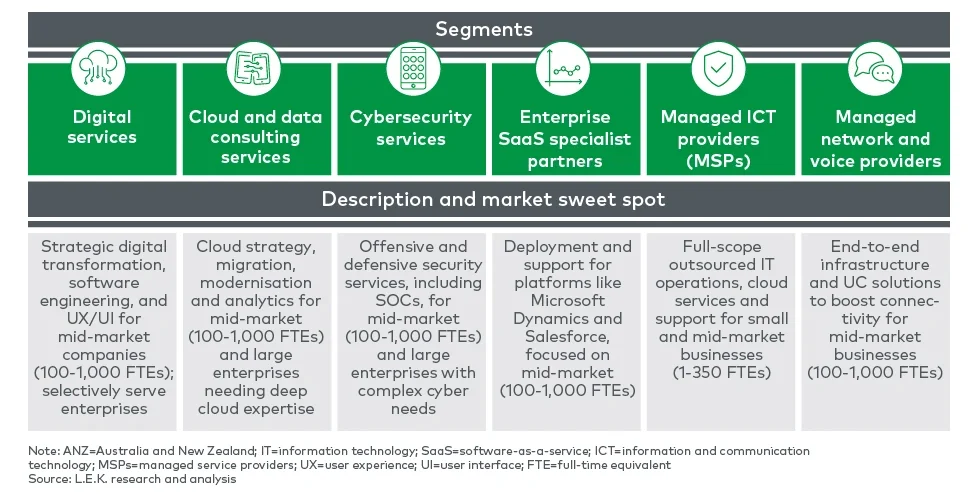
Identifying top investment opportunities begins with a clear view of the six segments that define this landscape and shape its underlying dynamics. 

Six segments of the IT services ecosystem

The chart below provides a side-by-side comparison of the market sweet spot, growth outlook, margin potential and investment activity across the independent IT services landscape — offering a structured lens for evaluating where strategic opportunities may lie (see Figure 1). 

Figure 1

Key service segments in the ANZ Independent IT service provider landscape

Image
Key service segments in the ANZ Independent IT service provider landscape

Figure 1

Key service segments in the ANZ Independent IT service provider landscape

Image
Key service segments in the ANZ Independent IT service provider landscape

These segments each bring unique dynamics that influence their growth, margins and strategic potential:

  • Digital services providers deliver transformation, software engineering and user experience/interface development, primarily for mid-market clients, while selectively supporting enterprises through time-and-materials models. While offering moderate growth (10%-12%), margins remain modest (8%-12%) and face increasing pressure from artificial intelligence (AI)-driven software development automation.
  • Cloud and data consulting specialists excel in cloud strategy, migration and application modernisation. Their deep local technical expertise enables them to target larger enterprises. The segment enjoys robust growth (12%-15%), particularly in specialised data and analytics applications.
  • Cybersecurity services span advisory and managed security operations. This segment shows exceptional strength, driven by increasing threats and regulatory requirements. Growth rates are impressive (12%-20%) with attractive margins (10%-20%), supported by recurring revenue streams and long-term contracts. 
  • Enterprise software-as-a-service (SaaS) specialist partners implement and support platforms such as Salesforce, Microsoft Dynamics, SAP and Oracle NetSuite. While growth is modest (5%-8%), strong earnings before interest, taxes, depreciation and amortisation (EBITDA) margins (12%-15%) reflect sticky client relationships and ongoing service engagements.
  • Managed information and communication technology (ICT) providers (managed service providers (MSPs)) deliver comprehensive outsourced IT operations with stable, contracted recurring revenues. Growth is steady (10%-12%) with variable margins (8%-20%) due to market fragmentation. This creates significant consolidation opportunities for disciplined players.
  • Managed network and voice providers specialise in networking and unified communications infrastructure. Market dynamics are challenging, with commoditisation driving lower growth (5%-7%) but higher margins (15%-25%). These services typically create more value as complementary offerings rather than standalone businesses.

With these dynamics in mind, the next step is to assess where growth and profitability most effectively intersect to guide investment priorities.

Where growth meets profitability

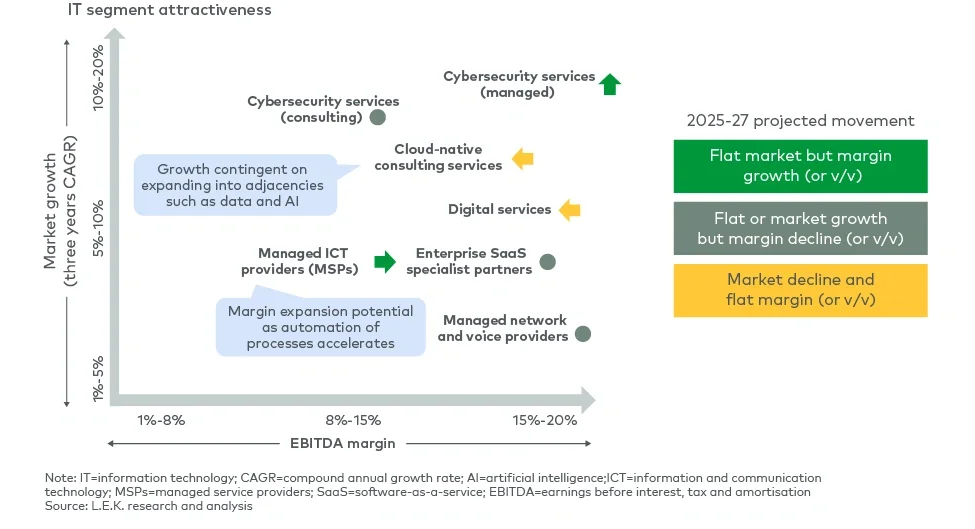
Not all segments offer equal investment potential. The most compelling opportunities combine strong growth with sustainable margins (see Figure 2). 

Figure 2

IT segment attractiveness

Image
IT segment attractiveness

Figure 2

IT segment attractiveness

Image
IT segment attractiveness

While the independent IT services market is typically framed around the six segments shown above, L.E.K. Consulting distinguishes between managed cybersecurity services and cybersecurity consulting due to their sharply different revenue models and scalability profiles. This segmentation reveals seven distinct investment areas, each offering a unique combination of growth trajectory, margin profile and value creation potential:

  1. Managed cybersecurity services stands out with 12%-15% EBITDA margins and growth approaching 20%. Mid-market companies increasingly recognise cybersecurity as an existential necessity rather than merely important. The growing sophistication of cyberattacks has created significant exposure for mid-market firms, with ransomware attacks potentially threatening business continuity. High-profile incidents involving Optus and Medibank have accelerated awareness and adoption across the segment.
  2. Cybersecurity consulting follows closely, benefitting from the same market drivers. While margins are slightly lower due to labour intensity, these businesses often develop long-term client relationships that generate consistent revenue.
  3. Cloud and data consulting remains attractive, though basic ‘lift and shift’ work is increasingly commoditised. The most promising players are those expanding into data, AI and application modernisation — areas that offer differentiation and margin resilience. Organisations focused on modernisation and building new platforms continue to see attractive growth trajectories.
  4. Enterprise SaaS specialists balance moderate growth with strong margins based on platform expertise (Salesforce, SAP, Microsoft Dynamics). This creates stickiness and recurring revenue through ongoing managed services.
  5. Managed ICT providers (MSPs) offer stable, multiyear contracts and recurring revenue. Automation of operational and support processes is transforming this space, enabling significant margin expansion as delivery costs decrease. Market fragmentation creates ample roll-up opportunities.
  6. Digital services face increasing headwinds despite healthy demand. Margins are under pressure from offshore competition and emerging AI-assisted software development. The advancement of AI in coding puts significant pressure on this segment, requiring cautious evaluation.
  7. Managed network and voice providers face the most challenging dynamics in a low-growth market. These providers often create more strategic value as bolt-on acquisitions, enhancing the breadth and stickiness of larger MSP platforms.

Valuation outcomes in this sector are shaped less by growth alone and more by one critical factor: revenue predictability.

The predictability premium in valuations

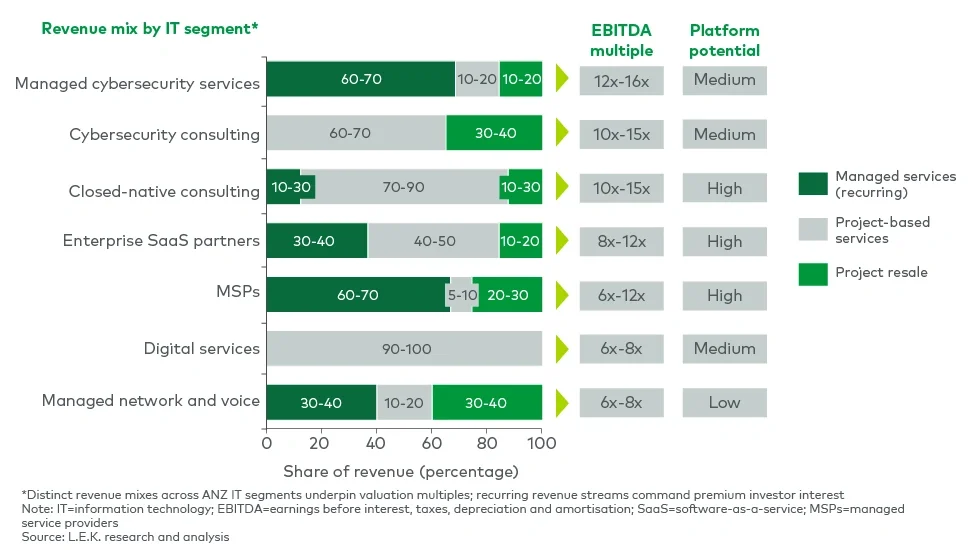
In the ANZ mid-market, segments with high recurring revenue — particularly those with three-to-five-year contracts — consistently command premium multiples (see Figure 3). 

Figure 3

Revenue mix and valuation multiples by segment 

Image
Revenue mix and valuation multiples by segment

Figure 3

Revenue mix and valuation multiples by segment 

Image
Revenue mix and valuation multiples by segment

Each segment’s position on the valuation spectrum is shaped by a distinct combination of revenue mix, platform potential and scalability:

  1. Managed cybersecurity services lead with 60%-70% recurring revenue and strong platform potential, commanding 12x-16x EBITDA multiples. Growth is driven by increasing threats and regulation, with significant greenfield opportunity. Most cybersecurity work in this space is from organisations that previously had no formal protection, representing true whitespace opportunity rather than displacement of existing providers.
  2. Cybersecurity consulting earns comparable multiples (10x-15x) despite being more project-based. These businesses benefit from ‘recurring revenue’ — engagements that behave like multiyear contracts despite their project-based nature. Long-term client relationships typically evolve into rolling multiyear statements of work, creating predictable revenue streams. 
  3. Cloud-native consulting (8x-10x multiples) sees only 10%-30% technically recurring revenue but benefits from high client retention and ongoing transformation projects. The most valuable businesses in this segment have evolved beyond basic migration services into data modernisation, AI and application modernisation.
  4. Enterprise SaaS partners trade at 8x-12x multiples with strong platform potential. Their vendor relationships drive stickiness, with value creation opportunities in vertical accelerators and post-implementation services.
  5. MSPs maintain 6x-12x multiples with 60%-70% recurring revenue. While operating in a mature market, they offer excellent platform potential for buy-and-build strategies through automation and consolidation. The likelihood of customers using MSPs for both IT work and security decreases as organisation size increases, with specialised security providers becoming more common above 500 employees.
  6. Digital services remain challenged at 6x-8x EBITDA multiples, with revenue that is 90% or more project-based and margins pressured by offshore competition and AI solutions. Success depends on differentiation or developing managed services offerings.
  7. Managed network and voice providers face limited growth and margin expansion, with multiples around 6x-8x despite 40% recurring revenue. These businesses typically create more value as bolt-on acquisitions than standalone investments.

These valuation benchmarks are informative, but to gain deeper insight, it’s essential to examine how competition and market evolution are shaping each segment’s strategic outlook.

Market dynamics and emerging opportunities

The competitive environment varies significantly by segment. Specialist independents successfully compete with global firms in high-value segments such as cybersecurity and cloud consulting through their ability to deploy local experts on-site — an advantage global firms often lack in Australia.

MSPs remain absent from enterprise-level engagements dominated by Accenture, Wipro and other global integrators, while mid-market competition occurs primarily among independents.

Service adoption patterns correlate with company size: larger organisations shift towards best-of-breed approaches with multiple specialised vendors, while smaller organisations prefer consolidated providers.

Our in-depth understanding of this industry indicates several high-quality assets will likely enter the market over the next 24 months, spanning MSPs with growing enterprise SaaS capabilities, cloud-native specialists and providers with government expertise. These represent distinct strategic opportunities — from platform acquisitions to transformation plays and bolt-ons — each with specific investment theses focused on cross-selling, margin expansion and consolidation potential.

Navigating the path to value creation

Several strategic implications emerge for private equity investors:

  • Segment selection matters: Investment theses must be tailored to specific market opportunities rather than relying on a generic IT services perspective. The varying growth trajectories, margin profiles and competitive dynamics across segments demand deep, segment-level expertise before capital is deployed.
  • Revenue mix drives valuation: Recurring revenue should be a central focus across all segments. Investors should prioritise businesses with a clear strategy for transitioning from project-based models to recurring revenue — or those demonstrating strong ‘recurring’ streams through long-term client relationships.
  • Scale benefits are segment-specific: MSPs benefit significantly from consolidation-driven operational leverage, while cybersecurity and cloud consultancies gain more from talent concentration and thought leadership. Understanding these differing scale dynamics is essential when setting growth targets and integration strategies.
  • Adjacency expansion requires careful orchestration: Cross-selling opportunities must be balanced with the need to preserve specialist positioning. The most successful expansions build on existing technical credibility rather than seeking to replicate the broad service portfolios of global integrators.
  • Geographic expansion opportunities vary: Managed cybersecurity and cloud consulting offer viable routes for Southeast Asian growth, whereas other segments face greater challenges when internationalising. Market selection is key — Singapore and Malaysia typically provide more accessible entry points than Indonesia or Vietnam.

The next 12–24 months represent a compelling window for private equity investment in Australia’s independent IT services landscape. The most attractive opportunities will combine strong positioning in high-growth segments with a demonstrated ability to build recurring revenue and enhance both organic growth and margins.  

For investors new to this market, understanding the interplay between segment positioning, revenue composition and competitive dynamics is critical to developing a robust investment thesis. Those who can navigate this complexity effectively will be well positioned to capitalise on a market undergoing rapid evolution and consolidation.

Our team brings deep experience in technology strategy, cloud computing, SaaS and M&A advisory. We support investors throughout the full journey — from target identification to value creation — leveraging our proprietary database of 200-plus ANZ providers and a market-sizing model we’ve maintained since 2018, providing robust time-series insights into how these segments have evolved and where they’re headed.

Contact us to discuss how we can help you navigate the ANZ IT services landscape with confidence.

L.E.K. Consulting is a registered trademark of L.E.K. Consulting. All other products and brands mentioned in this document are properties of their respective owners. © 2025 L.E.K. Consulting 

Questions about our latest thinking?

English

AI in the Boardroom: Insights from Reuters Momentum AI New York 2025

May 6, 2025

At the Reuters Momentum AI New York 2025 event, executives gathered to discuss how artificial intelligence is moving beyond experimentation with new technology and is becoming a fundamental part of business strategy. The panel, "AI: The View from the Boardroom," moderated by Darren Perry, Managing Director and Partner at L.E.K., featured insights from leaders actively integrating AI across their companies to achieve strategic objectives and drive shareholder value. Joining Darren Perry were industry leaders:  

  • Jaime Montemayor, Chief Digital and Technology Officer at General Mills  
  • Sydney Klein, SVP, Chief Security Officer and Head of IT Core Services at Bristol Myers Squibb  
  • Ali Keshavarz, President of Data and Analytics at CVS Health

From innovation to core strategy

A central theme of the discussion was how AI has shifted from isolated experiments to an essential part of everyday business planning and execution. Panelists agreed that unlocking AI's full potential means deeply embedding it into core strategy—not just treating it as a standalone technology. For instance, CVS Health, whose strategy is “building a world of health around every consumer,” uses AI-driven automation in care management to significantly improve clinical outcomes and patient experiences.

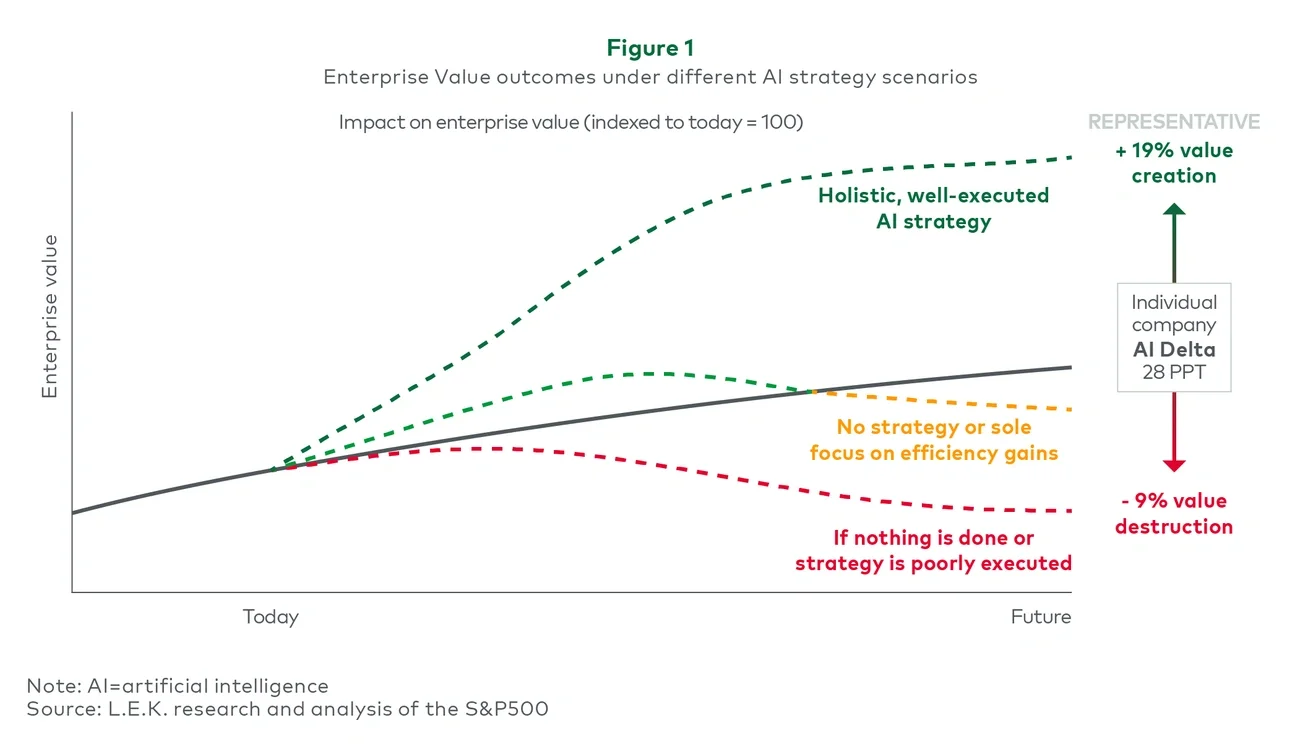
Yet, companies still face what's known as the "AI Delta," the value gap that exists between harnessing AI's full potential and falling behind due to poor strategy or execution (see Figure 1). Executives noted many organizations remain stuck chasing short-term efficiency gains instead of pursuing the broader transformational opportunities AI offers.

While AI-driven efficiency pursuits have their purpose, they are far less likely to create sustaining value in competitive markets than initiatives that foster differentiation or produce new revenue streams. Closing the value gap requires aligning AI initiatives closely with strategic business goals and strong leadership backing.

Image
Figure 1. Enterprise value outcomes under different AI strategy scenarios
Image
Figure 1. Enterprise value outcomes under different AI strategy scenarios

Business-driven leadership matters

Who leads AI initiatives greatly influences their success. Panelists emphasized that AI gains real traction when business leaders—not just technical specialists—drive the projects. This business-first approach shifts AI from being an experimental side project to a critical operational tool. For example, General Mills puts both commercial and functional leaders in charge of its AI projects, directly linking technology to clear, measurable business results.

Top-down leadership of AI tends to be more successful as it is more likely to identify common business problems across the business — like document summarization and internal knowledge retrieval — and solving them with standardized, reusable AI solutions. This approach reduces redundancy, speeds up implementation, and simplifies adoption across multiple departments.

Building the right culture and governance

A big part of successfully scaling AI involves creating a supportive organizational culture backed by solid governance. Companies that prioritize employee education and provide accessible AI tools create environments where teams feel ready and empowered to adopt AI. Bristol Myers Squibb, for example, has successfully embedded AI into daily workflows through extensive training and collaboration, moving it from theory to practical everyday use.

Robust governance frameworks are also essential to scale AI responsibly. Clear oversight mechanisms and compliance standards help mitigate risks and give teams the confidence to innovate. This structure is especially crucial in regulated industries, where solid governance isn’t just recommended — it's required for sustainable AI deployment. 

AI as a strategic advantage

By session's end, it was evident that AI is no longer merely a technological consideration but central to strategy, operational effectiveness, and competitive advantage. Enterprises that align AI rigorously with core strategic goals, promote its use with a top-down & business-driven mandate, and emphasize trustworthy implementation are not just narrowing the AI Delta — they're shaping the future of business leadership in an increasingly AI-driven world.

For more information, please contact us.

L.E.K. Consulting is a registered trademark of L.E.K. Consulting LLC. All other products and brands mentioned in this document are properties of their respective owners. © 2025 L.E.K. Consulting LLC 

English
Image
L.E.K. and Lincoln International
Special Report

State of the Fitness Market: 2025 Edition

May 7, 2025

The fitness industry is moving forward with renewed strength. After years of post-pandemic recovery and adaptation, the sector is now entering a phase of meaningful growth and reinvention. In a new report by L.E.K. Consulting and Lincoln International, we explore how this dynamic market is evolving.

By 2024, health club memberships soared to 77 million, with club visits up 8% — a clear signal that consumers are not just returning, but reimagining fitness. Younger generations in particular are driving the rise of strength training as they look for more than just cardio and classes. Gyms are also evolving quickly by replacing old layouts with free weights, recovery zones and holistic wellness services.

High-Value Low-Price and premium operators are setting the pace. The former delivers accessibility, while the latter offers full lifestyle integration. Meanwhile, GLP-1 medications are pushing strength preservation and wellness even further into the mainstream, reinforcing the gym’s role far beyond simple workouts.

Momentum on the investment side is just as strong. More than 70 M&A deals closed in 2024, with even more expected as new buyers crowd into the wellness space. Our analysis shows that fitness is no longer a side category — it’s fast becoming the center of the broader health economy.

Read the report at lincolninternational.com or download the analysis.

For more information, please contact us.

L.E.K. Consulting is a registered trademark of L.E.K. Consulting LLC. All other products and brands mentioned in this document are properties of their respective owners. © 2025 L.E.K. Consulting LLC

English

Optimizing Distribution Footprint for Cost Efficiency and Service Excellence

May 7, 2025

Background and challenges

A large US-based distributor and installer of insulation products experienced rapid growth through acquisitions and organic expansion. Due to a historic focus on growth, the client had limited focus on integrating the various acquired brands into the network and on conducting a comprehensive study of its footprint. This, combined with a strong culture of local autonomy, had led to issues around site coordination, inconsistent offerings and approaches, and an oversized and fragmented physical footprint.

L.E.K. Consulting was engaged for two phases of work to perform a network optimization study and determine potential opportunities for improvement across real estate, direct and indirect labor, fleet and logistics, and inventory management.

Approach

Given the client’s uncertainty about the potential impact of a comprehensive network optimization, the engagement was structured in two phases: (1) a diagnostic phase to quickly get to the size of prize and supply chain archetype to implement, and (2) an execution phase where the analysis was rebuilt in the client’s environment, socialized with regional leaders and refined to account for shifts in the market and nuanced learnings from regional leaders.

Diagnostic:

L.E.K. deployed best-in-class network modelling tools to baseline the current state and evaluate a wide range of potential network configurations. Real-time benchmarks were used to ensure accurate results that reflected today’s supply chain, multiple site visits were conducted to validate desktop findings and sensitivities were analyzed to ensure go-forward feasibility.  

On day one, we drove the critical task of baselining the current state network. To develop an accurate baseline, our team worked hand-in-hand with the client to develop an up-to-date master site list accounting for recent acquisitions, consolidations and physical moves (hundreds of locations confirmed in this exercise). As baselining progressed, we identified and resolved critical data issues, such as fleet inventory inaccuracies and missing product specifications to ensure accurate findings. Ultimately, a digital twin of the baseline network was established, tying total costs, miles driven and flows across 20+ product categories, hundreds of sites and thousands of customer locations. The digital twin was refined until the model achieved over 99% accuracy.

Once a baseline was established, L.E.K. developed a set of model constraints to ensure analytical outcomes were based on operational feasibility. The most critical constraint in this exercise was the capacity of each location (i.e., how much product could physically move through any location). Given the client lacked a sophisticated methodology for calculating capacity, our team developed a bespoke theoretical capacity calculation for each brand within the broader business.

Refinements were made through site visits and local leadership conversations until there was a high level of confidence among all stakeholders. Additional constraints, such as customer pick-up drive distances and manufacturing capability limitations were applied after a multitude of workshops with the client team.

The digital twin model was utilized to run hundreds of potential network scenarios, balancing cost with service levels to ultimately develop a set of recommended network changes that would improve the cost profile of the supply chain significantly, without sacrificing customer service.  

Execution:

The subsequent execution phase was designed to build network optimization capabilities in the client team, refine and update model scenarios to reflect changing market dynamics, and initiate implementation of the optimized network design.  

Our team of experts rebuilt the state-of-the-art digital twin inside the client’s ecosystem – developing automation tools, processes and accountability to ensure consistent and reliable model updates in the future. A structured training program (a mix of self-guided and L.E.K.-led trainings) was developed and delivered to the client culminating with successful tests without L.E.K. interjection.

While rebuilding the model in the client’s environment, L.E.K. and the client team took the opportunity to further refine model inputs and account for shifting market dynamics. The diagnostic findings held to further scrutiny, further increasing client confidence.  

Once the model was rebuilt and additional opportunities identified, we worked side-by-side with the client team to socialize findings with local leadership and initiate the implementation program.

Results

Working closely with the client leadership team, L.E.K. was able to successfully:

  • Identify and help realize approximately $100M in network savings with minimal impact to the local labor force and maintained customer service levels
  • Lowered carbon emissions and freight costs by reducing miles driven by 15%-20%, average service distance by 10%-15% and fleet assets by around 10%
  • Reduce lease costs by 10%-15%
  • Reduce labor costs by 5%-10%  
  • Upskill the client team in all aspects of network optimization, from data manipulation to scenario running to implication analysis and findings presentation

For more information, please contact us.

L.E.K. Consulting is a registered trademark of L.E.K. Consulting LLC. All other products and brands mentioned in this document are properties of their respective owners. © 2025 L.E.K. Consulting LLC 

English

Optimizing Biopharma Operations for Strategic Growth

May 6, 2025

Background and challenges

The client in this case was a clinical-stage biopharma company specializing in the development of therapeutics using antibody-drug conjugate (ADC), with operations spanning multiple sites including dedicated process development and Good Manufacturing Practices (cGMP) facilities. The company was facing a pivotal strategic shift after recently deciding to outsource key capabilities.

To align with this evolving strategy, the client sought to evaluate cost-efficient operating models that aligned with its longer-term strategy. Key challenges included realigning cGMP manufacturing operations to meet future needs, assessing the financial implications of structural changes to improve cost-effectiveness and creating a roadmap for effective implementation of changes.

Approach

The L.E.K. Consulting team undertook a comprehensive diagnostic to evaluate and align the cGMP manufacturing facilities with the client’s evolving strategy. The approach included the following key steps:

Phase 1: Establishing a baseline and strategic options

The team first established a baseline low-cost scenario, externalizing key manufacturing processes while maintaining the facility’s existing structure. This served as a cost-efficiency benchmark for comparison. Next, a range of strategic options was developed to realign the operational footprint with the client’s growth objectives while ensuring regulatory compliance and efficiency.

Phase 2: Quantifying and prioritizing scenarios

Each option was assessed based on its financial impact, operational feasibility and degree of strategic alignment. A prioritization framework highlighted the most feasible paths to cost savings and sustainable growth.

Phase 3: Financial and operational impact analysis

Our team identified key operational changes including workflow redesign and optimized resource use. A detailed financial analysis estimated savings, efficiency improvements and five-year financial impacts.

Phase 4: Business case and implementation roadmap

For the top strategic options, business cases were developed to quantify benefits and inform leadership decision-making. A high-level implementation roadmap provided key milestones and risk management strategies for execution.

Results

L.E.K.’s analysis enabled the client to adopt a strategic plan that optimized its cost structure and streamlined operational focus. Through the transition from in-house cGMP manufacturing to a more flexible external supply model, the client significantly reduced fixed costs and labor-related costs while reallocating resources to higher-value activities such as new product development and process improvements. The new approach enhanced financial performance, scalability and the client’s ability to innovate and remain competitive in a rapidly evolving market.

For more information, please contact us.

L.E.K. Consulting is a registered trademark of L.E.K. Consulting LLC. All other products and brands mentioned in this document are properties of their respective owners. © 2025 L.E.K. Consulting LLC

English
Subscribe to