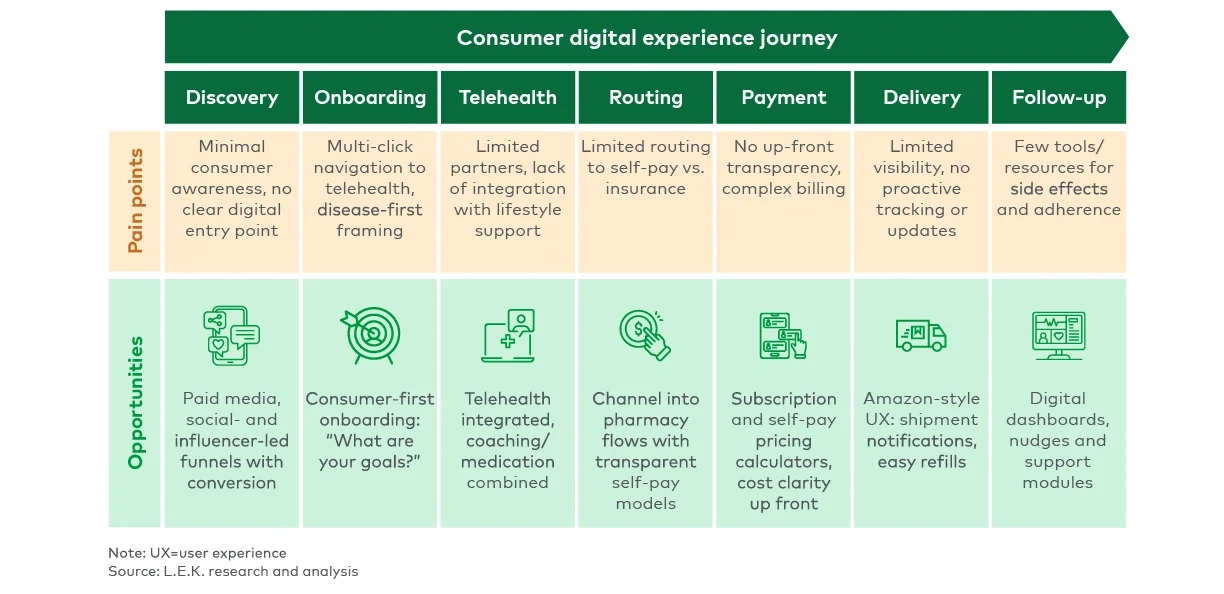


When a growing share of new-to-brand prescriptions in select therapeutic classes originates outside traditional channels, brand strategy itself must evolve. Obesity illustrates this shift. Anti-obesity medicines have demonstrated both the viability of novel commercial channels and the scale of self-directed care: Patients know the therapy they want, actively direct treatment decisions and engage outside traditional pharmaceutical pathways.
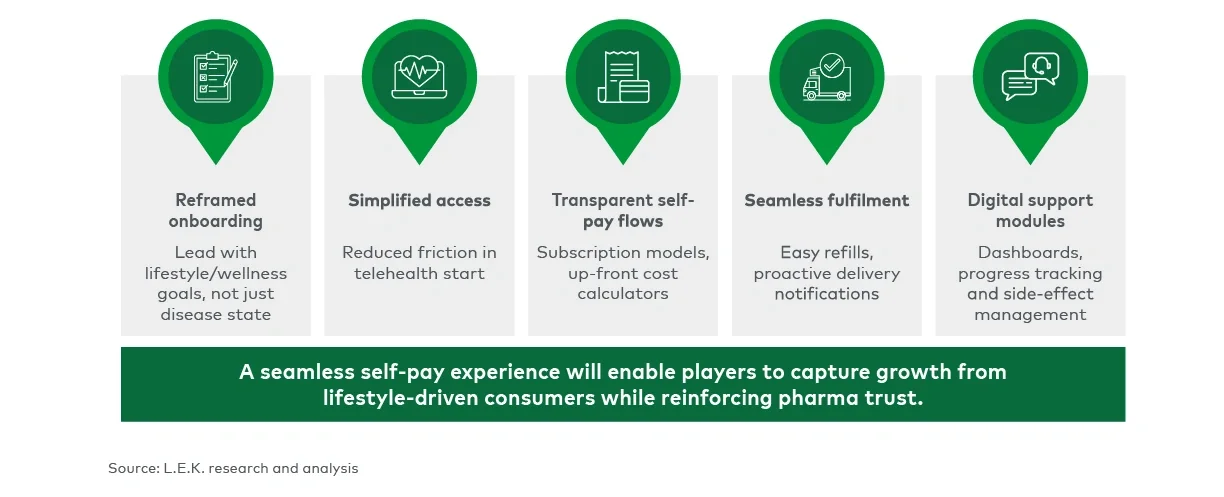
This dynamic warrants a reevaluation of pricing, access and channel strategy. In this emerging model, direct-to-consumer (DTC) and cash-pay pathways are not peripheral tactics; they shape affordability anchors and demand generation. Companies that fail to adapt risk ceding influence over both the patient experience and the economic logic of their most important assets.
A changing demand landscape and the rise of DTC and self-pay pathways
The DTC model for prescription pharmaceuticals has moved rapidly from experimentation to mainstream adoption. Digitally enabled, patient-initiated pathways reduce friction, compress time to therapy, and offer flexibility between reimbursement and cash-pay access.
In high-demand categories such as obesity, migraine and metabolic disease, coverage gaps and prior authorization barriers have created meaningful access friction. At the same time, patient comfort with virtual care and consumer-grade digital platforms has raised expectations for speed, transparency and convenience. Together, these forces make DTC a credible channel for conditions characterized by high patient activation and relatively standardized clinical decision-making.
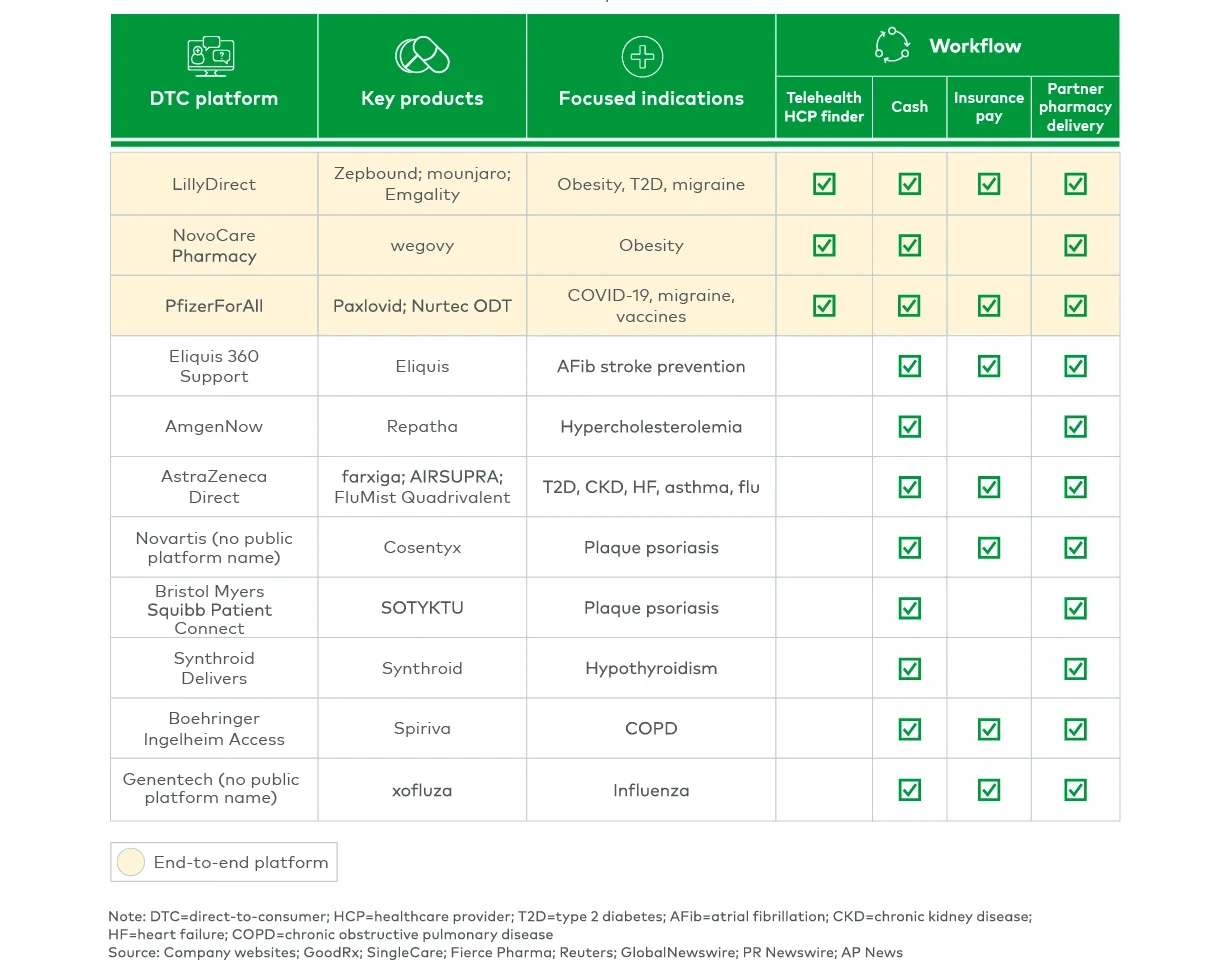
Biopharma leaders are increasingly treating DTC as a durable commercialization component rather than a tactical add-on. Platforms such as LillyDirect, NovoCare and PfizerForAll reflect this shift toward more direct, digitally coordinated engagement (see Figure 1).