Foodservice Brands Have Made Sustainability Their Packaging North Star

2026 U.S. Packaging Brand Owners Study Part 3
April 13, 2026

Sustainability has been — and, at least for the next three years, will continue to be — a top consideration for foodservice companies when it comes to choosing, and choosing to change, their packaging. Both consumer packaged goods (CPG) and foodservice brand owners have been prioritizing sustainability in their packaging since 2022, and around 72% of brand owners surveyed expect to achieve all of their related goals by 2030.

Those were among the core findings from L.E.K. Consulting’s survey of 450 U.S. brand managers and packaging stakeholders in the fourth quarter of 2025 and the first quarter of 2026 for our proprietary U.S. Brand Owner Packaging study, which broke out foodservice companies for the first time in eight years.

Foodservice companies are most concerned about sustainability and the environment

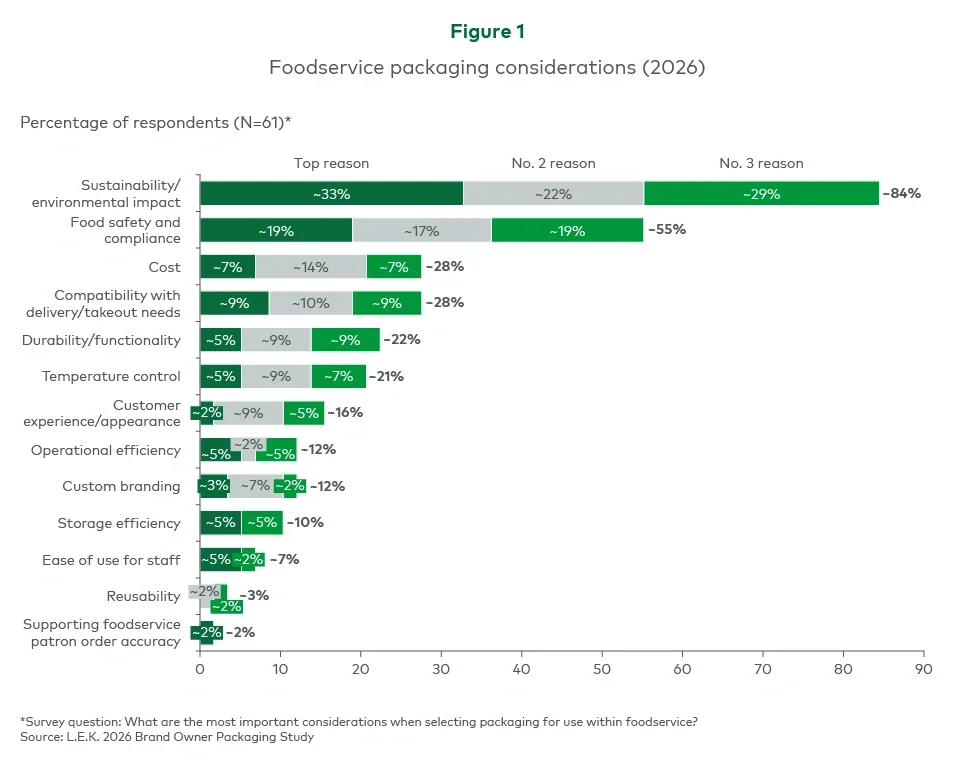
 In foodservice, sustainability and environmental concerns are overwhelmingly the primary considerations when selecting packaging (around 84%), followed by food safety and compliance (around 55%) and cost (around 28%) (see Figure 1). 
 

Image
Foodservice packaging considerations (2026)
Image
Foodservice packaging considerations (2026)

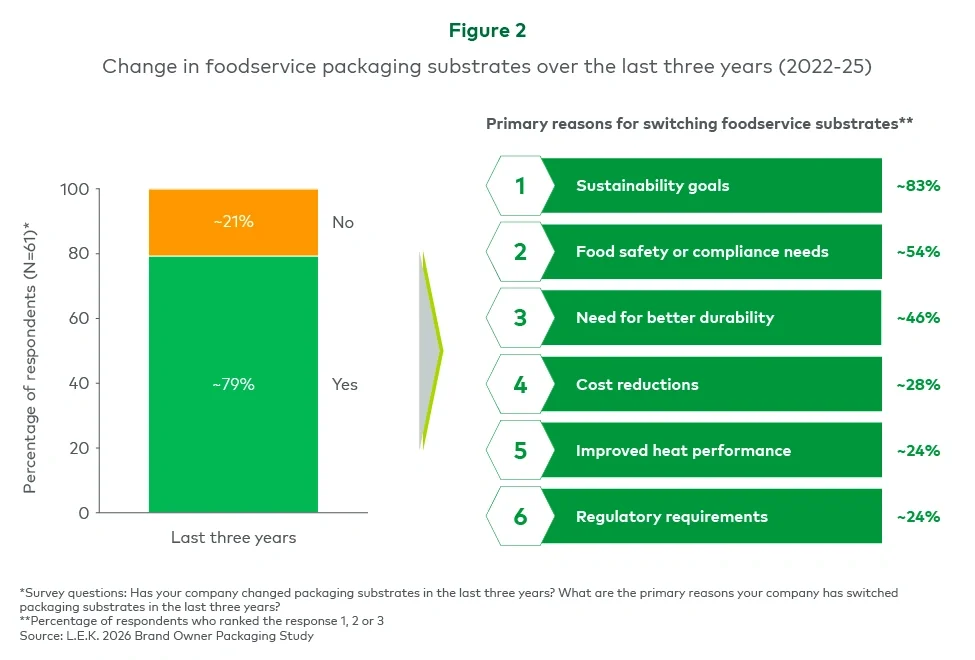
Sustainability’s primary importance to foodservice companies is not new. While approximately 99% of CPG brand owners expect to make changes to their packaging over the next three years, about 48% cited moving to sustainable packaging as the top reason. But foodservice brands have already been making sustainability their top priority when it comes to packaging. Of the approximately 79% of foodservice organizations that changed packaging substrates in the past three years, meeting sustainability goals was the No. 1 reason for approximately 83% of them (see Figure 2). 

Image
Change in foodservice packaging substrates over the last three years (2022-25)
Image
Change in foodservice packaging substrates over the last three years (2022-25)

Packaging innovation continues to be a top priority for foodservice companies

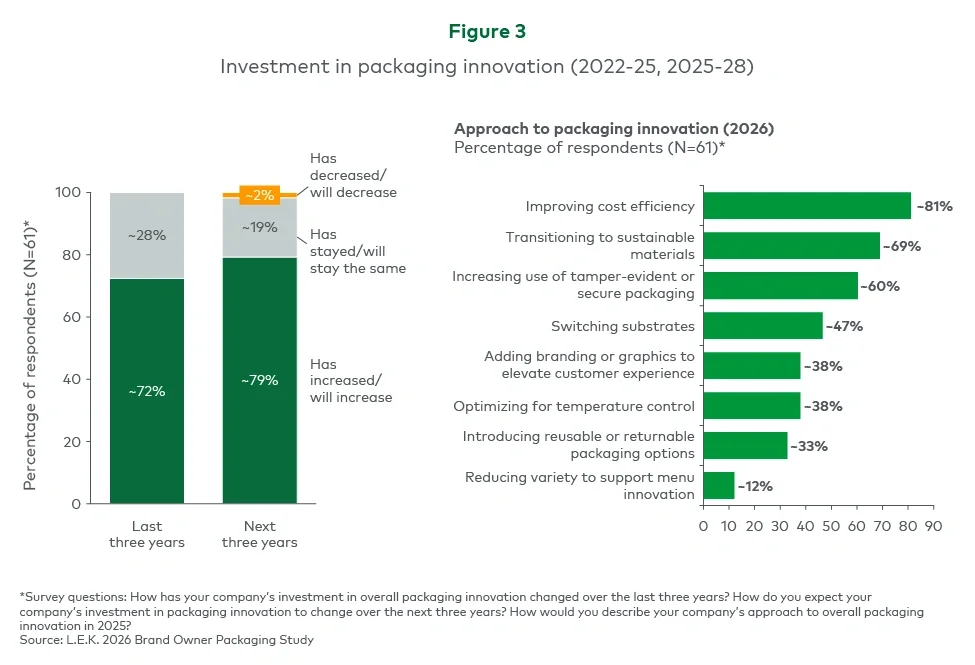
Packaging innovation is another area of importance for foodservice brands, as some 72% have invested in packaging innovation over the past three years — a number that is expected to rise to roughly 79% through 2028. Currently, the vast majority of foodservice operators (roughly 81%) cite improving cost efficiency as among the approaches they’re taking, followed by transitioning to sustainable materials (roughly 69%) (see Figure 3).

Image
Investment in packaging innovation (2022-25, 25-28)
Image
Investment in packaging innovation (2022-25, 25-28)

Be sure to read the fourth and final article in our 2026 packaging study series, which delves into how brand owners’ sourcing strategies are evolving. And don’t miss our breakdown of how brands are leveraging digital tools and AI across the packaging value chain and our overview of how packaging is impacting brands’ success.

If you would like access to the full results of the study, please contact us.

L.E.K. Consulting is a registered trademark of L.E.K. Consulting LLC. All other products and brands mentioned in this document are properties of their respective owners. © 2026 L.E.K. Consulting LLC


English

Discrete (Factory) Automation: Technology, Scale and the Next Wave of Industrial Investment

April 13, 2026

The discrete (factory) automation market is entering a new phase of growth, driven by structural megatrends and rapid advances in AI-enabled technologies. The global market is valued at approximately $150 billion in 2025 and is expected to reach around $200 billion by 2030.
 
Manufacturers are facing increasing pressure from labour shortages, supply chain volatility and rising quality and sustainability requirements. As a result, automation has become a strategic necessity rather than a discretionary investment. At the same time, advances in physical AI, intelligent robotics and digital twin technologies are enabling more flexible, adaptive and data-driven production systems.

These dynamics are accelerating the shift towards intelligent factories, where software-defined automation platforms improve throughput, quality and operational resilience. New models such as Robotics-as-a-Service and lifecycle analytics are also reshaping how value is delivered across the automation value chain.

In this report, L.E.K. Consulting and Harris Williams explore key market trends, emerging technologies and investment themes shaping the sector, alongside M&A activity and investor priorities.

Download the full report to find out more.

You can read part one of series here: Process Industry Automation: Control, Resilience and Investment Opportunities 
 

English

Brand Owners Have Shock-Proofed Their Sourcing Strategies

2026 U.S. Packaging Brand Owners Study Part 4
April 13, 2026

The packaging supply chain has faced significant disruption since 2021, prompting many brands to reevaluate their supply chains and consider potential actions to increase supply chain resiliency. But reduced supply chain risk is just one of several reasons why the vast majority (roughly 91%) of brand owners multisource their packaging — improved cost competitiveness, shorter lead times and better geographic coverage are all considered to be of roughly equal importance.

The reasons were revealed through L.E.K. Consulting’s eighth annual U.S. Brand Owner Packaging study, for which we surveyed 450 U.S. brand managers and packaging stakeholders in the fourth quarter of 2025 and first quarter of 2026.

Brand owners spread the risk — but not the spend

Nearly two-thirds of brands utilize both a primary and secondary supplier to source packaging for a particular format, with the lion’s share of spend going to the primary supplier (see Figure 1).

Image
Number of packaging suppliers used per packaging format (2026)
Image
Number of packaging suppliers used per packaging format (2026)

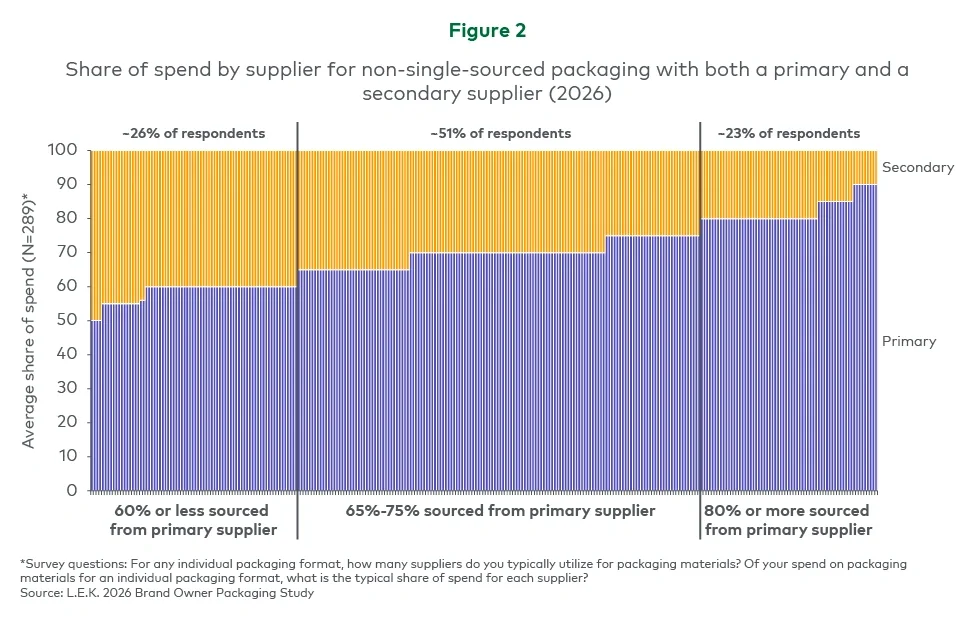
Among brands that use both a primary and secondary supplier (around 64% of respondents), roughly a quarter allocate 60% or less to their primary supplier, about half allocate 65%-75%, and the rest concentrate 80% or more (see Figure 2).

Image
Share of spend by supplier for non single sourced packaging with both a primary and a secondary supplier (2026)
Image
Share of spend by supplier for non single sourced packaging with both a primary and a secondary supplier (2026)

For brands that go further and use three or more suppliers (roughly 27% of respondents), the vast majority of them (about 80%) allocate a maximum of 60% of spend to their primary supplier; the rest (around 20%) allocate more (65%-75%).

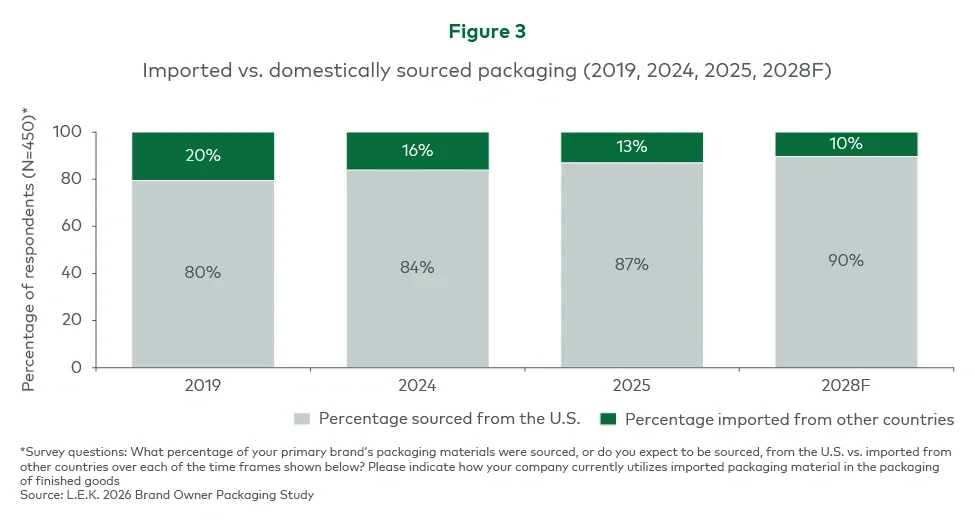
This push to diversify suppliers also has a geographic dimension. Brand owners have been steadily shifting toward domestic packaging suppliers — and by 2028, the percentage of packaging across surveyed end markets sourced from outside the U.S. is forecast to be half of 2019 levels, just 10%, driven in large part by the resilience advantages of domestic supply chains and the tariff risk from imported materials (see Figure 3).

Image
Imported vs domestically sourced packaging (2019, 2024, 2025, 2028F)
Image
Imported vs domestically sourced packaging (2019, 2024, 2025, 2028F)

To learn more about brand owners’ packaging needs in 2026, read about how brands are leveraging digital tools and AI across the packaging value chain, how foodservice brands are approaching packaging and how that differs from consumer packaged goods brands, and how packaging is impacting brands’ success.

If you would like access to the full results of the study, please contact us.

L.E.K. Consulting is a registered trademark of L.E.K. Consulting LLC. All other products and brands mentioned in this document are properties of their respective owners. © 2026 L.E.K. Consulting LLC

English

Brand Owners Are Embracing Digital and AI in Packaging

2026 U.S. Packaging Brand Owners Study Part 2
April 13, 2026

Brand owners are already using a wide range of digital tools and artificial intelligence (AI) use cases across the packaging value chain, and they plan to significantly increase their usage over the next three years as they view the impact of these technologies to be overwhelmingly positive. Their use of digital tools is highest in traceability features and business-to-business (B2B) customer portals, while AI adoption is most prevalent in product development and procurement/sourcing.

That’s according to L.E.K. Consulting’s proprietary eighth annual U.S. Brand Owner Packaging study, for which we surveyed 450 U.S. brand managers and packaging stakeholders in the fourth quarter of 2025 and the first quarter of 2026.

Brand owners think most digital tools have a positive impact

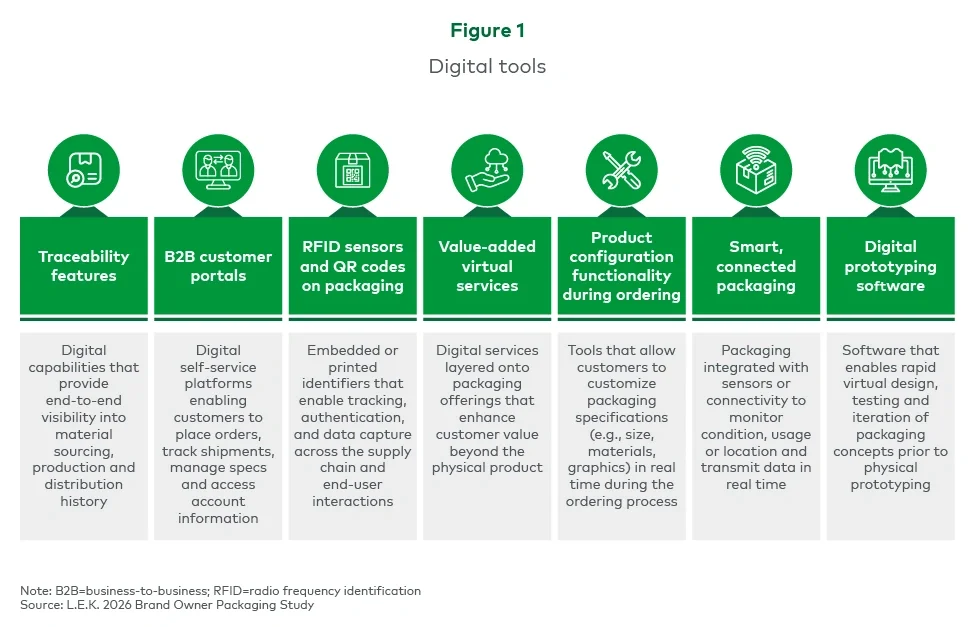
Brand owners currently leverage a number of digital tools across the packaging value chain. Categories range from traceability features that provide end-to-end visibility into material sourcing, production and distribution history to software that enables rapid virtual design, testing and iteration of packaging concepts prior to physical prototyping (see Figure 1).

Image
Digital tools
Image
Digital tools

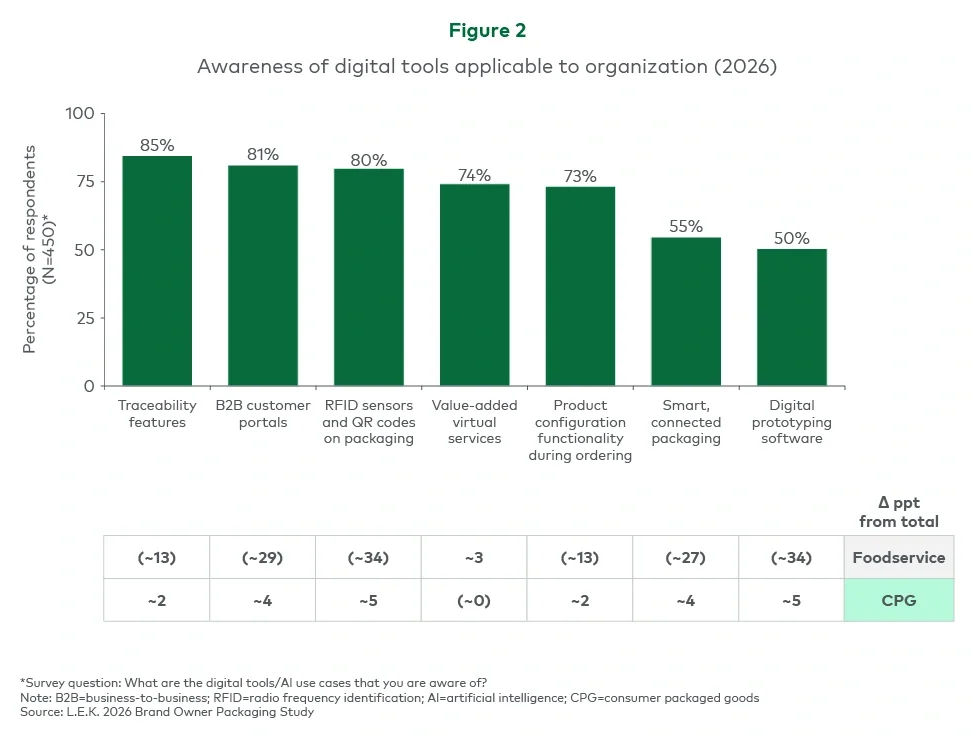
Brand owner awareness is highest for traceability features (85% of respondents) and B2B customer portals (81%) (see Figure 2). Awareness of digital tools is meaningfully higher among consumer packaged goods (CPGs) than it is among foodservice operators, according to the respondent feedback. 

Image
Awareness of digital tools applicable to organization (2026)
Image
Awareness of digital tools applicable to organization (2026)

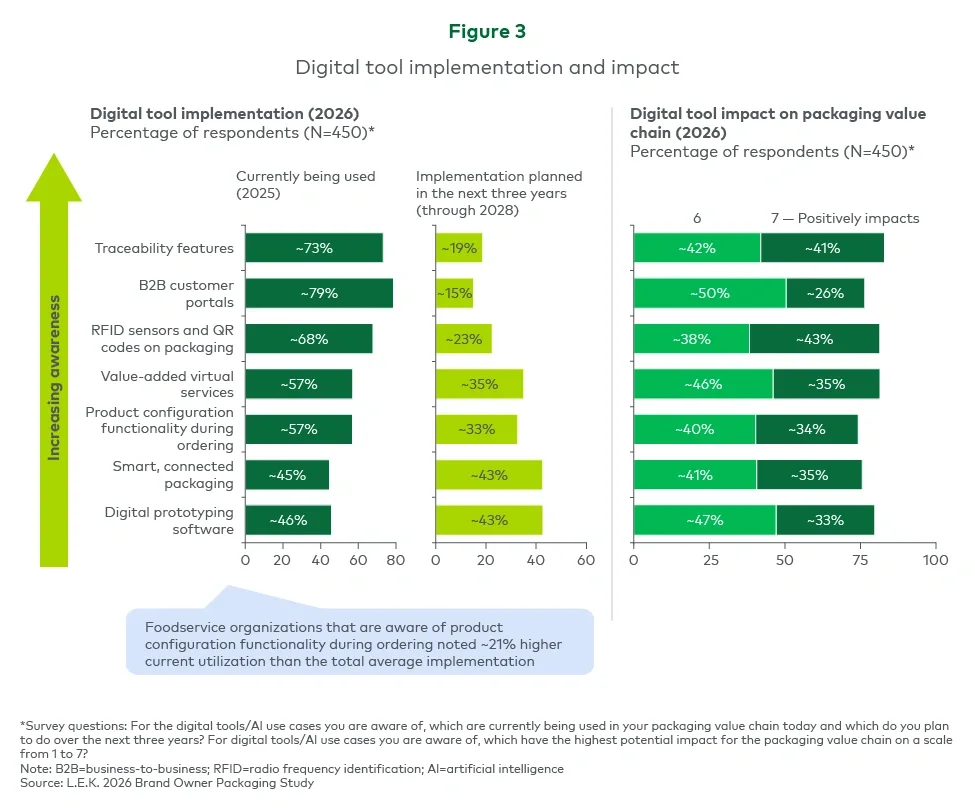
Those are also the most widely used, at approximately 73% and 79%, respectively, figures that are forecast to rise to roughly 92% and 94%, respectively, over the next three years. Meanwhile, some 45% of brand owners have already implemented smart, connected packaging and 46% are using digital prototyping software — and by 2028, those numbers are predicted to almost double, to approximately 88% and 89%, respectively. Indeed, at least 74% of respondents believe that each of the digital tools they use has a positive impact on the packaging value chain (see Figure 3).

Image
Digital tool implementation and impact
Image
Digital tool implementation and impact

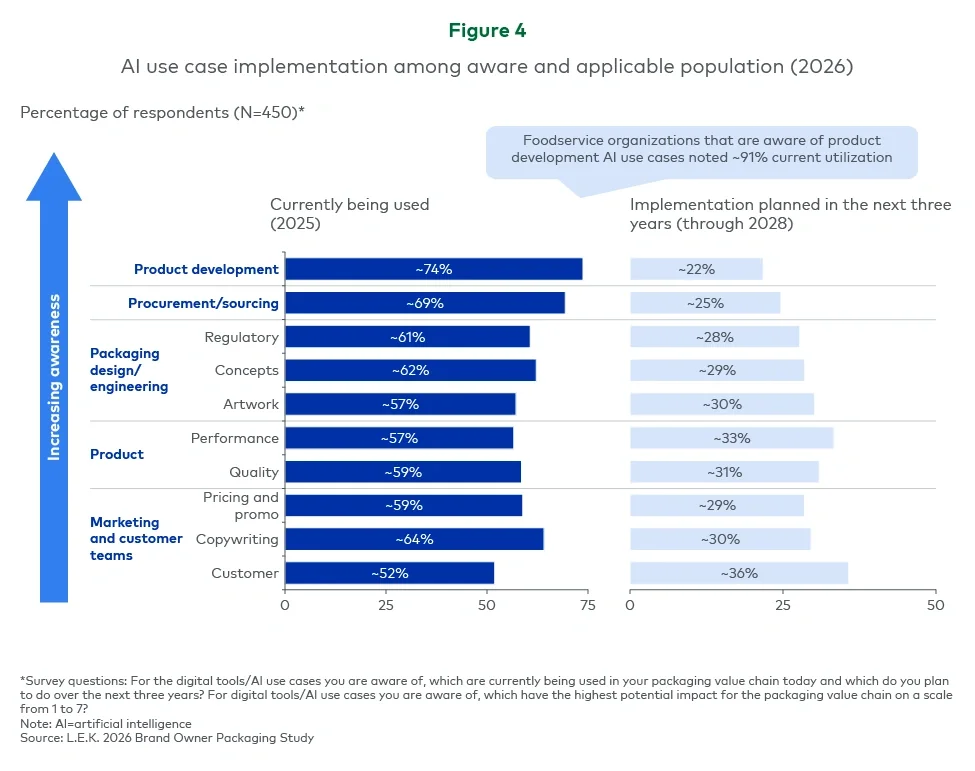
When it comes to AI use cases, product development (around 84%) and procurement/sourcing (around 82%) are the most commonly known and have the highest adoption rates (approximately 74% and 69%, respectively). But brand owners intend to expand their use of AI even further over the next three years, especially in customer-focused marketing, which they plan to take from around 52% to 88%, and product performance monitoring, which they plan to increase from around 57% to 90% (see Figure 4).

Image
AI use case implementation among aware and applicable population (2026)
Image
AI use case implementation among aware and applicable population (2026)

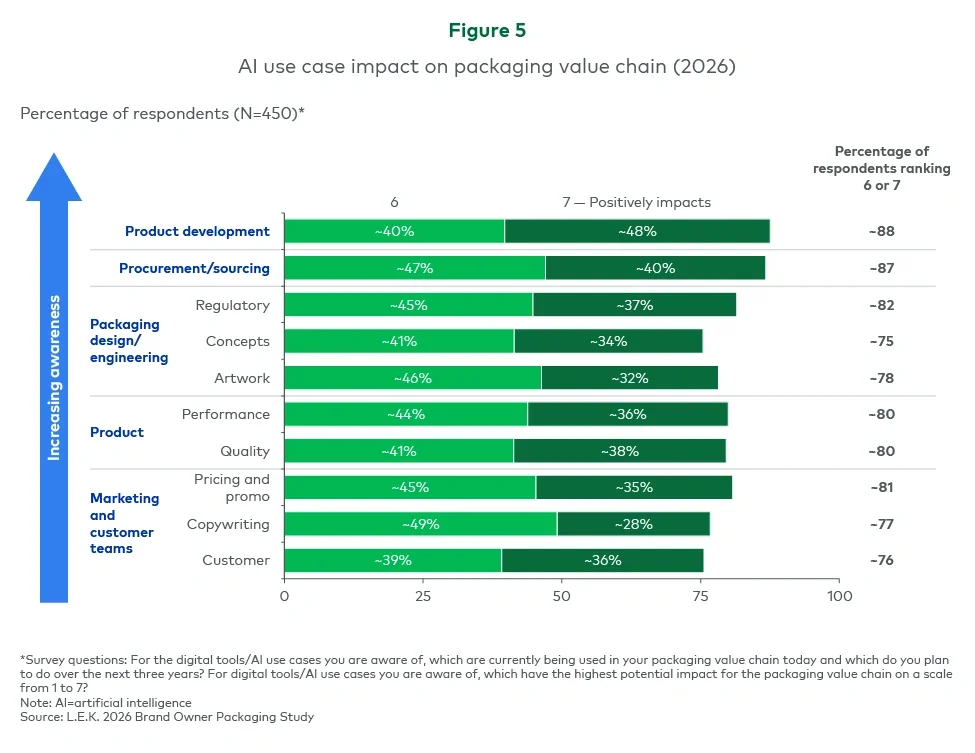
The brand owners we surveyed expect that AI will deliver a broadly positive impact across the packaging value chain going forward (see Figure 5). 

Image
AI use case impact on packaging value chain (2026)
Image
AI use case impact on packaging value chain (2026)

Meanwhile, leading brand owners are increasingly investing in innovative digital tools and AI use cases that enhance packaging and product branding. In 2025, for example, Nestlé R&D together with IBM Research created a generative AI tool that can identify novel high-barrier packaging materials, and Unilever said that it was leveraging real-time, physically accurate 3D technology to create digital twins of its products, each of which “contains all its variants, labels, packaging and language formats within a single file.” 

For more deep dives from our four-part series, don’t miss our look at how foodservice brands are approaching packaging and how that differs from CPG brands, our summary of how brand owners’ sourcing strategies are evolving, and our report on how packaging is impacting brands’ success.

If you would like access to the full study results, please contact us.

L.E.K. Consulting is a registered trademark of L.E.K. Consulting LLC. All other products and brands mentioned in this document are properties of their respective owners. © 2026 L.E.K. Consulting LLC
English

Beyond K-12: Mapping the Next M&A Upswing in Education

February 27, 2026

Beyond K-12, higher education continues to show strong structural tailwinds. As economies push for growth, governments are increasingly supportive of private higher-ed, and AI is accelerating the need for upskilling and continuous education. These shifts are creating meaningful opportunities for operators and investors alike. 

Watch Ashwin Assomull’s final video in the three-part Education Summit video series for more insights and on-the-ground perspectives. 

English

How Legal MSOs Are Restructuring Law Firm Operations

February 25, 2026

The legal services market is large and fragmented and generates consistent demand. Yet law firms have historically underinvested in technology and back-office infrastructure, operating more as attorney-led partnerships than modern service businesses.

This underinvestment is becoming harder to sustain. Client acquisition has grown more competitive, technology expectations have risen and compliance requirements have expanded. But traditional partnership structures constrain the capital needed to keep pace.

The barrier has been regulatory: ABA Model Rule 5.4 restricts nonlawyer ownership, fee sharing and control of law firms across most U.S. jurisdictions. Rather than wait for those rules to change, firms and investors have organized around them through managed services organizations (MSOs).

Momentum is building. Uplift Investors formed Orion Legal MSO with Dudley DeBosier Injury Lawyers in 2025, and legal industry observers report that roughly a dozen MSO deals closed in 2025, primarily in personal injury and mass tort practices.

L.E.K. Consulting has written previously about alternative business structures (ABSs), which allow direct equity investment in a handful of states. But MSOs remain the more established pathway, working across jurisdictions without requiring new regulatory approvals.

The legal MSO model: Definition and context

The MSO model originated in healthcare, where regulations prevent nonphysicians from owning medical practices. MSOs emerged as a workaround: A separate entity handles administrative functions while physicians retain ownership and control of the clinical practice. The structure has since scaled across dentistry, ophthalmology and other healthcare specialties.

In the context of legal services, an MSO is a separate operating company that provides back-office services to a law firm under a long-term management services agreement. Under this agreement, attorneys control all legal work while the MSO owns and runs the business infrastructure, typically handling marketing and intake, technology and data systems, finance and accounting, human resources (HR) and recruiting, facilities and procurement, and administrative operations. The MSO often employs and sets performance metrics to manage the firm’s entire nonlegal workforce.

How MSOs differ from ABSs and traditional outsourcing

ABSs allow direct equity ownership in law firms, whereas MSOs maintain separation; investors own the MSO entity, which contracts with the attorney-owned law firm to provide services.

Traditional outsourcing handles discrete tasks such as payroll, information technology (IT) support or bookkeeping. MSOs take over the entire business side: all back-office operations, technology infrastructure and administrative functions under a single long-term contract.

Some platforms, such as Federate, Legal Back Office or Delegate.Legal, provide MSO-like operations through an outsourced service model. Investor-owned MSOs are built around an investable entity with long-term contract economics.

Law firm functional taxonomy and MSO structure

Law firms operate across six functional areas. Under the MSO model, legal work and attorney-supervised roles remain with the firm. Everything else moves to the MSO: marketing and intake, technology and data systems, finance and accounting, HR and recruiting, facilities and procurement, and administrative operations.

These functional areas break down as follows:

  1. Legal delivery and professional judgment. All attorney work, legal strategy, case decisions and supervision of substantive legal work must remain with the attorney-owned law firm under ABA Model Rule 5.4.
  2. Client relationships and regulated activities. Client engagement agreements, client files, trust accounts and conflicts management must stay with the law firm because they involve fiduciary duties that cannot be delegated to nonlawyers.
  3. Business development and marketing. Lead generation, intake operations, call centers and advertising spend can move to the MSO. Synergies emerge from scale, data infrastructure and specialized expertise that many firms cannot build internally.
  4. Operations and technology. IT systems, case management platforms and process automation can move to the MSO. Synergies come from centralized purchasing power and access to specialized technical talent.
  5. Finance and human capital. Accounting, HR, recruiting, payroll and benefits administration can move to the MSO. Synergies include economies of scale in benefits negotiation and centralized payroll systems.
  6. Real estate and facilities. Office leases as well as equipment, facilities management and vendor contracts can move to the MSO. Synergies arise from bulk purchasing and lease negotiation leverage.

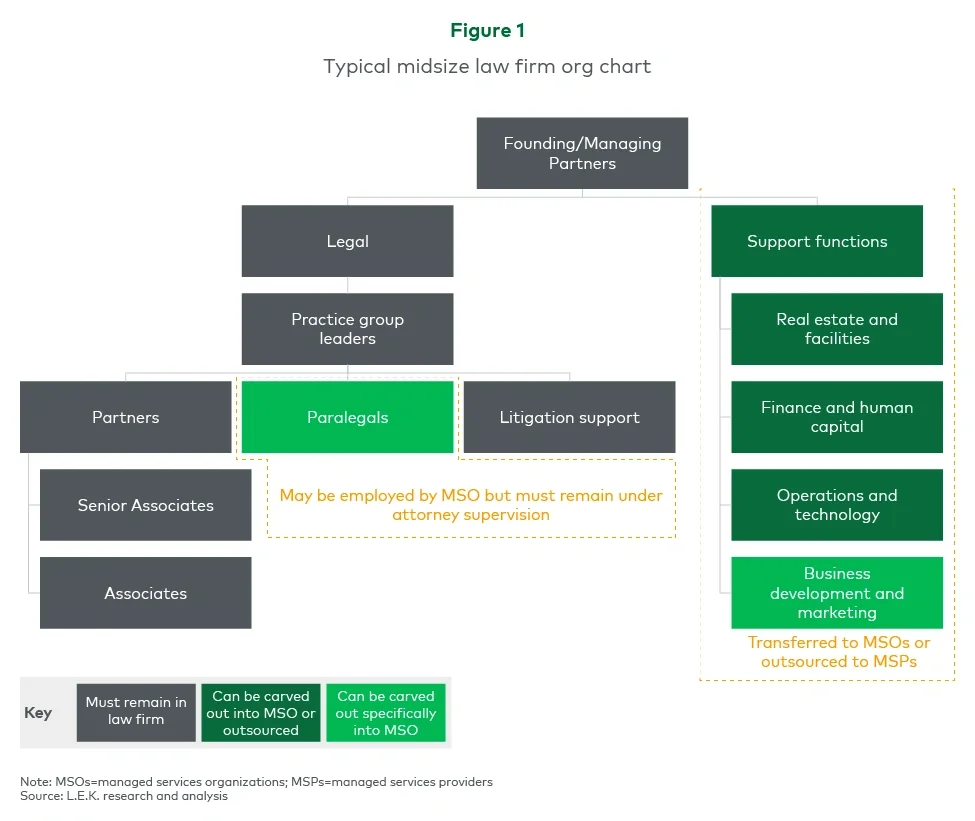
The paralegal question. Paralegals sit at the boundary. They may be employed by the MSO but must remain under attorney supervision from the law firm and cannot provide independent legal advice. North Carolina State Bar guidelines confirm that paralegals can be employed by entities other than law firms as long as they perform substantive legal work for which a lawyer remains responsible.

The organizational chart below illustrates how these functional areas split between the law firm and the MSO in a typical midsize firm.

Image
Figure 1 represents typical midsize firm law firm org chart
Image
Figure 1 represents typical midsize firm law firm org chart

How MSOs get paid without fee splitting

All legal fees belong to the law firm. The MSO is compensated through a management fee defined in the management services agreement. ABA Model Rule 5.4 prohibits this fee from being calculated as a percentage of the law firm’s legal revenues or profits. Texas Ethics Opinion 706 (February 2025) confirmed this prohibition.

Common compliant fee structures are flat monthly or annual fees or cost-plus pricing where the firm reimburses the MSO for actual operating costs plus a predetermined margin.

The fee must reflect fair market value; when benchmarked against comparable market pricing, it should fall within a reasonable range. MSOs document their costs, pricing methodology and industry benchmarking to demonstrate compliance.

The law firm collects client revenues, pays the MSO its management fee and distributes the remaining funds to partners after covering legal expenses and attorney compensation.

What this means for law firms and investors

Healthcare provides a useful precedent. When corporate practice of medicine doctrines prevented nonphysicians from owning clinics, the MSO model emerged as a work-around. The model has since scaled nationally across dentistry, ophthalmology, anesthesia and a number of other specialties.

Legal MSOs work when the division between legal practice and business operations is genuine and when the MSO delivers operational value. The value proposition differs by stakeholder:

For law firms: MSOs provide a path to professionalize the business side, attract capital and build scalable infrastructure without violating ethics rules.

For investors: MSOs offer exposure to legal services within existing regulatory constraints. The model is structured around fee-based cash flows from the MSO. Returns come from operational efficiencies, margin expansion and the ability to scale a platform across firms.

As firms face increasing operational complexity and investors seek entry into a large, fragmented market, MSOs have become the most practical structure available.

But structure alone doesn’t guarantee success. In our next article, we’ll look at how investors evaluate legal MSOs, where the model fits best and what breaks when these deals are done poorly.

L.E.K. works with law firms and investors navigating these structures. Reach out to discuss how an MSO might fit your strategy.

L.E.K. Consulting is a registered trademark of L.E.K. Consulting LLC. All other products and brands mentioned in this document are properties of their respective owners. © 2026 L.E.K. Consulting LLC
English
Executive Insights

L.E.K. Consulting’s 2025 US Health System Executive Survey: How Prepared Is Your Health System to Solve the Access-Capacity Equation?

February 26, 2026

Key takeaways

More than 90% of health system executives report significant challenges with patient access and system capacity.

Referral handoff breakdowns, ineffective patient outreach efforts and limited capacity are among the most pressing barriers to access.

Staffing gaps and infrastructure constraints remain the most acute capacity challenges, directly impacting patient throughput.

Health systems are acting on both fronts — managing margin impacts while advancing access and capacity growth.

For today’s health systems, patient access and system capacity are inseparable. The ability to meet community demand depends on getting both right. In L.E.K. Consulting’s 2025 Health System Executive Survey, more than 90% of U.S. executives said they face significant challenges on these fronts, from dropped referrals to workforce shortages.

These issues directly shape health systems’ growth and long-term resilience as well as the patient experience. In this edition of Executive Insights, we explore what executives tell us about the access and capacity challenges they are facing, the actions they are taking to address them and how leaders can better position their systems for sustained long-term growth.

The access challenge

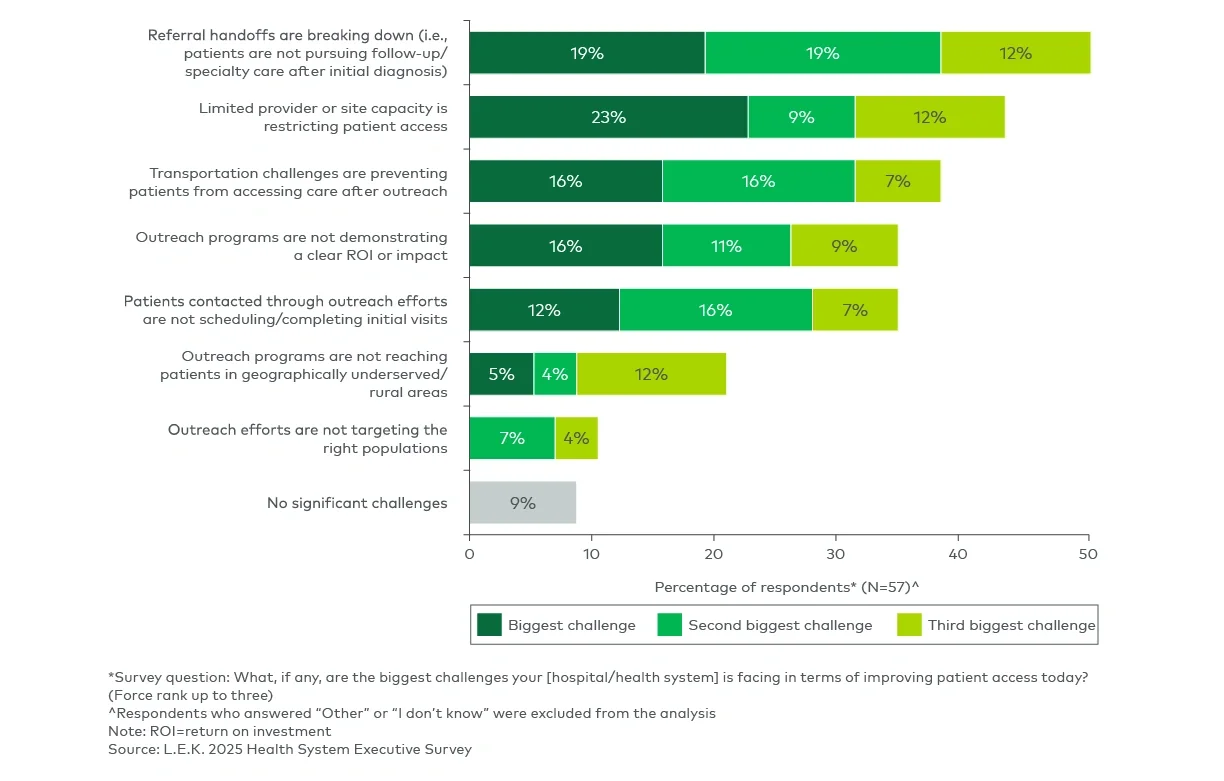
Access barriers continue to frustrate hospitals and health systems, with executives citing three as most pressing (see Figure 1):

  1. Breakdowns in referral handoffs: Patients often fail to pursue follow-up or specialty care after an initial diagnosis, leading to treatment gaps. These breakdowns reflect gaps in care coordination across providers and sites and highlight the lack of consistent navigation support once patients leave the initial care setting.
  2. Outreach effectiveness: Outreach programs frequently fail to demonstrate return on investment and often struggle with patient engagement, scheduling follow-through and addressing transportation barriers. This is particularly challenging in underserved communities where the need for access expansion is the greatest.
  3. System capacity limits: Leaders see provider and site capacity constraints as a critical barrier, because patient demand is met with scheduling delays that undermine timely access to care.

Figure 1

Patient access challenges currently facing hospitals/health systems (2025)

Image
Figure 1 represents patient access challenges currently facing hospitals/health systems (2025)

Figure 1

Patient access challenges currently facing hospitals/health systems (2025)

Image
Figure 1 represents patient access challenges currently facing hospitals/health systems (2025)

Executives see patient access as a multidimensional challenge, with barriers across coordination, capacity and outreach that ultimately shape trust, outcomes and financial performance.

The capacity challenge

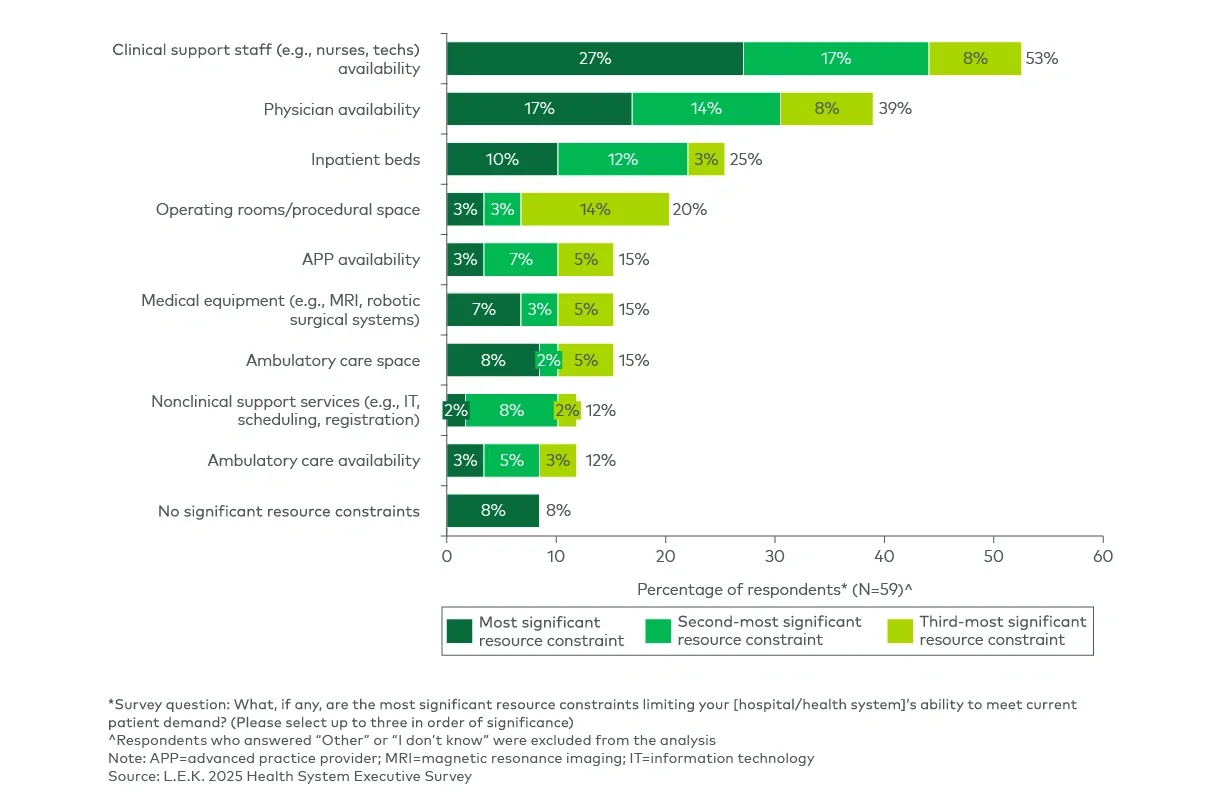
These access challenges do not exist in a vacuum. Even the most effective navigation programs or outreach campaigns can fall short if hospitals lack the staff, beds or procedural space to absorb additional patients. In our survey, executives cited two primary capacity challenges — staffing and infrastructure shortages (see Figure 2):

  • Staff shortages: A lack of clinical support staff availability was the most frequently cited bottleneck, followed closely by a lack of physician availability. Gaps in nursing and other clinical support staff roles strain day-to-day operations, making it difficult to maintain safe staffing ratios and consistent patient flow, which can force hospitals to delay procedures or divert patients. Ongoing staffing shortages also increase burnout risk for existing teams, creating a cycle of turnover that compounds access challenges.
  • Infrastructure shortages: Constrained physical assets, such as inpatient beds, operating rooms and procedural space, remain a major challenge for many systems. Inpatient bed capacity is increasingly misaligned with today’s patient population; older, higher-acuity patients drive demand that existing infrastructure cannot absorb. As a result, many hospitals face delayed admissions, emergency department (ED) boarding and/or more frequent diversions, leaving little flexibility to manage fluctuations in volume.

Figure 2

Capacity constraints limiting hospitals’/health systems’ ability to meet current patient demand (2025)

Image
Figure 2 represents capacity constraints limiting hospitals’/health systems’ ability to meet current patient demand (2025)

Figure 2

Capacity constraints limiting hospitals’/health systems’ ability to meet current patient demand (2025)

Image
Figure 2 represents capacity constraints limiting hospitals’/health systems’ ability to meet current patient demand (2025)

How are health systems addressing these challenges?

For health systems, effectively addressing access and capacity challenges is critical to improving patient outcomes while maintaining financial sustainability.

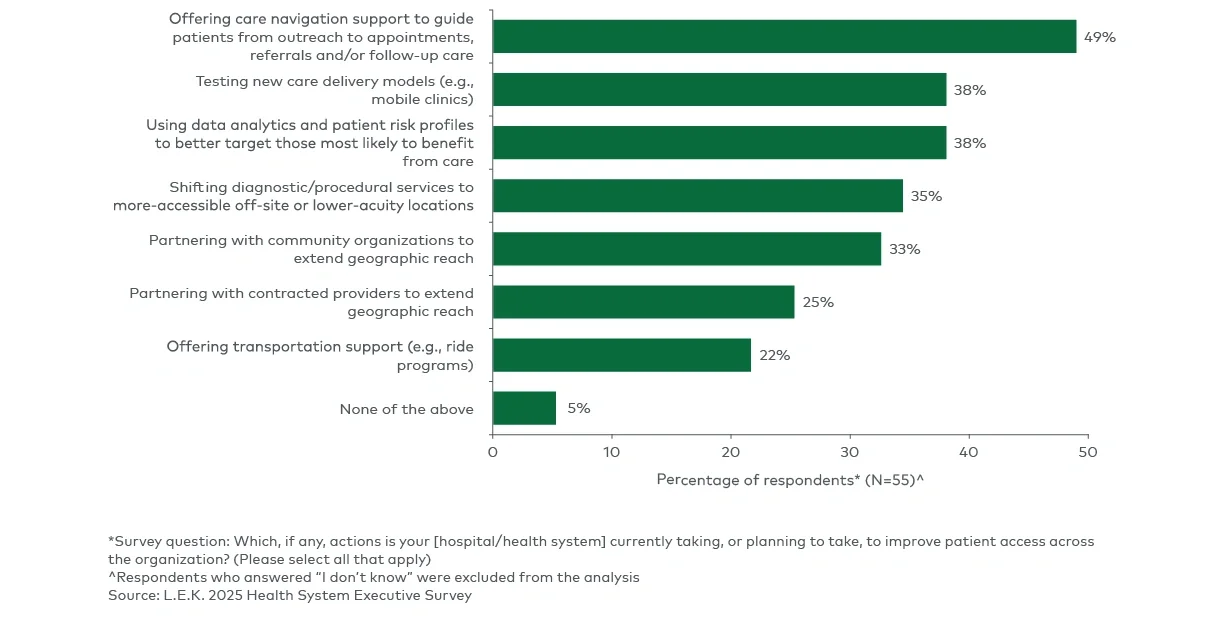
Health systems are taking a range of actions to break down access barriers (see Figure 3). The most common action is offering care navigation support (e.g., digital self-scheduling portals, automated appointment reminders, nurse or care management coordinators) to help patients move more seamlessly from outreach to appointments and follow-up care. Others are piloting new care delivery models, such as mobile clinics, to extend their reach into underserved communities. A growing number of organizations are also leveraging data analytics and patient risk profiles to ensure programs are focused on those most likely to benefit from them.

Figure 3

Hospital and health system planned or existing strategies to improve patient access (2025)

Image
Figure 3 represents hospital and health system planned or existing strategies to improve patient access (2025)

Figure 3

Hospital and health system planned or existing strategies to improve patient access (2025)

Image
Figure 3 represents hospital and health system planned or existing strategies to improve patient access (2025)

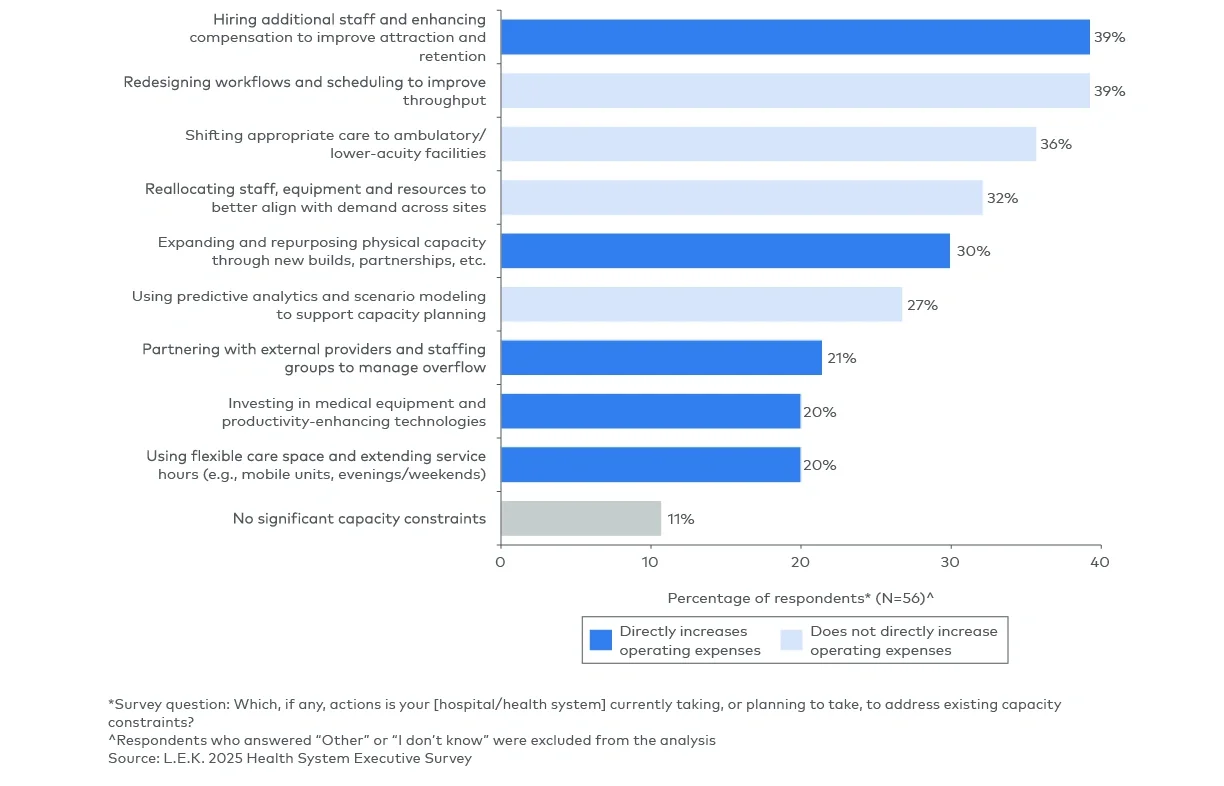
At the same time, leaders are investing in strategies to ease capacity constraint. Hiring and retaining staff remains a top priority, with executives citing recruitment and enhanced compensation as critical levers for stabilizing the workforce. Yet adding staff alone is not enough, as workforce supply remains constrained and patient demand will continue to outpace available capacity.

Nearly 40% of respondents are redesigning workflows and schedules to improve throughput, such as creating fast-track ED pathways, using artificial intelligence (AI)-driven scheduling tools to maximize provider availability and standardizing discharge processes, to ensure that limited resources can accommodate as much demand as possible.

More than a third of health systems are shifting appropriate care to ambulatory or other lower-acuity settings in order to alleviate overcrowded inpatient units. By strengthening care management and triage processes (e.g., hybrid ED-urgent care models), hospitals can ensure patients receive care in the most appropriate and lowest-cost setting based on their needs. Others are reallocating staff, equipment and resources across sites to better match demand.

Not all these strategies have the same financial implications (see Figure 4). Some — such as expanded recruitment efforts and wage increases, physician infrastructure expansions or a reliance on external staffing partners — can place additional pressure on margins. By contrast, initiatives such as workflow redesign, site-of-care shifts and staff reallocation can improve efficiency and margin performance over time.

Figure 4

Hospitals’/health systems’ planned or existing strategies to address capacity constraints (2025)

Image
Figure 4 represents hospitals’/health systems’ planned or existing strategies to address capacity constraints (2025)

Figure 4

Hospitals’/health systems’ planned or existing strategies to address capacity constraints (2025)

Image
Figure 4 represents hospitals’/health systems’ planned or existing strategies to address capacity constraints (2025)

This divergence highlights a central leadership challenge: how to pursue essential access and capacity strategies while preserving financial health. At L.E.K., we have worked with health system leaders to navigate these trade-offs, from addressing physician and human capital shortages to optimizing site-of-care models and deploying enabling technologies. Our experience shows that when margin-neutral or margin-negative moves are required, disciplined execution and complementary strategies can mitigate downside risk and set systems on a stronger long-term trajectory.

Conclusion

The goal for health systems and hospitals is straightforward: ensure patients can reliably enter the system and receive care when and where they need it. Access without capacity leaves patients waiting; capacity without access leaves resources underused. Which of the actions we’ve covered is your health system already pursuing? Which should your organization be considering next? If access or capacity challenges are on your agenda, let’s connect to discuss how your organization can take the next step.

To discuss access and capacity challenges and how we help health systems determine and execute their strategic priorities, please contact us.

The authors would like to thank Jenny Mackey for her contributions to this article.

Note: AI was used in the drafting of this article.

L.E.K. Consulting is a registered trademark of L.E.K. Consulting LLC. All other products and brands mentioned in this document are properties of their respective owners. © 2026 L.E.K. Consulting LLC
English

Supply Chain Simplification: Changing the Conversation Between Commercial and Operations

February 26, 2026

Businesses can unlock growth and profitability by simplifying their supply chains across supply chain processes and product portfolios. Yet many simplification efforts stall — not because the analysis is wrong, but because organizations struggle to translate insight into aligned decisions and sustained execution.

The root cause is structural. Commercial, finance and supply chain teams each carry distinct, and often competing, imperatives. Commercial teams seek differentiated offerings and responsiveness to customers. Finance teams prioritize margin and return on investment. Supply chain teams prefer level-loaded, predictable volume to maximize efficiency and capacity. Without a shared approach, these priorities pull in different directions, creating complexity that erodes margins and operational stability.

In this article, L.E.K. Consulting explores how companies can build cross-functional partnerships so simplification becomes systematic rather than episodic. The principles of supply chain simplification apply across industries, from building products to biopharma. Here, we draw on an example from the fast-moving consumer goods (FMCG) industry to show how simplification can change how supply chain and commercial teams work together to create value for the business and its customers.

Creating a shared language

Cross-functional partnership isn’t about meetings. It requires a shared language to foster common ground. Otherwise, familiar patterns return. Commercial pushes growth, supply chain protects efficiency and finance arbitrates after the fact.

The foundation is a common performance framework that integrates commercial and supply chain metrics — revenue, margin and a quantified complexity score reflecting incremental end-to-end costs. This shared lens enables objective trade-offs between customer demand and operational impact.

At one FMCG company, supply chain leaders shared their complexity metric with commercial teams and made the downstream impact of upstream decisions explicit. Product attributes and pack formats increased production variability. Marketing and trade choices created demand spikes and upended forecasts. Channel strategies boosted cost to serve and inventory requirements.

Transparency was reciprocal. Commercial leaders defined what mattered most, pairing quantitative metrics with context around customer strategy and consumer value. They set this framework up front and held themselves accountable to it.

With shared definitions of value and complexity, a functional stalemate gave way to thoughtful trade-offs. The result was a cross-functional stock-keeping unit (SKU) matrix classifying products by revenue and complexity, enabling transparent choices between portfolio breadth and operational burden.

Embedding partnership into how work gets done

Shared language creates alignment, but process and accountability make it stick. Many simplification efforts fail because the decision process doesn’t change. One-off portfolio reviews or SKU rationalizations may reduce complexity temporarily, only for it to return as new products, pack formats and channel requirements flow into the system.

At our FMCG client, annual portfolio reviews were already in place. The difference was anchoring those discussions in a weighted complexity metric to support objective discussions about SKU additions, deletions and modifications. The company also embedded complexity considerations into its stage-gate process, ensuring new products were evaluated not only for revenue potential but also for incremental cost and supply chain risk.

Over time, these routines shifted behavior and ownership. Commercial and supply chain teams jointly owned targets tied to complexity and service levels, reframing simplification as a growth enabler rather than a cost-cutting exercise. Finance reinforced the partnership by translating operational complexity into profit-and-loss impact, making trade-offs tangible and visible.

Cross-functional scorecards and disciplined “lookbacks” sustained accountability. Many companies are rigorous about approving innovation but seldom revisit whether the complexity it introduced delivered value. A structured review process closes that gap and enables continuous improvement by making it part of how the business operates.

From initiative to enterprise capability

As people-centric as it is, cross-functional partnership is also a practical enabler of measurable business outcomes. In our FMCG example, simplification led to streamlined SKU portfolios, improved forecast accuracy, reduced changeover time and stronger alignment between sales planning and supply chain execution. Financially, the company improved contribution margins and reduced working capital requirements as teams optimized inventory and reduced obsolescence.

Companies looking to build and sustain this kind of partnership can start with four practical moves:

  1. Align on a fact base. Build a shared dashboard that integrates commercial value metrics with operational complexity scores, so all functions can see the full impact of portfolio and channel decisions.
  2. Reconfigure governance. Institutionalize cross-functional portfolio reviews, embed complexity into stage-gate criteria and align incentives to balanced outcomes.
  3. Invest in capability. Train teams to interpret complexity metrics and link them to financial impact. This reduces subjectivity and enables more consistent decisions.
  4. Track and iterate. Use cross-functional scorecards to monitor progress and refine decision rules, ensuring simplification gains are sustained as the portfolio evolves.

Simplification doesn’t work without creating aligned incentives. If functional goals, up to and including compensation and bonus structures, reward conflicting outcomes, collaboration can revert to siloed decision-making. For some companies, awareness and a collaborative culture are all that are required to create cross-functional value. In other environments, companies may need a more holistic operating model shift, moving from function-specific targets to shared goals and accountability for outcomes such as profitable growth, service and cost to serve.

Ultimately, simplification becomes sustainable only when companies make cross-functional decision-making systematic — with shared language, governance and incentives that turn complexity from a hidden tax into a managed strategic lever.

For more information, please contact us.

L.E.K. Consulting is a registered trademark of L.E.K. Consulting LLC. All other products and brands mentioned in this document are properties of their respective owners. © 2026 L.E.K. Consulting LLC

English
Subscribe to