Japan Hospital Insights Survey Findings

June 20, 2025

Each year, L.E.K. Consulting surveys hundreds of hospital leaders across the Asia-Pacific (APAC) region to uncover evolving priorities and purchasing behaviors. Our goal is to equip healthcare companies with actionable insights to better engage stakeholders and refine their product and service strategies.

Below are key findings from this year’s survey focused on hospitals in Japan.

Financial outlook – Hospitals are balancing budget challenges with cautious optimism in the future on profitability

More than 60% of Japanese hospitals continue to operate at a deficit, a challenge that was exacerbated during the COVID-19 pandemic — particularly among acute care institutions.

Smaller hospitals (20–299 beds) experience heavier burdens from clinical staff costs, while larger hospitals (300+ beds) are more likely to increase investments, particularly in capital expenditures and medical supplies.

Despite current financial pressures, optimism exists. Approximately 70% of large hospitals anticipate EBITDA margins exceeding 10% within the next three years.

Strategic priorities – Hospitals are looking for efficiency, standardization, and workforce resilience

Across the board, Japanese hospitals are prioritizing cost control, care standardization and staff retention.

Larger hospitals are accelerating digital health investments, and smaller hospitals are concentrating on reducing medical supply costs.

Following the implementation of 2024 physician overtime regulations, workstyle reform is progressing — especially in larger hospitals. However, challenges remain: Larger hospitals cite a lack of solutions and implementation know-how, and smaller hospitals struggle primarily with insufficient funding.

Despite a strong interest in digital solutions for improving care quality and operational efficiency, hospitals face two major hurdles: 1) talent shortages in IT and digital health, and 2) limited infrastructure and technical capacity.

Equipment purchasing and maintenance – Hospitals are looking to standardize procurement to manage costs

Cost remains the top purchasing criterion for hospitals, followed closely by product innovation. As equipment value increases, decision-making influence shifts toward CEOs, directors, and CFOs.

To manage costs, hospitals are increasingly standardizing procurement practices — particularly in consumables — by narrowing the range of items and suppliers.

Hospitals are more likely to outsource equipment maintenance as asset value increases. Domestic medtech companies are widely regarded as the most reliable providers of service and support.

To learn more about the priorities of hospitals in Japan for 2025, please be sure to download our analysis.

L.E.K. Consulting is a registered trademark of L.E.K. Consulting LLC. All other products and brands mentioned in this document are properties of their respective owners. © 2025 L.E.K. Consulting LLC


English

Southeast Asia Hospital Insights Survey: Impacts on MedTech

June 20, 2025

Why this matters

Private hospitals in Southeast Asia (SEA) are entering a new growth phase. As budgets rebound in Singapore and Malaysia and clinical service lines expand regionwide, medtech companies must adapt to shifting procurement, localization and digitalization trends. This survey uncovers the precise levers hospital executives are pulling in 2025 so you can: 

  • Identify high‐growth segments: 50%-55% of SEA hospitals plan to expand cardiology and nephrology services
  • Tailor your value propositions: “Cost” and “physician preference” are top‐ranked criteria for over 80% of hospitals when purchasing new lower cost capital equipment and consumables
  • Accelerate digital adoption: 65% see digital health as a key to unlocking new revenue streams — despite 60% citing infrastructure and budget hurdles

1. Operations and financial outlook

In Singapore and Malaysia, over 80% of private hospitals expect year‐over‐year capex increases in FY26 — largely to fund new imaging suites and enhanced IT infrastructure. Executives view these investments as essential for improving clinical outcomes and strengthening long‐term medtech partnerships. In contrast, only 35%-45% of hospitals in Thailand, the Philippines, Indonesia and Vietnam anticipate positive EBITDA growth above 10%, even as they plan to boost overall spending. Providers here will likely favor cost‐effective solutions that help preserve margins while modernizing. Across SEA, around 55% plan to expand nephrology and 50% of respondents plan to expand cardiology services, driving demand for dialysis machines, cardiac imaging and related consumables.

2. Purchasing dynamics

Nearly 65% of SEA hospitals are consolidating suppliers, channeling spend toward fewer partners for surgical instruments and consumables. Midtier original equipment manufacturers (OEMs) should anticipate tougher negotiations and may need to offer outcome‐based pricing or bundled services to stay on preferred‐supplier lists. “Cost” and “physician preference” each rank among the top two purchasing criteria for over 80% of hospitals for lower cost purchases, highlighting the need to pair competitive pricing with strong clinical evidence. Meanwhile, “innovativeness” is gaining importance — especially in the Philippines, Malaysia and Singapore — signaling demand for artificial intelligence (AI)-driven imaging and remote monitoring. Finally, over 50% of hospital executives report that C-suite leaders now wield more influence over capital decisions, emphasizing return on investment (ROI) and cost metrics alongside clinical need.

3. Localization

Over 50% of Indonesia’s private hospitals enforce “local content” policies, with Jakarta having enforcement up to 70%. For foreign OEMs, this means forging local partnerships or establishing assembly operations to preserve market access.

4. Digital transformation

About 65% of SEA hospital leaders believe digital health solutions (AI, telemedicine) will boost patient outcomes and/or create new revenue, yet 60% cite inadequate infrastructure and/or unclear reimbursement as obstacles. Medtech companies that offer turnkey digital solutions — combining technology, training and financing — will stand out. Data monetization is most advanced in Singapore, where 40% of surveyed hospitals commercialize anonymized clinical data. In the Philippines and Indonesia, roughly 80% remain in early exploration, presenting opportunities for health-data platforms to shape emerging ecosystems.

To learn more, please download our analysis.

L.E.K. Consulting is a registered trademark of L.E.K. Consulting. All other products and brands mentioned in this document are properties of their respective owners. © 2025 L.E.K. Consulting

English

Building a Pricing Strategy for Success

June 20, 2025

In this episode, Jonathan Morgan, CEO of Education Perfect, joins Jade Kahn from L.E.K. Consulting to discuss the company’s recent pricing transformation journey. Jonathan shares how Education Perfect partnered with L.E.K. to develop a future-proof pricing strategy aligned with broader business goals. The conversation covers key challenges, the strategic review process, implementation success, and early business impacts —including improved retention and team alignment. Jonathan reflects on the importance of integrating pricing into go-to-market strategy and the value of external expertise. The episode offers practical insights for leaders navigating growth, pricing, and transformation in the edtech and broader B2B landscape.

L.E.K. Consulting is a registered trademark of L.E.K. Consulting LLC. All other products and brands mentioned in this document are properties of their respective owners. © 2025 L.E.K. Consulting LLC 

English

China Clinical CRO Market: Returning to Growth

June 18, 2025

After a period of market softness marked by price compression and funding headwinds, China’s clinical contract research organization (CRO) market is poised for a new phase of growth. Despite ongoing challenges, the sector’s fundamentals remain resilient — underpinned by a large patient pool, sustained investment in innovation and the growing imperative of globalization among Chinese biopharma players.

In this latest perspective, L.E.K. Consulting reviews the recent trajectory of China’s clinical CRO sector and identifies the strategic levers and tactics CROs can take to unlock value in a maturing yet fragmented landscape. We highlight:

  • Stabilizing market fundamentals. Recent declines in trial pricing are beginning to reverse and clinical trial volumes are showing early signs of recovery. Oncology remains the dominant area, while immunology, dermatology and rare diseases are emerging growth engines.
  • Segmented competitive dynamics. The market is defined by distinct segments: Multinational corporation (MNC) CROs lead in MNC-in-China trial execution, and Chinese CROs compete fiercely on China-for-China trials. Meanwhile, both are adopting new service models to support the global expansion ambitions of Chinese biopharma and biotech players. Differentiation beyond price is becoming a strategic necessity.
  • Operational innovation. Leading players are investing in business development, artificial intelligence-driven tools and flexible talent models to boost operational efficiency and elevate the customer experience. These innovations are particularly relevant as CROs strive to deliver global-quality services at competitive local cost.
  • Strategic opportunities for CROs. For MNC CROs, success will depend on pinpointing the most attractive segments, leveraging global expertise and adapting delivery models to fit China’s local market dynamics. For Chinese CROs, differentiation is imperative — price-based competition alone is no longer sustainable. Long-term success will be defined by the ability to build credibility, broaden service offerings and adopt technology-driven delivery approaches.  
  • Implications for investors. Fragmentation, rebounding demand and evolving delivery models present fertile ground for selective investment and value creation. As the market recovers, competitive advantage will increasingly hinge on differentiated capabilities and service excellence.

Next-step considerations for the industry include questions for:

  • CROs. How would you articulate your organization’s historical strengths and long-term strategy in China? What initiatives are you pursuing to differentiate beyond price in an increasingly competitive environment? Where are you focusing your next wave of investment — capabilities, technology, therapeutic expertise?
  • Investors. What qualitative and quantitative factors guide your evaluation of CROs in China? Are there particular segments or trends that you find especially compelling? Which CRO-related assets in your portfolio offer opportunities for operational optimization or strategic value enhancement?  

Explore the full report to understand where the opportunities lie and how leading CROs are preparing for what’s next. 

L.E.K. Consulting is a registered trademark of L.E.K. Consulting LLC. All other products and brands mentioned in this document are properties of their respective owners. © 2025 L.E.K. Consulting LLC

English

The Power of Integrating Operational and Commercial Strategies: From Diligence to Execution

June 16, 2025

When evaluating a target, investors must answer a range of critical questions — not just about market fit, but about operational readiness and long-term value potential. These include:

  • Can the business scale to meet growth objectives, or are there constraints in capacity, systems or talent that could limit upside?
  • Is the company operationally healthy, with mature systems, processes and infrastructure?
  • Are there hidden risks in technology, supply chain or workforce that aren’t visible in the CIM?
  • Do our financial assumptions about cost structure, capex and working capital reflect how the business actually runs?
  • What commercial and operational synergies can realistically be captured?
  • Are management, investors and operations teams aligned on how to execute the value creation plan post-close?

At L.E.K. Consulting, we’ve led hundreds of commercial and operational due diligence efforts across sectors including consumer, industrials, healthcare, TMT and financial services. Our experience shows that when commercial due diligence (CDD) and operational due diligence (ODD) are conducted together — not as parallel tracks but as one integrated process — the results go beyond the sum of their parts.

Six reasons to integrate CDD and ODD

1. Align strategy with execution

Even the strongest growth strategies can falter without operational readiness. Integrated diligence ensures that market opportunities identified during CDD align with the operational capabilities needed to deliver — capacity, systems, talent and infrastructure. For example, a company might see white space in adjacent markets, but without scalable production or a flexible supply chain, that upside remains hypothetical.

This alignment also acts as a check on operational health, a critical yet often overlooked driver of value. With early surfacing of issues like outdated systems or organizational gaps, integrated diligence helps avoid post-close surprises and sets a stronger foundation for execution.

2. Uncover hidden value

When CDD and ODD are run together, they often reveal opportunities that wouldn’t surface in isolation. Customer interviews might highlight recurring delivery issues, while operational analysis pinpoints the root cause — such as capacity constraints or logistics gaps. In other cases, ODD may uncover advanced capabilities that support premium pricing or expansion into new customer segments. This combined view helps investors see both where value is leaking and where new value can be created.

In a recent client engagement, customer interviews flagged delivery issues that were traced to upstream production bottlenecks. Addressing those constraints led to a 30% increase in throughput and helped prevent a potential 15% revenue loss.

3. Reduce risk

Siloed diligence often misses how risks in one area can compound issues elsewhere. Integrated analysis brings these connections to light — showing how gaps in vendor coverage, outdated IT systems or fragile organizational structures might amplify commercial risks like churn, delayed delivery or margin compression. With a fuller view of risk exposure, investors can plan mitigation strategies earlier and build more realistic valuations.

4. Increase confidence in financial outlook

A joined-up view of commercial and operational data strengthens key inputs to the valuation model. Revenue forecasts can be tied to actual capacity, while cost-to-serve, working capital and capex needs are grounded in how the business operates. That makes EBITDA adjustments and investment requirements more defensible.  

5. Gain more comprehensive value uplift post-close

When strategy and operations are aligned from Day 1, buyers can hit the ground running with a more confident 100-day plan. Integration and transformation priorities — such as footprint optimization, pricing changes or supply chain investments — are already pressure tested and agreed on. That early clarity accelerates execution and drives accountability across the portfolio company.

6. Increase deal efficiency and negotiating leverage

Running CDD and ODD as a single integrated project reduces duplication, shortens timelines and minimizes disruption to management. It also strengthens the buyer’s negotiating position. With a fuller view of upside and risk, acquirers can justify adjustments to deal structure — from price to escrows to earnouts — with a clear, data-backed rationale.

Integrated diligence in action

Integrated diligence provides a more complete view of both opportunity and risk. By combining commercial and operational insights, investors can validate key assumptions earlier and develop more realistic, actionable value creation plans.

When diligence efforts are fragmented, post-close strategies can lose momentum. An integrated approach builds alignment early, setting the stage for confident 100-day plans, focused transformation efforts and clear accountability. Beyond diligence, we help clients turn investment theses into practical roadmaps, with a focus on synergy capture, operational improvements and long-term growth.

Contact us to learn how L.E.K.’s integrated diligence approach can help you make smarter investment decisions and drive stronger results after close.

L.E.K. Consulting is a registered trademark of L.E.K. Consulting LLC. All other products and brands mentioned in this document are properties of their respective owners. © 2025 L.E.K. Consulting LLC

English
Executive Insights

Medtech CDMOs in Southeast Asia: Landscape Overview and Investment Opportunities

June 17, 2025

Key takeaways

As OEMs seek scalability and specialization, medtech CDMOs offer critical manufacturing support across regulated sectors.

In this space, long product life cycles and strict compliance standards make medtech CDMOs especially high-margin.

Southeast Asia is emerging as a strategic hub, driven by policy support, skilled labor and geopolitical neutrality.

Backing regional CDMOs with global reach and integrated services presents a compelling long-term growth play for investors.

General CDMO landscape

Contract development and manufacturing organizations (CDMOs) have become critical enablers of innovation and scalability across a wide range of industries. They provide end-to-end services — from product development and regulatory support to manufacturing, assembly and postmarket services — helping original equipment manufacturers (OEMs) focus on core R&D while outsourcing capital-intensive and highly specialized production activities.

The global CDMO ecosystem is multimaterial, multi-industry and increasingly specialized, often rooted in deep capabilities in metals (e.g., nitinol, titanium), plastics (e.g., injection molding, extrusion), silicone, ceramics and advanced coatings. This material versatility allows CDMOs to serve multiple regulated industries — ranging from medtech and biopharma to consumer electronics and automotive.

Key drivers of the CDMO model:

  • Manufacturing specialization: CDMOs offer OEMs access to high-precision, cost-efficient and specialized processes they cannot justify in-house
  • Material-adjacency expansion: Many CDMOs scale across sectors by leveraging expertise in specific materials or fabrication methods (e.g., a plastic injection molding CDMO moving from consumer products into drug delivery devices)
  • Asset-light growth for OEMs: CDMOs reduce OEM capital expenditure while supporting scalability and faster go-to-market timelines

Global medtech CDMO landscape

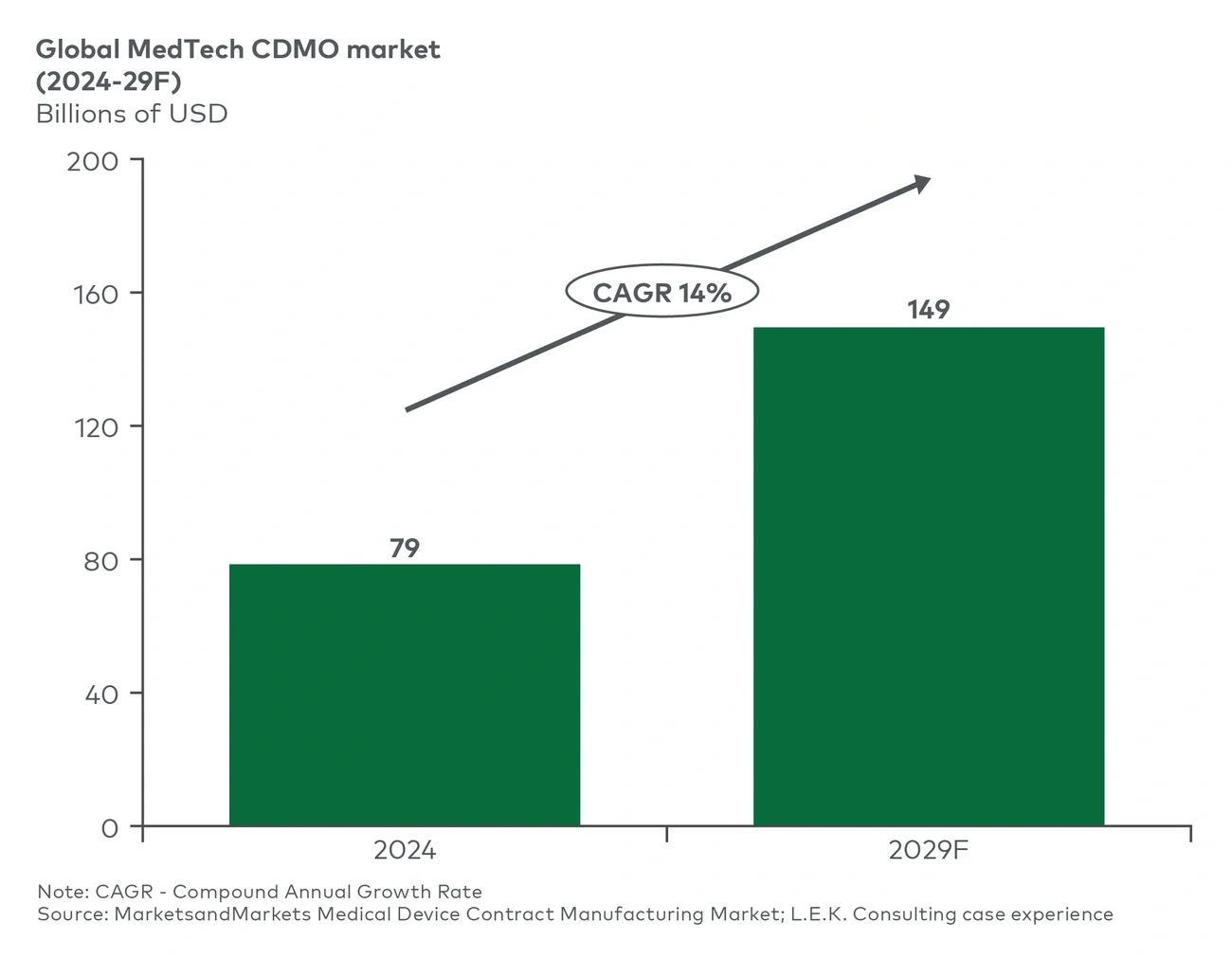
Medtech CDMOs represent one of the most attractive verticals in the broader CDMO space (see Figure 1). Unlike general industrial or electronics CDMOs, medtech manufacturers operate in tightly regulated environments, needing to meet the standards of the U.S. Food and Drug Administration or the International Organization for Standardization, or to gain the CE mark; furthermore, they serve OEMs with eight-to-10-plus-year product life cycles and produce devices that are central to patient outcomes and safety. 

Image
Global MedTech CDMO market (2024-29F)

Why medtech CDMO is particularly unique within general CMOs

  • Sticky OEM relationships: Medtech devices have long life cycles (eight to 15 years) and require complex onboarding, including regulatory validation and audits. This makes switching CDMOs costly and rare, resulting in long-term, highly valued customer relationships.
  • Higher margins: Medtech devices benefit from stronger pricing power as compared to pharmaceuticals, industrial products or consumer electronics. Devices are often used in critical care environments or surgical procedures, making quality and reliability far more important than cost. As a result, OEMs are less price sensitive and more focused on delivery performance, regulatory compliance and service customization.
  • Market access implications: Governments in key emerging markets such as India, Indonesia and China are enforcing localization policies to boost domestic medtech ecosystems. This regulatory pressure is pushing OEMs to establish or work with regional CDMOs in these markets.

As such, valuations of scaled healthcare CDMOs remain strong, reflecting the sector’s attractiveness to investors. For example, Novo acquired Catalent at an EBITDA multiple of 22.9x in December 2024, significantly higher than the approximately 16x EBITDA multiple observed for industrial CDMOs. The high valuations indicate the strategic value of CDMOs in supporting medtech companies’ growth and innovation.

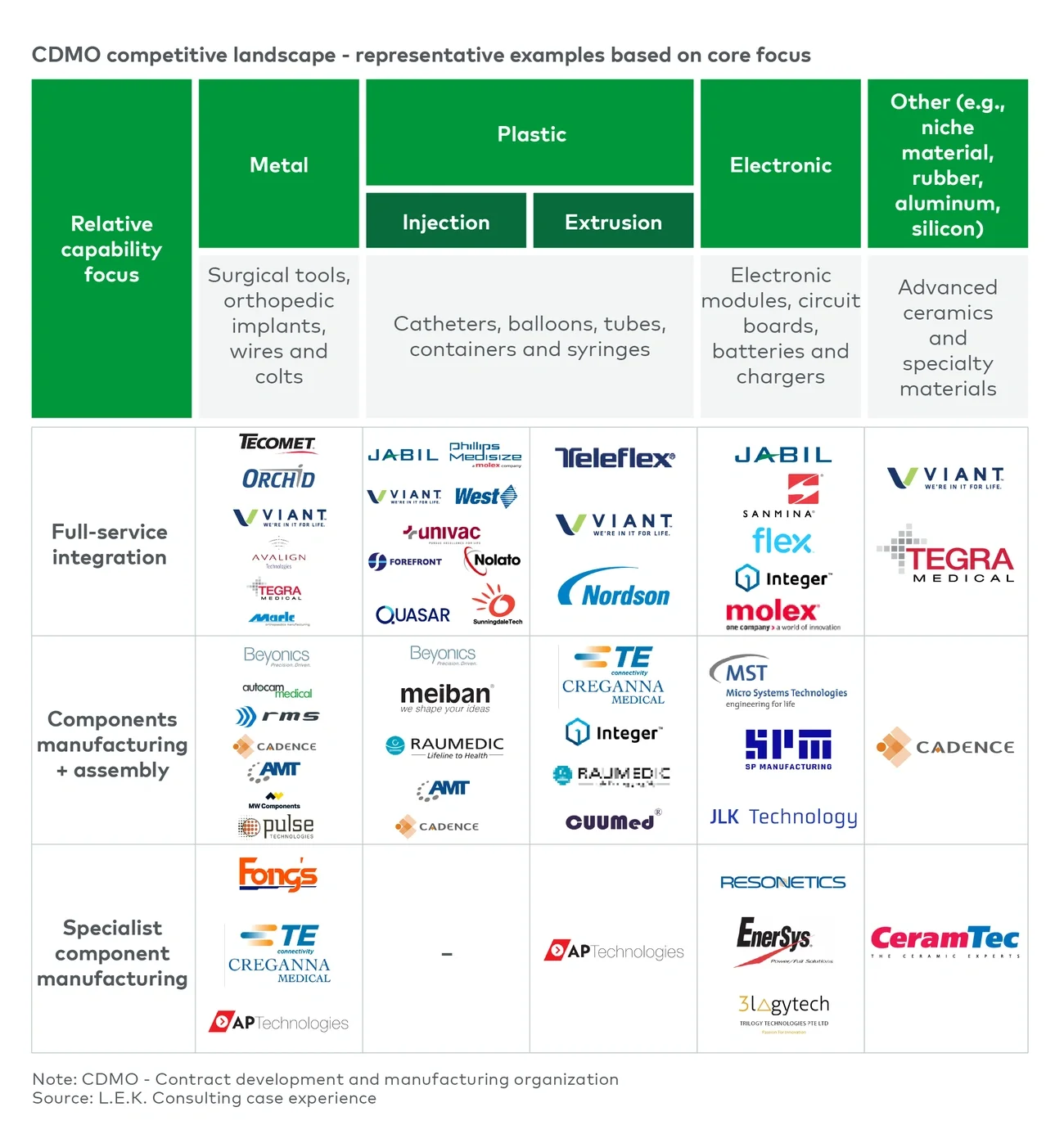
Medtech CDMOs are typically organized along these lines (see Figure 2):

  • Therapy areas: Orthopedics, cardiovascular, diagnostics, drug delivery and neurology
  • Technology platforms: Microfluidics, neurovascular delivery, robotic-assisted surgery tools and digital diagnostics
  • Value chain roles: From early design and engineering to cleanroom assembly, packaging, sterilization and regulatory consulting 
Image
Overall CDMO competitive landscape - representative examples

Why SEA is the next frontier for medtech CDMO investment

Southeast Asia (SEA) is quickly becoming a focal point for medtech CDMO investment. Historically viewed as a low-cost manufacturing base, the region is now positioned as a geopolitically neutral, increasingly high-tech and talent-rich ecosystem that aligns with OEM global manufacturing shifts. Companies such as Boston Scientific and Medtronic have already expanded their manufacturing operations in SEA, validating the region’s strategic relevance. CDMOs in SEA that can meet global compliance standards and scale operations are poised for significant upside.

Factors making SEA attractive include:

  • Growing domestic demand: SEA’s healthcare spending is projected to grow at a compound annual growth rate of 9% from 2025 to 2029, fueling higher demand for locally manufactured medical devices. As governments focus on improving healthcare access, domestic consumption of medtech products is expected to rise, making regional manufacturing a strategic necessity.
  • Government incentives for medtech manufacturing: To attract medtech manufacturers, countries such as Singapore, Malaysia and Thailand are offering tax incentives, grants and subsidies to support local production. These initiatives are designed to enhance supply chain resilience, create high-value jobs and position SEA as a global medtech manufacturing hub.
  • Advancements in manufacturing expertise: SEA is gaining global recognition for its advanced medtech manufacturing capabilities, with multinational corporations leveraging the region’s highly skilled labor force to produce complex high-tech devices at competitive costs. Increasing investments in precision engineering, automation and biocompatible materials have further strengthened SEA’s position as an attractive medtech manufacturing destination.
  • Localization policies driving regional sourcing: Governments across India, Indonesia and China are enforcing localization mandates that require medtech companies to source and manufacture products domestically. Policies such as India’s Production Linked Incentive Scheme and Indonesia’s Tingkat Komponen Dalam Negeri (TKDN) policy are pushing medtech firms to invest in regional manufacturing capabilities, further accelerating the growth of the SEA CDMO market.
  • Geopolitical neutrality: Amid rising geopolitical tensions — particularly between the U.S. and China — global medtech OEMs are actively seeking manufacturing bases in geopolitically neutral regions to de-risk their supply chains. SEA offers a unique position as a nonaligned, politically stable region, allowing companies to maintain continuity of operations without being caught in cross-border regulatory or trade conflicts.
  • Special economic zones (SEZs): These zones — such as Malaysia’s Iskandar SEZ, Vietnam’s Saigon Hi-Tech Park and Indonesia’s Batam Free Trade Zone — offer tax incentives, streamlined regulations and infrastructure support, attracting foreign investment and boosting the medtech CDMO market.

How PEs could approach the opportunity

Private equity (PE) investors have a clear opportunity to build or scale CDMO platforms in SEA that align with global OEM needs and long-term market shifts. Key investment strategies include:

  • Globalization: Expanding SEA-based CDMOs’ customer base beyond Asia-Pacific to the U.S. and the European Union, which mitigates risk and increases stability  
  • Vertical integration and value creation: Developing full-service CDMOs with design, production and regulatory capabilities to attract higher valuations  
  • Client diversification: Targeting CDMOs with material or customer adjacencies (e.g., medtech and pharma packaging) to expand revenue and customer base
  • Customer-led geographic expansion: Backing CDMOs that colocate with global OEMs entering SEA, and supporting them with regional CDMO capabilities
  • M&A and exit strategy: Acquiring complementary businesses (e.g., specialty material suppliers, internet-connectedmonitoring firms); exit strategies could include a strategic sale to a larger global manufacturer, an initial public offering or a secondary PE sale

As investors assess opportunities in SEA’s medtech CDMO space, the following strategic questions should guide diligence:

  • Customer adjacencies: Can the CDMO expand into adjacent customer verticals (e.g., diagnostics, pharma packaging) to drive cross-sector growth?
  • Technologies and materials: Which technologies (e.g., microfluidics, silicone molding) and materials align with high-growth device categories and existing capabilities?
  • Geopolitical resilience: How can the manufacturing footprint be structured across SEA to reduce exposure to geopolitical and trade disruption risks?
  • Outsourcing outlook: Will OEM outsourcing trends continue across design, development and manufacturing, or is there risk of insourcing in certain categories?
  • Therapy area shifts: Is the target well positioned to support emerging therapy areas (e.g., neurology), and can it expand upstream/downstream in the value chain? 

L.E.K. Consulting is a registered trademark of L.E.K. Consulting LLC. All other products and brands mentioned in this document are properties of their respective owners. © 2025 L.E.K. Consulting LLC

Questions about our latest thinking?

English
Executive Insights

L.E.K. Consulting’s Clinical and eClinical Pharma Services Outlook

June 13, 2025

Key takeaways

As trials grow increasingly complex, biopharma sponsors are turning to outsourced clinical and eClinical services to stay competitive.

Facing mounting recruitment challenges, sponsors are prioritizing digital solutions for finding and enrolling patients.

Growing demand for patient-focused endpoints is driving broader adoption of tools like ePRO and actigraphy.

In response, hybrid models combining centralized and site-based support are gaining steady traction.

Executive summary

As the volume and complexity of clinical trials continue to rise, biopharmaceutical sponsors and contract research organizations (CROs) are increasingly turning to outsourced clinical and eClinical services to streamline execution, enhance patient data collection and accelerate timelines. L.E.K. Consulting’s proprietary survey of industry stakeholders reveals several clear shifts shaping the next 12 months:

  • Outsourcing momentum continues to build: Over 55% of respondents expect to increase spend on outsourced services across all trial types and therapeutic areas. Rising trial complexity, global expansion and growing regulatory demands are fueling this trend.
  • Endpoint management is evolving: Patient-centric endpoints, novel biomarker validation and digital health technologies are pushing endpoint collection beyond traditional measures. Clinical outcome assessments (COAs)/patient-reported outcomes (PROs), imaging and actigraphy are poised for strong growth across multiple therapeutic areas.
  • Recruitment investments are tilting toward identification and enrollment: As patient recruitment challenges intensify, sponsors are prioritizing digital solutions that enhance outreach and reduce site burden. Patient identification and enrollment are drawing more budget attention than are retention efforts.
  • Centralized support models remain dominant — but site-based models are gaining ground: While centralized models are valued for scale and consistency, nearly half of respondents are increasing site-based support to better reach niche populations and improve local execution.

Together, these findings point to a market that increasingly values evidence-based decision-making and solutions that integrate operational execution with strategic impact — underscoring the growing importance of thoughtful vendor partnerships and adaptable clinical infrastructure.

Introduction to clinical and eClinical pharma services

The life sciences ecosystem is facilitating an expanding pipeline of novel assets in development and an increasing number of clinical trials to support them. The costs and timelines to bring new molecular entities through approval are rising rapidly. Several factors contribute to this trend:

  • Increasing complexity of trials: The demand for deeper and more diverse sets of endpoints, accelerated by the advent of advanced modalities (e.g., gene and cell therapy), has increased trial complexity.
  • Ongoing globalization of trials: There is a growing need for trials to access more sites to generate representative data, including global considerations, adding clinical and operational complexity.
  • More stringent regulatory and payer demands: There is mounting pressure from global regulators and payers to collect more patient-oriented, validated endpoint data.

Biopharmaceutical companies outsource clinical and eClinical services to CROs and dedicated solution providers to access specialized expertise, alleviate logistic burdens, expedite timelines and/or improve quality of data. Outsourced services support every aspect of the clinical trial process — from site selection through endpoint collection to regulatory submission. CROs and solution providers continue to expand their breadth to act as one-stop shops for customers and/or increase their depth in more niche offerings by specializing.

Our team of experts examined key aspects of the clinical trial value chain, inquiring about the key areas of growth and underlying drivers that fuel the outsourcing and innovation seen in clinical and eClinical pharmaceutical services.

Overview on survey composition

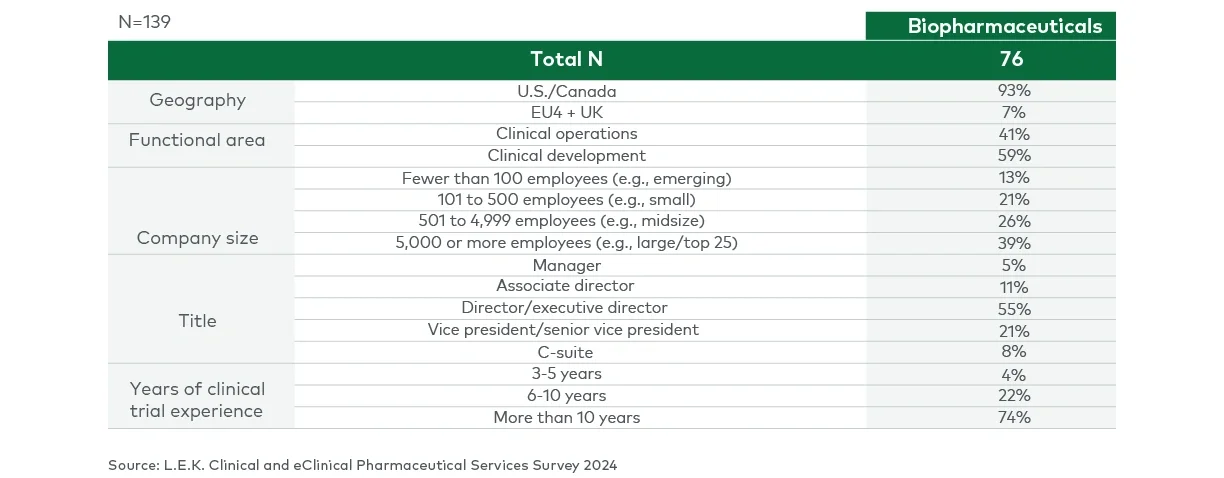
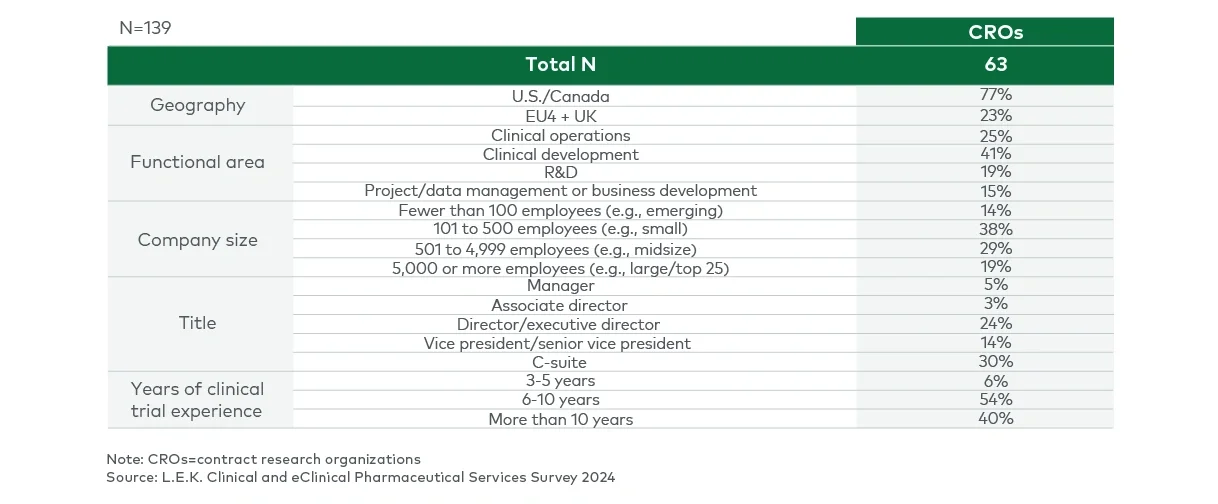
For the Clinical and eClinical Pharmaceutical Services Survey 2024, we recruited 139 biopharmaceutical and CRO respondents with involvement in outsourcing clinical and eClinical services. These respondents primarily worked on Phase 2 and Phase 3 clinical-stage assets with experience across a variety of therapeutic areas (see Figures 1a and 1b).

The survey explored key emerging trends in clinical trials and how they are catalyzing growth and changing decision-making dynamics in the outsourced pharmaceutical services market over the next 12 months.

Figure 1a

Survey respondent demographics (biopharmaceuticals)

Image
Survey respondent demographics (biopharmaceuticals)

Figure 1a

Survey respondent demographics (biopharmaceuticals)

Image
Survey respondent demographics (biopharmaceuticals)

Figure 1b

Survey respondent demographics (CROs)

Image
Survey respondent demographics (CROs)

Figure 1b

Survey respondent demographics (CROs)

Image
Survey respondent demographics (CROs)

Spend on outsourced clinical and eClinical services is expected to increase

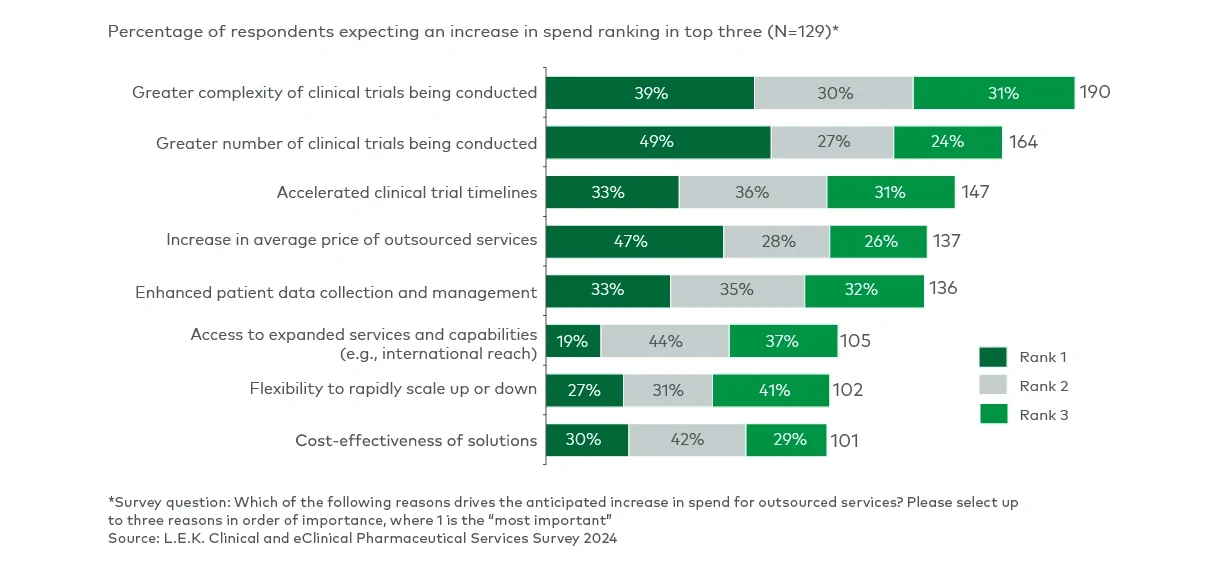
More than 55% of respondents anticipate increasing their spend on outsourced clinical and eClinical services across surveyed areas in the next 12 months, regardless of therapeutic area or trial type. Outside of rising prices (see Figure 2 for details), this growth is primarily driven by the increasing complexity and number of trials as well as the desire for accelerated trial timelines and enhanced patient data collection and management. These trends highlight mounting pressure on stakeholders to execute trials more efficiently. CROs and solution providers are well positioned to meet this need — enhancing speed, quality and operational impact.

Respondents’ views generally assume clinical trial starts will continue a measured recovery through 2025, with additional tailwinds derived from increasing cost and complexity of trials. At a market level, there is a relentless moderate increase in outsourcing rates to manage this complexity and needed specialization.

Figure 2

Drivers of increased anticipated spend in outsourced clinical/eClinical services

Image
Drivers of increased anticipated spend in outsourced clinical/eClinical services

Figure 2

Drivers of increased anticipated spend in outsourced clinical/eClinical services

Image
Drivers of increased anticipated spend in outsourced clinical/eClinical services

One specific area that is expected to evolve and support a growth in outsourced spend is the role of the trial site. The role of sites in decision-making for vendor selection of outsourced services continues to evolve over time relative to a historically centralized process. Approximately 63% of respondents already engage sites for decisions on site-related outsourced services. In addition, 25% also expect the sites’ involvement to increase in the next 12 months:

  1. The greatest increases are expected in patient engagement, patient retention and patient identification, which are more nascent, emerging offerings; stakeholders may be
    increasingly interested in gathering insight or providing solutions tailored to specific site or trial needs.
  2. The lowest increases were observed in more mature, established services such as randomization and trial supply management, electronic data capture, and ongoing services (e.g., participant payment services), which may require relatively little site-specific or trial-specific input.

These evolving dynamics within the outsourced pharma services market underscore an opportunity for CROs and solution providers to increase their support of clinical trials by delivering streamlined, efficient clinical trials.

The following sections of this Executive Insights examine in detail specific areas within the clinical/eClinical ecosystem.

Spending on outsourced endpoint management services is expected to rise

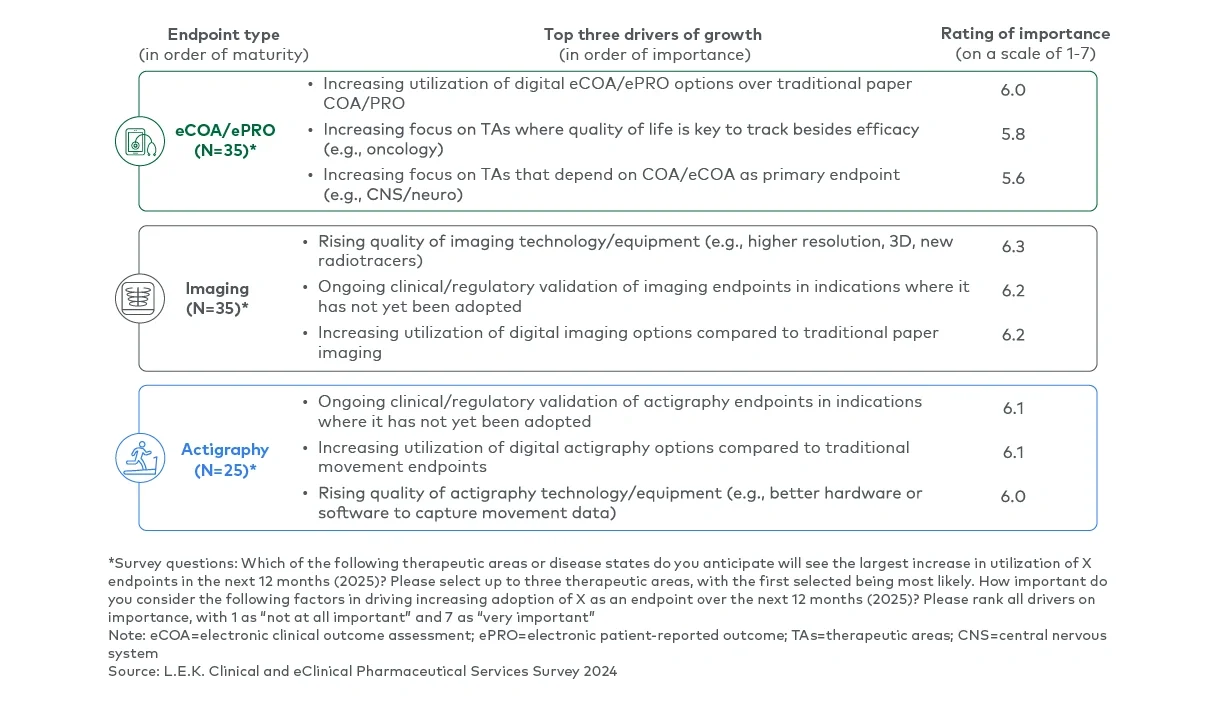
Endpoint management services focus on collecting and aggregating patient data for evaluation of clinical trial endpoints. More than 50% of respondents expect spending to increase, driven by the growing emphasis on patient-centric endpoints or regulatory validation requirements. However, this also heightens logistic and technical challenges for patients, trial sites and sponsors. These challenges will support a continued evolution toward leveraging outsourced support, a trend that respondents see expanding in the following areas of interest (see Figure 3):

  1. eCOA/ePRO As patient-centric endpoints gain prominence, trials are increasingly expanding their focus beyond traditional efficacy measures to capture real-world outcomes and quality-of-life indicators.
  2. Imaging: Stringent Food and Drug Administration validation requirements and evolving biomarker frameworks are catalyzing greater investment in high-resolution imaging and analytics, particularly in oncology and central nervous system trials.
  3. Actigraphy: Momentum is building behind actigraphy as a scalable digital endpoint, especially as wearable technologies become more standardized and regulatory bodies provide greater clarity.

Figure 3

Therapeutic areas or disease states driving greatest anticipated growth, by endpoint

Image
Therapeutic areas or disease states driving greatest anticipated growth, by endpoint

Figure 3

Therapeutic areas or disease states driving greatest anticipated growth, by endpoint

Image
Therapeutic areas or disease states driving greatest anticipated growth, by endpoint

This evolving landscape for endpoint management services presents an opportunity for CROs and solution providers to leverage their expertise and specialized services on behalf of sites. They can invest in enabling technologies (e.g., movement trackers) that allow for and streamline the collection and validation of patient data.

Willingness to spend on patient recruitment solutions will likely continue to grow, with a strong focus on patient identification and an emerging emphasis on enrollment services as the market evolves

Unmet needs in patient recruitment are ramping up as trials become more intricate, sites compete for the same set of eligible patients across pipeline candidates and site capacity remains relatively stagnant. According to our 2023 analysis, Clinical Trial Challenges:  Patient Recruitment and Diversity, only 5%-15% of patients are aware of clinical trials and approximately 25% of volunteers screened are eligible to participate. Additionally, around 50% of clinical trial sites fail to achieve enrollment targets, with roughly 20% failing to enroll a single patient.

This results in a system reliant on high volume to account for substantial “leakage” throughout the process — by some accounts, only one to five out of 100 prospective patients will enroll in, let alone complete, a trial. This is further complicated by a broad lack of access to clinical trials, with only a small percentage of patients and physicians involved in clinical trials today.

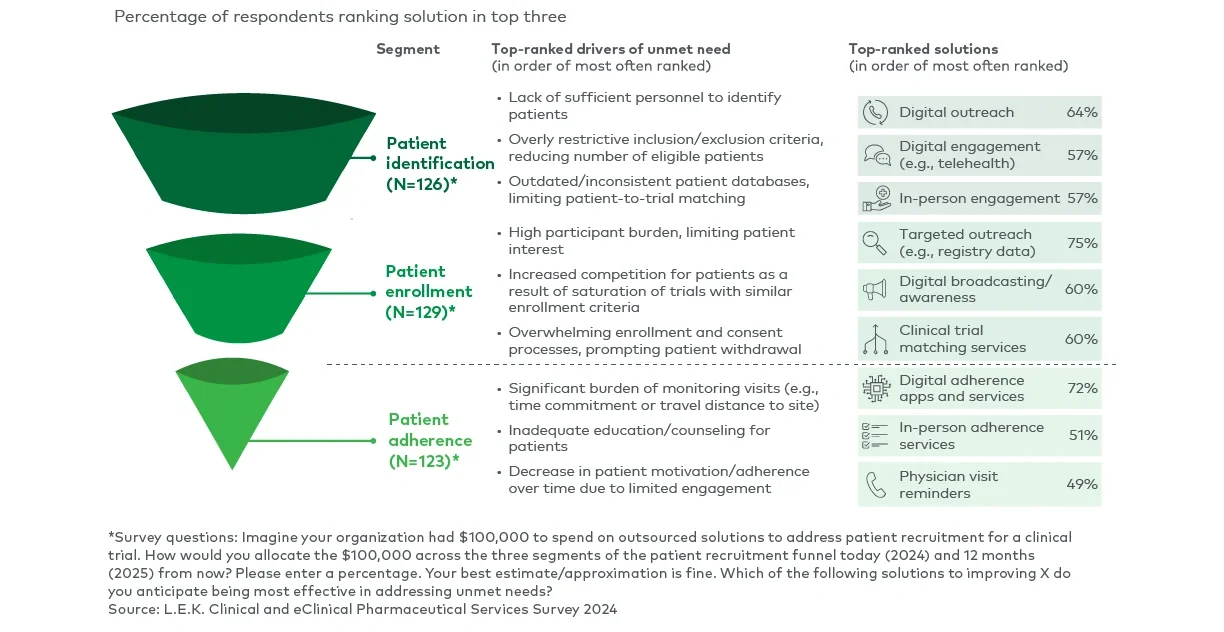
When given budget constraints to spend on solutions for patient recruitment, respondents report more willingness to spend on solutions for patient identification (42%) and enrollment (36%) over patient retention (22%) in the next 12 months. This is driven by both the relative nascency of patient retention services and a perception that patient identification and enrollment solutions provide greater immediate return on investment.

Regardless of the patient engagement segment, respondents are most interested in using digital tools, apps and/or services to address unmet needs (see Figure 4). This speaks to the diminishing bandwidth and increasing competition in clinical trial recruitment, where time and cost-effectiveness are top of mind.

  1. Patient identification: Top unmet needs include a lack of sufficient personnel for trials and restrictive inclusion/exclusion criteria. This is corroborated by respondents’ desire to use targeted outreach tools, clinical trial matching services and digital broadcasting to identify more patients, accelerate trial timelines and improve the quality of data collected.
  2. Patient enrollment: Respondents cite trials with high participant burden as a key enrollment blocker along with increasing competition and complex enrollment/consent processes driving unmet needs. To ameliorate this, they seek flexible digital and in-person engagement tools that are expected to reduce administrative burden and streamline initial recruitment timelines.
  3. Patient retention: Burdensome monitoring, inadequate education efforts and waning patient engagement over time are top unmet needs that diminish retention. Digital tools (e.g., reminders, gamification apps) and in-person services offer practical solutions to improve data quality and ease site workload.

Figure 4

Top-ranked unmet needs and solutions in patient recruitment, by segment

Image
Top-ranked unmet needs and solutions in patient recruitment, by segment

Figure 4

Top-ranked unmet needs and solutions in patient recruitment, by segment

Image
Top-ranked unmet needs and solutions in patient recruitment, by segment

As CROs and solution providers look to expand their books of business with patient recruitment, they should focus on developing or acquiring digital outreach or engagement tools that prioritize the time and cost-effectiveness for sites while enriching clinical trial timelines and patient data collection.

Willingness to spend on centralized or site-based support has historically favored centralized solutions

Biopharmaceutical companies and CROs have traditionally invested in centralized support, where a single team manages portions of trial processes across multiple sites or studies.

However, there is growing interest in site-based support, which provides direct assistance, resources and services to individual trial sites. When asked about budget allocation for the next 12 months, respondents anticipate a similar split between centralized and site-based support (about 54% and 46%, respectively), indicating strong demand for both.

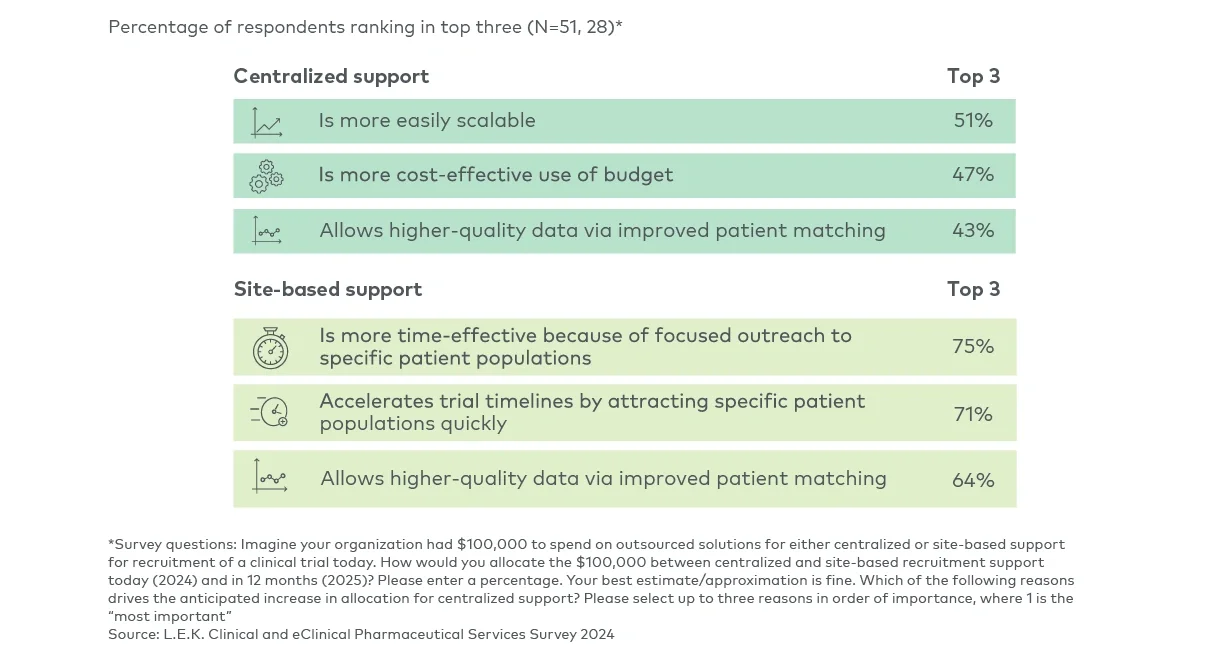
Regardless of preference, centralized services are poised to see continued growth while site-based services gain in adoption. Respondents are focused on solutions that are efficient for patient recruitment, with a keen eye toward accelerating trial timelines and improving data quality by attracting the right patients. Use of either model or both models of support is driven by the benefits (see Figure 5), which are often synergistic with one another:

  1. Centralized support: Respondents highlight its scalability and cost-effectiveness by accessing a larger, more diverse patient population efficiently. It suits larger, multisite trials that need consistent messaging across all sites. Centralized support can benefit both broad and rare disease trials targeting general or specific populations (e.g., via social media ads or national registries, respectively).
  2. Site-based support: Respondents note its potential to accelerate trial timelines and improve matching of targeted/focused outreach to specific patient populations. This is crucial in trials that are seeking highly specialized patients (e.g., 4L+ in oncology) or hard-to-find populations (e.g., undiagnosed rare diseases or specific ethnic subpopulations), and may be more suitable for single-site or smaller-scale trials.

Figure 5

Drivers of increases in anticipated spend in centralized and site-based support

Image
Drivers of increases in anticipated spend in centralized and site-based support

Figure 5

Drivers of increases in anticipated spend in centralized and site-based support

Image
Drivers of increases in anticipated spend in centralized and site-based support

As unmet needs mount in patient recruitment, sponsors should look to leverage both types of support. Both centralized and site-based support aim to improve efficiency of clinical trials and enhance data quality by attracting the right patients for trials. When used together, centralized support can quickly identify and prescreen large patient populations while site-based teams focus on qualified leads, especially in a highly competitive global Phase 3 trial.

CROs and solution providers must acknowledge that the two types of services address an overlapping unmet need in patient recruitment in different ways, positioning them as complementary offerings as they develop or expand their offerings of patient recruitment services.

Applications for artificial intelligence/machine learning are expected to increase across many of these use cases. In addition to data access and privacy challenges, respondents cite difficulties in demonstrating algorithm transparency, licensing/implementation costs and an unclear regulatory landscape in limiting use today. The short, medium and long terms are still uncertain and evolving; however, structured analysis, real-time data processing and predictive analytics have exciting potential.

Key questions for the ecosystem persist

Stakeholders across the ecosystem must account for these emerging trends to protect and expand their competitive advantage, including:

  • For pharma sponsors, balancing the risk of adopting new technology and processes against the risk of eroding time to market requires a careful, deliberate effort to maximize the value of partners.
  • For clinical/eClinical vendors, defining a clear, differentiated value proposition that resonates in the market is increasingly important.
  • For CROs, the ability to partner with a leading set of services to adroitly balance internal capabilities with overall offering strength is critical.
  • For clinical trial sites, efficiently adopting new technologies and tools to drive site efficiency is key both for operational performance and long-term site resonance and business development.

L.E.K. brings deep domain expertise and evidence-based insights to help sponsors, CROs and solution providers navigate this evolving landscape. To explore bespoke solutions tailored to your organization, please contact us.

L.E.K. Consulting is a registered trademark of L.E.K. Consulting LLC. All other products and brands mentioned in this document are properties of their respective owners. © 2025 L.E.K. Consulting LLC

Questions about our latest thinking?

English
Executive Insights

Partnerships, Not Policies: The Future of Insurance Innovation

June 12, 2025

Key takeaways

As customer expectations rise, insurers are turning to partnerships that deliver value beyond the policy.

Meanwhile, legacy models continue to fall short, driving a shift from transactional deals to deeper collaboration.

In turn, new partnership archetypes emerge that emphasize integration and shared outcomes.

Ultimately, operating models are being reimagined as insurers embrace co-creation to remain competitive.

Remember the song “Same as It Ever Was” by the Talking Heads? That’s insurance in a nutshell. The industry remains locked in outdated buying processes and stale products. But customers aren’t just comparing insurers anymore — Amazon, Apple and fintech disruptors have raised expectations. A sleek interface and a streamlined claims process? Those are table stakes.

Innovation must center on improving customers’ lives. But for companies trapped in “this is how we’ve always done it,” building a compelling value proposition will be an uphill battle. Outdated models cannot deliver next-gen experiences and service. Strategic partnerships can be the engine to close innovation gaps, but only if insurers move beyond transactional relationships to true collaboration. Partnerships should be about co-creating solutions that enhance the entire value chain, not just outsourcing to reduce variable costs.

Innovation and technology represent part of the answer, but they need to align with a future-state strategy to be effective. Traditional companies continue investing heavily in artificial intelligence and technology, but few are building use cases that transform the current insurance model. Newcomers are hungry to disrupt the market. Those that stand pat risk inefficiency, decreased revenue or irrelevancy.

The future of insurance isn’t about selling policies. It’s about seamlessly improving customers’ lives, delivering solutions to their problems with a frictionless experience.

“Leading insurance companies are shifting from a trading partner to a strategic partner mindset. This is a teaming mentality, with all parties focused on driving better customer outcomes.”

David Hitsky, L.E.K. Insurance practice leader

But with great partnerships comes great responsibility. Customers look for a single point of accountability when something goes wrong, not finger-pointing. Insurers must continuously monitor whether collaborations deliver intended value. Customer impact is the ultimate measure of success.

The path forward cannot work without better partnerships. An interconnected, customer-first ecosystem will define the next era of insurance. Those who fail to truly innovate around the customer risk obsolescence.

Here, L.E.K. Consulting presents a structured framework for evaluating partnerships, balancing risks and rewards, and leveraging ecosystem alliances to stay competitive in a rapidly evolving market.

“And you may ask yourself, ‘Well, how did I get here?’”

Insurance companies have historically treated partnerships transactionally. They would bring in a partner to execute a stand-alone task and send back the results. Now, these companies must reimagine a future state where you work collaboratively to innovate and deliver an experience that wows customers. Models that prioritize simplicity, predictability and usability will gain traction — eliminating activities that no longer add value.

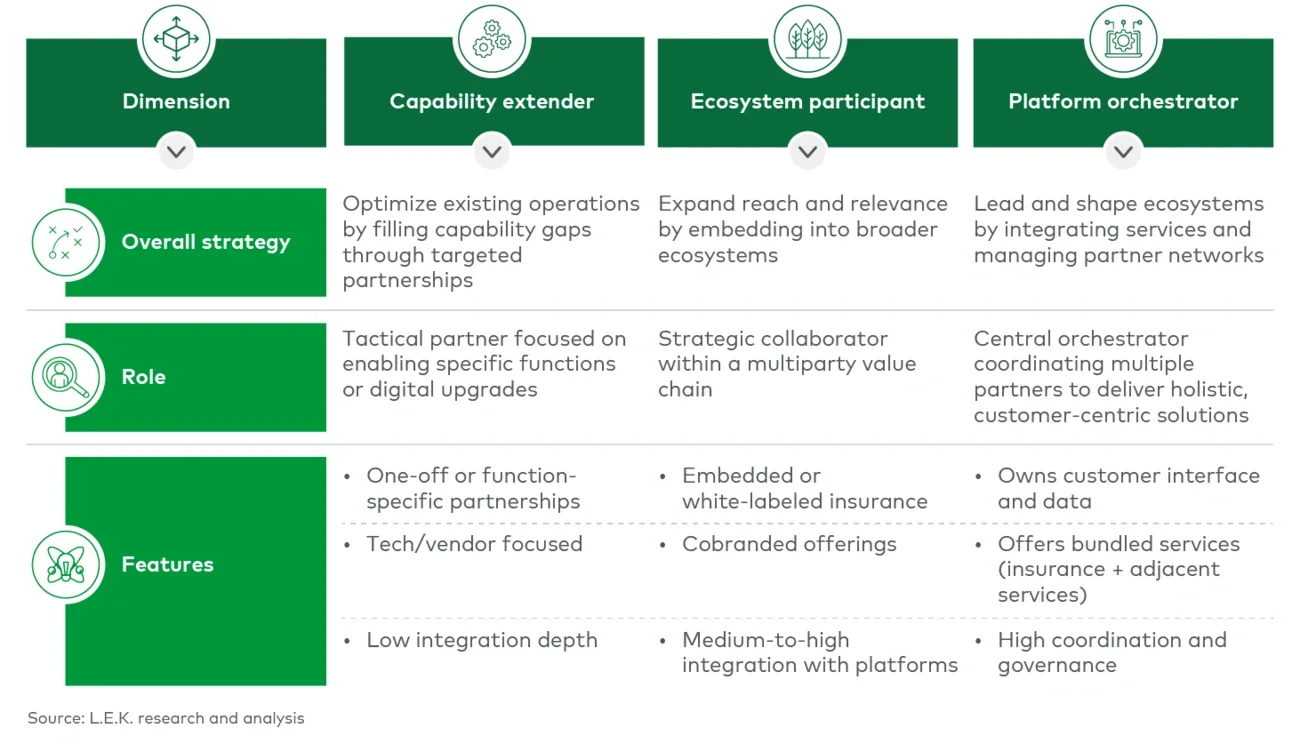
With distinct partnership models and archetypes to pursue, insurers must consider several factors, including resource availability, risk appetite, and technology and partnership orchestration capabilities. These archetypes span organizations that range from “traditionalists” that want to maintain the status quo and compete independently to “ecosystem maestros,” where the company aims to build and manage a network of partnerships to provide a broad and holistic set of services to customers (See Table 1).

Table 1

Partnership archetypes

Image
Partnership archetypes

Table 1

Partnership archetypes

Image
Partnership archetypes

Partnerships can progress from initial value chain integrations to full cocreation driven by success and/or customer needs.

The partnership playbook: Strategy, value and long-term fit

Finding a partner isn’t enough — it’s about choosing one that can fast-track the institution’s strategic goals and foster a long-term collaboration. Defining the strategy with a revamped operating model is the first step. Finding a partner that complements the insurer’s capabilities, aligns growth pathways and enables a win-win relationship is key.

Effective partnerships fuel long-term goals. In our experience, any potential partnership should consider the following.

First, can the partnership help your organization meet specific objectives, and do the partner’s approach and long-term goals align with these objectives? To assess this, determine how well the partner’s offerings align with or complement the insurer’s core services and operations. Without this alignment, the partnership cannot reach its full potential.

Any partnership should help the insurer build a unique value proposition by reinforcing the company’s strengths and enabling distinctive and resilient new offerings.

Balance of power dynamics and tradeoffs are important when selecting partners. Institutions shouldn’t fall into the trap of focusing only on bigger and more-established partners; emerging players can often deliver longer-term value opportunities. Without these considerations, the partnership may pay dividends only in the short term.

Lastly, the insurer should consider sources of value, including strategic, product, sales and distribution, and capability areas. These can diverge and converge over time. Partnerships designed to prioritize one source of value may grow into others as organizations intertwine. This increases the need to be holistic, forward-looking and flexible when defining agreements.

Balancing benefits and risks

The benefits of strategic partnerships should align with company imperatives and aim to improve one or more of the following:

  • Growth: How does the partnership help to address new customers and markets, improve the customer proposition or create value?
  • Market positioning: Can the alliance help differentiate the insurer from competitors, improve brand reputation or create a competitive advantage? Can this advantage be sustained, or is it easily replicated?
  • Customer experience and affinity: Can this partnership fill product and service gaps and elevate the customer experience? Remember, it’s not just about the insurer’s success but also about providing easily accessible, customer-centric solutions that anticipate and address their needs.
  • Operational efficiency: Can the partnership quickly improve the insurer’s ability to make data-driven decisions, streamline internal processes and promote operational efficiency (e.g., underwriting and claims processing)?

Strategic partnerships can introduce risks that insurance companies must manage carefully. When priorities, timelines or strategies diverge, misaligned goals can derail success. What’s more, the growing need for data sharing requires a strong third-party risk management and compliance program to reduce operational and financial risks. Without stakeholder trust and transparency, partnerships will fail.

Culture and technological incompatibility can also derail partnership success. Insurers may be hesitant to partner or lack the digital maturity of potential partners (e.g., insurtechs and third-party administrators). To mitigate this, ongoing communication and shared understanding are key.

Monetizing partnerships will be challenging without carefully considering revenue models and timelines. Partnership plans need to balance different cost elements and revenue expectations. Unaddressed power imbalances between partners can quickly sour a partnership.

In the era of personalization, data sharing is critical. This can blur the lines of end customer ownership, particularly with distribution partners. Clear boundaries must be set to avoid conflict.

The partnership should also be scalable. A partner may be able to accommodate the transaction volume and customer types today, but can they enable future growth and innovation?

To thrive in today’s fast-evolving ecosystem, insurers must move beyond the traditional “build, buy, partner” to “partner, build, buy.” As stand-alone entities, they can no longer deliver innovative products and services fast enough.

Companies that fail to embrace partnerships will see competitors steal market share and customers and risk irrelevancy. Any partnership should deliver joint partner value and be customer focused.

When goals clash, partnerships crash: Lessons from failed insurance alliances

Strategic misalignment can undermine success. Below are two recent examples of insurance partnerships that failed for this reason:

  • In 2016, AIG launched a joint venture with Hamilton Insurance and data science firm Two Sigma to modernize small commercial insurance. The goal was to simplify the broker experience through data-driven underwriting and a streamlined digital platform. However, the venture soon faced challenges: The complexity and variability of small commercial insurance across industries and states made automation and scale difficult. Strategic misalignment among partners, shifting priorities within AIG, and growing competition from insurtechs further hindered progress. Ultimately, the platform was acquired by cyber insurer Coalition in 2021.
  • Google attempted to enter the U.S. auto insurance market through its Google Compare Platform. Though the program had earlier success in the U.K., efforts in the U.S. fell flat. The initiative struggled with limited carrier participation, regulatory complexity, channel conflict and low conversion rates. Most important, it underestimated the difficulty of commoditizing insurance in a trust-based, highly regulated environment. It’s a cautionary tale for tech companies aiming to disrupt the sector without deep industry integration.

The building blocks of partnership success

Partnerships take work. Some bring instant success while others fall short. Objectives, key results and key performance indicators are critical to fostering success. Defining them early ensures both sides have a clear roadmap to track progress and pivot when necessary. Open and frequent communication is critical, and a proper feedback loop enables the partnership to improve processes and optimize value.

Insurers should understand that not all partnerships are created equal and that short-term wins may not translate into long-term success. Consulting firms like L.E.K. bring a fresh, impartial view to partner evaluations and help design frameworks and governance models that amplify partnership impact. They know what works, what doesn’t and the red flags to watch for. Rather than chasing quick fixes, advisors help you build a strategy for enduring profitability and success.

Strategic partnerships are a significant weapon in the race to innovate and compete. It’s time for the insurance industry to evolve and innovate. Customers expect a great experience, and insurers must reengineer operating models and build alliances to meet the needs of today and beyond. This future state will allow insurers to increase efficiency and prevent revenue leakage by playing in their new ecosystem lane.

So, why L.E.K.?

At L.E.K., our Financial Services practice is built for the moments that define the future of your business, not just maintain the present. We work with leaders navigating disruption, transformation and growth — helping them move with clarity and conviction in high-stakes situations. Our teams are senior-leaded and deeply engaged, bringing a sharp understanding of both strategic and financial realities.

What sets us apart is how we show up: We don’t rely on frameworks. We co-create tailored strategies with our clients and bring a best-in-breed mindset to every engagement — drawing on external expertise when it’s in the client’s best interest.

Whether you’re rethinking a business model, targeting new markets or positioning for long-term value, we’re here to help you lead with focus, agility and impact.

L.E.K. Consulting is a registered trademark of L.E.K. Consulting LLC. All other products and brands mentioned in this document are properties of their respective owners. © 2025 L.E.K. Consulting LLC

Questions about our latest thinking?

English
Image
report thumbnail

Prescription for Progress: A Health Equity Maturity Framework for Pharma Companies

June 12, 2025

Despite global efforts, health inequities remain deeply entrenched, with half the world’s population lacking access to essential health services.

This Special Report explores how pharmaceutical companies can embed health equity into their core operations. It introduces L.E.K.’s Health Equity Maturity Framework — a tool to assess, benchmark and improve pharma’s health equity performance — and presents findings from a proprietary benchmarking study.

Download the full report for more detail. You can also watch our short companion video, where L.E.K. Partner Verena Ahnert highlights why pharma must take meaningful, measurable action to reduce health disparities.

L.E.K. Consulting is a registered trademark of L.E.K. Consulting. All other products and brands mentioned in this document are properties of their respective owners. © 2025 L.E.K. Consulting

English
Subscribe to