Executive Insights

Tracking the Transformation: CDMOs in Nutrition and Beauty

June 12, 2025

Key takeaways

As brand expectations grow, contract development and manufacturing organizations (CDMOs) are broadening capabilities to meet demand for more formats and services.

At the same time, rising competition and shifting consumer tastes are reshaping investment priorities across regions. 

Leading CDMOs are evolving into full-service partners with integrated innovation and production capabilities.

Ultimately, those aligning commercial strength with executional excellence are best positioned for long-term growth 

As consumer needs evolve and brand expectations rise, CDMOs serving the nutritional supplements and beauty sectors are adapting to meet these shifting demands — from format expansion and broader service offerings to regional specialization and deeper capability sets.

L.E.K. Consulting’s proprietary CDMO database, “CDMOlodex,” tracks capabilities, services and specialization across hundreds of nutrition and beauty CDMOs in North America and Europe. These competitive dynamics provide critical context for investors and operators evaluating where the market is headed and how to identify winning platforms.

Positive tailwinds for the CDMO sector

There are several macro factors driving the attractiveness of this market:

  • Large and growing markets: Nutrition and beauty categories continue to experience steady mid-single-digit growth driven by sustained consumer demand.
  • Recession-resilient segments: These categories have proven durable during economic downturns — for example, according to the Nutrition Business Journal, nutritional supplement sales grew roughly 6% annually during the global financial crisis of 2007-2009.
  • Indexed access to attractive categories: CDMOs offer a way to participate in the long-term growth of the nutrition and beauty markets without exposure to the volatility or life cycle risk of individual consumer brands.
  • Increase in outsourcing: Brands are increasingly turning to CDMOs to manage complexity, reduce regulatory burden and increase speed to market with innovation.
  • Sticky customer relationships: CDMOs benefit from recurring revenue streams and usually sticky customer relationships — though customer concentration and evolving brand strategies can present ongoing risks.
  • Fragmented market with consolidation potential: The sector remains highly fragmented, with opportunities for roll-ups and platform creation. 

What the data tells us: Trends from the front lines

To better understand how CDMOs are evolving — and where the strongest opportunities lie — we analyzed data from CDMOlodex. The data reveals clear shifts in format expansion, capability development and regional specialization.

The rise of one-stop shops

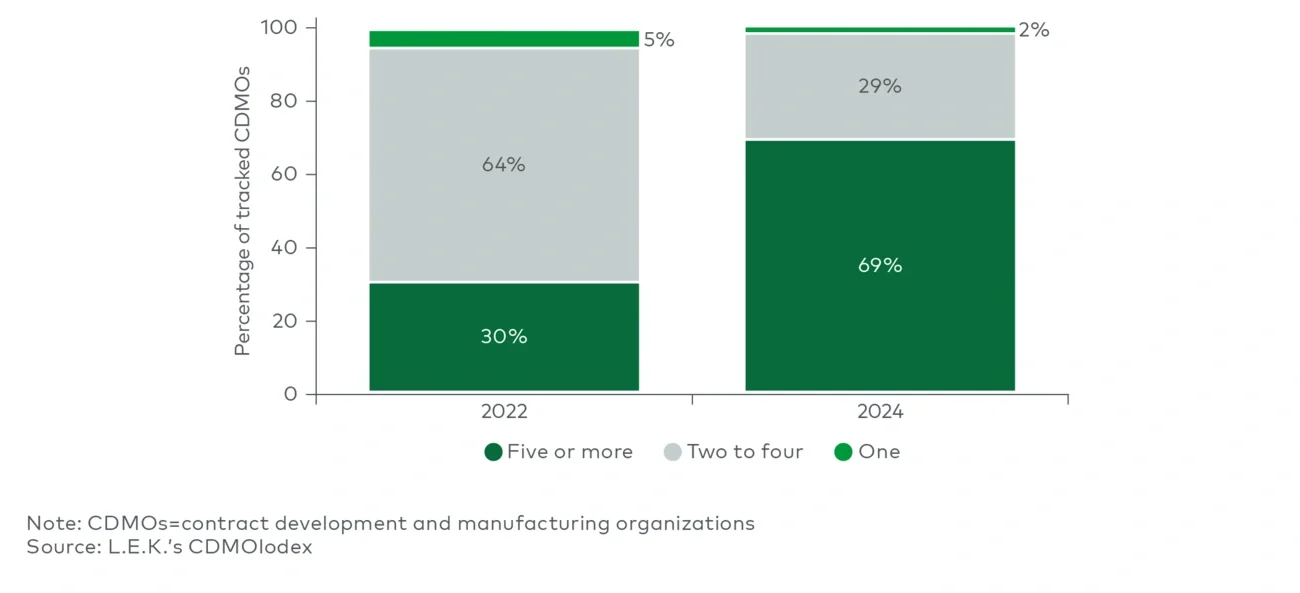
To meet expanding brand demands, CDMOs are increasingly positioning themselves as one-stop shops — broadening their capabilities to serve a wider range of product types and services. This breadth allows CDMOs to grow share of wallet with existing customers by supporting more formats across the product portfolio. This increasing breadth is particularly evident in nutrition, where the share of U.S. CDMOs offering five or more formats jumped from approximately 30% to about 70% between 2022 and 2024 (see Figure 1). 

Figure 1

Number of formats offered by US nutrition CDMOs 

Image
Number of formats offered by US nutrition CDMOs

Figure 1

Number of formats offered by US nutrition CDMOs 

Image
Number of formats offered by US nutrition CDMOs

In Europe, a similar multiformat focus is evident, especially in the U.K. Over 85% of tracked nutrition CDMOs offer at least two formats, with roughly 20% offering five or more — underscoring a strong skew toward broader capabilities.

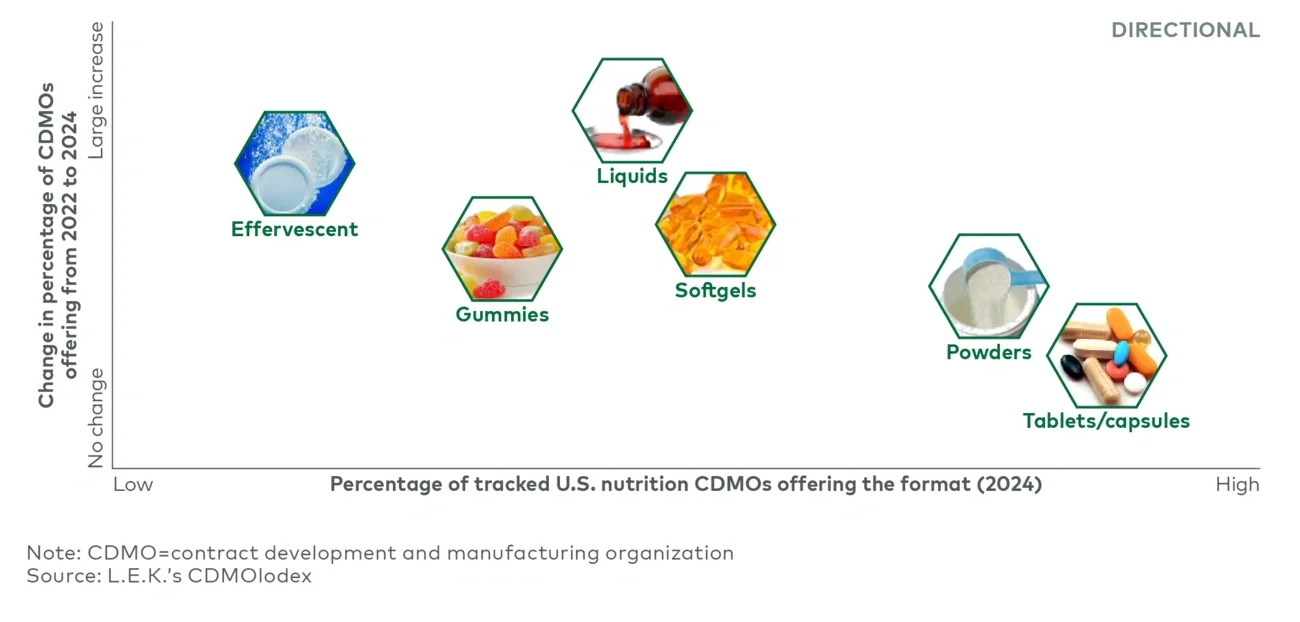
That said, the type of formats each CDMO offers is evolving. While tablets and capsules are still common, they’ve lost share of consumer spending in the broader retail market as shoppers gravitate toward more innovative and user-friendly formats — particularly gummies. For example, the share of U.S. CDMOs offering gummies rose 15 percentage points from 2022 to 2024, reflecting widespread efforts to capture rising consumer demand. Many CDMOs as well as brands invested heavily in gummy capacity during this period.

Since then, however, the post-COVID-19 supply-demand balance has shifted — with some CDMOs struggling to fill lines amid rising competition. For investors, it’s important to assess whether recent or planned expansions are aligned with sustainable demand or at risk of leading to underutilized assets and increased margin pressure.

Effervescent powders and liquids are also gaining traction, though they remain less commonly offered than tablets, capsules and powders across the tracked CDMO landscape. This growth is underpinned by consumer preferences and demand as effervescent powders and liquids allow for easier consumption compared with pills, more enjoyable flavors and taste (e.g., carbonation) and often better absorption of nutrients.

Figure 2 illustrates the relative penetration by format, with powders and tablets/capsules being highly penetrated mature formats, while effervescent powders, gummies and liquids have relatively lower penetration but their popularity is increasing more rapidly. 

Figure 2

US nutrition CDMO penetration by format and change in format penetration over time

Image
US nutrition CDMO penetration by format and change in format penetration over time

Figure 2

US nutrition CDMO penetration by format and change in format penetration over time

Image
US nutrition CDMO penetration by format and change in format penetration over time

In beauty, U.S. CDMOs have also expanded format capabilities. For example, topical capabilities (e.g., skin and body cream, lotion) surged from about 70% to almost 95% of tracked CDMOs, while those offering hair care rose from approximately 50% to nearly 75%. Even traditionally lower-penetration categories like color cosmetics saw a jump in penetration — from roughly 40% to about 65% — reflecting the broader mandate of CDMOs to expand capabilities and win customer share.

Innovation inside: Expanding end-to-end services

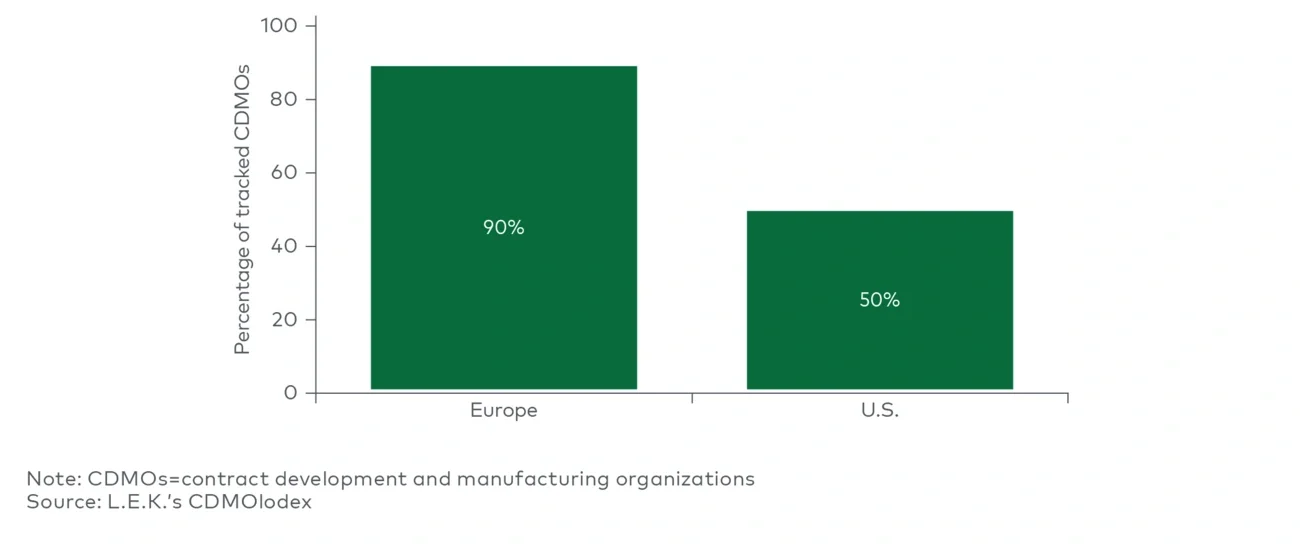
As brands seek faster time to market and greater innovation support, CDMOs are evolving from contract fillers to fully integrated partners. Formerly considered value-adding, services like R&D support or formulation development are now baseline expectations. However, there are some stark regional differences. R&D capabilities are present in 90% of European beauty CDMOs — compared to just 50% in the U.S. (see Figure 3). This gap highlights the greater emphasis on outsourced innovation outside the U.S. market. 

Figure 3

Beauty CDMOs with R&D capabilities, by region 

Image
Beauty CDMOs with R&D capabilities, by region

Figure 3

Beauty CDMOs with R&D capabilities, by region 

Image
Beauty CDMOs with R&D capabilities, by region

Geography matters: Regional specialization in focus

Regional consumer preferences continue to influence how CDMOs shape their service offerings — particularly in terms of product format and specialization. For example, in nutrition, gummies have become a significant delivery format in the U.S., where 35% of CDMOs offer gummy manufacturing. This contrasts sharply with Europe, where only roughly 15% produce gummies. This difference reinforces how local consumer preferences and category maturity shape CDMO investment and capability development across regions. 

Key diligence areas for investors

For private equity investors evaluating this dynamic and fragmented market, diligence typically falls into three core themes:

1. Strategic fit

Service scope and specialization

  • Does the target offer end-to-end services, and where does it stand out in format complexity, technical capabilities or formulation depth?
  • Is the production model geared toward long-run, established stock-keeping units or optimized for short runs that support innovation and speed to market?
  • Is the company active in codeveloping new products with clients? Does it invest meaningfully in R&D, such as by maintaining dedicated innovation teams or allocating a portion of revenue toward product development?

Geographic footprint

  • What end markets is the target serving — both by customer location and shipment destination?
  • Does the company have any region-specific capabilities or regulatory expertise that give it an edge?

Market fit

  • Are its offerings aligned with high-growth categories and channels and emerging consumer trends?
  • Is there clarity on which categories drive current revenue versus those prioritized for future growth?

2. Commercial strength

With strategic positioning defined, the next lens is commercial strength — how the CDMO attracts, converts and retains valuable customers.

Commercial model

  • How is the sales team structured and incentivized? Is there a centralized commercial team, or is the model factory-led (in multisite platforms)? Does it include dedicated business development resources, and how does the team approach target selection?
  • What is the company’s track record in customer retention net of churned business and winning profitable business? 
  • What is the company’s pricing strategy? How does pricing benchmark across competitors? How can differentiation unlock pricing power?

Customer dynamics

  • How concentrated is the customer base?
  • What types of clients does the CDMO serve — including the size of the organization (e.g., small/emerging brands vs. large global players), geographic focus (local, regional or global) and customer model (e.g., traditional brands, digital-first, multilevel marketing or retailer-owned)?
  • Are key customers gaining or losing market share?
  • How satisfied and loyal are its customers?
  • Is there evidence of cross-selling across sites or business units, particularly in multi-entity platforms?

3. Executional excellence

With commercial fundamentals established, the final lens is execution — assessing whether the CDMO can consistently deliver high-quality products at scale or offer the flexibility required for faster-moving or more specialized customers.

Operational strength

  • How reliable is delivery performance?
  • What do return rates and margin trends suggest about efficiency and scalability?
  • How modern is the facility footprint, and can its infrastructure and automation scale to support customer demand and profitability?
  • How well is capacity managed, and how much headroom exists for scale-up or future growth?

Quality and compliance

  • How robust are its quality systems and documentation practices? Does the company hold relevant certifications (e.g., GMP, NSF)?
  • Are there any recent violations, recalls or audit concerns?

Taken together, these factors can help identify CDMOs with the greatest potential for long-term value creation. 

Case study highlight:

A top vitamins, minerals and supplements (VMS) contract manufacturer was experiencing declining sales, limited new-customer traction and operational challenges. To reverse this trend, L.E.K. Consulting was engaged to conduct commercial performance diagnostics and an operational health check.

On the commercial side, we benchmarked company performance, diagnosed shortfalls vs. growth plans, evaluated customer churn risk and connected customer pain points to variances in operational performance. Operationally, we evaluated key areas such as planning, labor, shop-floor execution and quality — uncovering bottlenecks that limited efficiency. The result was a strategic roadmap that included initiatives to boost throughput by approximately 30% and reduce labor costs by around 15%, setting the client’s business on a path to recovery and sustainable growth. 

Our perspective: Why it matters

As brands continue to push boundaries — innovating across formats, categories and geographies — CDMOs are racing to keep up. For investors, the opportunity lies in identifying platforms that demonstrate strategic fit, commercial strength and executional excellence. CDMOs that align with market demand, build durable commercial engines and consistently execute are best positioned to lead in this fragmented, fast-moving space.

Our proprietary CDMO database CDMOlodex provides a granular view of these dynamics — tracking capabilities across hundreds of players.

Whether evaluating a target, building a platform or identifying white space — we can help.

Contact us to explore how we support diligence, platform-building and long-term value creation in the CDMO space.

L.E.K. Consulting is a registered trademark of L.E.K. Consulting LLC. All other products and brands mentioned in this document are properties of their respective owners. © 2025 L.E.K. Consulting LLC 

Questions about our latest thinking?

English

Sustainability Under Pressure: How European Brands Are Balancing Goals and Realities

Part 3 of a four-article series on the 2025 European Brand Owner Packaging Survey
June 9, 2025

Sustainability continues to rank high on the strategic agenda for European brand owners, but the landscape is evolving. While most remain committed to long-term goals, cost pressures, limited material access and regulatory inertia are complicating execution. In 2025, the sustainability conversation is shifting from just being about ambition to focusing on tradeoffs, realism and targeted action.

L.E.K. Consulting’s fourth annual European Brand Owner Packaging Survey, conducted between December 2024 and January 2025, reveals a more grounded but still active sustainability push. With 645 brand owners surveyed across Germany, France, the UK, Spain, Italy and Poland, the data offers a detailed view into how packaging leaders are defining, funding and operationalising sustainable change.

This article, the third in our series, focuses on the state of sustainable packaging, examining how definitions are evolving, what actions brands are prioritising and what barriers are holding them back. Previous articles explored innovation trends and cost management.

Packaging spend is shifting towards sustainability, but in a more focused manner

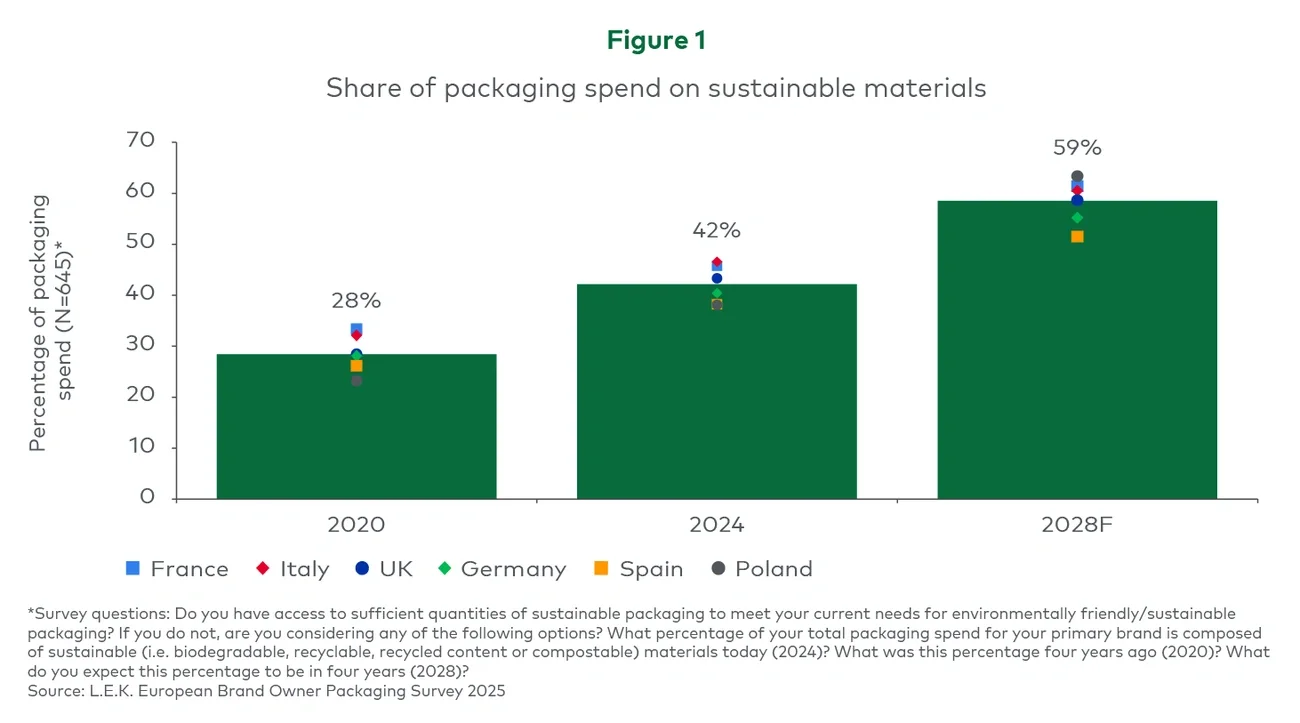
European brand owners report that 42% of their current packaging spend is allocated to sustainable materials — a significant jump from 28% just four years ago. That number is expected to rise to 59% by 2028, which suggests a slight acceleration.

Geographically, there is meaningful variation. France leads with 45% of packaging budgets currently directed to sustainable solutions, while Poland trails at 39%. These differences reflect market maturity, consumer pressure and supply chain readiness at the local level (see Figure 1).

Image
Figure 1. Share of packaging spend on sustainable materials
Image
Figure 1. Share of packaging spend on sustainable materials

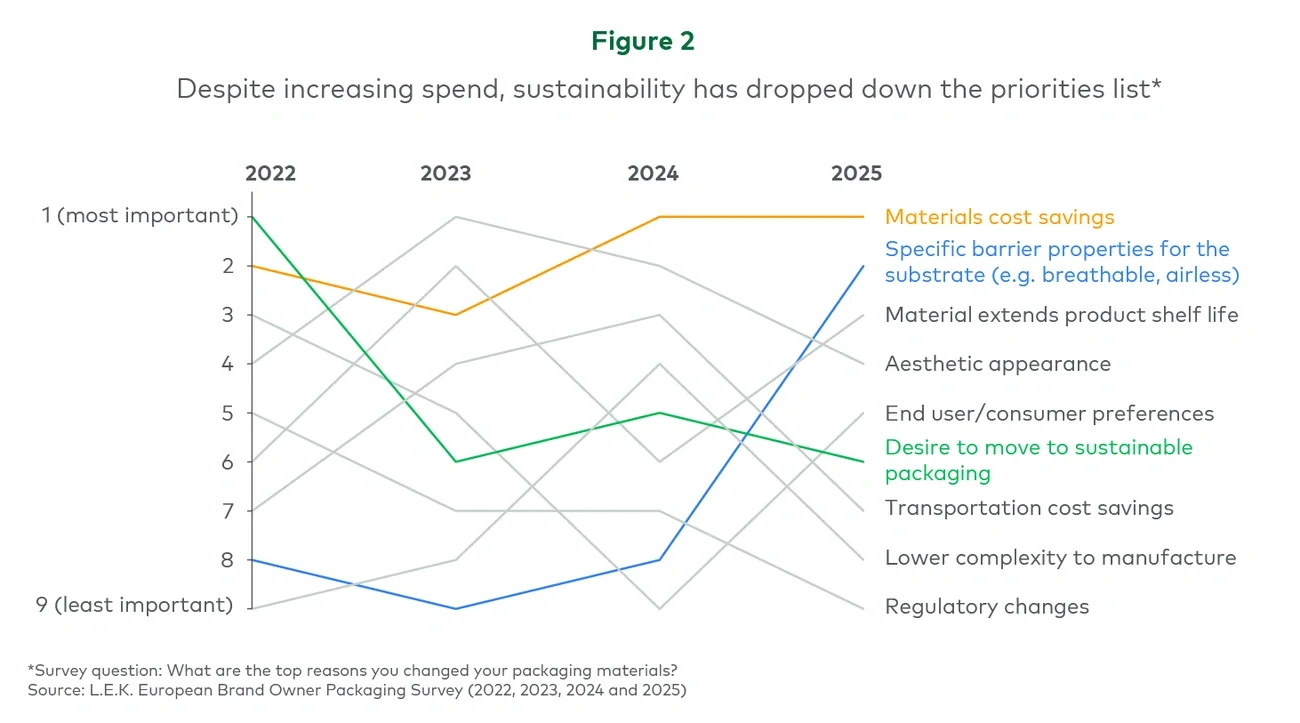
Compared to previous years, however, sustainability has declined in overall importance, particularly in the context of substrate change. Cost and aesthetics now lead the list of priorities, while sustainability has dropped to sixth place (see Figure 2).

Image
Despite increasing spend, sustainability has dropped down the priorities list*
Image
Despite increasing spend, sustainability has dropped down the priorities list*

What ‘sustainable’ actually means to brand owners

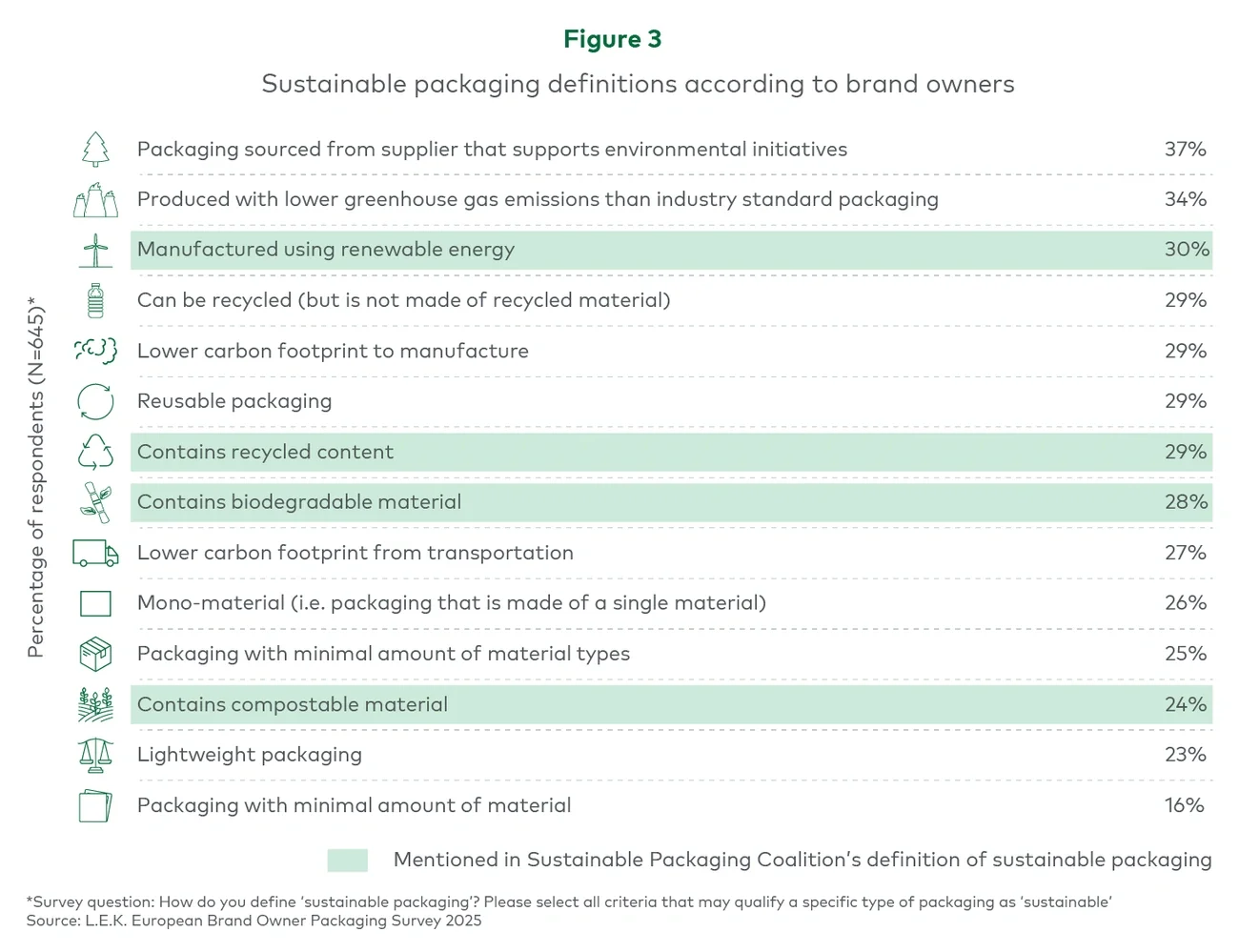
When asked to define sustainable packaging, brand owners pointed to supplier-level criteria and emissions performance — not just materials. The top three definitions were:

  • Packaging sourced from suppliers that support environmental initiatives (37%)
  • Packaging produced with lower greenhouse gas emissions than the industry standard (34%)
  • Packaging manufactured using renewable energy (30%)

Interestingly, circularity definitions, such as those mentioning recyclable or compostable materials, ranked lower. This shift signals a maturing view of sustainability, one that reflects carbon impact and systemic change taking priority over material-focused solutions (see Figure 3). This may also be driven by the fact that circularity faces challenges in recyclable materials’ properties (often lacking the barrier properties of multi-laminate, non-recyclable materials) and/or in recycling infrastructure availability.

Image
Figure 3. Sustainable packaging definitions according to brand owners
Image
Figure 3. Sustainable packaging definitions according to brand owners

Material access remains a persistent constraint

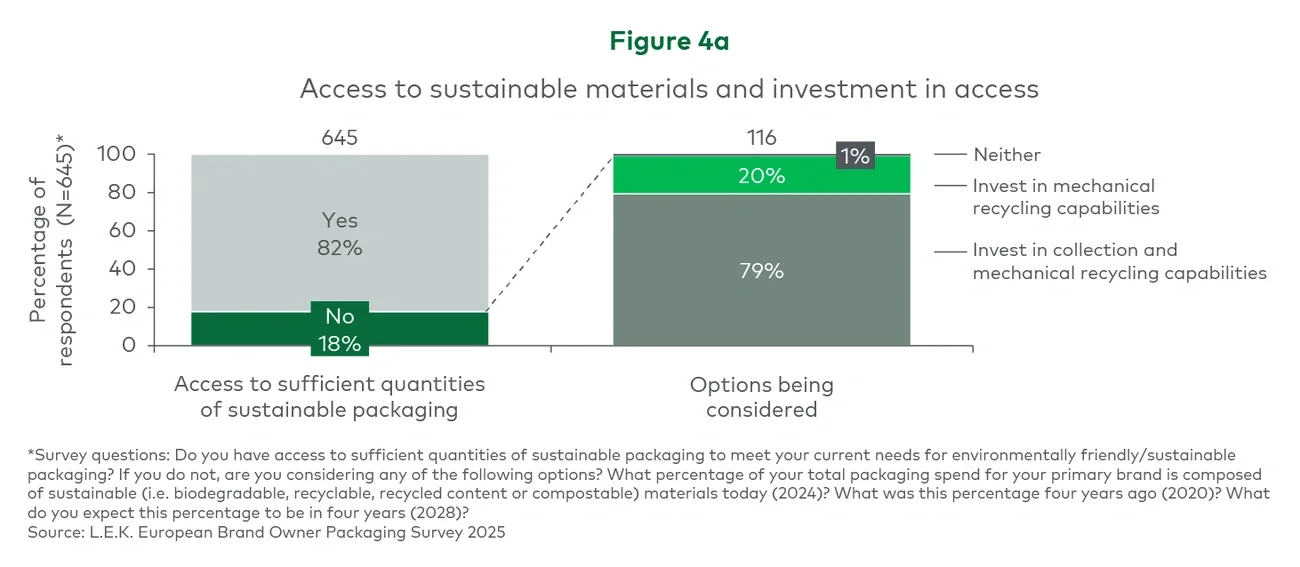
Even with rising ambitions, supply challenges are real. Nearly 1 in 5 brand owners (18%) report they do not currently have access to enough sustainable packaging materials. This issue disproportionately affects smaller brands, but even larger players don’t always have solutions available.

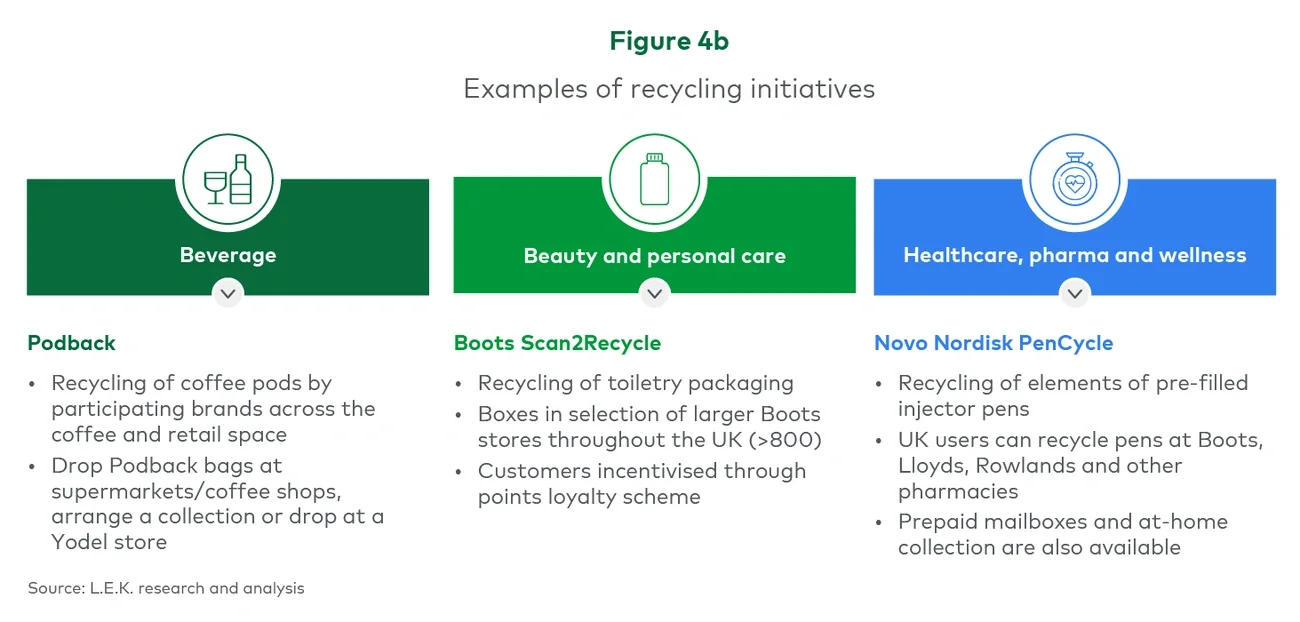
Among those facing shortfalls, most are not waiting for suppliers to catch up. Roughly 80% say they are considering investment in mechanical recycling and/or collection capabilities to secure sustainable material flows (see Figure 4a). This is particularly evident in sectors like beverage (e.g. coffee pod collection programmes), beauty and personal care (toiletry packaging return schemes) and healthcare (injector pen recycling) (see Figure 4b).

Image
Figure 4a. Access to sustainable materials and investment in access
Image
Figure 4a. Access to sustainable materials and investment in access
Image
Figure 4b. Examples of recycling initiatives
Image
Figure 4b. Examples of recycling initiatives

Expectations vs reality: Where brands are focused

The actions brands expect to take between now and 2028 show a clear pivot away from surface-level changes towards deeper supply chain interventions. In addition to supplier criteria and emissions reduction, mono-material formats, biodegradable inputs and post-consumer recycled content feature prominently on forward-looking roadmaps.

But ambition doesn’t always equal follow-through. The data shows that some areas, particularly those requiring investment in renewable energy or lightweighting, are seeing slower action, suggesting that cost and operational barriers remain significant.

Barriers are cost-related and structural

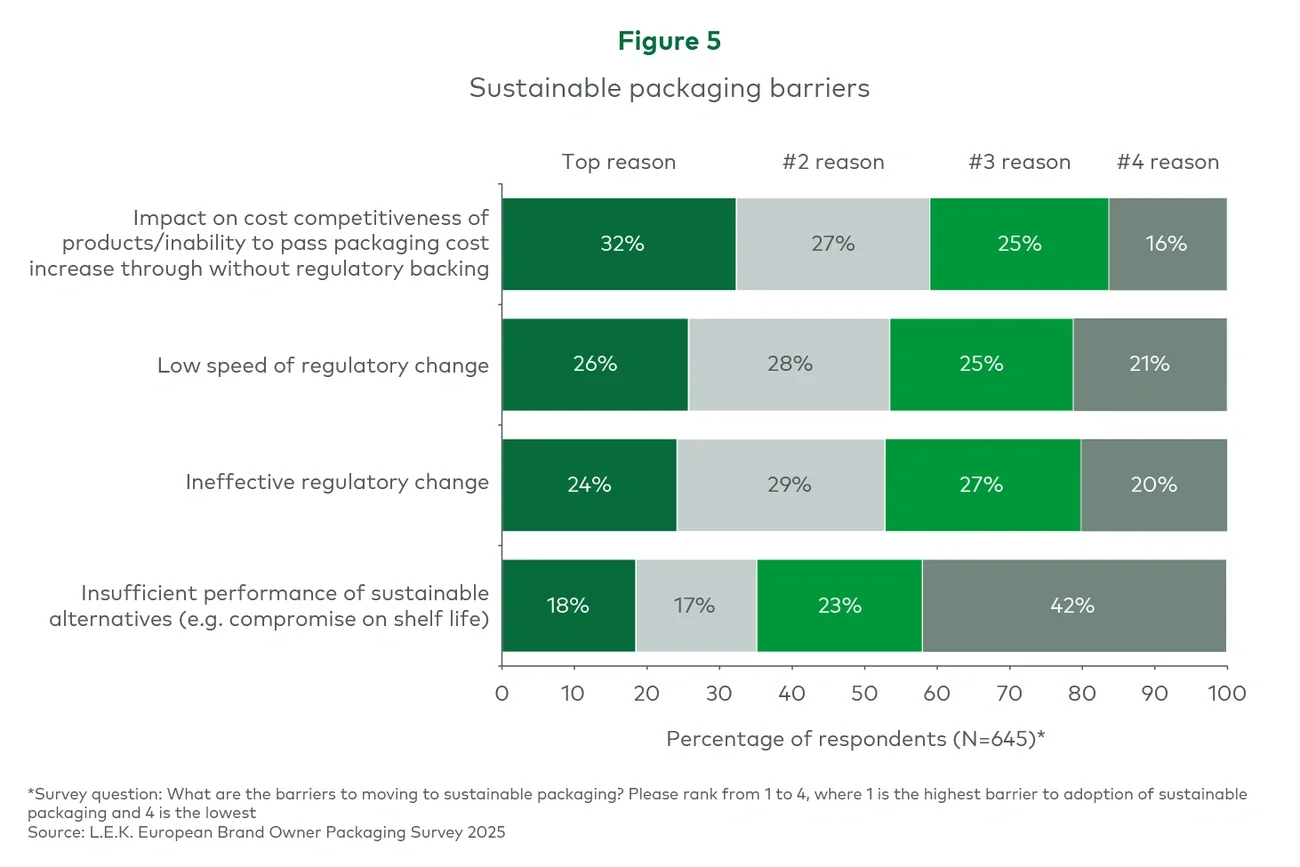
The top reason brand owners cite for slow progress on sustainable packaging? Cost competitiveness. Nearly 60% of respondents identified the inability to pass cost increases on to consumers, particularly in the absence of regulatory support, one of the top barriers to adoption. With the emergence of new tariffs on international trade, this concern will be even more pronounced for the products and trade flows which are affected.

This concern is most acute among larger companies, which face steeper complexity and scale-related challenges. Smaller firms, meanwhile, are more likely to cite the slow pace of regulatory change as their main frustration — a sign that they’re willing to act but lack policy tailwinds.

Another frequently cited issue is concerns over the performance of sustainable materials, such as potential reductions in shelf life (see Figure 5).

Image
Figure 5. Sustainable packaging barriers
Image
Figure 5. Sustainable packaging barriers

A shift towards targeted impact

For all the headwinds, brand owners remain broadly optimistic about their sustainability trajectory, but future success will require recalibrating expectations. The sustainability agenda must deliver on operational feasibility, cost containment and regulatory compliance. The winners will be those that focus on measurable impact and partner smartly with their customers and across the value chain. 

In the next instalment in our series, we’ll look at the key differences (and a few important similarities) between European and US packaging agendas.

Please contact us to find out more.

L.E.K. Consulting is a registered trademark of L.E.K. Consulting. All other products and brands mentioned in this document are properties of their respective owners. © 2025 L.E.K. Consulting

English

Innovation, Growth and Barriers to Success

June 10, 2025

Innovation has driven extraordinary economic growth over the past few decades, creating immense value for companies and investors. However, while some companies have flourished, innovation and growth remain highly concentrated. Hear from Stuart Jackson and Ilya Trakhtenberg with a thought-provoking discussion on how businesses can unlock the full potential of innovation.

Footage courtesy of Healthcare Business International 2025 (HBI 2025). 

L.E.K. Consulting is a registered trademark of L.E.K. Consulting. All other products and brands mentioned in this document are properties of their respective owners. © 2025 L.E.K. Consulting

English
Executive Insights

Thriving Amid Uncertainty: How Strategic Agility Fuels Sustainability Success

June 9, 2025

Key takeaways

Strategic agility is critical for navigating rapid sustainability disruptions, such as the recent volatility in raw materials markets and evolving international regulations and administrative priorities.

Companies can transform sustainability challenges into strategic opportunities through proactive scenario planning, digital transformation and cross-ecosystem collaboration.

Effective agility is necessary for organisations to swiftly adapt to regulatory uncertainty, supply chain vulnerabilities and evolving consumer demands. 

Organisations embedding agility into their core strategy gain resilience, outperform competitors and proactively lead in sustainability rather than simply reacting to change. 

Sustainability efforts can unravel quickly without strategic agility. Between 2020 and 2022, for example, lithium prices surged nearly 900%, sending shockwaves through the electric vehicle industry. From April 2025, evolving tariffs on critical imports — in addition to US executive actions targeting climate technologies and prioritising coal and a noticeable backtrack on environmental, social and governance language — have forced companies to rethink how the energy transition will evolve around the globe.

Regardless of the political sentiment and challenged supply chains, sustainability is at its heart about ensuring your company is set up for long-term success and taking a holistic perspective on the risks, disruptions and opportunities available.  

Indeed, as this Executive Insights highlights, companies that have embedded sustainability successfully and considered their Scope 3 emissions are likely to have better traceability and understanding of their supply chains, enabling them to more quickly grasp the impact of disruptions.  

Companies face shifting regulatory landscapes, volatile supply chains, technological disruption and consumer demands that change as swiftly as a trending hashtag. Traditional strategies simply don’t work in this new reality. If businesses hope to thrive, adaptability must become second nature.

The stakes are undeniably high. Organisations that master agility position themselves to seize emerging opportunities, smoothly navigate disruptions and outperform competitors that are slower to adjust. Agility is a strategic capability, strengthened through scenario planning, modular thinking, digital transformation, decentralised decision-making and purposeful collaboration across ecosystems. Companies that embed these capabilities gain stability along with the flexibility to lead rather than follow.  

To fully appreciate agility’s value, it’s crucial to first understand the sustainability challenges organisations face, from regulatory volatility to fragile supply chains.

Current landscape: Challenges in achieving sustainability

Organisations pursuing sustainability find themselves navigating an increasingly turbulent environment, marked by unpredictable regulatory swings, fragile supply chains, complex stakeholder expectations, rapid technological change and intense economic pressures. The path towards meaningful progress is rarely linear — success requires a sophisticated understanding of the multifaceted challenges involved and the agility to address them swiftly.

Stakeholder alignment

Sustainability is complex, partly because it involves much more than internal commitments alone. It requires engaging a vast network of stakeholders — from government regulators and suppliers to customers, industry enablers and investors — each with distinct agendas, maturity levels and definitions of success. This tangled web makes coordinated progress challenging at best; aligning diverse interests and expectations across these groups becomes a delicate balancing act.

Regulatory volatility

Businesses today grapple with policies that shift without warning. Consider the rapid-fire changes in US emissions regulations: ambitious targets under President Joe Biden and then substantial rollbacks and policy reversals under President Donald Trump (including targeted executive actions set to prevent state-level climate change policies), along with tariffs targeting some of the main exporters of climate technology to the US.  

Similarly, the UK’s deadline shift from 2030 to 2035 for banning new internal combustion engine vehicle sales, Germany’s abrupt policy reversal on nuclear power, and the EU’s Omnibus package delaying sustainability reporting requirements and reducing the reach and impact of the Corporate Sustainability Reporting Directive and the Corporate Sustainability Due Diligence Directive highlight how swiftly regulatory landscapes can transform.

This unpredictability forces businesses to frequently recalibrate their investments, making long-term planning feel like navigating through fog.

Supply chain disruptions

As reliance on China for rare earth minerals and battery production intensifies supply chain risks globally, with geopolitical tensions threatening continuous disruption, companies need to actively manage and fortify their supply chains. These uncertainties stall sustainability projects, forcing businesses into reactive rather than proactive positions.

Market and consumer dynamics

L.E.K. Consulting’s Global Consumer Sustainability Survey found that customers demand sustainable products, yet they’re hesitant when faced with higher prices and are often uncertain about which aspects of sustainability they should prioritise.

Likewise, companies developing sustainable packaging encounter resistance in passing the premium costs to consumers. Bridging the gap between sustainability aspirations and practical affordability remains a significant challenge.

Technological advancements

Technologies like AI-driven renewable energy grids, carbon capture and advanced recycling offer enormous potential — but implementation costs and the complexity of integrating them into legacy infrastructure remain daunting barriers. To compete effectively, organisations must rapidly integrate these solutions, despite economic and logistical challenges.

Economic pressures

Economic uncertainty and potential downturns frequently compel businesses to prioritise immediate profitability, putting critical long-term sustainability initiatives at risk. Yet agility provides a pathway through this turbulence, offering organisations the strategic tools to navigate disruption and turn uncertainty into opportunity.

Agility’s role in achieving sustainability

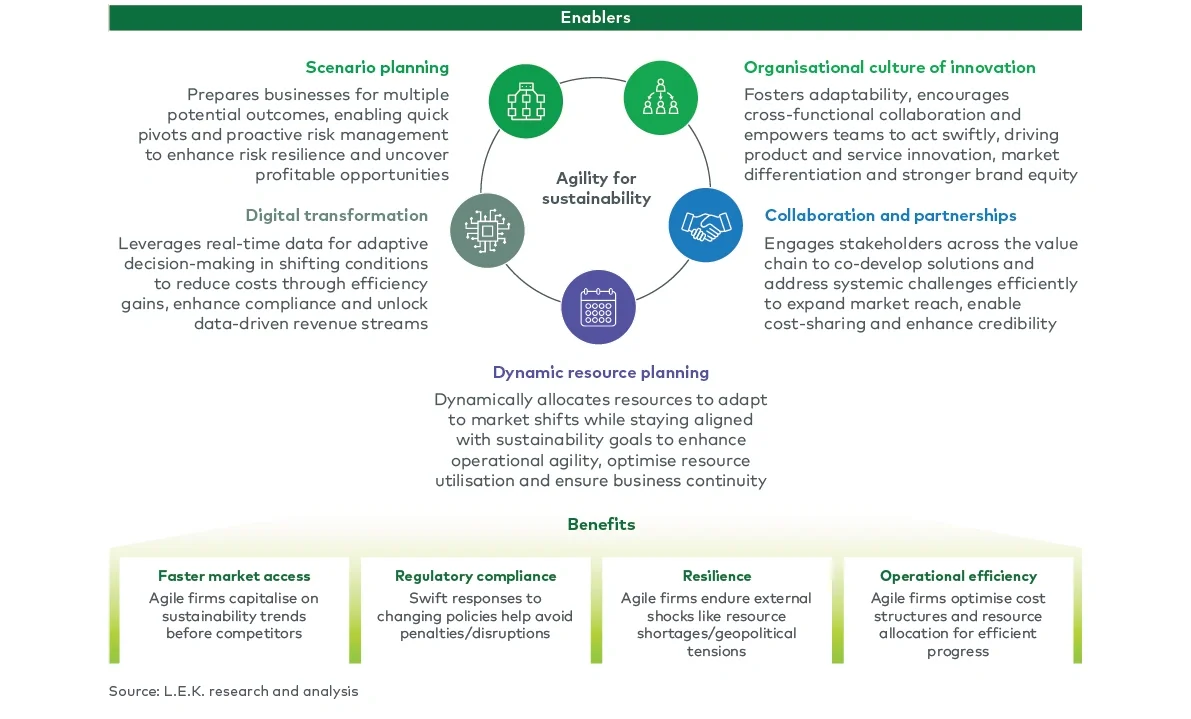
To effectively manage today’s sustainability challenges, businesses need practical strategies for translating agility into tangible outcomes. L.E.K.’s agility framework (see Figure 1) illustrates how agility enables organisations to transform sustainability challenges into strategic opportunities. 

Figure 1

Agility framework

Image
Agility framework

Figure 1

Agility framework

Image
Agility framework

This strategic agility offers clear benefits:

  • Competitive edge: Rapid adaptation to sustainability trends positions companies as proactive market leaders, enhancing both brand reputation and customer loyalty
  • Access to pockets of market growth: Agile organisations enter emerging markets earlier, tapping into sustainability-driven opportunities ahead of their slower-moving peers
  • Resilience: Agility builds organisational muscle to withstand resource shortages, geopolitical tensions and market volatility without losing sight of sustainability goals

But how do businesses actually become agile? Here are key enablers that top performers utilise.

  • Scenario planning: Rather than betting on a single vision of the future, agile companies imagine multiple plausible scenarios, proactively identifying risks and opportunities.

  • Digital transformation: Real-time analytics, AI and data-driven insights facilitate fast, informed decision-making, turning unpredictability into a competitive advantage. An important part of this is creating strategic plans that consider the risks, benefits and likelihood of different scenarios — helping businesses take confident steps now while keeping options open for less-likely outcomes.  
  • Innovative organisational culture: A culture of adaptability empowers cross-functional teams to react quickly and creatively in the face of disruption.
  • Collaborative partnerships: Engaging stakeholders across your entire ecosystem ensures better-coordinated systemic responses to sustainability challenges — and reduces risk and excessive resource deployment by one organisation.
  • Dynamic resource planning: Allocating resources flexibly allows companies to swiftly pivot strategies in response to evolving sustainability priorities.

Key steps to building agility for sustainability

Addressing short-term pressures proactively is essential, but organisations must do more than react to immediate challenges. To fully realise agility’s strategic benefits, companies need a structured approach. The following steps provide a clear, practical roadmap for embedding agility into the very core of your sustainability strategy:

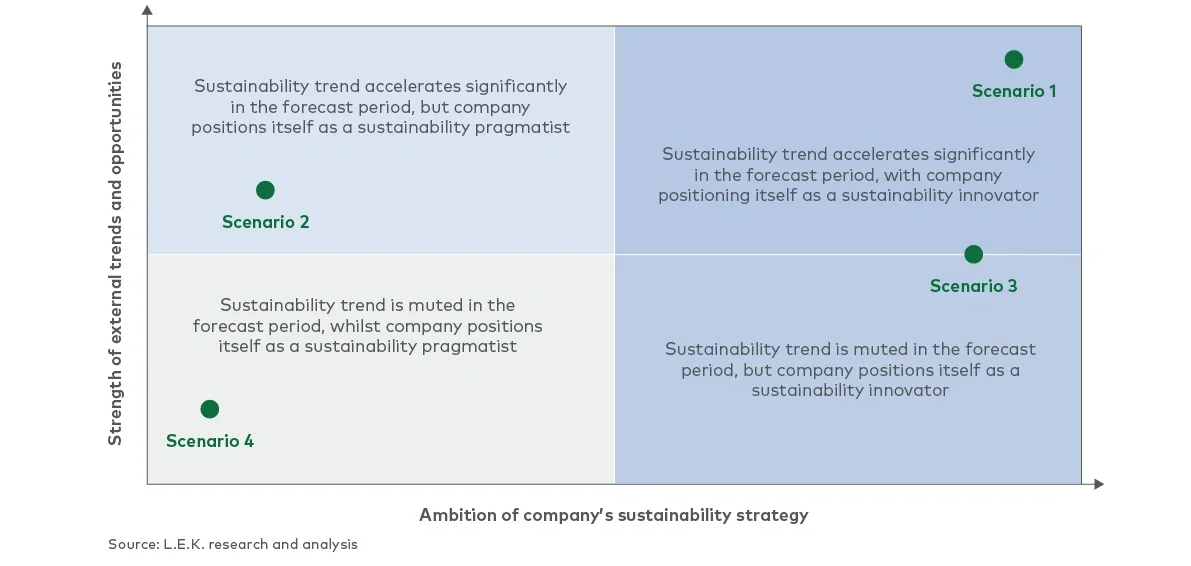
  • Invest in scenario-based agile strategic planning: Develop comprehensive scenarios to anticipate multiple futures, enabling strategic flexibility (see Figure 2)
  • Adopt modular approaches: Design operations and products that facilitate swift adaptation to evolving market conditions
  • Empower decision-makers: Decentralise authority, giving teams the autonomy to rapidly respond to sustainability challenges
  • Leverage digital technologies: Enhance operational transparency and responsiveness through AI, the internet of things and blockchain
  • Collaborate across ecosystems: Engage stakeholders, governments and suppliers in systemic collaboration to overcome sustainability barriers 

Figure 2

Approach to scenario planning

Image
Approach to scenario planning

Figure 2

Approach to scenario planning

Image
Approach to scenario planning

Effective scenario planning provides rich, data-driven narratives about possible futures — not predictions but plausible paths that inform strategic decisions. Developing clear, actionable early-warning signals further enables organisations to identify and respond swiftly to emerging scenarios.

These deliberate steps, when thoughtfully implemented, equip organisations not merely to respond effectively but also to proactively define their sustainability agenda, turning agility from a reactive necessity into strategic advantage.

Turning agility into strategic advantage for sustainability

In today’s dynamic sustainability landscape, agility moves from being beneficial to indispensable. Companies incorporating strategic agility do more than weather the storm; they turn disruption into distinct competitive advantage.

Forward-looking organisations understand sustainability requires proactive, systematic preparedness built on scenario insights, modular flexibility, decentralised decision-making, advanced digital capabilities and meaningful collaboration. Those that embrace these practices now will set new benchmarks, redefine their industries and lead sustainability’s next era — not merely keeping pace but actively driving the future.

In short, sustainability and agility are intertwined pathways to leadership. The businesses that realise this today will define tomorrow’s markets.

Please contact the team to find out how L.E.K. can support your organisation on this journey.

To see how leading organisations are putting agility into action, watch our companion video for further insight.

L.E.K. Consulting is a registered trademark of L.E.K. Consulting. All other products and brands mentioned in this document are properties of their respective owners. © 2025 L.E.K. Consulting

Questions about our latest thinking?

English

Why Health Equity Matters in Pharma

June 12, 2025

Disparities in healthcare access persist across markets, and pharma is well placed to address them. In this video, L.E.K. Partner Verena Ahnert outlines how companies can build credible, scalable strategies to improve health equity while supporting commercial goals.

Watch the full video to explore where the industry stands today and how L.E.K.’s maturity framework helps pharma companies assess progress and prioritise next steps.

Discover further insights in our Special Report on embedding health equity into pharma strategy.  

L.E.K. Consulting is a registered trademark of L.E.K. Consulting. All other products and brands mentioned in this document are properties of their respective owners. © 2025 L.E.K. Consulting

English

The Power of Agility in Sustainability

June 9, 2025

Shifting regulations, supply chain risks and cost pressures are making sustainability harder to deliver — and more critical to get right. In this video, L.E.K. Partners Rebecca Scottorn and Harpreet Singh explain how businesses can stay on track by embedding agility into their sustainability strategies.

Watch the full video to learn how agile organisations are navigating disruption, adapting with confidence and maintaining long-term momentum — and how L.E.K. supports clients in making this a reality.

For more detail, read our Executive Insights on how strategic agility drives sustainability success.

L.E.K. Consulting is a registered trademark of L.E.K. Consulting. All other products and brands mentioned in this document are properties of their respective owners. © 2025 L.E.K. Consulting

English

Integration Along the Value Chain – Redesigning Care Around the Patient

June 5, 2025

Care delivery is often designed around how systems want to deal with a patient and not always around the patient's needs. Hear from Tobias Koesters and panel members on different models of value chain integration and analysis of the impact on the patient, on clinicians and on payors in terms of increasing outcomes and lowering costs.  

Footage courtesy of Healthcare Business International 2025 (HBI 2025). 

L.E.K. Consulting is a registered trademark of L.E.K. Consulting. All other products and brands mentioned in this document are properties of their respective owners. © 2025 L.E.K. Consulting

English

Investing in Central and Eastern Europe

June 5, 2025

Growth in Central and Eastern Europe remains strong. Buoyed by a well-educated and relatively price-competitive workforce, there are fast-growing healthcare companies seeking to become European leaders. Hear from Guillaume Duparc and panel members for a data-driven overview of the opportunities in the market along with discussion between investors and providers.  

Footage courtesy of Healthcare Business International 2025 (HBI 2025). 

L.E.K. Consulting is a registered trademark of L.E.K. Consulting. All other products and brands mentioned in this document are properties of their respective owners. © 2025 L.E.K. Consulting

English

What is AI’s Equity Story?

June 5, 2025

What is the true economic impact of AI on value creation? Hear from Klaus Boehncke, Guillaume Duparc and panel members with examples and best practices to get positive ROI from AI investment, and answers to the questions all CEOs and investors should be asking when investing and implementing in the technology.  

Footage courtesy of Healthcare Business International 2025 (HBI 2025). 

L.E.K. Consulting is a registered trademark of L.E.K. Consulting. All other products and brands mentioned in this document are properties of their respective owners. © 2025 L.E.K. Consulting

English
Subscribe to