Higher Education in Dubai: The Middlesex University Journey

October 17, 2025

Cedwyn Fernandes
Cedwyn Fernandes

In the first of a three-part series, L.E.K. Consulting Partner Chinmay Jhaveri interviews Professor Cedwyn Fernandes, Pro Vice-Chancellor of Middlesex University and Director of Middlesex University Dubai, to explore Dubai’s remarkable higher education trajectory.

From just 27 students in 2005 to more than 6,300 learners enrolled across 90 programs today, Middlesex University Dubai has become the largest UK branch campus outside China. Their discussion unpacks how Dubai’s seamlessly integrated educational ecosystem — and the global resonance of Brand Dubai — has propelled this growth, creating new opportunities for learners and institutions alike.

This conversation offers a lens into how policy, innovation and partnerships continue to redefine transnational education in Dubai, setting the stage for Parts 2 and 3 in the series.

English
Executive Insights

Indonesia’s Retail Pharmacy Landscape: Why Global Investors Should Take a Closer Look

October 16, 2025

Indonesia’s retail pharmacy sector represents an interesting and still largely untapped opportunity within the country’s healthcare system. Despite a population of more than 280 million people, the market is highly fragmented, with modern chains accounting for only a small share of outlets. At the same time, broader insurance coverage, a growing middle class and rapid digital adoption are reshaping how Indonesians seek medicines and healthcare services. Together, these factors are laying the groundwork for consolidation, professionalization and innovation — creating space for investors and operators to add real value while supporting the evolution of a more accessible and resilient healthcare channel.

Indonesia’s pharmacy sector cannot be understood in isolation — it is deeply linked to broader structural challenges in the country’s healthcare system. At only about 170,000 doctors (six per 10,000 people) as of 2023, physician density remains approximately 60% below the global average, underscoring a nationwide shortage of medical professionals (see Figure 1). Accessibility is another major hurdle: nearly half of the population lives in rural areas, yet only roughly 5% of health facilities are located there, creating significant gaps in coverage. Affordability compounds these issues, with out-of-pocket spending still accounting for a large portion of healthcare costs. Against this backdrop, with many Indonesians unable to access even basic healthcare services, pharmacies have emerged as a crucial first line of care, bridging affordability and access gaps in ways hospitals and clinics often cannot.

Figure 1

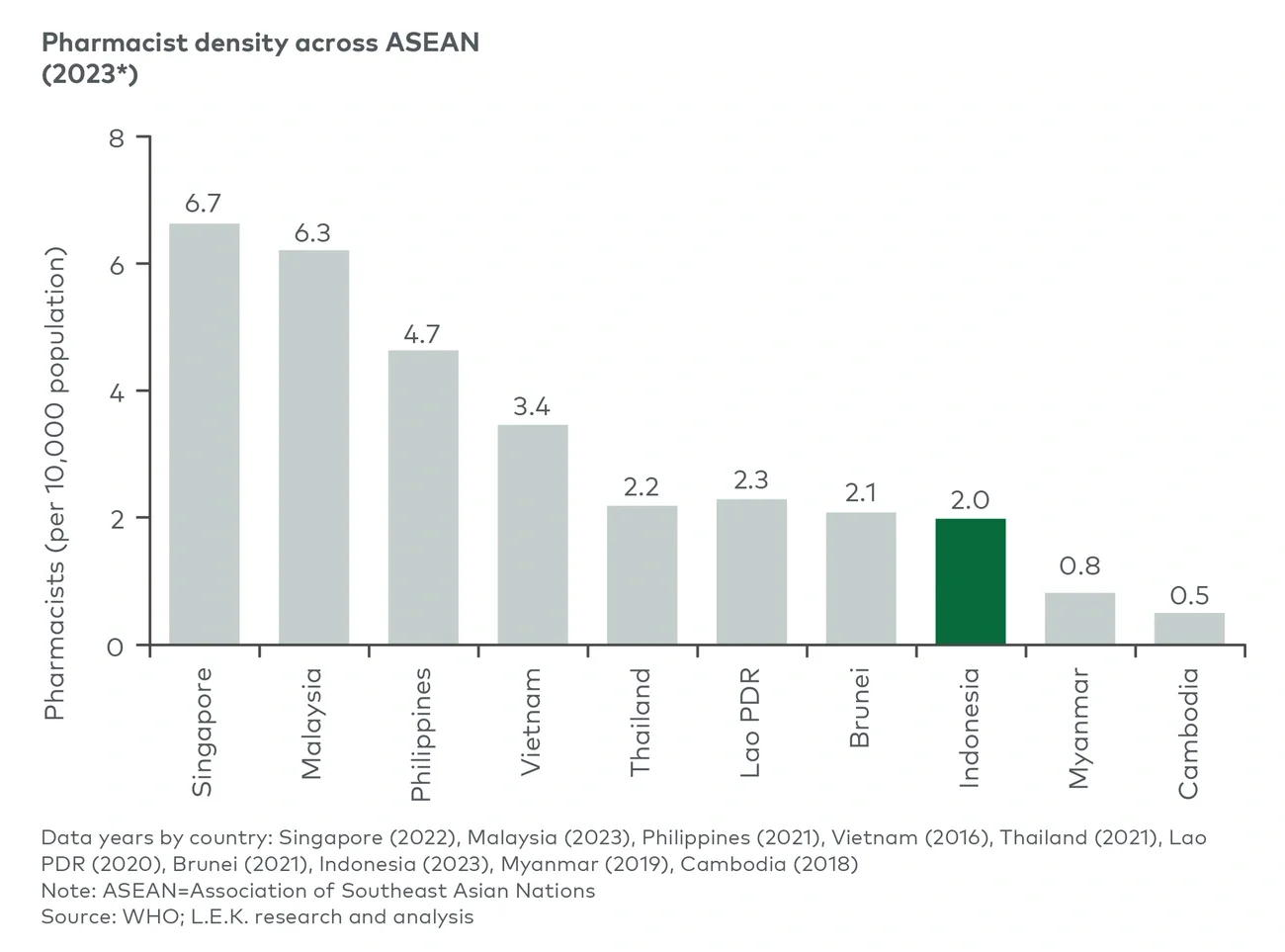
Pharmacist density across ASEAN

Image
Pharmacist density across ASEAN

Figure 1

Pharmacist density across ASEAN

Image
Pharmacist density across ASEAN

Indonesia has only two pharmacists per 10,000 inhabitants — the third-lowest ratio in the Association of Southeast Asian Nations (ASEAN). The supply gap, combined with demographic and economic trends, highlights the scale of the opportunity.

Fragmentation creates a consolidation opportunity

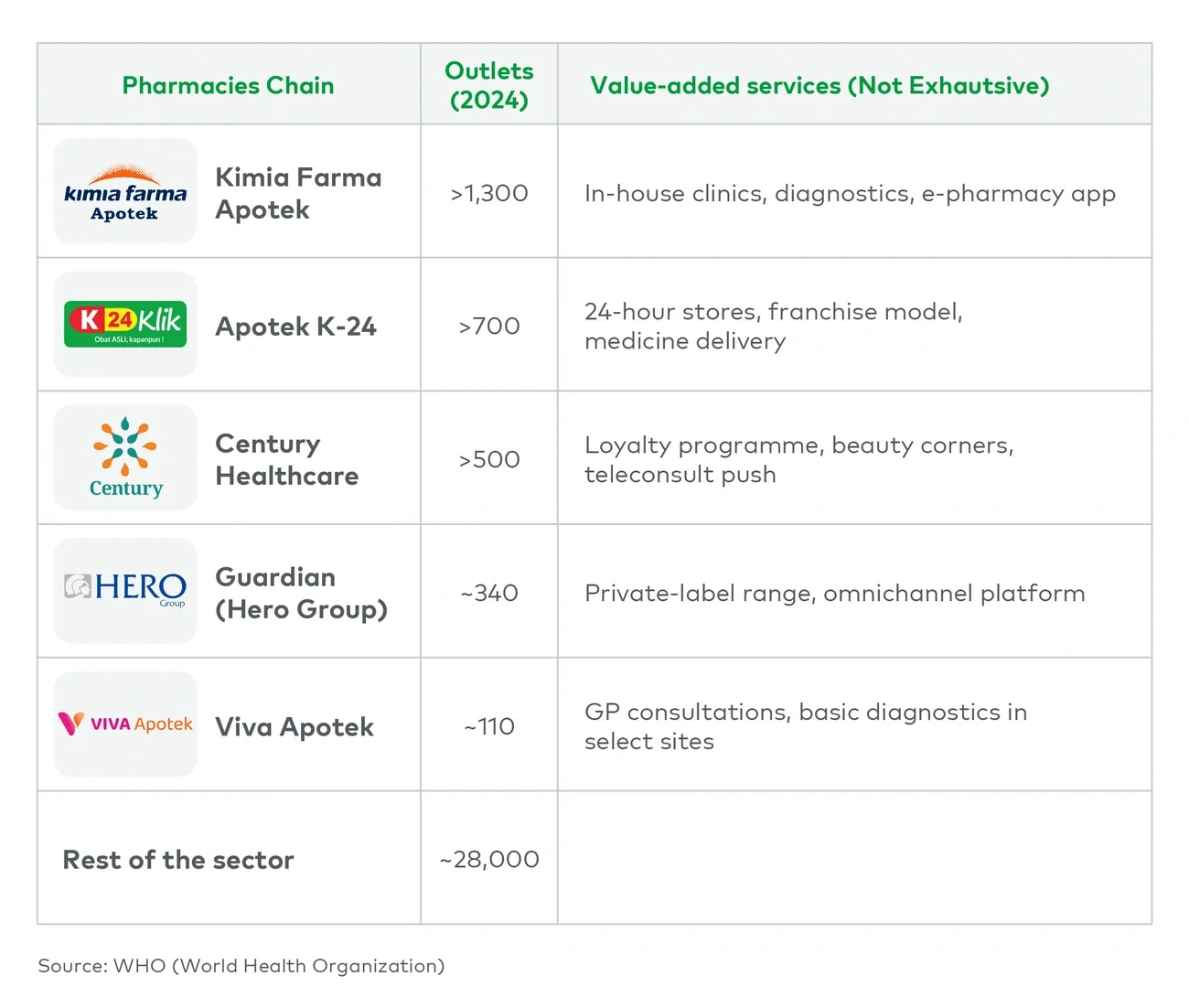
Indonesia counts approximately 31,000 licensed pharmacies, yet the top five banners run only about 10% of them (see Figure 2). Independent “mom-and-pop” stores dominate, limiting efficiency and consistency. Consolidation and professionalization are natural next steps.
 

Figure 2

Number of pharmacy outlets in Indonesia, 2016-21

Image
Number of pharmacy outlets in Indonesia, 2016-21

Figure 2

Number of pharmacy outlets in Indonesia, 2016-21

Image
Number of pharmacy outlets in Indonesia, 2016-21

Tailwinds supercharge the growth outlook

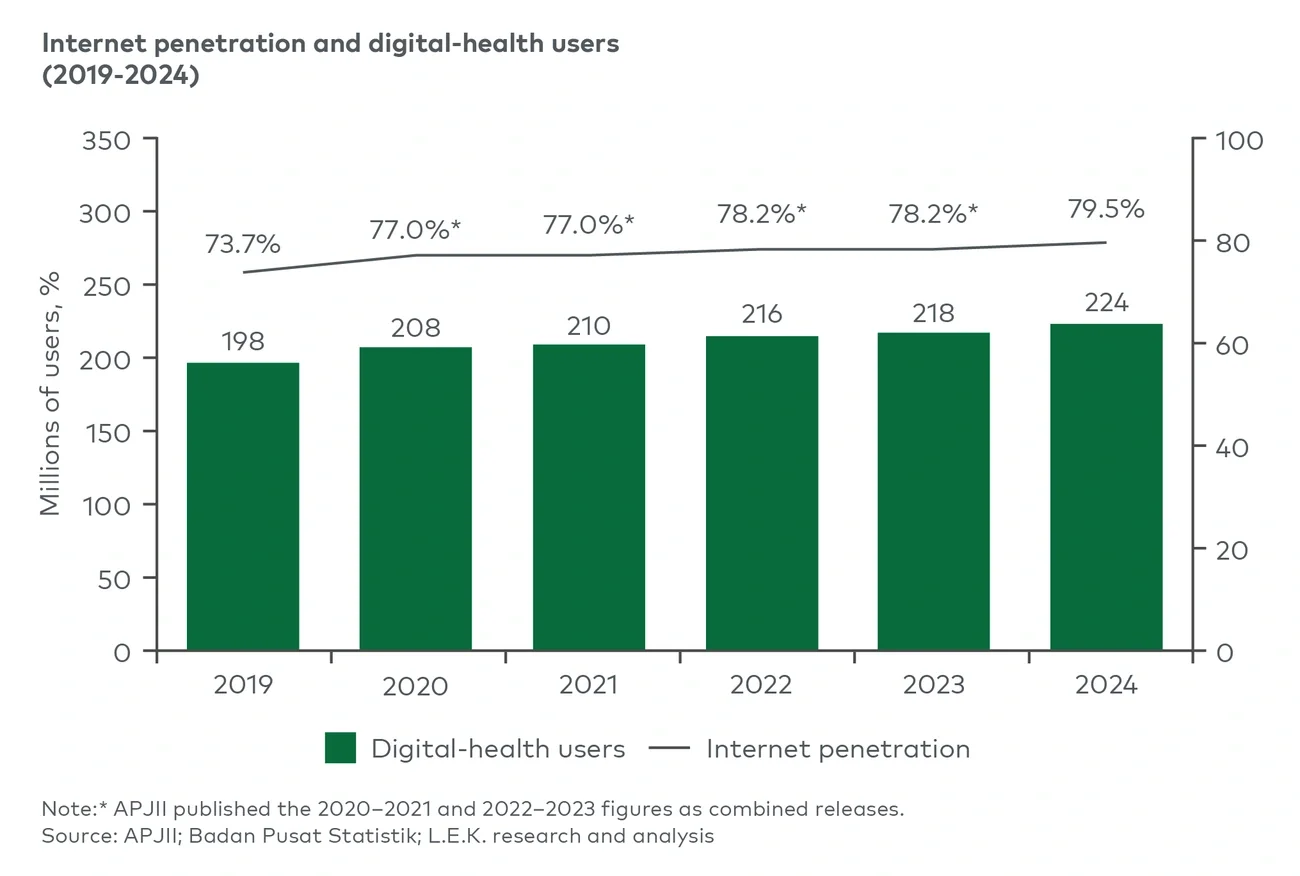
Licensing capabilities are becoming increasingly central to success in Indonesia’s pharmacy market. Securing a PSEF (Penyelenggara Sistem Elektronik Farmasi) e-pharmacy license allows a pharmacy to operate not only as an offline retail touchpoint but also as an online fulfillment partner. This dual role means a licensed pharmacy can fulfill orders through its own digital channels and simultaneously act as a logistics and dispensing partner for third- party platforms. In today’s digital age, where consumer expectations increasingly include online convenience and rapid delivery, the ability to bridge physical and digital fulfillment has shifted from a nice-to-have to a fundamental competitive requirement. Regulatory liberalization (i.e., Presidential Regulation 10/2021) has eased ownership limits in pharma manufacturing and wholesale distribution and opened pathways for joint ventures and franchising in downstream healthcare. Furthermore, internet penetration reached 79.5% in 2024, driving uptake of telehealth (30-35 million active users) and e-pharmacy fulfilment

(see Figure 3). Chains that embrace e-prescriptions, delivery and loyalty-linked apps are already enjoying double-digit same-store growth.

Figure 3

Internet penetration and digital-health users, 2019-24

Image
Internet penetration and digital-health users, 2019-24

Figure 3

Internet penetration and digital-health users, 2019-24

Image
Internet penetration and digital-health users, 2019-24

BPJS limitations and the path to growth

A defining feature of the Indonesian system is the Badan Penyelenggara Jaminan Sosial Kesehatan national health insurance scheme. Current regulation stipulates that BPJS-covered prescriptions cannot be dispensed at private pharmacies; instead, patients must obtain medicines at designated public health facilities. This significantly reduces the role of retail pharmacies in reimbursed prescription volumes.

As a result, pharmacies must look elsewhere for growth. The most important levers include:

  • Raising consumer awareness of pharmacies as a trusted first point of care
  • Consolidating independents into larger, more efficient networks
  • Expanding consumer-health portfolios across over the counter (OTC) medicines, supplements, beauty and traditional herbal products, where margins are higher and pharmacies retain pricing power

These dynamics frame the retail pharmacy channel less as a reimbursement vehicle and more as a consumer-health, retail-driven play.

A strategic route to seed brands and capture value-added demand

Pharmacies are Indonesians’ first stop for care: over 60% of purchases are made without a physician visit. For multinational suppliers and investors, this creates opportunities to secure prescription and OTC pull-through via shelf space and pharmacist advocacy, tap into consumer-health adjacencies such as vitamins and herbal products (some of which are growing at more than 12% CAGR), and build data-driven ecosystems through loyalty programs and digital engagement.

Figure 4

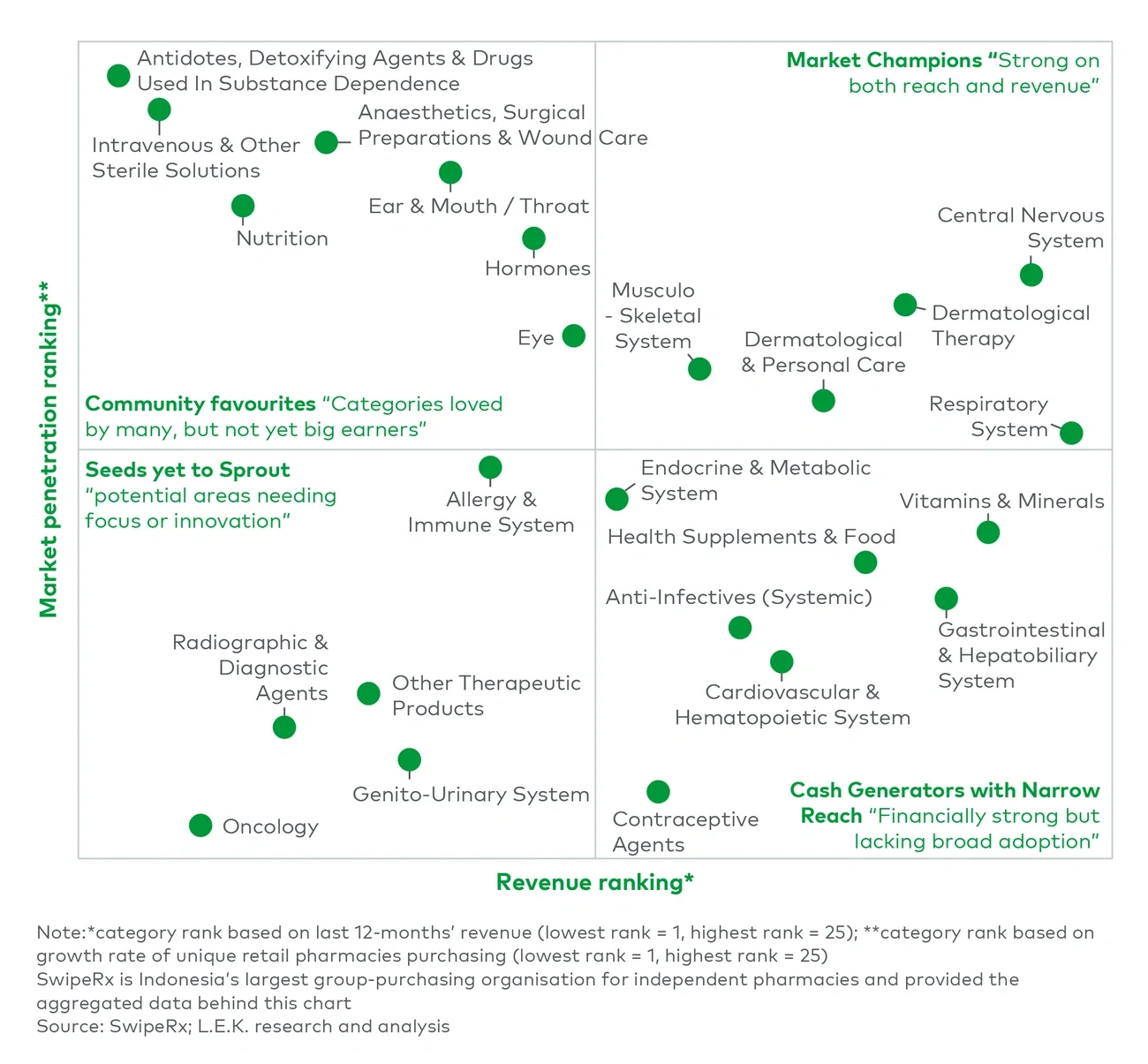
Retail pharmacy sector positioning

Image
Retail pharmacy sector positioning

Figure 4

Retail pharmacy sector positioning

Image
Retail pharmacy sector positioning

Figure 4 highlights therapeutic areas like respiratory, central nervous system and dermatology where consolidation could unlock faster branded growth.

Value-creation levers for pharmacy chains

Beyond consolidation and portfolio expansion, leading operators can create additional value through operational and experiential levers:

  • Storefront and layout optimization: Clear zoning of prescription, OTC and wellness categories; adding consultation or diagnostics corners to increase service revenue
  • Network optimization: Using geospatial analytics to refine expansion and proximity to clinics/hospitals
  • Workforce productivity: Standardized pharmacist training and digital workflow automation
  • Private-label development: Launching proprietary OTC and wellness ranges with superior margins
  • Omnichannel integration: Seamless e-commerce, loyalty apps and last-mile delivery
  • Data monetization: Leveraging loyalty and purchase data for adherence programs and supplier partnerships

What winning investors will do next

To capture this opportunity, successful investors will focus on a few priority actions that can both accelerate growth and strengthen long-term competitiveness:

  • Secure a scalable platform: Achieve a majority stake in a leading banner or a franchise roll-up to 1,000-plus stores.
  • Digitally enable operations: Integrate e-prescriptions, analytics and last-mile delivery.
  • Broaden the offer: Add clinics, diagnostics and chronic-disease management.
  • Localize portfolio and sourcing: Adapt formats and packaging, and leverage purchasing scale.

Indonesia’s retail pharmacy sector is still underdeveloped but changing quickly. With BPJS regulation limiting direct participation in reimbursed prescriptions, the growth story will be driven by consolidation, consumer awareness and portfolio expansion into higher-margin products. Combined with supportive regulation and rising digital adoption, this creates fertile ground for well-capitalized investors to add value while shaping the next chapter of the country’s healthcare system.

L.E.K. Consulting is a registered trademark of L.E.K. Consulting LLC. All other products and brands mentioned in this document are properties of their respective owners. © 2025 L.E.K. Consulting LLC

English
Image
report thumbnail
Special Report

Key Trends Shaping the Future of MedTech Startups in APAC and Beyond

October 17, 2025

The MedTech industry in Asia Pacific has experienced a decade of rapid change. Healthcare systems have faced new pressures, patient expectations have evolved, and entrepreneurs have stepped up to meet those challenges. The result is a vibrant ecosystem where startups are shaping the future of care, fueled by local and global investment, technology, and the region’s diverse health needs.

This report is the result of a collaboration between MedTech Innovator and L.E.K. Consulting. Drawing on more than 2,600 startup applications to the MedTech Innovator Asia Pacific Accelerator Program between 2019 and 2025, it provides a detailed view of how the industry is evolving. The data reflects the creativity and resilience of innovators across medical devices, digital health, and in vitro diagnostics, while also highlighting broader shifts in patient needs, models of care, funding patterns, and investor sentiment.

The past decade has brought both disruption and progress, from the pandemic and the rise of telehealth to workforce challenges, new artificial intelligence tools, and a more cautious funding environment. Startups are often the first to respond, adapting quickly to new pressures and pointing the way toward transformative technologies. In Asia Pacific, these innovators are demonstrating not only agility but also increasing sophistication, digital integration, and readiness to lead in AI-enabled healthcare. By understanding these patterns, we hope this report helps investors, policymakers, and healthcare leaders make better decisions that support entrepreneurs and deliver lasting benefits for patients.

For further insights into our analysis, download the full report.

Contact us for more information.

English

Tariffs Move From Headlines to Shelves: How Brands and Retailers Adjust Prices

October 15, 2025

The backdrop: 2025’s tariff overhang and jittery consumers

Tariffs have certainly been at the center of business planning in 2025. With the stop-start dynamic of tariff policies, it has been hard to understand how much prices are actually changing at checkout.

Regardless, consumers have noticed. While prices have been steadily rising these past few months, the latest L.E.K. Consulting consumer sentiment pulse surveys highlight that consumers expect to shoulder the expected rise in costs, feel they are already paying more than they’d like and thus expect to tighten their budgets.

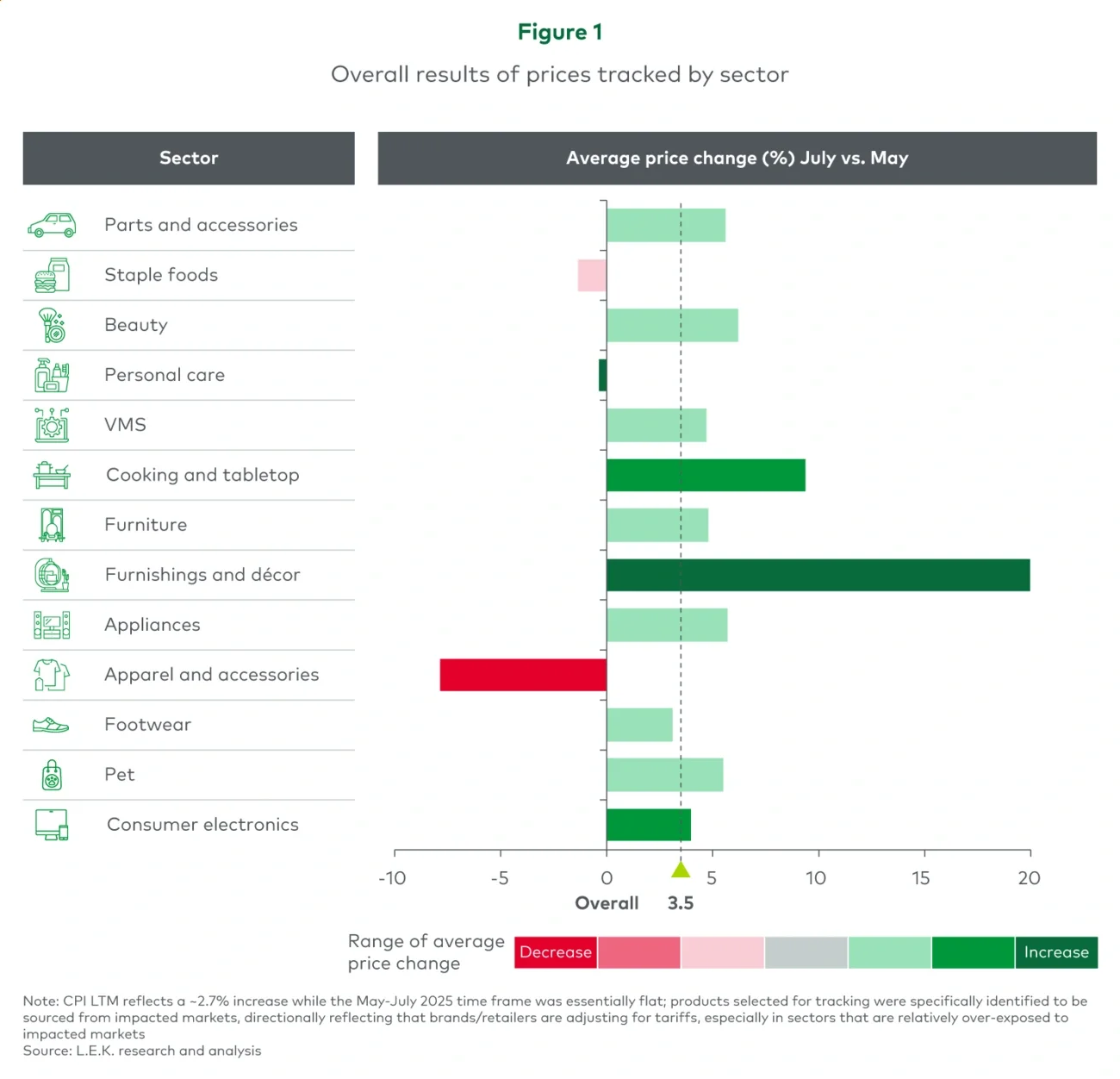
To further separate noise from signal, we tracked prices for approximately 300 stock-keeping units (SKUs) across six consumer sectors and about 130 retailers during that same time frame and found that net prices rose roughly 3.5% on tariff-exposed goods.

What we found: Prices did increase, but unevenly

The amplitude of price changes varied by category, price tier and channel (see Figure 1). Premium tiers and specialty channels did more of the “heavy lifting” on absolute price points; value channels emphasized stability. More specifically:

  • Household essentials were steady (flat to slightly down) as retailers prioritized price image and trip loyalty in these aisles.
  • Meanwhile, discretionary goods spiked, especially in home goods (e.g., cooking and tabletop) and beauty.
  • Consumers feel it most in big-ticket discretionary categories such as household durables, where the highest share of respondents in our pulse surveys say they are now paying “above acceptable” levels. This was consistent with price-scraped findings.
  • The apparel and accessories category is the price-cut outlier. We have seen in our consumer work that apparel is the key area where consumers will reduce spend in response to tariffs. That behavior is consistent with the market actually cutting average prices using more promotional activity as they work through pre-tariff inventory based on a likely higher level of demand. 
Image
Figure 1. Overall results of prices tracked by sector
Image
Figure 1. Overall results of prices tracked by sector
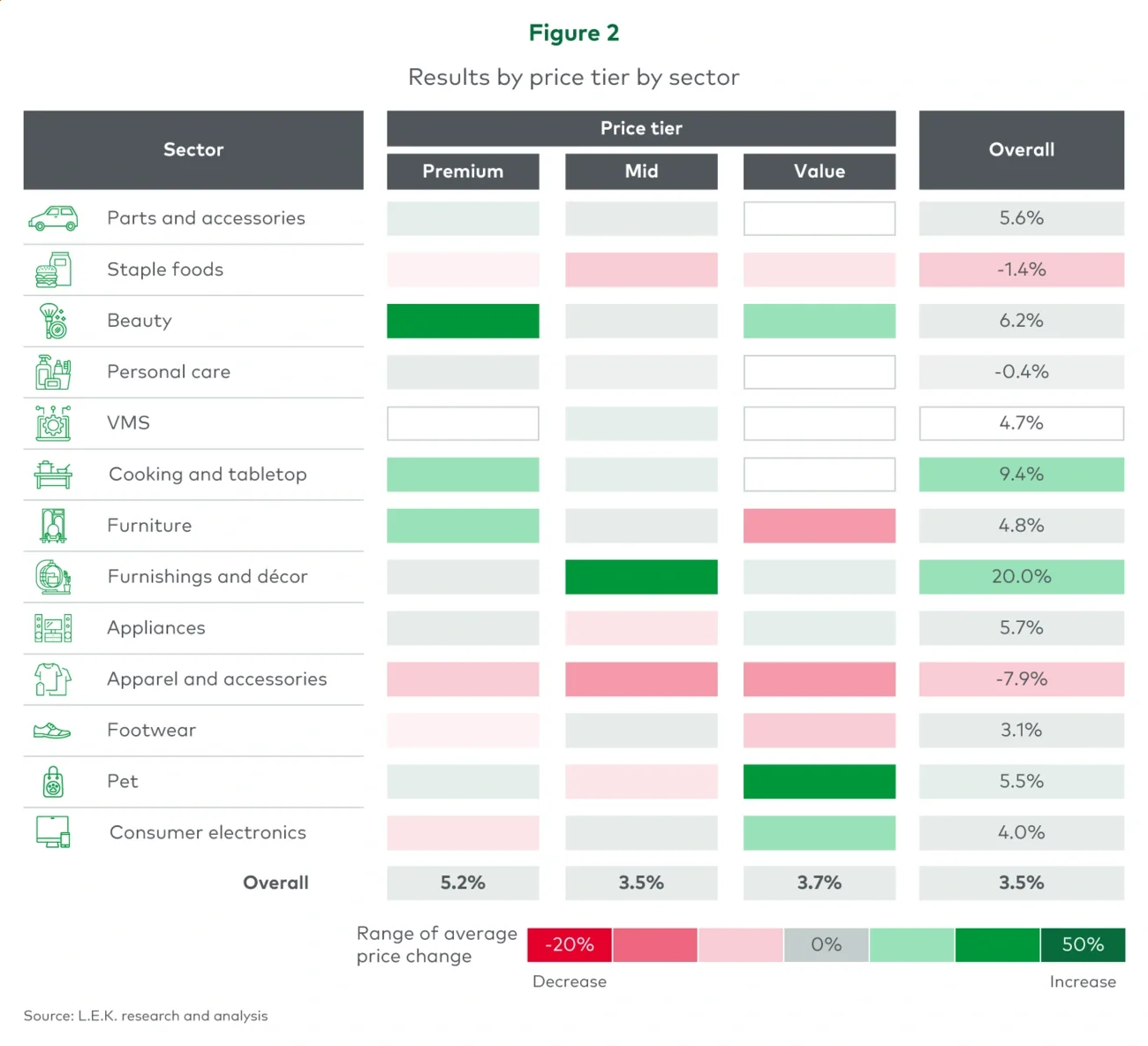
  • Price tier dynamics: broadly speaking, premium products went up, value went down. As seen in Figure 2, outside of furnishings, premium SKUs led the increases; value-tier SKUs were further reduced to sharpen the price ladder and protect share.
  • Food and beverage showed how the middle squeezes its pricing to defend against private label. These SKUs nudged down by almost 4.5% to straddle shoppers trading between national brands and fast-growing store brands. This aligns with market data: U.S. private labels hit record shares in 2024 and continued to outgrow brands in 1H25.
Image
Figure 2. Results by price tier by sector
Image
Figure 2. Results by price tier by sector
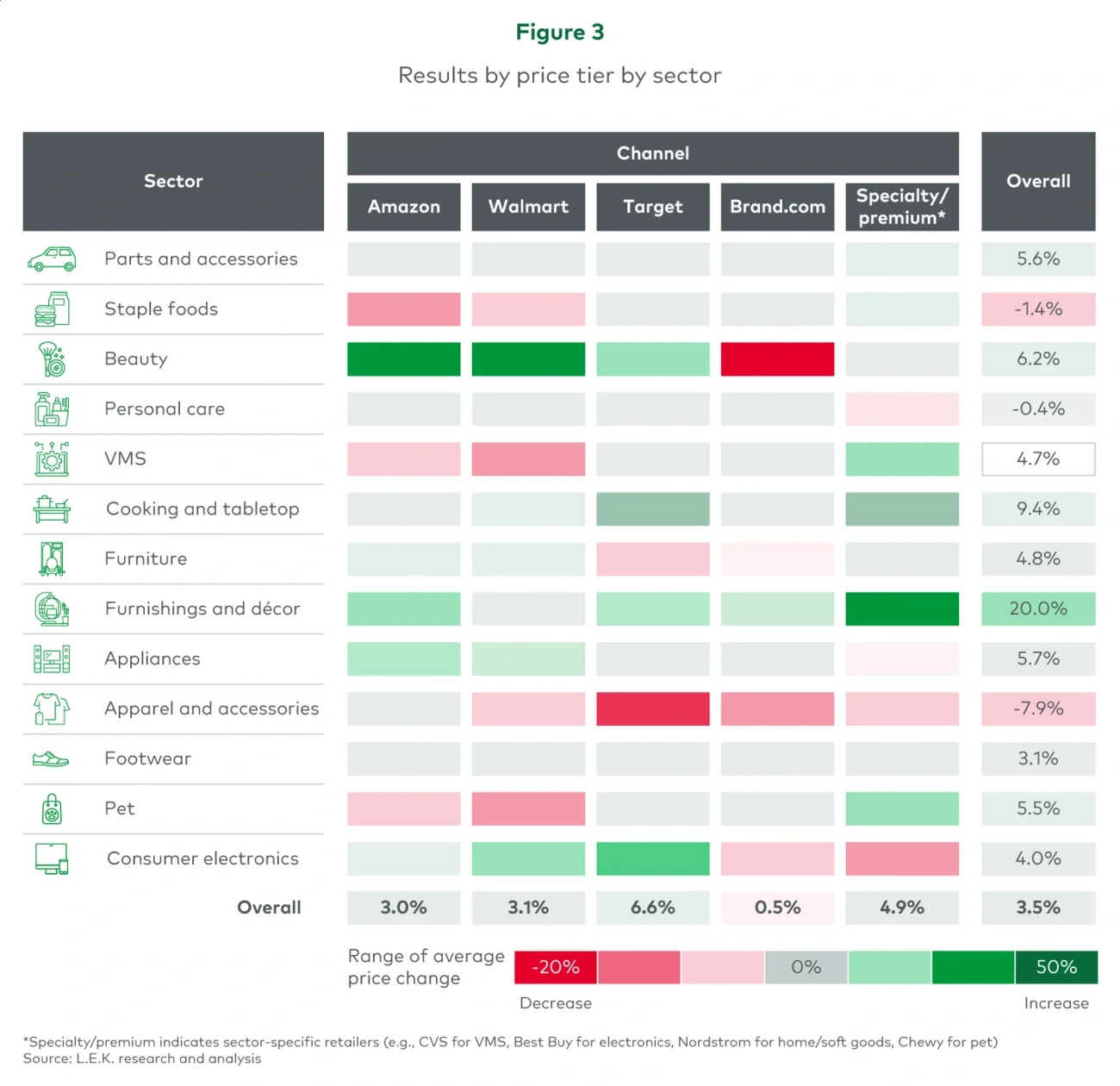
  • Retail channels behaved true to their perceived value positioning (see Figure 3). Specialty/premium retailers tended to pass through costs to shoppers with a higher willingness to pay and with brand affinity, while brand.com and value players (e.g., Amazon, Walmart) largely held the line on everyday-low-price image, likely leaning on mix, pack/size and supplier funding to maintain shelf discipline.
Image
Figure 3. Results by channel by sector
Image
Figure 3. Results by channel by sector

So what? Pricing in a tariff era requires precision, not posture

The through line in 2025 is uncertainty: Policies continue to toggle on and off, more attention is paid to price increases, companies attempt to manage their tariff exposure and consumers are primed to believe they’ll foot the bill. This cocktail makes broad, blunt price moves risky. 

Instead, these findings argue for precision and agility; be surgical with your pricing by product, tier and channel but also use both gross pricing and promotional activities to optimize. 
This means taking a hard look at the current cost vs. value-based pricing strategies, a refresh of your portfolio and price-pack architecture, and a more surgical assessment of current promotional strategies to balance driving value and traffic vs. margin. 

It is critical for brands and retailers to set themselves up for success as families ramp up for the holiday season. Please reach out to us to go deeper into these sector- and SKU-level patterns and how we can help operationalize these findings.

Postscript 
Our methodology
L.E.K. tracked prices for approximately 300 SKUs across six consumer sectors and about 130 retailers. We focused on widely purchased tariff‑exposed or adjacent items to understand how sectors, brands and channels actually adjusted shelf prices as policy uncertainty unfolded (see Figure 4).

L.E.K. Consulting is a registered trademark of L.E.K. Consulting LLC. All other products and brands mentioned in this document are properties of their respective owners. © 2025 L.E.K. Consulting LLC

English

Building Resilient and Sustainable Healthcare Supply Chains

October 15, 2025

When a shipment of temperature-sensitive vaccines or therapeutics leaves the factory, the margin for error is vanishingly small. A short time outside the right temperature range or a hold-up at a border can render the products useless — wasting millions of dollars and, more importantly, putting patients at risk.

This is the reality of healthcare and pharmaceutical supply chains: intricate, tightly regulated networks where precision is the difference between success and failure. The pandemic revealed how easily those networks can fracture — and how quickly they can be reconfigured when there is no alternative.

Now, new pressures are mounting. Half of all new drugs require cold-chain handling, while the growth of biosimilar usage adds further strain. Regulatory scrutiny is tightening, with the 2025 EU Good Distribution Practice (GDP) update raising the bar on traceability. At the same time, climate commitments are pushing organisations to redesign networks for lower emissions.

The challenge is clear. In the years ahead, industry players must build supply chains that are both resilient to disruption and credible in the eyes of regulators, while moving decisively toward a lower-carbon future.

Partnering for resilience and compliance

To manage this complexity, healthcare organisations increasingly depend on specialist third-party logistics providers (3PLs). Best-in-class providers run GDP-validated networks supported by 24/7 control towers and lane-risk mapping. For healthcare systems such as the NHS, this can translate into fewer therapy write-offs and improved patient outcomes. 

Choosing the right logistics partner also helps meet regulatory expectations. Robust quality systems reduce the risk of audit failures or product recalls, while investments made by logistics providers in automation, alternative-fuel fleets and advanced analytics provide access to cutting-edge infrastructure without tying up customers’ internal resources. 

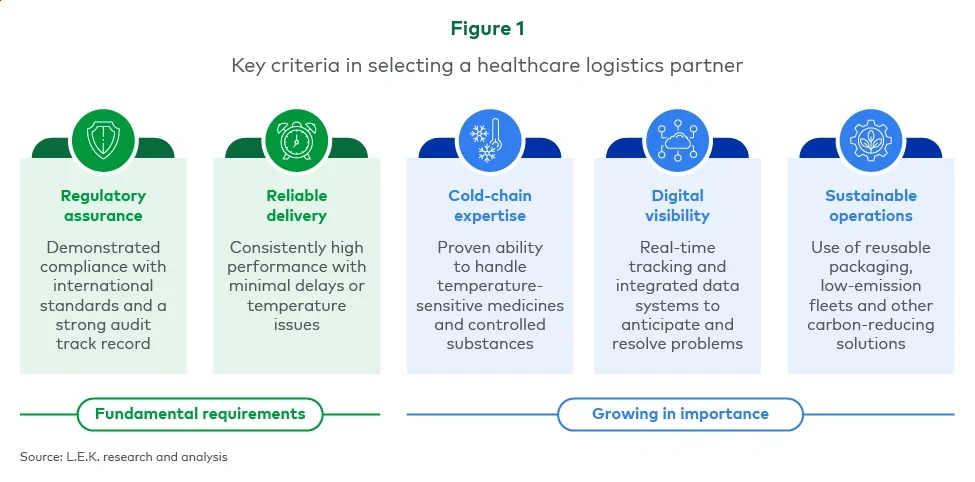
Selection criteria typically focus on regulatory assurance, delivery reliability and cold-chain expertise. Increasingly, advanced capabilities such as secure chain-of-custody, late-stage customisation and real-time IoT telemetry are differentiators. Scalability and sustainability credentials are also becoming decisive factors in competitive tenders (see Figure 1).

Image
Figure 1. Key criteria in selecting a healthcare logistics partner
Image
Figure 1. Key criteria in selecting a healthcare logistics partner

Balancing technology, sustainability and regulation

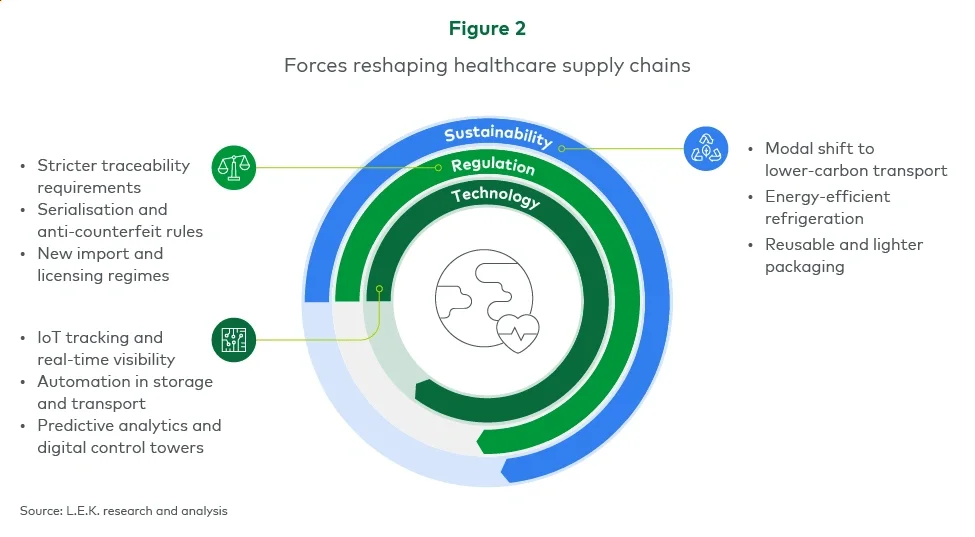
Cold chains remain vulnerable, especially at hand-offs where visibility drops. Organisations are responding with better monitoring, more resilient packaging and expanded storage, while also tackling the challenge of decarbonising logistics. Modal shifts, upgraded refrigeration and reusable packaging are already helping to cut emissions without compromising quality.

Technology is central to these efforts. IoT tracking, automation and digital platforms are improving visibility and reducing errors, while predictive analytics allow supply chains to be managed more proactively and efficiently. The pandemic accelerated this transition, prompting diversification, buffer stocks and new delivery models such as NHS drone trials.

All of this is unfolding against a backdrop of tougher regulation (see Figure 2). Europe is raising distribution standards, the US is enforcing end-to-end serialisation and Brexit has created new import rules. Compliance now requires more than box-ticking: organisations must show control, maintain oversight of partners and be ready for audit at all times.

Image
Figure 2. Forces reshaping healthcare supply chains
Image
Figure 2. Forces reshaping healthcare supply chains

The road ahead

The outlook for healthcare and pharmaceutical logistics is one of continual adaptation. More products need careful handling, rules are getting tighter and the pressure to cut emissions is growing. The task now is to design supply chains with resilience at their core. Done well, this will reduce risk and give the industry a framework it can trust in the years ahead.

At L.E.K. Consulting, we work with organisations around the world to design supply chains that are resilient, compliant and sustainable. If you would like to discuss how to future-proof your operations and stay ahead of regulatory and technological change, please contact us.

L.E.K. Consulting is a registered trademark of L.E.K. Consulting LLC. All other products and brands mentioned in this document are properties of their respective owners. © 2025 L.E.K. Consulting LLC 

English
Executive Insights

What CFO-COO Alignment Means for Leaders and Investors

October 14, 2025

Key takeaways

Chief financial officers (CFOs) are increasingly taking on operational responsibilities, reflecting a shift toward tighter Finance-Ops alignment across enterprises of all sizes.

Office of the CFO tools are emerging as command centers for data-driven decision-making, extending CFO influence across operations, HR, supply chain and customer experience.

This closer integration allows companies to accelerate decision-making, improve capital velocity and link financial stewardship directly with operational execution.

For CFOs, solution providers and investors, the convergence creates opportunities in capability building, operating models, digital stack design and stronger enterprise performance.

The C-suite is being reshaped. As margin pressure intensifies and decision cycles shorten, companies are aligning financial and operational leadership more closely. In many organizations, this means finance and operations are working in lockstep, and in some cases, the roles are formally combined.

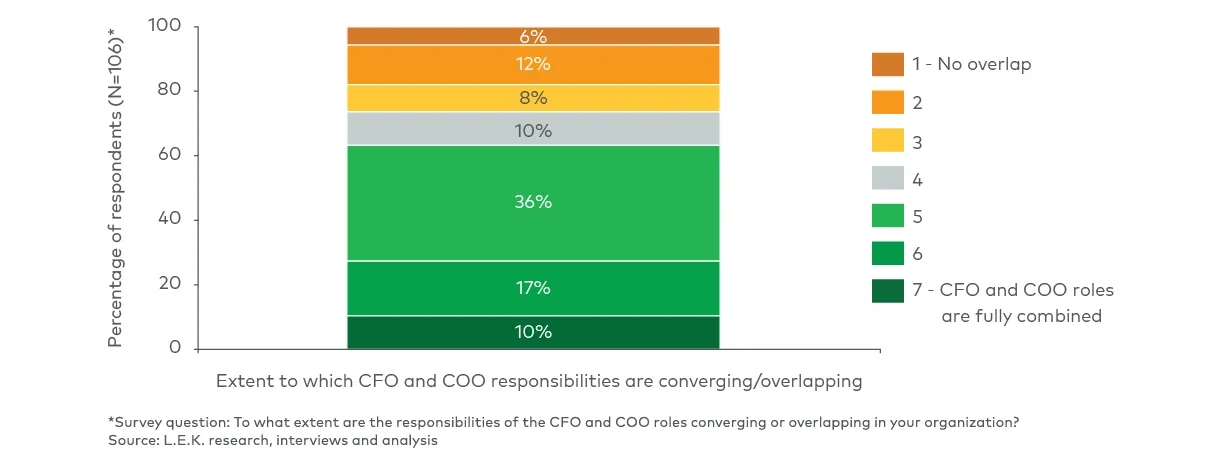
According to L.E.K. Consulting’s 2025 Office of the CFO Survey of over 100 chief financial officers (CFOs) across multiple industries, nearly two-thirds say their responsibilities now overlap with the chief operations officer (COO) role. In about 10% of companies, the positions are fully merged (see Figure 1).

Figure 1

Responsibilities of the CFO and COO are converging and overlapping

Image
Responsibilities of the CFO and COO are converging and overlapping

Figure 1

Responsibilities of the CFO and COO are converging and overlapping

Image
Responsibilities of the CFO and COO are converging and overlapping

To gauge the depth of this shift, L.E.K.’s Financial Services team spoke with CFOs and COOs across industries. Paired with our survey, these conversations highlight how finance and operations are becoming more closely linked.

In this Executive Insights, we explore what’s driving this closer alignment, how companies are adapting, and the implications for solution providers, investors and finance leaders.

The role is already evolving

The CFO of a home goods manufacturer shared with us, “Back in 2021, we eliminated the COO role and I assumed most of the responsibility.” Major enterprises are making similar moves:

  • Qualcomm named Akash Palkhiwala as chief financial officer and chief operating officer in January 2024, citing the need for unified leadership to support long-term growth and execution.
  • PayPal formally merged its financial and operational leadership in early 2025, naming CFO Jamie Miller as chief financial and operating officer.
  • Salesforce followed soon after, appointing board member Robin Washington as president and chief operating and financial officer, effective in March 2025.

The structural merger of roles is more common in large enterprises, but smaller companies have long blurred the lines between finance and operations. In all cases, the imperative is the same: tighter alignment, greater efficiency and clearer accountability. Research supports the benefits. A 16-year study of more than 3,500 companies found that CFOs who take on operational responsibilities improve reporting quality without hurting performance.

What CFOs are now taking on

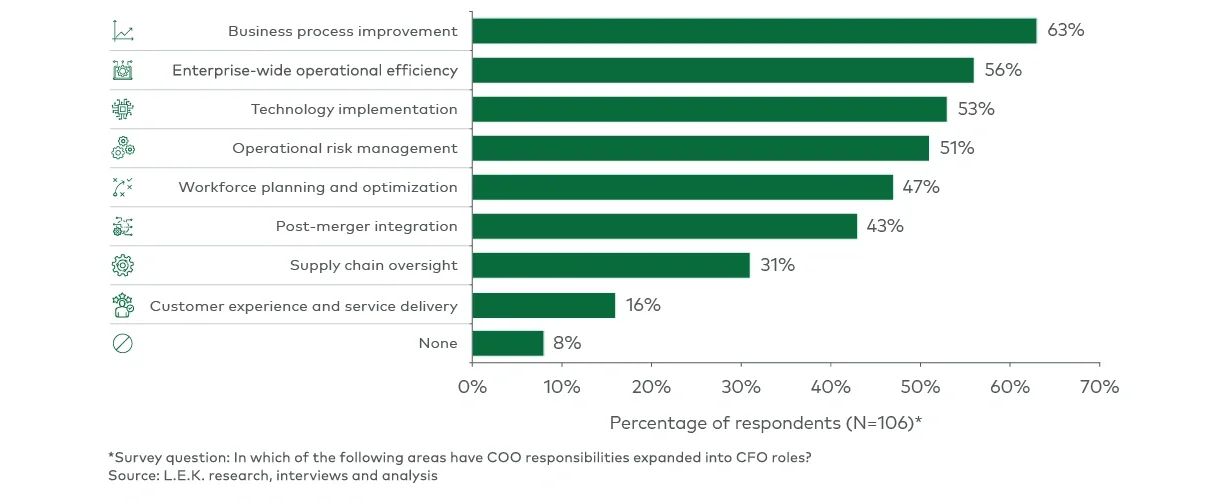
According to our survey, the most common operational responsibilities now overseen by finance leaders include business process improvement, enterprisewide efficiency and technology implementation. These areas have historically sat with the COO but are increasingly being managed by CFOs as finance and operations become more interconnected (see Figure 2).

Figure 2

CFOs are increasingly taking on traditional COO responsibilities

Image
CFOs are increasingly taking on traditional COO responsibilities

Figure 2

CFOs are increasingly taking on traditional COO responsibilities

Image
CFOs are increasingly taking on traditional COO responsibilities

Rising expectations are pushing finance leaders to deliver results across the business, especially in high-growth or efficiency-driven environments. More and more, CFOs are being asked to lead not only financial strategy but also technology choices and cross-functional execution.

Capital velocity and the case for convergence

As liquidity tightens and efficiency expectations rise, companies face growing pressure to make faster, more precise decisions. The result is a “capital velocity loop” where financial stewardship and operational execution reinforce each other.

Several forces are behind this loop:

  • Efficiency demands are intensifying
    With rising rates and compressed margins, capital tied up in inventory, receivables or idle assets erodes value and limits agility.
  • Unified leadership eliminates friction
    When the same executive oversees both treasury and operations, decisions around capex, safety stock and supplier terms can be evaluated against funding costs in real time without slow cross-functional negotiation.
  • Working capital becomes a growth engine
    Reducing the cash conversion cycle unlocks internal liquidity that can be reinvested into growth, debt reduction or shareholder returns.

One CFO explained, “It’s critical to see what the financial cost or opportunity is. Having a combined role increases the speed of decision-making where instead of having two heads coming together, you have one person with purview of both sides.”

Whether managed by a single executive or by two tightly aligned leaders, bringing financial and operational levers together enables companies to respond more quickly, allocate capital more effectively and drive continuous improvement. 

Technology strategy in transition

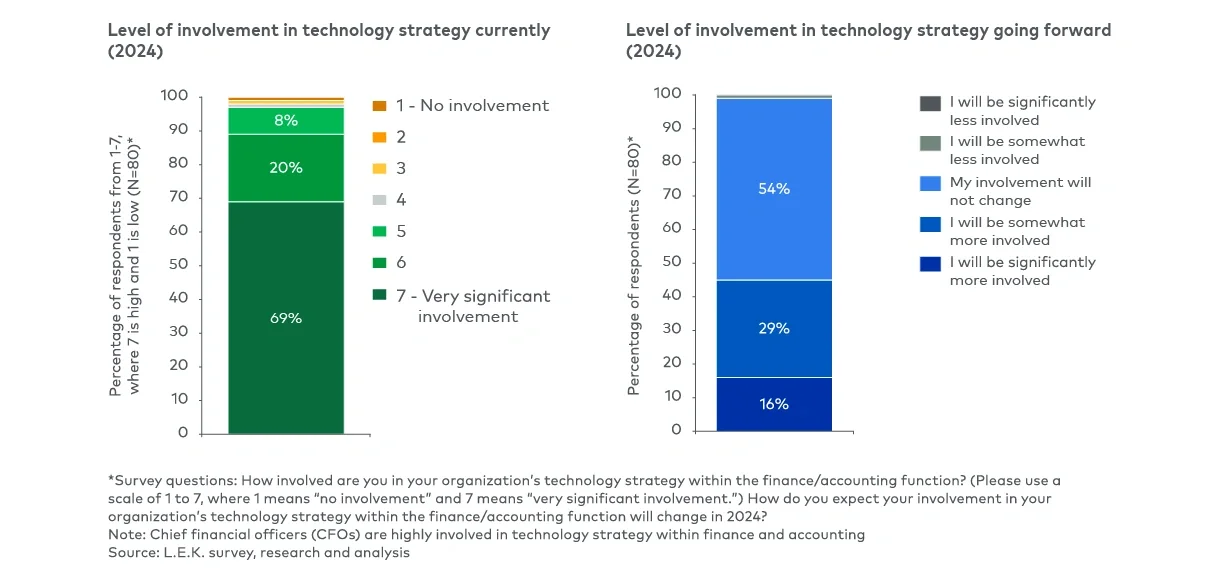
As CFOs assume broader operational responsibilities, their role in technology strategy is growing. In our 2024 survey, 69% reported active involvement in shaping the tech roadmap (see Figure 3). Data analytics (or business intelligence) topped the list of high-impact technologies, cited by 81% of CFOs, well ahead of AI and cloud computing, each named by about half. The results point to a clear demand for tools that unify financial and operational data.

Figure 3

CFOs report high involvement in technology strategy, reinforcing their growing role in operational and digital leadership

Image
CFOs report high involvement in technology strategy, reinforcing their growing role in operational and digital leadership

Figure 3

CFOs report high involvement in technology strategy, reinforcing their growing role in operational and digital leadership

Image
CFOs report high involvement in technology strategy, reinforcing their growing role in operational and digital leadership

Many CFOs describe this shift as both intuitive and practical. “CFOs touch almost every system in the organization. ERP, CRM, FP&A, payroll all roll up through finance,” one former CFO noted. Another added, “Data used to be hard to find, so most resources went into gathering and validating it. Now the focus is on understanding what the data means.”

Advancements in Office of the CFO tools are powering this shift, integrating financial and operational data into a single view. Finance leaders are using these systems as command centers for decision-making, extending their influence across operations, HR, supply chain and customer experience. 

Implications for CFOs, solution providers and investors

As finance takes on more operational responsibility, companies are rethinking their enterprise systems. CFOs now wield greater influence over technology choices and performance priorities, creating opportunities not only for themselves but also for solution providers and investors.

For solution providers

  • Platforms that integrate financial and operational data, especially those that improve working capital efficiency and enable real-time decisions, are gaining in importance.
  • Solutions that promote cross-functional alignment and faster execution are increasingly valuable in helping leaders translate insights into action.

For investors

  • Companies where CFOs oversee operations may be better positioned to manage capital pressures and drive internal alignment.
  • This integration can lead to stronger execution, more disciplined resource allocation and higher returns on invested capital.

For CFOs, closer alignment is reshaping the agenda:

  • Developing fluency in end-to-end value streams, not just profit and loss, and encouraging talent movement between finance and operations
  • Exploring Finance-Ops “pods” embedded in functions such as manufacturing, logistics and customer experience, supported by shared key performance indicators
  • Evaluating digital stack priorities such as AI-augmented scenario planning and continuous close and predictive supply analytics while phasing out legacy tools
  • Shaping the CFO’s leadership brand as storyteller-in-chief for both capital markets and the shop floor

Executives already holding dual CFO-COO roles confirm how this model plays out day to day. At a recent Fortune COO summit, Hasbro’s Gina Goetter noted that every operational choice ties back to a financial one, making the combination feel natural. Block’s Amrita Ahuja added that aligning finance and operations supports coordination across legal, people and policy teams while keeping the company responsive.

What comes next

The CFO role is moving beyond financial stewardship into broader strategic and operational leadership. Organizations, tools and services that enable integrated decision-making will define the next wave of enterprise performance.

L.E.K.’s Financial Services team helps CFOs, investors and enterprise leaders navigate this shift. We bring deep expertise across the Office of the CFO stack, vertical software as a service, enterprise resource planning, spend management and services models to uncover growth opportunities, support transactions and improve execution.

To explore how Finance-Ops alignment is creating value in enterprise software and financial services, contact our team

Stay tuned for additional in-depth results from L.E.K.’s 2025 Office of the CFO Survey.

L.E.K. Consulting is a registered trademark of L.E.K. Consulting. All other products and brands mentioned in this document are properties of their respective owners. © 2025 L.E.K. Consulting


English

China’s Innovation Momentum: Powered by Life Science Research Tools and Enablers

October 14, 2025

China’s life sciences innovation is accelerating — but myths and misconceptions still cloud the outlook. From market variability to the rise of local competitors and shifting policy mandates, global stakeholders often struggle to see the full picture.

In this video briefing, L.E.K. Partner Helen Chen explains how government funding, biopharma R&D and institutional investment are driving renewed growth in China’s life-sciences enabler segment. She highlights where multinationals can still thrive — by focusing on customer segmentation and uncovering pockets of technology-driven demand.

Watch the full video to learn how to navigate the risks and unlock opportunities in this dynamic market

English

Innovation in Animal Health: Turning Potential into Progress

October 14, 2025

Shifts in regulation, consumer expectations and scientific progress are driving a wave of innovation that is reshaping the animal health market. 

This infographic distils the forces redefining standards of care and market dynamics, and highlights the opportunities for those ready to act. Download it for a clear visual snapshot and explore our full Executive Insights for deeper strategic guidance.

Innovation in Animal Health: Turning Potential into Progress
 

English
Special Report

Navigating Growth in Over-the-Counter Remedies and Acute Self-Care

October 9, 2025

The consumer health market sits at the crossroads of healthcare and consumer goods. Over-the-counter (OTC) remedies and acute self-care solutions playing a critical role in everyday wellness. As consumers take greater ownership of their health, the OTC category is evolving, creating meaningful opportunities for both strategics and private equity investors.

In this latest Special Report co-authored by L.E.K. Consulting and Lincoln International, we explore the structural tailwinds shaping the OTC landscape, where growth is concentrated and what investors should prioritize when evaluating acquisition targets in this increasingly dynamic market.

As the market continues to expand, several themes stand out that highlight both the scale of the opportunity and the factors shaping future growth:

  • Large, resilient market: The U.S. OTC remedies and acute self-care market reached approximately $57 billion in 2024, demonstrating steady long-term growth and resilience even during economic uncertainty.
  • High-growth segments: Oral care, deodorant and eye care are among the fastest-growing categories, fueled by consumer preferences for natural wellness-forward products.
    Consumer behavior shifts: Rising healthcare costs and increasing self-care habits are driving consumers toward OTC products as first-line solutions.
  • Innovation and sustainability: Natural formulations, sustainable packaging and Rx-to-OTC switches are reshaping the category and expanding consumer access.
  • M&A momentum: Private equity and strategic players are actively consolidating brands and platforms, with large-scale deals underscoring the sector’s attractiveness. Emerging and digitally native brands present compelling bolt-on opportunities.

Conclusion

OTC remedies and acute self-care offer investors an attractive combination of scale, stability and structural growth drivers. With innovation accelerating across sub-segments, and consumer reliance on self-care deepening, the sector represents a compelling platform for long-term value creation. Success will require careful alignment with secular tailwinds and strategic innovation.

For further insights into our analysis, download  the full report.

Contact us for more information.

L.E.K. Consulting is a registered trademark of L.E.K. Consulting LLC. All other products and brands mentioned in this document are properties of their respective owners. © 2024 L.E.K. Consulting LLC



English
Subscribe to