How CPG Companies Can Use Revenue Growth Management to Offset Tariffs

September 8, 2025

Amid the push to reshore manufacturing, consumer packaged goods (CPG) companies are caught in a conundrum. From cleaning products to over-the-counter medications, many categories of consumer-packaged goods are already commonly made in the U.S. However, that’s not necessarily the case for their materials. Domestic canned food manufacturers, for instance, rely on imports for 70% of the tin-mill steel that goes into their cans.

As a result, CPG companies may be highly exposed to tariffs even if the products they sell come from U.S. factories. This risk was borne out recently for the canned food industry as the U.S. government slapped a 50% levy on imported tin-mill steel. At that rate, the price of canned goods on the grocery shelf could rise as much as 15%.

Consumers are tired of price increases. According to a July 2025 L.E.K. Consulting survey, 45% of consumers believe they’re already paying prices that are higher than they deem acceptable. CPG companies know this, but they need to respond and maintain their own profit margins.

In a high-tariff environment, the first instinct is to look to the supply chain for mitigating strategies. While that’s entirely appropriate, CPG companies have other tools at their disposal. In this article, we’ll show how revenue growth management, or RGM, is a powerful way to defend against tariffs and position the business for more resilient growth.

The basics of RGM

RGM — or, as it’s sometimes called, strategic revenue management — is the holistic optimization of four data-driven disciplines.

  1. Price pack architecture (PPA). PPA is about offering the right product variations to different consumer segments, then matching those variations to relevant channels. The goal is to boost margins and define the stock-keeping unit, or SKU, portfolio more effectively.
  2. Strategic pricing. Also known as price curve optimization, strategic pricing uses analytical tools to determine the ideal price for each product, considering the competition and consumer willingness to pay. Improved margins are a goal here as well, along with demand management to minimize wasted supply.
  3. Trade spend. Through trade budgeting and promotion analysis, CPG companies can evaluate the effectiveness of their promotions, find new promotion opportunities and more effectively negotiate with retail partners to manage trade spend. Outcomes include improved retailer partnerships and greater volume return on investment per trade dollar spent.
  4. Mix management. Product mix and assortment optimization is also critical to protecting margin. But this capability is about more than just SKU rationalization. We advise our clients to simplify to enable growth, which involves distinguishing good (value-creating) complexity from bad (value-destroying) complexity in the supply chain.

Real-world applications

CPG companies can coordinate all four RGM components to increase profitability. That’s the approach we took for one client facing profitability challenges. It turned out that some products were underpriced relative to consumer value, while others were getting more trade investment than necessary to drive target volumes. Consumer research revealed which brands had stronger equity and which product types consumers were willing to pay a premium for.

Another client with a large, complex supply chain wanted to know which SKUs were worth the complexity. As part of a mix management assessment, we looked at sources of raw materials as well as how the product was made and distributed to identify ways to unlock capacity, optimize costs or improve availability. This helped us understand which SKUs should be evaluated for bad complexity, making them candidates for removal from the portfolio. From there, we worked with the client to create ground rules for bringing complex SKUs to market.

A critical line of defense

As effective as RGM can be, it’s also challenging since it asks companies to optimize growth with precision in a world of ambiguity. Data is complex and often imperfect. Decisions can be politically sensitive (think discontinuing a favorite but unprofitable SKU or scaling back trade support for a major customer). The systems and tools to activate RGM strategies aren’t always there. And shopper behavior is ever shifting.

Against that backdrop, the following principles can keep an RGM-driven tariff response on track.

  • Optimal pricing is value-based, not cost-plus. Tariffs create an opportunity to revisit pricing and PPA. That includes determining whether certain SKUs or product lines have a more premium perception and should be priced above mainstream offerings. There’s also the opportunity to look for core-range innovations that allow the company to charge more for product features that consumers value.
  • Trade strategy goes hand in hand with price resets. Many CPG companies tackle trade by looking at what they did the previous year and making some slight adjustments. But a more extensive review of trade best practices — to optimize frequency, depth and promotional bundling — is called for when resetting prices.
  • A simpler supply chain is a more profitable supply chain. Although one-time SKU rationalizations help offset tariff impacts, ongoing “simplify to enable growth” initiatives help build resilience. By making complexity scoring and review part of business as usual, CPG companies can ensure a simpler and healthier supply chain.

To learn more about revenue growth management and supply chain optimization, please visit our pages here and here. And if you’d like to discuss RGM strategies in the context of your own organization, please contact us
 

L.E.K. Consulting is a registered trademark of L.E.K. Consulting LLC. All other products and brands mentioned in this document are properties of their respective owners. © 2025 L.E.K. Consulting LLC

English
Executive Insights

China’s Life Sciences Sector in Transition: How Suppliers Can Thrive in the Next Chapter

August 29, 2025

Key takeaways

China’s life sciences sector is now globally recognized and remains a strategically vital market for multinational suppliers. Success now hinges on rethinking legacy assumptions and adapting to a more competitive and dynamic environment.

Customer needs and funding realities differ markedly across academia, hospitals, contract research organizations and the biopharma industry, requiring multinational life sciences companies (MNCs) to segment intelligently and tailor go-to-market (GTM) approaches accordingly.

Domestic competitors are gaining traction in commoditized segments, intensifying pressure on MNCs to rethink their target customer and product segments, pricing and value proposition.

To succeed, MNCs must take a segment-specific approach, enhance GTM effectiveness, harness digital platforms and consider investing in localization to navigate geopolitical uncertainties and evolving trade policies.

As one of the world’s largest healthcare markets, and the one with the largest number of scientists, China plays a pivotal role in shaping global demand for life sciences tools and services. It combines significant domestic consumption with deepening innovation capacity and remains a strategic priority for multinational life sciences companies (MNCs) seeking long-term growth, operational resilience and global relevance.

For multinational suppliers of research tools, equipment and diagnostics, the country’s vast academic, hospital and industrial infrastructure has represented both scale and strategic depth. But recent market dynamics have prompted many to reassess their positioning.

This Executive Insights explores how MNCs can recalibrate their strategies to respond to these shifting dynamics — distilling the challenges, highlighting growth pockets and outlining critical next steps for renewed competitiveness.

The imperative for MNCs is clear: To succeed in the next chapter, they must pivot from legacy assumptions and retool for a market that rewards agility, segmentation and deep local fluency.

Short-term disruptions, long-term opportunity: Understanding what’s really driving the market shift

A series of short-term shocks have reshaped demand patterns. In 2022, a surge in equipment investment was triggered by the Chinese government’s subsidized low-interest loan program. Universities and hospitals moved quickly to deploy capital, creating a one-off spike in procurement. By 2023, that momentum had faded, replaced by a market adjusting to lower baseline demand.

Meanwhile, a sustained funding slowdown in biotech has taken hold. Procurement behavior has followed suit, becoming more conservative and cost-sensitive, especially toward research investments.

The aftershocks of the COVID-19 era have also distorted market signals. During the pandemic, many bioproduction customers significantly overstocked in response to supply chain uncertainty.

At the same time, local competition has intensified. This has contributed to downward pricing pressure across several categories, compressing margins for global players.

However, green shoots are emerging. China’s biomedical research funding from the Natural Science Foundation of China (including the General Program, Regional Science Fund and Young Scientists Fund) has returned growth in 2024 after a dip during 2022-23.

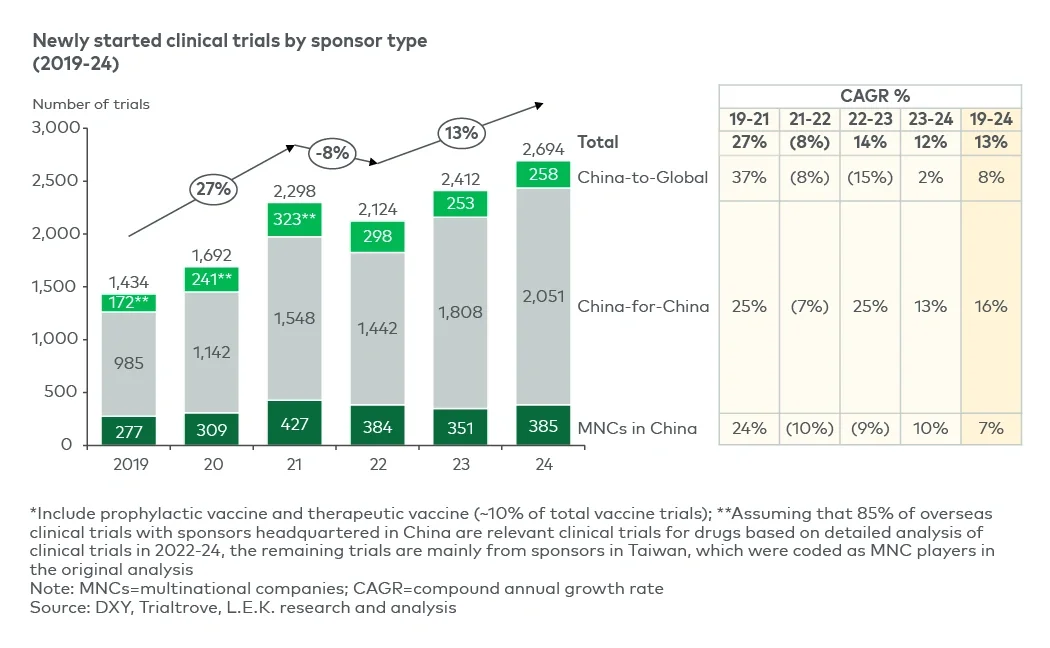
Clinical activity has also remained resilient, supported by consistent engagement from both multinational and domestic sponsors (see Figure 1). The volume of new drug development in China is now nearing that of the U.S., making China’s innovative biopharma research ecosystem a key end market for global life sciences tools and reagent suppliers.

Image
New clinical trials, by sponsor type

Meanwhile, the investigational drug pipeline is evolving in both scope and quality, with a growing share of candidates falling into the next generation/advanced therapies category.

Understanding the disparities beneath the headline figures

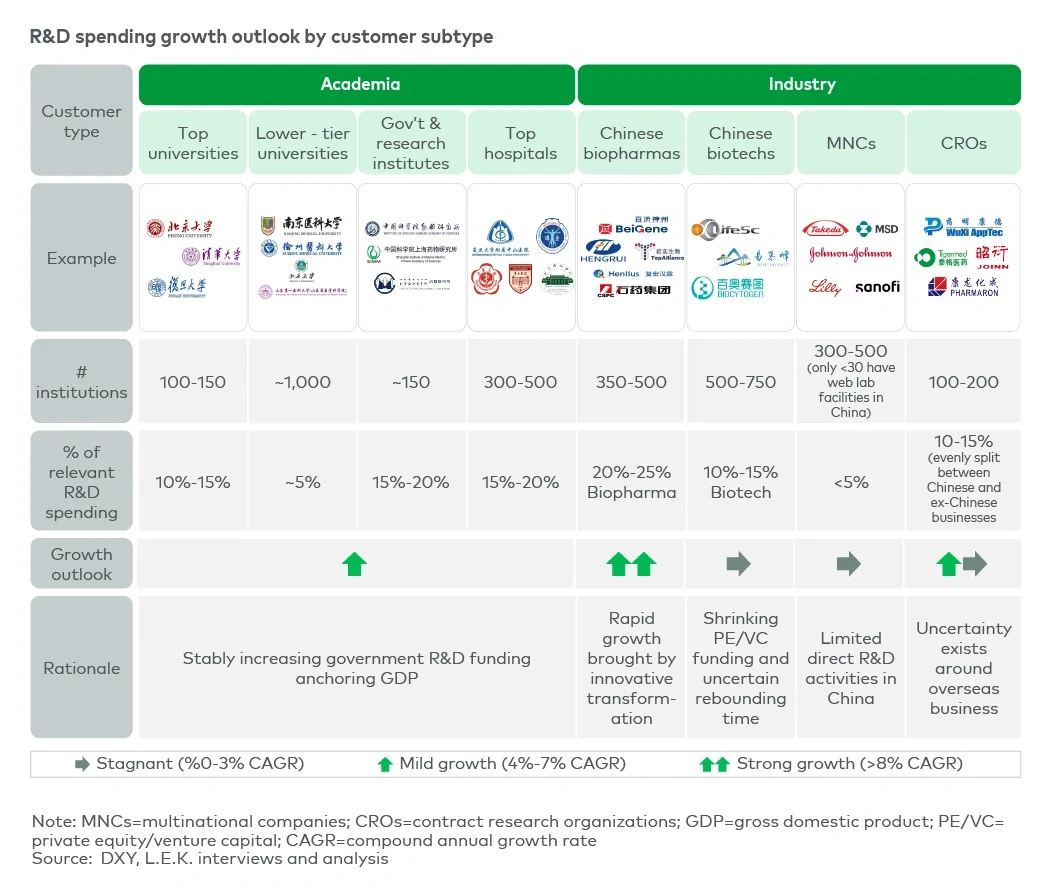
Headline growth figures often obscure the reality on the ground. In China’s life sciences sector, performance varies significantly across the customer base — reinforcing the need for a segment-specific approach (see Figure 2).

Image
Growth outlook and share of R&D spend differ across customer segments

To succeed, MNCs must move beyond one-size-fits-all strategies and engage with the unique priorities of the three following groups:

  1. Academia and research
    In the academic and research sector, top-tier universities and national institutes continue to exhibit steady procurement behavior. Underpinned by sustained government funding, these institutions remain relatively insulated from macroeconomic volatility.

    Their long-term investments in infrastructure and scientific capability position them as key customers of high-end, specialized tools — albeit with more structured and sometimes slower procurement cycles.
  2. Biopharma and biotech
    In industry, a divide is emerging between well-capitalized biopharma players and more fragile biotech firms.

    The former are maintaining or expanding their R&D investment after undergoing significant innovative transformation. Many have passed beyond the “me too” stage and are now making waves globally, earning U.S. Food and Drug Administration breakthrough designations and partnerships with MNC pharmas and brand-name financial sponsors.
    The latter, constrained by a tough private equity/venture capital funding environment, are focusing on their lead assets at the expense of their early-stage pipelines.

    Engagement strategies must account for these divergent trajectories.
  3. Contract research organizations
    Contract research organizations (CROs) are also in transition. While concerns about the U.S. BioSecure Act has curbed international client activity, domestic Chinese demand is beginning to recover. Chinese biopharmas are increasingly outsourcing R&D to CROs, driving a gradual rebound in revenue and shifting the axis of demand inward.

    This segmentation underscores a broader truth: Success will hinge on identifying growth hotspots, understanding their structural drivers and aligning commercial models to reflect distinct customer priorities and constraints.

Signs of renewal amid competitive flux

Chinese biopharmas are increasingly making global waves. Recent high-profile billion- dollar-plus deals between Chinese and MNC pharmas demonstrate the maturation of China-based biotech and the international validation of domestic innovation. These developments reaffirm China’s position not only as a manufacturing base but also as a center of scientific development.

However, competitive dynamics are becoming more complex. In more commoditized segments, Chinese suppliers are rapidly closing the quality gap as they offer competitive pricing. While MNCs still lead high-specification applications, the margin for error is narrowing. Identifying the product and customer segments where MNCs have a strong right to win (through technology, brand and service) is critical.

Price competition is most pronounced in commoditized instruments and mature consumables. However, in categories such as flow cytometry and niche reagents, MNC products retain clear quality and performance advantages.

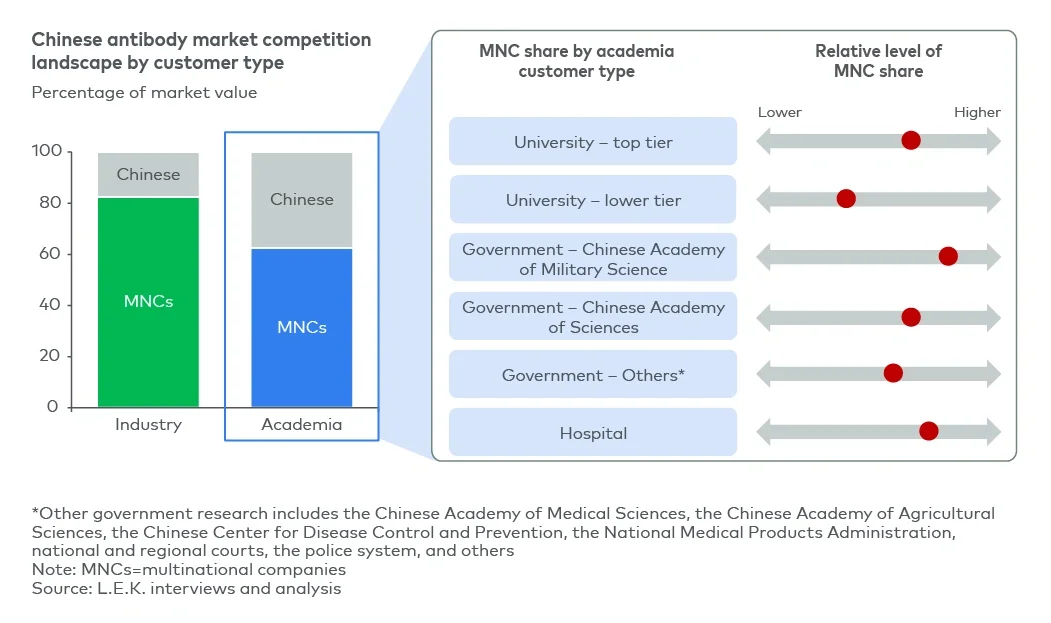
The competitive landscape also changes across customer segments. In select segments with strong funding, such as industry and academia, customers acknowledge the quality advantage of MNCs and are more willing to pay. In more price-sensitive segments, Chinese products are deemed acceptable (see Figure 3, for example). Variance of Chinese substitution is also observed across application areas for the same product categories.

Image
MNC share in China’s antibody market, by customer type

Implications for multinational strategy

MNCs can no longer anchor their strategy in assumptions of steady growth and technological innovation. Success requires sharper segmentation, a retooled portfolio strategy, localization and enhanced go-to-market (GTM) effectiveness.

Digital engagement is evolving. Platforms such as WeChat and ecommerce portals have become increasingly important channels for influencing and converting academic and younger professional customers. MNCs must invest in tailored digital strategies to remain visible and relevant to these user groups.

New customers are emerging. Innovative Chinese biopharmas with global ambitions are now a key customer segment for life sciences tools and reagent suppliers.

Sharper segmentation is essential. MNCs should prioritize customer groups based on growth outlook, competitive intensity and their own right to win. This enables focused investment in segments where differentiation is achievable while taking a more value- driven or selective approach in others.

Portfolio strategy must transform. High-value segments should be protected through innovation and quality assurance, while commoditized offerings may benefit from simplification, bundling or selective retreat.

Localization, both in manufacturing and product positioning, is gaining traction. Several MNCs have successfully introduced value-oriented product lines for the Chinese market, balancing price competitiveness with brand equity. These approaches must be carefully structured to protect core brand equity while competing effectively on price and access.

GTM effectiveness is a critical success factor. Both MNCs and Chinese companies have shown that active engagement and performance-linked training can transform third-party networks into scalable, high-impact extensions of the direct sales force. Digital platforms, from WeChat stores to ecommerce marketplaces, are reshaping engagement and sales conversion models.

Charting a new path forward

The next phase of growth in China’s life sciences tool market will not reward inertia. For MNCs, this is a moment to reset — to challenge old assumptions, rethink customer engagement and sharpen competitive focus.

Some key questions to consider include:

  • How should your company refine your customer segmentation to reflect the evolving market and customer dynamics? Are there specific segments where you see untapped potential? Which segments should you focus on, considering potential and your right to win?
  • Who are your key competitors in China, and what are their winning factors?
  • How can you differentiate your offerings in an increasingly competitive market where Chinese firms are gaining market share?
  • How can you adapt your GTM approach to enhance competitiveness?
  • To what extent should you localize in China, to enhance your competitiveness and navigate the increasing geopolitical uncertainties and evolving tariff policies?
  • Given the geopolitical uncertainties and shifting trade policies, how should companies best understand the risk points and position themselves to maximize the opportunities for the widest possible outcomes?

How L.E.K. Consulting can help

L.E.K. helps companies navigate inflection points with precision. Our teams support clients across a wide range of challenges, from market segmentation to distributor transformation.

Contact us to discuss how we can help sharpen your strategy and capture the opportunities ahead.

Authors: Helen Chen, Grace Wang, Alex Vadas, Tian Han and Adrian Slusarczyk, with support from Yuexin Dong

English

From Campus to Career: Empowering Future Talent in Dubai

August 27, 2025

L.E.K.’s Chinmay Jhaveri connects with Professor Yusra Mouzughi to discuss how the University of Birmingham Dubai is equipping students for success beyond the classroom. From state-of-the-art labs to real-world projects and strong employer partnerships, the conversation highlights how the institution blends academic rigor with hands-on experience, preparing students to thrive in the region’s fast-evolving innovation economy.

L.E.K. Consulting is a registered trademark of L.E.K. Consulting LLC. All other products and brands mentioned in this document are properties of their respective owners. © 2025 L.E.K. Consulting LLC

English
Executive Insights

The Great Agency Realignment: What Consolidation Means for Investors and Operators

August 28, 2025

Key takeaways

Four agency models are emerging: consolidated holdcos, agile challenger networks, private equity rollups and focused specialists.  

Client retention is a critical M&A risk. Investors should prioritize signs of embeddedness such as cross-sell success, account expansion and institutional client relationships.  

Private equity interest remains high, and firms are shifting from rapid rollups to operational value creation, focusing on scalable platforms and positioning for successful exits amid evolving market dynamics.  

The most competitive platforms will scale by using technology to drive efficiency, focusing on distinct customer segments and aligning their models with client outcomes.  

The advertising agency ecosystem is undergoing another major transformation, comparable to past waves of change such as the dot-com era, the rise of programmatic advertising and the social and mobile booms. What was once a fragmented sector led by creatives is now a battleground for scale, efficiency and tech-fueled performance.

Several factors are responsible: changing consumer behavior, the rise of self-serve tools from platforms such as Google and Meta, and the adoption of programmatic buying and generative artificial intelligence (AI). These trends have reduced marketers’ reliance on traditional agencies while raising expectations for what agencies must deliver. In response, many brands have adopted a growing mix of vendors across media, creative and analytics.

To keep up, marketing leaders have leaned into specialist firms that offer deeper expertise in specific areas. But that shift has introduced new complexity, triggering a familiar cycle: Brands unbundle to access niche capabilities, rebundle to regain efficiency and then add more partners as needs evolve.  

How agencies are responding

Four distinct agency models are taking shape. Each reflects a different approach to integration, scale and specialization:

  • Holdco consolidation: Legacy giants like Omnicom and IPG are pursuing scale-driven mergers to compete with consultancies and digital platforms.
  • Agile challenger networks: Midsize groups such as Stagwell and Attivo are positioning themselves as faster-moving, tech-forward alternatives.
  • PE rollups: Private equity (PE) firms are assembling multicapability platforms by combining creative, digital and/or performance agencies.
  • Focused specialists: Typically, PE-backed firms super-serve specific customer segments or verticals, like small and medium-size businesses (SMBs) or regulated industries.

Here’s an in-depth look at each of these models as agencies and investors reposition to remain competitive.

Holdco consolidation: Scale plays from the top

The IPG-Omnicom merger (the first major tie-up among top-tier holding companies in years) is progressing toward completion, having received U.S. Federal Trade Commission approval in June 2025. The move reflects how agency giants are responding to growing competitive pressure on two fronts:

  • Digital platforms like Google, Meta and Amazon increasingly enable brands to bypass agencies entirely by controlling vast swaths of premium inventory (accounting for over 50% of global digital ad spending in 2025).  
  • Large consultancies such as Accenture are challenging agencies by offering integrated marketing solutions that combine strategy, technology and execution.

The deal’s genesis reveals the pressure legacy holdcos face: IPG CEO Philippe Krakowsky initiated strategic talks in July 2023 after recognizing that creative strength alone couldn’t offset eroding client budgets and competitive advances. After rejecting proposals from PE and other strategic players, IPG found its match in Omnicom’s technology-first approach.

The combined entity expects $750 million in annual cost savings while creating a $25 billion revenue giant that would rival Accenture Song, the marketing services division of Accenture. If approved, the merger could trigger industry realignment as rivals like WPP, Publicis and Dentsu face pressure to pursue their own consolidation moves, potentially squeezing midsize independents while creating opportunities for boutique agencies to continue to position themselves as nimble alternatives.

Agile challenger networks: Midsize groups on the rise

As legacy holdcos pursue scale-first rebundling, midsize networks like Stagwell and Attivo are thriving with a different approach: agile rebundling. This model combines broad, integrated capabilities with founder-led cultures and faster speed-to-market.

Stagwell

Stagwell (NASDAQ: STGW) bills itself as “the challenger holding company built to transform marketing.” Stagwell has set a goal to double revenue from $2.3 billion to $5 billion by 2029, with a strategy focused on tech-driven acquisitions and partnerships. Its 2024 purchase of UNICEPTA brought AI-powered media intelligence into Stagwell’s Marketing Cloud, while a partnership with Palantir expanded its AI-enabled marketing capabilities.

The results are promising. The Marketing Cloud division posted 31% year-over-year growth in fiscal year 2023, and four of its agencies (72andSunny, Anomaly, Code and Theory, and GALE) earned spots on Ad Age’s 2025 Agency A-List.

Attivo Group

Founded in 2020 and backed by private equity, New Zealand-based Attivo has built a multicapability network through strategic acquisitions. It represents a new wave of players capitalizing on legacy holdcos refocusing their portfolios. Attivo has acquired established agencies like Hill Holliday and Deutsch NY from IPG, picking up heritage brands the larger holdco could no longer efficiently manage.

Attivo’s May 2025 acquisition of AI-powered agency The Next Practice illustrates how quickly these networks can integrate new capabilities.

Stagwell and Attivo, along with others like S4 Capital, The Brandtech Group and Dept, are part of a broader wave of midsize challengers redefining the agency model. These firms are drawing clients away from both global holdcos and niche independents by combining integrated capabilities with greater speed, flexibility and tech fluency. Some are also rethinking how services are delivered. S4 Capital, for example, has moved from billable hours to output-based pricing as AI reshapes the economics of creative and production work.

PE rollups: Building value through portfolios

Private equity activity in the agency world has accelerated, with the number of business-to-business services deals (including agencies, consultancies and tech providers) rising 21% year over year in 2024. According to SI Global’s second annual Private Equity Insights Report, more than 50 PE firms now actively target the space. Many are pursuing rollup strategies to build full-service marketing platforms by combining boutique creative shops, digital specialists and performance firms into nimble, integrated networks. 


Source: SI Global, May 2025 

Platform investment activity rebounded in 2024, with a sharp increase in the number of deals, especially in digital businesses. More than 50% of new investments went to firms categorized as “digital,” a broad label that includes everything from influencer agencies to digital transformation consultancies. While social and influencer marketing remains in demand, many PE firms are building platforms around specific verticals or service areas such as SMB-focused solutions, financial services or retail media.

Recent moves like IPG’s sale of R/GA to Truelink Capital, Huge’s sale to AEA Investors and Svoboda Capital’s investment in Highdive reflect how PE firms are actively reshaping their marketing services portfolios. Huge’s post-acquisition merger with Hero Digital shows how quickly these platforms can pivot toward high-growth areas: 62% of Hero’s clients now use AI or generative AI in their projects, up from just 25% in June 2024.

Focused specialists: Doubling down on a segment

Some PE firms are backing more focused and scalable agency models, investing in businesses with depth in a specific customer type, channel and/or vertical:

  • Vertical specialists: These platforms focus on industries where domain expertise and, in some cases, compliance-ready solutions create strong defensibility and retention. Examples include Scorpion and FMG Suite, which deliver tech-powered marketing tailored to home services and legal professionals, among others.
  • SMB-focused providers: These platforms typically serve SMBs through subscription-based marketing solutions that combine digital presence, customer relationship management systems and performance tools. Hibu is one example delivering these services efficiently through automation and centralized operations.
  • Other focused models: A third category includes platforms built around distinct distribution strategies, such as white-label solutions for agencies or channel-focused models that serve intermediaries like resellers or media partners. These approaches often emphasize scalability through partner networks rather than direct client acquisition.

What this means for investors and operators

For investors, the most attractive platforms demonstrate strong client retention, differentiated capabilities, a clear view of their target segments and the ability to scale efficiently. While PE firms are working to moderate entry prices, competition from more than 50 active investors continues to keep multiples high. Tech-enabled agencies remain a focus, often commanding premium valuations due to their perceived scalability and performance upside.

Each of the four segments presents opportunity, but none is without risk:

  1. Consolidated holdcos must integrate sprawling networks while preserving creative strengths, managing client conflicts and aligning legacy tech stacks. The failed Publicis-Omnicom merger highlights these challenges, and the proposed IPG-Omnicom deal may face similar hurdles.
  2. Agile challenger networks benefit from speed and integration but risk overextending lean teams or diluting their edge as they grow.
  3. PE rollups require stitching together firms with different systems, cultures and models, making careful integration critical.
  4. Focused specialists must prove that depth in a single vertical or offering can scale without sacrificing flexibility or margin.

Even with strong strategy and execution, agency M&A often falters without client durability, as many firms still rely on individual relationships rather than institutional ones. Investors should look for signs of embeddedness — cross-selling, account growth and multithreaded ties — to ensure clients stay long enough to realize full value.

The next phase of agency evolution

The agency model is being rewritten. Investors are no longer rewarding size for its own sake. They are looking for platforms that scale efficiently, retain clients and deliver results.

Winning firms are moving fast — automating workflows, aligning services with how brands buy and focusing on customer segments where they can lead. Models built around real client outcomes — and not legacy structures — will define the next generation of agency platforms.

Next in this series, we’ll explore what truly makes an agency defensible in today’s market, from proprietary tech to institutional client depth, as consolidation reshapes competitive dynamics.  

To learn more about how L.E.K. Consulting helps investors and operators navigate agency M&A, contact us.

L.E.K. Consulting is a registered trademark of L.E.K. Consulting LLC. All other products and brands mentioned in this document are properties of their respective owners. © 2025 L.E.K. Consulting LLC

Questions about our latest thinking?

English

Mind the Gap: How Brands Can Reconnect With Consumers Through Value-Based Pricing

August 26, 2025

Key takeaways

U.S. apparel prices rose sharply during 2021-24 while overall consumer sentiment fell to multi-year lows, creating a widening price-value gap for shoppers.   

More than half of consumers already feel they pay too much for key apparel categories, yet brands with strong equity continue to demonstrate pricing power.  

Successful players segment assortments, align price ladders with consumer willingness-to-pay, and use price cues and promotions surgically to influence perception rather than pursue blanket pricing approaches. 

When combined with selective cost- and competition-based tactics, value-based pricing helps brands defend margins while reinforcing brand heat and category role.  

Context: Apparel prices have gone up as consumers are increasingly constrained

After a decade in which apparel price inflation lagged CPI, COVID-19-era supply-chain shocks, labor and input cost spikes, and new tariffs have pushed U.S. apparel prices continually higher. With over 95% of apparel and footwear manufactured overseas, brands must now assess how to preserve margin amid ongoing uncertainty in the tariff environment.

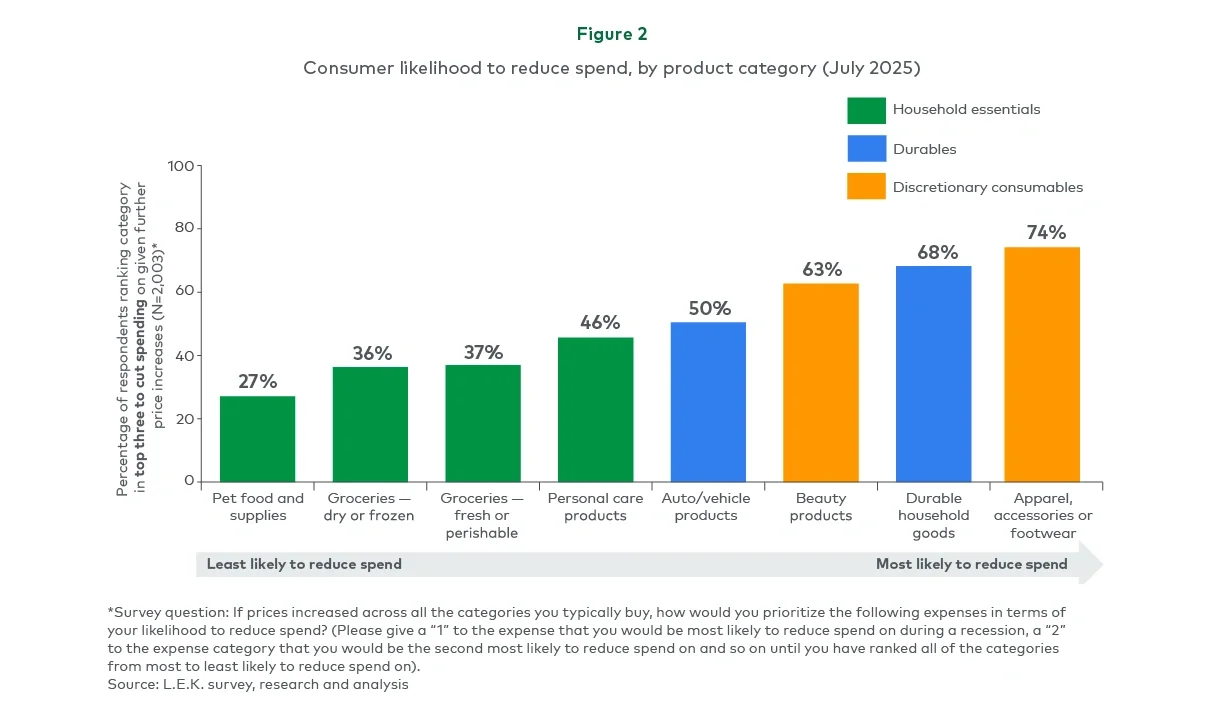
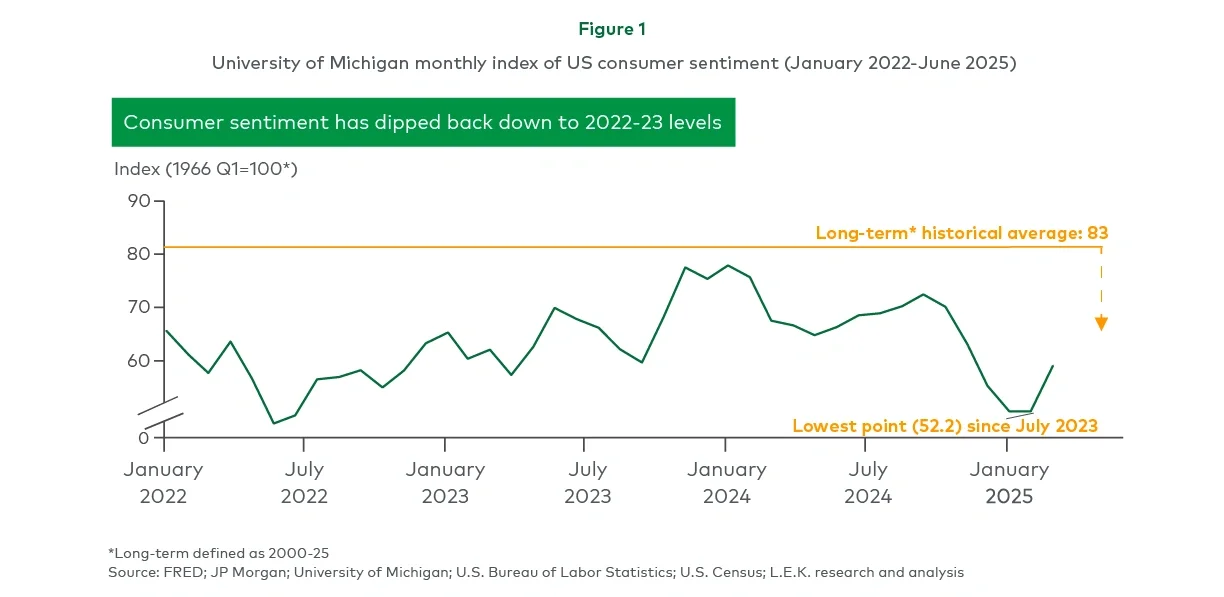
At the same time, U.S. consumers are increasingly constrained: The University of Michigan’s Consumer Sentiment Index remains below long-term historical averages, while over 50% of respondents in a recent L.E.K. Consulting survey have said that they already “pay more than they want to” for everyday apparel and footwear (see Figure 1).

Image
Figure 1
Image
Figure 1

The net result? A clear risk that value-constrained shoppers trade down or defer purchases — apparel, footwear and accessories now rank as the first category consumers cut when recession fears rise (see Figure 2).

Image
Figure 2
Image
Figure 2

To win back consumers, what’s become clear is that apparel brands need to return to value-based pricing.

Now is the moment for value-based pricing

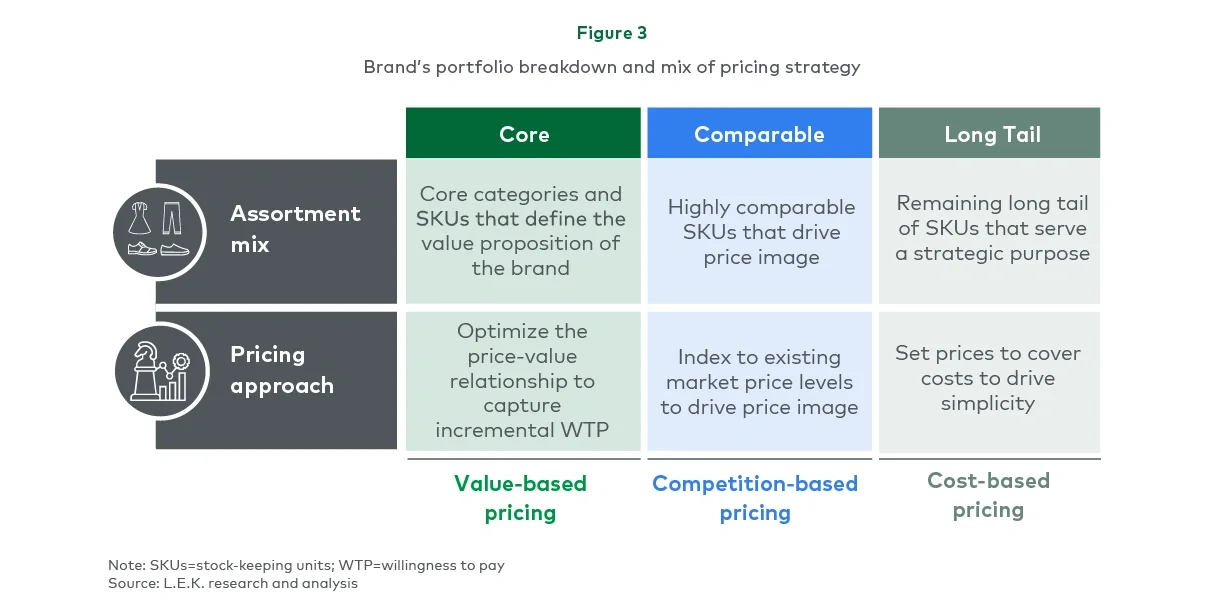
Value-based pricing (VBP), setting ticket prices to reflect the benefits consumers actually feel rather than simply adding a cost markup or matching the market, has shifted from progressive theory to commercial imperative. Blanket cost-plus increases driven by input costs are colliding with a consumer who already senses they are overpaying. The most effective brands and retailers understand this and start with the consumer and the products that matter to them, not the costing sheet (see Figure 3). 

Image
Figure 3
Image
Figure 3

Accordingly, a value-based pricing lens reframes the conversation:

  • It defends margin, where genuine differentiation exists (proprietary performance fabrics, limited-edition collaborations, circularity credentials).
  • It signals fairness by pegging price to visible brand attributes.
  • It preserves strategic agility by letting brands flex by channel, cohort or occasion instead of pulling a blunt, across-the-board lever.

Lessons from current winners

Three themes stand out among brands already executing value-based pricing successfully:

1. Brand heat underwrites pricing power at all price tiers

  • Ralph Lauren lifted AUR +11% YoY in FY24 while growing its top line, leveraging sustained investment in brand elevation.
  • On Running, a top 10 brand on the L.E.K. Brand Heat Index since 2022, raised 2025 revenue guidance on the back of premium positioning and an ongoing price review.

2. One size does not fit all

  • Nike is selectively increasing prices on higher-priced franchises while holding kids’ and sub-$100 shoes flat, maintaining entry accessibility.
  • Best-in-class players calibrate differently for carryover versus seasonal lines and actively manage opening price points.

3. Price itself shapes perception

  • Brands and retailers have multiple levers to pull to impact the net price to a consumer and should consider all of these when refining their pricing strategy.
  • American Eagle is trimming blanket promotions but layering personalized offers through its loyalty app, preserving value while improving mix.
  • Tactical use of psychological thresholds (e.g., $99) and cadence helps reinforce, rather than erode, perceived value.

Looking ahead

Apparel brands cannot cut cost or promote their way out of the current price-value gap. A consumer-led value-based pricing approach, one that distinguishes where the brand truly adds value and prices accordingly, is the most credible path to safeguarding both margin and brand positioning. Brands that move first stand to convert pricing from a defensive necessity amid ongoing volatility into a strategic source of value creation.

How we can help

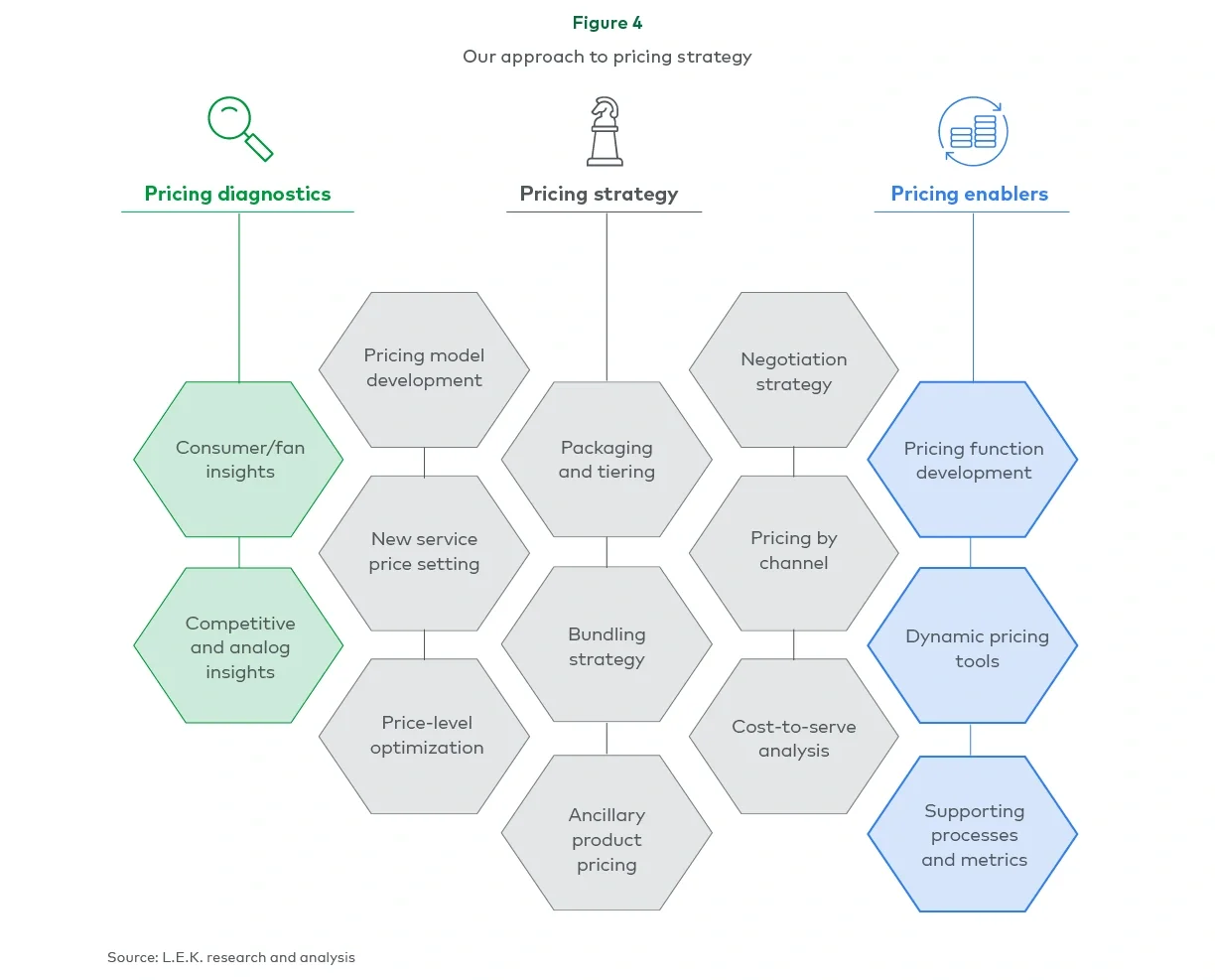
L.E.K.’s bespoke pricing framework integrates consumer segmentation, assortment analytics and channel economics to uncover hidden pricing power and redeploy it where it matters most (see Figure 4).

Image
Figure 4
Image
Figure 4

Pricing diagnostics uncover unmonetized value by analyzing sales and market signal data, consumer insights and price sensitivity. Competitive benchmarking, analogue comparisons and value driver analysis help prioritize opportunities and define a clear end-state vision with a roadmap to get there. We begin by identifying where pricing can deliver the most impact.

Building on that foundation, pricing strategy focuses on aligning architecture with consumer segmentation, product roles and competitive position. We optimize MSRP and elasticity, design price clusters by store or zone and develop bundling strategies that reflect real perceived value. This also includes SKU rationalization, wholesale and markdown planning, and selective expansion across channels, markets or shopper cohorts.  

To activate this strategy at scale, pricing operations provide the structure and tools. Regional operating models, change management and playbooks guide consistent execution. Teams use pricing rules, value-selling tools and KPI frameworks to stay aligned. We support this with dashboards, ROI calculators, competitive tracking and software guidance to ensure pricing stays agile and precise.

Contact us to discuss how value-based pricing can help your organization strengthen resilience and win share in a value-centric market.

L.E.K. Consulting is a registered trademark of L.E.K. Consulting LLC. All other products and brands mentioned in this document are properties of their respective owners. © 2025 L.E.K. Consulting LLC 

English

Global Growth: Redefining the International Student Experience

August 26, 2025

In this discussion, L.E.K.’s Chinmay Jhaveri joins Professor Yusra Mouzughi to unpack the factors behind the University of Birmingham Dubai’s rapid enrollment growth and rising global appeal. Together, they explore how strategic location, student-centric policies and robust career pathways are transforming Dubai into a premier hub for international education. 

Discover how the University of Birmingham Dubai is shaping the future of transnational learning in the region.

L.E.K. Consulting is a registered trademark of L.E.K. Consulting LLC. All other products and brands mentioned in this document are properties of their respective owners. © 2025 L.E.K. Consulting LLC

English
Executive Insights

Indonesian Private Healthcare: Investing in a “Dual-Speed” Services Market

August 26, 2025

Key takeaways

Southeast Asia’s hospitals are riding structural tailwinds: growing affordability, rising health awareness, a surge in noncommunicable diseases, and improved access to routine care and screening via universal health coverage programs. This is fueling rising demand for care across the region.

Indonesia’s low per capita healthcare spend contrasts with broad insurance coverage, positioning the country at an inflection point. Private providers are expanding to relieve public sector strain, with consolidation and growth opportunities emerging.

Two private hospital archetypes have emerged: mass-market hospitals, which are larger, highly utilized, and serve mostly government-insured patients at 15%-25% EBITDA margins; and premium hospitals, which are smaller, less occupied, but deliver EBITDA margins above 25%.

Indonesia has made healthcare a national priority, linking it to its “Golden Indonesia 2045” vision of a productive, high-income society. Reforms include expanded screening, investment in public hospitals, large-scale doctor training and bed class standardization. These moves bolster the long-term outlook for hospital operators despite near-term reimbursement challenges.

Introduction

Across the Association of Southeast Asian Nations, demand for hospital services is rising as populations live longer and grapple with the lifestyle diseases of affluence. The result is a dual-speed market: a burgeoning mass segment seeking basic affordable care and a growing affluent segment demanding cutting-edge treatments. For investors, the question is no longer whether the healthcare pie will grow, but how to position themselves for the most attractive slices.

This Executive Insights examines the Indonesian hospital sector through that lens. We first set the regional context of Southeast Asia’s healthcare evolution, highlighting the two distinct private hospital models that have emerged. We then dive into Indonesia — a market long underpenetrated in healthcare spending — which is now reaching a tipping point due to demographic momentum, policy reforms and accelerating private sector involvement. We explore the investment playbook for mass-market hospitals serving the broad population, as well as the push by premium providers into superior services. Finally, we consider how government actions and long-term commitments are reducing investment risk. The opportunity, in short, is to participate in Indonesia’s healthcare inflection point — and to reap healthy returns by meeting the country’s surging demand for quality hospital care. 

Southeast Asia’s dual-speed healthcare market

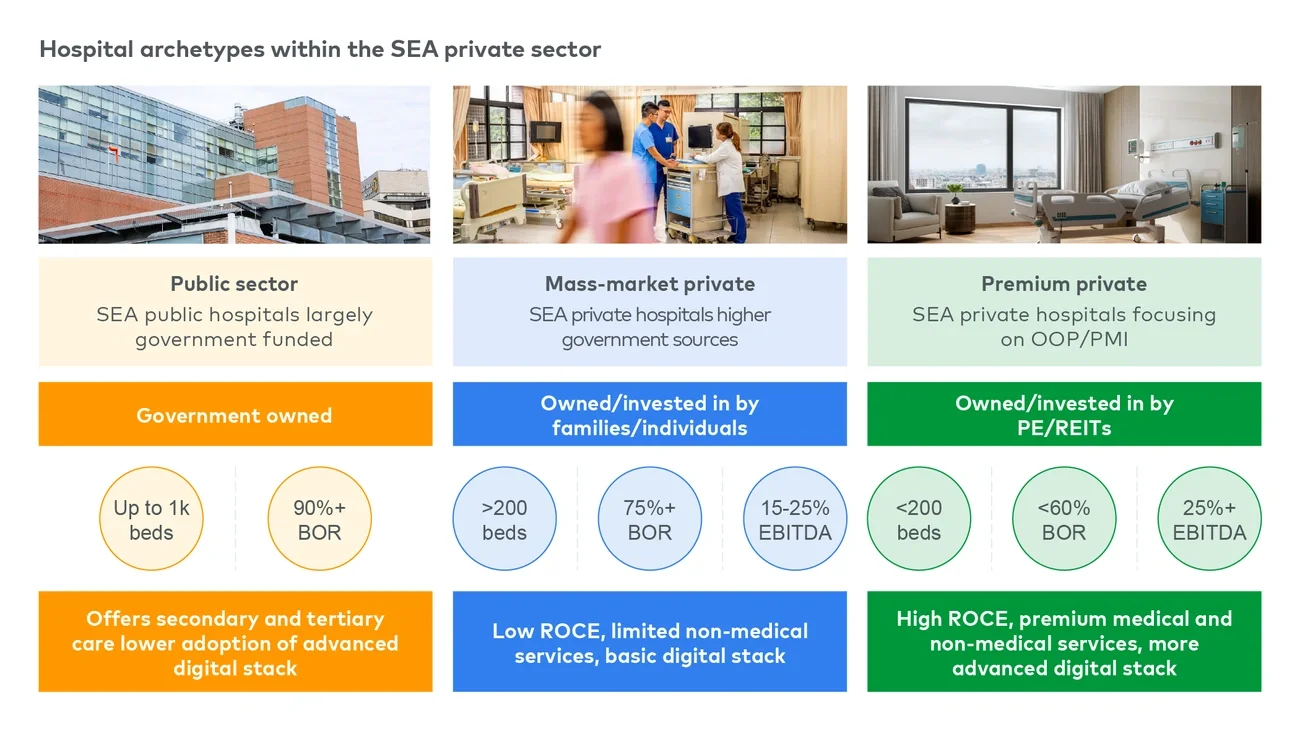
Southeast Asia’s healthcare landscape is being reshaped by powerful macro forces. Populations are graying and suffering more chronic diseases, creating structural demand growth for hospital services. At the same time, economic growth and public insurance schemes, e.g., JKN (Jaminan Kesehatan Nasional, Indonesia’s national social health insurance scheme), PhilHealth, have improved access to care, bringing millions of new patients into the system.1 Private hospital operators across the region face fundamental market shifts, from changing patient preferences (consumerism, digital engagement) to shifting payer dynamics (rising private insurance penetration, moves toward DRG-Diagnosis Related Groups systems). In response, two distinct archetypes of private hospitals have emerged in the region, each with different strategies and performance profiles. 

Figure 1

Hospital Archetypes within the SEA Private Sector (Figures adjusted to Indonesian context)

Image
Hospital Archetypes within the SEA Private Sector (Figures adjusted to Indonesian context)

Figure 1

Hospital Archetypes within the SEA Private Sector (Figures adjusted to Indonesian context)

Image
Hospital Archetypes within the SEA Private Sector (Figures adjusted to Indonesian context)

The mass-market private hospitals focus on serving the broad middle- and lower-income population, often in partnership with government insurance. These hospitals are typically large-capacity facilities — often 200-plus beds — designed for scale. They run at very high bed occupancy (often >75%), a reflection of acute demand from subsidized patients and a chronic undersupply of hospital beds in many areas. However, because a significant portion of their patients are on government tariffs or tightly managed budgets, profit margins are relatively modest. Mass-market operators tend to achieve only around 15%-25% EBITDA (earnings before interest, taxes, depreciation and amortization) margins. They emphasize secondary and tertiary care services (general medicine, maternal and child health, surgeries, catheterization labs) with limited frills, and often have relatively basic digital systems and infrastructure. In short, this model prizes volume and cost-efficiency — filling beds and delivering acceptable care at low cost.

By contrast, premium private hospitals target the upper end of the market — patients who pay out of pocket or have private insurance — and differentiate on premium and advanced medical and nonmedical services. These hospitals are often smaller (i.e., <200 beds) and operate at lower occupancy levels (typically well under 60%) to ensure they provide premium services while also managing regulatory requirements related to bed availability across different classes of care. Instead of volume, they compete on specialized clinical offerings and patient experience. Profitability for premium hospitals is high — EBITDA margins above 25% are common, reflecting higher tariffs and a case mix that skews toward complex procedures. Many of these hospitals are able to continuously reinvest in new technology and key opinion leader talent, supported by the natural earnings strength of the business and its higher return on capital employed compared with other healthcare segments. This archetype focuses on tertiary care (cardiac catheterization labs, oncology, advanced diagnostics, etc.) and often has more sophisticated digital health tools and hospital management systems. In essence, the premium model trades lower throughput for higher revenue per patient, aiming to be the provider of choice for those who can afford the best.

Notably, these two models often coexist within the same country, creating a dual-speed healthcare system. In more mature markets like Malaysia or Thailand, large private groups have portfolios spanning both segments. In nascent markets, the gap is starker — e.g., Vietnam and Indonesia see a few high-end hospitals in big cities, while the masses rely on either overcrowded public facilities or emerging budget private hospitals. Healthcare investors in Southeast Asia must therefore calibrate strategies to this dichotomy: mass-market scale versus premium specialization. Both offer growth, but through very different operational playbooks.

Indonesia: Underpenetrated market poised for growth

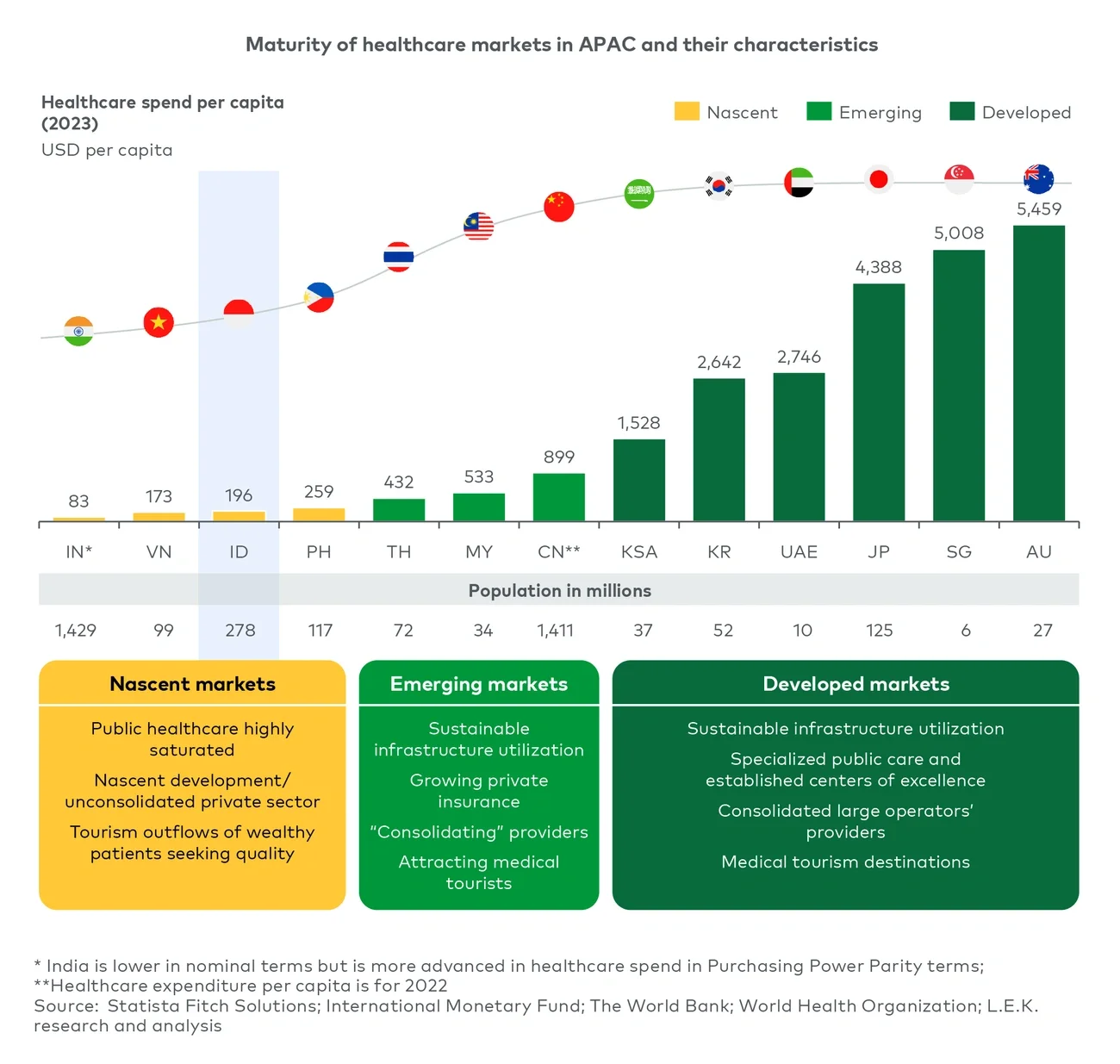
Among major Southeast Asian countries, Indonesia has arguably the most headroom for healthcare growth. The country’s healthcare spending has been historically low — around USD 80-200 per capita in recent years — which is just a fraction of that of neighboring countries (Malaysia at about USD 530 per person and Thailand at around USD 430) (see Figure 2). 

Figure 2

Maturity of healthcare markets in APAC and their characteristics 

Image
Maturity of healthcare markets in APAC and their characteristics

Figure 2

Maturity of healthcare markets in APAC and their characteristics 

Image
Maturity of healthcare markets in APAC and their characteristics

Indonesia also has one of the lowest hospital bed-to-population ratios in the region.2 This underinvestment is incongruous with Indonesia’s status as the region’s largest nation (over 270 million people) and its consistent economic growth. The result has been a chronically underserved healthcare market — one where basic indicators like doctor density and hospital beds have lagged regional averages. For investors, this represents latent demand that is now beginning to be unlocked.

Several converging factors indicate that Indonesia’s healthcare sector is at an inflection point. Indonesia is transitioning from a nascent healthcare market to an emerging one, as the private sector starts playing a greater role in supporting a saturated public system.

The country’s public hospitals (which account for the majority of beds) are straining under patient loads — many run at over 90% occupancy routinely, with long queues for surgeries and treatments. The expansion of JKN, which is administered by BPJS (Badan Penyelenggara Jaminan Sosial), has dramatically increased healthcare utilization. As of December 2023, JKN/BPJS covered about 95% of the population, making it one of the world’s largest universal coverage schemes.3 This has shifted most healthcare financing to public sources, as government health expenditure growth (8% compound annual growth rate) has outpaced private spending in recent years. Consequently, demand is surging at the low end, and public facilities alone cannot cope — creating an opening for private providers to step in across Tier 1, 2 and 3 cities.

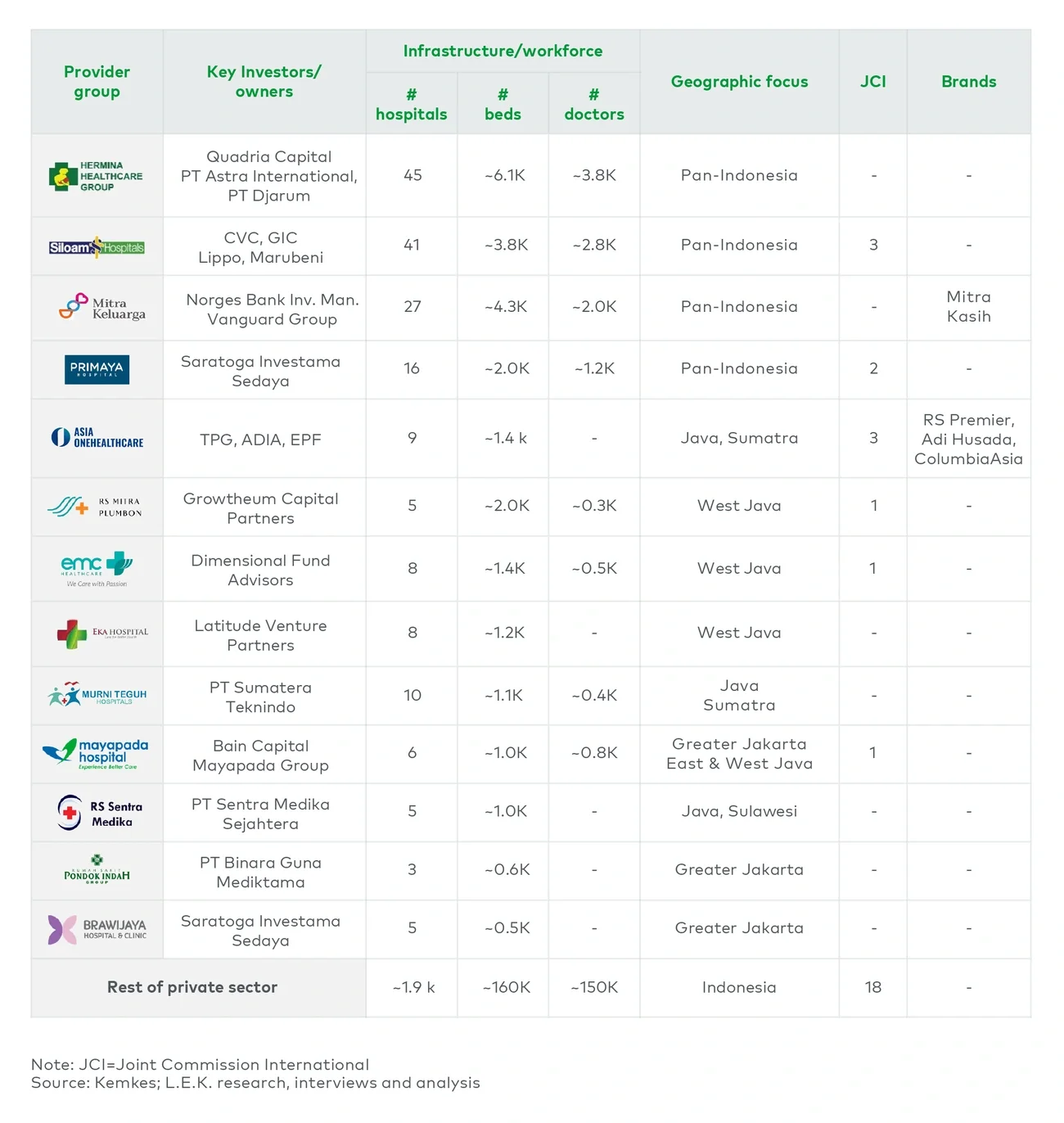
At the same time, the private hospital sector in Indonesia remains highly fragmented and ripe for consolidation. Despite the proliferation of new hospital groups in the past decade, the top 10-15 private hospital networks still account for only about 10% of total private bed supply (approximately 180,000 total private hospital beds). The vast majority of Indonesia’s remaining approximately 160,000 private hospital beds are spread across hundreds of independent or single-site providers. Early signs of consolidation are already visible: For instance, multiple private equity investors and local conglomerates have entered the hospital space, scaling up platforms that can later absorb smaller players. In short, Indonesia’s hospital market today has the ingredients for robust growth: huge unmet needs, financing in place (through JKN and rising incomes), increasing private medical insurance penetration and a competitive landscape that favors those who can scale up networks efficiently. It is a classic case of an underpenetrated market at a tipping point, now moving into a phase of accelerated investment and expansion (see Figure 3).

Figure 3

Image
Figure 3

Figure 3

Image
Figure 3

Mass-market hospitals: Volume play with discipline

Serving the mass-market segment in Indonesia means working with the realities of JKN/ BPJS — high patient volumes, regulated prices and an acute need for cost control. Many private hospitals in Indonesia treat JKN patients, but most still lack the infrastructure or systems to handle large BPJS volumes efficiently.4 However, a new cohort of investors is cracking the code for mass-market healthcare delivery. Their playbook is borrowed from both public health principles and private sector efficiency. Key elements include focusing on underserved geographies, optimizing workforce and costs, standardizing care protocols for consistency and throughput, and understanding the scale — smaller mass-market providers typically operate at about 5% EBITDA.

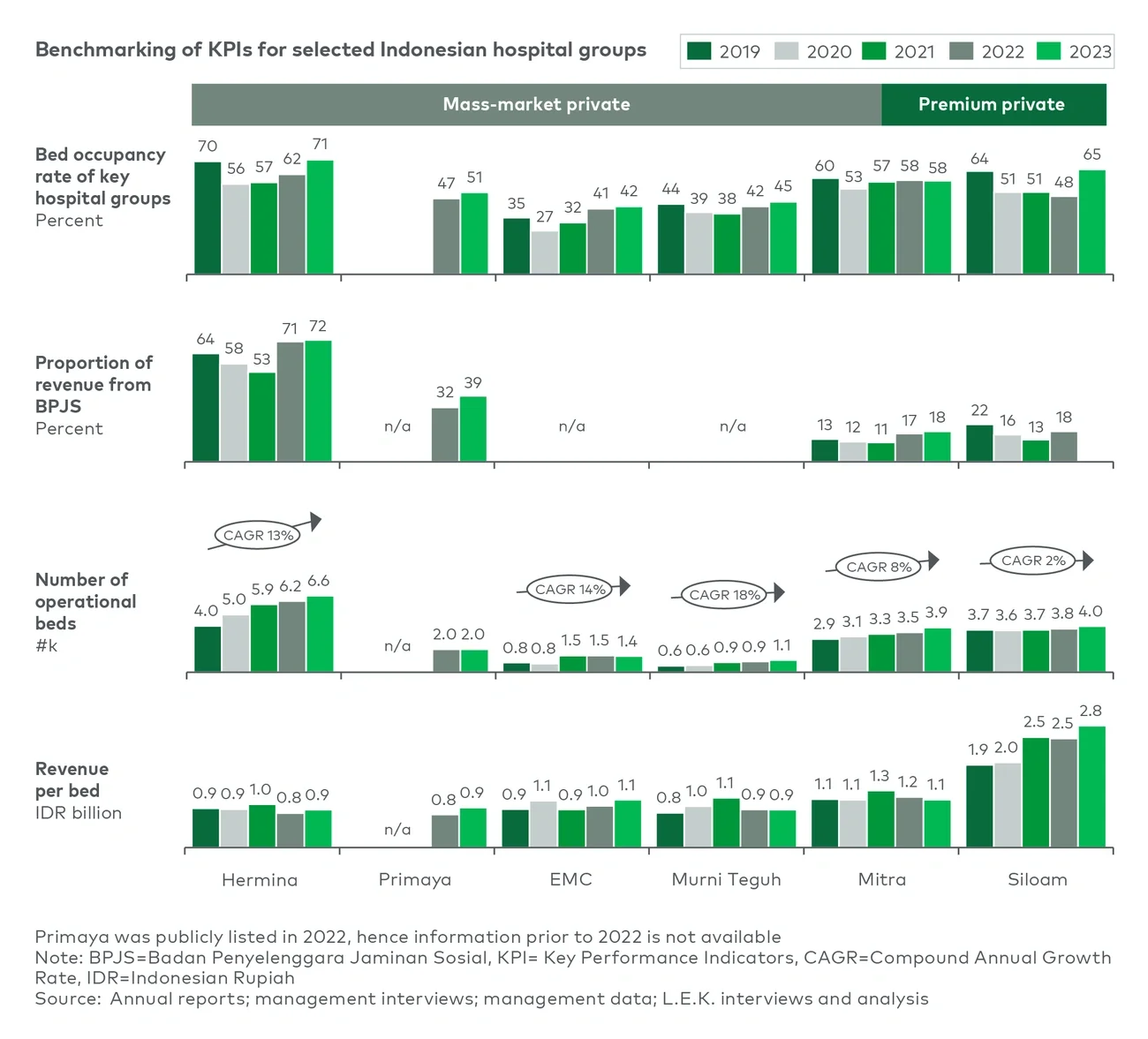
Key Performance Indicator benchmarks of selected private hospital groups illustrate the divergence in Bed Occupancy Rates and Average Revenue Per Bed of these groups which are inversely related to their BPJS volumes. 

Figure 4

Benchmarking of KPIs for Selected Private Hospital Groups

Image
Benchmarking of KPIs for Selected Private Hospital Groups

Figure 4

Benchmarking of KPIs for Selected Private Hospital Groups

Image
Benchmarking of KPIs for Selected Private Hospital Groups

One example is a hospital network that has rapidly expanded by catering almost exclusively to BPJS patients. This network of hospitals has positioned itself as a “BPJS-focused,

high-volume” provider. By locating hospitals in second-tier cities and peri-urban areas, it taps pent-up local demand where public facilities are scant and few private competitors operate. These hospitals recruit younger doctors and clinicians who are keen to build their careers. Doctors follow structured clinical protocols set by the network — ensuring that care delivery is standardized and efficient, rather than dependent on individual doctor preferences. This approach increases throughput (more patients treated per doctor)

and aligns with BPJS guidelines for appropriate care. Importantly, the network exercises strict cost discipline in all aspects: from bulk procurement of generic drugs and supplies to lean hospital administrative staffing and utilitarian facilities. The result is a sustainable economic model even at BPJS’s modest tariff levels. High bed occupancy and volume drive revenue, while low cost per patient preserves a reasonable margin. This mass-market strategy can succeed where a traditional private hospital might fail. As evidence, some of these value-focused hospitals are reportedly profitable, with EBITDA margins in the high teens and above, despite 70%-80% of their patients being JKN-funded.5 They demonstrate that with the right scale and rigor, serving the masses is not just a social mission but also a viable business.

Indonesia’s government insurance administrators have indirectly encouraged such private participation by maintaining JKN financial stability in recent years. Moreover, the sheer volume growth of insured patients (tens of millions added in the past few years) means that even at low unit prices, the revenue pool is expanding. In summary, Indonesia’s mass- market hospital opportunity hinges on executing a disciplined, volume-driven model. Those who can streamline operations and work with government payers are poised to capture a huge share of Indonesia’s healthcare growth story, all while delivering accessible care to communities that need it most.

Premium players: Investing in advanced care

Even as mass-market providers race to add basic capacity, Indonesia’s premium hospital segment is also gaining momentum. In major urban centers like Jakarta, Surabaya and Bandung, several private hospital groups are positioning themselves to capture demand for complex and specialized care that historically was met through outbound medical tourism. (In nascent markets, wealthy Indonesians have often traveled to Singapore, Malaysia or beyond for advanced treatments — but this dynamic is beginning to change.) The leading private hospital players in Indonesia are now making significant investments in cutting- edge medical technology and specialty services to keep affluent patients in the country.

A clear example is oncology. Indonesia has a high and growing cancer burden, yet access to advanced cancer treatment has been limited domestically — for instance, there are only a handful of linear accelerators (LINACs) for radiotherapy in the entire country. Recognizing the gap, some private groups are stepping up. One major hospital network in Jakarta is in the process of installing Indonesia’s first proton therapy center, an advanced form of radiation therapy, as part of an expansion that includes six new hospitals by 2027.6 This multimillion-dollar investment signals confidence that demand for high-end oncology services will rise and that patients will pay for quality care at home rather than flying to Singapore or the United States. Likewise, several hospitals have recently acquired or are planning to acquire LINAC machines for conventional radiotherapy — often holding off only until they see sufficient private-pay patient volume to justify the expense. Currently a large portion of Indonesian cancer patients either rely on overcrowded public facilities or go abroad, so private hospitals see an opportunity to repatriate that volume by offering comparable technology.

Cardiac care is another area of focus. Many premium Indonesian hospitals are equipping cardiac catheterization labs (for angioplasty, stenting, etc.) and establishing heart centers, as heart disease remains the country’s top killer. The leading hospitals accredited by Joint Commission International in Jakarta now each boast multiple catheterization labs and cardiothoracic surgery teams and are starting to perform complex interventions that were rarely done in-country a decade ago.7 Investments in high-end diagnostic imaging are also evident — for example, 3.0 Tesla MRI machines and 256-slice computerized tomography scanners (the latest generation) are now present in several private facilities, matching the technology offerings of Singapore’s hospitals.8 Across the board, centers of excellence are being developed: from neurosciences units with advanced MRI and stroke care, to in vitro fertilization (IVF) clinics targeting Indonesia’s growing IVF market. These moves not only attract patients who would otherwise go abroad but also help capture the growing expatriate community and medical tourism inflows from neighboring countries (e.g., patients from East Timor or Papua New Guinea coming to Indonesian hospitals).

For investors specifically eyeing the premium hospital space, Indonesia offers a chance to ride an upgrade cycle. As the country’s healthcare system matures, what is considered “premium” today (e.g., basic cardiac surgery or simple cancer care) will become more commonplace, and truly advanced offerings (organ transplants, gene therapy, etc.) will define the new premium. The current wave of capital expenditure on proton therapy, LINACs, robotic surgery systems and other high-end equipment is laying the groundwork for Indonesia’s private hospitals to become regional leaders in care quality. Within a decade, Indonesia could conceivably retain a significant portion of its outbound medical tourism flows — especially if costs undercut Singapore or U.S. prices. The investor thesis here is to back those groups that are investing wisely in technology and talent, creating high barriers to entry and strong brand equity for top-notch care. So far, early adopters are already seeing returns: Many premium hospitals report healthy growth in revenue per patient. With the government’s tacit support (e.g., special economic zones such as Bali and Batam,9,10 or allowing foreign specialist hiring in limited cases), the premium segment is set to flourish alongside the mass-market boom.

Policy tailwinds: Government commitment and reforms

The Indonesian government has explicitly linked healthcare improvement to its broader national development agenda. President Joko Widodo’s administration articulated the vision of a Golden Indonesia 2045, wherein Indonesia achieves high-income status by its centenary. A key pillar of this vision is a healthier, more productive population — which implies reducing premature mortality and boosting human capital. To address systemic challenges and unlock the full potential of its healthcare system, Indonesia is pursuing reform on three key fronts. 

1. Targeting high-mortality diseases through preventive care

A country cannot become fully developed if a large portion of its people die in their prime or suffer chronic illness. To have an educated, productive workforce in 2045, the parents of those workers should not die prematurely; if they do, families fall into hardship and the next generation’s education suffers.

This understanding has sharpened political will to tackle the leading causes of early death. Policymakers have identified priority disease areas for intensive intervention: cancer, cardiovascular disease, neurological conditions (e.g., stroke), uro-nephrology and maternal health (i.e., 4+1: 4 major non-communicable disease areas cancer, cardiovascular, neurological, uro-nephrology + maternal health). Nationwide screening programs have been launched for cancers and heart disease to catch illnesses early. More recently, the government began offering comprehensive medical checkups to JKN members.11 The rationale is straightforward: Prevention and early treatment save lives — and money — down the line, and checkups monitoring patients control long-term healthcare costs.

2. Addressing the human resource bottleneck

To expand healthcare capacity, the government is investing directly in infrastructure and manpower. Indonesia has secured a multibillion-dollar commitment from the World Bank to fund hospital infrastructure and equipment upgrades.12 These funds are being used to procure high-cost medical equipment (e.g., imaging machines, radiotherapy units) for both new and existing hospitals.

But the government also recognizes that equipment is useless without skilled professionals. As described earlier in this piece, Indonesia has suffered from a shortage of doctors and specialists.

The Health Ministry has started sending Indonesian doctors abroad for subspecialist training, notably to China.13 These doctors are expected to return and help ease the specialist supply bottleneck. Over the next decade, this initiative should significantly expand the pool of surgeons, cardiologists, oncologists, and other specialists needed to staff new service lines in hospitals. To generate additional specialists, hospital-based specialist training has been introduced as an alternative to medical school-trained specialists. For investors, this is a critical de-risking measure: The human capital constraint is being addressed at the highest policy level.

3. Reforming the BPJS class system

Another key policy reform could significantly improve private hospital economics: the standardization of BPJS hospital bed classes. Currently, JKN offers tiered inpatient classes (Class I, II, III), each with different amenities. The government is planning to abolish these distinctions, creating a uniform standard of care for all insured patients.14

This change will essentially downgrade higher-income JKN members within the system — everyone will receive the same basic ward-level accommodation. While this may cause some dissatisfaction, it is likely to encourage those who can afford it to shift toward higher-premium private hospitals, where they can access better amenities and faster care outside the constraints of standardized JKN coverage.

For private hospital operators, this is a compelling opportunity as it may drive more affluent patients to opt for fully private care if they seek VIP-level comfort.

For hospital investors, this shift means more diagnoses and referrals that ultimately increase demand for hospital services. It creates a virtuous cycle: Early detection brings patients into the system earlier, improving outcomes and boosting volumes for providers. 

Outlook: Healthy returns beyond the short term

Indonesia’s hospital sector is on the cusp of a sustained upswing, backed by fundamental demographic and epidemiological trends as well as deliberate policy support. In the near term, investors may have some concerns around BPJS reimbursement rates and operational challenges — indeed, margins on government-paid patients are tight, and private operators must adapt to a still-evolving regulatory environment. However, the long- run trajectory is clearly positive. The combination of extraordinary demand growth (from an increasingly insured population) and improving ecosystem fundamentals (more doctors, better insurance mechanisms, government funding for infrastructure) makes Indonesia a compelling healthcare investment destination. Private hospital operators who establish a strong foothold now — whether in the value-driven mass market or the higher-end specialty segment — can build scale and expertise that will be difficult to replicate later. They will also be well placed to benefit as efficiencies improve and any future adjustments in tariff or copay policy take effect. It bears noting that many private Indonesian hospitals already enjoy margins above global averages due to the supply-demand imbalance; as the system becomes more streamlined, even incremental improvements in payer mix or pricing could translate to outsized profit growth.

Investors with an eye on global trends should recognize that success in Indonesia not only yields direct returns but also positions them to export those insights to new markets on the cusp of healthcare transformation. In summary, while challenges in Indonesian healthcare remain, the direction of travel is clear and favorable. For investors willing to look past the immediate growing pains, Indonesia’s hospital sector offers a rare opportunity to do well by doing good — profiting from enabling millions of people to live healthier, longer and more productive lives. The prognosis is excellent: Indonesia’s healthcare inflection point is here, and the time to invest is now.

L.E.K. Consulting is a registered trademark of L.E.K. Consulting LLC. All other products and brands mentioned in this document are properties of their respective owners. © 2025 L.E.K. Consulting LLC 

Endnotes
1WHO (2024), Executive Summary
2Asia Pacific Observatory on Health Systems and Policies (2017), p115 
3GovInsider (2024) 
4World Bank Group (2019), p54 
5BRI Equity Research (2025), p1 
6Ion Beam Applications (2020)
7Muharram et al., (2024)
8Bali International Hospital a. (2025)
9Bali International Hospital b. (2025)
10International Travel and Health Insurance Journal (2024)
11Ksatria Medical Systems (2023) 
12World Bank Group (2025)
13Xinhua (2025)
14Kompas (2025) 

Questions about our latest thinking?

English

Navigating China's Volume-Based Procurement in the Pharma Industry

August 27, 2025

China’s Volume-Based Procurement (VBP) tenders have already sliced average drug prices by 50 %+, saving the system US $60 billion and redirecting ≈80 % of that to fund innovative therapies.
In this video briefing, L.E.K. Partner Helen Chen shows why VBP is now a permanent fixture and outlines a three-phase playbook to preserve brand value as volumes and margins tighten.

Watch the video for Helen’s data-backed guidance and concrete next steps for pharmaceutical leaders navigating China’s evolving market.

L.E.K. Consulting is a registered trademark of L.E.K. Consulting LLC. All other products and brands mentioned in this document are properties of their respective owners. © 2025 L.E.K. Consulting LLC 

English

Unlocking China's Precision Medicine Potential

August 25, 2025

China stands at the tipping point of a precision-medicine revolution. Policy momentum, a vast patient pool and a thriving life-sciences ecosystem are converging to accelerate progress.

In this three-minute briefing, L.E.K. Partner Helen Chen explains how targeted diagnostics and therapies could soon benefit ~10 million patients, unleash ≈ US $200 billion in investment and reduce national healthcare costs by ≈ US $30 billion. Realizing this upside, however, will require stakeholders to streamline diagnostic approvals, modernize reimbursement pathways and foster deeper collaboration across the value chain.

For a deeper dive, download L.E.K. Consulting’s newly released China Edition of the “On the Cusp of a Cure” APAC white paper. Developed in collaboration with 16 regional experts, the report pinpoints adoption barriers, offers system-level recommendations and quantifies the long-term value that precision care could unlock across China’s healthcare system.

Access the full report:

L.E.K. Consulting is a registered trademark of L.E.K. Consulting LLC. All other products and brands mentioned in this document are properties of their respective owners. © 2025 L.E.K. Consulting LLC 

English
Subscribe to