Due Diligence of a Field Management Software Provider

November 7, 2025

The challenge

A leading provider of field management software across retail, CPG, QSR, hospitality and property management stood at a pivotal juncture. As leadership prepared for a sale, the company faced the risk of being undervalued in a market often seen as fragmented and mature. To maximize buyer confidence, the company needed to shift others’ perception of it, from considering it just another player in a crowded field to recognizing it as a differentiated leader with significant growth potential.

At a glance, L.E.K. Consulting’s client:

  • Needed a credible view of total addressable market and growth runway
  • Required proof points to show competitive differentiation
  • Sought a clear equity story to strengthen buyer confidence

Our approach

We began by mapping the broader field management software landscape. Through rigorous market sizing, our team assessed both the penetrated market and the broader total addressable opportunity. The analysis revealed considerable whitespace, a signal that expansion potential remained far greater than many investors assumed.

Building on this market view, we turned to the client’s track record. The review uncovered that the company’s growth had consistently outpaced the overall market by a factor of 2.5, fueled by its focus on high-growth segments. Additionally, the client’s breadth of offering and strong customer relationships were validated as points of competitive advantage.

To bring the future growth story to life, we highlighted two new end markets the client could serve, each with the attractive dynamics of large workforces, high adoption potential and existing client ties. Geographic expansion opportunities were also identified, particularly in regions with strong digital adoption and a high concentration of the client’s core industries.
Step by step, this reframed the narrative from one of fragmentation and maturity to one of leadership, momentum and untapped upside.

Key elements of the approach

  • Market sizing revealed substantial unpenetrated opportunity
  • Performance analysis showed growth at 2.5x market pace
  • Competitive differentiation was validated through the client’s breadth of solutions and customer depth
  • Growth opportunities were identified across select industries and geographies

Results

The engagement equipped the client with a compelling, investor-ready equity story rooted in data and credibility. The attractiveness of the market and the company’s differentiated positioning, which had once been difficult to articulate, was now a concise and confident narrative ready for prospective buyers.

Impact delivered

  • Comprehensive market assessment highlighting sizable whitespace
  • Strong validation of differentiated multisolution positioning
  • Defined pathway for growth by expanding into new end markets and geographies
     

L.E.K. Consulting is a registered trademark of L.E.K. Consulting LLC. All other products and brands mentioned in this document are properties of their respective owners. © 2025 L.E.K. Consulting LLC

English

Improving Ecommerce Capabilities to Grow Profitability for a Lifestyle Retailer

November 7, 2025

Background

A multichannel lifestyle retailer known for high-quality leather goods, apparel and accessories engaged L.E.K. Consulting to develop a comprehensive strategy aimed at driving profitable growth across its brick-and-mortar and ecommerce channels. With an upcoming board meeting, the client sought our support to establish a clear view of its current business performance and value drivers, analyze consumer data to guide decision-making and define actionable growth strategies. Additionally, we were tasked with building a financial model to evaluate the implications of various options, culminating in a comprehensive roadmap to be presented to the board.

Approach

We began by conducting a holistic assessment of the retailer’s business landscape, including a benchmarking analysis of sales data compared with key competitors. Leveraging tools such as Digital Commerce 360, we evaluated the client’s ecommerce capabilities to determine how they stacked up against industry standards and identified specific areas where the client was lagging behind.

This analysis uncovered several critical factors that successful lifestyle retailers leverage to achieve sustainable growth. Those key success elements identified included a brand proposition that resonates with consumers, the delivery of seasonal and curated product assortments, and an optimized omnichannel experience that integrates physical and digital interactions. We used these benchmarks to pinpoint underperformance in the client’s core metrics — insights that would shape the foundation of an improved strategy.

After identifying these gaps, we collaborated with the client’s leadership to prioritize critical initiatives. Key actions included refining the brand’s market positioning to strengthen consumer attraction, implementing targeted marketing efforts and enhancing product assortments based on consumer demand and seasonality.

Results

Before engaging with L.E.K., the retailer faced a decline in business performance, with no clear plan to reverse the trend. Our thorough assessment provided the client with a straightforward understanding of its current position, highlighting the most significant obstacles to growth and areas where important adjustments could yield the highest impact.

The framework we provided helped the client’s leadership align on a shared vision for growth, underscoring the need for investment in ecommerce capabilities as a core pillar of future success. Additionally, our data-driven approach highlighted the importance of a responsive brand identity and consumer-focused product offerings. As a result, the client now has the tools and clarity to execute a well-defined strategy that meets the demands of today’s consumers, positioning the brand for continued growth and relevance in an increasingly digital market.

L.E.K. Consulting is a registered trademark of L.E.K. Consulting LLC. All other products and brands mentioned in this document are properties of their respective owners. © 2025 L.E.K. Consulting LLC

English

Reenergizing Sales and Marketing Performance for a National Casual Footwear Brand

November 7, 2025

Background and challenge

A nationally recognized casual shoe brand engaged L.E.K. Consulting to understand recent sales softness and identify what would most effectively restore growth. Performance had weakened after a period of faster growth, with declines visible across channels and uncertainty around root causes. Potential drivers spanned both marketing (targeting mix, channel mix, messaging) and ecommerce execution (site experience, digital merchandising, product newness).

Approach

We built an integrated fact base across channels — aggregating sales, web and digital marketing data — to create a unified, executive-level view of commercial health. With that foundation, we quantified the sales miss versus plan and prior year, and examined customer value trends, including declines in customer lifetime value (the projected long-term value of a customer based on expected repeat purchases and retention). In parallel and using brand tracking alongside digital and social signals, we assessed how effectively the marketing strategy was driving awareness and consideration among priority customer groups.

We then profiled recent purchasers against the ideal customer to pinpoint targeting opportunities, executed a performance-marketing audit to diagnose lower or less-qualified traffic and refine channel mix and tactics, and evaluated the end-to-end user journey across key retail marketplaces and the brand site to isolate conversion frictions.

Finally, we synthesized insights through a holistic lens across traffic, conversion and order value, and operationalized the work via a Power BI proof-of-concept dashboard. The dashboard monitors core key performance indicators — companywide sales performance and channel deep dives — along with views into customer and silhouette trends, marketing/awareness effectiveness and engagement by demographics.

Results

By turning a fragmented fact base into one source of truth and pairing it with an executive dashboard, the team shifted the conversation from “What’s happening?” to “What we do next,” yielding the outcomes below:

  • Executive alignment on drivers and priorities. Clear synthesis of the sales miss and why performance lagged across segments and product types, along with a prioritized action plan.
  • Always-on performance visibility. An executive-view dashboard for ongoing monitoring — covering companywide sales performance, channel deep dives, customer trends, marketing/awareness effectiveness and engagement by demographics.
  • Data foundation for targeted improvement. An integrated, executive-level view and diagnostic framework (traffic → conversion → order value) to focus improvements where they matter most.

L.E.K. Consulting is a registered trademark of L.E.K. Consulting LLC. All other products and brands mentioned in this document are properties of their respective owners. © 2025 L.E.K. Consulting LLC

English
Executive Insights

Trends In Neuroscience Drug Discovery And Development

November 7, 2025

Key takeaways

Advances in understanding disease heterogeneity have enabled the development of novel targets and biomarker science, including the discovery of new blood-based biomarkers and the development of imaging and digital metrics to enable precision medicine strategies in neuroscience.

Developers are incorporating surrogate endpoints and accelerated timelines in response to evolving regulatory precedents; cases in Alzheimer’s and ALS illustrate how these strategies are shaping trial execution, interpretation and approval dynamics.

Novel mechanisms of action, advanced modalities and delivery technologies that cross the blood-brain barrier are creating opportunities in previously intractable diseases.

Large- and mid-cap pharmas are using major M&A and business development and licensing to accelerate reentry or expansion into neuroscience, and competition for attractive pipeline assets is intense.

The landscape of neuroscience drug development

Neurological and psychiatric diseases are among the greatest healthcare challenges of our time. In 2019, neurological diseases led to 108 million disability-adjusted life years (DALYs), and psychiatric conditions contributed another 138 million DALYs. Combined, these illnesses impose a global economic burden of approximately $5 trillion annually.

Despite growing unmet need, drug development in neuroscience has been deprioritized by many major pharmaceutical companies due to disease heterogeneity among patients and high clinical failure rates. Between 2010 and 2019, pharma leaders such as AstraZeneca, GSK, Pfizer and Amgen exited or downsized their neuroscience programs.

Today, this picture is shifting. Advances in clinical technology, greater understanding of disease mechanisms and renewed biotech investment are driving resurgence. This momentum is translating into high-value deals and increased commitment to neuroscience innovation. For example, BMS, AbbVie and Sanofi have reentered or intensified their presence in neuroscience with recent acquisitions, while Roche has increased early R&D activity through strategic biotech and academic partnerships.

Challenges in Neuroscience Drug Development

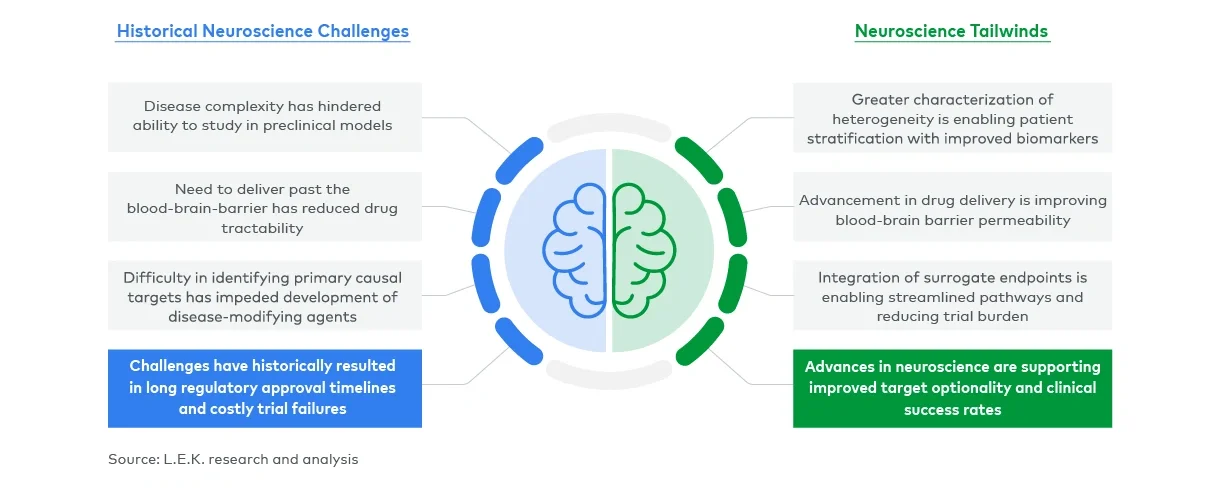
Many neuroscience indications have complex, multifactorial etiologies that are poorly understood and difficult to segment and model (see Figure 1). The heterogeneous nature of these diseases has hindered target identification (i.e., finding one target that significantly modulates disease pathology) and clinical development planning (e.g., patient identification, trial design and length). Even in indications with good biological understanding, the blood brain barrier has historically presented target accessibility challenges.

Identification of biomarkers in neuroscience has additionally been challenging due to the difficulty of sampling tissue at the site of pathology, poorly defined diagnostic criteria and the lack of animal models for validation. While examples like neurofilament light chain show promise across multiple neurological conditions, most biomarkers, including those regularly used in clinical trials (e.g., amyloid beta and tau in Alzheimer’s disease), do not fully capture the complexity of disease progression or response to therapy. This has contributed to the challenge of patient identification and stratification.

These factors together have contributed to delayed approvals, trial inefficiencies, and a higher rate of clinical failure in neuroscience programs. Greater success has typically been seen in diseases that are more genetically defined or pathologically simpler (e.g. spinal muscular atrophy, certain lysosomal storage disorders).

Figure 1

Image
Neuroscience headwinds and tailwinds

Figure 1

Image
Neuroscience headwinds and tailwinds

Clinical development tailwinds

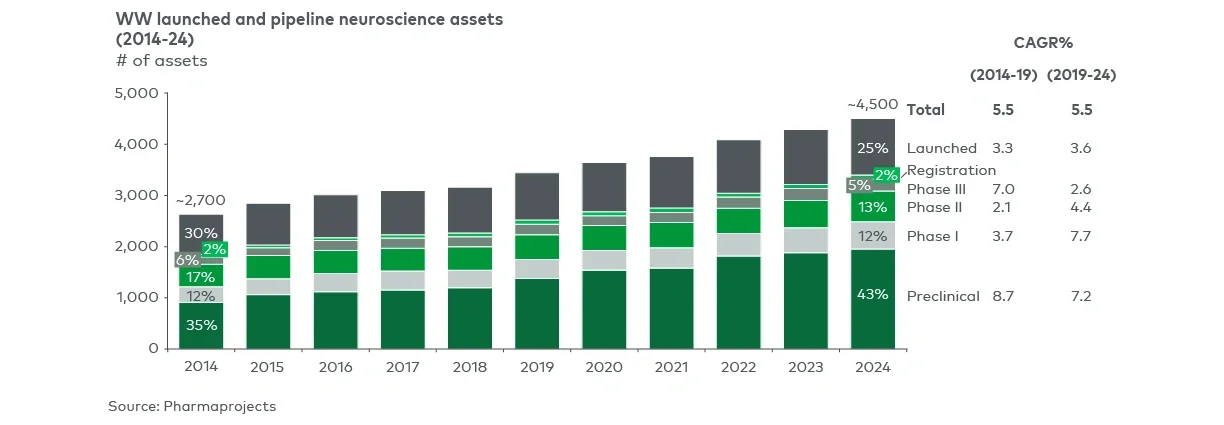
Despite persistent difficulties in neuroscience drug development, activity in the space has seen early-stage growth in recent years, driven by progress in understanding disease etiology and patient heterogeneity, the emergence of better validated biomarkers (e.g., blood-based and digital biomarkers in Alzheimer’s, imaging and electroencephalogram-based biomarkers in neuropsychological indications), and exploration of novel mechanisms of action (MOAs) to appropriately target historically intractable conditions. The neuroscience pipeline has expanded, growing approximately 6% annually over the past five years, with early-stage assets (preclinical and Phase I) growing even faster, at rates of around 7% and 8% annually, respectively (see Figure 2a). This trend is due to repurposing of less-risky MOAs with proven success in other therapeutic areas (e.g., immunology) as well as novel target development.

Figure 2a

Image
The number of neuroscience pipeline assets has been increasing steadily

Figure 2a

Image
The number of neuroscience pipeline assets has been increasing steadily

As disease knowledge grows, precision medicine strategies are increasingly viable, enhancing patient stratification and trial selection to boost clinical success in genetically defined or biomarker-defined subgroups. There have also been major gains in technology supporting high-throughput sequencing and proteomic profiling, with these molecular tools now becoming more widely available for clinical use to help support drug discovery and clinical evaluation.

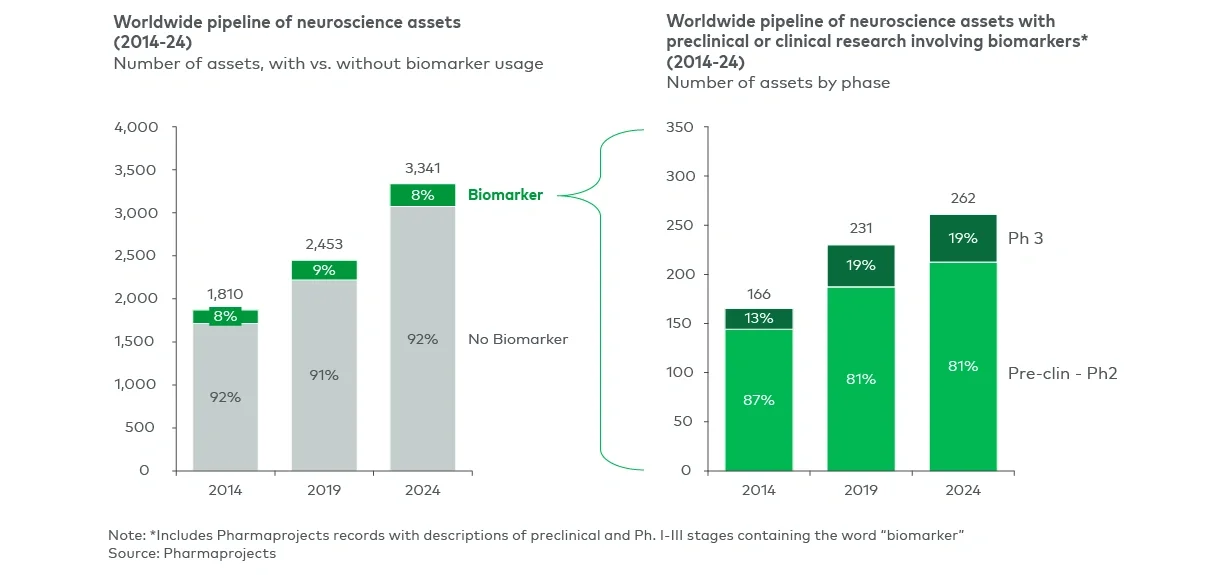
These advancements have supported the increasing number of clinical programs over the past decade (see Figure 2b). And while many of these new strategies and technologies have enabled the use of emerging modalities such as gene therapies, antisense oligonucleotides (ASOs) and siRNA/RNAi, small molecules still represent the majority of the neuroscience development pipeline (roughly 60%), highlighting their continued value in new treatment development.

Figure 2b

Image
Biomarker utilization in neuroscience has continued and is linked to more late-stage activity now vs. years prior

Figure 2b

Image
Biomarker utilization in neuroscience has continued and is linked to more late-stage activity now vs. years prior

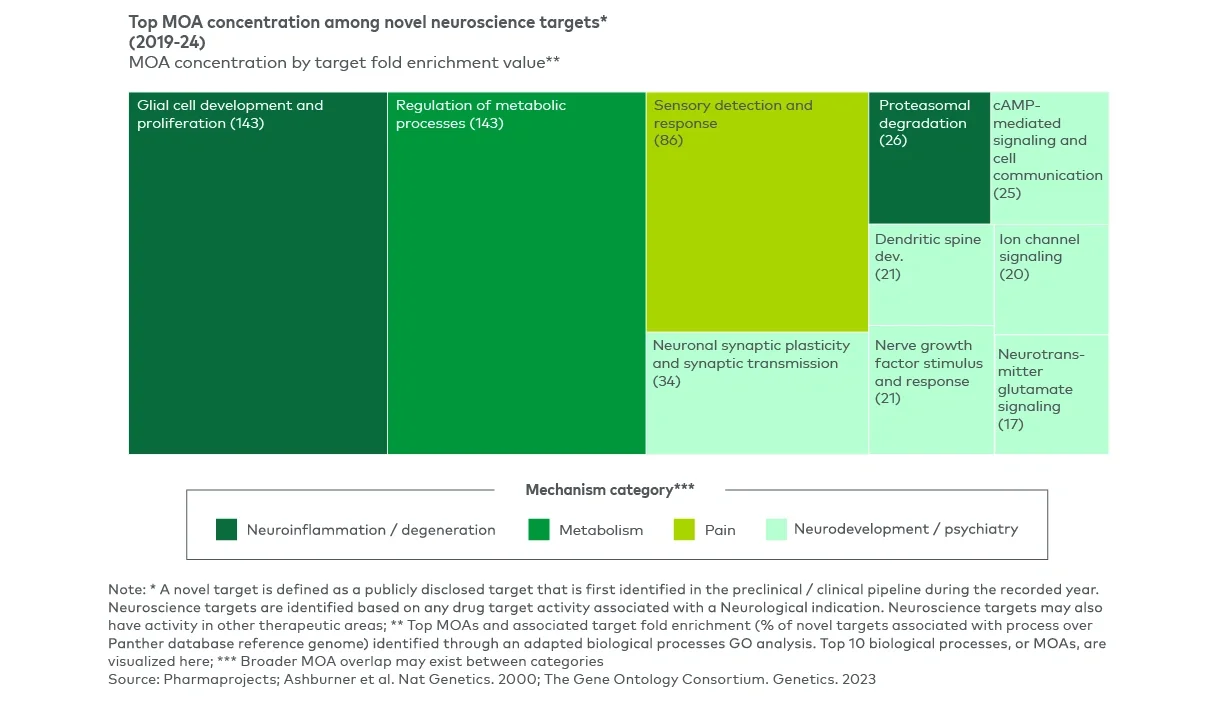
Novel targets are being identified to address major unmet needs in prominent disease areas. Innovation is concentrated within the broader categories of indications (see Figure 3), including, for example:

  • Neuroinflammation/degeneration — multiple sclerosis, Parkinson’s disease, traumatic brain injury
  • Metabolism — Batten disease, Krabbe disease, Niemann-Pick disease
  • Pain — erythromelalgia, nociceptive/neuropathic pain, spinal cord injury
  • Neurodevelopment/psychiatry — bipolar disorder, major depressive disorder, Rett syndrome

The highest concentration of activity is focused specifically on glial cell development and on the proliferation and regulation of metabolic processes. Beyond these, novel target activity is significantly enriched for pain/itch-related mechanisms that look to modulate sensation/ physical reception, which can be off-balance in moderate-to-severe pain indications, and neuronal plasticity mechanisms that better manage the patient’s ability to retain function, which can be limited in neurodevelopmental/neuropsychiatry disorders.

Figure 3

Image
Recent novel target R&D is heavily concentrated in neuroinflammation/degeneration and metabolism mechanisms

Figure 3

Image
Recent novel target R&D is heavily concentrated in neuroinflammation/degeneration and metabolism mechanisms

Innovations supporting novel target development include the emergence of improved drug delivery strategies as well as advanced modalities that safely deliver effective pharmacological treatment across the blood-brain barrier. One example is Zolgensma, the U.S. Food and Drug Administration-approved gene therapy for SMA, which uses an AAV9 vector capable of successfully crossing the blood-brain barrier to transduce motor neurons and drive improved survival and motor function. Gene therapy momentum continues to rise, especially in neurodegenerative diseases with clear genetic components (e.g., Parkinson’s disease, Huntington’s disease). For example, uniQure’s AMT-130 Phase I/II recently showed meaningful slowing of Huntington’s disease progression vs. baseline.

Newer platforms are now building on the progress of AAV-based delivery. For example, transferrin receptor-mediated transport platforms are being developed to help deliver a range of modalities across the blood-brain barrier, including nucleotide therapies, larger small molecules and antibodies. These technologies expand the number of druggable targets in the central nervous system (CNS), supporting more opportunities to pursue mechanisms previously considered inaccessible. As more advanced therapies near launch, neuro-associated care sites will need to build the appropriate capacity (e.g., supporting IV infusion needs) and policies (e.g., coverage of high volume diseases) to drive fast adoption and broad patient access.

Clinical trial strategies in neuroscience have also been changing in response to both unmet needs and advances in biomarker science. Surrogate endpoints such as amyloid plaque reduction or fluid biomarkers are being integrated into trial designs to enable earlier readouts and efficient development timelines. The approval trajectory of anti-amyloid therapies in Alzheimer’s disease exemplifies this shift: Aduhelm received accelerated approval based on amyloid positron emission tomography (PET) imaging, bringing renewed attention to surrogate endpoints in place of conclusive clinical outcomes. Leqembi followed a similar path, receiving accelerated approval based on amyloid PET and full approval following a confirmatory Phase III trial.

In amyotrophic lateral sclerosis (ALS), Qalsody was granted approval based on reductions in neurofilament light chain, signaling growing incorporation of mechanistic biomarkers into trial endpoints. While still evolving, these approaches reflect a broader trend toward adaptive trial designs and pathways that expedite approvals, reduce development burden, and align early efficacy signals with long-term clinical outcomes.

Funding and Dealmaking Trends

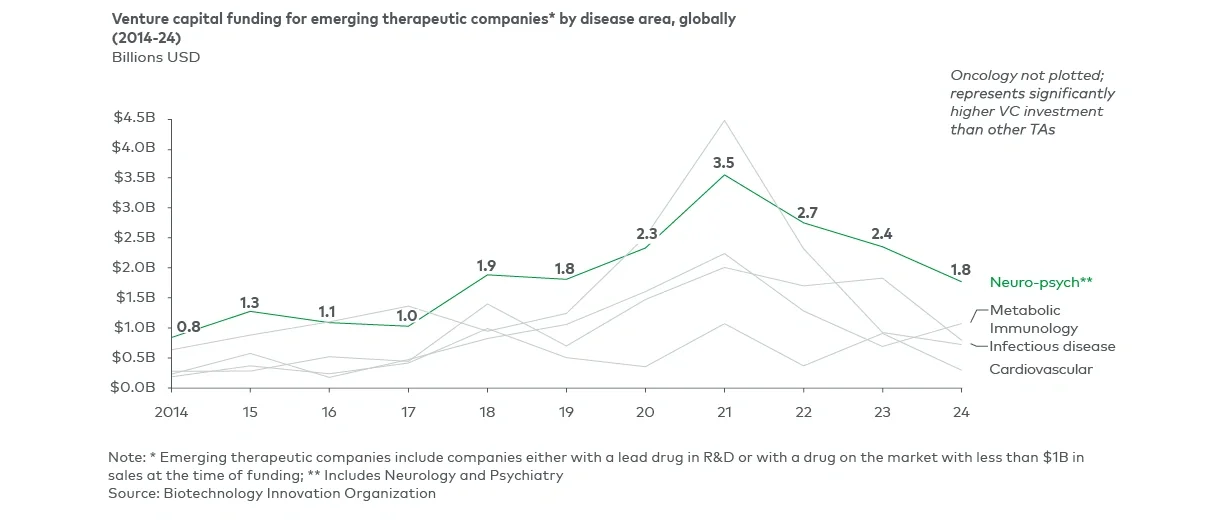
Alongside the pursuit of novel targets, development of greater delivery tools, and presence of more favorable regulatory support, investor sentiment toward neuroscience has improved considerably (see Figure 4). While total biotech venture funding has declined since its 2021 peak, neuroscience has increased its share of available capital, ranking as the second most funded therapeutic area after oncology from 2022 to 2024 and widening its lead over other non-oncology fields since 2021.

Figure 4

Image
Neuroscience-focused biotechs have seen an increase in venture capital funding and were the second most funded therapeutic area behind oncology in 2024

Figure 4

Image
Neuroscience-focused biotechs have seen an increase in venture capital funding and were the second most funded therapeutic area behind oncology in 2024

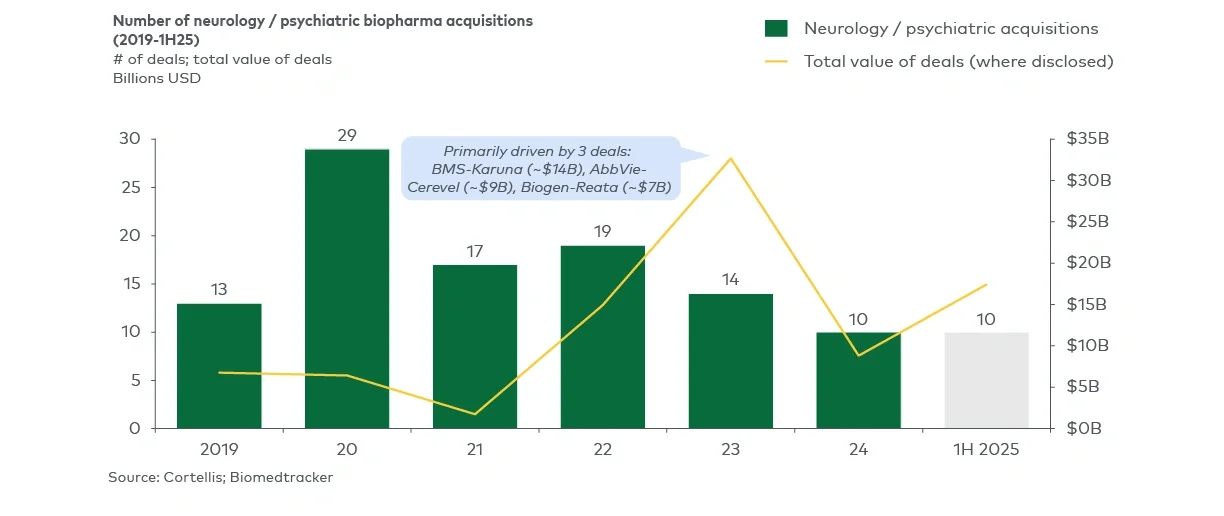
Additionally, M&A activity in neuroscience over the past five-plus years has remained strong (see Figure 5). 2023 was a breakout year, surpassing $30 billion in deal value, driven by three large acquisitions: BMS-Karuna ($14 billion), AbbVie-Cerevel ($9 billion) and Biogen-Reata ($7 billion). This trend continued into early 2025 with Johnson & Johnson’s announcement of its acquisition of Intra-Cellular Therapies ($15 billion). The growing interest from large pharmaceutical companies is evident in these high-profile acquisitions. Neuroscience is becoming a priority investment area, with valuations rising as companies seek to reenter or expand their presence in the field.

Figure 5

Image
Neuroscience M&A has continued to remain active over the last several years, with the first half of 2025 already matching 2024 in total deal count

Figure 5

Image
Neuroscience M&A has continued to remain active over the last several years, with the first half of 2025 already matching 2024 in total deal count

While funding and dealmaking trends underscore a growing resurgence, committed neuroscience players are still mindful of the therapeutic area’s inherent risk and volatility. Some are complementing their neuroscience pipelines with assets in other disease areas to balance risk. For example, Acadia Pharmaceuticals has expanded into rare disease with their Rett syndrome therapy Daybue and are building on this momentum with pipeline therapies in Prader-Willi and Fragile X syndromes.

Similarly, Biogen continues to invest in Alzheimer’s and ALS while advancing late-stage systemic lupus erythematosus assets as part of a growing immunology presence. These strategies highlight that even among a scientific renaissance in neuroscience, long-term success may depend on pairing innovation in this area with a diversified portfolio.

Areas for Continued Investment

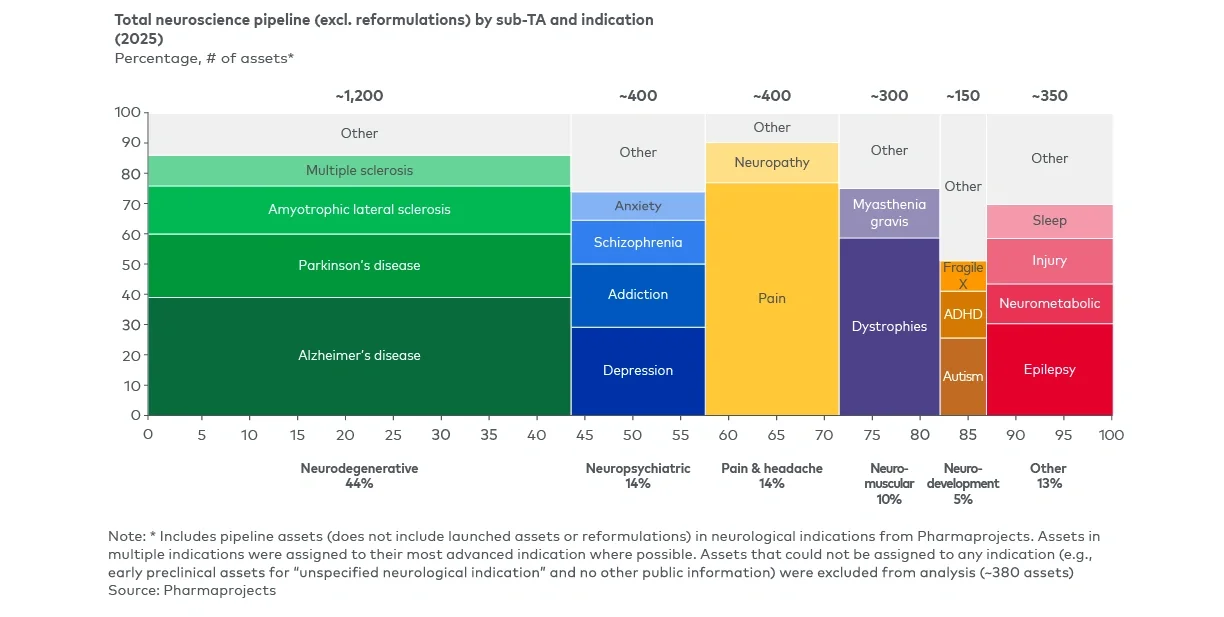
Despite recent progress, significant unmet needs persist across various areas within neuroscience, particularly in neuropsychiatric, pain, neurodevelopmental, neuromuscular, and neurodegenerative conditions – fueling total pipeline activity (see Figure 6). Looking ahead, promising avenues for innovation and investment are emerging, including:

  • Developing new approaches to validated pathways, including through the adaptation of learnings in other therapeutic areas (such as leveraging immunology targets within neuroscience indications)
  • Exploring complementary disease mechanisms within attractive pathways, including the use of polypharmacy or combination regimens that engage multiple MOAs, whether within the same pathway or across converging biological axes
  • Investigating new modality/delivery approaches to expand on the types of targeted therapies that can be utilized within the CNS
  • Leveraging enabling technologies to enhance drug development, support patient identification, and improve clinical outcome measurements

In neuropsychiatric disorders, including treatment-resistant depression, addiction, and schizophrenia, emerging treatments such as NMDA modulators and psychedelic-based therapies build on established areas of excitement but require further clinical validation. Additionally, approvals and clinical activity against first-in-class M1 and M4 muscarinic targets (e.g., Cobenfy, Emraclidine) expand beyond established approaches to target dopamine-specific pathways for antipsychotic treatments. Meanwhile, advances in functional imaging and digital phenotyping (e.g., Alto Neuroscience’s Precision Psychiatry Platform) are supporting more targeted and biomarker-guided approaches to clinical development.

Similarly in pain indications, the focus has been on developing novel, non-opioid targeting treatment to move beyond historic strategies for chronic or severe pain management. Attractive mechanisms being pursued today include identifying how targeting different sensory pathways , such as itch, can help alleviate conditions of pain. Recent advancements into new targeted therapies include Vertex’s Journavx, a first-in-class non-opioid treatment (targeting NaV1.8) for patients with moderate-to-severe acute pain. Additionally, Kriya Therapeutics recently raised over $300M to advance its pipeline of gene therapies, including a program targeting trigeminal neuralgia, further illustrating how diverse modalities are now being applied to historically underserved pain conditions.

Neurodevelopmental and neuromuscular disorders, especially rare genetic conditions such as Duchenne muscular dystrophy (DMD), present both technical challenges and opportunities for modality innovation. For example, in DMD, the development of gene therapies has been complicated by the size and complexity of the DMD dystrophin gene and safety concerns regarding gene therapy use. Sarepta’s Elevidys has faced a series of clinical and commercial setbacks, but newer micro-dystrophin constructs utilizing different AAV vectors are in development and have the potential to offset both efficacy limitations and the safety concerns seen with Elevidys.

Alternative marketed strategies exist to target the DMD gene mutations (e.g., exon-skipping ASO therapies) but have yet to achieve sufficient efficacy, partly due to limitations in tissue targeting. However, companies are currently working to develop more targeted therapies that can improve on current safety and efficacy standards. For example, Avidity is developing a next-generation exon skipper designed to better target muscle cells by utilizing an antibody-oligonucleotide conjugate to increase tissue specificity.

In neurodegenerative diseases, inflammation-targeted therapies are gaining attention as potential disease-modifying treatments. In ALS, therapeutic progress has been difficult due to disease heterogeneity and rapid progression, as underscored by the recent withdrawal of Amylyx’s Relyvrio. However, pipeline candidates are exploring upstream mechanisms like TDP-43, mitophagy and axonal transport, and are directly targeting inflammatory signaling as in RAPA-501, an autologous T-cell therapy that enhances regulatory immune function. These programs represent a multimodal strategy tailored to a disease landscape where heterogeneity limits the likelihood of a single, uniform solution.

In Alzheimer’s disease, R&D activities have expanded beyond the classic hallmarks of amyloid beta and phosphorylated tau to include additional targets such as glial-neuronal cross-talk, oxidative stress and proteostasis. In parallel, developers are innovating on existing amyloid approaches with subcutaneous or oral delivery forms (e.g., Eli Lilly’s remternetug, Annovis’s buntanetap), improved blood-brain barrier delivery (e.g., Roche’s blood-brain barrier shuttle), and combination trials investigating multi-target approaches, which are gaining traction as understanding of disease biology broadens.

Alongside innovation in MOAs and delivery technology, biomarker development is expanding to include blood-based, imaging-based and digital tools; for example, Johnson & Johnson is investigating ways to use machine learning to measure changes in speech patterns that may be predictive of early Alzheimer’s. These approaches reflect the continued centrality of amyloid and tau, complemented by a broader, multi-pathway understanding of disease biology and the technologies needed to target mutation more effectively as well as identify it earlier in the disease course.


Figure 6.

Image
Neurodegenerative-related assets make up almost half of the neuroscience R&D pipeline, driven primarily by Alzheimer’s disease and Parkinson’s disease

Figure 6.

Image
Neurodegenerative-related assets make up almost half of the neuroscience R&D pipeline, driven primarily by Alzheimer’s disease and Parkinson’s disease

Strategic planning for neuroscience R&D

Neuroscience drug development has long been regarded as one of the most challenging areas in biopharma. While historical failure rates remain high, novel MOAs, precision approaches and evolving regulatory pathways have revitalized interest in neuroscience development, offering new hope for patients with neurological and psychiatric disorders.

An opportunity exists to capitalize on today’s unmet need “through” by advances in precision medicine (patient identification/evaluation), improved drug delivery and a growing understanding of the molecular pathology underlying heterogeneous diseases. Achieving success will require focused investment in the right biological target, modality and supporting diagnostic/enabling technology. The upside for a realized investment may be significant, as companies see opportunities to reach patient populations with limited therapeutic options and become a leader in a constantly evolving marketplace.

Editor’s note: L.E.K. helps biopharma organizations evaluate white space opportunities and determine the most attractive areas for investment based on an individual organization’s expertise, resourcing and ambition. This includes developing a well-laid, long-term strategic roadmap that outlines developmental plans, investment and capability requirements, and timing for key inflection points. Our approach helps organizations consistently make better decisions, deliver improved business performance and reach critical areas of patient unmet need. To find out more and for further discussion, please contact Sean Dyson and Delia Silva.

For more information, please contact us.

L.E.K. Consulting is a registered trademark of L.E.K. Consulting LLC. All other products and brands mentioned in this document are properties of their respective owners. © 2025 L.E.K. Consulting LLC 

English

British School Brands: Strategy and Growth in the GCC

November 7, 2025

The GCC is emerging as a major growth corridor for Global K-12 education, with three markets showing especially strong appetite for British curriculum schools and education brands.  

In this keynote excerpt from IPSEF Global 2025, L.E.K. Consulting Partner Ashwin Assomull highlights the rising adoption of the British curriculum across the region, the strategic opportunities this creates for British K-12 providers, and the practical entry and growth levers to strengthen their presence in Dubai, Sharjah and other fast-growing GCC markets. 

L.E.K. Consulting is a registered trademark of L.E.K. Consulting. All other products and brands mentioned in this document are properties of their respective owners. © 2025 L.E.K. Consulting

English

Digital-First GTM: How Leaders Stay Ahead in B2B Marketing

November 6, 2025

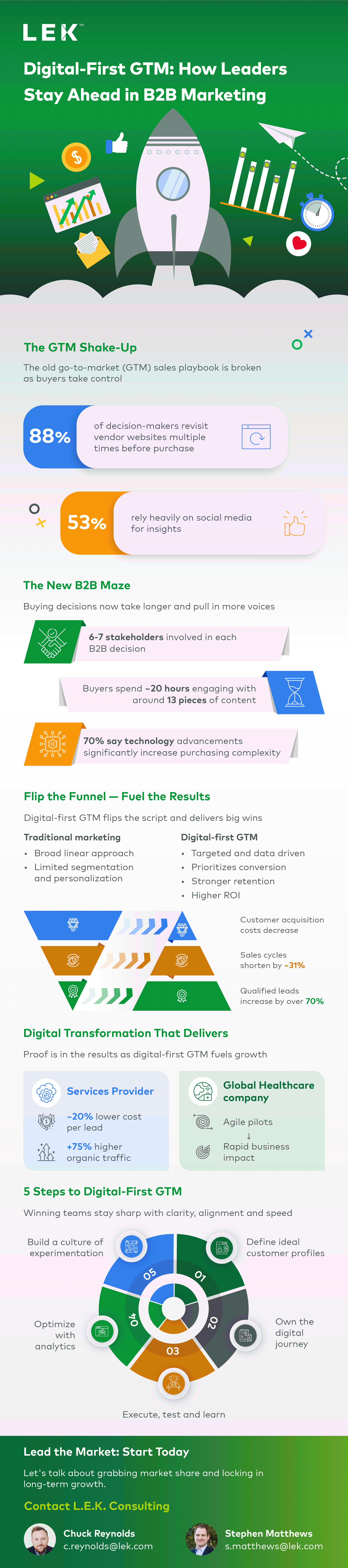
B2B buying has changed. Decisions now take longer, involve more voices and require buyers to do more research before ever reaching out. The old go-to-market (GTM) playbook can’t keep up.

Digital-first GTM is the new path forward. It helps leaders shorten cycles, generate stronger qualified leads and increase conversion by more than 70%.

Download our analysis  to see how winning teams stay ahead.

Explore our Executive Insights to learn more about the full strategic value of digital-first GTM approaches.

Digital-First GTM: How Leaders Stay Ahead in B2B Marketing

For more information, please contact us.
 

L.E.K. Consulting is a registered trademark of L.E.K. Consulting LLC. All other products and brands mentioned in this document are properties of their respective owners. © 2025 L.E.K. Consulting LLC

English

Opportunities for Vehicle Electrification

December 29, 2025

The accelerating shift toward vehicle electrification and the wide-ranging opportunities it presents for the automotive services sector and investors are explored by L.E.K.’s Ashish Khanna and Will Chamberlain. They discuss how the transition from internal combustion engines to electric vehicles is unfolding across the UK and Europe, examining the opportunities and challenges for manufacturers, financial services, infrastructure providers and consumers alike.

Subscribe to Insight Exchange on Apple Podcasts, Spotify and Amazon Music and Audible for the latest episodes.

English
Executive Insights

Value Creation: The Prescription for Hospitals Looking To Deliver Excellent Care and Healthy Returns

November 6, 2025

Key takeaways

While private hospitals benefit from growing demand, public sector constraints and growth in private pay, they also face pressures from payors and patients who prefer outpatient care settings and digital connectivity.

A good understanding of underlying megatrends as well as individual market circumstances are both business essentials, so working with a trusted guide who knows the market is the key.

Value creation opportunities are there for the taking, but hospitals need to know which levers to apply and how best to do so within their organisation.

With deep experience and a significant commitment to and focus on healthcare, our expert team helps hospitals across Europe adapt to change and develop and deploy the services that patients need — along with the long-term value that investors deserve.

The pressure of ageing populations, shortages of qualified clinicians and a steady growth in chronic disease are testing state healthcare services to their limit. Following the structural strain that the pandemic placed on already stretched public health systems, it comes as no surprise that private healthcare provision is becoming increasingly important across Europe. 

With a combination of private demand, whether funded by individuals or employers via private health insurance, and a growing role in the delivery of publicly funded care, there is potential for private hospitals to deliver excellent levels of patient care. They can also deliver healthy returns for investors, provided they can navigate tariff pressures, the broader out-of-hospital agenda and evolving patient expectations.

So, how can providers make the most of the opportunities presented and address challenges? Recent L.E.K. Consulting research and experience reveals how to create value in this vital sector.  

Across markets, there is a clear out-of-hospital care agenda pushed by public and private payors, which is creating the need for hospitals to rethink their participation models. Outpatient delivery is growing rapidly, driven in part by patients demanding more convenience, access and digital connectivity as well as a preference for clinic-based care when possible. This change is facilitated by medical advancements, technology and payors favouring cost-efficient care settings. Numerous providers across Europe have extended into integrated outpatient offerings. 

For hospitals, there is a real risk of lagging behind these emerging integrated providers, putting the onus on them to adapt to survive. 

Operational efficiency is, of course, under the spotlight, with costs increasing and pressure from payors. In the search for efficiency at both group and individual hospital level, scaled players and platforms look set to win the day. Also, as patient choice increases, so do expectations. This means that providers need to invest in brand building as well as using digital transformation alongside physical touchpoints to deliver better patient pathways. 
Understanding the benchmarks in the market today and developing a strategy for long-term value creation for the future have never been more imperative.

The global megatrends driving change in healthcare provision

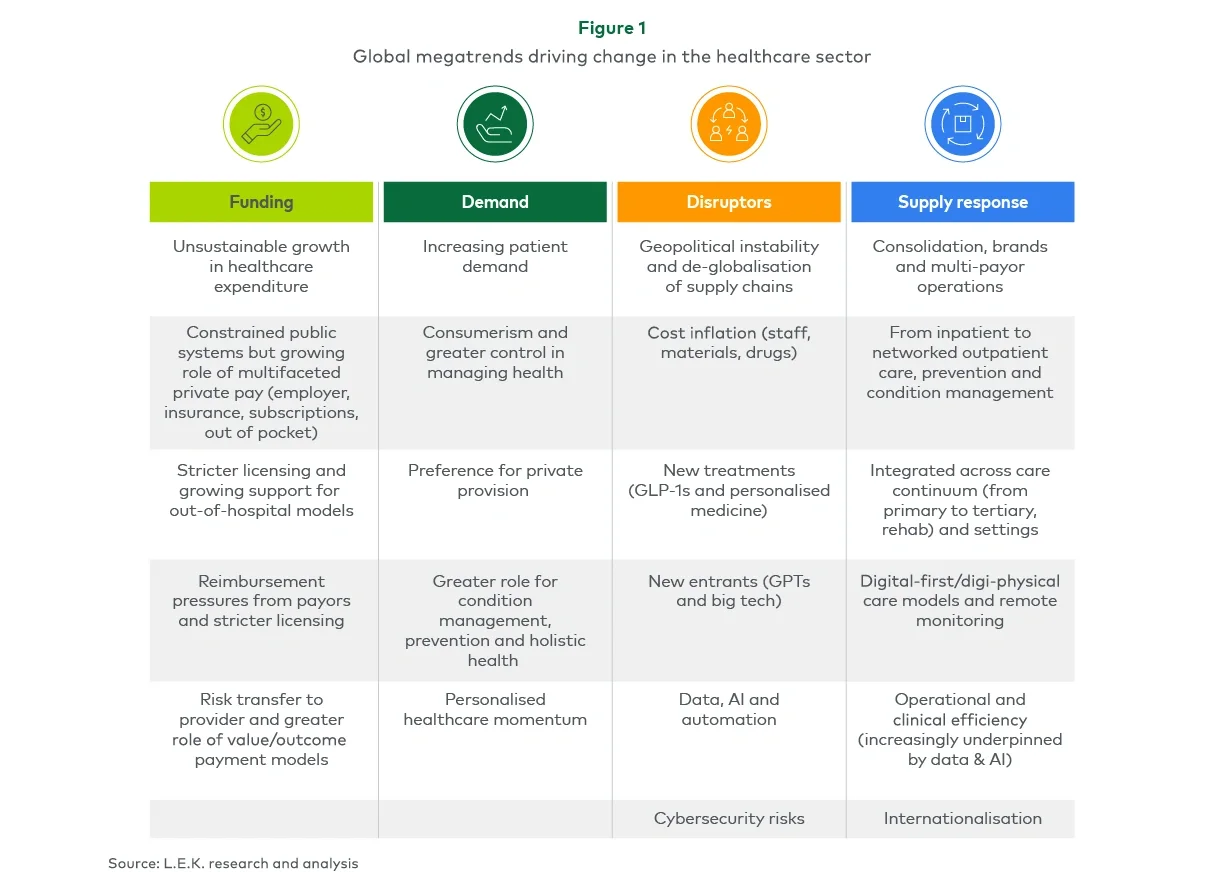
Below, we highlight the megatrends driving structural change across global healthcare, from evolving funding pressures to advances in treatment and supply chain transformation (see Figure 1). We also explore what this means in context. 

Image
Global megatrends driving change in the healthcare sector
Image
Global megatrends driving change in the healthcare sector

Funding and policy
With public healthcare systems constrained by funding challenges and a lack of suitable talent, both individuals and governments are spending more to access and deliver the services they need. The pressure is on from payors looking for right-sized reimbursement, and funders are eager to see value delivered. 

Demand
Leaps forward in medical science have placed preventative medicine and health screening at the forefront of modern healthcare. Medical innovation continues apace, with exciting new drugs and treatments reaching the market. But an ever-growing number of patients places a growing burden on resources. And with patients looking for a personalised approach to medicine and keen to exercise choices commercially and geographically, keeping up with demand is challenging.

Disruptors
The opportunities that AI and automation offer are significant for healthcare providers looking to deliver more services to more people, more efficiently. Meanwhile, advances in data analytics are enabling deeper insights into patient needs and clearer guidance on how providers can structure and deliver care. 

Supply
The way that patients are treated is changing, with a preference for successful outpatient and day-case medicine rather than hospitals when possible. This is shaking up how hospitals operate, impacts the services offered, and drives the need for consolidation, operational efficiency, digital transformation and supply chain efficiency.

How the right strategy can create sustainable value

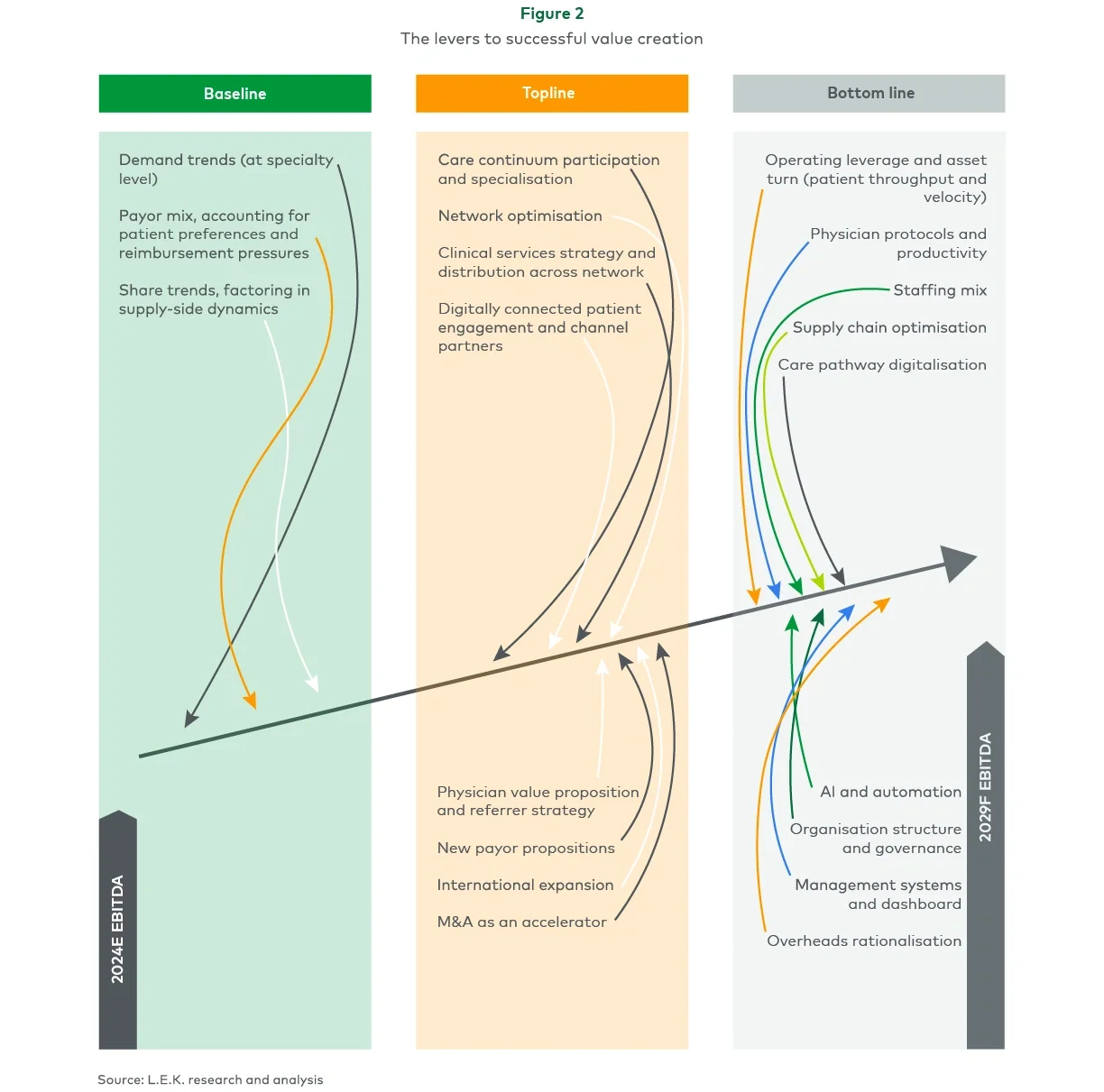
Understanding the trends is only part of the value creation story. With our recent experience showing that healthcare providers have the potential to double EBITDA over the next three-year period, knowing which levers can create sustainable value and grasping how and when to apply them is key (see Figure 2).

Image
The levers to successful value creation
Image
The levers to successful value creation

Lever 1: Organic growth

Organic baseline growth has a part to play in value creation. As underlying demand grows and the payor mix diversifies, projecting an accurate baseline trajectory is key.

Lever 2: Revenue acceleration and offering optimisation

From network optimisation and the expansion of outpatient services to enhancing patient-centric services and improving referral pathways, providers have multiple opportunities to accelerate revenue and optimise their offerings. A refreshed brand and experience are also key, along with ways to expand the use of data and technologies, as well as the business’ international footprint. 

Lever 3: EBITDA margin improvement

Is your organisation structured and centralised at group level? Are you using your hospital infrastructure well, and are there opportunities to right-size and optimise staffing levels? And how well are you using digital tools to improve operational efficiency, clinical effectiveness and how you manage data? These are all questions to ask in the search for margin improvement. 

How L.E.K can deliver value-creating growth 

By addressing key strategic and operational issues, our expert teams are helping hospitals and healthcare providers across Europe understand the changes in their market and develop a strategy for growth. Working with both providers and their investors puts us at the heart of this industry and makes us the perfect partner for businesses looking to create long-term value by delivering high-quality services. 

Please get in touch to find out more about our work and to tell us about your challenges.

English
Executive Insights

Building and Construction Distributors Can Increase Their Margins More; Here Are 10 Ways To Do It

November 5, 2025

Key takeaways

Building products distributors have significantly improved their EBITDA margins over the past decade.

Significant runway exists for continued margin expansion across and within product categories.

Margin uplift has become a consistent rationale for acquisitions in building and construction distribution.

Distributors can utilize 10 cost and revenue levers to unlock margin upside.

In the building and construction business, many distributors keep their return on capital high by earning healthy margins on high-turn products. This strategy has paid off especially well in recent years, even after accounting for post-COVID-19 pricing concessions. But the trend has continued long enough that industry watchers are left wondering whether it still has room to run.

In this Executive Insights, we’ll look at the conditions that have enabled distributors to expand their EBITDA (earnings before interest, taxes, depreciation and amortization) margins. Then we’ll examine where remaining opportunities for EBITDA margin uplift can be found and what distributors can do to capture them.

A supportive environment for margin growth

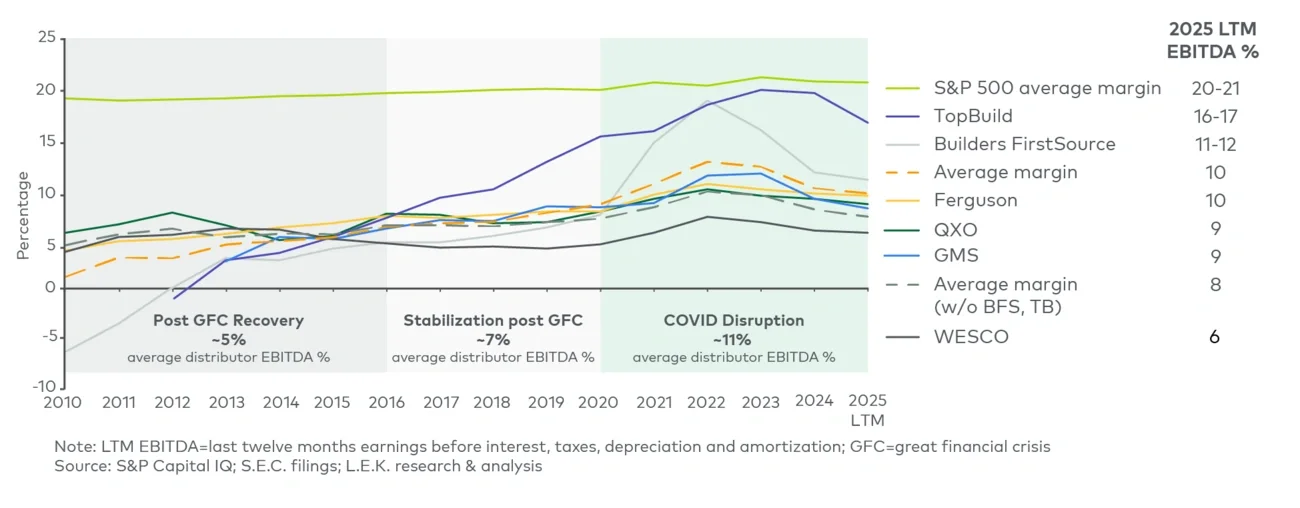
Public building products distributors have materially expanded their EBITDA margins over the last 10 years (see Figure 1).

Figure 1

Margin performance among national building products distributors, 2010-2025

Image
Margin performance among national building products distributors, 2010-2025

Figure 1

Margin performance among national building products distributors, 2010-2025

Image
Margin performance among national building products distributors, 2010-2025

This trend is partly due to consistent demand for building products following the 2008 financial crisis and the subsequent collapse in new residential construction. Key construction measures have shown steady growth. Between 2010 and 2023, spending in commercial and residential construction increased 5.7% and 9.9% per year, respectively.

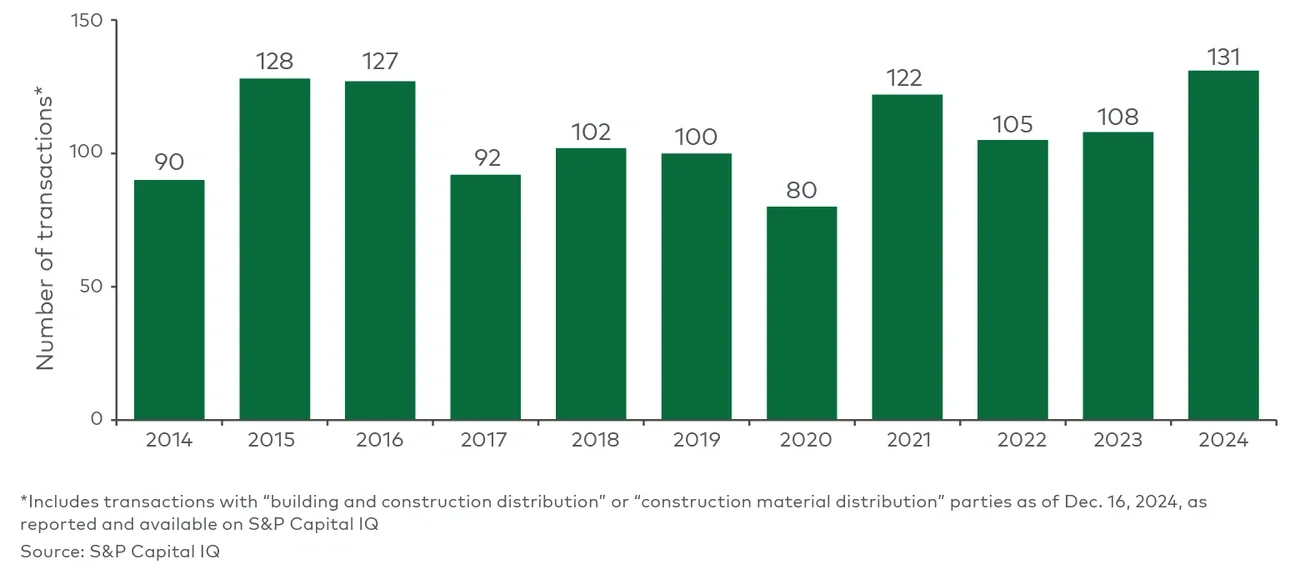
Another factor is the stable deal environment for building and construction distribution (see Figure 2). Lately, margin uplift has been a consistent rationale for M&A in the sector.

Figure 2

US building and construction distribution transaction volume, 2014-2024

Image
US building and construction distribution transaction volume, 2014-2024

Figure 2

US building and construction distribution transaction volume, 2014-2024

Image
US building and construction distribution transaction volume, 2014-2024

That hasn’t always been the case. When Wesco International acquired RS Electronics in 2012, for example, the strategy was to expand Wesco’s electronic product offerings and customer base for industrial original equipment manufacturers. But when Wesco merged with Anixter in 2020, margin improvement was a core financial rationale.

When it comes to acquisition targets, scaled building products distributors tend to generate higher margins than do smaller ones. Reasons include purchasing synergies, favorable pricing and cost efficiencies. M&A can help distributors improve margins by addressing other exogenous conditions like shifting customer preferences or supplier consolidation and fragmentation.

Opportunities for further improvement

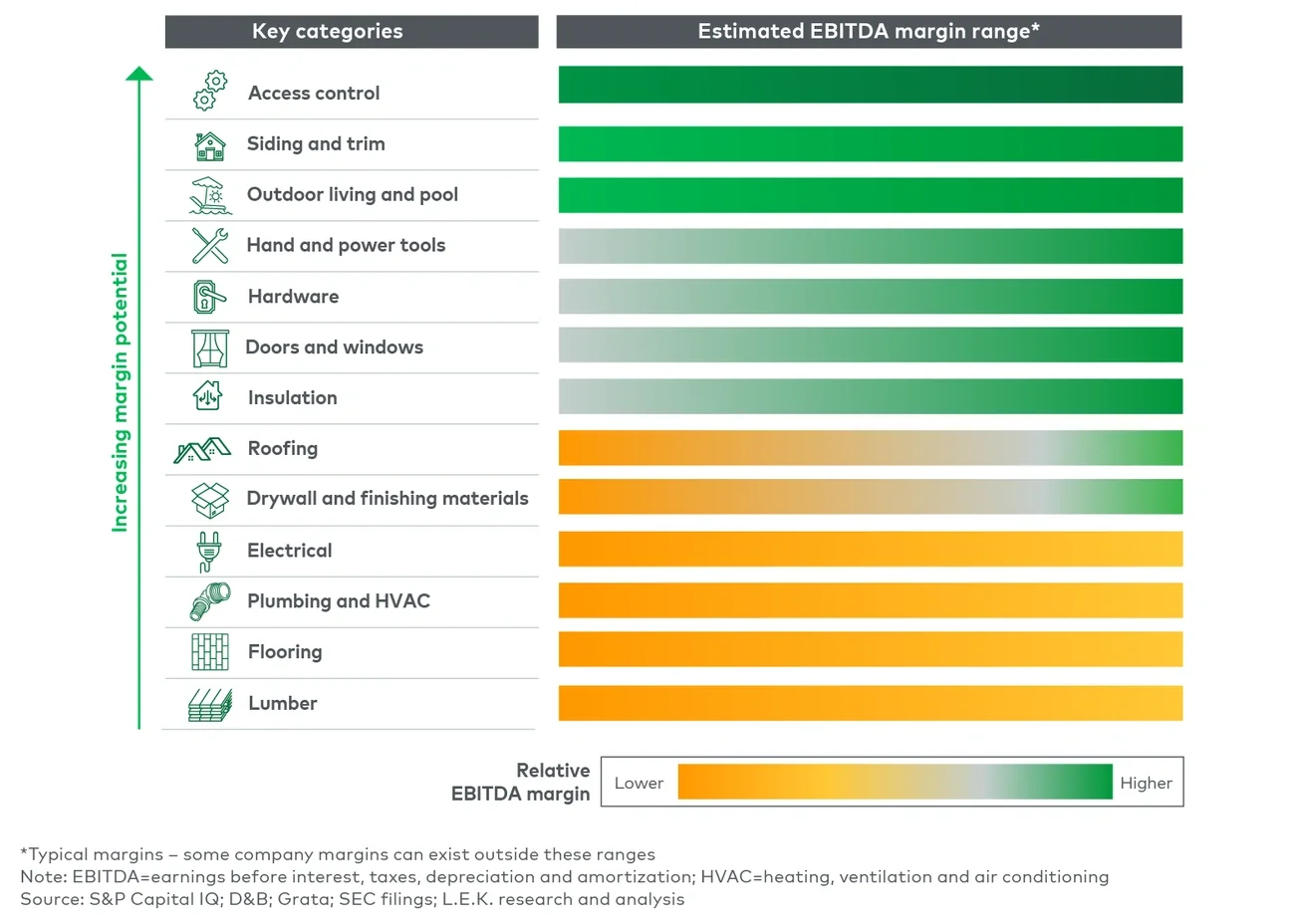
Despite years of chasing margin uplift, there’s still a good deal of untapped opportunity across numerous building and construction product categories (see Figure 3).

Figure 3

Building and construction EBITDA margins by category

Image
Building and construction EBITDA margins by category

Figure 3

Building and construction EBITDA margins by category

Image
Building and construction EBITDA margins by category

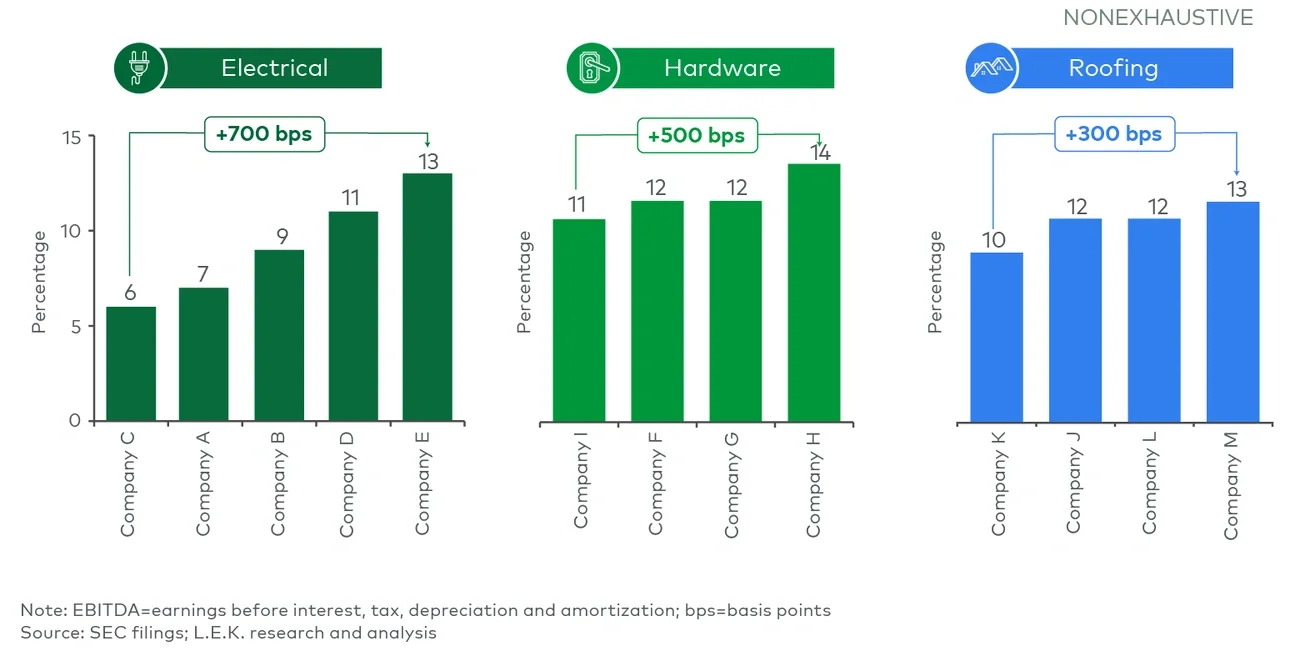
Building products EBITDA margins can be highly variable by category. Access control products tend to have the highest margins, reflecting the growing consumer appetite for technology. The lowest margins, perhaps predictably, can be found in lumber. Even within categories, margins can vary (see Figure 4).

Figure 4

Estimated EBITDA margins by primary category, 2023

Image
Estimated EBITDA margins by primary category, 2023

Figure 4

Estimated EBITDA margins by primary category, 2023

Image
Estimated EBITDA margins by primary category, 2023

Although all categories have opportunities to increase margin, certain attributes are particularly favorable to achieving higher margins. They include:

  • Exposure to repair & renovation
  • Alignment with mission-critical end-user needs (e.g., emergency repair)
  • Distributor consolidation
  • Supplier consolidation
  • The need for value-added services

These attributes may be more present in some categories than in others.

The 10 levers of margin uplift

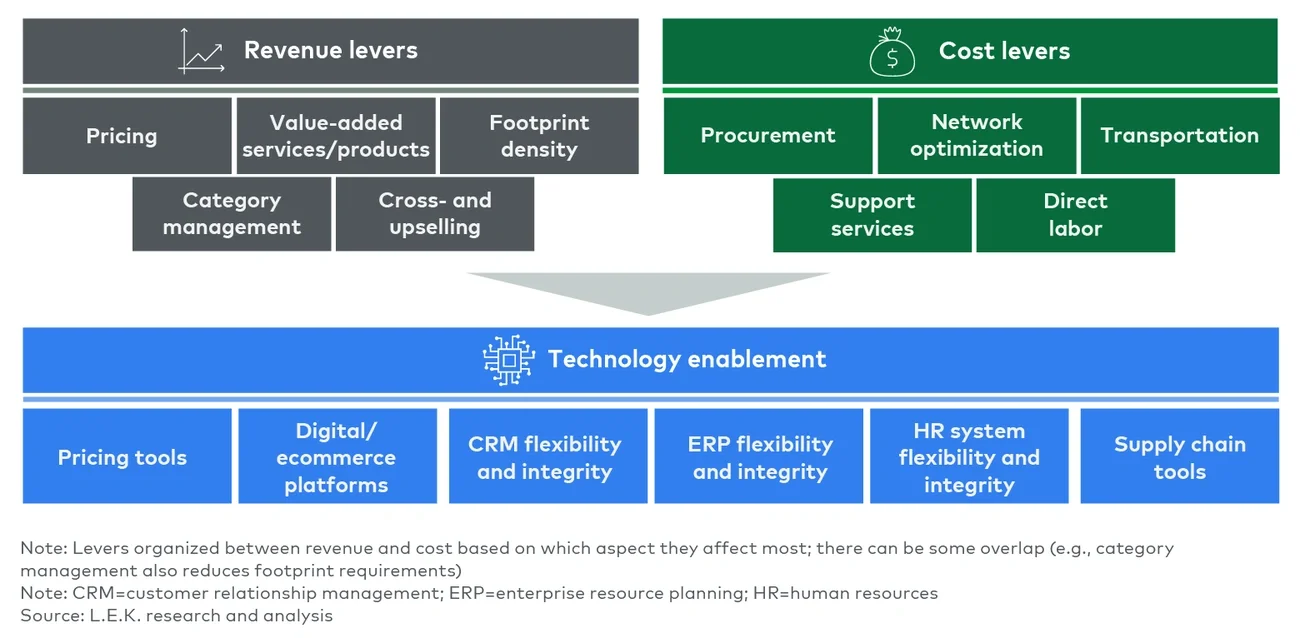
Against that backdrop, what levers can distributors pull to unlock margin upside? Here are 10 that we’ve identified, with technology enabling many of them (see Figure 5).

Figure 5

Levers of margin uplift

Image
Levers of margin uplift

Figure 5

Levers of margin uplift

Image
Levers of margin uplift
  1. Pricing
    Systematically assess whether you’re charging the optimal price for the value of different services, taking into account variations at the regional level along with the timing of different needs
  2. Value-added offerings
    Find new ways to build up your capabilities in value-added products (think private label or prefabricated) and services (like installation or inventory management capabilities).
  3. Footprint density
    Customers typically won’t drive more than 10-20 minutes to buy. So increasing your share of the local market can boost customer loyalty and position you to sell more value solutions.
  4. Category management
    Create upside by diversifying stock-keeping unit assortments, optimizing for high-turn products and prioritizing higher-margin sales.
  5. Cross-selling and upselling
    Online cross-selling and upselling tactics not only help retain customers; they can also lead to higher-margin sales and a bigger basket size.
  6. Procurement
    Scale — whether achieved organically or through M&A — can give you the power to obtain better terms from manufacturers.
  7. Network optimization
    Other benefits of organic and M&A growth include the ability to right-size locations, serve customers from the most optimal branch, and build new branches to bring products and services closer to customers.
  8. Transportation
    Increasing the number and size of shipments gives you more flexibility as to how much of your fleet is owned versus leased to manage costs.
  9. Support services
    Combining and eliminating overhead functions delivers reliable savings, although impact may or may not be as high as other levers.
  10. Direct labor
    Improved and expanded analytical capabilities can help you streamline staffing through better labor forecasting, distribution center slotting and facility workflow.

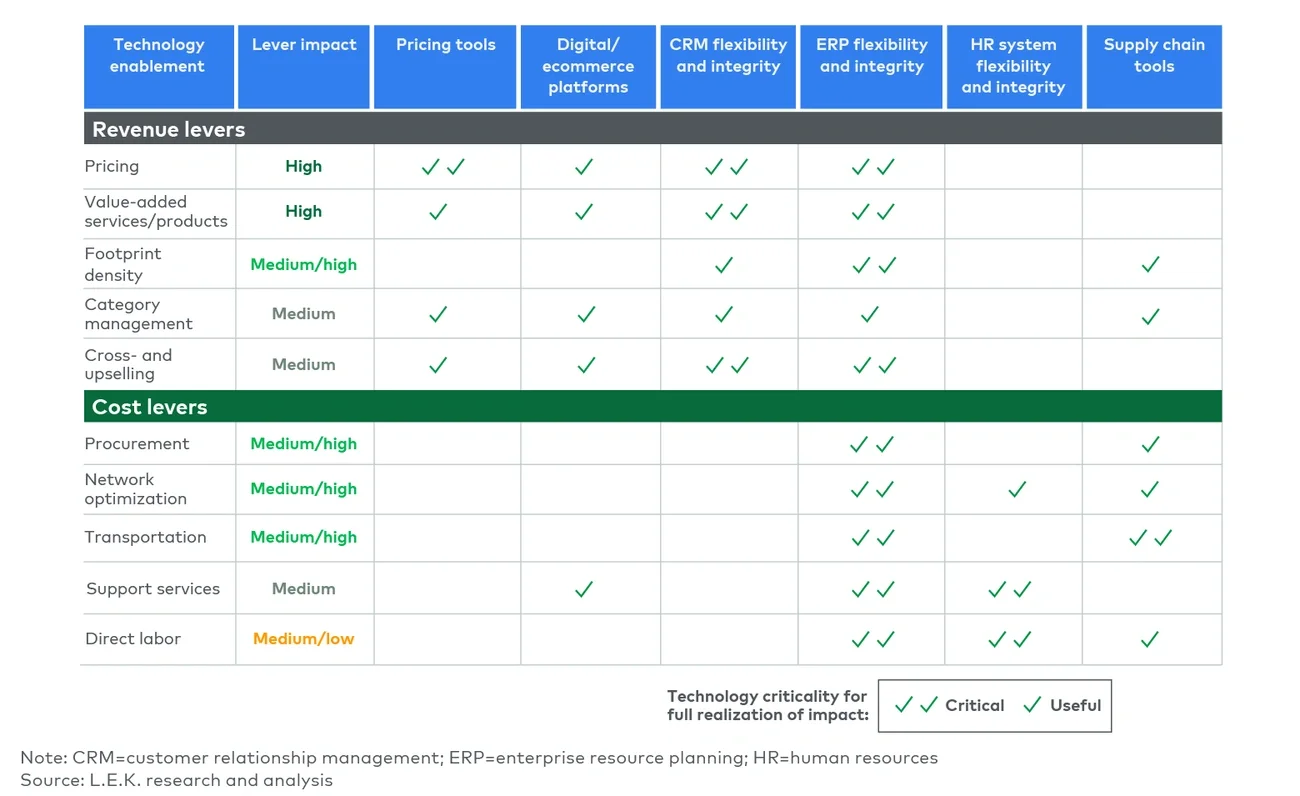
Additionally: Technology enablement. Any of the margin uplift levers we’ve just described can be enhanced with technology (see Figure 6). Examples include pricing and supply chain management tools as well as platforms for ecommerce, customer relationship management and human resources.

Figure 6

Role of technology in margin uplift

Image
Role of technology in margin uplift

Figure 6

Role of technology in margin uplift

Image
Role of technology in margin uplift

Charting a path to sustained margin improvement

Building products distribution has enjoyed a decade of steady EBITDA margin expansion, thanks to a favorable macroeconomic environment, strategic M&A activity, and sustained demand in both the residential and commercial markets. But as margin gains become consolidated and new margin uplift becomes harder to achieve, distributors must shift from riding tailwinds to actively engineering further improvements.

The good news: Meaningful opportunities remain. By making the most of margin-rich product categories and pulling targeted cost and revenue levers, distributors can unlock the next wave of profitable growth. The path forward will require a realistic assessment of the time, capabilities and resources involved, with an eye toward achieving real impact in the medium term. If you are a distributor or investor seeking to improve margins and drive value creation, reach out to L.E.K. Consulting to discuss how we can help.

L.E.K. Consulting is a registered trademark of L.E.K. Consulting LLC. All other products and brands mentioned in this document are properties of their respective owners. © 2025 L.E.K. Consulting LLC 

English

Technology Connectivity Services in Commercial Aviation

November 5, 2025

Commercial aviation is poised for robust growth, with passenger demand projected to grow by approximately 4% annually through 2030. This steady expansion is supported by several key factors, including:

  • A positive macroeconomic outlook and an expanding middle class in developing countries, driving stronger consumer spending and broadening the base of future air travellers
  • Increasing market penetration of low-cost carriers (LCCs), making air travel more accessible and affordable, and thereby increasing the adoption and frequency of air travel among broader population segments

LCCs have long positioned themselves as disruptors by stripping out frills and focusing on price. However, the sector is undergoing a clear strategic evolution. As LCCs pivot towards hybrid models — combining ultra-low-cost efficiency with selective premiumisation — the demands on onboard experience are shifting significantly. Connectivity is central to this transformation.

For full-service carriers (FSCs), ancillaries are also becoming an increasingly important part of the revenue model, as well as seeking improvements in customer experience and engagement. All of which can be enhanced by connectivity.

Three forces underpin this trend. First, ancillary revenue growth remains critical. With unbundling strategies now mature, carriers are leveraging digital platforms to offer targeted retail, dynamic pricing and subscription products. 

Second, passenger mix is diversifying. Beyond budget millennials, LCCs are serving more corporate flyers and FSCs are increasingly serving premium leisure travellers, while both are facing digitally savvy new generations. Each segment carries distinct service expectations, from seamless digital transactions to premium seating. 

Third, competitive differentiation is increasingly tied to customer experience rather than fares alone. Premium seating, entertainment bundles and digital schemes are expanding. Onboard Wi-Fi and app-enabled engagement will be essential to deliver these higher-margin offerings.

In recent years, onboard spend opportunities have become a critical area; however, progress has been constrained by limited in-flight connectivity. The imminent arrival of high-speed, low-cost satellite connectivity represents a paradigm shift for commercial aviation, unlocking a new wave of opportunities.

Airlines will increasingly expect connectivity providers not only to supply bandwidth, but to enable holistic digital platforms that generate onboard ancillary revenue (i.e. in-flight retail and entertainment, e-commerce, etc.) and capture value from operational benefits (i.e. crew productivity, real-time routing planning).

For investors and providers alike, the question has shifted from whether connectivity will become universal to who will best positioned to capture the value it unlocks.

A market at an inflection point

Historically, onboard Wi-Fi was constrained by geostationary satellite technology: costly, heavy and slow. This kept adoption limited to premium cabins or long-haul fleets. 

Today, the increasing number of low-Earth-orbit (LEO) satellites and new antenna developments are changing the economics and the onboard experience (see Figure 1):

  • Latency is significantly reduced, enabling high-speed onboard connectivity
  • Onboard antenna costs have fallen to c.€250k per aircraft (versus €0.5–1m historically)
  • Retrofit times have been cut from a week to less than 24 hours, minimising downtime
  • Lightweight designs (30–60 kg) now make connectivity feasible for narrowbody fleets, the backbone of global aviation
Image
Figure 1. Number of LEO satellite launches, by type
Image
Figure 1. Number of LEO satellite launches, by type

As demand for broadband services increases, satellite companies are serving airlines with data packages with high-cap or unlimited data. For example, Starlink, now one of the most significant players, already offers unlimited in-flight broadband for a $10k monthly fee supported by a network of ~8,000 LEO satellites.  

As a result, connectivity is shifting from a long-haul premium feature to a mainstream requirement across short- and medium-haul flights.

Connectivity as a strategic enabler for airlines

Uptake of broadband connectivity should be understood as both a revenue enabler and a cost-saver, creating value across four critical dimensions: passenger experience, ancillary revenue, operational efficiency and crew productivity.

  • Passenger experience
    Surveys show 75% of passengers are more likely to rebook with an airline offering high-quality Wi-Fi
  • Ancillary revenue
    Digital advertising, real-time e-commerce (i.e. F&B, streaming of entertainment, ticketing of destination services, etc.) and in-flight seat upgrades all rely on live connectivity
  • Operational benefits
    Enhanced connectivity drives operational cost savings but also contributes to ESG objectives
    • Fuel and maintenance savings
      • Real-time weather routing optimises flights, reducing fuel consumption and emissions
      • Real-time maintenance indicators help to prevent unplanned disruptions, extend aircraft lifespan and reduce the cost associated with unscheduled repairs
    • Supply chain and turnaround efficiencies
      • Faster restocking and data-driven inventory management streamline logistics, reduce waste and minimise turnaround times, improving operational performance
    • Crew productivity
      • Live transaction processing reduces the risk of fraud and errors in onboard sales
      • Uptake in crew connectivity simplifies tasks, allowing crew to spend more time engaging with passengers, improving overall customer experience

In short, connectivity transforms the aircraft from a transport vessel into a digital commerce platform and operations hub.

The current market situation

Early movers have focused on in-flight retail (IFR) and in-flight entertainment (IFE), prioritising these among a range of possible digital initiatives. 

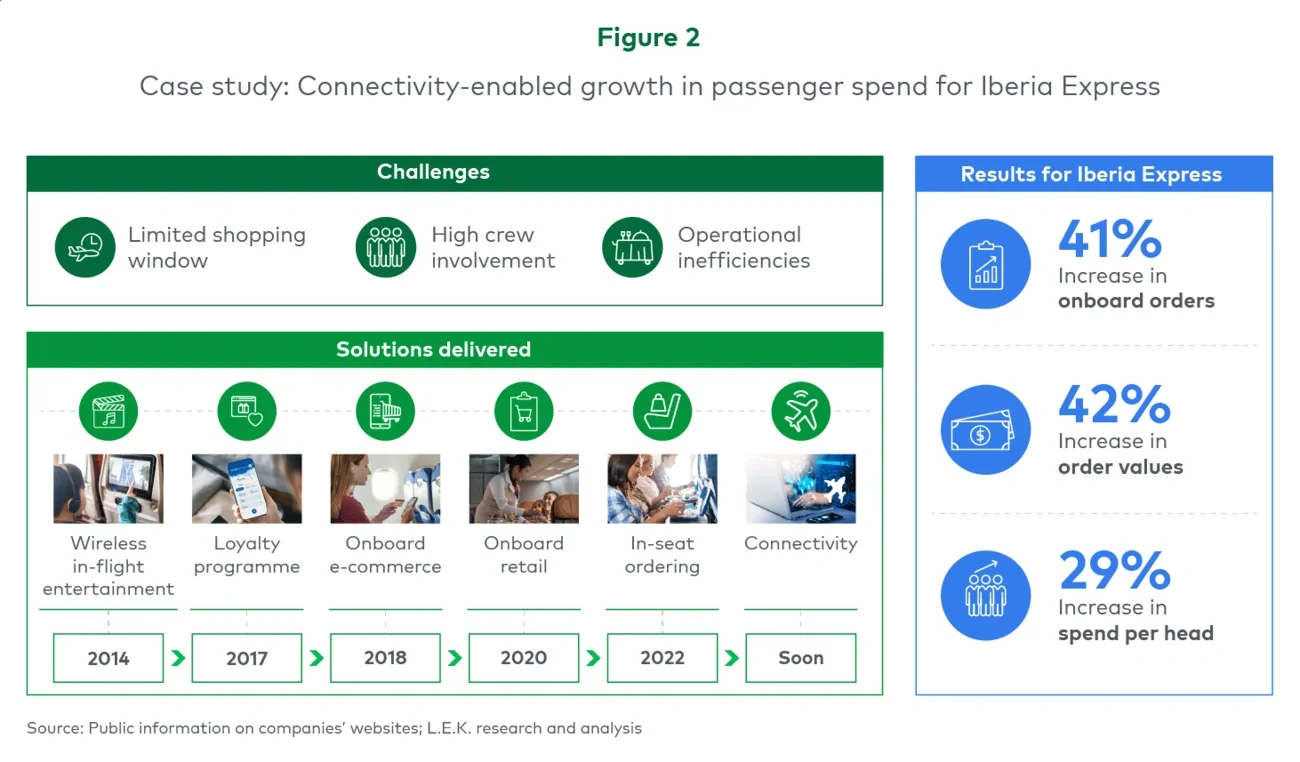
Adopters of onboard digital solutions are already seeing strong positive outcomes. For example, Iberia Express has reported significant improvements in onboard order volumes, transaction value and spend per passenger as a result of these initiatives (see Figure 2).

Image
Figure 2. Case study: Connectivity-enabled growth in passenger spend for Iberia Express
Image
Figure 2. Case study: Connectivity-enabled growth in passenger spend for Iberia Express

However, industry adoption across initiatives remains at relatively early stages, particularly on in-flight retail services.

According to L.E.K. discussions with decision-makers at major airlines, penetration of digital solutions is expected to accelerate, driving incremental market growth and enhancing the attractiveness of this opportunity for technology providers.

Particularly, LCCs are leading adoption, driven by their relentless focus on ancillary revenue and operational efficiency. In our study, LCCs stated to be focused on addressing the following pain points at this stage:

  • Monetising onboard activity
  • Improving customer experience and passenger understanding
  • Reducing inventory waste and improving stock management
  • Mitigating crew inefficiencies and boosting on-board productivity

These efforts are poised to drive broader industry adoption as digital capabilities become increasingly critical for both commercial and operational performance.

New market participants are emerging as onboard technology partners for airlines

Delivering these solutions requires strategic partners capable of aligning seamlessly with airline operations, simplifying integration with multiple stakeholders and ensuring scalable technology platforms.

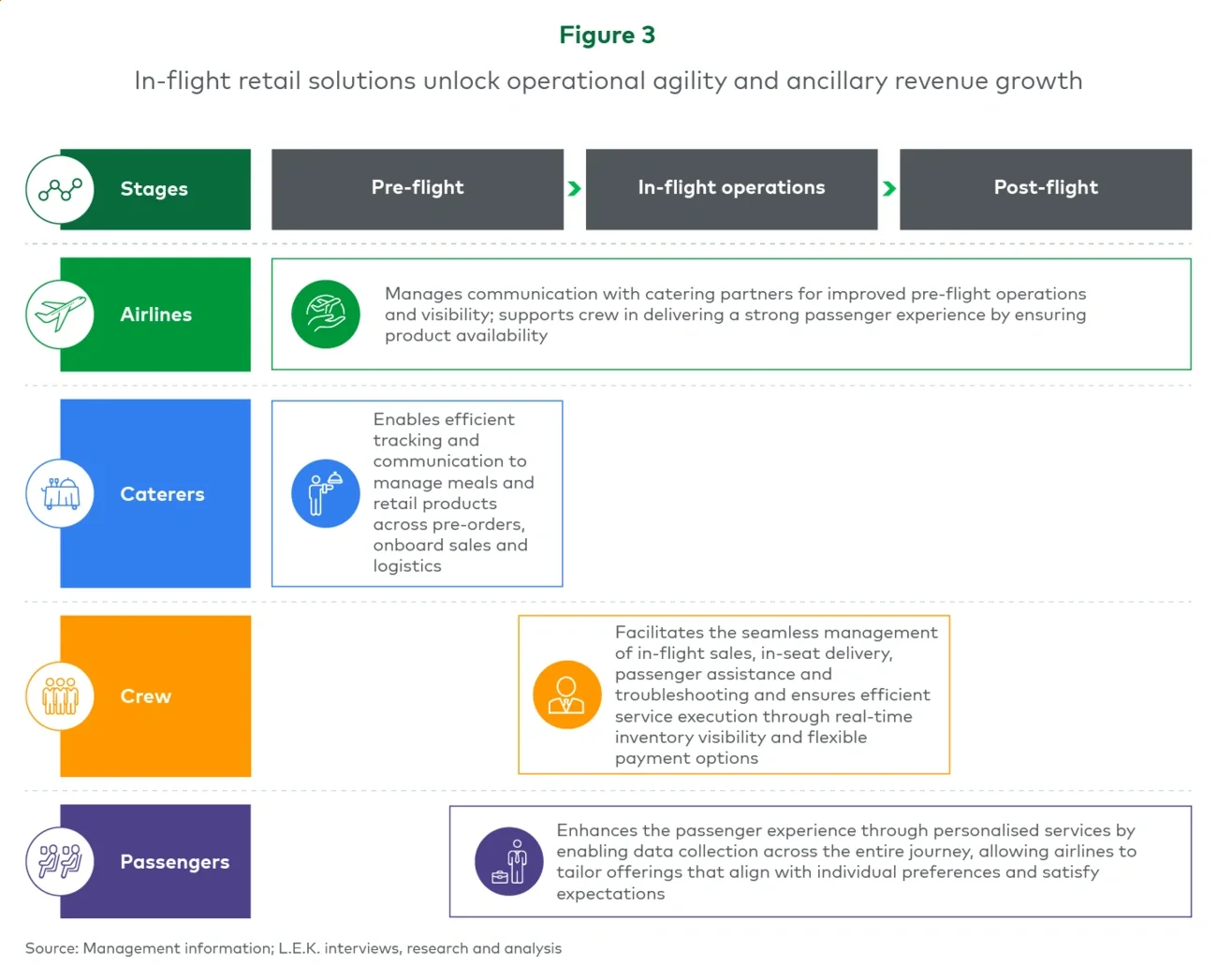
A good example is the typical IFR solution focused on food & beverage and duty-free sales, which connects caterers, airlines, crew and passengers across the value chain to deliver a cohesive and efficient onboard experience (see Figure 3).

Image
Figure 3. In-flight retail solutions unlock operational agility and ancillary revenue growth
Image
Figure 3. In-flight retail solutions unlock operational agility and ancillary revenue growth

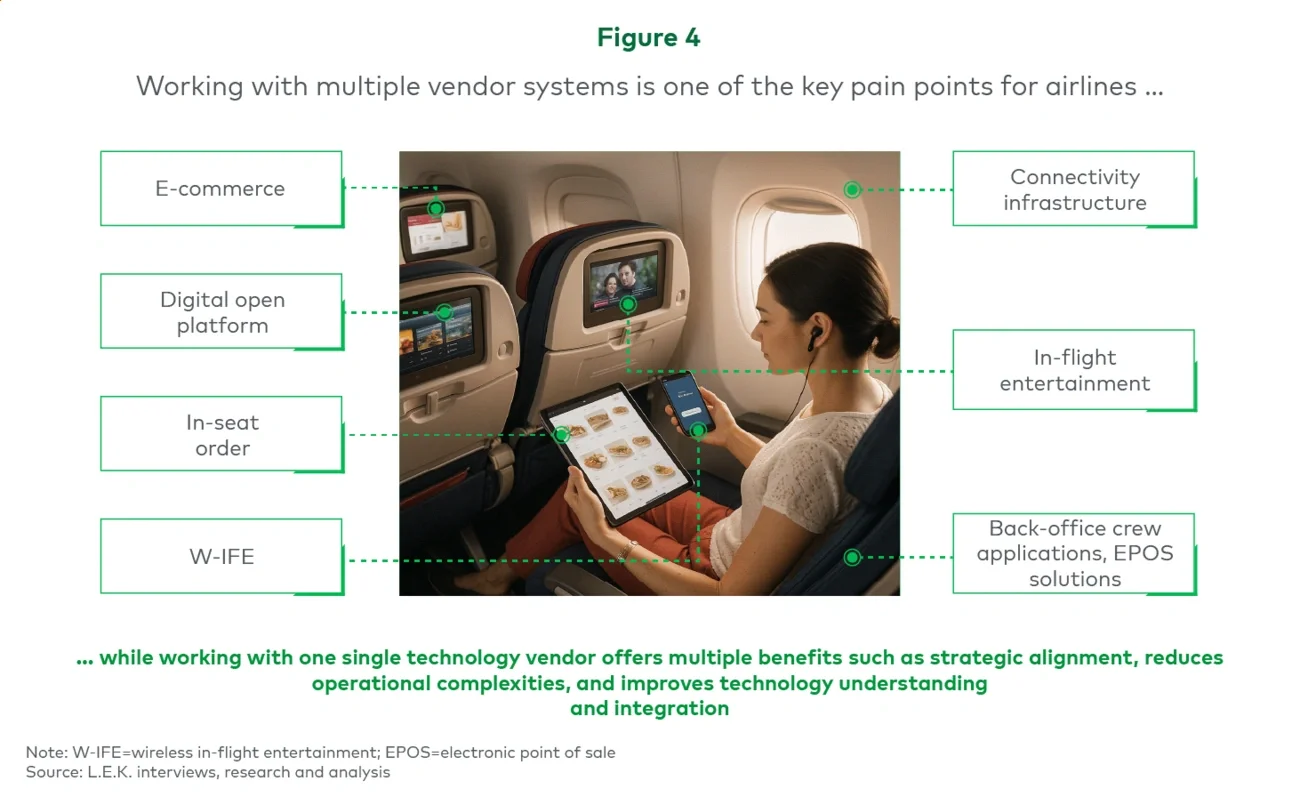
Moreover, there is growing complexity in aligning the full onboard customer experience with a broader digital strategy that extends beyond retail services (see Figure 4).

Image
Figure 4. Working with multiple vendor systems is one of the key pain points for airlines
Image
Figure 4. Working with multiple vendor systems is one of the key pain points for airlines

The current provider landscape is highly fragmented, formed by a small number of relevant providers, a long list of small players, several specialised in standalone solutions, and others with a specific regional focus or complementary end-markets (i.e. maritime, financial services, hospitality).

This fragmentation creates a significant consolidation opportunity for first movers with integrated, end-to-end platforms.

The opportunity goes beyond commercial aviation

While the near-term focus for connectivity providers will be commercial aviation, the implications of high-speed, low-latency satellite connectivity extend much further.

Airlines are only the first segment of a broader industry ecosystem that is rapidly digitising.

  • Ferries and cruises
    Cruise lines and ferry operators are under similar pressure to transform the passenger experience and monetise onboard activities. Reliable broadband at sea can support digital retail platforms, entertainment streaming and even destination services, mirroring the value proposition in aviation.
  • Rail
    High-speed rail networks are increasingly competing with airlines on short-haul routes. Connectivity-enabled digital retail and entertainment services can be transplanted directly from aviation to rail, enhancing passenger experience and ancillary revenue potential.

In addition, technology partners with robust digital platforms (e.g. e-commerce, retail) are increasingly well-positioned to expand into adjacent opportunities, connect multiple stakeholders and facilitate real-time service delivery — a growing need across multiple sectors.

  • Hospitality and sports venues
    Hotels, resorts and stadiums are seeking ways to deepen guest engagement and unlock new digital commerce channels. For instance, with real-time ordering of food and merchandise, and dynamic advertising opportunities during events.
  • Events and leisure
    The same platforms that integrate payments, content and personalised services onboard an aircraft can be adapted to arenas, conference centres and theme parks, anywhere operators seek to monetise the customer journey.

In this sense, aviation is the proving ground, but the real prize is much larger, lying in cross-sector expansion. Companies that succeed in building modular, scalable connectivity solutions for airlines will be uniquely positioned to extend those capabilities and expand into adjacent opportunities.

Contact us to find out more.

English
Subscribe to