Executive Insights

L.E.K. Consulting’s 2025 US Health System Executive Survey

Part 2: A growing financial divide: Is your health system in the 50% falling behind?
November 17, 2025

Key Takeaways

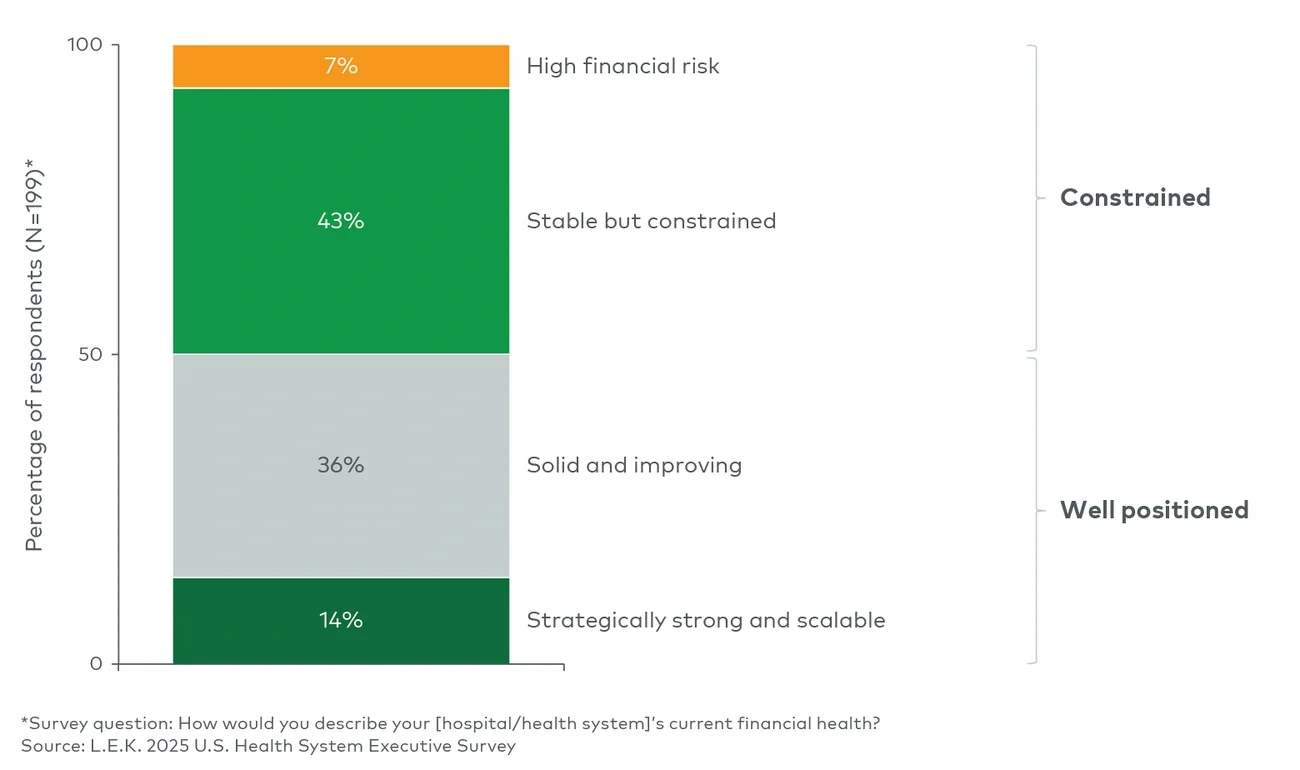
There is a clear divide in the financial health of U.S. health systems: Approximately 50% of health system executives reported that their organization’s financial position is constrained.

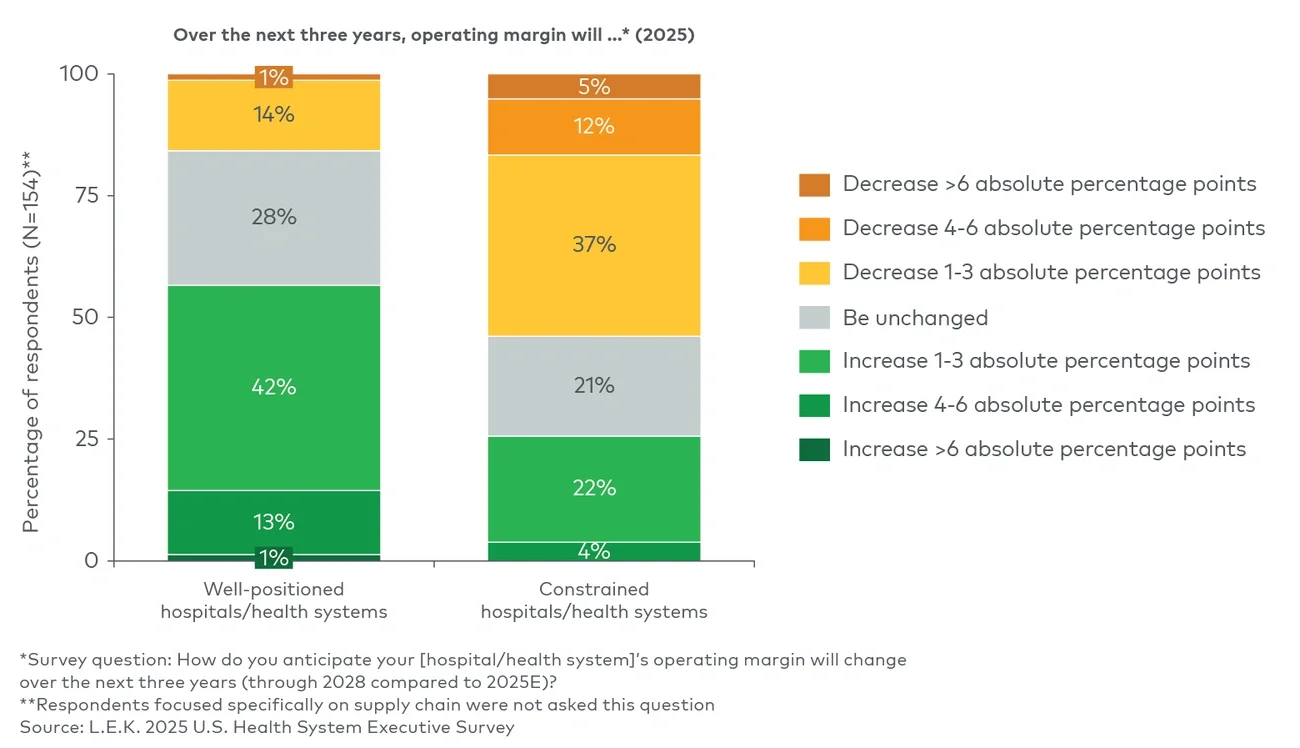
Respondents to our 2025 Health System Executive Survey expect the gap to widen: Only 25% of financially constrained systems expect margins to improve (vs. 60% for those building from a position of financial strength).

Constrained systems face structural challenges and are less able to invest in long-term mitigators to these challenges, potentially exacerbating the divide.

All systems, but especially those facing financial constraints, will need to partner and invest selectively and creatively to strengthen their position and long-term viability; we will share actions systems are taking in these areas in future articles.

Each year, L.E.K. Consulting surveys hundreds of hospital and health system executives to capture their financial position and outlook, strategic priorities and near-to-mid-term actions.

Our 2025 U.S. Health System Executive Survey comes at a time of rising costs, reimbursement headwinds and regulatory uncertainty. Many leaders report financial strain and are prioritizing near-term financial relief. Yet 50% describe their systems as financially strong and are investing in strategies to secure long-term viability.

The divide between financially strong and financially constrained systems is widening. In this edition of Executive Insights, we explore the defining characteristics of these two cohorts and how their strategic priorities converge and diverge.

The financial divide

There is a clear divide in the financial health of U.S. hospitals and health systems. Approximately 50% of respondents reported that their organization’s financial position is solid or strong, and around 50% reported that their organization’s financial position is constrained or at high risk (see Figure 1).

Figure 1

Hospital and health system current financial health (2025)

Image
Hospital and health system current financial health (2025)

Figure 1

Hospital and health system current financial health (2025)

Image
Hospital and health system current financial health (2025)

Liquidity further underscores this divide. More than half of respondents reported that their system holds fewer than 180 days of cash on hand, leaving them exposed to shocks ranging from regulatory cuts to tariff-driven supply chain cost spikes. Unlike stronger systems, these hospitals lack the flexibility to absorb disruption and invest in strategic initiatives.

Who is constrained?

While no single factor can entirely explain each system’s financial position, we observed three primary differences between well-positioned and constrained health systems in this survey:

  1. Constrained health systems tend to be smaller (although some smaller health systems reported that their financial position is solid or strong)
  2. Constrained health systems tend to be more exposed to Medicaid and Affordable Care Act funding cuts and 340B program reform, likely indicating a more challenging payer mix
  3. Understandably, strategic initiatives related to footprint expansion, research and innovation are less likely to be priorities for constrained health systems
     

Strategic priorities: Consistent in the core, diverging on investment

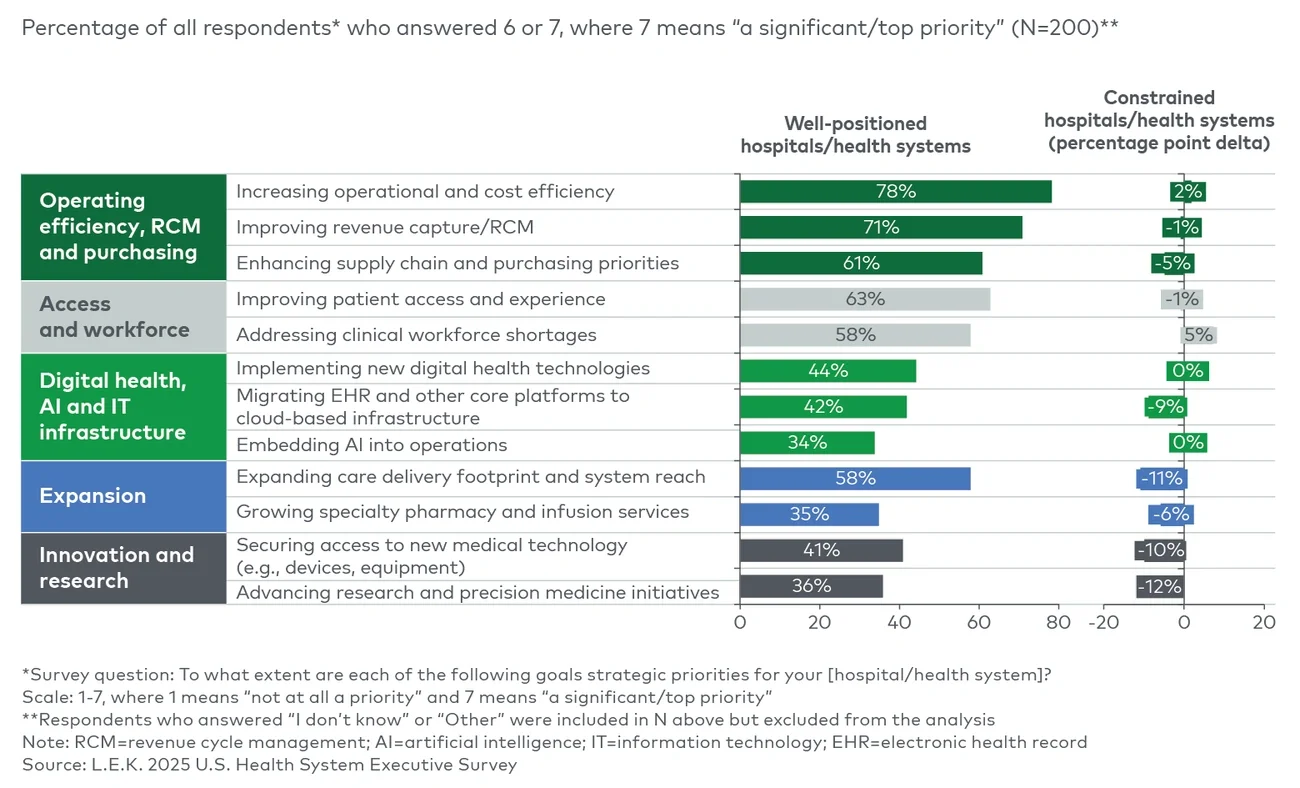
The top strategic priorities for all hospitals and health systems, regardless of financial health, are consistent and clear: More than 55% of executives in both well-positioned and constrained systems cite operational and cost efficiency, revenue capture and revenue cycle management (RCM), supply chain performance, patient access, and workforce as top priorities (see Figure 2).

Where strategic priorities diverge, however, is the degree to which constrained systems are prioritizing strategic investments that can improve financial strength over the long term.

Many well-positioned systems are prioritizing care delivery footprint expansion, innovation and research to diversify revenue and improve margins — opportunities that constrained peers may miss, risking an expansion of the financial gap over time.

Figure 2

Hospital and health system strategic priorities (2025)

Image
Hospital and health system strategic priorities (2025)

Figure 2

Hospital and health system strategic priorities (2025)

Image
Hospital and health system strategic priorities (2025)

Consistent in the core

  • Operating efficiency, RCM and purchasing
    With financial cushions thin, efficiency is a core priority. Eight in 10 systems are proactively reviewing costs against long-term revenue outlooks. Executives are closely examining supply chain and purchasing strategy, seeking to balance resiliency and cost reduction. For RCM, hospitals are focusing on process improvements, automation, audits and artificial intelligence (AI) to reduce leakage and administrative expense.
  • Access, patient experience and workforce
    Over 90% of hospitals cite having significant patient access challenges. Referral handoff breakdowns, limited provider or site capacity, and transportation are top drivers. Persistent workforce shortages continue to limit throughput. Hospitals are responding with retention and engagement strategies across physicians, nurses and nonclinical staff.
  • Digital health, AI and IT infrastructure
    Technology underpins efficiency and access. Many hospitals are expanding their use of digital health tools, with top priorities being claims, RCM, provider support and telehealth. AI is moving from concept to application in clinical and nonclinical areas. Together, these investments mark steady progression along the digital adoption curve.

Divergent on strategic investment

  • Expansion: Financially stronger systems are also selectively expanding their non-acute care footprint outside of physician offices, particularly in ambulatory surgery centers and satellite emergency departments. Well-positioned systems are also more commonly expanding their specialty pharmacy and ambulatory infusion services. These programs can diversify income and capture high-value services, but they require capital and scale not available to many constrained peers.
  • Innovation and research: A minority of systems — particularly those with stronger financials — are prioritizing access to new medical technologies and investments in clinical trials and precision medicine. These initiatives can elevate reputation, enhance clinical differentiation and, in some cases, open new revenue streams, potentially further compounding the divide between well-positioned and constrained systems.
     

Executives expect gap to widen

Survey results show a clear split in expectations for the next three years. Nearly 60% of well-positioned hospitals expect operating margins to increase, while nearly 60% of constrained systems expect margins to fall (see Figure 3).

Figure 3

Hospital and health system operating margin growth expectations

Image
Hospital and health system operating margin growth expectations

Figure 3

Hospital and health system operating margin growth expectations

Image
Hospital and health system operating margin growth expectations

Well-positioned systems can reinvest gains into ambulatory sites, pharmacy, infusion and selective technology, compounding their advantage. Constrained peers, by contrast, possess fewer options and will need to find creative ways to execute exceptionally against core efficiency and revenue capture priorities and partner and invest selectively to improve their position.

Conclusion

The 2025 survey results make clear that hospitals share a common operational agenda. Regardless of starting position, systems must deliver on the fundamentals — cost efficiency, revenue integrity, supply chain resilience, patient access and workforce stability. These priorities are nonnegotiable, and execution here will determine near-term performance.

At the same time, financial strength increasingly shapes the ability to invest beyond the core. Well-positioned systems can choose where to expand — whether into ambulatory sites, pharmacy and infusion, or selective technology and research bets. Constrained peers will need to “pick their spots” and find opportunities to partner creatively to secure their long-term position.

L.E.K. will publish additional insights from its 2025 Health System Executive Survey in the coming months, providing more detail as to the actions health systems are taking in each of these priority areas. Please register here and select HEALTHCARE SERVICES for these and other future updates.

To discuss how L.E.K. helps health systems determine and execute their strategic priorities, please contact us

L.E.K. Consulting is a registered trademark of L.E.K. Consulting. All other products and brands mentioned in this document are properties of their respective owners. © 2025 L.E.K. Consulting

English

Pharma Growth in China: Key Partnerships and Global Opportunities

November 14, 2025

China is the world’s second-largest pharmaceutical market — and a vital anchor for many global companies. Innovation continues to emerge from local biopharma, but commercializing new products across 12,000 public hospitals and thousands more private institutions presents real challenges. 

In this video briefing, L.E.K. Partner Helen Chen explains why partnerships and licensing deals are becoming the preferred route to market. Drawing on examples like Merck’s 2023 collaboration with China’s Abisco, she highlights how the right partnerships can accelerate pipelines, expand portfolios, and strengthen therapeutic area leadership. Watch the full video to learn how global and local players can capture value from China’s innovation while navigating capital constraints and competitive pressures.

L.E.K. Consulting is a registered trademark of L.E.K. Consulting LLC. All other products and brands mentioned in this document are properties of their respective owners. © 2025 L.E.K. Consulting LLC

English

Dubai Higher Education: A Global Magnet for International Students

November 13, 2025

Cedwyn Fernandes
Cedwyn Fernandes

In this conversation, L.E.K. Consulting Partner Chinmay Jhaveri continues his discussion with Professor Cedwyn Fernandes, exploring why students from across the world are choosing Dubai. Together, they unpack the academic, cultural and economic factors that underpin the Emirate’s growing appeal — revealing how a unique mix of opportunity, connectivity and global outlook is positioning Dubai as a leading destination for higher education.

English

How Scaled Facilities Services Providers Can Win Share in a Competitive Market

November 12, 2025

Winning commercial facility service providers will look less like traditional roll-ups chasing size and more like digitally adept, commercially disciplined partners that align national scale with local responsiveness. 

While many providers and investors assume bigger equals better, L.E.K. Consulting’s most recent survey of commercial facility decision-makers challenges this and several other long-held beliefs amid a shifting facility services landscape. Account management quality, proactive communication and targeted digital investments are equally determinative of customer acquisition and retention success — if not more of a factor than scale alone.

For investors in those providers, that means looking beyond company size to assess the strength of their account management and client retention as well as their investment in digital tooling and automation. Ensuring commercial discipline when it comes to pricing, bundling and renewals — and of course, the ability to manage any impacts from broader macro uncertainty — is key.

Five takeaways from our survey

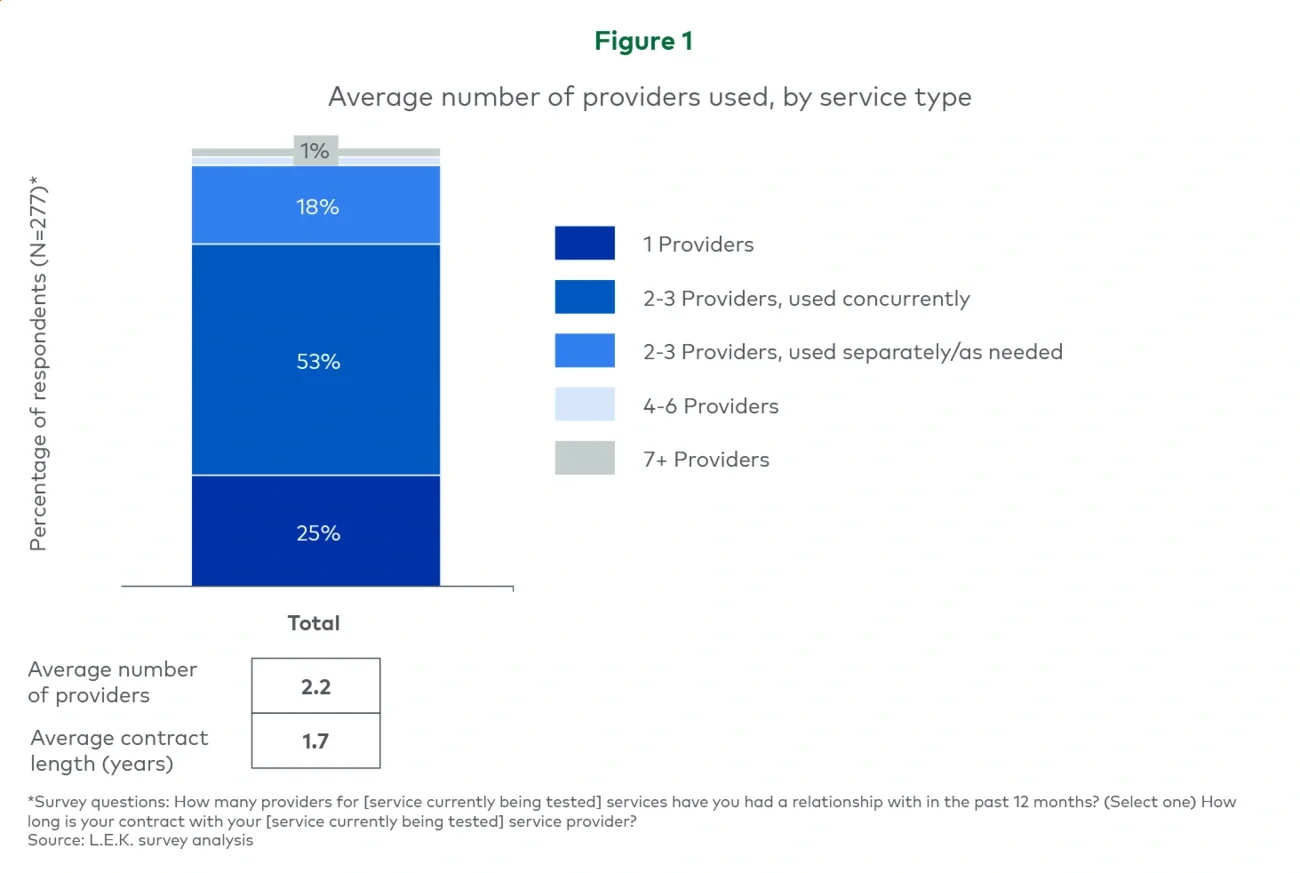
The number of vendors used in the facilities management space varies by end market, with pest control being the most concentrated (37% of facilities managers use one provider) and painting the least (only 8% use one provider). But facilities managers typically use multiple vendors (see Figure 1). 

Image
Average number of providers used, by service type
Image
Average number of providers used, by service type

In order to differentiate themselves from the competition, service providers (and, by extension, their investors) need to have a thorough understanding of the facilities manager purchasing space. With that in mind, our primary research uncovered the following:

  1. Most providers are discovered digitally. 
    Online search/review websites are the most common discovery method as they allow decision-makers to easily compare, aggregate and assess provider options while avoiding back-and-forth communication with prospective providers. Indeed, online searches are the primary discovery method across end markets. That said, healthcare, multifamily and education also rely significantly on recommendations from original equipment manufacturers and other business partners, indicating that providers may need to adapt their customer acquisition approaches to specific end markets.

    Meanwhile, as generative searches (e.g., ChatGPT, Google AI) increase — and with them, the number of AI-generated summaries — the resulting decline in organic individual website visits means commercial service providers will need to ensure their marketing algorithms are set up to succeed with AI.
  2. Quality and professionalism are a potential source of differentiation. 
    While service quality is consistently cited as the most important criteria across building/equipment maintenance and replacement services, price certifications (e.g., manufacturer certifications), and professionalism are key differentiators, particularly for critical regulatory and safety-driven services such as security access and control. Quality, price and professionalism are also highly valued when it comes to routine maintenance services like janitorial/cleaning and landscaping, as consistency of these services — or lack thereof — is more apparent given their regular nature.
  3. Sales teams need to be even more proactive. 
    Of the approximately 37% of survey respondents who said they’d switched providers within the past year, some cited delivery/quality issues or customer personnel changes, but others said the switch was due to a lack of proactive commercial excellence. It seems that many facilities managers have accepted a somewhat passive level of sales support, which creates an opportunity for those providers that pursue it well, while making those that don’t vulnerable to their more proactive, disciplined competitors.

    Proactive communication was the only metric that scored below average satisfaction, which suggests providers that stay ahead of customer concerns will have an edge when their contracts come up for renewal. Providers that successfully adopt digital/data-driven personalization are likely to be at an advantage as well.
  4. Renewal rates vary depending on the category. 
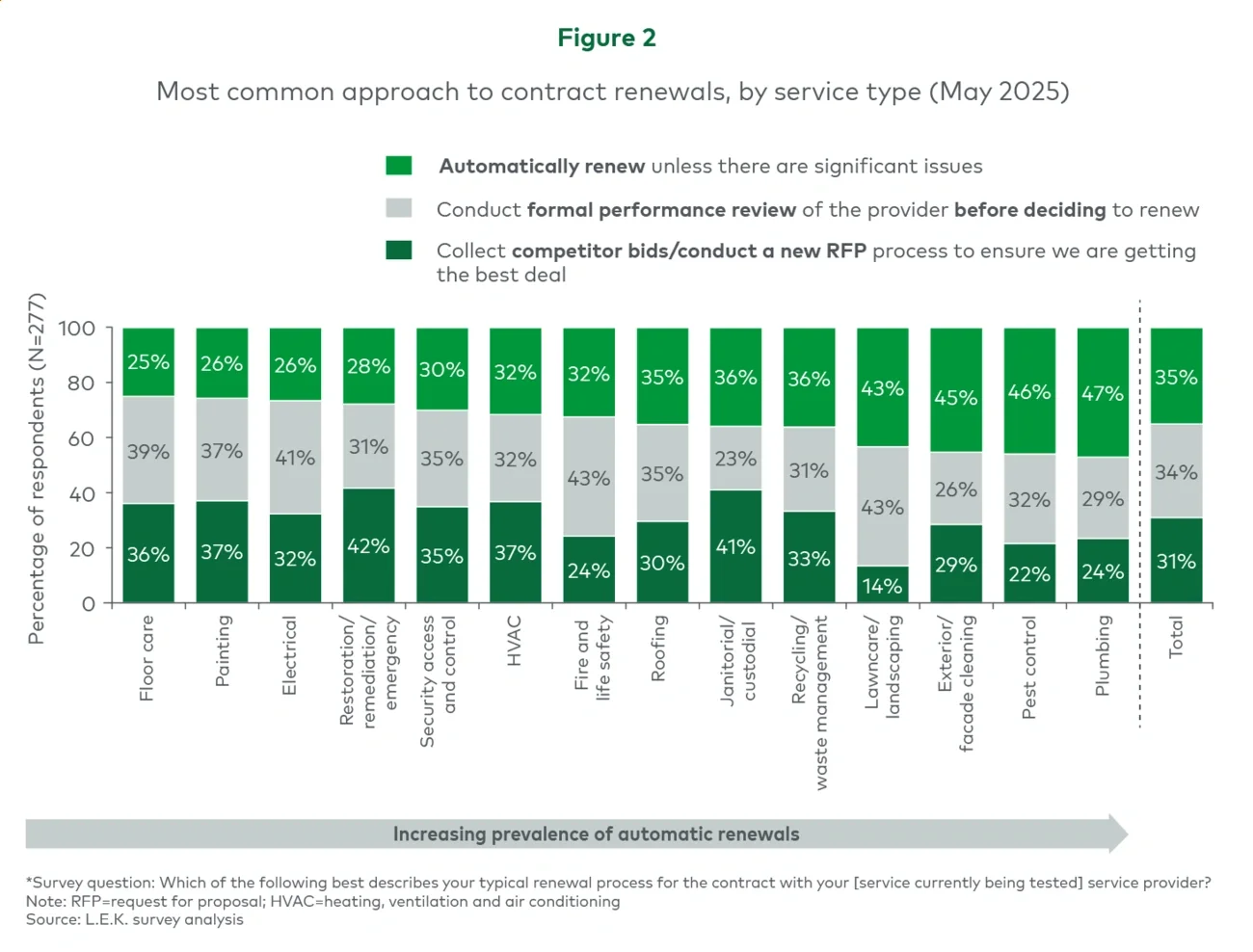
    High automatic renewal rates are common for services that feature ongoing vs. one-time project work (see Figure 2).
Image
Most common approach to contract renewals, by service type (May 2025)
Image
Most common approach to contract renewals, by service type (May 2025)
  1. Bundling offers simplicity and cost-efficiency. 
    In a bid to save money and simplify processes, larger enterprises are increasingly seeking bundled contracts and centralized purchasing from service providers, sometimes all from a single provider (which can create its own set of challenges). 

Scaled providers can benefit from a shift toward more centralized purchasing

For all but the smallest organizations (i.e., fewer than six locations), speed, consistency and national reach are crucial as the company continues to shift toward centralized purchasing. That’s why going forward, scale is expected to become an increasingly important differentiator when it comes to choosing a service provider.

Unsurprisingly, it’s all relative. Larger organizations tend to be more interested in national scale as it offers them greater potential for realizing benefits across a larger number of locations. Smaller organizations, on the other hand, have less upside — and less incentive — to standardize across their network, and instead tend to be more interconnected among their individual locations relative to their larger peers.

So when considering salesforce structure, service providers are likely best positioned to win with national/key account managers focused on large customers. The more localized the customer, the more they favor localized providers, ideally those with local/regional sales representatives who prioritize customers that have five or fewer locations. Of course, there are exceptions to these broad rules of thumb, but these guideposts can provide a starting point of focus.

Digital has become a core retainment and growth tool

Providers that make tools such as online work order management, digital inspection reports and automated billing part of their core service model are better positioned not just to win clients, but also to retain them.

Digital offerings for work order management and billing/payments, as well as inspection and reporting tools such as apps and photo-based inspection capabilities, are already common and are highly valued by customers. To remain competitive going forward, service providers need to continue investing in these features.

Client portals, digital communication and scheduling tools are less frequently offered today but are of interest to commercial building managers. As such, these options present a way for service providers to differentiate themselves.

With trust comes cross-selling potential

Facilities managers are now willing to consider multiple services from providers who are able to reliably deliver said services — so long as they have shown they can deliver. Indeed, the trust-in-delivery factor seems more important than the level of expertise.

Our previous research on residential cross-selling opportunities, Bundling Opportunities in Residential Services, showed that in addition to trust, convenience and expertise were also factors. This suggests that while there is a cross-selling opportunity in residential services, the opportunity is arguably even greater in facilities services.

Challenges remain

As our survey makes clear, scale offers providers a host of advantages. But they’re still faced with a number of challenges.

Sales reps are reactive. 
Facilities managers report being generally happy with their sales reps, but those reps tend to be reactive, which leaves the door open for a commercial excellence-driven competitor to succeed.

Digital differentiation is increasingly difficult. 
Differentiating through digital is becoming harder now that basic digital features have already been widely adopted. But other, less developed digital offerings such as client portals and real-time scheduling aren’t as frequently offered by providers despite being viewed as high value.

Broader business risks persist. 
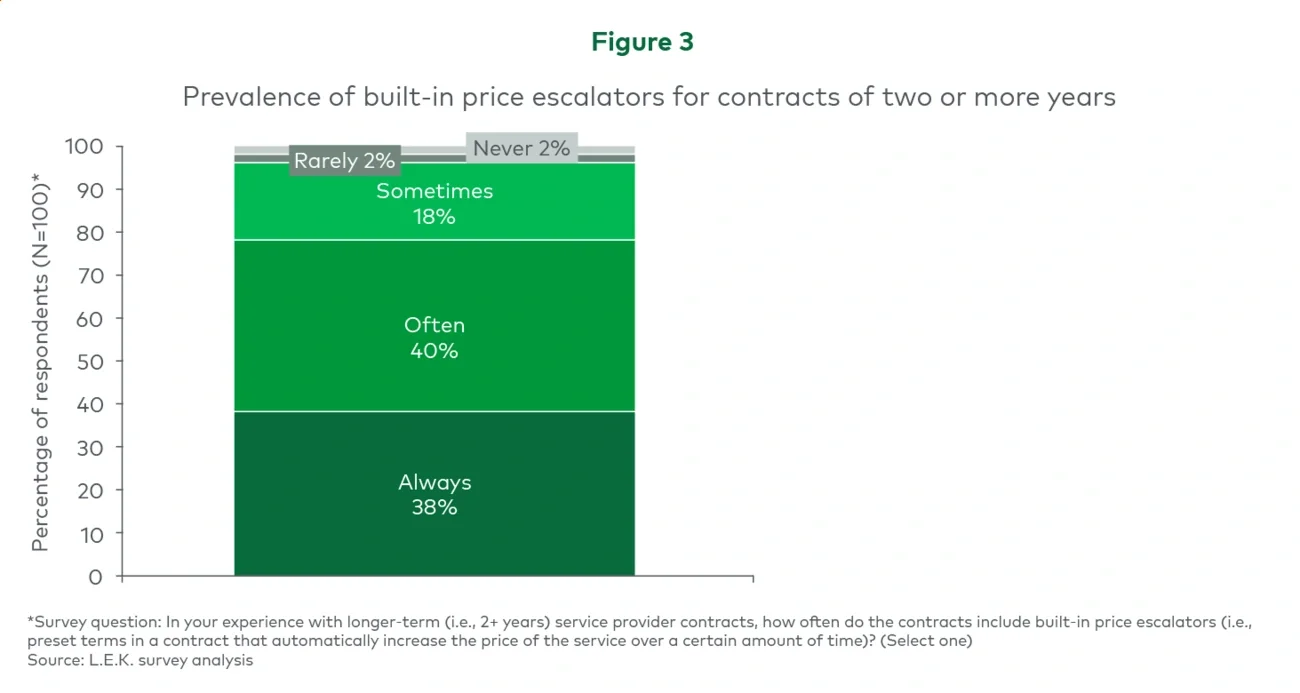
Rapid price changes are always possible due to tariffs and immigration/labor shortages, for example. Geopolitical uncertainties aside, escalators are a recommended best practice. Many providers, though by no means all of them or for all of their contracts, already have these in place (see Figure 3).


Image
Prevalence of built-in price escalators for contracts of two or more years
Image
Prevalence of built-in price escalators for contracts of two or more years

Price escalators are frequently included in commercial building services contracts of two or more years, with more than 95% of facilities managers indicating that at least some of their contracts include them. Market participants note that price escalators have become increasingly commonplace, especially after COVID-19-driven disruptions brought unforeseen increases to the cost of labor, equipment, etc. Shorter-term contracts generally do not include price escalators, which can leave providers vulnerable in periods of market volatility/high inflation. Tariff and labor shortage risk makes those without price escalators potentially vulnerable to margin compression.

Client turnover is disruptive. 
Sometimes new staff means some existing client relationships will end. Broader account management (i.e., not being dependent on a single relationship, although that can be unavoidable) and ensuring a relationship is quickly established with a new provider can mitigate the risk.

Thoughtful scale wins

While scale that supports consistent execution of cross-regional contracts provides a necessary platform, it is far from enough. To maximize their return on investment, investors need to assess a service provider’s ability to:

  • Manage accounts and retain clients
  • Invest in digital tooling and automation
  • Consistently execute cross-regional contracts
  • Exhibit discipline in their pricing, bundling and renewals

Moreover, investors need to ensure that national reach is combined with proactive service, relationship-based selling and digital fluency. After all, the point of scaling facilities services isn’t to be a bigger provider, but a better one.

For more information, please contact us.

L.E.K. Consulting is a registered trademark of L.E.K. Consulting LLC. All other products and brands mentioned in this document are properties of their respective owners. © 2025 L.E.K. Consulting LLC

English

Developing and Operationalizing Omnichannel Capabilities in the Pharmaceutical Market

November 12, 2025

Background

A pharmaceutical company on the brink of launching its first drug was looking to improve its digital customer experience. The client specifically wanted to operationalize its omnichannel capabilities by establishing agile processes to execute omnichannel engagement with test-and-learn teams and to define a robust operating model with an implementation plan to deliver omnichannel execution during the normal course of business.

Due to L.E.K. Consulting’s extensive experience in the pharmaceutical market and deep knowledge of the digital space, the client approached us to develop an omnichannel operating model roadmap.

Approach

Setting the vision required close collaboration with management through a series of agile working sessions to define priority customer personas, opportunities and pain points. With that set of defined customer personas, we identified key omnichannel tactics and required capabilities.

Through these agile working sessions, the team identified five main initiatives that could be implemented to address key capability gaps in the client’s current operating model.

  1. First, the client needed to upskill employees on agile ways of working by leveraging an Agile Coach to train employees in key roles on the new model of agile tools and methodologies.
  2. Second, the client should establish a content strategy governance body to oversee a unified content strategy.
  3. Third, we recommended the client reorient processes and ways of working to incorporate agile methodologies into business-as-usual processes and day-to-day activities.
  4. Fourth, the client was advised to create new roles, such as a customer experience designer, to address capability gaps. Last, the client needed to communicate how the responsibilities of various roles would change in the new operating model.

To develop this omnichannel model, our team began by implementing personalization pods that tested omnichannel tactics in an agile, controlled test-and-learn environment to enable execution in future launches without augmentation. Through these tests, we defined a robust operating model to deliver omnichannel execution as the normal course of business.

Results

The client received an omnichannel strategy and a robust integrated operating model, including design principles and content value chain frameworks, which it can use to drive the success of its current and future product offerings. Our omnichannel strategy is expected to drive higher customer engagement with the client, thereby supporting improved business performance.

L.E.K. Consulting is a registered trademark of L.E.K. Consulting LLC. All other products and brands mentioned in this document are properties of their respective owners. © 2025 L.E.K. Consulting LLC

English

Assessing DTC Value Ahead of Company Sale

Demonstrating the value of a high-performing direct-to-consumer pet business to potential buyers
November 12, 2025

The challenge

A private equity firm preparing to sell one of its portfolio companies, a pet technology business, wanted a deeper understanding of the company’s customers, key trends and growth prospects, as well as the performance and value of its direct-to-consumer (DTC) business. The company had made significant investments in this channel and wanted potential buyers to recognize it as a key strength in the sale process.

L.E.K. Consulting was engaged to conduct a full market study, including a comprehensive DTC assessment centered on customer metrics such as lifetime value, transaction patterns and upgrade rates. The goal was to quantify customer engagement and demonstrate DTC channel performance, along with highlighting the contribution of that performance to enterprise value.

At a glance, our client:

  • Needed to evaluate DTC customer performance and channel contribution ahead of sale
  • Sought to demonstrate the strength of customer engagement and value creation within the pet technology market
  • Wanted potential buyers to recognize the DTC channel’s differentiated value and contribution to the company’s growth


Our approach

As part of the market study, we conducted a data-driven evaluation of the client’s DTC business, analyzing detailed transaction and customer data to quantify engagement and long-term value. The team segmented customers by cohorts informed by the date of first purchase, the category of initial purchase and purchasing behavior over time, including repeat rates, upgrades and attachment metrics.

Through this analysis, we identified clear evidence of high customer loyalty and strong lifetime value, confirming that the DTC channel was a meaningful driver of growth and retention.
Beyond customer-level analytics, the team examined the broader pet products market to contextualize the company’s position for potential investors. We assessed total market size, key segments and growth trends, complemented by consumer insights to understand owner preferences and brand performance versus competitors.

Finally, we outlined the future potential of the DTC business by identifying long-term levers for growth and continued value creation, reinforcing its importance to the company’s investment thesis.

Key elements of the approach:

  • Conducted detailed analysis of customer behavior, retention and lifetime value in the DTC channel
  • Benchmarked company performance within the broader pet care market using consumer and competitive insights
  • Highlighted channel strengths and long-term growth levers to inform the company’s sale narrative


The results

The analysis equipped the client with a robust understanding of its DTC performance and market position, supporting a compelling equity story ahead of sale. Our findings enabled the client to articulate the strategic value of its DTC channel with confidence, reinforcing it as a source of recurring revenue, strong customer engagement and sustained growth potential.

Impact delivered:

  • Quantified DTC performance through customer lifetime value and retention analysis
  • Strengthened the equity story by demonstrating the DTC channel’s strategic and financial value
  • Positioned the company as a high-quality growth platform in the attractive pet technology market

L.E.K. Consulting is a registered trademark of L.E.K. Consulting LLC. All other products and brands mentioned in this document are properties of their respective owners. © 2025 L.E.K. Consulting LLC

English

A Five-Year Roadmap for AI-Powered Medical Imaging Analytics

Defining a phased commercialization strategy for AI-driven innovation in medical imaging
November 12, 2025

The challenge

A developer of artificial intelligence (AI)-powered medical imaging analytics for early detection of cardiac and bone disease sought to define a go-to-market strategy for the U.S. market with return on investment (ROI) quantification. The client aimed to equip its sales team with evidence-based materials, including clinical use cases for health systems and guidance on optimal product and service bundles.

L.E.K. Consulting was selected for its deep medtech and AI expertise to design a clear, phased strategy that would accelerate adoption and position the client for long-term success.

At a glance, our client:

  • Needed a structured U.S. go-to-market plan to drive adoption of AI-powered analytics with ROI quantification
  • Sought to equip the commercial team with targeted sales materials and clinical use cases
  • Wanted to align near-term commercialization with a scalable, long-term innovation roadmap
     

Our approach

We developed a five-year go-to-market strategy organized into distinct phases, each designed to build commercial readiness and scale market adoption over time.

Year 1: foundation building

The first year focuses on laying the groundwork — onboarding early adopters, building infrastructure, compiling data and engaging key medical societies to secure buy-in.

Years 2–3: evidence and adoption

The next phase emphasizes generating clinical evidence and accelerating adoption through targeted sales efforts, reimbursement readiness and a physician referral playbook to capture best practices.

Years 4–5: broader adoption and support

These years outline plans to scale adoption across health systems, expand support services and strengthen market credibility through reimbursement preparation.

Beyond Year 5: continuous innovation and scaling

Beyond five years, the roadmap calls for ongoing innovation — expanding features, enhancing services and investing in infrastructure to maintain leadership in AI medical imaging.

Key elements of the approach:

  • Structured a phased, five-year roadmap with ROI evaluation
  • Combined AI, clinical and market insights to guide adoption and expansion
  • Developed tailored sales materials and playbooks to enable execution across teams


The results

Our strategy positioned the AI imaging company for sustained success in the U.S. market. The client received a clear, time-based roadmap detailing market entry, customer targeting and commercialization milestones, supported by tactical sales tools and evidence-building plans.

The roadmap not only prepared the company for near-term launch but also ensured readiness for continuous innovation and scaling beyond the first five years.

Impact delivered:

  • Provided a five-year strategic roadmap linking clinical, commercial and operational goals
  • Enabled data-driven market entry supported by tailored sales and evidence tools
  • Positioned the company for scalable, long-term growth in AI-powered medical imaging

L.E.K. Consulting is a registered trademark of L.E.K. Consulting LLC. All other products and brands mentioned in this document are properties of their respective owners. © 2025 L.E.K. Consulting LLC

English

Building Investor Confidence Through Technology Due Diligence

November 12, 2025

Background and challenges

For companies preparing for a transaction, commercial performance and market attractiveness alone aren’t enough — investors want to see whether underlying technology can support future growth and is prepared to capitalize on artificial intelligence (AI) advancements. That was the situation for a healthcare information technology software and services provider approaching a sell-side diligence. The business had built a robust ecosystem of proprietary and third-party solutions, but leadership recognized that questions about scalability, architecture maturity and vendor dependencies could weaken investor confidence if left unanswered. The engagement exemplified how early integration of commercial and technology diligence can shape both deal positioning and investor perception.

Approach

From the outset, the engagement was structured as an integrated commercial and technology diligence, ensuring that technology findings informed valuation discussions and the deal narrative in real time. L.E.K. Consulting embedded technology diligence and a solution maturity assessment into the sell-side process. The work involved a deep look at how the company’s technology underpinned its commercial strengths. Specifically, the team:

  • Examined internal capabilities such as solution architecture and product management to evaluate how effectively the core platform was managed and improved
  • Analyzed the full stack of proprietary solutions for scalability, reliability, flexibility and performance — aligning the differentiation of these in-house solutions with where the market placed value and identifying gaps where off-the-shelf alternatives could not compete
  • Reviewed third-party vendor partnerships, surfacing both strengths and risks — including potential vendor lock-in — and identifying opportunities for development
  • Assessed key maturity dimensions spanning architecture, scalability, security posture, team capability and roadmap readiness to provide a holistic view of the technology’s ability to scale and support growth

This integration of technical and commercial diligence ensured that the findings translated directly into a compelling investment story.

Results

The final report linked technology maturity directly to commercial opportunity, demonstrating that the company’s architecture was both reliable in the present and flexible enough to support future growth. It also clarified the role of third-party solutions, highlighting where they added value and where risks required attention. 

Beyond validating the technology, the assessment helped our client:

  • Refine the deal model by phasing capital expenditure investments and identifying opportunities to reduce transition service agreement (TSA) costs — insights that directly supported valuation discipline and investment timing
  • Define TSA scope and Day 1 and Day 100 priorities, sequencing critical technology upgrades and vendor transitions to maintain business continuity post-close
  • Review the verified baseline posture of cybersecurity and controls and prioritize the remediation efforts needed to meet enterprise compliance expectations
  • Develop a concise maturity model and scorecard that linked technical findings to the commercial thesis, creating investor-ready outputs that clearly conveyed risk and upside potential

With this foundation, the client could confidently present its technology as an enabler of competitive differentiation, strengthening investor confidence and positioning the business for a successful transaction.

For more information, please contact us.
 

L.E.K. Consulting is a registered trademark of L.E.K. Consulting LLC. All other products and brands mentioned in this document are properties of their respective owners. © 2025 L.E.K. Consulting LLC

English
Image
report cover

On the Cusp of a Cure: Is Asia Pacific Ready for the Precision Era? (Australia)

November 11, 2025

The Precision Era of medicine is arriving in Asia Pacific, driven by a critical mass of innovative therapies that will redefine treatment, attract investment and improve lives. Powered by advances in diagnostics, AI and genomic technologies, precision therapies offer curative potential for diseases once deemed untreatable, ushering in a new standard of care across oncology, rare genetic disorders and beyond.

This white paper series explores Asia Pacific’s readiness for the Precision Era — the current transformative period where generically prescribed and regularly administered treatments are increasingly giving way to potentially curative therapies tailored to individuals and their disease.  

Drawing on research across more than 1,000 clinical trials across four novel technologies and four markets, we assess the clinical, economic and social benefits of precision therapies, identify systemic barriers to precision therapy adoption, provide recommendations for improvement, and assess the value of widespread adoption across Australia, China, Japan and Korea.

The Precision Era represents a major opportunity for Australia. Over the next decade, precision therapies could improve outcomes for more than 250,000 Australians. However, the country is constrained by slow regulatory and reimbursement processes, limited investment in R&D and manufacturing infrastructure, and low awareness of precision medicine among key stakeholders. Accelerating reform and improving access will be essential to ensure Australian patients and the economy benefit fully from this new medical paradigm.

The ‘On the Cusp of a Cure’ white paper series was supported by an advisory committee of 16 pre-eminent regional experts in precision medicine, economic and health policy, and patient experience across Australia, China, Japan and Korea. It was also sponsored by Johnson & Johnson.  

Download the PDF to discover how precision therapies can drive life-changing outcomes and sustainable growth.

Editor’s Note: For more insights, please explore the country-focused white papers in the ‘On the Cusp of a Cure: Is Asia Pacific Ready for the Precision Era?’ series.

L.E.K. Consulting is a registered trademark of L.E.K. Consulting LLC. All other products and brands mentioned in this document are properties of their respective owners. © 2025 L.E.K. Consulting LLC

English
Image
report cover
Special Report

Advancing Innovation and Global Reach: The Next Chapter in China’s Clinical Trial Development

November 12, 2025

China’s clinical development sector has evolved at remarkable speed over the past decade. Policy reform, investment and a maturing ecosystem have transformed the country into one of the world’s most dynamic hubs for clinical research. As Chinese biopharmaceutical companies expand their capabilities and global reach, new opportunities are emerging for innovation-driven collaboration and growth.

Developed jointly by L.E.K. Consulting and PharmaDJ, this Special Report examines the strategic trends shaping the next phase of China’s clinical trial landscape. Drawing on survey insights from leading pharmaceutical companies and CROs, the analysis identifies three defining forces driving the sector forward: the rise of more innovative and differentiated therapies, the continued globalization of Chinese innovation, and the adoption of AI and smarter clinical trial tools.

The report explores how these forces are transforming the industry’s operating model — from early-stage R&D through to global-scale trials — and what they mean for multinational pharmas, domestic biotechs and service providers seeking to strengthen their positions in an increasingly competitive environment. It also provides a practical lens on how companies can prepare for the next wave of development, balancing innovation, efficiency and collaboration.

China has established a strong foundation for clinical trial growth, underpinned by its large patient base, favorable policies and sustained R&D investment from pharmas. Trial volume in China has risen rapidly from roughly one-third of the U.S. and one-half of the European levels in 2019 to approximately 0.8× and 1.1× respectively by 2024, positioning China as a major global player in clinical development. As the sector enters its next phase of growth, three strategic trends are expected to shape the future of China’s clinical trial landscape:

  • Development of more innovative and differentiated therapies
    Chinese biopharmas and biotechs are increasing investment in first-in-class and best-in-class assets, next-generation modalities, and new technology platforms, gaining stronger global recognition. The surge in Phase II and III trials highlights China’s growing capability to advance innovations from early to late stages, creating rising opportunities for clinical development industry participants. While homogeneous competition persists, companies are driving differentiation through early combination planning, indication expansion and strategic asset prioritization.
  • Continued globalization of Chinese innovation
    Globalization remains a strategic imperative for Chinese biopharmas/biotechs, with rising China-to-global trials and licensing deals reaching record highs. This creates expanding opportunities for MNC pharmas to access differentiated, early-stage Chinese assets that enhance global portfolios, and for CROs equipped with global-standard quality systems, regulatory expertise and multiregional execution capabilities to play a pivotal role in supporting cross-border clinical development.
  • Adoption of AI and smarter clinical trial tools
    AI is emerging as a transformative enabler across the drug R&D life cycle. Within clinical development, industry participants show growing interest in adopting AI, with the highest near-term potential in data analysis and management. Pharmas and CROs need to proactively integrate AI into their clinical development capabilities to enhance efficiency and improve trial quality.

Download the full report to understand how China’s evolving clinical trial ecosystem is reshaping global drug development and what it means for your organization’s strategy.

L.E.K. Consulting is a registered trademark of L.E.K. Consulting LLC. All other products and brands mentioned in this document are properties of their respective owners. © 2025 L.E.K. Consulting LLC

English
Subscribe to