Optimizing Four-Wall DC Operations for a Pharmaceutical Distributor

March 27, 2025

A leading pharmaceutical distributor saw a sharp decline in warehouse productivity after implementing a new Warehouse Management System (WMS). L.E.K. Consulting was engaged to evaluate warehouse performance and identify improvement opportunities. Through a comprehensive, four-facility assessment, L.E.K. uncovered a 17%-34% potential productivity uplift and designed a phased implementation plan to capture the gains and restore sustainable operations.

Challenge:

The company lagged industry benchmarks in warehousing performance, with declining efficiency further driving up labor costs.

New technology investments failed to deliver expected productivity gains, with labor instead increasing to handle operational disruptions.

Management was unclear on where to focus for maximum uplift and sought an outside-in assessment to identify and prioritize 4-wall improvement initiatives.

Approach:

Our team designed a rapid, hands-on 4-wall improvement program to identify operational challenges, develop efficiency uplift solutions and build a playbook for execution:  

  • Performance baselining: Analyzed distribution center operations by assessing key metrics (e.g., pick rates, pick exceptions, labor hours, inventory accuracy) and conducting detailed on-floor observations, interviews and time studies  
  • Root cause analysis and opportunity identification: Identified core issues inhibiting performance (e.g., high congestion in pick aisles), diagnosed root causes (e.g., fast turning items located too close together) and hypothesized improvement opportunities (e.g., revised velocity-based slotting strategy)
  • Solution design and initiative development: Developed set of performance improvement initiatives based on identified issues and organized these into 5 solution themes for rollout to the full distribution network
  • Implementation plan creation: Built a time-phased execution workplan, providing rollout guidance and target completion dates for each initiative  

Results:

This hands-on assessment delivered actionable improvement opportunities that were initiated across the distributor’s network as a comprehensive performance improvement program. Collectively, this program enabled 17% labor reduction or capacity gain in one to two years, with 34% total uplift potential within three to five years.  

Improvement opportunities were organized into five key solution areas:

  • Staffing and labor Deployment: Develop weekly and intra-day labor planning tools to align near-term labor deployment with demand, minimizing idle time and wasted time from job transitions
  • Equipment utilization: Adjust workflows and disseminate best practices for using automated retrieval and storage system to maximize machine utilization and achieve industry standard throughput rates
  • Inventory control and slotting: Establish a consistent standard to track, measure and report inventory health across all facilities (e.g., inventory record defect rate) and right-size locations based on cubic velocity to reduce systematic inventory inaccuracies and eliminate associated productivity loss  
  • Workflow and waving strategy: Utilize waving rules and filtering to right-size waves based on volume, pick type and priority type, level-loading activity across the shift
  • Layout improvement: Minimize narrow aisles for picking and arrange equipment to minimize walk time between functions

We defined 2 to 5 target initiatives within each of these key solution areas, each with corresponding execution guidelines. The improvement program was divided into three phases: the first six months focused on building foundational tools and processes, months 6-24 on gradually rolling out improvement initiatives and months 24+ on aggressively pursuing improvement targets.

Conclusion:

L.E.K.’s 4-wall DC improvement program disrupted the company’s status quo and established a clear path to reverse poor performance trends. If your business is looking to transform your warehousing operations, our Operations and Supply Chain team can help deliver similar impactful results.

Contact us to learn how we can drive sustainable improvements for your organization.

L.E.K. Consulting is a registered trademark of L.E.K. Consulting LLC. All other products and brands mentioned in this document are properties of their respective owners. © 2025 L.E.K. Consulting LLC

English
Executive Insights

The Future Role of Generative AI in SaaS Pricing

March 31, 2025

Key takeaways

Generative AI (GenAI) fundamentally shifts SaaS pricing from seat-based to outcome-/value-driven models, with many leaders viewing AI as transformative.

Companies are charging premiums for Microsoft Copilot-style AI features, with value created through both productivity enhancement and complete task automation.

Emerging pricing models are either outcome-based (pay per result), consumption-based (pay per usage) or hybrid subscription models combining fixed fees with variable AI components. 

Data architecture becomes more critical than UI as workflows shift to AI agents, positioning companies with robust data infrastructure for success. 

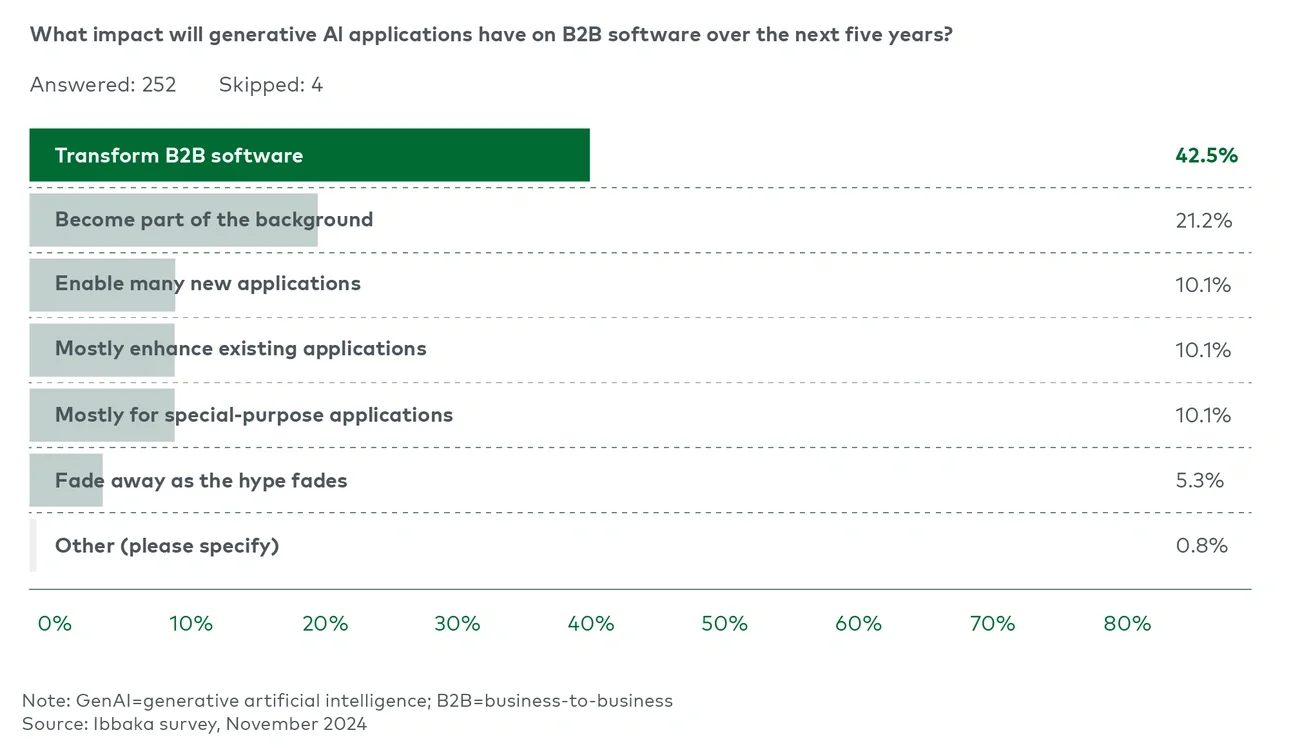
The business-to-business (B2B) software industry is undergoing a pivotal transformation driven by generative artificial intelligence (GenAI). Once primarily focused on enhancing human productivity, this technology is now reshaping how businesses develop, deliver and price their offerings. A recent survey revealed that 42.5% of industry leaders view GenAI as transformative, with the potential to disrupt domains such as development, sales and pricing (see Figure 1).  

Figure 1

GenAI’s impact on B2B software

Image
GenAI’s impact on B2B software

Figure 1

GenAI’s impact on B2B software

Image
GenAI’s impact on B2B software

This narrative of revolutionary change underscores a critical shift. Companies are no longer just building AI into their products; they are actively rethinking pricing strategies to reflect its transformative potential. How can businesses align their pricing with the value that AI delivers, and what challenges must they navigate along the way?

Industry perspectives on AI

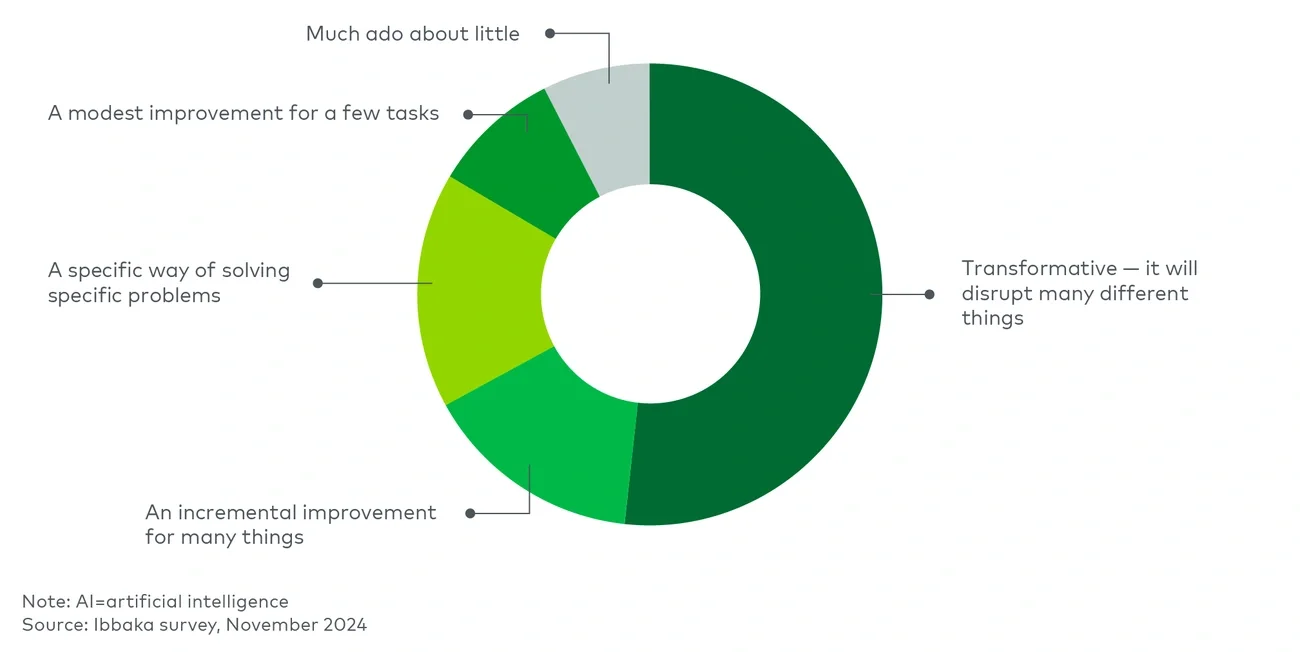
Industry attitudes toward AI reveal widespread enthusiasm, particularly among early adopters. Over half of respondents in a recent survey conducted by Ibbaka, a pricing and value management platform, believe GenAI will disrupt multiple domains, from product development to customer support and pricing (see Figure 2).  

Figure 2

Over 50% of respondents believe AI is transformative across domains

Image
Over 50% of respondents believe AI is transformative across domains

Figure 2

Over 50% of respondents believe AI is transformative across domains

Image
Over 50% of respondents believe AI is transformative across domains

This growing excitement has a direct impact on pricing strategies. GenAI isn’t just another feature — it represents a paradigm shift that demands innovative pricing models capable of capturing its unique value. Traditional subscription-based approaches are being challenged as software-as-a-service (SaaS) companies grapple with new ways to align costs with outcomes and usage.

How GenAI is redefining SaaS pricing

GenAI is fundamentally reshaping the traditional relationship between pricing and usage. By enabling businesses to “do more with less,” AI challenges the relevance of seat-based pricing models while driving innovation in outcome-based, consumption-based and hybrid strategies.

Companies such as Zendesk are leading the way with hybrid approaches, charging per seat for human users and per resolved ticket for AI agents. This shift reflects a broader trend: SaaS companies are aligning their pricing strategies with the dynamic value AI delivers. 

Key pricing models in the age of AI

1. Outcome-based pricing: Paying for results

Outcome-based pricing ties costs directly to measurable results, offering a transparent and ROI-aligned approach. Examples include:

  • Zendesk’s AI agents: Zendesk charges customers per ticket resolved by AI, ensuring businesses pay only for successful outcomes.
  • Intercom’s Fin: Intercom uses a $0.99-per-resolution model, eliminating the risks of charging for unused or underperforming features and building customer trust.

Advantages: Outcome-based pricing offers transparency by tying costs to success metrics such as resolved tickets and tasks completed. This alignment allows customers to perceive direct value from their spending.

Drawbacks: Attribution disputes can arise when outcomes involve multiple tools or manual inputs. Additionally, scalability can become challenging if success metrics are unclear or poorly calibrated.

2. Consumption-based pricing: Charging for usage

Consumption-based models align pricing with resource usage, providing flexibility for businesses of varying sizes. Examples include:

  • OpenAI: OpenAI charges based on tokens processed, reflecting the granular usage of its language models. This approach scales easily, from startups to large enterprises.
  • Synthesia: Synthesia implements a per-minute video-generation model with tiered access, allowing smaller creators and enterprise users to choose plans tailored to their needs.

Advantages: Consumption-based pricing is highly scalable and flexible, adapting seamlessly to customer usage patterns. It allows businesses to pay only for what they consume, reducing waste and maximizing efficiency.

Drawbacks: This model introduces revenue volatility, as usage can fluctuate unpredictably across customers and time. Customers also face the risk of unexpected cost spikes, requiring careful monitoring to avoid surprises. 

3. Hybrid subscription models: Balancing predictability and flexibility

Hybrid subscription models combine the stability of subscription fees with the adaptability of consumption- or outcome-based pricing. These models are particularly effective for AI-driven tools, capturing value from both predictable base fees and variable AI-powered usage. Examples include:

  • Microsoft’s Copilot: Priced at 60%-70% of the base product fee, Copilot reflects AI’s productivity enhancements while combining predictable subscription revenue with a variable usage fee that scales with the value delivered.
  • Salesforce’s Einstein 1: Einstein 1 combines base subscription fees with usage-based components, balancing stable revenue streams with flexibility for customers scaling their AI adoption.

Advantages: Hybrid subscription models provide predictability through stable base fees while offering flexibility with variable charges for AI-powered features. This approach meets the needs of diverse customer segments, encouraging broader AI adoption.

Drawbacks: These models require sophisticated systems to track and manage both fixed and variable charges effectively. Customers may need education to understand the value proposition and navigate the model’s complexity.

Trends and innovations in AI pricing

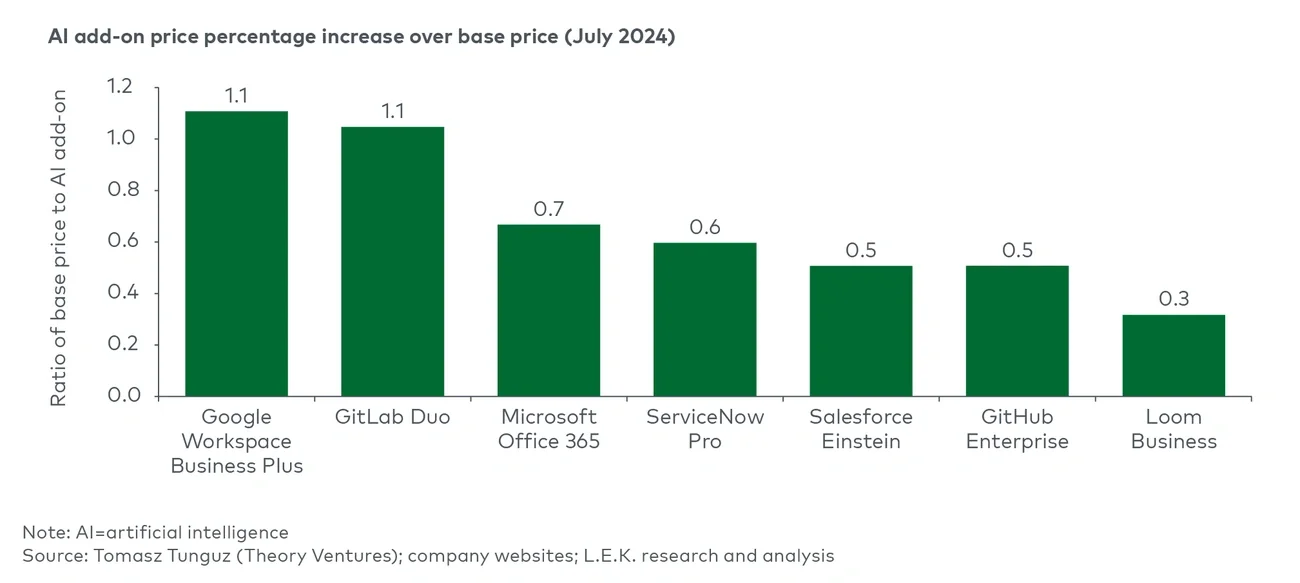
The growing trend of premium pricing for Copilot-style AI add-ons (AI features assist with tasks within existing user-centric software), ranging from 30%-110% above the base per-seat cost, underscores the growing value attributed to AI-driven productivity tools. This range reflects a strategic balance: Some companies prioritize usage with lower add-on prices, while others focus on monetization with higher premiums.  

Examples such as Microsoft’s Copilot and Salesforce’s Einstein 1 highlight how hybrid pricing models blend predictable subscription revenue with flexible, usage-based components (see Figure 3). 

Figure 3

Pricing model progression from traditional to AI-driven pricing models 

Image
Pricing model progression from traditional to AI-driven pricing models

Figure 3

Pricing model progression from traditional to AI-driven pricing models 

Image
Pricing model progression from traditional to AI-driven pricing models

GenAI is driving SaaS companies to innovate beyond traditional pricing models. By aligning strategies with AI’s transformative potential, these companies are better positioned to meet customer expectations and unlock new revenue streams.

The dual impact of AI on SaaS value creation

GenAI creates value in SaaS through two distinct approaches:

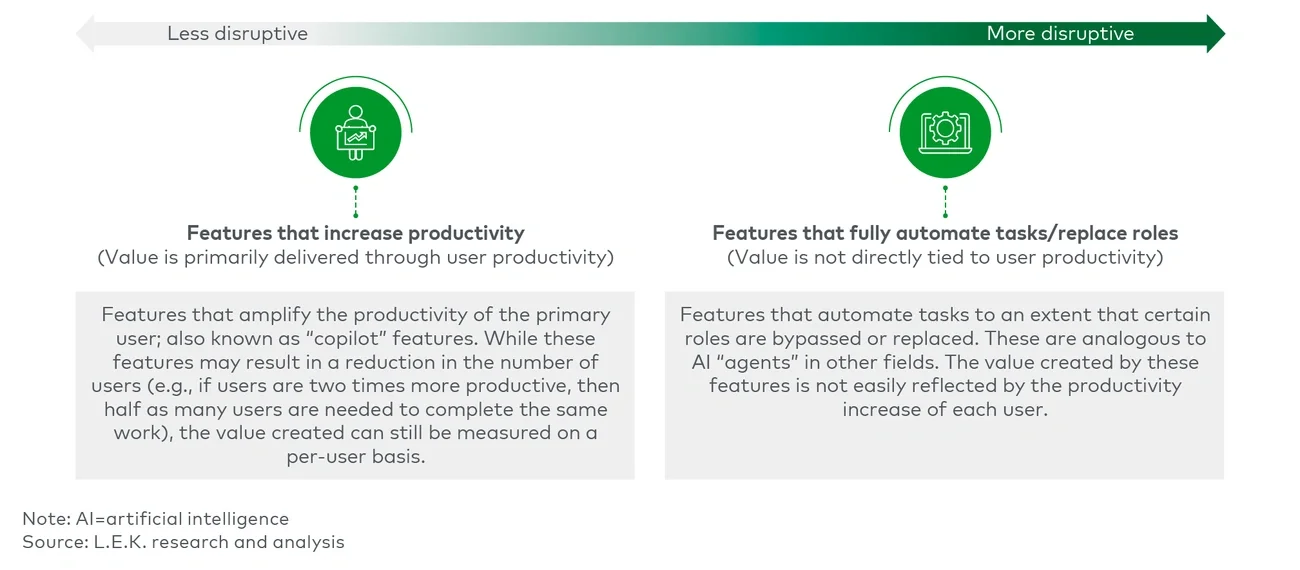
  • Productivity enhancement: Some AI tools enhance human efficiency, enabling users to accomplish more in less time. For instance, Microsoft and ServiceNow have reported 50% productivity gains from AI features, priced at a 60%-70% premium over base subscriptions, potentially resulting in workforce reductions as productivity rises.
  • Task automation: AI agents fully replace human roles in specific workflows, creating opportunities for agent-centric pricing tied directly to outcomes. This shift allows businesses to monetize AI capabilities through models such as per-task or per-resolution charges.

These benefits capture not only productivity improvements but also benefits such as reduced errors, faster workflows and better decision-making capabilities. As SaaS companies explore AI pricing models, they must distinguish between tools that enhance human productivity and those that fully automate processes to align costs with value (see Figure 4). 

Figure 4

AI capability continuum 

Image
AI capability continuum 

Figure 4

AI capability continuum 

Image
AI capability continuum 

Strategic approaches to AI feature integration

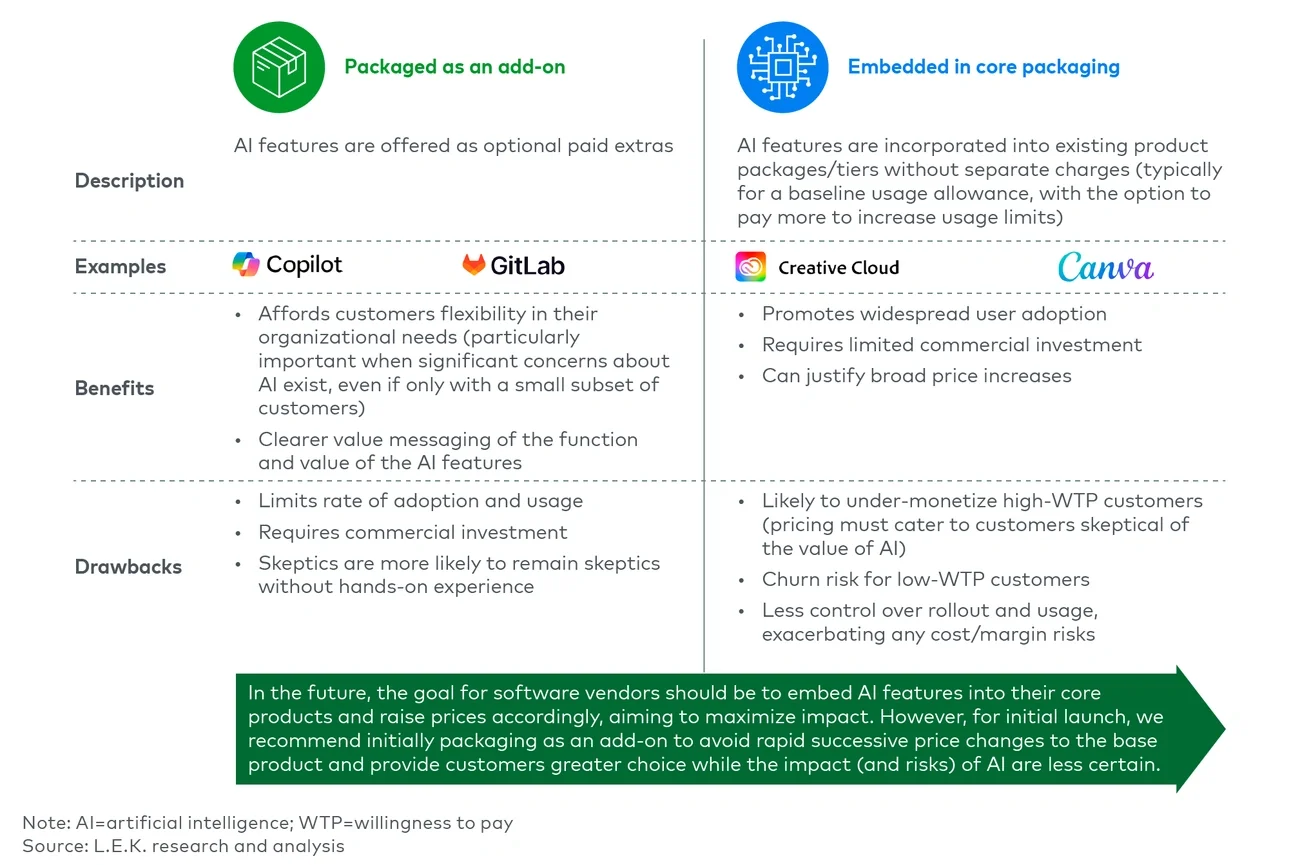
AI features that increase user productivity can be embedded into core products eventually and be initially packaged as an add-on to reduce complexity in the near term. This strategic choice shapes how companies introduce and monetize their AI capabilities (see Figure 5). 

Figure 5

Strategic approaches to AI feature integration

Image
Strategic approaches to AI feature integration

Figure 5

Strategic approaches to AI feature integration

Image
Strategic approaches to AI feature integration

Why data architecture matters more than user interface (UI)

GenAI shifts the focus from user-friendly interfaces to robust data architectures. With workflows increasingly handled by AI agents rather than human users, the emphasis is on structured, accessible data to support AI-driven decisions and operations. Companies such as Snowflake and Databricks, which excel in advanced data infrastructure, are well positioned for this shift.

As Jamin Ball, a venture capitalist investing in enterprise software businesses, notes, “The best end-user experience will come from a better underlying data architecture, not an easy-to-use UI. The leading application vendors today have become systems of record that workflows are built around. A system of record is just a database. And the workflows will be carried out by agents and API calls.” This shift fundamentally changes how we think about value creation in SaaS.

Upcoming topics on SaaS pricing transformation

The integration of GenAI into SaaS products is driving a profound evolution in how companies approach pricing. Traditional models often fail to capture AI’s dynamic value, necessitating innovative strategies. This article is the first in L.E.K. Consulting’s four-part series exploring the future of SaaS pricing in the AI era. The remaining three topics are:

AI product packaging strategies: This article will examine approaches for incorporating AI into your product offering, from add-on features to fully integrated solutions. We’ll analyze how companies such as Microsoft, OpenAI and Synthesia structure their AI offerings and how different packaging decisions impact market adoption.

Pricing models for AI features: This article will explore pricing strategies for AI-enhanced products, from traditional licensing to usage-based models. We’ll examine how companies determine and implement value metrics across both horizontal applications (e.g., content generators) and vertical solutions (e.g., healthcare diagnostics).

The future of annual recurring revenue (ARR) and valuations with GenAI pricing: This article will examine how SaaS companies can rethink ARR in the context of variable revenue. It will discuss managing baseline and variable income, forecasting dynamic usage patterns, and evaluating AI’s impact on SaaS valuations.

Redefining value through GenAI

GenAI is reshaping how SaaS companies deliver and monetize value. Innovative pricing models tied to outcomes and usage allow businesses to reflect AI’s transformative potential while meeting evolving customer expectations. Success in this shift requires balancing transparency, scalability and alignment with market needs. Companies that adapt to these changes will unlock new growth opportunities and solidify their positions in the competitive AI-driven landscape.

GenAI is compelling SaaS companies to innovate their pricing strategies, pushing beyond traditional models to reflect its transformative impact on value creation and delivery. For more on these topics, visit our in-depth perspectives on consumption-based pricing and outcome-based pricing to explore their advantages and challenges, hybrid approaches to these models, and real-world applications in detail.

For more information, please contact us.

L.E.K. Consulting is a registered trademark of L.E.K. Consulting LLC. All other products and brands mentioned in this document are properties of their respective owners. © 2025 L.E.K. Consulting LLC 

Questions about our latest thinking?

English

Transforming Supply Chain Challenges into Strategic In-Sourcing Success

March 28, 2025

Background and Challenges

A fast-growing industrials manufacturer was facing persistent supply chain disruptions that threatened its operations. Late shipments, inconsistent quality and supplier failures were creating backlogs, straining customer relationships and putting revenue at risk. At the center of the issue was a critical rotomolded plastic component ― essential for product quality ― sourced from an external supplier struggling to meet demand.

Recognizing the need for greater control, the company engaged L.E.K. Consulting to assess the feasibility of in-sourcing production. The goal was to determine operational requirements, assess financial viability and build a compelling business case for investment.

Approach

We conducted a comprehensive, data-driven assessment to ensure the transition to in-sourcing was both financially feasible and operationally sound. We worked collaboratively with the client in establishing a baseline, identifying key operational considerations, modelling implications and developing a roadmap for success:  

  • Baseline assessment ― Mapped out the full supply chain, quantifying costs, production delays and supplier risks. Identified revenue losses and key vulnerabilities affecting reliability and efficiency.
  • Operational considerations ― Evaluated manufacturing technologies, modeled cost structures and assessed scalability to find the best-fit production solution. Designed an optimized material flow that integrated with existing operations. Developed a labor strategy that leveraged the current workforce while minimizing unnecessary hires.
  • Accelerating ramp-up ― Developed production scenarios to significantly reduce implementation time. Cut ramp-up time in half by coordinating product trials and technology stabilization at the OEM site, minimizing trial costs and revenue disruptions.
  • Financial modeling and business case ― Built a robust financial model comparing in-sourcing costs, incorporating efficiency gains, quality improvements and sensitivity testing for market fluctuations.
  • Implementation roadmap ― Developed a clear execution plan with defined milestones, risk mitigation strategies and investment priorities, ensuring leadership alignment and a seamless transition.  

Results

Our strategic guidance provided the manufacturer with the confidence and clarity to proceed. Expected results include:

  • 15% reduction in operational expenses  
  • 25% lower one-time investment than initially projected by avoiding overbuilding unnecessary capital expenditures.
  • Full executive and board approval, supported by a well-defined execution plan.
  • A reduced risk profile, with stronger governance structure and supply chain resilience.

By addressing supply chain weaknesses with a structured, data-driven strategy, the manufacturer transformed a recurring challenge into a long-term competitive advantage. With greater control over production, improved efficiency and reduced risk, the company positioned itself for sustainable, cost-effective growth.

For more information, please contact us.

L.E.K. Consulting is a registered trademark of L.E.K. Consulting LLC. All other products and brands mentioned in this document are properties of their respective owners. © 2025 L.E.K. Consulting LLC

English

The Recruitment Industry’s Next Chapter: Leveraging Technology for Strategic Gain

March 28, 2025

The recruitment industry is undergoing a profound transformation as AI, advanced analytics and digital platforms reshape traditional practices. However, human value isn’t diminishing: these innovations accentuate it, freeing advisers from repetitive tasks and empowering them to focus on strategic counsel, cultural alignment and long-term talent development. 

In an era of ubiquitous talent visibility, the real differentiator lies not in identifying candidates, but in ensuring that chosen leaders thrive within their organisations. 

Lessons from the past

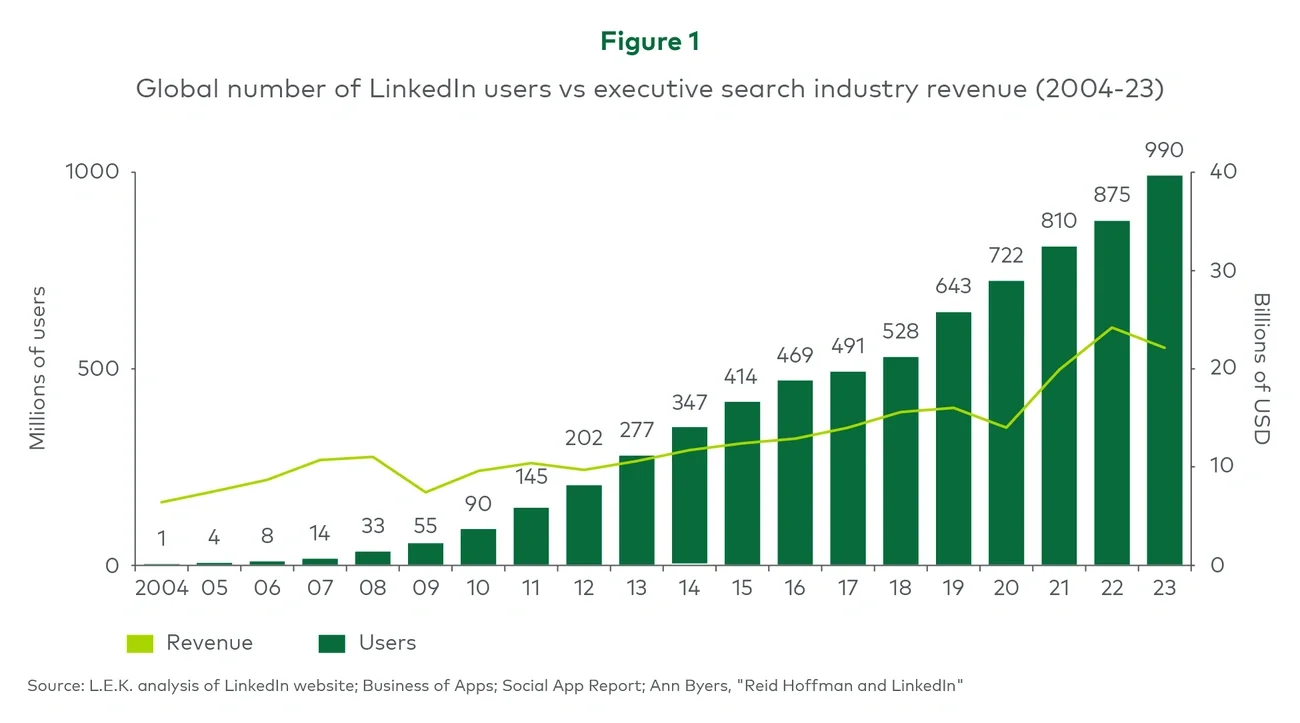
When LinkedIn and similar platforms emerged, they dramatically increased talent visibility. Over time, LinkedIn’s user base rose from a few million to nearly a billion, making it easier to find candidates. Many expected this to erode the talent search model. Instead, global search revenues grew as well (see Figure 1). 

Image
Figure 1. Global number of LinkedIn users vs executive search industry revenue (2004-23)
Image
Figure 1. Global number of LinkedIn users vs executive search industry revenue (2004-23)

Identifying raw talent was no longer the challenge; interpreting context, ensuring cultural fit and providing strategic reassurance remained indispensable. Technology made discovery universal, but human judgement still determined whether people would actually succeed in their roles.

Insights from the dating industry

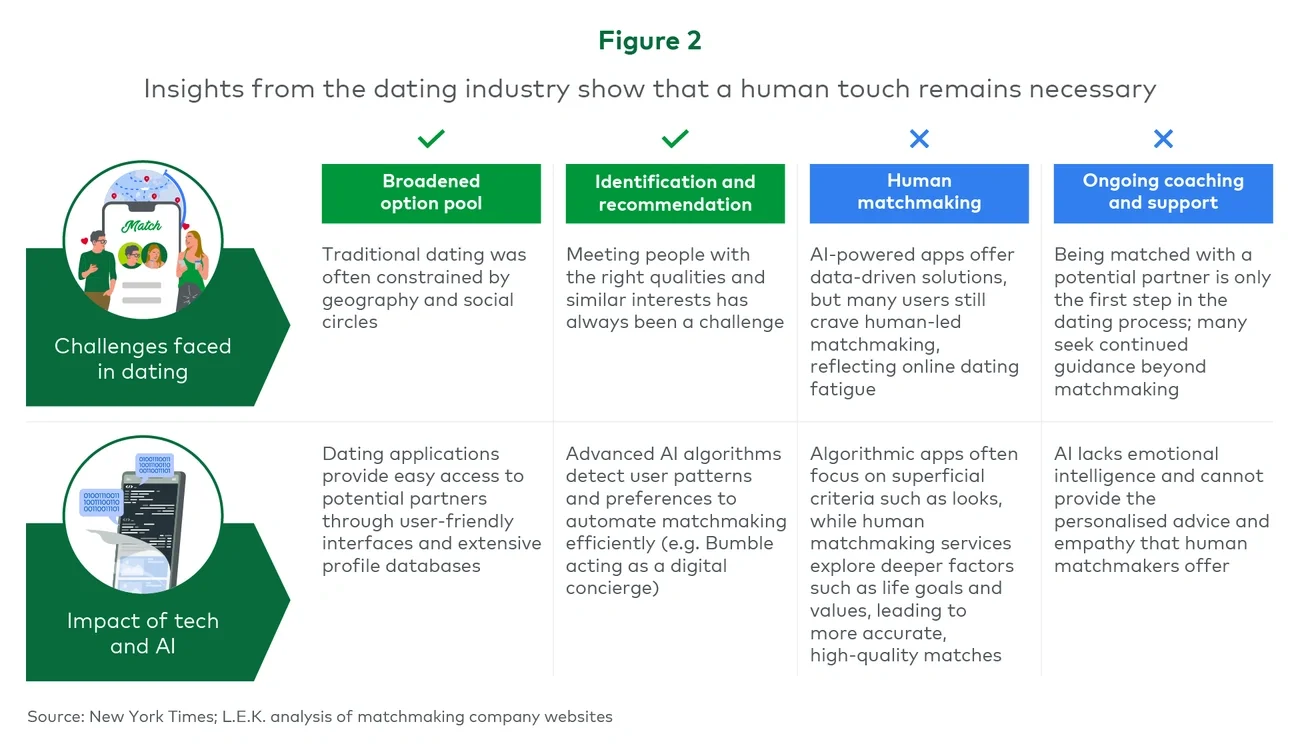
Online dating platforms show a similar pattern. Algorithms broaden the pool of potential matches and suggest likely fits, akin to how AI assists in initial candidate filtering. Yet people still seek empathy, intuition and personal understanding to form meaningful connections. 

Similarly, while AI-driven recruitment tools handle initial screening and recommendations, organisations rely on human advisers to interpret intangible qualities like leadership potential, cultural compatibility and long-term impact. Technology refines the options; human insight ensures enduring alignment (see Figure 2).

Image
Figure 2. Insights from the dating industry show that a human touch remains necessary
Image
Figure 2. Insights from the dating industry show that a human touch remains necessary

Relationships remain key, especially in executive recruitment

Automation significantly impacts high-volume recruitment, where large candidate pools benefit from rapid, algorithmic filtering. By contrast, senior executive and board-level searches remain deeply relationship driven. These roles depend on discretion, trusted networks and the nuanced evaluation of leadership qualities that algorithms cannot fully capture. 

However, AI is playing a growing role in leadership assessment and candidate benchmarking, enhancing the process rather than replacing human judgement. At this level, technology assists with data gathering and initial assessments, but the final decision still hinges on an adviser’s ability to align talent with strategic priorities, cultural fit and long-term organisational success.

The growing role of technology

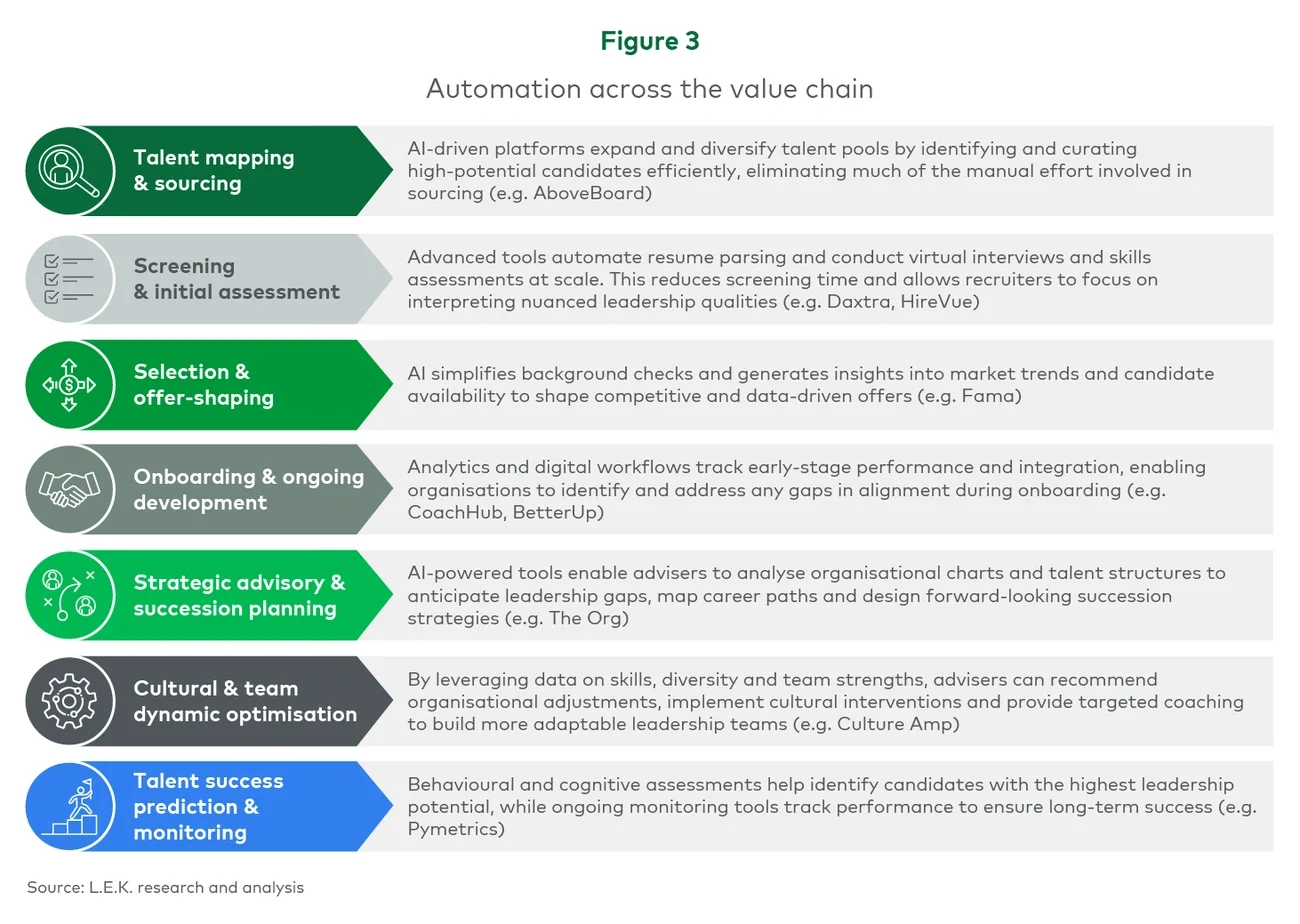
Recruitment comprises multiple steps: mapping talent markets, screening candidates, shaping offers and nurturing long-term development. As technology touches each phase, it automates routine tasks and injects data-driven rigor, allowing advisers to concentrate on strategic guidance, cultural alignment and forward-looking leadership planning.

In this expanded model, technology underpins not only efficiency but also strategic foresight and long-term organisational health. Recruiters move from reactive problem-solvers to proactive architects of leadership ecosystems (see Figure 3).

Image
Figure 3. Automation across the value chain
Image
Figure 3. Automation across the value chain

In-house capabilities are growing

Meanwhile, in-house teams are becoming more capable of leveraging the same technology. Many searches, especially at mid-levels, can now be handled efficiently and cost-effectively in-house. 

“In-house teams are a huge threat,” noted one industry leader, “you can hire a Head of Talent and pay them the equivalent of one search with an external company, so in-house you could even do five searches for the price of one.”

However, in-house teams face clear limitations when it comes to the most complex and high-stakes leadership appointments. Senior roles often require discretion, external market benchmarks and the nuanced assessment of leadership fit that external advisers provide. As one executive observed, “those teams would never do board of directors or CEO search […] it’s relationship driven and AI won’t replace that.”

Technology is narrowing the capability gap between in-house teams and external search firms, enabling internal recruiters to handle more searches autonomously. However, for highly specialised or sensitive leadership hires, many organisations continue to partner with external advisers who provide market intelligence, benchmarking data and discreet candidate outreach. External firms will also have wider networks, especially over time as the in-house team’s Rolodex goes stale.

Opportunities to thrive in this tech-driven era

The way recruiters create value is changing – narrowing in recruitment and broadening into other related services. The infusion of AI, analytics and digital platforms doesn’t overshadow human skill. Instead, it highlights what exceptional advisers do best: interpret subtle signals, align hires with broader strategic goals and nurture leadership talent for sustained impact. 

By streamlining the transactional elements of recruitment, technology creates space for deeper engagement, helping recruiters guide clients through complex decisions and shape leadership teams that endure and evolve.

Far from becoming obsolete, advisers who embrace technology become more valuable partners. They focus on what truly differentiates top-tier recruitment: cultural insight, strategic alignment and the long-term viability of chosen leaders. 

In this new landscape, human expertise and AI-enabled efficiency form a powerful combination that leads to stronger, more resilient organisations. To find out more, please contact one of the team. 

L.E.K. Consulting is a registered trademark of L.E.K. Consulting LLC. All other products and brands mentioned in this document are properties of their respective owners. © 2025 L.E.K. Consulting LLC

English

AI Integration in Education: Building a Future-Ready Curriculum

March 31, 2025

AI literacy is essential for the next generation. A future-ready curriculum must go beyond technical skills, fostering critical thinking, adaptability and collaboration across disciplines. Aakansha Sethi, Partner at L.E.K.'s Global Education Practice, and Krishnan Gopi, a digital transformation leader, discuss how education systems can equip students with the skills they need in an AI-powered world.

Watch now to learn more.

L.E.K. Consulting is a registered trademark of L.E.K. Consulting LLC. All other products and brands mentioned in this document are properties of their respective owners. © 2025 L.E.K. Consulting LLC 

English

School of the Future: AI-Driven Transformation

March 27, 2025

As AI reshapes education, students will have unprecedented choice over when, where, how and from whom they learn. Aakansha Sethi, Partner at L.E.K.'s Global Education Practice, and Krishnan Gopi, a digital transformation leader, examine how AI is transforming education systems and what this shift means for institutions, educators and learners.

Watch now to explore the next phase of AI-driven education.

L.E.K. Consulting is a registered trademark of L.E.K. Consulting LLC. All other products and brands mentioned in this document are properties of their respective owners. © 2025 L.E.K. Consulting LLC

English

Bridging the Gaps in Education with AI

March 27, 2025

AI is revolutionizing education by personalizing learning, modernizing assessments and reducing administrative burdens. In this discussion, Aakansha Sethi, Partner at L.E.K.'s Global Education Practice, and Krishnan Gopi, a digital transformation leader, explore how AI can bridge the gaps in education and enhance student outcomes.

Watch now to gain insights into the future of AI-driven learning.

L.E.K. Consulting is a registered trademark of L.E.K. Consulting LLC. All other products and brands mentioned in this document are properties of their respective owners. © 2025 L.E.K. Consulting LLC

English

Proving AI’s Value in Business With Effective Change Management

March 19, 2025

Organisations worldwide are converging on 2025 as the pivotal moment when AI must convert hype into measurable returns. A key success factor lies in how companies orchestrate change management, ensuring AI initiatives are purposefully aligned with strategic goals and earn genuine buy-in from everyone involved. This alignment is what bridges the AI Delta – the gap between success with AI and value loss from poor execution.

Understanding the AI Delta

The AI Delta stems from a fundamental misalignment between AI adoption and business objectives. Companies often invest in AI but fail to integrate it effectively, leading to underutilised capabilities, unfulfilled expectations and missed ROI. 

Without strong change management, AI risks becoming a disjointed initiative rather than a catalyst for transformation. Bridging this gap requires a structured approach that prioritises both technical implementation and the human factors essential for adoption.

Addressing resistance to AI

Change management is especially vital in addressing some of the biggest challenges associated with AI adoption. Resistance often stems from fears of job displacement or distrust in data privacy measures. Employees need more than just reassurance; they require practical upskilling – comprehensive training on AI fundamentals, data analysis and emerging tools – to feel confident and motivated to embrace new technology. 

Resistance to AI adoption isn’t just about job security fears. Executives may hesitate due to unclear ROI, while employees might struggle with unfamiliar tools. Organisational silos can also slow adoption, as different departments fail to align on AI-driven processes. Addressing these concerns requires proactive change management that tailors messaging and training to different stakeholder groups.

Additionally, placing ethics at the centre of AI programmes is non-negotiable. By enacting clear governance frameworks and tackling data biases head-on, leaders can foster a culture of transparency and mutual trust with stakeholders.

Ethical AI and governance mechanisms

Ethical AI implementation hinges on three core pillars: 

  • Transparency: Clear communication on AI’s decision-making process to build trust
  • Accountability: Defined roles for monitoring AI outputs and ensuring responsible usage
  • Fairness: Proactive steps to detect and mitigate biases in AI models, preventing unintended discrimination

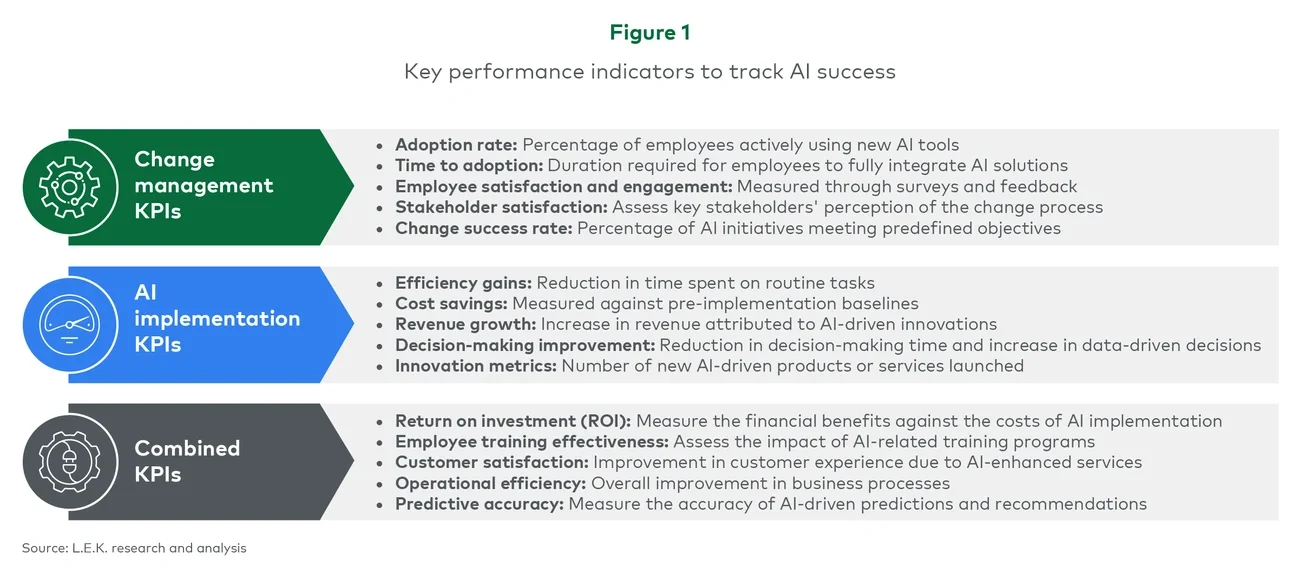
Critically, organisations must measure the difference AI makes (see Figure 1). Key indicators of success include the speed and extent of employee uptake, the overall efficiency gains achieved and any jump in data-driven decision-making. 

Cost savings against pre-implementation benchmarks and tangible revenue boosts from AI-driven products also speak volumes about how effectively teams are capitalising on automation and insights.

Image
Figure 1. Key performance indicators to track AI success
Image
Figure 1. Key performance indicators to track AI success

Measuring AI’s business impact

Tracking KPIs such as delivery time and revenue impact ensures AI initiatives remain aligned with strategic goals. For instance, a high adoption rate signals strong change management, while efficiency improvements reflect AI’s real contribution to operations. 

Companies should regularly assess whether these improvements are truly reshaping employee engagement, stakeholder satisfaction and, ultimately, long-term innovation capacity.

Research suggests that 63% of organisations using AI at the business-unit level see revenue increases, and nearly half report cost savings – yet skills gaps remain a significant barrier. In fact, 62% of workers feel unprepared to use AI effectively. These figures underscore why robust change management, rooted in transparent communications, continuous learning and strategic alignment, offers such a substantial competitive edge.

By creating an environment that balances innovation with strategic execution, organisations can ensure 2025 becomes a milestone of success. 

How L.E.K. can help

Over the next year, the AI Delta will widen between those who merely experiment with AI and those who drive true transformation. L.E.K. helps businesses bridge this gap through strategic change management support. 

Contact us to explore how we can help your firm on its AI adoption journey.

Want to find out more about why 2025 is the year for AI to deliver real and measurable value across all industries? Discover sector-specific insights in L.E.K.’s Look Forward 2025 campaign.

L.E.K. Consulting is a registered trademark of L.E.K. Consulting LLC. All other products and brands mentioned in this document are properties of their respective owners. © 2025 L.E.K. Consulting LLC 

English
Executive Insights

The Future of Animal Health: Strategic Lessons from Human Healthcare

March 17, 2025

Key takeaways

Animal health is at a turning point, as rising pet ownership, the humanisation of companion animals and sustainability pressures in livestock drive industry growth and reshape market dynamics.

Advances in vaccines, diagnostics and AI-driven tools will enable more effective disease prevention, earlier diagnosis and improved treatment options across both companion and livestock segments. 

Companies are leveraging M&A, divestments and R&D investment to strengthen portfolios, drive innovation and maintain a competitive edge.

Stricter oversight of antibiotics and sustainability is reshaping product development, while AI, telemedicine and digital health solutions are enhancing efficiency and expanding access to care. 

The human health industry has undergone a wave of transformation over the past decade, powered by AI-driven drug discovery, digital therapeutics and precision medicine. These innovations are not only revolutionising patient care but also reshaping market dynamics, compelling companies to rethink their strategies.  

Now, a similar shift is beginning in animal health, spurred by increasing pet ownership, sustainability demands and technological advances. The question is no longer whether animal health will follow human healthcare’s trajectory, but how quickly, and who will lead this transformation.

This Executive Insights explores the key drivers reshaping animal health, their implications for the industry’s future and valuable insights drawn from innovations in human health.

Key drivers of change in animal health

The animal health industry is at a turning point, driven by evolving market dynamics, shifting consumer attitudes and growing demands for innovation across both companion and livestock segments. We unpack the key drivers reshaping the industry and highlight the opportunities they present.

The animal health market is expanding, with significant variations across key categories: (i) companion animals; and within livestock: (ii) swine; (iii) poultry; and (iv) ruminants.  

  • Companion animals: Increasing and ageing pet population, pet humanisation, rising disposable incomes, increasing penetration of pet insurance, and advanced therapeutics have propelled growth.
  • Swine: Growth is moderate but steady, driven by rising pork consumption in emerging markets and increasing focus on disease prevention.
  • Poultry: Expansion in bio-poultry (sustainable farming practices) is a notable trend, aligning with demand for healthier and environmentally friendly products.
  • Ruminants: The market remains stable but comparatively slow-growing due to cost sensitivity and fewer innovations targeting this segment.

Companion animals are driving most of this expansion, fuelled by increased pet ownership and higher spending per pet. L.E.K. forecasts sustained momentum in the companion animal segment, with a projected 6-8% annual growth rate, outpacing livestock categories and pushing it to account for over half of the total animal health market.  

Demographic and market shifts

Companion

Demographic changes are redefining the animal health landscape. Millennial and Gen Z pet owners account for a growing portion of the companion animal market, with these groups representing over 50% of pet owners in the U.S. and Western Europe. These younger consumers are increasingly viewing pets as family members and are therefore willing to spend more on advanced healthcare and wellness products.

Additionally, an ageing pet population is increasing spending and driving demand for advanced healthcare, such as diagnostics, vaccines and biologics. New therapies are addressing a range of disease areas, including neurological and behavioural conditions like separation anxiety. Chronic diseases, such as diabetes, are becoming more prevalent due to the ageing pet population. There is also increasing interest in wellness products, including dietary supplements.

Livestock

In the livestock sector, sustainability and animal welfare are becoming increasingly influential. This is, in part, driven by governments and non-governmental organisations increasing regulatory policies, investment and incentives for healthier and more sustainable livestock practices. This has accelerated investments in antibiotic alternatives and eco-friendly vaccines, among others. Additionally, global population growth and the ever-present needs for efficacious, low-cost products and reliable supply chains continue to influence the market.

Unmet needs across segments

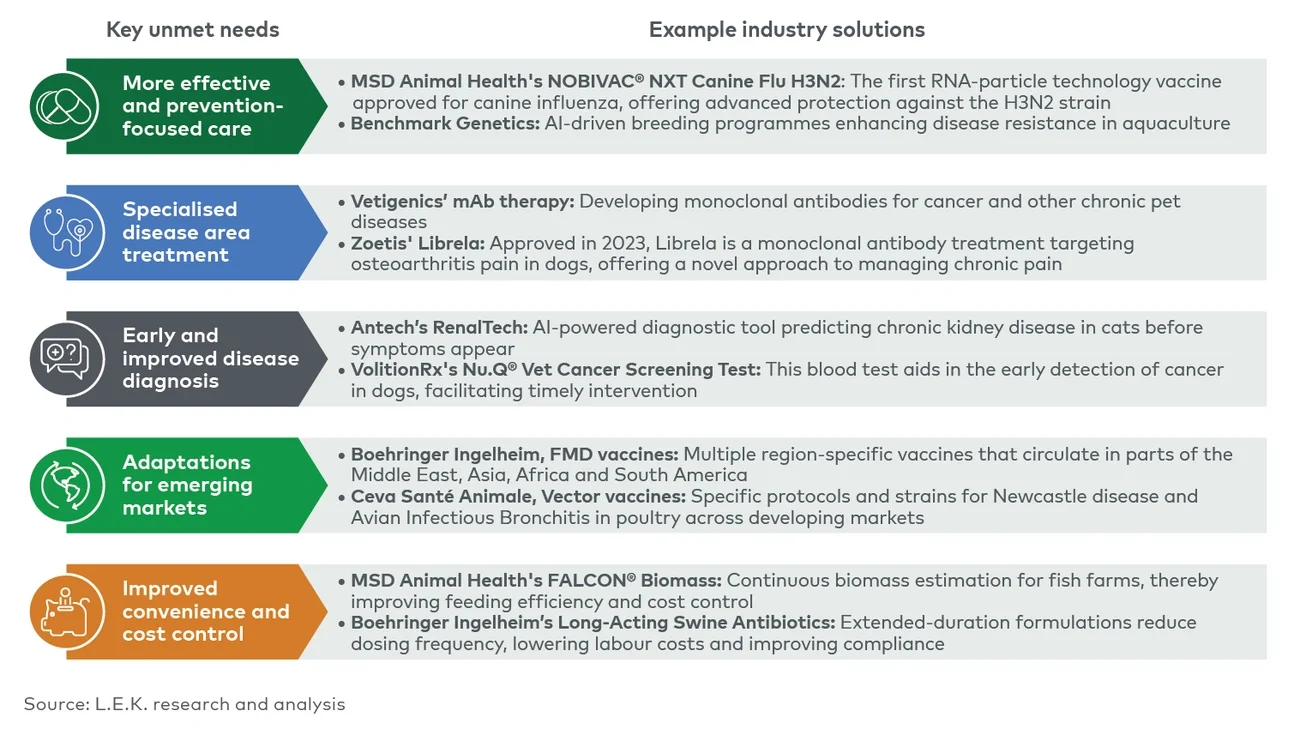
The evolving field of animal health has several critical gaps that offer opportunities for innovation and investment. Addressing these will be key to driving long-term growth and improving animal care in both companion and livestock sectors (see Figure 1). 

Figure 1

Key unmet needs and example industry solutions in animal health

Image
Key unmet needs and example industry solutions in animal health

Figure 1

Key unmet needs and example industry solutions in animal health

Image
Key unmet needs and example industry solutions in animal health

1. More effective and prevention-focused care

Preventive solutions are becoming a priority as reliance on traditional treatments, such as antibiotics, declines. Advances in vaccines, biologics and immunotherapies are enabling earlier disease intervention and reducing the need for reactive treatments. Improving the efficacy and duration of disease prevention tools will be essential, particularly in livestock farming, where disease outbreaks can have devastating financial and operational consequences. Investment in novel technologies, such as mRNA vaccines and AI-assisted vaccine development, is accelerating progress in this area.

2. Specialised disease area treatment

There is a growing need for specialised treatments in areas that have historically been underserved, such as cardiology, nephrology and behavioural health. Companion animals, in particular, are living longer, driving demand for chronic disease management solutions similar to those seen in human healthcare. Meanwhile, emerging advanced therapies, including monoclonal antibodies and gene editing technologies, are being explored as potential breakthroughs in complex disease treatment. As these therapies advance, their accessibility and affordability will be key to their widespread adoption in veterinary medicine.

3. Early and improved disease diagnosis

Improved diagnostics are essential for enabling earlier disease detection and more precise treatment strategies. AI-powered imaging, rapid point-of-care testing and genetic profiling are transforming diagnostics, allowing veterinarians to tailor treatments to individual animals. This shift towards more targeted therapies aligns with trends in human healthcare and presents new opportunities for companies in this space. Enhanced access to affordable and efficient diagnostics will be particularly impactful in livestock, where disease surveillance is critical to herd health management and productivity.

4. Adaptations for emerging markets

Emerging markets face unique challenges, including limited access to advanced animal health solutions and region-specific disease burdens. To address these needs, companies are increasingly investing in localised vaccine production, temperature-stable formulations and cost-effective treatment options tailored to regional demands. By expanding manufacturing capabilities and developing solutions adapted to specific geographies, the industry can improve animal health outcomes in high-growth markets, particularly in Latin America and Asia.

5. Improved convenience and cost control

Economic pressures on livestock producers are driving demand for solutions that reduce costs and streamline operations. Broad-spectrum treatment portfolios, combination therapies, fixed-dose vaccines, and species-optimised routes of administration are helping to simplify disease management while minimising administration costs. Additionally, innovations in supply chain optimisation and digital health tools are enhancing efficiency in animal health product procurement and usage. As cost pressures persist, solutions that offer both convenience and financial sustainability will play a crucial role in shaping the future of the industry.

Implications for the future of animal health

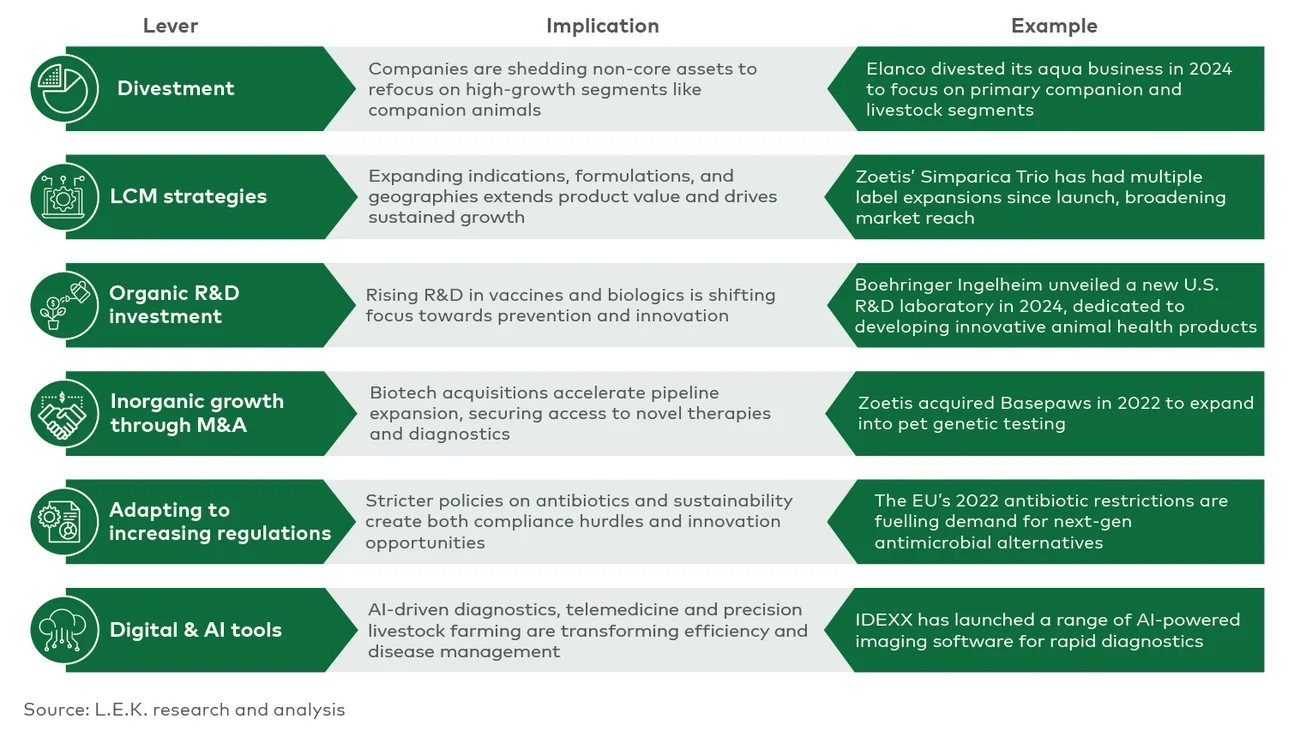
The animal health industry is evolving rapidly, shaped by strategic shifts, technological advancements and regulatory pressures. Several key levers will define future opportunities, drawing parallels to transformations already seen in human health (see Figure 2). Companies that proactively utilise these will be best positioned for long-term success. 

Figure 2

Investment and innovation levers shaping the future of animal health

Image
Investment and innovation levers shaping the future of animal health

Figure 2

Investment and innovation levers shaping the future of animal health

Image
Investment and innovation levers shaping the future of animal health

1. Strategic divestments

As companies refine their strategic priorities, divestments have become an important tool for optimising portfolios and refocusing on high-growth areas. For example, Zoetis sold its medicated feed additive portfolio to Phibro Animal Health for $350 million, allowing it to focus on core areas. These moves mirror trends in human pharmaceuticals, where divestments are often used to reallocate resources to high-innovation segments. 

In the future, we may see further rationalisation in animal health, particularly in lower-growth sectors such as ruminants or commoditised livestock pharmaceuticals, as companies double down on innovation-driven or companion animal segments. This also creates opportunities for industry players and investors to acquire assets, enabling market consolidation, cross-species or species-specific portfolio expansion, geographic growth and cost optimisation through streamlined sales channels, supply chains and operations.

2. Lifecycle management

Maximising the lifecycle of existing products has long been a critical strategy in pharmaceuticals, and this approach is becoming increasingly relevant in animal health. Companies are extending product value through geographic expansions, new formulations and multi-species approvals. For instance, Elanco’s expansion of the Credelio parasiticide franchise to encompass a broader range of indications, and species-specific variations, has allowed the company to broaden its market and propel growth.  

As competition increases, lifecycle management will be essential for animal health companies to extract greater long-term value from their R&D investments. Future strategies may include multi-species bundling, fixed-dose combinations, and reformulations that improve compliance and ease of administration.

3. Organic R&D investment

The animal health industry has historically lagged human pharmaceuticals in R&D intensity, with leading players investing 8-12% of revenue compared to 20-25%. However, a shift is underway, with increasing investment in novel modalities such as mRNA vaccines and monoclonal antibodies. Boehringer Ingelheim’s recent opening of a state-of-the-art late-stage R&D lab in the U.S. underscores the industry’s growing focus on cutting-edge innovation.  

As demand for advanced therapies rises, we expect to see further increases in R&D spending, particularly in diagnostics, disease prevention and targeted biologics.

4. M&A and partnerships

With valuations in human biopharma cooling after years of high multiples, investors are increasingly looking at animal health as a high-margin, high-growth alternative. The sector’s fragmentation makes it ripe for consolidation, particularly in diagnostics, specialty biologics and precision livestock farming technologies.  

Large players are looking to biotech firms for novel platforms and disruptive technologies, much like in human health. Zoetis’ acquisition of antibody biotech adivo in 2023, and Boehringer Ingelheim’s acquisition of chronic disease vaccine biotech Saiba Animal Health in 2024 illustrate how established companies are leveraging M&A to access innovation and expand their portfolios. Additionally, growing interest in precision livestock farming and digital therapeutics is fuelling further deal activity.  

Looking ahead, we anticipate continued consolidation, particularly in biotech, diagnostics and digital health, as companies seek to accelerate R&D pipelines and differentiate their portfolios. There is also potential for institutional investors to execute a ‘buy and build’ strategy by exploiting consolidation opportunities in the long tail of animal health companies, outside of the market leaders.

5. Regulatory landscape

Governments and regulatory agencies are tightening oversight of veterinary medicines, with a particular focus on antibiotic use and sustainability. The EU’s 2022 regulations restricting prophylactic antibiotic use in livestock and the U.S. FDA’s increased scrutiny of antimicrobial stewardship are reshaping the competitive landscape.  

While stricter regulations can pose hurdles for market access, they also create opportunities for companies investing in alternatives, such as vaccines, probiotics and precision therapeutics. In emerging markets, regulatory frameworks are evolving rapidly, with governments in Asia and Latin America incentivising local production and innovation.  

Companies that stay ahead of these regulatory shifts and invest in compliant, next-generation solutions will gain a competitive edge or provide attractive exit opportunities to larger players.

6. Digital and AI-driven solutions

The integration of digital technologies and AI is reshaping diagnostics, treatment and veterinary workflows. AI-powered diagnostic tools, telemedicine platforms and precision herd management systems are gaining traction, improving efficiency and access to care. Zoetis’ Vetscan Imagyst diagnostic tool is an example of how AI is being leveraged to support veterinarians in delivering expert-level results in minutes.  

Meanwhile, wearable health monitoring devices for livestock and companion animals are enabling real-time health tracking and predictive analytics. As veterinary practices consolidate and operational efficiency becomes a priority, digital solutions will continue to expand, providing new avenues for data-driven decision-making and improved animal health outcomes.

Conclusion

The animal health industry stands on the cusp of transformative change, and companies must act decisively to stay ahead. L.E.K.’s strategic analysis underscores that those who fail to adapt risk obsolescence, while those that embrace AI, biologics and sustainability-driven innovations will emerge as industry leaders.  

Drawing lessons from the evolution of human healthcare, animal health companies have the opportunity to drive meaningful change across the entire ecosystem — addressing unmet needs, improving efficiency and unlocking new revenue streams. These strategies not only create long-term competitive advantage for companies but also open new avenues for investors looking to capitalise on the sector’s momentum.  

Indeed, the sector’s unique blend of stability (recurring veterinary care) and disruption (biotech-driven breakthroughs) presents rare opportunities for both short-term gains and long-term value creation.

If you’d like to discuss growth opportunities further, reach out to the team.

L.E.K. Consulting is a registered trademark of L.E.K. Consulting LLC. All other products and brands mentioned in this document are properties of their respective owners. © 2025 L.E.K. Consulting LLC 

Questions about our latest thinking?

English

Elevating B2B Digital Commerce

February 10, 2025

In this episode, we explore the evolving landscape of B2B digital commerce, focusing on its critical role in contemporary business strategies. Host Gavin McGrath is joined by Corey Highfield from L.E.K. Consulting and Jared Abelson from Simpson Strong-Tie to discuss the importance of digital strategies, the common barriers to adoption, and the steps for successful implementation. Our speakers also explore the nuances of maintaining brand integrity, the significance of data management, and the essentials of internal and external communication in B2B digital commerce. 

Key Points/Topics Covered:

  • The increasing importance of digital strategies for B2B commerce, driven by a shift in buyer behaviours.
  • Common barriers to effective digital strategy adoption, including pricing integrity and digital immaturity.
  • Importance of data management and foundational infrastructure for successful digital initiatives.
  • The role of clear internal and external communication in rolling out B2B digital commerce strategies.
  • Strategies for managing reseller programs and maintaining consistent product information across channels. 

L.E.K. Consulting is a registered trademark of L.E.K. Consulting LLC. All other products and brands mentioned in this document are properties of their respective owners. © 2025 L.E.K. Consulting LLC

Read the full transcript below

Speaker 1:
Welcome to Insight Exchange, presented by L.E.K Consulting, a global strategy consultancy that helps business leaders seize competitive advantage and amplify growth. Insight Exchange is our forum dedicated to the free, open, and unbiased exchange of the insights and ideas that are driving business into the future. We exchange insights with the brightest minds of the day, the most daring innovators, and the doers who are right now rebuilding the world around us.

Gavin McGrath:
The internet is here to stay. Today we're focusing on the evolving landscape of B2B digital commerce with exclusive insights from L.E.K Consulting. I'm Gavin McGrath, partner and managing director at L.E.K Consulting, where I lead strategy and advisory work as part of our digital practice. Coming up, you'll hear a discussion on the importance of digital commerce strategies in B2B sectors, common barriers and successful execution techniques. To provide insights on these topics, let's welcome our experts, Corey Highfield from L.E.K Consulting and Jared Abelson from Simpson Strong Tie. Would you please each take a moment to introduce yourselves?

Corey Highfield:
Thank you Gavin. And hello everybody. My name is Corey Highfield and I'm a partner in L.E.K.'s industrials practice that focuses on building and construction and the crossover of digital. So I spend a lot of my time in the digital commerce space, largely B2B as you think about industrials and building construction more specifically, and I'm crossed over with Gavin and Jared on this topic more specifically a few times in our past.

Jared Abelson:
Thanks, Gavin and Corey. I'm Jared Abelson. I head up the e-business department for Simpson Strong Tie. We're a structural engineer building products company. We've been in the industry for 70 plus years. Probably the building you're in has some of our product in it. We make the metal connectors that hold all the wood together. We've since branched out at many other product lines. I oversee the e-business department, which is marketplace management, our authorized online reseller program, our B2B customer portal, which is our commerce site for B2B, e-commerce, marketing through the channels and digital support.

Gavin McGrath:
Thanks to you both for being here. Well, let's start with this. What makes digital strategies crucial for B2B commerce success? A lot of people seem to recognize the role of the digital channel, but what makes this critical for action?

Jared Abelson:
Well, I'll start out with the stat, which is probably the first and only stat that I'll use this entire podcast, but it's really critical as a B2B manufacturer, 55% of B2B buyers are now actually transacting through digital channels. So that's all the way from 98% of search, product search starts online, and now half of that is being transacted without a rep or anybody in that decision tree. So if you're not shoppable online, you're going to cease to exist, especially as the demographics start shifting younger. Their preferred channel is online. They don't want to call in, they don't want to email. They want to do everything themselves at their time. Also, your competitors are online. You may not even know who these competitors are because they're not the traditional ones you're used to competing with. Amazon and other marketplaces made it really easy for knockoff companies and offshore manufacturers to come in and create marketplace-only brands.

Gavin McGrath:
What are the most common barriers you see Corey? Things that hinder effective digital strategy adoption.

Corey Highfield:
Question Gavin, because there's a lot that can get in the way for companies adopting and driving forward their digital strategy. I think there's four that I would highlight just at a top level. One, pricing and integrity. Two, digital maturity or digital immaturity. Three, pervasiveness of digital stakeholders that impact the brand or the image of the company. And then lastly, product information consistency. I'll just touch on each of these quickly. So as we think about pricing integrity, the ability to really maintain price across channels is critical to avoid that race to the bottom, which you can see on some online channels, and that will ultimately undermine both physical store sales as well as other online channels if you're selling through multiple sites. So having consistency here is key to maintaining customer trust and sustaining high levels of profitability. Next, as you think about digital immaturity, what you see is companies that are digitally immature, they really miss out on significant growth.

As Jared mentioned. That's where the puck is moving. That's where competitors are going, and that's where your customers want to be. So when we do see digital mature companies acting on their strategies and doubling down, they're able to capture significant revenue growth while those that are slow, delayed or ignore digital strategies really lag behind with outdated processes and more limited market reach. So there's a clear competitive advantage to being a digital immature business. You can lead that digital transformation and you're more likely to become a leader in your space or a leader in your sector. Next, just quickly on brand image, when you're online or in the e-commerce world, there's a range of digital stakeholders that can create challenges to maintaining that consistent brand image. Managing these range of stakeholders is key to having a consistent, reliable, reputable brand image among customers and your distribution partners.

So any inconsistencies that you have online can quickly escalate and really hinder or harm customer trust. So you really need to be proactive in managing this and really leverage your digital stakeholders so that you're enhancing your reach and your capabilities, but it's going to require some more meticulous or more measured coordination to keep that brand image positive and unified across all of your channels online. Then lastly, product information consistency. This is one where a customer comes across different or varying levels of product information by channel, whether online or in store, and that's going to create confusion, frustration, and again kind of decreases that trust in the brand. So really what you want to do is limit these discrepancies, which can cause supply chain issues. They can cause challenges to business relationships. They can harm that brand trust and make sure that the information around your product or your SKUs is consistent across all channels online and in store.

Jared Abelson:
Just to echo some of those points, I don't know who needs to hear this, whatever company's listening, data, data is always going to be your problem. You have to build it into your structure of your company and it all starts with data. You're going to have the greatest pie in the sky idea of what you want to do, give you the biggest opportunity, but if you haven't taken the initial groundwork steps to get your data cleaned up and complete and organized, you're just going to triple or quadruple the cost and difficulty of whatever project's downstream. It's boring. It doesn't get a lot of attention, but data, data, data.

Gavin McGrath:
Jared, can you build on that? As you think about structuring investments and unlocking the points, Corey, and you were just outlining, how do you think about infrastructure development and sort of actioning what you can do with that data?

Jared Abelson:
Yeah, again, you have to do the big boring stuff, which is data infrastructure to get yourself in place. Ultimately, B2B is lagging behind B2C, it's catching up pretty quickly. I think B2B has learned a lot of lessons and there's a lot of opportunity with just blocking and tackling projects. We've noticed we're really able to support our customers at a pretty high level with a lot of just the basics. Everybody wants to talk about AI and all that, where it's coming and what's our AI strategy. That's great. You should have an idea, but don't undersell what you can get done putting in the foundation to get there eventually. You'll see a lot of wins. As we go in and we talk to some bigger customers, we always grade ourselves pretty harshly and think we're so far behind, but the conversations we have with customers, we go in, I'm like, "hey, we can provide you our whole product catalog digitally. Here's a login." Or "hey, we can set up an API to send our product catalog to your system, their jaws drop. There's a lot of foundational wins you can get.

Gavin McGrath:
Well, I'll vouch for you that you're not behind based on everything I know.

Jared Abelson:
Appreciate that.

Gavin McGrath:
Corey, what are the essential steps for planning an investment in B2B digital commerce?

Corey Highfield:
I really like Jared's last answer of one, we don't need to do everything for everybody. So as I think about planning an investment for digital commerce in the B2B setting, it's really tailoring that to your channel and your customer needs, might not be the need that we need to accept Bitcoin, right? But we really need to tailor that experience and that channel to support the business objectives of the customer, to improve that customer experience, to drive satisfaction and to drive loyalty. So really tailoring, especially when you're building an omnichannel strategy, you're tailoring that experience for the needs of the customer within that specific channel.

Jared Abelson:
E-commerce is not one size fits all. You really have to look at it as building a strategy that fits your analog business. This is even more important when you look at more legacy companies like us. We've been around for a long time, over 70 years, and it sounds sort of corny, but it's really the art of the science of how do you move a legacy company into this digital age while retaining what made that company great and leveraging digital to emphasize the core value props that you've had in the analog world. It's pretty easy to slap a, we need to do this, that, and the other thing onto your roadmap, but if it doesn't make sense and jive with the company and the brand, it can do a lot of damage.

Corey Highfield:
Yeah, I completely agree, Jared, and I think that gets to the point around goal definition and tracking. When you're making these investments in B2B, digital e-commerce, you really want to have clear objectives and performance targets, and they're going to be similar in terms of those broader goals that you have for your legacy or your analog business, obviously with some new metrics that you want to track online, but you need to have those signposts to really ensure that you're tailoring the strategy and it's effective as you're rolling it out.

And I think that also leads to, as you think about stakeholder engagement, really effectively communicating the benefits of this digital strategy, not only internally to your broader organization and the different business units that are part of it, but externally to your partners, to your distribution channels, to your customers, which are going to be critical to get uptick and support and momentum for your digital strategy. So by fostering that understanding and that enthusiasm, you can really drive a successful rollout and maximize the impact of your digital initiatives, which to my early point, you should be tracking and defining quite clearly as that, helps set up the strategy overall and the level of investment needed.

Jared Abelson:
I would say also if you're a company looking at what your digital strategy should be, if you haven't already done a customer journey map, that's a great place to start, really understanding the landscape of A, the market digitally and also how your customers and your customer's customers are moving their way through and making decisions along the way. We constantly are referring back to what does it look like? What is the customer experience in this part of the journey or that part of the journey, and that's where we're looking for digital opportunity of how can we surprise and delight our customers at those interactions that they're used to doing analog? Can we add value to that digitally and not just replace because we have to but really enhance that experience in those moments.

Gavin McGrath:
Jared, I should have said it earlier, but congrats by the way, on your e-commerce manufacturer of the year award from Digital Commerce 360 and the B2B E-commerce Association.

Jared Abelson:
I appreciate that. That came as a little bit of surprise. We had some tough competition, other great companies doing really good stuff. Our team was very proud of that, so thank you.

Gavin McGrath:
Like I said, [inaudible 00:14:06] good validation.

Jared Abelson:
Yep.

Gavin McGrath:
So as you think about these various stakeholders and you think about your customer stakeholders in particular, how do you think about which ones to promote to and support as part of your B2B digital commerce strategy?

Jared Abelson:
It depends on which part of the e-commerce strategy we're going to talk about, but ultimately, as a B2B player, we are not selling directly anywhere aligned except to our customer, our existing customers. So really as we think about marketplaces, since we're not selling directly, we're looking to limit the amount of resellers. We really value our partners who are playing in that space, but if we're not going to assume that sale and that relationship, we have to have a much stronger relationship with those partners that are essentially working as our proxies in there. So we're looking at narrowing that down, especially in marketplaces, you can't have 500 different resellers going around doing everything. It's pretty chaotic.

As far as customer sites, we want to support all of our customers selling their products on their own sites. That's a lot of our product data and content syndication capabilities we've built out. We want to support every one of our customers who are choosing to be our partners. That said, different levels of performance online require different level of support from the company. So we are tailoring and adjusting. We have a tiered authorized online reseller program that organizes our resource investment to each customer, and we give lots of opportunity to ensure that customers can move up and get better support. We never want to be telling a customer they can't sell our product.

Corey Highfield:
I also just thinking about that, Jared, having worked with you and the team there, it's obviously scale is a factor, but who of your partners is investing online and who has that growth trajectory that you want to support? To your point, we want to be everywhere we need to be, but also making sure that you're supporting those more digitally native and e-commerce native partners online and putting them in the right tier to be supported and highlighted.

Jared Abelson:
That's a great point. As we've gone down the road on this, we've really noticed that customers play online in a bunch of different ways, or our customers at least. There's customers who say, "hey, we just need to start, open up a website to sell our existing customers who are coming into the store because they say they want to buy it online." Cool, we definitely want to help you with that. But when it comes to how much are we going to invest, that's a pretty low investment on their end. We want to really be partnering with customers who see the opportunity and are going to grow and really manage and drive the channel forward and help us and partner with us to grow the overall business.

Gavin McGrath:
Now, great ideas are worth nothing without plans for successful execution. What role does internal or external communication play in rolling out a B2B commerce strategy?

Corey Highfield:
Well, they're both really important Gavin, you want to be able to, as I mentioned previously, communicate the right messages to the right folks and the right stakeholders both internally and externally. So as you think about internal communication, clear and consistent messaging to ensure that all departments understand the importance of your digital strategy, of your reseller program, of your B2B e-commerce initiatives, what the objectives are and how it fits and aligns with that broader corporate strategy. That will create internal alignment that then will foster collaboration and ensure everybody's working towards the same common goals. Externally, similar but slightly different. We want to make sure that we're engaging with the right partners, the right resellers, the right distribution channels, the right online, the right e-commerce sites, and providing them with the right information. So going back to the consistent product information, we want to make sure that we're giving everybody the latest and greatest and that it's consistent across all channels and we want to give them the training and support necessary for their success.

So to Jared's earlier point, making sure that we are supporting those partners of ours and helping them grow and build out their presence online. So you do that through clear guidelines, regular updates, training sessions that are really going to empower these partners to effectively represent your brand and deliver really strong and even exceptional customer experiences. What this is all going to do both internally and externally is build a cohesive partner network and support engagement online. So as you think about that partner network, you're going to have reinforcing messages between your internal stakeholders and your external partners that then will allow or uphold brand standards, deliver consistent messaging, enable and support quick adaptation to market changes, and really drive customer satisfaction and loyalty.

The engagement that you'll create will be a collaborative relationship built on trust and mutual benefit, not only between you and your partners, but also downstream to your customers or your customer's customers, as Jared was mentioning, and you can got to build in those regular feedback mechanisms, make sure there's open communication that enables that continuous evolution and adaptation to changing market dynamics and conditions. Because it's not a set it and forget it strategy. It is one that you'll continually have to refine and improve and evolve over time.

Jared Abelson:
I totally agree. When you're thinking externally, I think one of the things to keep in mind is you have to be very transparent about your intentions with your customers is you develop your strategy and I think ultimately you need to be sensitive to the position they're in. Their whole business is changing too, as they have to figure it out. Their customer needs are changing.

They may not have all the answers either, and they're just looking for a partner, and if you can go out there and just transfer [inaudible 00:20:35], hey, maybe we're going to try a few things, or this is our goal, this is what we're going after, and just being honest with them, you're going to see come back to you in spades. They'll be happy to jump in with you and help support your digital initiatives if you're just transparent. Internally, ultimately you have to be your own evangelist within your company, trying to push digital initiatives, articulate the goals, be honest with the risks. We do a lot of targeted newsletters internally and externally just about saying, this is what we're up to, this is what we're doing, this is what we're going after, and having data to back it up internally and externally.

Corey Highfield:
I think those State of the Union type communications and newsletters or whatever other format you decide to use internally, externally can be really powerful, gets everybody aligned and singing from that same songbook and knowing where we're marching and what we're marching towards.

Jared Abelson:
Yeah, we found a lot of power. Just the other year we started up a quarterly newsletter to our authorized online resellers that talks about all the new products, the new assets and content that's available, things that we're doing on social media they can co-promote, and really where we're headed, what to expect, and they love it. We've jumped then. It's opened the doors for us to co-produce other materials. A lot of our customers have their own newsletters and that has opened up the doors for us to essentially get free advertising through their networks as well.

Gavin McGrath:
What about internally as you think about management and governance, you've got your various stakeholders that you talked about getting on board and sort of keeping on board, but how do you think about maintaining things around price integrity or the governance of the actual program and sort of monitoring for success and even the data management piece that you touched on earlier, Jared?

Jared Abelson:
Well, we've become very good friends with our legal department, and I think you have to be when you're looking at online is really what external and internal customers are looking for is that decisions you're making are going to play well with existing contracts in place, and you have some ability to protect your brand and protect your resellers online as far as communication and bringing everybody in, e-commerce and digital is a team sport. You can't do anything in a silo. So we're constantly working with the larger sales team, making sure that what we're trying to push with the resellers and coordinating resellers is actually going to translate to what's happening out in the field. Especially with legacy businesses, there's a lot of tribal knowledge and perceptions that are just baked into the way the company operates, and you have to be aware that you're going in and challenging that in some way with the digital strategy.

So you have to really figure out how do you separate the wheat from the chaff of what is perceived reality and what is real opportunity, but be aware that you're going to get pushback and be prepared to debate the merits and have data to back that up internally. And if you can have a pretty coherent value proposition to the larger analog business, they'll jump right on board, especially if you're framing it of how you're supporting them. We're always saying, we don't want to replace you. We're here to help and enhance everything you guys are doing day to day.

Gavin McGrath:
Jared, you mentioned your reseller program. What have you or other companies done in your space to ensure success of those types of reseller programs?

Jared Abelson:
Again, going back to clear and transparent messaging and being very decisive with your goals and setting expectations. Again, we view it as a true partnerships with our partners. Both sides need the wind for both of us to be successful. We've invested in tools that allow us to monitor what's going on our products online so we can bring better insight into what's going on, and we've also made large investments in tools that support our online resellers, so ultimately we're just putting a lot of investment all along the channel to better understand it, size it, analyze it, and support it. There's no shortage of different ways to get involved in the digital channel.

Corey Highfield:
I'm sure you all have seen this, Jared, but I think some of the key building blocks, you need to be coordinated. That's going to get back to communication internally and externally. You need to invest or allocate resources proportionally. So that's tailoring to what we're trying to achieve, and that gets to the continuous performance evaluation. How are we tracking against our key metrics and are we investing to the right level to hit those and how are those aligned with our broader digital strategy and corporate strategy objectives? And lastly, just being adaptable and responsive, right? This is not a strategy plan that we develop and then set on a shelf for five years and dust it off and down the line and try to slightly tweak it. It needs to be continually evolved and updated as market conditions change, as new competitors come into the fold and as channel partners and resellers adapt and become more digitally native as they follow the customer base.

Jared Abelson:
Yeah, I mean, going back to your earlier point about this is not set it and forget it. I think when trying to just overall evaluate how you should play, what you should do, what you should invest in, how do you support it, you need to go in. This is not a single project that you launch, it's out there in the world and you start then your ROI calculator, seeing when you're going to get paid back on it. You're opening up an entirely new line of business. It's going to require support and maintenance, and this is just how your company's going to have to do business going forward.

Gavin McGrath:
Jared, Corey, I really appreciate the time and the thoughts from both of you. We here at L.E.K, we're happy to provide more detailed discussions on requests and invite you to connect with us to learn more about L.E.K Consulting's extensive experience in providing strategic support to businesses and investors, focusing on opportunities in digital commerce, from digital strategy adoption, and overcoming barriers, to executing digital commerce successfully, managing online reseller programs and more. Thank you for listening.

Speaker 1:
Thank you, our listeners for joining us today at the Insight Exchange presented by L.E.K Consulting. Links to resources mentioned in this podcast can be found in the show notes. Please subscribe or follow for future episodes wherever you listen to your podcasts. Also, we encourage you to submit your suggestions for future insights online at LEK.com.


English
Subscribe to