

What is premium leisure and why does it matter?
Economists have increasingly focused on the “K-shaped economy,” particularly the widening disparity between affluent and low-income consumers. While this dynamic requires airlines to compete effectively for both value-oriented and ultra-premium travelers, the often-overlooked middle of the market represents significant economic upside for commercial airlines.
A decade ago, airlines were focused on two things:
- Expanding premium and first-class cabins
- Unbundling fares to create greater flexibility around baggage, refundability and fare classes while also accelerating the rise of the ultra-low-cost carrier model
While effective, these strategies left the premium leisure segment underdefined and underinvested.
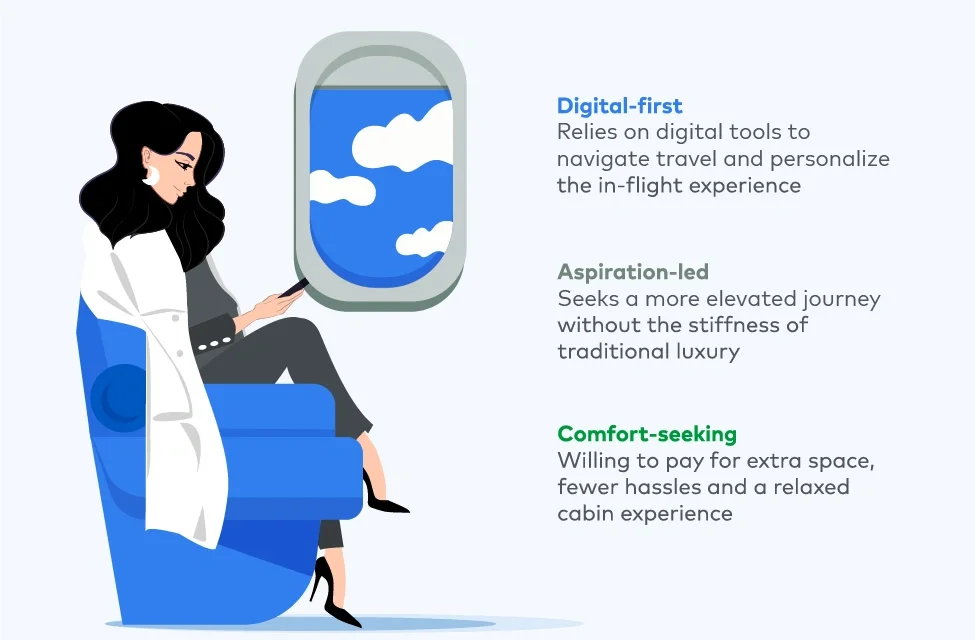
The premium leisure traveler sits between the conventional business traveler and the purely budget-driven flyer. They are often in their late 20s to mid-40s, traveling for a holiday, wedding, or family escape, and choosing premium economy or extra-legroom seating. They expect to board early to avoid the gate scrum, put on their noise-cancelling headphones and stretch out their legs with a sparkling water in hand.
These travelers value the small details that signal a frictionless experience worth paying up for: better food, more personal service, reliable Wi-Fi and a mobile app to manage the trip. They are seeking a more contemporary form of premium that feels easy, relevant and personal, without the stiffness or exclusivity that can make legacy first- or business-class experiences feel out of touch.