IT Services Landscape: 6 Key Segments for Investors

August 12, 2025

In this video, Aakash Gandhi explores the evolving landscape of independent IT service providers in Australia and New Zealand. With several assets expected to come to market over the next 12 to 24 months, private equity investors must navigate a complex and fragmented sector to uncover high-potential opportunities.

The video outlines three critical investment questions, followed by a structured overview of six core service segments, ranging from digital services and cloud consulting to cybersecurity and managed IT.

Each segment is analysed in terms of growth, margins and competitive positioning, providing a foundational lens for investors seeking resilient and scalable platforms in the region.

L.E.K. Consulting is a registered trademark of L.E.K. Consulting LLC. All other products and brands mentioned in this document are properties of their respective owners. © 2025 L.E.K. Consulting LLC

English
Image
report thumbnail

On the Cusp of a Cure: Is Asia Pacific Ready for the Precision Era? (South Korea)

August 12, 2025

The Precision Era of medicine is arriving in Asia Pacific, driven by a critical mass of innovative therapies that will redefine treatment, attract investment and improve lives. Powered by advances in diagnostics, AI and genomic technologies, precision therapies offer curative potential for diseases once deemed untreatable, ushering in a new standard of care across oncology, rare genetic disorders and beyond.

This white paper series explores Asia Pacific’s readiness for the Precision Era — the current transformative period where generically prescribed and regularly administered treatments are increasingly giving way to potentially curative therapies tailored to individuals and their disease.  

Drawing on research across more than 1,000 clinical trials across four novel technologies and four markets, we assess the clinical, economic and social benefits of precision therapies, identify systemic barriers to precision therapy adoption, provide recommendations for improvement, and assess the value of widespread adoption across Australia, China, Japan and Korea.  

The Precision Era marks a turning point for South Korea. New therapies could create over 325,000 cumulative years of life gained, save the healthcare system KRW2.2 trillion, and unlock KRW60 trillion in economic investment — supporting access, diagnostics and clinical trials, and creating 20,000 highly skilled jobs. But for the full potential to be realised, regulatory, knowledge and infrastructure barriers must be addressed.

The ‘On the Cusp of a Cure’ white paper series was supported by an advisory committee of 16 pre-eminent regional experts in precision medicine, economic and health policy, and patient experience across Australia, China, Japan and Korea. It was also sponsored by Johnson & Johnson.  

Download the PDF to discover how precision therapies can drive life-changing outcomes and sustainable growth. 


Editor’s Note: For more insights, please explore the country-focused white papers in the 'On the Cusp of a Cure: Is Asia Pacific Ready for the Precision Era?  series.


정밀 의료 사례 연구 보고서

아시아 태평양, 정밀 의료 시대를 맞을 준비가 되었는가?

아시아 태평양 지역은 이제 혁신적인 치료법의 확산과 함께 치료의 기준을 재정의하고, 투자 유치를 촉진하며, 삶의 질을 높일 수 있는 중요한 전환점에 도달하였습니다. 

진단 기술, 인공지능(AI), 유전체 분석 등 첨단 기술의 발전은 과거에는 치료가 불가능하다고 여겨졌던 질환에 대한 치료 가능성을 열어주고 있으며, 암과 희귀 유전 질환을 포함한 다양한 질환 영역에서 새로운 치료 표준을 정립해 가고 있습니다.

본 시리즈는 아시아 태평양 지역이 정밀의료 시대를 맞이할 준비가 얼마나 갖춰져 있는지를 진단하기 위해 기획되었습니다. 정밀의료 시대는 획일적인 진료 방식에서 벗어나, 환자 개개인의 유전적 특성과 질환의 특성에 기반한 맞춤형 치료가 새로운 표준으로 자리잡는 전환기입니다.

본 시리즈는 4가지 첨단 기술과 4개 주요 시장에서 진행된 1,000건 이상의 임상시험 데이터를 기반으로, 정밀 치료가 제공하는 임상적, 경제적, 사회적 효과를 종합적으로 평가합니다.
또한, 정밀 치료의 확산을 저해하는 제도적·시스템적 장애 요인을 분석하고, 이를 해소하기 위한 정책적 제언을 제시하며 호주, 중국, 일본, 한국 등 주요 국가에서 정밀 치료가 광범위하게 도입될 경우 창출될 수 있는 가치를 함께 살펴봅니다.

한국은 정밀의료 시대를 맞아 중요한 변곡점에 서 있습니다. 신규 치료법의 도입은 총 32만 5천 년에 달하는 생명 연장 효과를 가져올 수 있으며, 보건의료 재정 측면에서 약 2.2조 원의 비용 절감, 약 60조 원 규모의 경제적 투자 유발이 기대됩니다.

이러한 변화는 진단 및 임상시험 역량 강화, 의료 접근성 확대, 그리고 2만 개 이상의 고숙련 일자리 창출로 이어질 수 있습니다. 다만, 이러한 잠재력이 실질적인 성과로 이어지기 위해서는 규제, 전문 인력 확보, 인프라 구축 등에서의 구조적 과제를 해결하는 것이 필수적입니다.

‘치유의 문턱에서(On the Cusp of a Cure)’시리즈는 호주, 중국, 일본, 한국의 정밀의료, 보건경제 및 정책, 환자 경험 분야의 지역 최고 전문가 16명으로 구성된 자문 위원회의 지원 및 “존슨앤드존슨(Jonson & Johnson)” 의 후원을 통해 제작되었습니다.

PDF를 다운로드하여 정밀 치료가 가져올 획기적인 삶의 변화와 지속 가능한 성장 가능성을 직접 확인해보세요. 

L.E.K. Consulting is a registered trademark of L.E.K. Consulting LLC. All other products and brands mentioned in this document are properties of their respective owners. © 2025 L.E.K. Consulting LLC

English
Executive Insights

The True Value of Last-Mile Logistics in Healthcare

August 8, 2025

Key takeaways

Internal and third-party last-mile logistics providers transport critical materials across the care continuum to support patient care, diagnostics and administrative functions. Virtually every patient encounter depends, directly or indirectly, on last-mile logistics, yet healthcare organizations rarely assess the hidden clinical impact of poor logistics performance.

The cost of mishandled specimens alone can reach $1 million per year for an average-sized health system with three to four hospitals. When other types of remediation are included, the total financial burden grows even further.

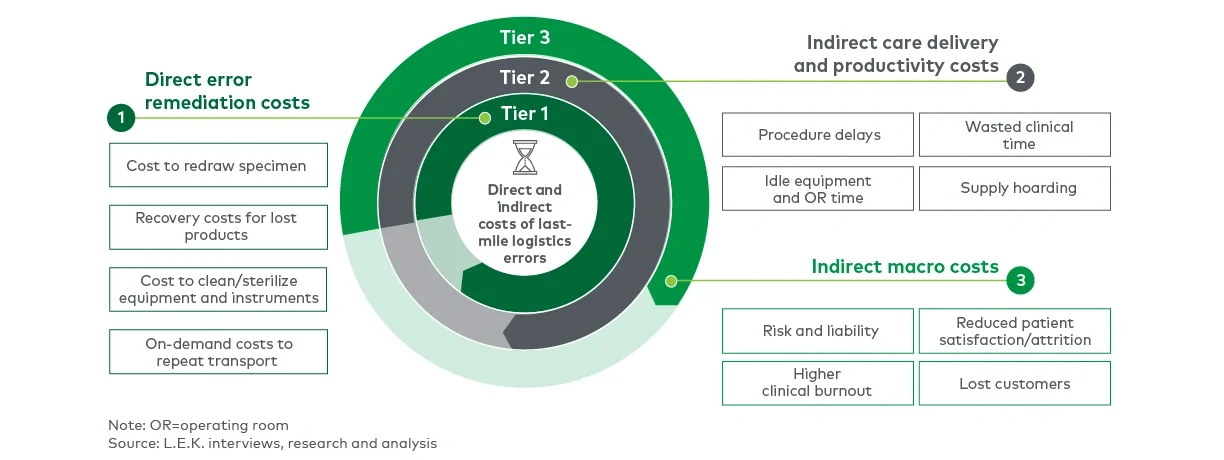
Healthcare organizations often focus only on the direct costs of logistics services, overlooking the more substantial costs that arise when failures occur. These can be grouped into three tiers: 1) direct remediation (e.g., lab redraws, supply loss), 2) clinical productivity loss (e.g., procedure delays, clinician downtime), and 3) macro impact (e.g., liability, patient or customer loss). 

In two surveys totaling approximately 660 responses, more than half of nurses reported that last-mile logistics errors had caused a delay or cancellation of at least one procedure in the past year. Each of these events carried an average cost of $4,500 and contributed to broader issues such as decreased clinician satisfaction, compromised patient experience and lost revenue. 

What role does last-mile logistics play in healthcare delivery?

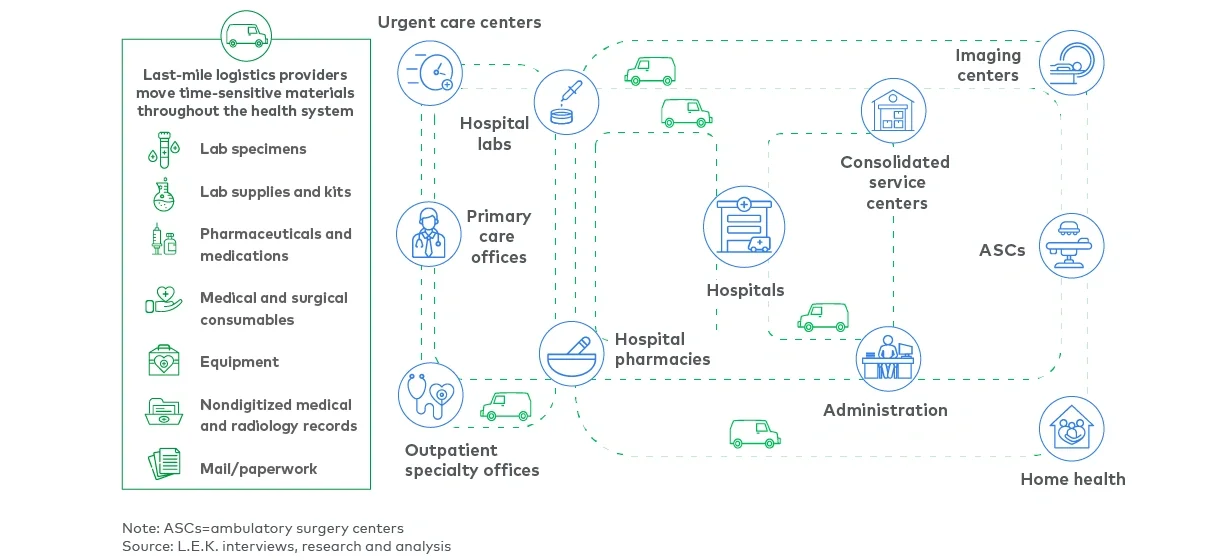
Health systems and laboratories rely on last-mile logistics providers to transport a variety of materials to and from sites of care. A typical health system delivers care across a broad continuum of sites, often numbering in the hundreds, including hospitals, labs, pharmacies and outpatient centers (e.g., ambulatory surgical centers, primary care offices, specialty offices, urgent care centers). 

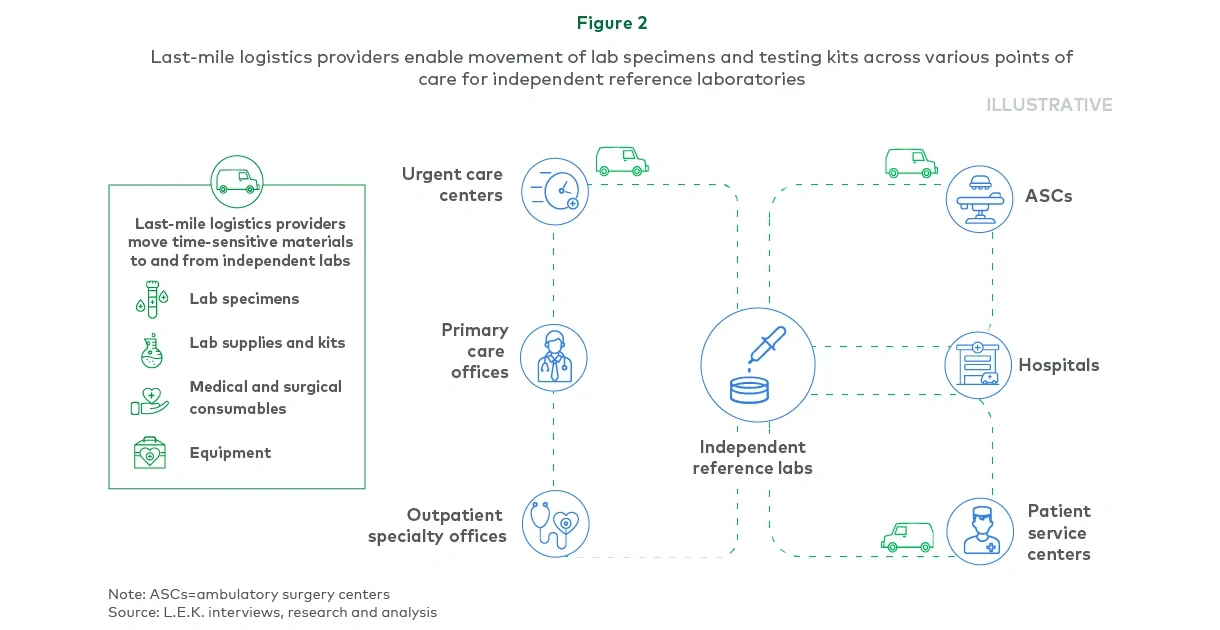
Similarly, laboratories service extensive footprints of specimen collection sites that vary in scale and urgency requirements. Across both health systems and laboratories, sites rely on the timely transport of materials to provide patient care, conduct prompt diagnostics and fulfill administrative requirements (see Figures 1 and 2 for illustrations of common sites and material flows at health systems and independent laboratories).

Providers of last-mile logistics transport both highly sensitive materials — including lab specimens and pharmaceuticals — and less-sensitive items — including consumables and paperwork. Timely and quality-driven shipping is required for lab tests to ensure accurate test results are delivered as soon as possible to inform care decisions. Medical and surgical consumables (e.g., swabs) and essential equipment (e.g., surgical tools) are transported across various sites of care to ensure punctual care delivery. Patient prescriptions and pharmaceuticals are moved between care sites and pharmacies for patient treatments and drug formulation. 

Figure 1

Last-mile logistics providers enable movement of critical materials among health system sites 

Image
Last-mile logistics providers enable movement of critical materials among health system sites

Figure 1

Last-mile logistics providers enable movement of critical materials among health system sites 

Image
Last-mile logistics providers enable movement of critical materials among health system sites

Figure 2

Last-mile logistics providers enable movement of lab specimens and testing kits across various points of care for independent reference laboratories

Image
Last-mile logistics providers enable movement of lab specimens and testing kits across various points of care for independent reference laboratories

Figure 2

Last-mile logistics providers enable movement of lab specimens and testing kits across various points of care for independent reference laboratories

Image
Last-mile logistics providers enable movement of lab specimens and testing kits across various points of care for independent reference laboratories

How does the quality of a last-mile logistics solution impact clinical care?

Any quality issue with last-mile logistics has the potential to disrupt or delay care. A delayed pharmaceutical delivery can interfere with infusion therapy. A breach in sterilization can delay an orthopedic procedure. A misplaced supply can divert clinician time from patient care.

Specimen mishandling is especially notable as a high volume of specimens are transported, by both health systems and independent laboratories. Specimen handling errors often result from human error such as storing specimens at the wrong temperature, delaying delivery or even losing an item.

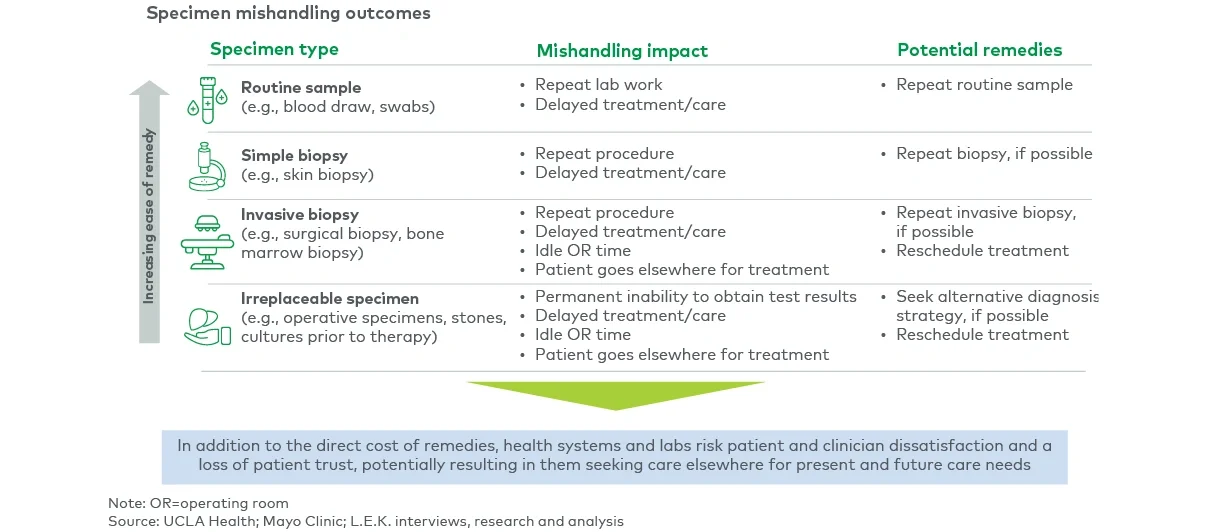
The clinical impacts of specimen mishandling range from wasteful repeat lab work to delayed patient treatment or care (e.g., postponed procedures) to even the permanent inability to obtain test results. While the mishandling of routine samples and biopsies can be corrected, patient treatment or care may be delayed because a test result informs the course of action.  

In the case of more complex samples (e.g., invasive biopsies), specimen mishandling may lead to complications such as idle operating room time or patient mistrust that could prompt them to seek treatment or services elsewhere. And, when it comes to irreplaceable specimens (e.g., operative specimens and stones), the effects of mishandling cannot be reversed, leading to a permanent limitation on care effectiveness (see Table 1 for an overview of specimen types and the impact of mishandling incidents).

Table 1

Mishandling lab specimens may impact patient care, and remedies may lead to direct costs to the health system 

Image
Mishandling lab specimens may impact patient care, and remedies may lead to direct costs to the health system

Table 1

Mishandling lab specimens may impact patient care, and remedies may lead to direct costs to the health system 

Image
Mishandling lab specimens may impact patient care, and remedies may lead to direct costs to the health system

What kinds of costs come from last-mile healthcare logistics errors?

Beyond its clinical impact, mishandling comes at a financial cost that can eat away at the bottom line. There are three tiers of costs (see Figure 3 for an illustration of the framework):

  1. Direct remediation: When an error occurs, there is often a direct cost to remediate the issue. Examples include the redraw of a specimen, the repurchase of a pharmaceutical and the resterilization of instruments.
  2. Clinical productivity loss: Last-mile logistics errors can interfere with clinical productivity. Effects vary from idle operating room time to clinical time spent on work-arounds to inefficient lab equipment usage.
  3. Macro impact: This catchall category applies to impacts that can be infrequent but meaningful, such as a liability event or customer loss. 

Figure 3

Direct and indirect costs associated with last-mile logistics errors

Image
Direct and indirect costs associated with last-mile logistics errors

Figure 3

Direct and indirect costs associated with last-mile logistics errors

Image
Direct and indirect costs associated with last-mile logistics errors

What is the magnitude of costs stemming from logistics errors?

At an aggregate level, providers and laboratories spend more on remedying logistics errors than on the cost of last-mile logistics itself. The following includes estimates of the cost effects of two particularly common forms of remediation.

Specimen recollection

As a Tier 1 cost, specimen recollection is particularly common and includes components such as clinician time and materials costs. Remediation costs can range from $350 per incident for a routine specimen (e.g., a simple blood draw) to as much as $5,000 for an invasive biopsy (e.g., a surgical biopsy).

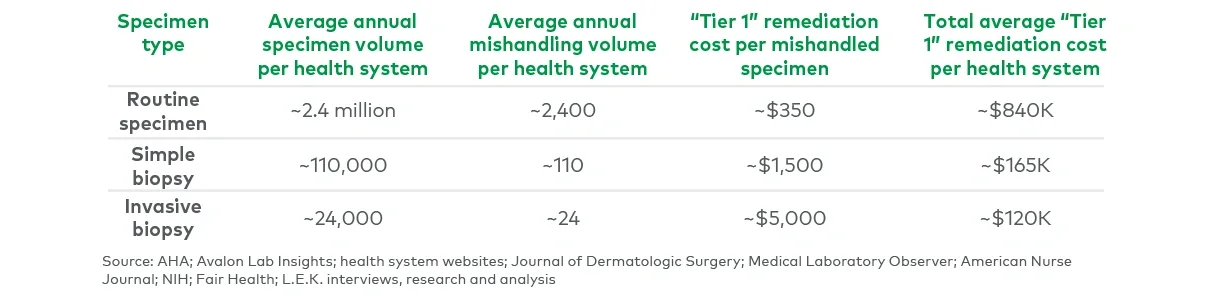
While the mishandling cost per sample may seem small, it can quickly become material when considering the volume of mishandling incidents that typically occur within healthcare. This translates into an average incremental cost across all specimens of approximately $0.35 for routine specimens, roughly $1.50 for simple biopsies and about $5.00 for invasive biopsies. In total, an average three-to-four-hospital system may experience approximately $1 million in annual specimen mishandling costs for direct remedies to mishandled specimens and biopsies; larger systems could experience far greater costs due to specimen mishandling during transport (see Table 2 for an overview of typical specimen and mishandling volumes within an average-sized health system). 

Table 2

The average annual volume of various specimens transported and mishandled within an average three-to-four-hospital health system 

Image
The average annual volume of various specimens transported and mishandled within an average three-to-four-hospital health system

Table 2

The average annual volume of various specimens transported and mishandled within an average three-to-four-hospital health system 

Image
The average annual volume of various specimens transported and mishandled within an average three-to-four-hospital health system

Procedure delay

Specimen mishandling may also cause a procedure to be rescheduled (as can many other forms of last-mile errors, such as equipment mishandling).


“Equipment has to be carefully handled by a knowledgeable team. We’ve had moments when equipment gets thrown around and is delivered completely damaged or needs to be recalibrated, both of which disrupt workflows and potentially affect patient procedures or outcomes due to time constraints.”

— National health system supply chain leader 

This Tier 2 effect is alarmingly common. In fact, in 2022 and 2024 surveys conducted by American Nurse Journal, 54% of 661 nurse respondents said that in the past year they had to reschedule at least one patient procedure due to a medical courier error. Each delayed procedure can produce idle operating room time that averages approximately $4,500 (note: procedure delay is based on an estimated $50/minute cost and an average procedure length of 90 minutes). With roughly 1.8 million nurses employed at hospital systems (according to the Bureau of Labor Statistics), these inputs imply that the total cost of last-mile-logistics- related procedure delays to healthcare in the United States is truly staggering.

What are additional costs of quality lapses in last-mile healthcare logistics?

Beyond those elements L.E.K. Consulting has studied, last-mile logistics errors — including mishandled specimens, misdelivered pharmacy products, lost or damaged surgery instruments and other medical shipment errors — produce abundant examples of other impacts to health systems and labs. Tier 3 cost impacts are more indirect and macro in nature but can be significant.

The impact on patient experience

Errors in healthcare shipment transport create inconvenience for patients, for example by forcing them to return for specimen recollection. Additionally, if providers perceive mishandling incidents as commonplace, they may become less willing to refer patients into the health system or partner with a lab, posing a substantial reputational and financial risk.

“We don’t want patients leaving our health system for another one, and errors in last-mile logistics can lead to that, especially when it’s a serious error. The lifetime value of a patient is significant, and there can be further damage if the patient vocalizes the poor experience.”

— Academic medical center supply chain leader

Exposure to legal liability

While infrequent, legal liability from last-mile logistics errors can be substantial.

“The cost of mishandled specimens can skyrocket with irreplaceable samples, but what costs even more is the intangible reputational cost. In my last health system, an in-house driver lost a surgical specimen and it cost us $50 million in lawsuits, and we likely lost thousands of patients because of the bad press.”

— Regional health system supply chain leader

How does a high-quality logistics provider enable healthcare organizations to reduce costs and improve care?

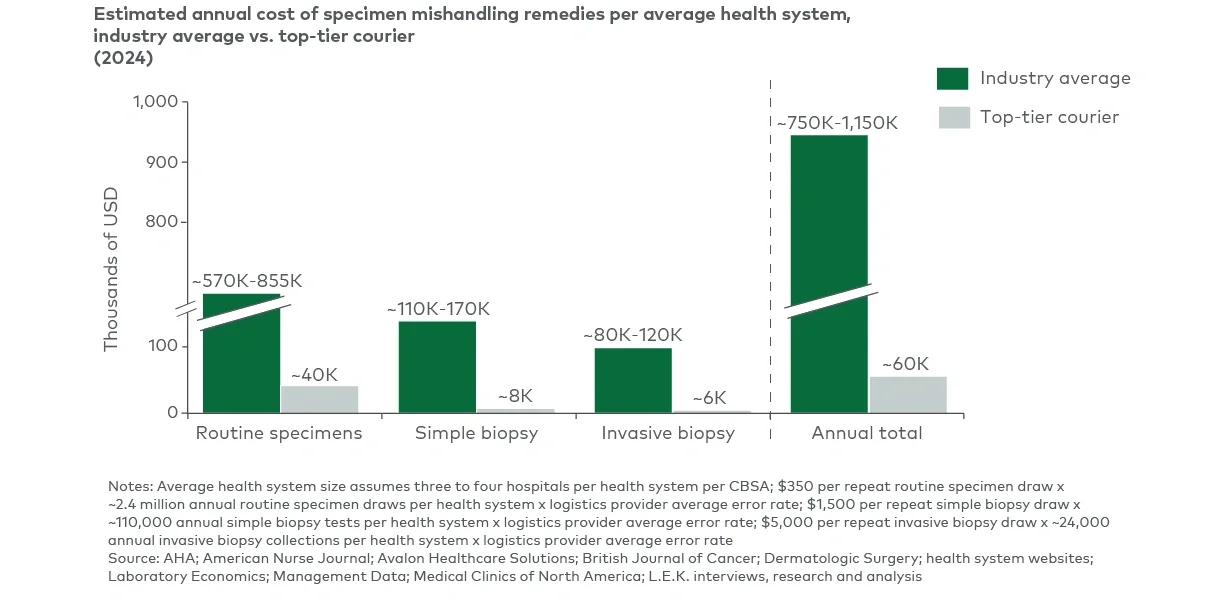
Given last-mile logistics’ impact on care and cost, even modest improvements in the quality of this service can make large differences, and variation is often significant. Top-tier logistics providers have meaningfully better results in reducing error rates compared to the industry average (e.g., error rates as low as 1 in 20,000 stops versus industry norms of 1 in 1,000) because of their rigorous protocols that include employed drivers, technology platforms for routing and order tracking, and local 24/7/365 support. 

Returning to the examination of specimen mishandling costs, lower error rates can save average-sized health systems as much as $1 million annually by reducing last-mile remediation costs by 95% (see Figure 4 for a comparison of the industry average cost of specimen mishandling and that of a top-tier courier). 

Figure 4

Industry average mishandling rates can lead to substantial additional costs for health systems compared to top-tier couriers such as MedSpeed 

Image
Industry average mishandling rates can lead to substantial additional costs for health systems compared to top-tier couriers such as MedSpeed

Figure 4

Industry average mishandling rates can lead to substantial additional costs for health systems compared to top-tier couriers such as MedSpeed 

Image
Industry average mishandling rates can lead to substantial additional costs for health systems compared to top-tier couriers such as MedSpeed

How can providers determine the effectiveness and reliability of a logistics partner?

As health systems and laboratories continue to invest in enhancing their capabilities to deliver high-quality, affordable care, they should consider their approach to last-mile logistics and set higher expectations for their courier partners. To develop a deeper understanding of a courier’s quality and capabilities during evaluation, healthcare stakeholders should place a greater emphasis on questions such as:

  • What are the courier’s service levels and how does it measure and report quality?
  • What is the courier’s empirical error rate and how does it benchmark to peers?
  • What operational (e.g., people, vehicles) and technology investments has the courier made in order to ensure responsiveness and drive quality?
  • How does the courier address and remedy errors to minimize costs and clinical/reputational repercussions for the health system?
  • How well is the courier able to serve the breadth of needs across the health system and all associated sites?
  • How well can it scale as the footprint of the system changes?

Conclusions

Last-mile logistics providers play a crucial role in healthcare by ensuring the timely and safe transport of critical materials across various care sites. Quality lapses in this process can lead to significant clinical disruptions and financial burdens for health systems and laboratories — a critical issue that is rarely assessed. Too often the focus is on unit pricing, which most often does not translate into lower total cost.

Logistical errors can delay treatments and procedures, force repeated lab work and compromise test results, which not only require high remedy costs but also negatively impact patient care and experience, damage patient trust and erode provider reputations. Investing in high-quality logistics services with stringent protocols can greatly reduce these mishandling incidents, thereby improving operational efficiency, generating cost savings and ensuring patient satisfaction.

This white paper has been co-authored by members of L.E.K. Consulting’s Healthcare Supply Chain practice (Ilya Trakhtenberg, Managing Director; Lillian Cham, Principal) and MedSpeed (Jake Crampton, CEO), a leading healthcare logistics provider serving health systems and labs.

For more information, please contact us.

L.E.K. Consulting is a registered trademark of L.E.K. Consulting LLC. All other products and brands mentioned in this document are properties of their respective owners. © 2025 L.E.K. Consulting LLC 

Questions about our latest thinking?

English
Executive Insights

Medicalised Home Care in France: A Rising Convergence of Nursing Services and Home Support

August 6, 2025

Key takeaways

Rising demand for elderly care, combined with shifting demographics and policy support, is blurring the lines between personal assistance and clinical services. This is driving a structural transformation across France’s home care sector.

Recent reforms are professionalising service delivery and promoting convergence between support and nursing care.

For moderately dependent individuals, home care offers a substantially lower-cost alternative to nursing homes, delivering comparable outcomes while aligning with patient preferences to remain at home. 

To succeed in a more complex, medicalised care environment, providers must invest in upskilling frontline staff and embedding digital tools that support coordination, early intervention and continuous learning. 

Introduction

As demographic shifts accelerate, elderly people increasingly prefer to address the effects of ageing from home whenever possible. The rising demand for services that integrate social assistance and clinical care is blurring traditional boundaries, driving a profound transformation within the French home care sector. This deep structural change is reshaping not only stakeholder expectations, but the industry’s service offerings and business models.

In this evolving home care environment, industry players must reimagine their value propositions, rethink their organisational models, and revise their approach to collaboration across France’s broader health and social care ecosystem.

This Executive Insights is designed to equip industry leaders and investors with actionable insights to handle the greater complexity of patient needs while delivering a step change in professionalism, workforce capabilities and operational excellence.

Long-term support of elderly people at home: A growing opportunity

Two primary factors are at the root of the growing medicalisation of home care in France: the rapidly ageing French population, and the tendency of home-based care to prove more cost-effective for patients experiencing loss of autonomy (to a certain point) than institutional care in nursing homes.

An ageing demographic structure

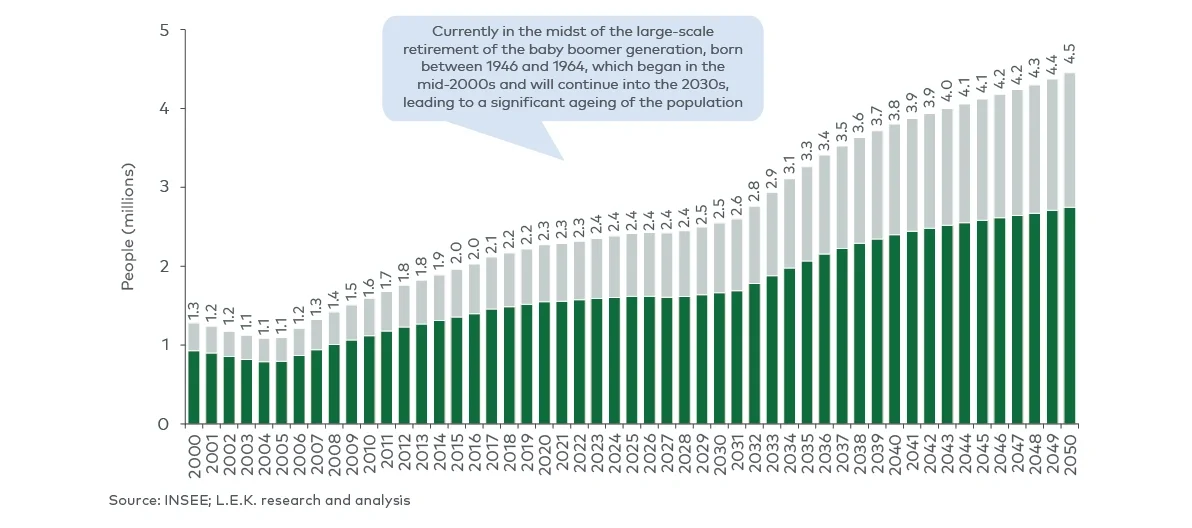
According to the National Institute of Statistics and Economic Studies (INSEE), individuals aged 80 and over will account for nearly 10% of the French population by 2050, compared to c.6% today. This demographic shift, propelled by baby boomers reaching the 85+ range starting in 2030, will have a strong impact on residential care facilities for dependent elderly people, known as EHPADs (see Figure 1).

Figure 1

85+ population in France, 2000-2050F

Image
85+ population in France, 2000-2050F

Figure 1

85+ population in France, 2000-2050F

Image
85+ population in France, 2000-2050F

Yet families and older individuals seem increasingly eager to postpone entry into residential care for as long as possible. A 2022 OpinionWay survey indicates that while 93% of French people see nursing homes as the default choice for relatives facing loss of autonomy, 59% believe institutionalisation of elderly people often occurs even when not justified by their level of dependency. This suggests that public opinion favours exploring alternatives to hospitalisation of patients in physical and cognitive decline.

Complicating this trend, the ageing French population also means a decline in the ratio of potential family caregivers to elderly individuals, from 3.2 caregivers per elderly person to 2.8 by 2030, according to INSEE projections.

Home care: A cost-effective option for some

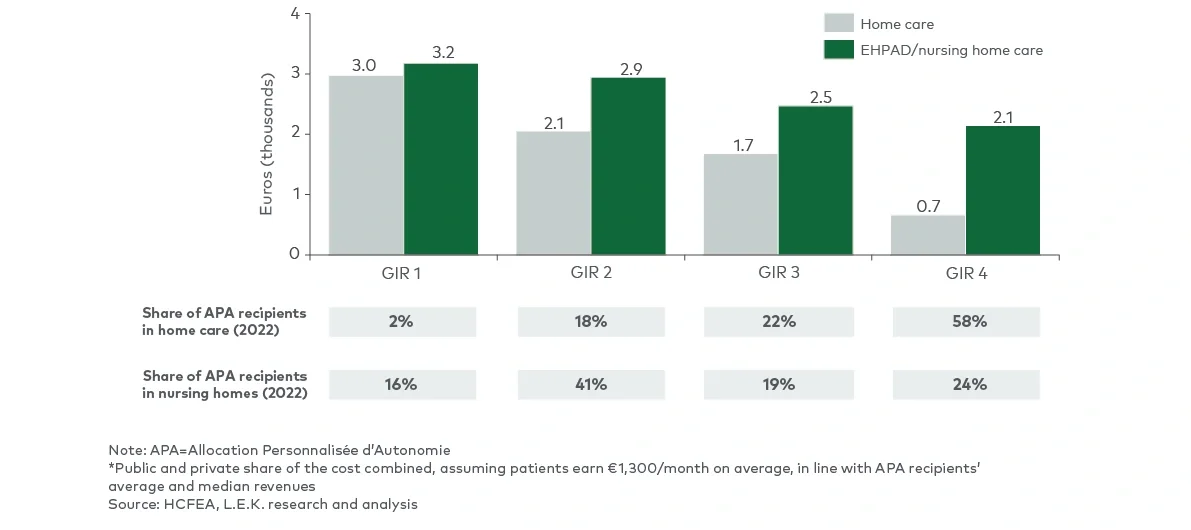
Overall healthcare and support costs are highest for individuals with the lowest levels of autonomy, assessed using the national Groupe Iso-Ressources (GIR) scale, which guides eligibility for support and care planning. 

Unlike for patients classified as GIR 1 (most dependent) or GIR 2 due to the intensity and complexity of care required, home-based care presents a particularly compelling option for patients classified as GIR 3 or GIR 4, where the level of dependency remains moderate (GIR 6 indicates the highest level of autonomy).

For these patients, the shift from institutional care to home care can lead to substantial reductions in overall costs. In 2021, the average estimated cost of a GIR 4 patient receiving home care treatment was only a third of the equivalent cost of a nursing home (see Figure 2).

Figure 2

Average monthly cost of home care vs nursing home care among APA recipients in France, 2021+ 

Image
Average monthly cost of home care vs nursing home care among APA recipients in France, 2021+

Figure 2

Average monthly cost of home care vs nursing home care among APA recipients in France, 2021+ 

Image
Average monthly cost of home care vs nursing home care among APA recipients in France, 2021+

Greater professionalisation: A byproduct of demand for home care services

The accelerating demand for elderly care in France has prompted a rise in the volume of home care services on offer, accompanied by a drive toward greater organisation, quality and professionalisation within the sector.

The role of demographic and policy shifts

Supported by changing family preferences, the number of elderly individuals receiving care at home has surged in tandem with a clear shift in public policy towards reducing reliance on institutional care and promoting home-based support instead.

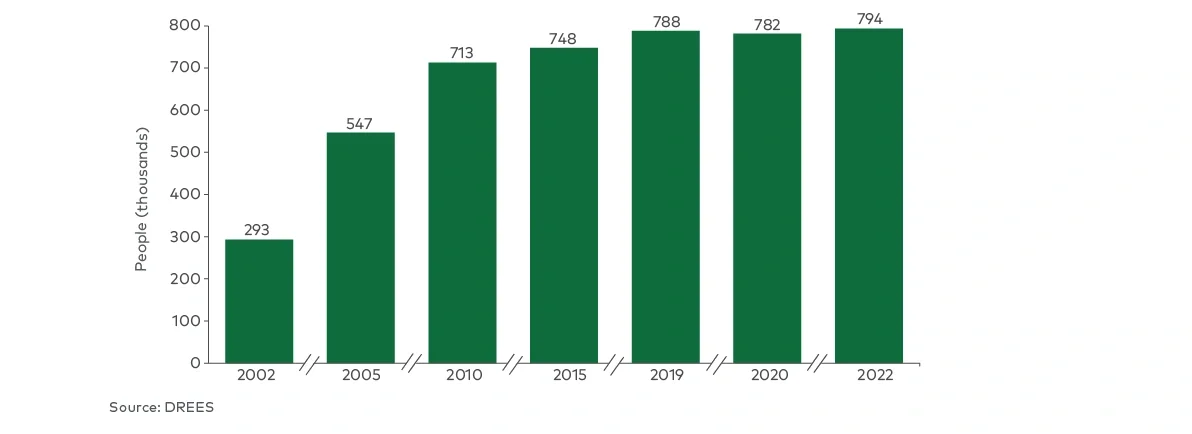
Today, nearly 800,000 individuals benefit from Allocation Personnalisée d’Autonomie (APA) — a public allowance that helps cover the cost of care for elderly individuals with loss of autonomy, whether at home or in residential care — compared to c.300,000 just two decades earlier (see Figure 3).

Figure 3

Evolution of the number of home care APA recipients in France, 2002-2022 

Image
Evolution of the number of home care APA recipients in France, 2002-2022

Figure 3

Evolution of the number of home care APA recipients in France, 2002-2022 

Image
Evolution of the number of home care APA recipients in France, 2002-2022

Furthermore, the French home care allowance is mostly used to finance services d’aide et d’accompagnement à domicile (SAAD), non-medical home care providers offering support with daily living activities such as housekeeping, meals and personal assistance.  

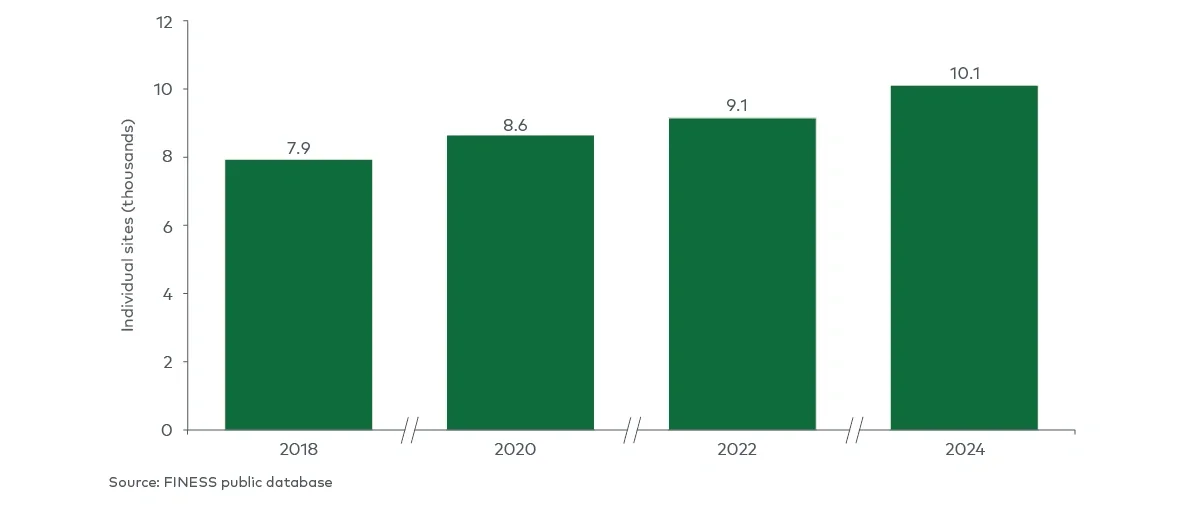
Amid this rising demand for home-based support, the number of SAADs has grown steadily in recent years, from approximately 8,200 in 2019 to around 10,100 in 2024 (see Figure 4). 

Figure 4

Evolution of the number of SAAD agencies in France, 2018-2024

Image
Evolution of the number of SAAD agencies in France, 2018-2024

Figure 4

Evolution of the number of SAAD agencies in France, 2018-2024

Image
Evolution of the number of SAAD agencies in France, 2018-2024

Strengthening the home care sector through a new regulatory framework

Historically, the home care sector in France has grown by fits and starts, with wide disparities in funding across départements, limited efforts to professionalise the workforce and no consistent framework for ensuring quality. Seeking a more structured and sustainable model, French authorities launched ambitious SAAD reforms in 2019 in response to the sharp increase in elderly people ageing at home with proper support.

The 2019 reforms introduced a national reference pricing system to standardise hourly rates and reduce out-of-pocket costs for patients. It also encouraged operators to enter multiyear contracts (called CPOMs, or Contrats Pluriannuels d'Objectifs et de Moyens) with regional authorities, in exchange for more uniform funding and clear commitments regarding service quality, workforce conditions and territorial coverage.

In parallel, French authorities established a unified national quality framework, setting common service standards for all operators regardless of status. This aimed to reinforce the sector’s professionalisation and improve patients’ experiences. The reforms also laid the foundation for deeper integration between home healthcare services (SAAD) and services de soins infirmiers à domicile (SSIAD), in anticipation of further reforms to come, as discussed below.

This effort to put the sector in order has paved the way for a more consistent and predictable operating environment, especially for private players. It represents a turning point: rather than ancillary to the ageing policy mix, home care is becoming a core component of elderly support infrastructure.

Personal assistance meets nursing care: An institutionalised trend

Combined with the ever-increasing panoply of patients’ needs, recent regulations have aimed at better integrating support and medicalised services. This convergence of personal assistance and nursing care reflects a deeper structural shift in the home care landscape.

Increasingly complex home care needs

The average age of individuals entering EHPADs has climbed steadily in recent years, according to French government data from La Direction de la Recherche, des Études, de l'Évaluation et des Statistiques, or DREES (see Figure 5). This trend reflects a broader shift: individuals are staying at home longer, often despite more advanced levels of frailty and multiple chronic conditions.

Figure 5

Average age of entry in nursing homes in France, 2003-2019

Image
Average age of entry in nursing homes in France, 2003-2019

Figure 5

Average age of entry in nursing homes in France, 2003-2019

Image
Average age of entry in nursing homes in France, 2003-2019

As a result, SAAD home care providers must expand their role beyond basic support tasks such as housekeeping and grocery shopping to deliver more complex interventions, closely coordinated with SSIAD nursing care providers.  

This evolution calls for enhanced capabilities in care coordination, professionalisation of home care workers, and tighter integration with the healthcare system.

A shifting ecosystem of hybrid players

The home care landscape in France is undergoing a structural transformation, with the growing presence of hybrid players reshaping traditional boundaries. Some SAAD providers are moving to other segments of the value chain by integrating nursing services, both to capture more value and to reduce their dependence on regulated APA pricing. Meanwhile, major EHPAD operating groups have expanded into home care, aiming to reach a broader, less institutionalised patient base.  

New, intermediate models are also emerging, such as Ages & Vie, to offer non-medicalised senior co-living arrangements. This further blurs the lines between home care, assisted living and residential facilities.

Strategic priorities: The shift to more integrated home care

To capitalise on the growing convergence of at-home support and more medicalised care, the sector must urgently address two critical issues: upskilling of the workforce and embedding digital tools in day-to-day work.

Developing the right capabilities

To effectively meet the demands of a more complex, medically oriented care model, home care workers must have the opportunity to strengthen their skills base. Going forward, in addition to reinforcing core hygiene and supporting the acts of daily living, home aides must be trained to recognise early signs of health deterioration and then act as a reliable relay within multidisciplinary care teams. Enhancing communication with nurses and physicians is crucial to ensuring seamless coordination and timely escalation when clinical issues arise.

This shift requires not only more robust initial training, but also a culture of ongoing professional development. Many home care workers still operate in isolation, with limited access to structured learning or feedback. New training models that are more modular, digital and adapted to field constraints will be essential to support skills acquisition and retention.

At the same time, the sector must address deep-rooted recruitment challenges: according to the national employment agency, France Travail, hiring is a struggle for approximately 80% of home care and domestic support roles. This reflects both a shortage of qualified candidates and the demanding physical, emotional and organisational nature of the work.

Moreover, emerging needs call for hybrid profiles — professionals who exhibit a combination of interpersonal, technical and digital competencies in order to manage frailty; support autonomy; and use modern, connected health tools. Developing such capabilities at scale through recruitment and training will be a defining challenge — and opportunity — for home care providers seeking to remain relevant in a transforming ecosystem.

Leveraging digital tools and training

As home care evolves, digital tools increasingly enable effective, coordinated care delivery to serve patients with increasingly complex needs. These technologies make care delivery more responsive, continuous and integrated across disciplines, improving quality in ways such as the following:

  • Secure digital platforms allow for real-time sharing of patient information. Home aides, nurses and other healthcare practitioners can deliver faster decision-making and greater continuity across fragmented care pathways. Providers who achieve this level of interoperability are hard to come by and may gain a significant operational advantage.
  • Remote patient monitoring is the new frontier of digital. Fall detectors, biometric alerts and smart home sensors provide actionable data related to frail patients, particularly those living alone. These technologies may help detect deterioration early and reduce emergency interventions — a critical benefit in ageing populations who benefit greatly from avoiding hospital visits.
  • Digital tools are enabling a new wave of training approaches. E-learning platforms, mobile apps and simulation-based modules provide accessible, flexible upskilling for a workforce that often lacks the time or mobility for traditional training. For home care professionals frequently working in isolation, this continuous learning capacity is vital for quality and confidence in care delivery.

Looking ahead, the most advanced home care operators — especially those evolving into integrated and more medicalised services — have the potential to become true care orchestrators. By combining digital infrastructure, trained staff and data-driven insights, they can coordinate medical and social interventions remotely, with greater agility and precision.

The digital transformation of home care is about empowering frontline workers, connecting care teams and creating a new standard of proactive, patient-centred service at home.

How L.E.K. can help

The home care sector is at a crossroads, where significant opportunities exist for both established players and new entrants to unlock value.  

To discuss these insights in greater detail, or to explore strategic transformation opportunities in the home care sector, please get in touch with the authors. 

Winston & Strawn LLP provide their perspective on our summary:

As home care in France continues to evolve towards a more medicalised model, digital tools — from teleconsultation platforms and remote monitoring devices to AI-powered decision support — are becoming essential to the transformation. While these innovations promise improved care monitoring, coordination and accessibility, they also raise complex legal and ethical challenges, particularly in terms of data protection, cybersecurity and liability.

From a regulatory standpoint, the use of digital tools in the home care context notably falls under the General Data Protection Regulation (GDPR) and the French Data Protection Act. Given that the data being processed often continuously and across multiple platforms concerns patients’ health, it is considered “sensitive data”, subject to heightened obligations and which cannot be shared with non-healthcare practitioners. In many cases, prior formalities with the CNIL remain required, particularly when AI tools are involved.

An emerging difficulty lies in the fragmentation of stakeholders within home care, mixing healthcare practitioners with non-healthcare practitioners: SADs (SAADs, SSIADs and SPASADs), telemedicine providers, coordinating physicians, software vendors, and even local authorities may all play a role. Determining who can access the data, act as data controller and ensuring proper legal bases for processing across this network becomes a delicate exercise, especially when subcontracting chains, cooperation agreements and CPOMs are involved. 

Home care services involving several parties often blur lines of responsibility, making legal liability harder to trace, and thus to mitigate. The legal responsibility for breaches cannot simply be delegated to technology providers; professional accountability remains central, and a careful drafting of the agreements involving several providers is absolutely key. 

The increasing use of AI-based tools in home care such as predictive analytics or triage support introduces further complexity. Notably, Article 10 of the EU AI Act introduces strict requirements around how personal data (particularly health data) may be used in training and validating high-risk AI systems. It allows for the use of sensitive data only when strictly necessary to detect or correct algorithmic bias, and only under robust safeguards: strong data protection, restricted access and mandatory deletion when the data is no longer needed.

For home care providers, this has direct implications. Tools must be assessed not just for their technical performance, but also for how and why they were built: whether their training data is fair, representative and free from bias. In a sector serving frail, often digitally marginalised individuals, even subtle algorithmic errors can result in inequitable or unsafe care. 

Providers will need to ensure AI tools meet not only regulatory expectations, but also ethical standards grounded in the realities of home-based care. Here again, ensuring each party’s compliance and a proper allocation of liability is fundamental.

L.E.K. thanks Gilles Bigot and Julie Vern Cesano-Gouffrant for their contributions on legal analysis in this Executive Insights.

Note: This communication has been prepared for the general information of clients of L.E.K. Consulting. You should not rely on the contents. Although it touches on certain legal and regulatory aspects it does not constitute legal advice and should not be regarded as a substitute for legal advice or any recommendation.

L.E.K. Consulting is a registered trademark of L.E.K. Consulting. All other products and brands mentioned in this document are properties of their respective owners. © 2025 L.E.K. Consulting

Questions about our latest thinking?

English

Health Equity in Pharma: A Closer Look at Industry Progress

August 13, 2025

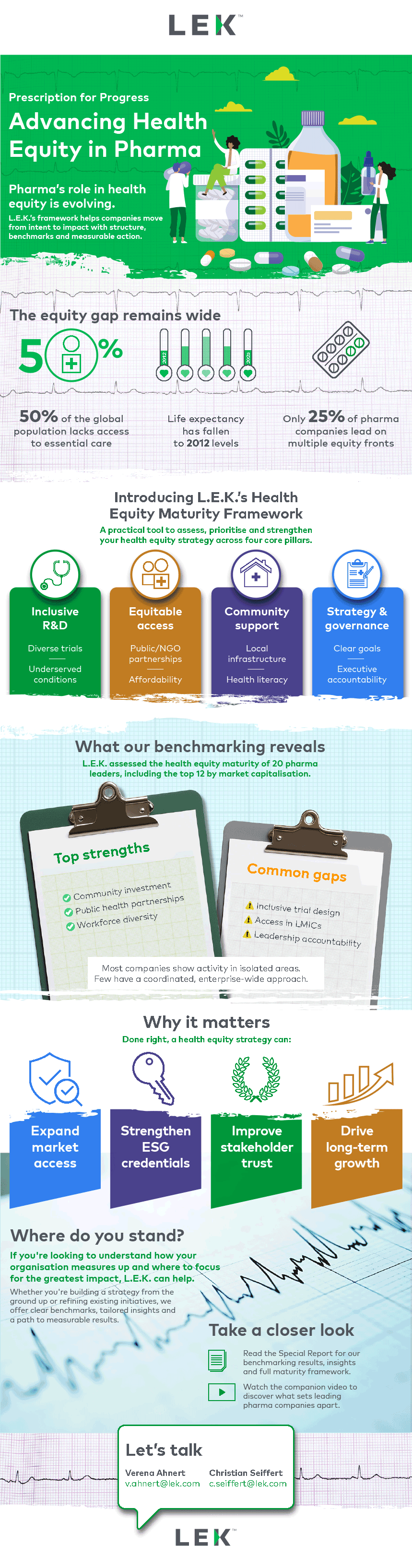
Half of the world’s population still lacks access to basic healthcare, yet most pharma companies are addressing health equity in isolated ways. Our research shows that only a quarter are making meaningful progress across clinical development, access, community support and governance.

This infographic highlights the biggest gaps and the areas where leaders are making headway.

Explore more:

Read our Special Report to discover more about L.E.K.’s Health Equity Maturity Framework and find out how 20 global pharma companies measure up.

Watch our short video to hear L.E.K. Partner Verena Ahnert explain why health equity must be a core business priority. 

infographic


L.E.K. Consulting is a registered trademark of L.E.K. Consulting. All other products and brands mentioned in this document are properties of their respective owners. © 2025 L.E.K. Consulting

English
Image
report thumbnail

On the Cusp of a Cure: Is Asia Pacific Ready for the Precision Era? (Japan)

July 29, 2025

The Precision Era of medicine is arriving in Asia Pacific, driven by a critical mass of innovative therapies that will redefine treatment, attract investment and improve lives. Powered by advances in diagnostics, AI and genomic technologies, precision therapies offer curative potential for diseases once deemed untreatable, ushering in a new standard of care across oncology, rare genetic disorders and beyond.

This white paper series explores Asia Pacific’s readiness for the Precision Era — the current transformative period where generically prescribed and regularly administered treatments are increasingly giving way to potentially curative therapies tailored to individuals and their disease.  

Drawing on research across more than 1,000 clinical trials across four novel technologies and four markets, we assess the clinical, economic and social benefits of precision therapies, identify systemic barriers to precision therapy adoption, provide recommendations for improvement, and assess the value of widespread adoption across Australia, China, Japan and Korea.

The Precision Era presents a transformative opportunity for Japan’s healthcare system, offering the dual benefits of economic growth and system-wide cost efficiencies. With around 1.5 million patients expected to benefit, precision therapies are projected to reduce hospital admissions, lower medication costs and decrease the need for specialist visits, as patients experience longer periods of improved health.

The ‘On the Cusp of a Cure’ white paper series was supported by an advisory committee of 16 pre-eminent regional experts in precision medicine, economic and health policy, and patient experience across Australia, China, Japan and Korea. It was also sponsored by Johnson & Johnson.

Download the PDF to discover how precision therapies can drive life-changing outcomes and sustainable growth.

Editor’s Note: For more insights, please explore the country-focused white papers in the ‘On the Cusp of a Cure: Is Asia Pacific Ready for the Precision Era?’ series.

L.E.K. Consulting is a registered trademark of L.E.K. Consulting LLC. All other products and brands mentioned in this document are properties of their respective owners. © 2025 L.E.K. Consulting LLC

English

Opportunities to Drive Non-Farebox Revenue

July 25, 2025

With public transport budgets under pressure, finding new sources of revenue beyond fares is more important than ever. In this video, L.E.K. Partner Mark Streeting explores five key strategies for non-farebox revenue generation.

Drawing on L.E.K.’s recent review of each strategy's viability in the Australian context, Mark highlights the importance of aligning financial innovation with public expectations and long-term sustainability.

Watch this video to learn how transport agencies can diversify funding while supporting more accessible and efficient mobility.

L.E.K. Consulting is a registered trademark of L.E.K. Consulting LLC. All other products and brands mentioned in this document are properties of their respective owners. © 2025 L.E.K. Consulting LLC

English

Sustainability in Aviation: Navigating Scope 3 Emissions

July 24, 2025

Scope 3 emissions represent the most complex and high-impact challenge for airports on the path to net zero.

L.E.K. Partner George Woods shares six strategic steps for navigating Scope 3 — from building a clear emissions inventory to prioritising initiatives that deliver both environmental and commercial outcomes. He explains why sustainable aviation fuel will be essential, why airports must be cautious about overcommitting to long-term targets, and how to avoid common pitfalls like greenwashing and misaligned investment.

Watch now to explore how airports can lead with clarity, confidence and impact.

L.E.K. Consulting is a registered trademark of L.E.K. Consulting LLC. All other products and brands mentioned in this document are properties of their respective owners. © 2025 L.E.K. Consulting LLC

English

Future Outlook of Australia’s Aviation Industry

July 25, 2025

Australia’s aviation industry is on the verge of its largest investment cycle since privatisation — with new aircraft, terminals and runways set to reshape the travel experience.

In this video, L.E.K. Partner Ian Kershaw outlines the key dynamics shaping the decade ahead, from domestic capacity growth and international supply constraints to elevated fares and infrastructure-led competition. He also highlights why airport investment strategies will need to balance optimism with realism, especially as passenger forecasts outpace airline fleet growth.

Watch the full video to understand the risks, opportunities and priorities that will define the next chapter in Australian aviation.

L.E.K. Consulting is a registered trademark of L.E.K. Consulting. All other products and brands mentioned in this document are properties of their respective owners. © 2025 L.E.K. Consulting

English
Subscribe to