Procurement Model Evaluation for Multi-billion Dollar Capital Infrastructure Project

November 21, 2021

Background and Challenge

An Australian state-government entity engaged the L.E.K. Major Capital Projects Advisory (MCPA) team to assist in evaluating procurement strategy and contracting options for a multi-billion-dollar transport infrastructure project during the feasibility stage of the project life cycle.

Approach and Recommendation

L.E.K.’s MCPA team worked as non-voting members of both the Evaluation and Selection Committees to develop and assess an innovative development partner concept and shepherd it through an Expression of Interest phase prior to a formal Request for Tender.

L.E.K. worked with the client to define the development partner model itself, leveraging its experience in commercial structuring, risk allocation and contract design. This was aided through an analysis of global best practice in project delivery.

L.E.K. then supported the development of the EOI documentation and participated in evaluation of each EOI, which the client then took through to the RFT stage.

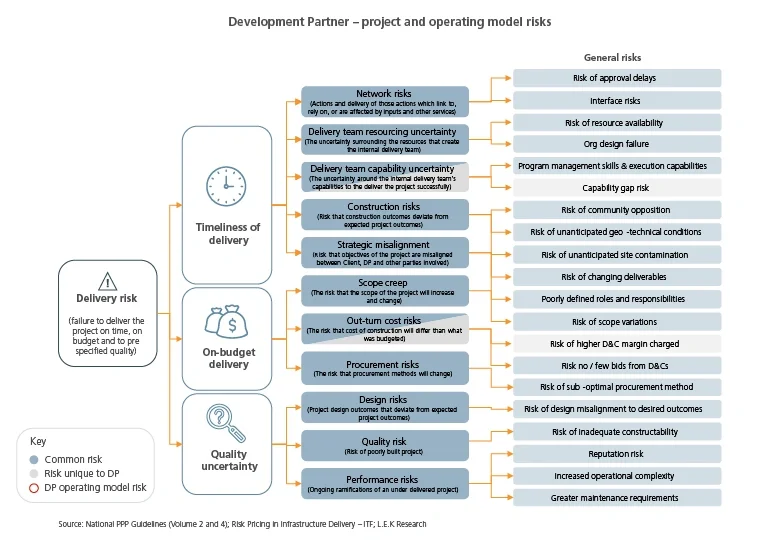
This state-government client later re-engaged L.E.K. to provide further assistance on the Project. An L.E.K. Senior Partner acted as Chair of the Tender Evaluation Panel, and the Head of the MCPA practice conduced an independent, ring-fenced analysis of the major risks inherent in the development model.

Our work in this phase of the project involved assigning a probability of the risk occurring, assessing the commercial impact of occurrence, expressing the total commercial impact of all risks as a proportion of the total costs proposed in the model and normalising the value of the RFT bids to reflect the commercial implications of these risks.

Subsequent to the completion of the evaluations, L.E.K. was further retained to review the procurement process and help the client examine the key lessons learned to inform similar efforts in future major capital projects.
Image
development partner project risks
Image
development partner project risks

Results

With L.E.K.’s assistance, the client thoroughly examined, assessed and tested an innovative procurement model designed to achieve better project quality, cost and schedule outcomes for government.  This included testing the ability to transfer risk between the state and private parties and the ways to better align state and private sector objectives to deliver improved Value for Money and Whole of Life outcomes for government.

English

Omnichannel Engagement for Pharma Companies in APAC

November 18, 2021

Omnichannel engagement has the power to transform the way pharmaceutical companies engage with their customers and other key stakeholders, making interactions more meaningful, valuable and impactful for both sides.

In this on-demand webinar, hosted by L.E.K. Consulting in collaboration with Loop Horizon, we share insights on driving transformation through omnichannel engagement. Our panel of industry experts include:

  • Elliot Antrobus-Holder, Global Head of Omnichannel, Gilead Sciences
  • Chris Field, Managing Director, Loop Horizon Health
  • Geoffrey Allars, Senior Manager, Sales Force and Marketing Excellence, Amgen Australia
  • Glenn Cross, Marketing and Sales Effectiveness Head, APMA, Novartis
  • Stephanie Newey, Partner, L.E.K. Consulting

The session addresses key questions about omnichannel engagement, such as:

  • What is the biggest impact on accelerating omnichannel capability through an organization?
  • What are the benefits for sales teams and what are the barriers to overcome?
  • What critical building blocks are required to enable data-informed insights?
  • What is the minimum technological baseline to get started with omnichannel engagement?

Watch the replay for ways to bring omnichannel to life.

Learn more in this article we authored in partnership with Loop Horizon and CI&T:https://www.lek.com/insights/omnichannel-engagement-pharma-key-success-factors-and-case-e xamples


English

Energy Transition — High Gas Prices Strengthen Case for Nuclear

November 18, 2021

Gas shortage has exposed the lack of resilience in energy networks

The September spike in European gas prices (to six times April’s level) has caused shockwaves throughout the energy sector. Over a dozen UK utilities have already gone bankrupt (e.g. Avro Energy, People’s Energy) with more expected, and consumer and industrial electricity prices are rapidly rising. Beyond energy, the security of the food supply and home heating have all been affected. 

Global prices have similarly been rising across major APAC and US hubs, driven by both the energy transition and gas-specific factors. The broader energy transition is increasing demand for gas in the short term, driven by:

  • Shift away from coal-fired power plants 
  • Weaker than expected generation in some renewable assets (e.g. wind at less than a third of 2020 levels in certain regions)
  • Aging and retiring nuclear power plants

Gas-specific issues have compounded this, including:

  • Supply shortages with weaker than expected deliveries from Norway/Russia, and the Maghreb pipeline shutdown
  • Depletion of major swing supply assets (e.g. Groningen in the Netherlands)
  • Limited storage in major European economies (e.g. the UK)
  • Chinese competition for available liquified natural gas supply
  • Rapid demand rebounds as industrial and consumer activity recovers from the worst of COVID-19

Increasing renewable electricity generation alone is not a sufficient solution because intermittency is a fundamental and potentially very expensive problem

Increasing renewable penetration will help diversify many countries’ sources of electricity, combat climate change and provide low-cost electricity (excluding storage and grid stabilisation costs). However, in isolation, renewables cannot substitute for gas in the grid:

  • Dispatchable renewables, where operators have some control/certainty over supply to meet demand, are difficult or impossible to scale up (e.g. hydropower, biofuels)
     
  • Intermittent renewables are low cost and highly scalable (e.g. wind and solar); however, their supply is uncertain across timescales:
     
    • Solar power’s output is available in northern grids only at relatively low demand times (i.e. around midday) and is seasonally variable
       
    • Wind is a function of complex weather systems with unpredictable outputs

As a result, renewables impose a cost of uncertainty on the grid at a system level and cannot directly substitute for gas.

There are only three options to provide clean electricity and manage intermittency 

Of the three options, only nuclear can meet both the requirement to manage (longer-term) intermittency and deliver clean electricity.

  1. Combining renewables with energy storage can address the intermittency challenge. There is a strong commercial case for the development of combined models, particularly for short-term storage (<24 hours), that could be addressed by utility-scale battery storage, particularly as the technology improves and costs decline. However, long-term storage (>24 hours) solutions are much more uncertain, with limited suitable sites for compressed air etc., and uncertain technological/commercial models for hydrogen or power-to-gas storage facilities.
     
  2. Combining gas generation with carbon capture utilisation and storage (CCUS) requires a significant new market to be created, requires a technological leap forward to allow for CCUS at Scale, and retains the same challenges of price volatility and energy security that we are currently facing. Currently existing CCUS systems capture much, much less (c. 30%-35%) than the 2050 target of 85%-95%. Placing an economically rational price on carbon emissions will likely be necessary to incentivise significant adoption and improved performance.
     
  3. Nuclear provides clean power and meets required carbon goals with minimal grid investment. Historically, major roll-outs of large reactors have been used to limit exposure to energy price volatility (e.g. France in the 1970s). Nuclear has traditionally provided a secure ‘baseload’ with year-round power, but new technologies could enable nuclear to serve a materially greater proportion of the load curve. Over the past two decades, installations have been slow to complete and limited, and nuclear has not been extensively deployed as a solution to climate change, given political resistance and high costs for large projects ($130-$200/MWh) relative to other fuels. However, recent months have seen a resurgence in interest, driven by increased political support (potential inclusion of nuclear on EU Sustainable Finance Taxonomy) and improving technology/economics (e.g. small modular reactors (SMRs)).

The case for nuclear in a net-zero world is becoming very strong

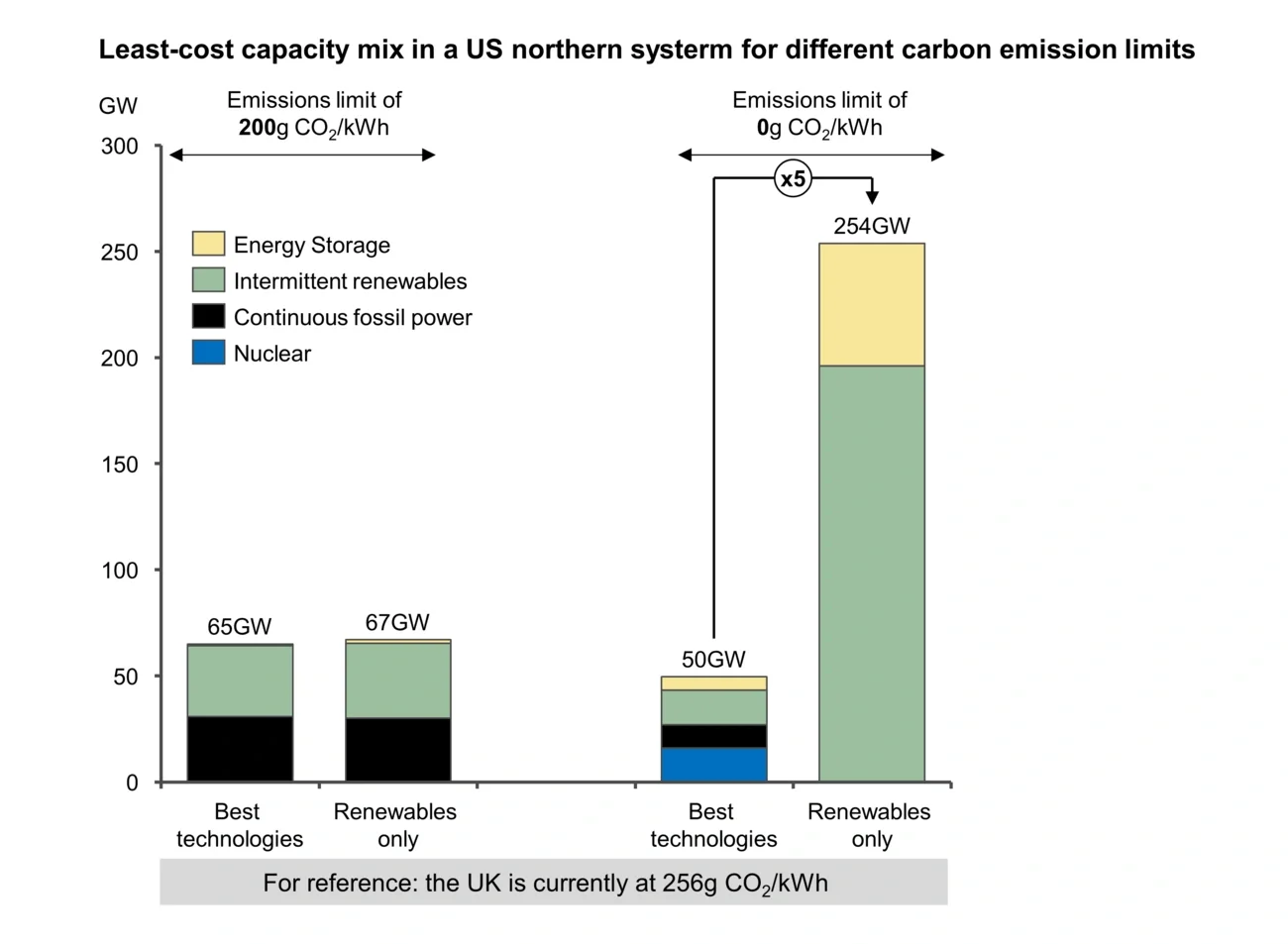
Deploying the right set of generation technologies (rather than just renewables) to support the transition to net zero materially reduces the required level of capacity buildout (and hence cost) whilst scaling up the ability to manage intermittent renewables. Over the medium term, nuclear will be essentially the only clean, dispatchable generation technology that minimises the cost of the transition. 

Image
carbon emissions limits
Image
carbon emissions limits

The development of SMRs uses a fundamentally proven technology and addresses the long-standing problems with traditional large nuclear reactors: bespoke construction projects that usually experience enormous cost and schedule overruns. SMRs create a clear set of benefits for the utilities that manage the grid. Specifically, SMRs should:

  • Reduce costs of nuclear power materially (from $120/MWh to $40-$60/MWh)
     
  • Accelerate buildout at sites that are scalable (through standardised, factory assembled modules)
     
  • Enable much more flexible and incremental capacity (<500MW) additions 
     
  • Fit into much smaller sites for a given level of capacity (up to two orders of magnitude smaller)
     
  • Provide clean electricity to charge the rapidly growing fleet of electric vehicles; charging vehicles overnight helpfully increases baseload demand
     
  • Serve demand more flexibly, through mixed hydrogen generation, industrial use and grid service models
     
  • Provide clean electricity to power the production of hydrogen and other synthetic fuels (e.g. sustainable aviation fuel) 
     
  • Support other net-zero goals, including providing low-cost power for Direct Air Capture Facilities

SMRs also have an important role to play off grid where there is substantial demand for dispatchable power; for example:

  • Traditional process industries: Serve a wide range of large plants in industries that include refining, chemicals, steel production and aluminium smelting; traditionally these have been served by combined cycle gas turbines
     
  • Data centres: Power the rapid growing ‘hyperscale’ data centres — many of which are owned by ‘Big Tech’ and have very public existing green commitments 
     
  • Hydrogen and other synthetic fuels: To provide clean baseload electricity for electrolysis to generate hydrogen at scale (if that is not supplied on grid)
     
  • Desalination: One energy intensive solution to the major global water scarcity challenge that will only become more acute over the coming decades

Obviously, the successful development and deployment of SMRs is not without risk and requires significant funding. The recent announcements by Rolls-Royce and the UK government are very welcome and encouraging in accelerating the development of this critical technology. Now is the time for new countries and companies to capture a significant economic prize.

This article was written by John Goddard, Senior Partner in L.E.K.’s Industrial practice and Vice-Chair of Sustainability, having founded the L.E.K. Sustainability Centre of Excellence, with Philip Meier, Senior Principal, and Luke Samuel, Manager in L.E.K.’s Industrial practice.

English

Long-Term Relationship Helps Sustain Environmental Consultancy

December 1, 2021

Background and challenge

Over the past 15 years, L.E.K. Consulting has gained a deep understanding of the environmental and sustainability consulting industry, having conducted multiple projects for one of the global market leaders and largest ‘pure play’ sustainability consultancies. We have supplied buy-side and sell-side transaction support for the company itself and leading private equity firms on multiple occasions. We also provided support to the company in evaluating strategic options and growth opportunities (organic and inorganic). 

Approach and recommendations

As part of our transaction support work, we performed detailed research into and analysis of the company and the global environmental and sustainability consulting industry. This involved working with the client to synthesize volumes of internal data; undertaking comprehensive modelling to assess the size, nature and segmentation of the market; conducting extensive interview programmes globally with some of the largest users of environmental health and safety (EHS) and sustainability consultants to provide clear insights into the shape of evolving demand, the nature of the competitive landscape and relative positioning of the company; and producing robust reports to facilitate the transaction process.

Results

Our work has facilitated multiple successful transaction processes since 2005 and enabled the company to gain a robust understanding of strategic growth opportunities at key points in their evolution, beginning with their acquisition of a stake in a leading environmental strategy and risk consultancy in 2005. In the most recent transaction, the business was valued at around US$3bn, an impressive testament to the value creation delivered by successive management teams and its continued growth potential. 

English

Competitive Study Supports Sale of Leading Electrical Power Services Provider

November 18, 2021

Background and challenge

Power utilities in the U.S. are facing four overall challenges:

  • An aging U.S. power grid, including increased service and maintenance expenses due to the operation of older assets
     
  • Grid modernization, including a demand for “smart grids” that is causing utility companies to rethink and update systems 
     
  • A stringent regulatory environment, which is causing assets to be carefully monitored due to severe penalties for noncompliance
     
  • Scarcity of engineering labor, which is increasing the tendency to outsource engineering and field services to third-party providers

The client, a power systems field and engineering provider whose primary services include protection and control, testing and maintenance, commissioning, compliance support, and design engineering services, has been successful in tackling these challenges while also providing exceptional customer service to its industrial, commercial and government customers. While the company was able to meet the increasing demands for its electrical power services, it had outgrown its own market. 

To help validate the client’s value proposition and execute its sale, L.E.K. Consulting provided the client with a fact-based assessment of the outsourced power grid services market and an analysis of its customer dynamics and competitive position across its end markets. 

Approach and recommendations

After we conducted a rigorous analysis to evaluate our client’s addressable market and identify its positioning, we let management know of key emerging trends they could take advantage of and articulated a strong case for the company’s sale.

We also concluded that its core market was well structured, and determined that, combined with significant tailwinds and our client’s ability to show competitive differentiation through its customer service and breadth of services, its business had a significant runway for growth.

Results

Our analysis indicated that our client’s market has significant tailwinds and will grow at a double-digit CAGR through 2024. It validated our client’s value proposition and its ability to provide the necessary service offerings to remain competitive and ensure market outperformance. It also identified areas where the company could improve or offer additional services to retain existing customers or add new ones, and mapped and analyzed competitors’ offerings, by segment, to identify any gaps that it could fill going forward. That analysis — and its implications — was subsequently used to help facilitate its ultimate sale. 

English

Oil and Gas Executives Put ESG and Sustainability on the Decarbonization Agenda

November 18, 2021

So far, our series on key findings from L.E.K. Consulting’s 2021 Energy Transition Study has focused on energy transition initiatives. In our last article, we examined what oil and gas executives say they need in order to effectively prepare their organizations for the energy transition

However, energy transition and environmental, social and governance (ESG) are inextricably linked. These two influential themes share a focus on carbon footprint reduction, electrification, resource sustainability and diversification to lower-carbon energy solutions.
As such, let’s shift gears and talk about how energy companies and investors are considering their ESG priorities and sustainability more broadly. 

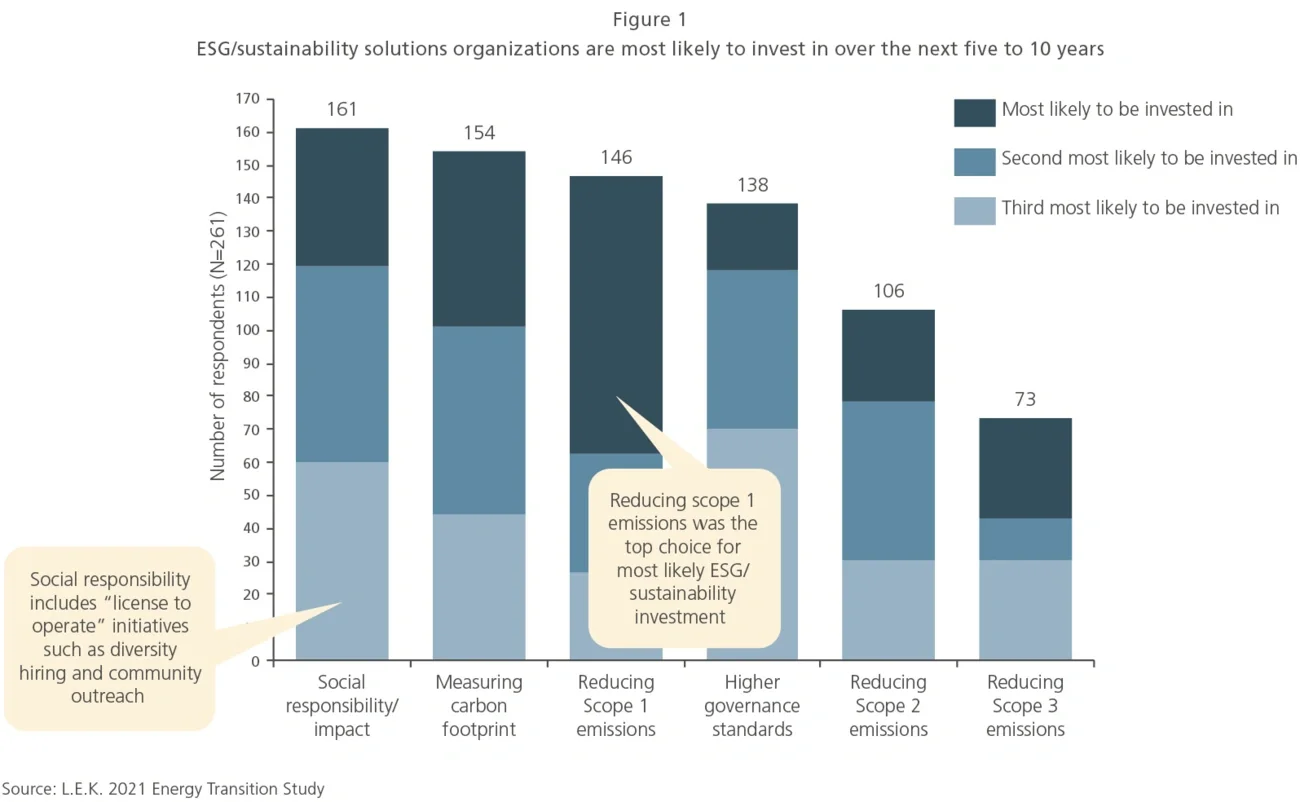
We asked our 261 survey participants to identify the ESG/sustainability solutions their organization would be most likely to invest in over the next five to 10 years. We also asked them to rank their top three picks in order of priority (see Figure 1). 

Image
ESG/sustainability solutions
Image
ESG/sustainability solutions

The most common choice is social responsibility and impact. This includes “license to operate” initiatives such as diversity hiring and community outreach, and a majority (62%) of respondents put this one on their top-three list. Oil and gas companies have a long history of supporting social impact across global footprints where community-building initiatives are an operational imperative. The study data suggests that through a continued oil and gas focus, social issues remain the top priority as well. 

Reducing Scope 1 emissions is more likely than any other solution to be a number-one priority, and, while Scope 3 emissions appear less important today, momentum may be gaining. Although 56% of respondents identify reducing Scope 1 emissions as a top-three priority, most of that group put it at the head of their list. It’s also more of an issue for exploration and production (E&P) and oil-field services and equipment (OFSE), judging from these results: 24% of majors, 25% of nonmajors and 17% of OFSE companies identify Scope 1 emissions reduction as a priority. It doesn’t make the top three for any of the midstream and downstream companies or investor and financial entities represented in the survey. While Scope 3 emissions is a distant sixth overall for the most likely area to be invested in, it’s the fourth highest ranked among respondents’ top “most likely to be invested in” areas (see Figure 1). This difference may suggest there is a subset of companies that believe more effort must be invested in Scope 3 to mitigate the risk of being caught off guard if this becomes as important to investors and stakeholders as Scope 1 is suddenly today. 

We have one more key finding to highlight from our energy transition study. While the oil and gas industry is largely moving in the same direction, there are contrarian views around prioritization, pace of change and technology. We’ll address those views in the next and final article of this series. 


Do you want to dive deeper into these key trends or read other thought leadership from our Energy sector? Sign up below, and we’ll alert you when future insights have been published.


English
Executive Insights

COVID-19 Recovery Opportunities in Consumer Lending

November 19, 2021

Key takeaways

COVID-19 is expected to have a substantial impact on banking and lending over both the short and the long term, compounding the shifts that took place in customer behaviors, technology trends, and increased market investment and capital.

The economic impact of COVID-19 was felt most acutely in Q2 2020, but recovery remains uncertain.

Banks experienced weaker demand for consumer loans overall as customers engaged in more conservative financial habits regarding big purchases and used government stimulus money to pay off remaining debts.

Consumers increased their use of online channels/digital platforms, prompting various fintech companies to create new online lending opportunities such as point-of-sale financing.

The COVID-19 pandemic has ushered in a series of fundamental challenges to the U.S. economy. Like the great financial crisis of 2007-08, it has reshaped the landscape of consumer lending, but in a very different way. During the COVID-19 pandemic, individuals have curtailed their spending amid layoffs, while the federal government has injected billions of dollars back into the economy in the form of stimulus checks. Ecommerce was a key beneficiary, and it looks like newly established purchase pathways are here to stay. 

In the meantime, lenders across the board have reconsidered their participation in consumer lending. Some, especially prime lenders, have significantly reduced their exposure by tightening their criteria for new lending — in some cases, even stopping new lending completely until a sense of normalcy returns.

The net result is that the pandemic has created substantial opportunities in consumer lending, both for new lenders looking to enter the market and for existing lenders looking to expand their footprint. As vaccines continue to be administered and businesses across the nation take steps toward reopening permanently, financial institutions and their investors can employ numerous strategies to make the most of those opportunities.

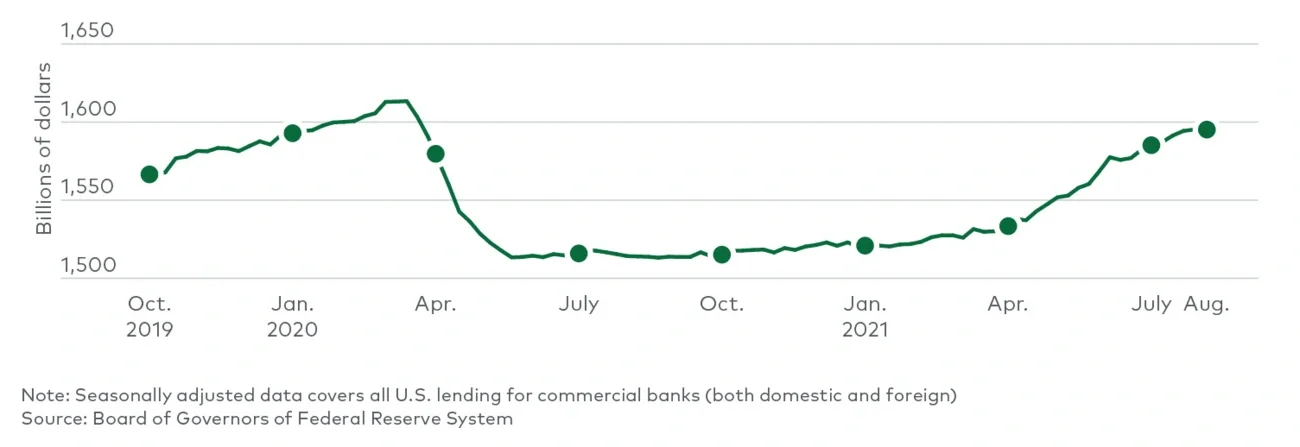
Those steps helped keep delinquency rates low in 2020. The economic disruption was most apparent in the second quarter of that year, as lending for unsecured credit products slowed dramatically (see Figure 1).

Figure 1

Commercial bank lending for consumer loans (October 2019-August 2021)

Image
commercial bank lending

Figure 1

Commercial bank lending for consumer loans (October 2019-August 2021)

Image
commercial bank lending

Access to credit cards and personal loans was expected to rebound through the first half of 2021 due to anticipated improvements in macroeconomic factors such as employment and GDP, but while some consumers may have overextended and will struggle with their monthly payments after government assistance programs end, many will seek loans again, sending their balances back up. 

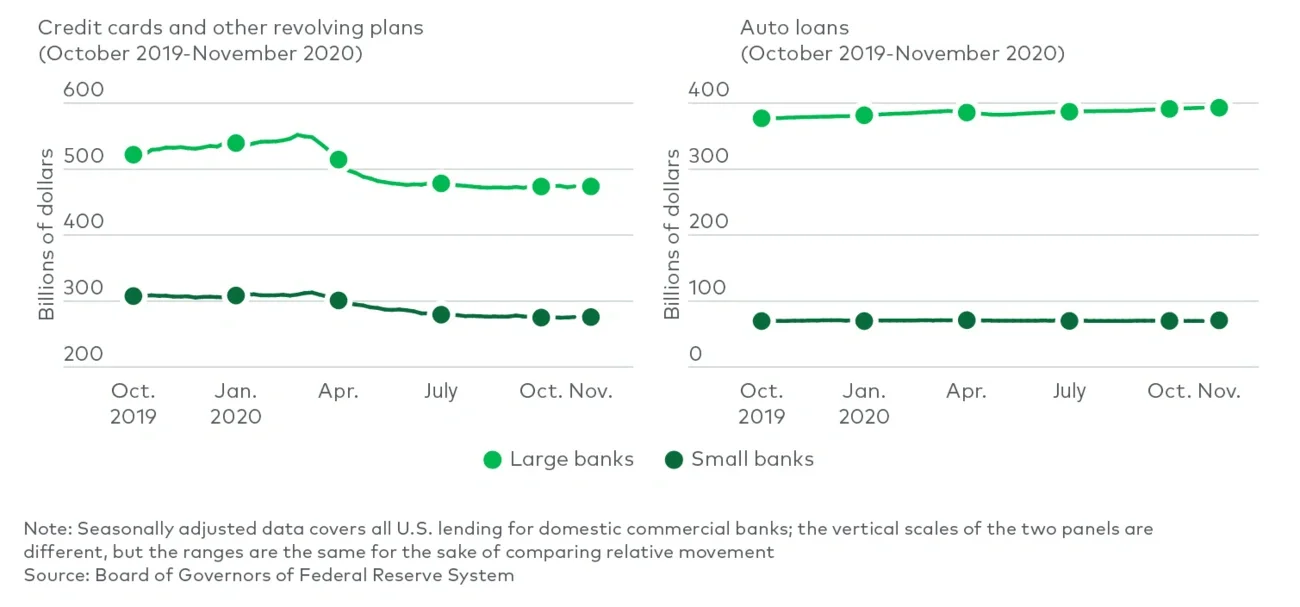
In 2020, credit card loans decreased at small and big banks alike, with large banks accounting for the lion’s share of the volume decline. Auto loans, meanwhile, slowed during March and April 2020 but started to grow again in the second half of the year as new and used vehicle sales resumed (see Figure 2).

Figure 2

Consumer lending by domestic banks

Image
consumer lending by domestic bank

Figure 2

Consumer lending by domestic banks

Image
consumer lending by domestic bank

Banks experienced weaker demand for consumer loans as customers displayed more conservative financial habits. Revolving balances fell — primarily due to people charging less to their credit cards — as consumers dialed back on discretionary spending, in particular for restaurants and nonessential shopping. In addition to spending less, consumers who secured cash from government stimulus programs used some of that money to pay off both credit card and existing loan balances. 

While economic conditions have begun stabilizing recently, unemployment remains high relative to before the pandemic, which has prompted lenders across various industries to implement restrictions on lending. In the meantime, forbearance programs have changed the lending landscape as the programs make it difficult both to interpret credit-scoring data in underwriting and to collect on defaulted loans. 

But as vaccines continue to be administered across the U.S., the hope is that the reopening of the country’s businesses — together with the increased number of available jobs and higher wages — will improve consumers’ ability to manage their debts in 2021 while also prompting them to increase their credit-card spending.

More new loans will go to lower-risk consumers as lenders put a greater emphasis on customers’ repayment history and take a more conservative approach to assessing loan affordability, while many consumers who do get loans will be charged higher rates. However, lenders — especially unsecured lenders — will eventually need to reassess their lending criteria and increase their risk appetite to prevent their books from going into runoff and their incomes from falling to unsustainable levels.

The number of consumer borrowing options was already on the rise when COVID-19 hit, but the pandemic threw the technological innovations powering that growth into overdrive. Fintech lending platforms welcomed small-business owners who had previously been turned down by traditional banks, for example, and mobile apps offering easier, faster ways to borrow money streamlined the user experience. 

While many big banks and legacy lenders have not yet learned from their fintech rivals, adopting emerging best practices that came about as a result of COVID-19 could help them improve their performance in the interim. These practices include:

  • Using data and psychometrics to assess creditworthiness
  • Deploying accounting integration to provide invoice financing for short-term needs
  • Harnessing artificial intelligence (AI) to transform lending into a long-term partnership
  • Building ongoing relationships through a membership model

The pandemic has also acted as a catalyst for lenders to adopt new technologies to stay competitive. Consumer use of online channels and digital platforms has surged during the pandemic: 40% of consumers have been using digital channels more frequently, while 60% of consumers say they conduct the majority of their financial transactions on mobile applications. One in three consumers are now engaging with their preferred financial institution multiple times a week via digital channels, and roughly two out of every three consumers are utilizing such platforms a minimum of once a week. Financial institutions that have prioritized digital innovation to optimize their consumer interactions are likely to see the most upside over the long term. 

Consumers’ increased online channel/digital platform use means they can be receptive to receiving relevant credit offers that are tailored to their financial needs. Lenders subsequently need to continue investing in providing consumers with seamless engagement, underwriting and servicing experiences. Those lenders that customize every consumer touchpoint to enable a seamless experience will be the ones that win going forward

Point-of-sale (POS) lending, which enables consumers to make purchases with incremental payments,  also became a much more common option during the pandemic as consumers increased their online spending. Ecommerce merchants are prime candidates for offering these types of digital loans because the loans can be promoted to consumers before they get to checkout, which can increase the amount consumers spend on their purchases. Retailers then partner with third-party lenders (e.g., Affirm, Afterpay, Klarna) to integrate their services into the checkout process. 

One reason for the popularity of POS installment loans offered through digital channels is that lenders have streamlined the application process, reducing the friction that consumers would otherwise find prohibitive. The ability to quickly access financing at a retailer’s website, more flexible borrowing limits, no credit history requirements, and low- or no-interest options have all helped reduce the friction of borrowing.

Many consumers have never faced unemployment or base interest rates at anything far above zero, which will challenge both the rates’ affordability and consumer budgeting skills going forward. Lenders are facing corresponding tactical and strategic challenges that are being driven by changing customer behaviors, emerging technology and data sources, and increased competition and margin pressure due to new investments and capital in the industry.

For lenders, the challenges associated with COVID-19 will play out over the short and long terms. 

Short-term challenges

These challenges include:

  • High volume of forbearance requests from distressed customers in 2020
  • Immediate impact of government initiatives in mortgages and unsecured lending on customer repayment behavior as well as lenders’ ability to use more involved collection methods 
  • Inability to use normal working methods and a wide range of other operational difficulties as contingency plans are tested beyond what was, until recently, regarded as any reasonable expectation in terms of both depth and duration of the crisis

Long-term challenges

These challenges include:

  • Short-term challenges (listed above) that persist beyond the immediate emergency period, fundamentally changing the lending and financial services landscape itself
  • A resetting of assessments of creditworthiness to include lower and/or more volatile expectations around income and earnings
  • Changes in customer behavior and, by extension, the ability to assess customers’ creditworthiness (though funding availability will be less challenging than it was during the great financial crisis)

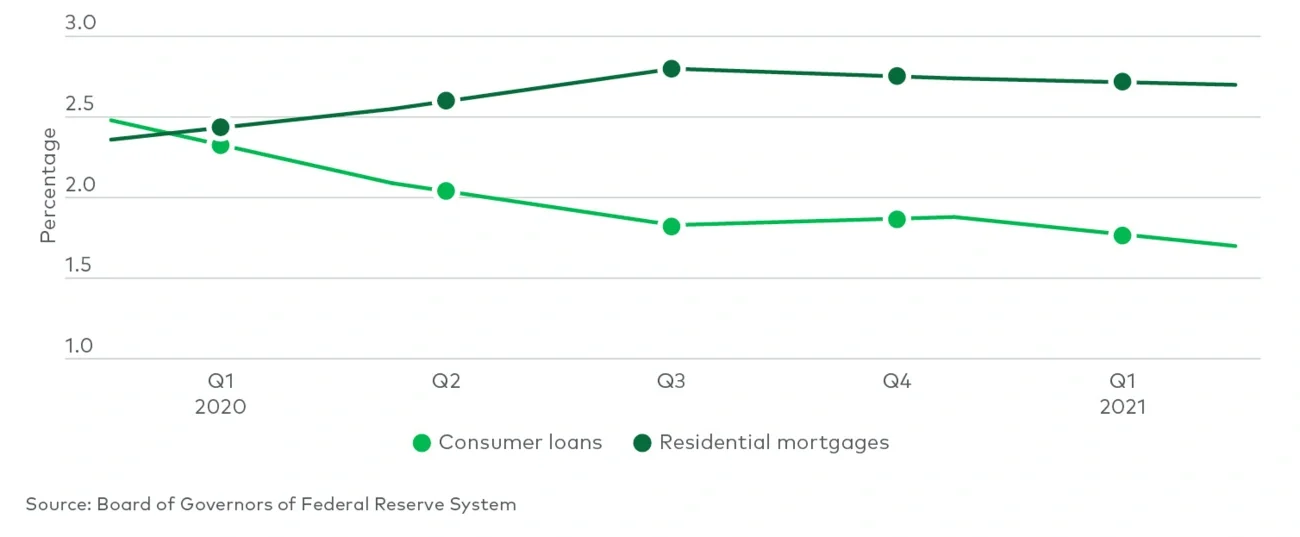
U.S. delinquencies increased during the great financial crisis at a higher rate than in other countries (e.g., United Kingdom), whereas during the COVID-19 pandemic, U.S. delinquencies have remained low. According to the Federal Reserve, from the first quarter of 2020 through the first quarter of 2021, the average delinquency rate on residential mortgages was 2.64%; for consumer loans (credit cards, other), it was 1.99% (see Figure 3).

Figure 3

US delinquency rates on residential mortgages and consumer loans (Q1 2020-Q1 2021, by quarter)

Image
residential mortgage and consumer loan rates

Figure 3

US delinquency rates on residential mortgages and consumer loans (Q1 2020-Q1 2021, by quarter)

Image
residential mortgage and consumer loan rates

COVID-19 has prompted many prominent banks to moderate their appetites for mortgage lending. JPMorgan, U.S. Bank and Wells Fargo have all tightened their standards on home loans and suspended their home equity line of credit offerings, for example. Meanwhile, nonbank lenders — which now provide a majority of home loans — don’t have access to Federal Reserve funds and so may not be able to absorb a flood of defaults. Notably, these actions run counter to the Federal Reserve’s approach of boosting liquidity at banks in order to promote lending.

Groups in the nonbank lending space, meanwhile, have experienced substantial margin calls throughout the pandemic. As a result, many of them have ceased lending altogether and are instead selling portfolios to raise cash that will allow them to continue in the business.

Lenders can use a variety of levers to create successful going-forward strategies. These strategies differ by bank type and lending class and include especially strong opportunities for specialist lenders and/or those with complex, data-driven underwriting capabilities.

Big banks. To help them capture the seven out of 10 Americans who say they would switch to a financial institution with more inclusive lending practices, big banks should use machine learning and big data tools to augment credit reports with real-time income or cash-flow data. They should also continue their accelerated shift to online channels, as all lenders will need to keep investing in seamless engagement, underwriting and servicing experiences. Large financial institutions that prioritize digital innovation to optimize their consumer interactions are likely to see the most competitive upside over the long term.

Small banks. Against a backdrop of increased interest in lender trustworthiness; intuitive digital application processes; personal loans for new entrants; and self-serve, omnichannel digital lending experiences, small banks should position themselves to meet changing consumer demand. 

Specialist lenders. To capture customers that the larger prime banks have turned away, specialist lenders should actively position and market themselves to newly nonprime borrowers. Specialist lenders should also continue to offer tailored solutions through open banking for those with complex and nontraditional financial needs. Doing so will help streamline the mortgage approval process; it will also help the specialist lending sector deliver tailored solutions to this growing segment of the market with greater speed and efficiency.

Subprime lenders. To meet the evolving preferences and needs of consumers, subprime lenders should also actively position and market themselves to customer groups that have been newly rejected by mainstream lenders. Subprime lenders could also offer POS financing as an alternative to credit cards. Presenting line of credit financing as personal loans to consumers who make frequent, small-dollar transactions will help combine the strengths of personal loans and credit cards to target initial consumer transactions. And to better assess customer risk profiles, subprime lenders should invest in automation, which will help remove any replicable rule-based process from humans by leveraging AI and machine learning, allowing lenders to scale up without the need for a corresponding increase in team size. 

COVID-19 has prompted U.S. lenders across the board to reconsider their participation in consumer lending. And those lenders that remain have pulled back on new business volume as they try to determine: 

  • How secure their funding is and the level of volume it will support
  • To what degree new lending should match up with the overall operating cost base of their business
  • How to assess the creditworthiness of new customers
  • How confident they are in both the performance of their back books and their cost expectations to allow for increased collection activities 

Economic shocks and the downturns they yield also create opportunity, and COVID-19 is no different. And unlike in the great financial crisis, the federal government has provided a significant amount of fiscal relief to help consumers meet their loan obligations. Banks and specialist lenders, and their investors, need to embrace strategies that make the most of their capabilities while directly addressing the needs — and evolving behaviors — of their target customers.

English
Executive Insights

Jobs Automation: Growing Public Popularity Means Senior Leaders Must Act

November 12, 2021

Key takeaways

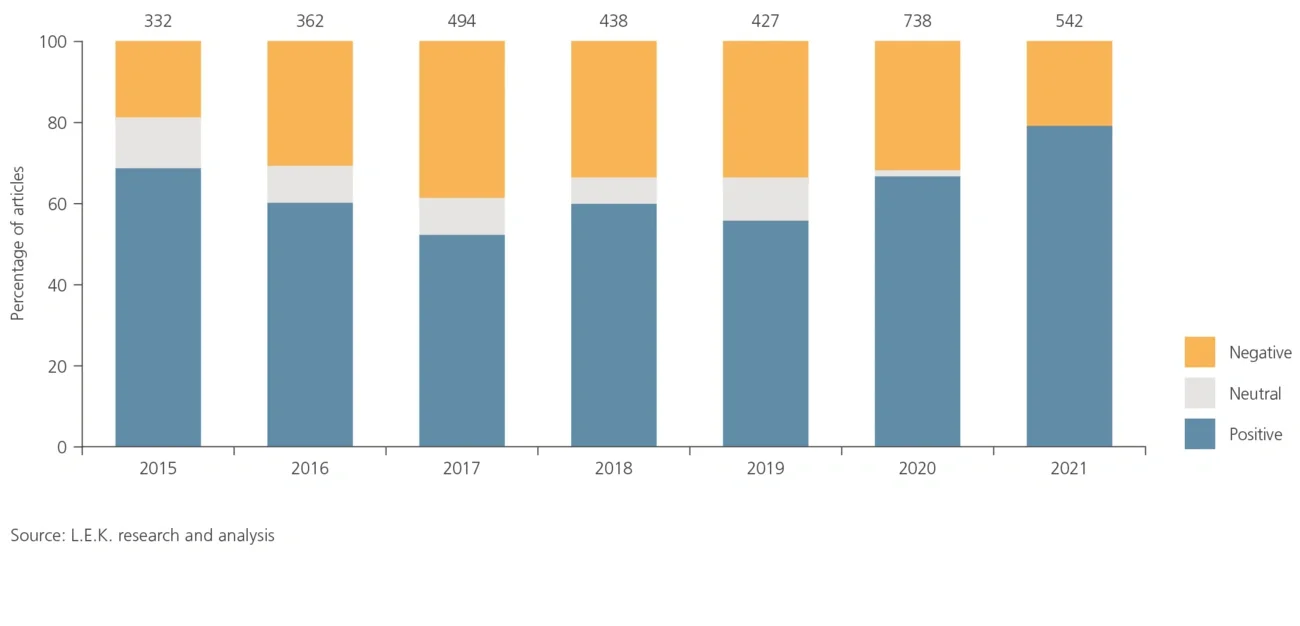
An L.E.K. analysis of over 3,000 press articles reveals that public opinion about jobs automation has grown increasingly positive over the last six years, a trend that the COVID-19 pandemic has accelerated.

But there are regional differences in positive sentiment, with major European economies lagging the Asia-Pacific region.

Media sentiment toward jobs automation is also mostly positive, especially among specialist and technical publications.

In many sectors, the automation train has already left the station. Business leaders can lay the foundation for success by taking action in three areas: horizon-scanning, staff surveys and messaging around how the company is addressing automation.

Automation continues to have a positive impact on job creation, as we highlighted in our previous Executive Insights “Automation and Jobs: Why CEOs Must Prepare for Structural Change" published in March 2020. Indeed, within the UK labour market, the advent of new technologies has not only created more jobs than it has replaced, but also jobs that are more resilient to automation through being more complex, social and creative.

These trends towards automation have continued and have been accelerated by COVID-19, with lockdowns prompting many companies to harness the potential of replacing some in-person activities (but much less so whole jobs) with automated processes.

In this Executive Insights, we examine how public opinion towards automation has become increasingly positive over recent years as more and more people have real-world experience of automated services, accelerated during the COVID-19 pandemic. We also highlight the various ways in which CEOs should be looking to reposition their businesses as jobs automation accelerates over the coming years, changing the mix of skills needed by their workforce.

Figure 1 below shows the results of our analysis.

Figure 1

Sentiment towards jobs automation (2015-21)

Image
jobs automation

Figure 1

Sentiment towards jobs automation (2015-21)

Image
jobs automation

The analysis shows that public opinion has become increasingly positive towards jobs automation in recent years as more and more people encounter and have positive experiences of automation in their daily lives: positive sentiment towards ‘job automation’ rose from around 52% of articles in 2017 to 79% by June 2021. 

The fact that the first half of 2021 is by far the most positive period across our survey reflects, at least in part, its timing after the worst of the initial stages of the pandemic and related lockdowns, which have accelerated adoption of automation. 

This acceleration has happened partly through necessity. For example: 

  • Banks were initially overwhelmed by volumes of queries from panicked customers in the early stages of the pandemic and were forced to adopt automated means of handling these. Many customers who would never voluntarily interact with their banks this way, e.g. through online channels or chatbots, have been forced to do so, and found this to be much more to their liking than they expected.
  • Physical non-essential retail stores were closed by governments to prevent the spread of COVID-19, which increased use of ecommerce and online delivery companies during the period of lockdown, both of which use automation more extensively than their bricks-and-mortar equivalents.

More and more people have therefore had positive real-world experience of interacting with automated technology through and after the pandemic, which we believe has contributed to more rapidly improving sentiment.

The pandemic has also accelerated commercial interest in taking automation further, for reasons both of risk reduction and of more positive, transformational development. For example: 

  • Warehouses have increasingly adopted robot picking and packing of goods to reduce the health risk of COVID-19 transmission and the business execution risk by covering for and reducing the impact of staff absences and shortages. This includes both direct risk (as in the peak of the health crisis itself) and indirect risk, for example, in the subsequent ‘pingdemic’ which occurred as the UK gradually reopened for business in summer 2021.
  • Google is currently carrying out cutting-edge research into how robotic process automation (RPA) software can also be incorporated into industrial robots. In July 2021, Google launched a new company, Intrinsic, with the aim of building software that will make industrial robots “easier to use, less costly and more flexible”.

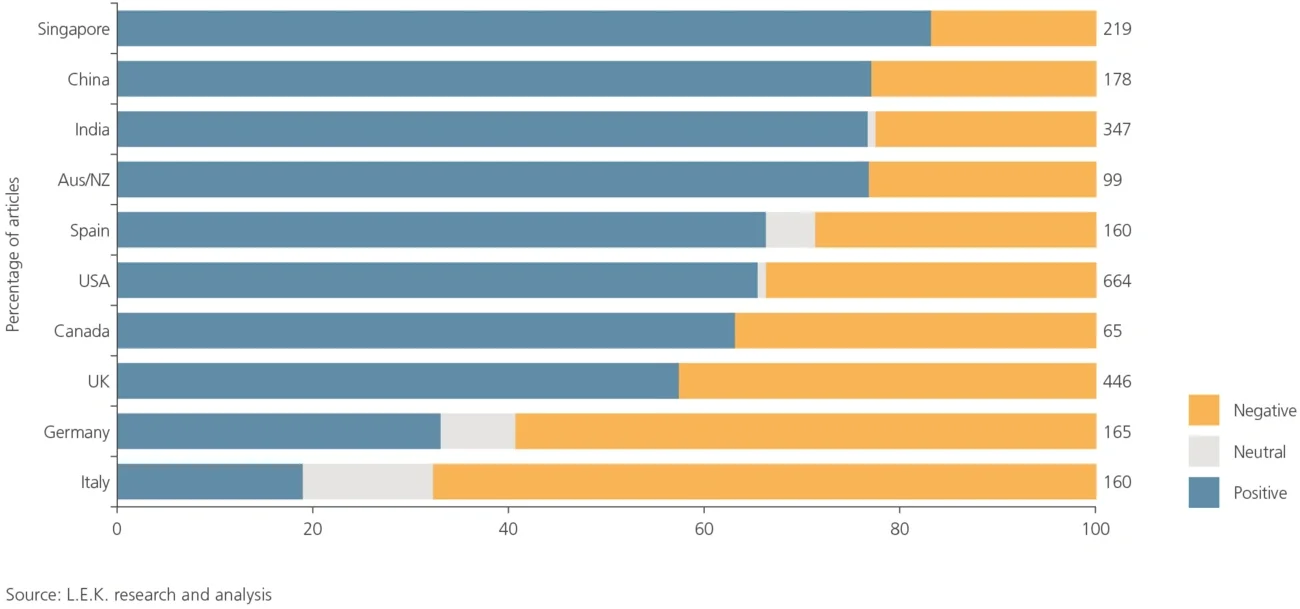
L.E.K. analysis of over 3,000 press articles published since 2015 also found that the major European countries are lagging behind the Asia-Pacific region in terms of positive sentiment towards jobs automation. 

Figure 2 below shows the results.

Figure 2

Sentiment towards jobs automation by country (2015-21)

Image
jobs automation sentiment

Figure 2

Sentiment towards jobs automation by country (2015-21)

Image
jobs automation sentiment

This analysis shows that Singapore leads the way with 83% of articles relating to jobs automation being positive, closely followed by China at 77%. This compares to 33% of articles for Germany and below 20% for Italy, where interaction with automated services in daily life remains much lower than the more forward-thinking Asia-Pacific economies.

In previous years, TV and print media have broadcast or published sensationalist stories that decry the ‘inevitable’ loss of human jobs to automation. However, as our previous Executive Insights in March 2020 showed, this presumed conclusion was incorrect, with automation in fact having led to an increase in both the quality and quantity of jobs available within the UK labour market.

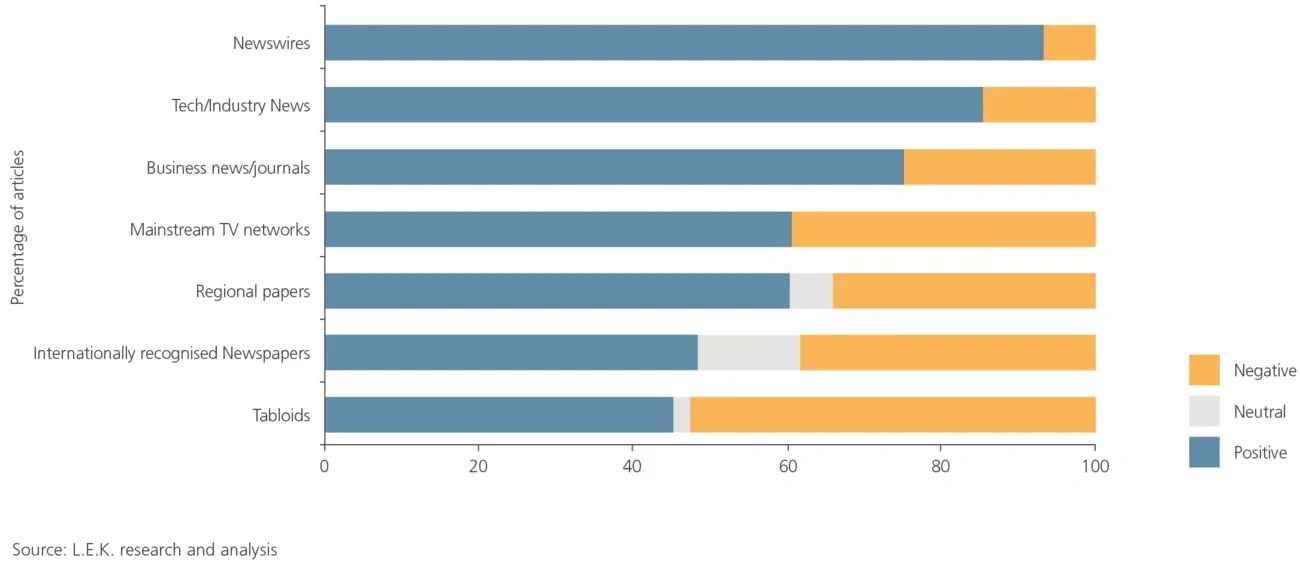
Through L.E.K.’s analysis of various types of media over the past six years, we have discovered that most of the media is now positive towards jobs automation. Figure 3 of our analysis shows that specialist and technical publications lead the way in terms of their positive assessment of jobs automation, with a 93% positive view from newswires and a 75% positive view from business news/journals. 

Figure 3

Sentiment towards jobs automation by publisher type (2015-21)

Image
jobs automation sentiment

Figure 3

Sentiment towards jobs automation by publisher type (2015-21)

Image
jobs automation sentiment

While tabloids remain a laggard, with a score of just 45%, their readership profile tends to be skewed more towards older people (who in turn are more likely to be retired), so proportionately fewer younger employees (who will be developing their careers during this future period of greater automation) will be influenced in their viewpoints towards jobs automation by this source.

Within many sectors, it can be argued that the automation train has already left the station, and therefore it remains urgent for businesses to step up their investment in automation, if they have not already done so, to lay the foundations for future success.

We have identified the following areas which will help our clients succeed in this world of increased jobs automation:

  • First, we would urge our clients to carry out ‘horizon-scanning’ — namely to understand the best (and worst) of what is now being achieved in jobs automation by peers and competitors, in detailed, practical terms.
  • It is also important to survey staff in terms of their own personal attitudes and preferences towards jobs automation, and their readiness to accept a greater amount of change in how they work day-to-day — generic or poorly thought through solutions have the potential to do more harm than good if they do not address the actual needs of the specific situation.
  • Developing appropriate market-facing and employee-facing messaging around how the company is addressing automation is also key, with the view of presenting a compelling but balanced long-term picture as to how jobs automation will impact the business.

In addition, the need that we have previously identified for CEOs to engage proactively with the potential offered by automation remains crucial. Traditionalists looking to pander to older staff fears around automation will become increasingly out of kilter with younger and more optimistic employees. 

With public opinion becoming better informed with each passing year about the real-world benefits of automation, we would reiterate our call for CEOs to develop strategies to retain and develop existing talent to carry out the next generation of more automated work and to align staff and management incentives with automation trends so that all parts of the business are seeking, not resisting, automation. 

The authors would like to thank Duarte Pimentel (Senior Data & Analytics Specialist) in L.E.K.’s European Data & Analytics team for his contributions to this article.

English
Subscribe to