

The Great Reopening and Priority Reset: Consumer Insights – Edition 1, Part 1

May 14, 2021

This is the first installment of The Great Reopening and Priority Reset Series, which reflects the results of a recurring consumer pulse survey. The objective of this series is to highlight the “priority reset” happening among consumers and how it is affecting their priorities for post-COVID-19 spending. 

We will be publishing two parts for this edition. Edition 1, Part 1 will cover macro themes, and a subsequent report will identify strategically relevant segments of consumers with distinctly different attitudinal and behavioral profiles.

This survey includes responses captured April 21-23, 2021, from ~1,000 U.S. consumers who are demographically representative of the general population. Additional surveys can be found at the L.E.K. COVID-19 Insights Center

Edition 1, Part 1 yielded a number of interesting insights about changes in consumers’ expectations of activities they will engage in and categories they expect to spend money on once the outbreak is contained.

Important note: All forward-looking data reported is a reflection of consumer sentiment/expectations and is not an official L.E.K. forecast.

Many Americans are unsure about taking the vaccine

Government investment and resources have been instrumental in mobilizing the vaccine effort across the country. With the supply of vaccines continuing to increase and states continuing to broaden eligibility standards, many Americans have been able to get at least their first dose of the vaccine in recent months.

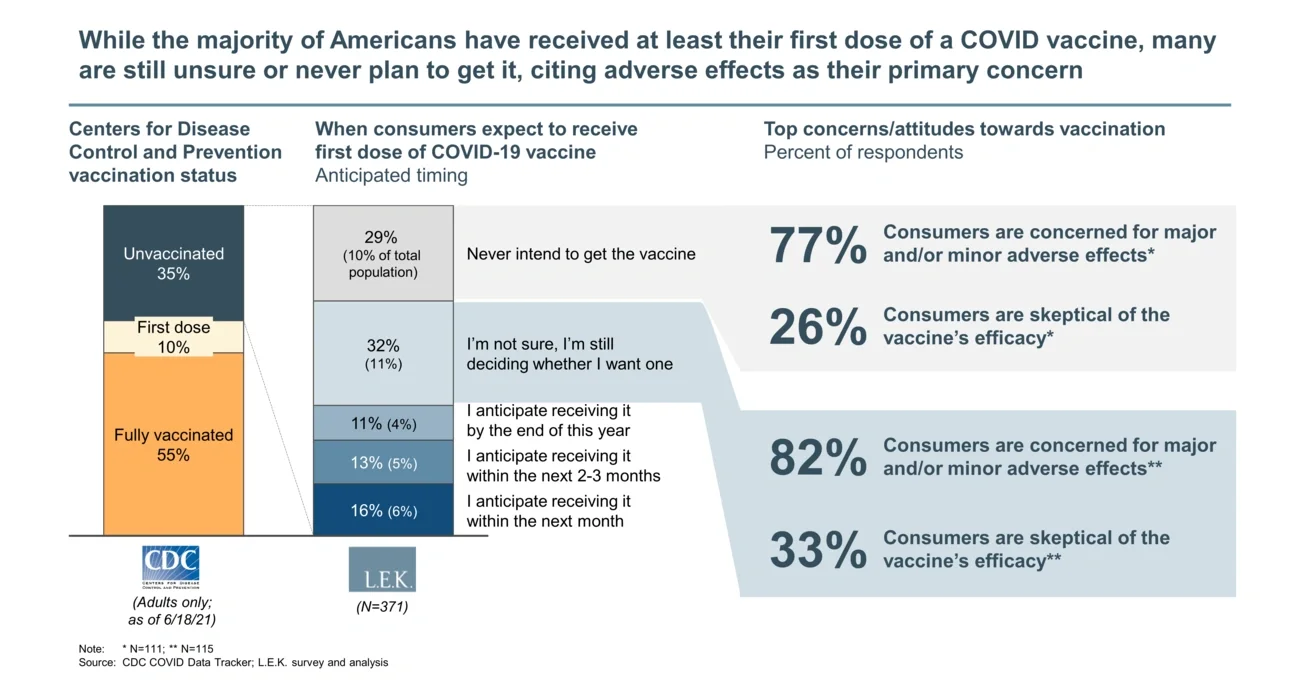
As of June 18, 2021, the Centers for Disease Control and Prevention (CDC) reported that almost 148 million Americans have been fully vaccinated and another 28 million have received at least their first dose. While many Americans continue to schedule appointments for the vaccine, many others still have strong concerns about its efficacy and the potential for adverse side effects.

Overall, the results from this survey suggest that ~10% of Americans never plan to get the vaccine and another ~11% are still unsure about getting it, although those proportions vary across demographics (e.g., race, gender, political affiliation, level of education).

The most common concern among those who are unsure about the vaccine or never plan to get it is the potential for adverse effects. This concern is shared almost universally across the major demographic cuts available in the data.
Image
majority of Americans have received
Image
majority of Americans have received

Consumers expect to use the majority of their stimulus checks in a defensive manner

To help support the economy in the wake of the COVID-19 pandemic, the government has passed multiple rounds of economic stimulus payments. The latest round of government checks started being distributed in mid-March 2021.

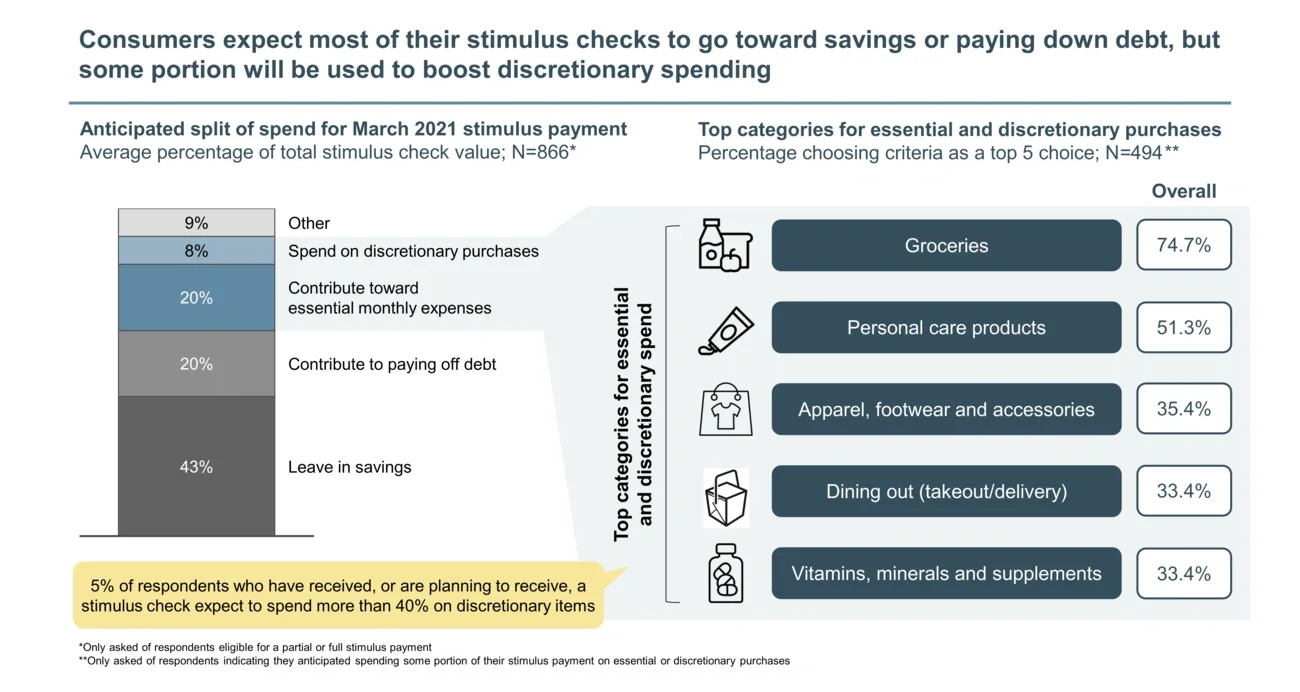
Consumers expect to use the majority of their stimulus checks in a defensive manner, either to increase savings (43%) or pay down debt (20%). Among the portion of the checks that consumers do intend to spend, essentials (e.g., groceries) remain the most common categories of spend, with a smaller portion allocated to discretionary items.

These findings are similar to those related to previous rounds of stimulus checks, as the Federal Reserve Bank of New York estimates that 36.4% and 37.1% of the round 1 and 2 stimulus checks, respectively, were left in savings. The increased savings rate of this third round could be a positive sign that people are in more stable financial positions as we emerge from the pandemic and are able to put more money away to protect against future uncertainty.

The most common categories of expected spend on essential purchases are groceries, personal care products and healthcare products (e.g., medications, vitamins, supplements). The most common discretionary items cited among consumers are apparel, footwear, accessories, and dining out as people embrace reopenings across the country.

Image
spending stimulus checks
Image
spending stimulus checks

Consumer spending is expected to bounce back

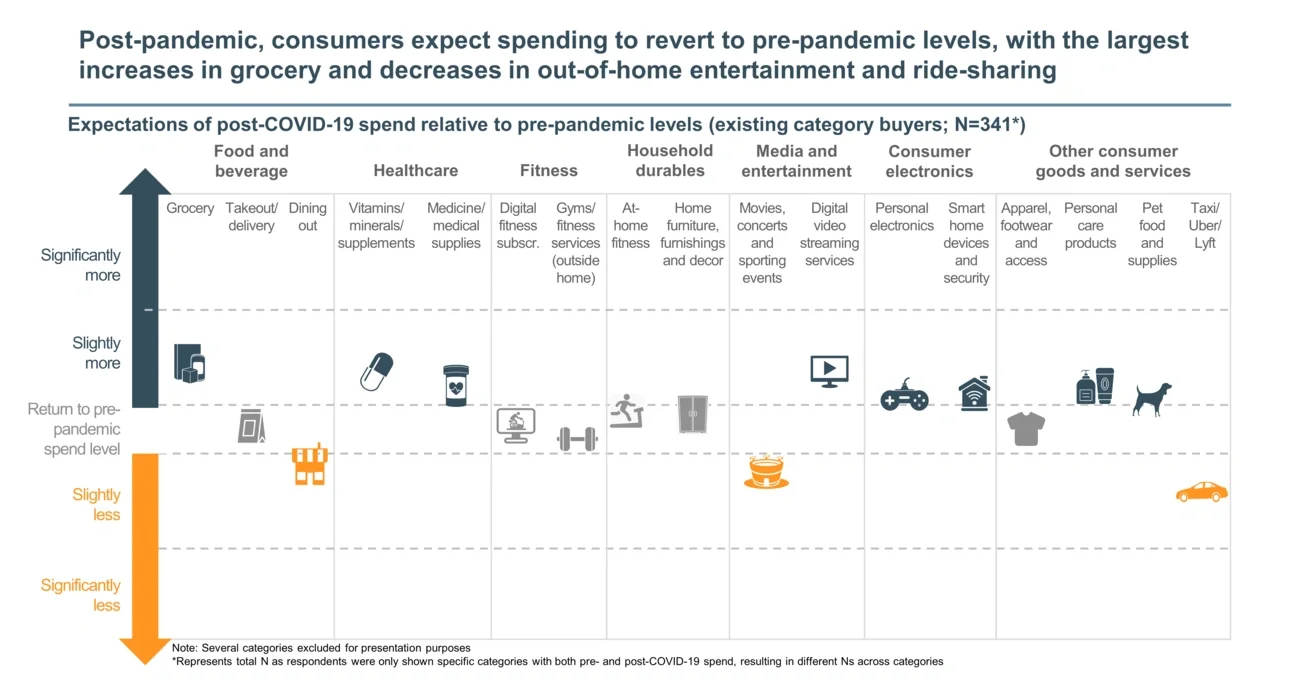
During the pandemic, categories like grocery, takeout, healthcare, and at-home entertainment surged as consumers were concerned about their health and spending more time at home during COVID-related lockdowns. Conversely, categories like dining out and out-of-home entertainment were among the most negatively impacted.

So how do consumers expect their behaviors to change? Once the outbreak is contained, many consumers expect to continue spending more on groceries, healthcare products, and at-home entertainment. Similarly, they expect to continue spending less on dining out, out-of-home entertainment (e.g., sporting events), and taxis and ride shares.

Image
Post-pandemic, consumers expect
Image
Post-pandemic, consumers expect
Image
delivery or curbside pickup
Image
delivery or curbside pickup

Many pandemic activities will persist

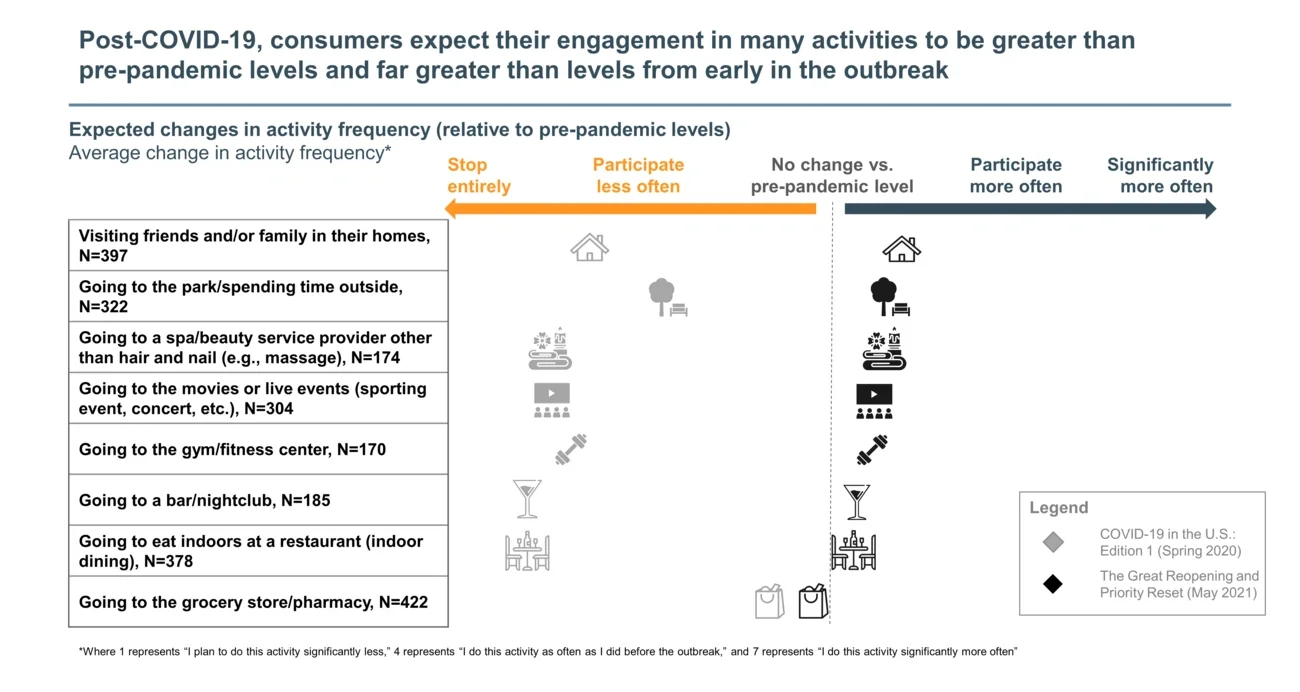
For post-COVID-19 activities, consumers expect to spend more time with friends and family, either participating in family activities or visiting them at their homes. They also expect to spend more time outside (e.g., going to the park) and visiting places that increase their well-being (e.g., spas, gyms) relative to pre-pandemic levels.

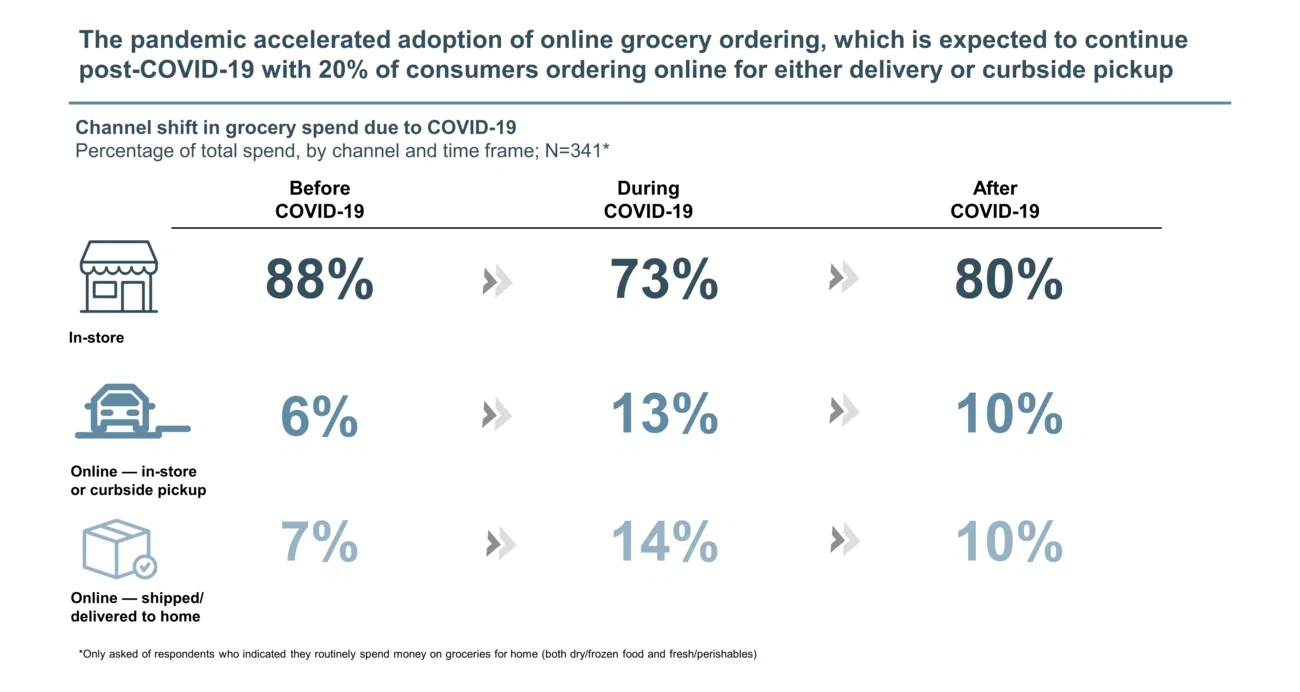
Consumers expect to go to grocery stores and pharmacies less post-COVID-19, as many were introduced to the convenience of online ordering and delivery during COVID-19 lockdowns. 

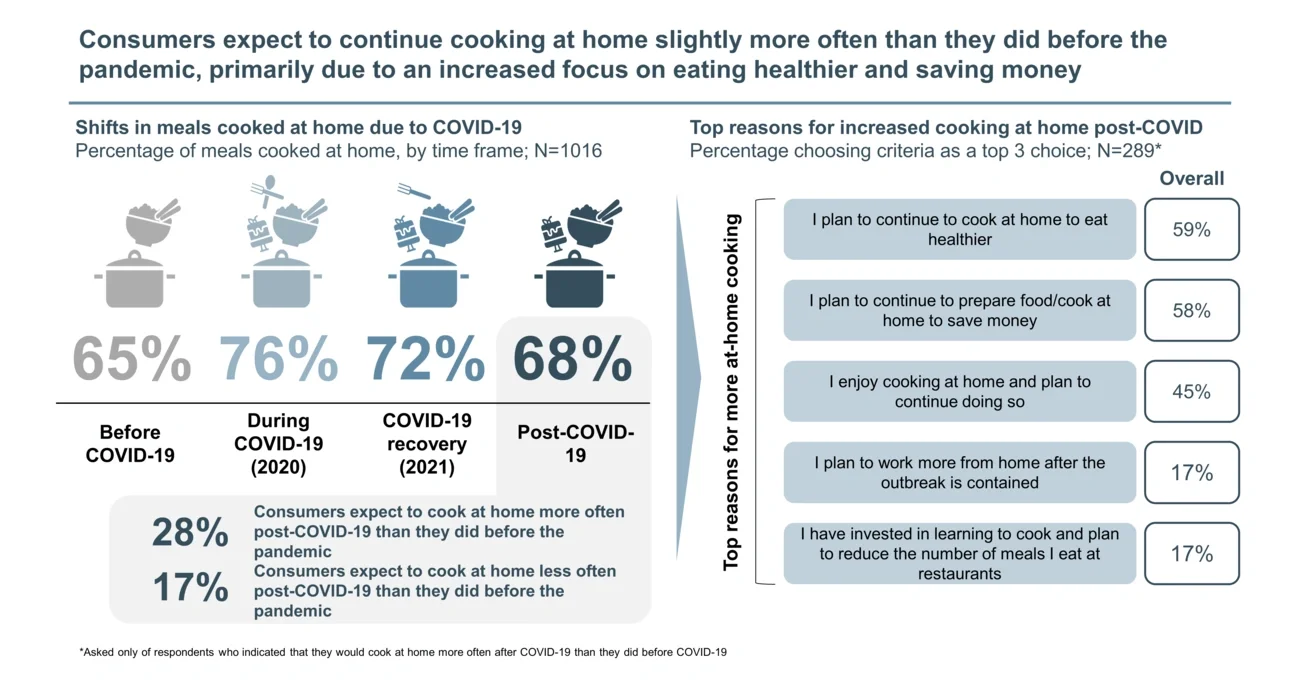
Many consumers also expect to continue cooking more meals at home post-COVID-19, as they see it as a way to eat healthier, save money and spend more time enjoying the activity itself.

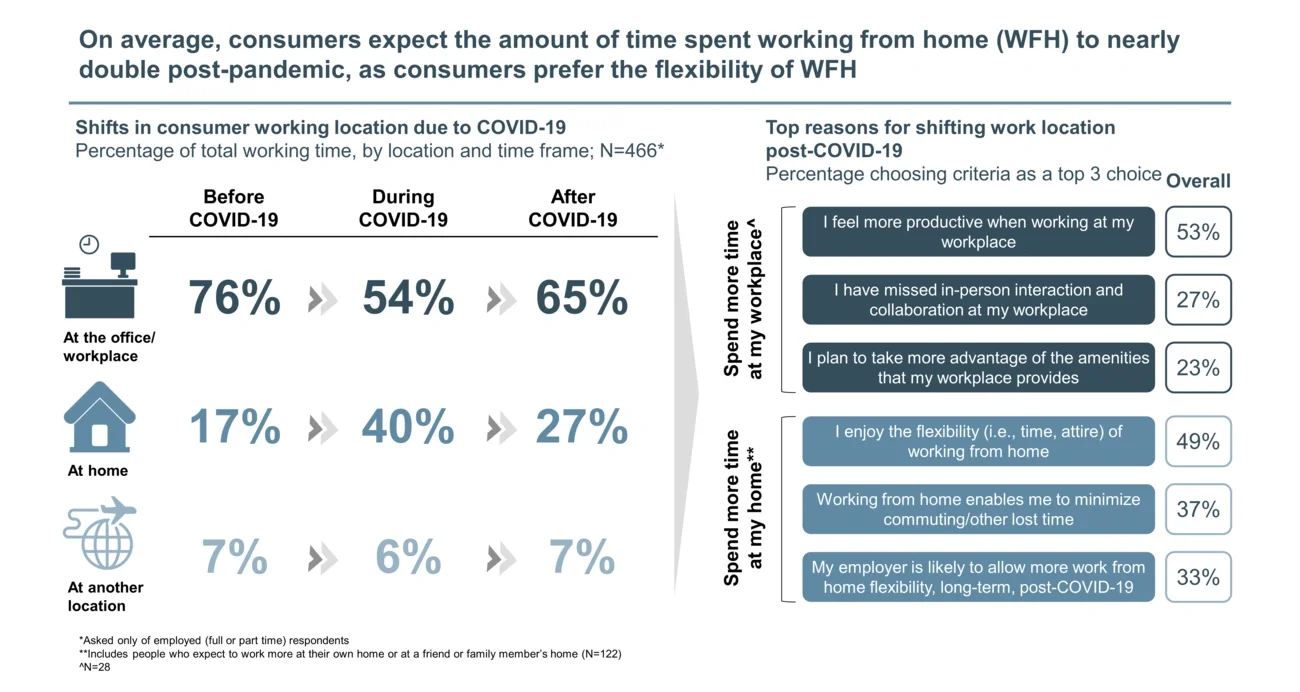
While many employees will be returning to their offices post-COVID-19, 34% of working hours are expected to be away from the office, as consumers prefer the flexibility of working from home and the time saved from not commuting.

Image
engagement in many activities
Image
engagement in many activities
Image
eating healthier and saving money
Image
eating healthier and saving money
Image
time spent working from home
Image
time spent working from home

Pet ownership has accelerated

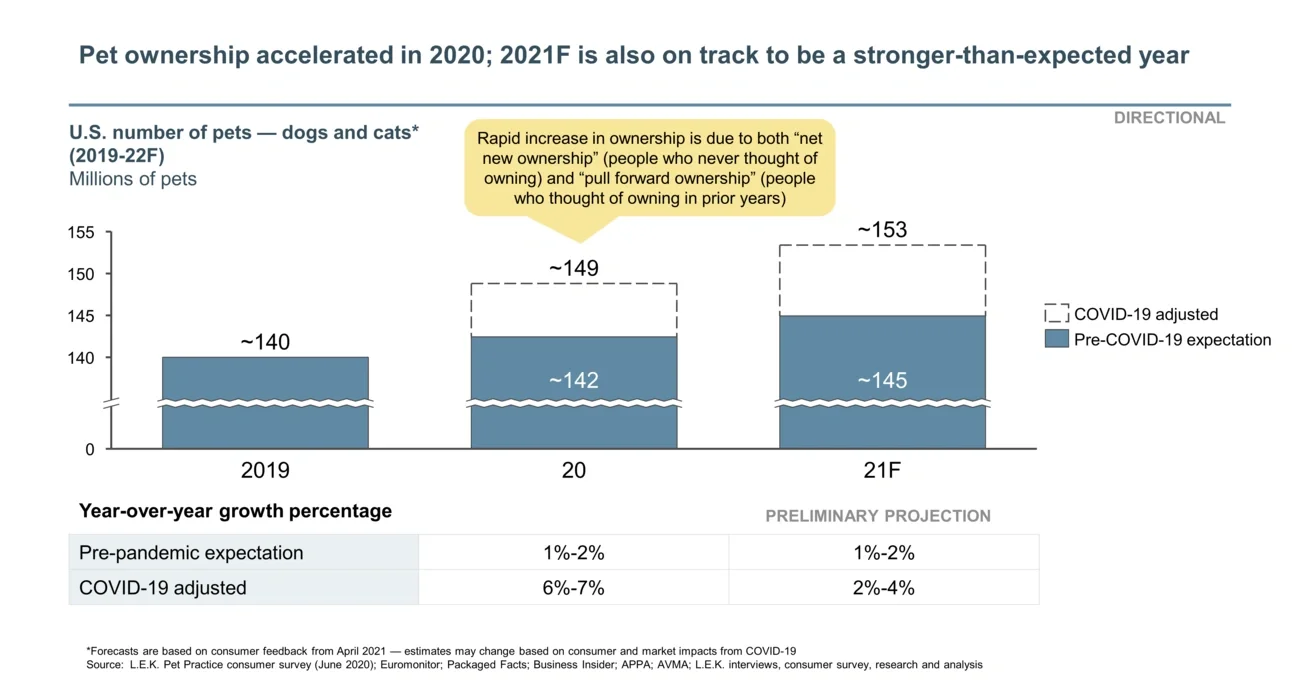
One sector that benefited immensely from COVID-19 lockdowns was the pet industry. The number of pet dogs and cats in the U.S. increased by 9 million in 2020, an increase of 6%-7% over 2019. Demand was so high that many consumers are still on waiting lists for pets across the country in 2021.

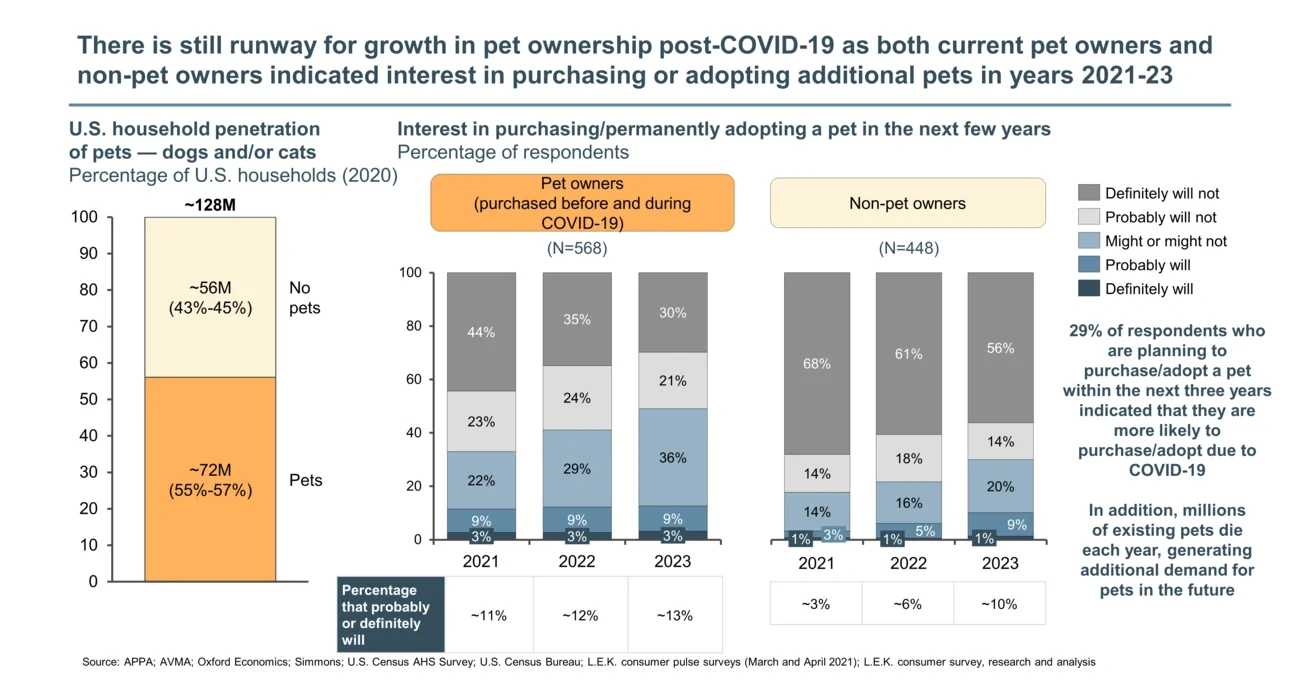
Looking ahead to when the COVID-19 outbreak is contained, there is still runway for growth among both pet owners and non-pet owners. Eleven to thirteen percent of pet owners and 3%-10% of non-pet owners say they are interested in purchasing or adopting additional pets in 2021-23. In addition, millions of existing pets die each year, generating additional demand for pets in the future. 
 

Image
Pet ownership accelerated in 2020
Image
Pet ownership accelerated in 2020
Image
growth in pet ownership
Image
growth in pet ownership

Consumers expect to continue using virtual meeting options

The COVID-19 pandemic put a virtual halt on travel as many countries enacted travel bans and even discouraged domestic travel through requirements of multiweek quarantine periods.

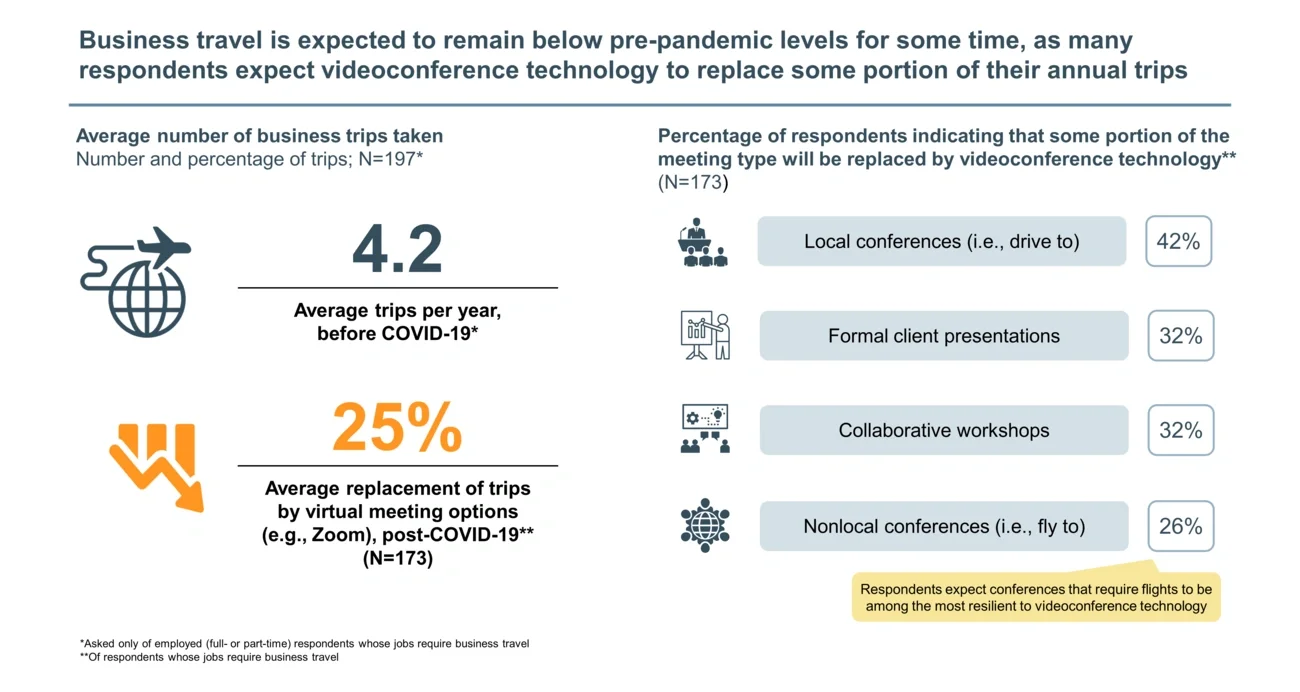
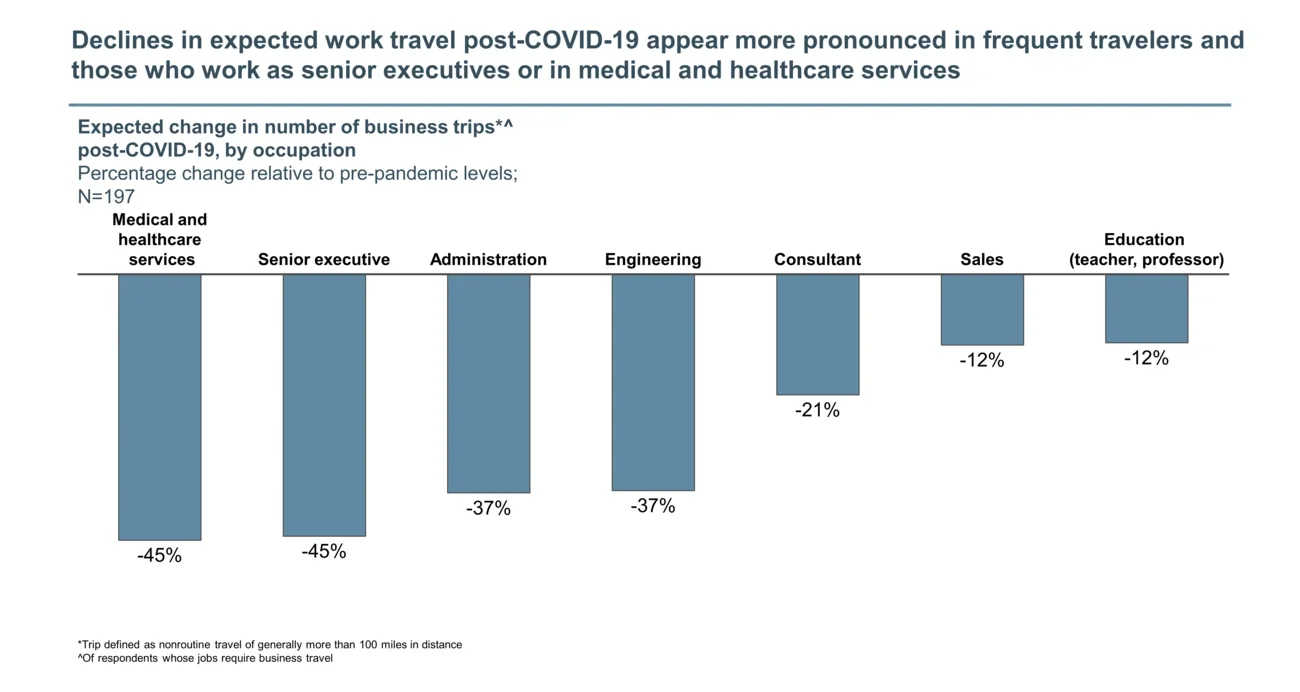
Business travel is expected to be negatively impacted post-COVID-19, as many companies and employees have realized the efficiency of virtual alternatives to in-person meetings (e.g., Zoom). On average, consumers expect to replace 25% of pre-pandemic business travel with virtual substitutes once the outbreak is contained.

The largest declines in post-COVID-19 business travel are expected from senior executives and those who work in administration and medical and healthcare services.

Image
Business travel is expected
Image
Business travel is expected
Image
work travel post-COVID-19
Image
work travel post-COVID-19

Consumers expect to take more leisure trips

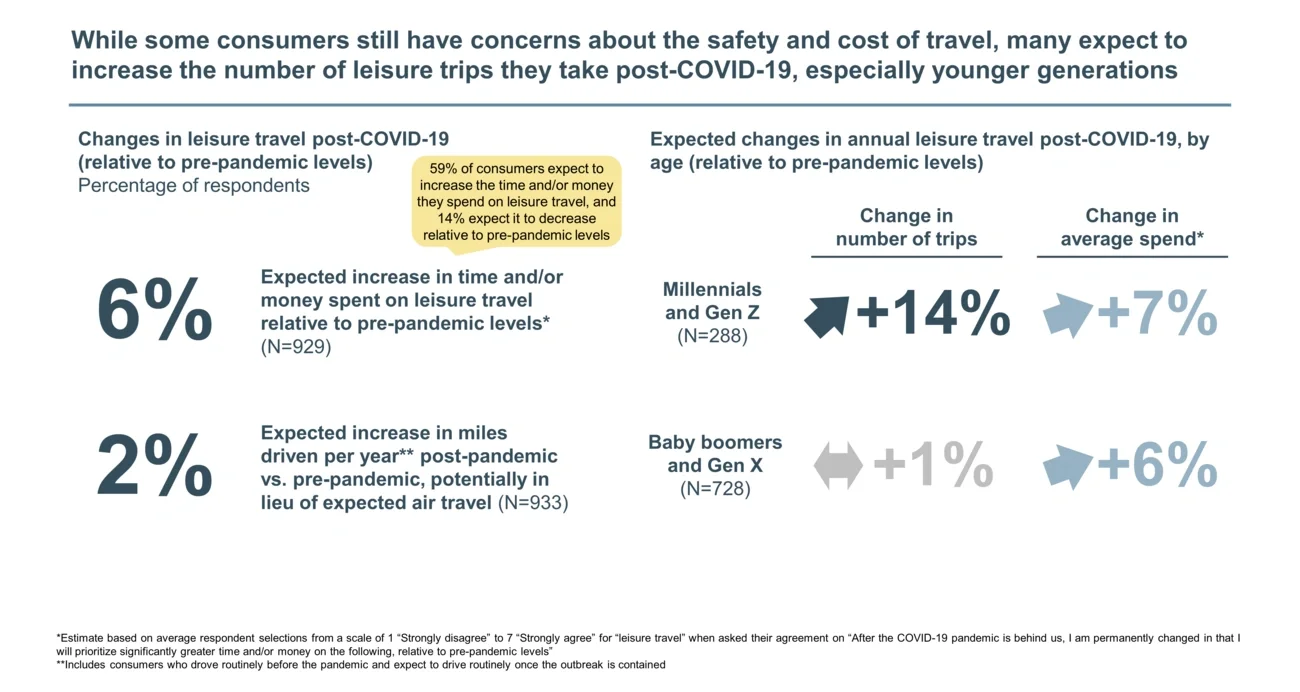
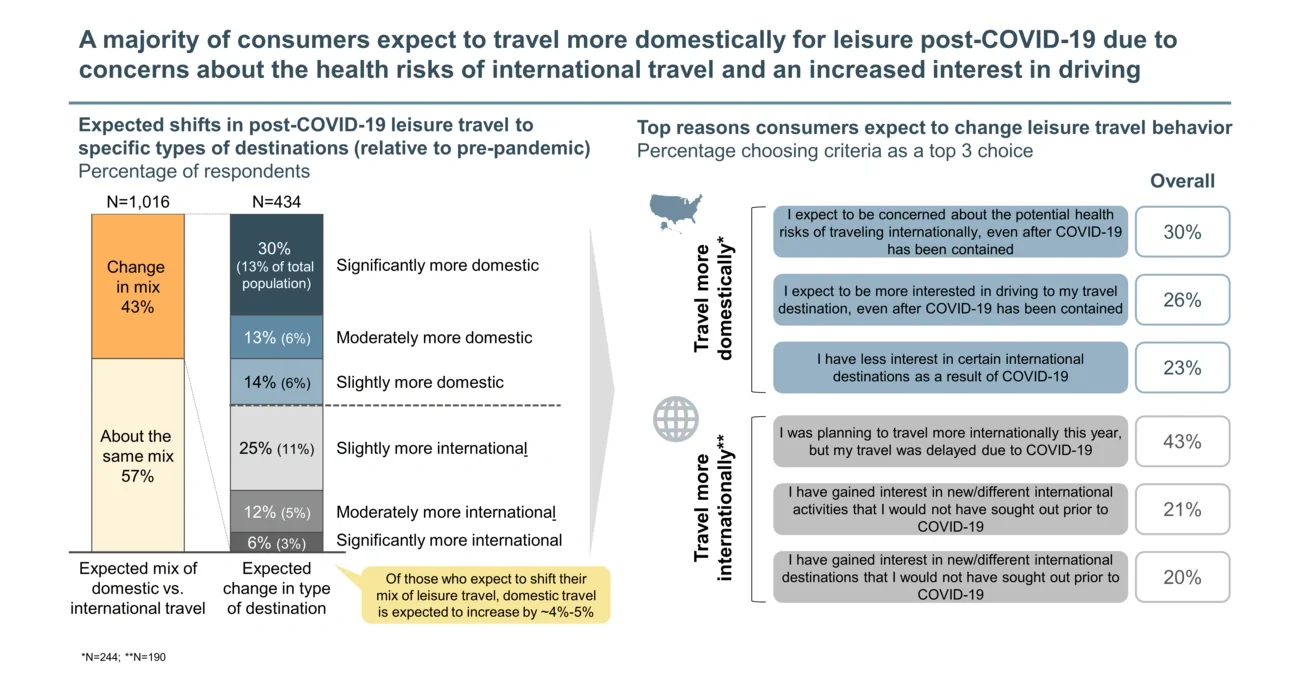
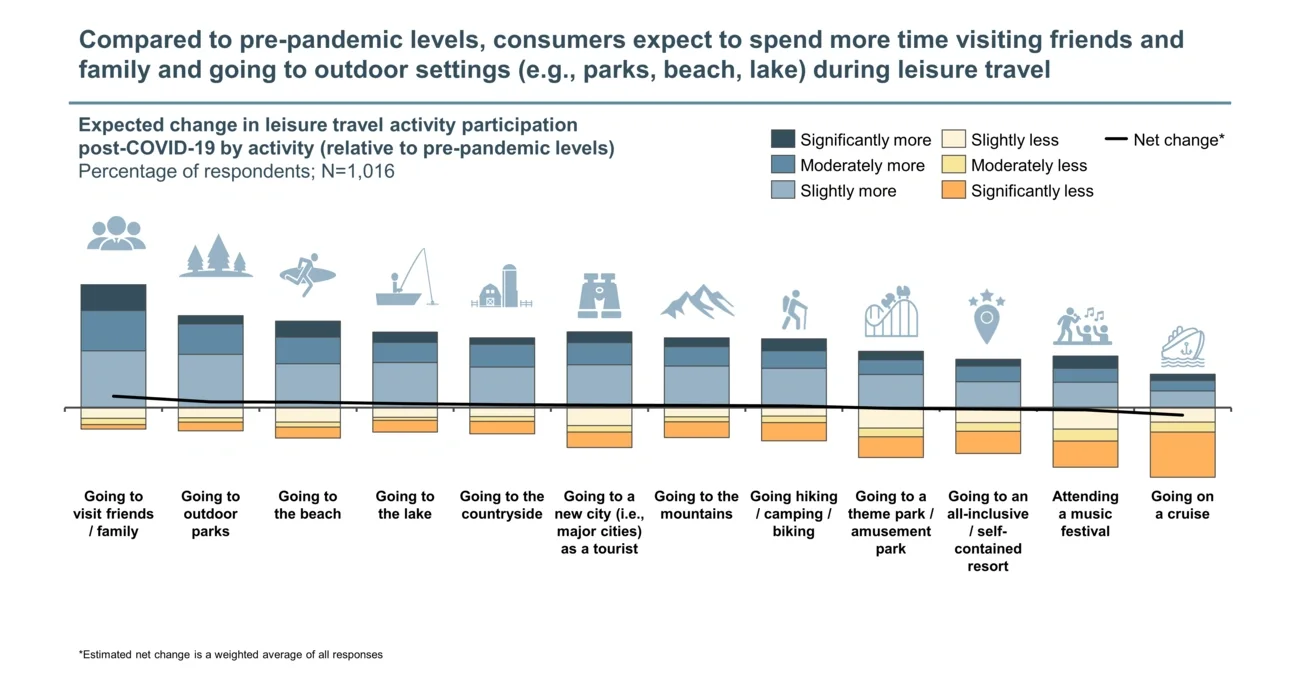
Leisure travel expectations are more optimistic, as many consumers expect to travel more post-COVID-19 than they did before the pandemic. While concerns about safety and cost persist, consumers overall expect to take more leisure trips per year than they did pre-COVID. This is especially true among younger generations.

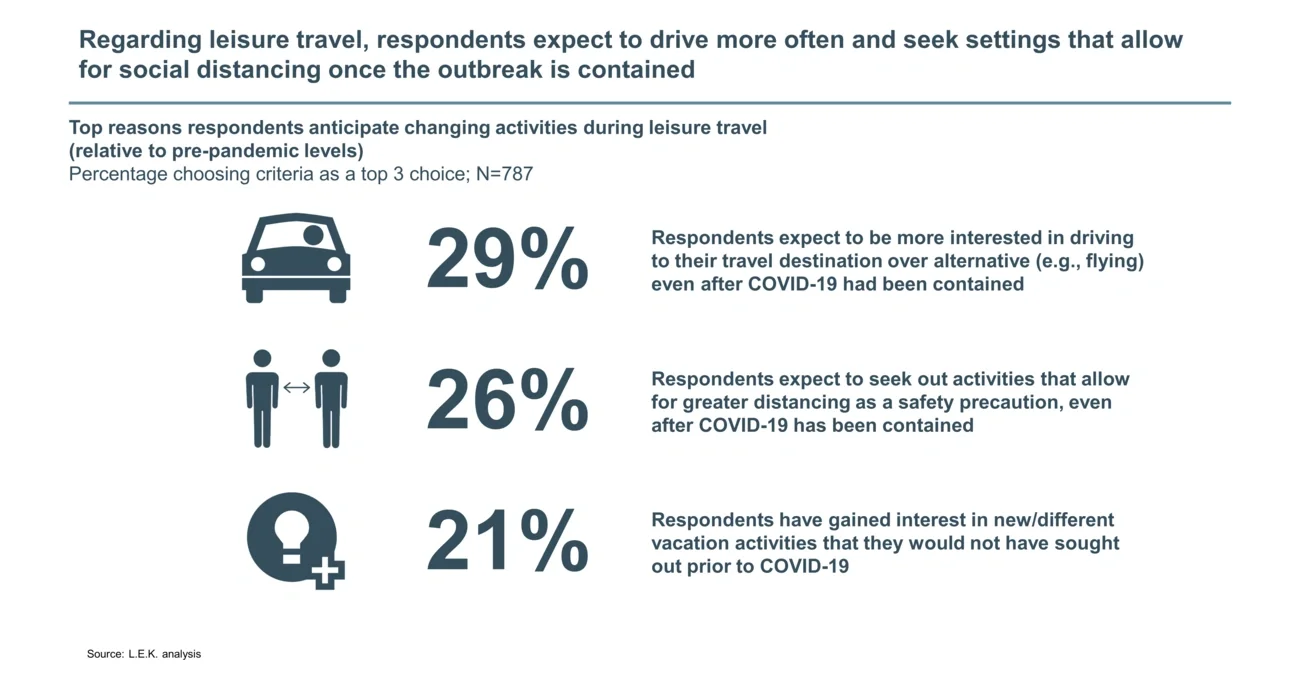
When taking leisure trips post-COVID-19 consumers expect to spend more time visiting friends and family and going to outdoor settings (e.g., parks), as they plan to travel more by car and seek settings that allow for social distancing.

Image
drive more often
Image
drive more often
Image
concerns about the safety
Image
concerns about the safety
Image
travel more domestically for leisure
Image
travel more domestically for leisure
Image
spend more time visiting friends
Image
spend more time visiting friends

A look ahead to Edition 1, Part 2

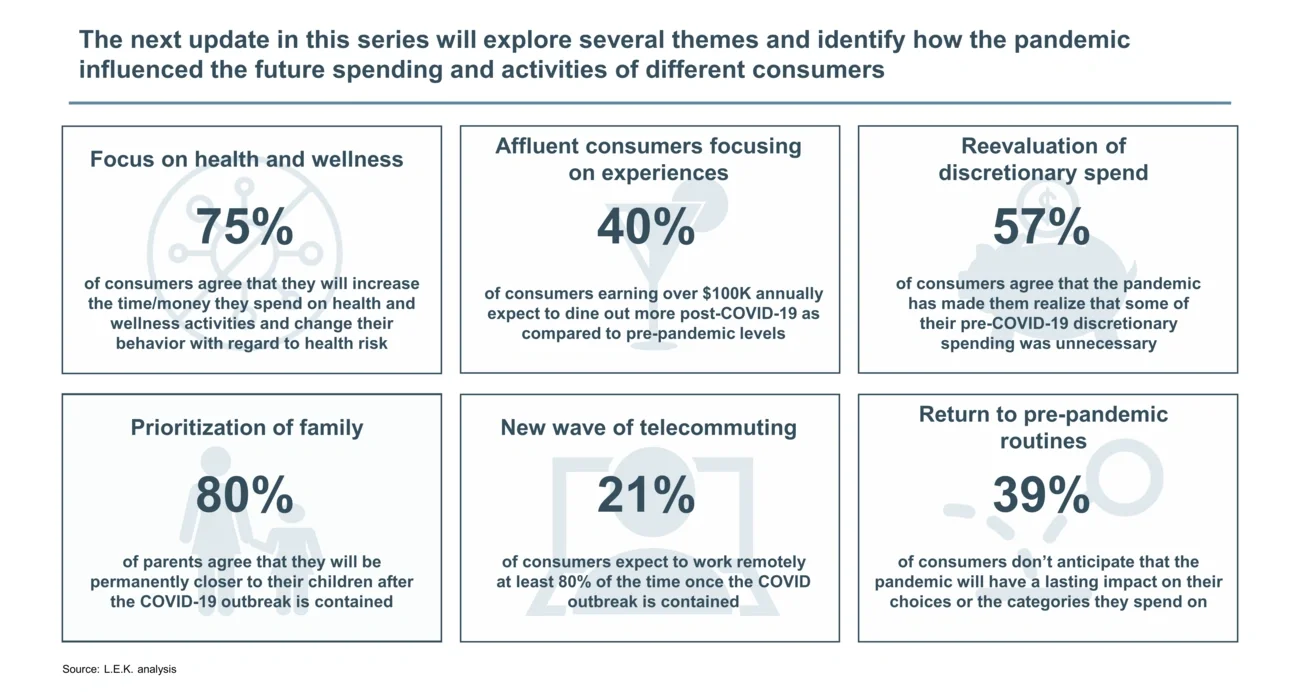
The COVID-19 pandemic has driven a “priority reset” among consumers, where many expect to permanently change how they prioritize their time and what they spend money on.

Reviewing consumer sentiment and attitudinal shifts based on experiences during the COVID-19 pandemic, several themes emerged that will drive permanent shifts in consumer behaviors:

  • Greater focus on health and wellness
  • Increased focus on experiences among affluent consumers
  • A reevaluation of discretionary spending
  • Increased focus on balance and prioritization of family (e.g., children, significant other)
  • More working hours spent away from the office and varying levels of flexibility across consumer groups
  • Established consumers returning to pre-pandemic routines and spending
Image
future spending and activities of different consumers
Image
future spending and activities of different consumers

In sum

As a reminder, this is the first part of The Great Reopening and Priority Reset Series: Edition 1. A second report will continue to explore these macro trends and identify how the pandemic has permanently changed the attitudes and priorities for different groups of consumers. We expect to share the next edition in this series in the coming weeks.

We understand that many of our clients are facing new disruptions and increased uncertainty in their business outlooks. Some of these changes are likely to endure well beyond when the current pandemic has passed. While many of these changes will create challenges, new opportunities will emerge. We will continue to share our ideas and insights through our website and other media over the coming months.

We wish good health to you and your loved ones, and we look forward to continuing to support our clients through this difficult time.

To continue the discussion, please don’t hesitate to contact us.

Editor's note: updated as of June 18, 2021.

English

PE Firm Receives Due Diligence Support for Roll-Up of Waste Collection Companies

June 7, 2021

Background and challenge

A private equity (PE) client was looking at a platform acquisition in the waste collection and disposal market in a growing regional market. It engaged L.E.K. Consulting to conduct a due diligence, with a particular focus on the overall market opportunity, competitive dynamics and risks. 

Approach and recommendations

The platform company operated in two primary segments: the construction and demolition (C&D) waste market, and the municipal solid waste (MSW) market. For both segments, we assessed the metropolitan statistical area market demand, the competitive landscape and customers’ purchasing perspectives. Given its location, we also assessed the impact of tropical storms and hurricanes on the volatility of the target’s addressable market. 

After our client successfully completed the acquisition, we were again engaged to evaluate another company as a potential tuck-in acquisition — a solid waste management and recycling company focused on residential, commercial and industrial waste collection; hauling; and landfill management. For this target, we sized the current serviceable market for municipal solid waste collection in the company’s core markets. In addition, we determined how certain factors — for example, population growth in key geographies, waste generation per capita, trends in outsourcing of waste management — were expected to impact market growth. 

Results

For the platform acquisition, we concluded that the C&D market in the growing regional area was expected to have strong growth with significant volume bumps caused by storms. Pricing was growing at a steady pace, and the target had a strong competitive position in the market. As a result of our analysis, the PE firm moved forward with the acquisition, which gave them their initial foothold in waste management.

For the bolt-on acquisition, we projected steady earnings growth, driven primarily by population growth, a slight increase in waste generated per capita and rising prices. Customer stickiness in the form of renewal rates was as high as 90% because of its high levels of service, and we found that the target’s pricing was competitive. Based on these findings, we recommended that investing in this company would be an excellent path to expanding the platform’s geographic footprint.

English

Environmental Remediation and Geotechnical Services Firm Finds Rapid Growth in New Channel

May 13, 2021

Background and challenges

A leading provider of environmental remediation and geotechnical construction services in North America was searching for new opportunities for growth after encountering economic and regulatory headwinds in its core markets. Although the company served a diversified set of industrial end markets, it wanted to better understand future growth opportunities across various customer, service and channel segments of the market and engaged L.E.K. Consulting to help.  

Approach and recommendations

We conducted an assessment of recent market and regulatory trends across market segments most relevant to remediation services providers. Our analysis focused on the company’s core service segments, as well as potential growth opportunities across both end markets and channels to market. Based on our analysis, the company decided to meaningfully enter a new channel segment which it had previously not served. 

Results

English

Pharma Carve-outs — How To Turn Yours Into a Success Story

May 6, 2021

Image
illustrative divestments
Image
illustrative divestments

The five steps to a successful carve-out 

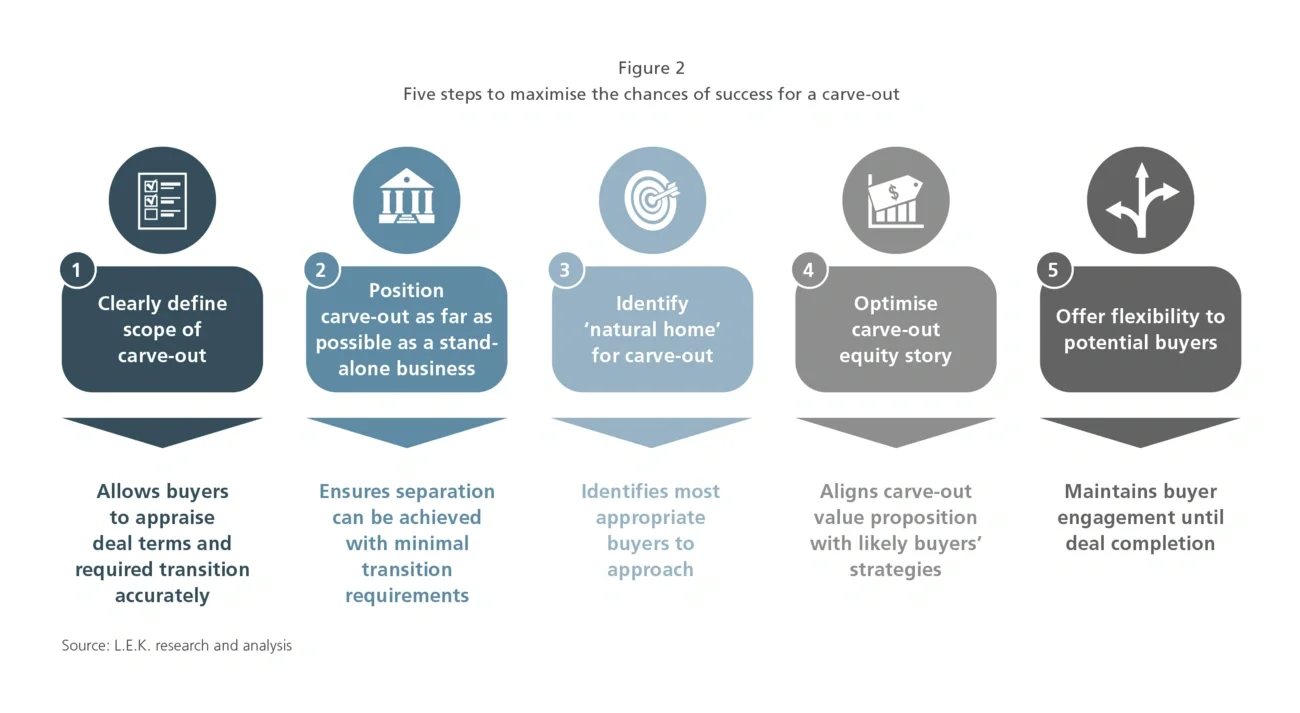
Having worked on numerous biopharma carve-outs, we have detailed below the five key steps to maximise the chances of a successful transaction (see Figure 2).

Image
successes of carveout
Image
successes of carveout

1. Clearly define the scope of the carve-out
 

  • The early definition of the carve-out scope will ensure both the seller and buyer can accurately appraise synergies, the value of the portfolio and ultimate deal terms, and the actions required during the transition. 
     
  • Scope definition should cover products, geographies and the scale of personnel and facilities (e.g. manufacturing) that are essential parts of the carve-out. For example, a portfolio of closely related products (e.g. sharing manufacturing facilities and sales force) may be best divested as one.
    ​​​​​

2. Start to position and operate the carve-out as a stand-alone business 
 

  • Before the sale process is initiated, the carve-out should be positioned and operated as a stand-alone business as much as possible (if not already operating as such) to ensure separation can be achieved with minimal transition requirements and to iron out any potential issues around separation of core functions (e.g. IT, data management, manufacturing, R&D, commercial, medical).
     
  • For product-level divestments (rather than business units or portfolios), this may focus primarily on identifying stand-alone requirements or current level of support (e.g. sales force and manufacturing) rather than operating it as stand-alone so that the buyer can start planning the post-carveout phase. Financials should be available on a pro forma basis for analysis by any potential acquirer.
     
  • As the seller implements this operational independence, it may revisit the scope of the carve-out as interdependencies are discovered (e.g. commercial or operational synergies between products).

3. Identify the ‘natural home(s)’ for the carve-out
 

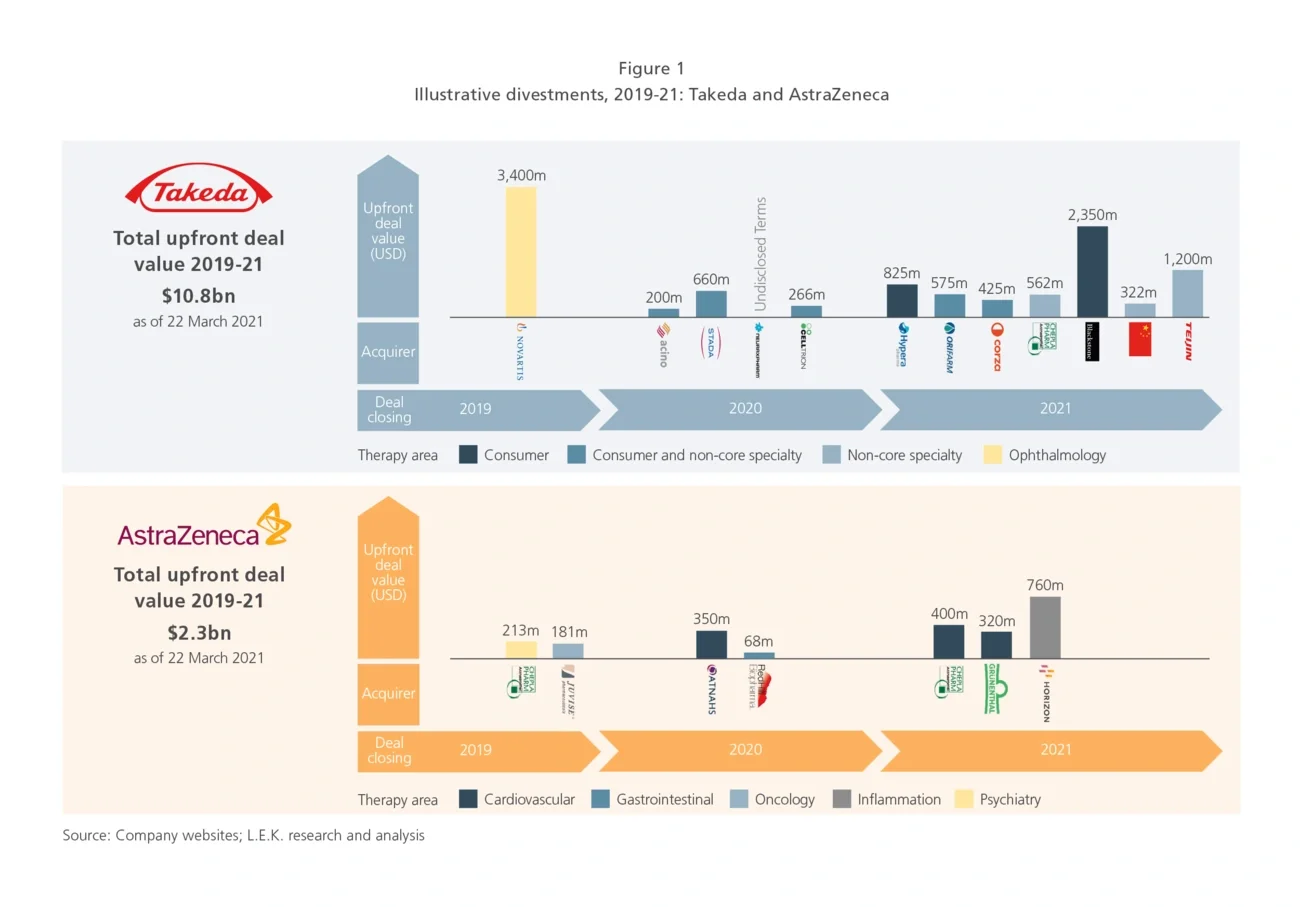
  • Carve-out destinations vary, from formation of a stand-alone business to acquisition by either financial or strategic buyers, often followed by incorporation into another business. For example, Teva divested its women’s health division to CVC Capital Partners as a standalone business, whilst Atnahs Pharma incorporated the hypertension portfolio it acquired from AstraZeneca into its existing operations.
     
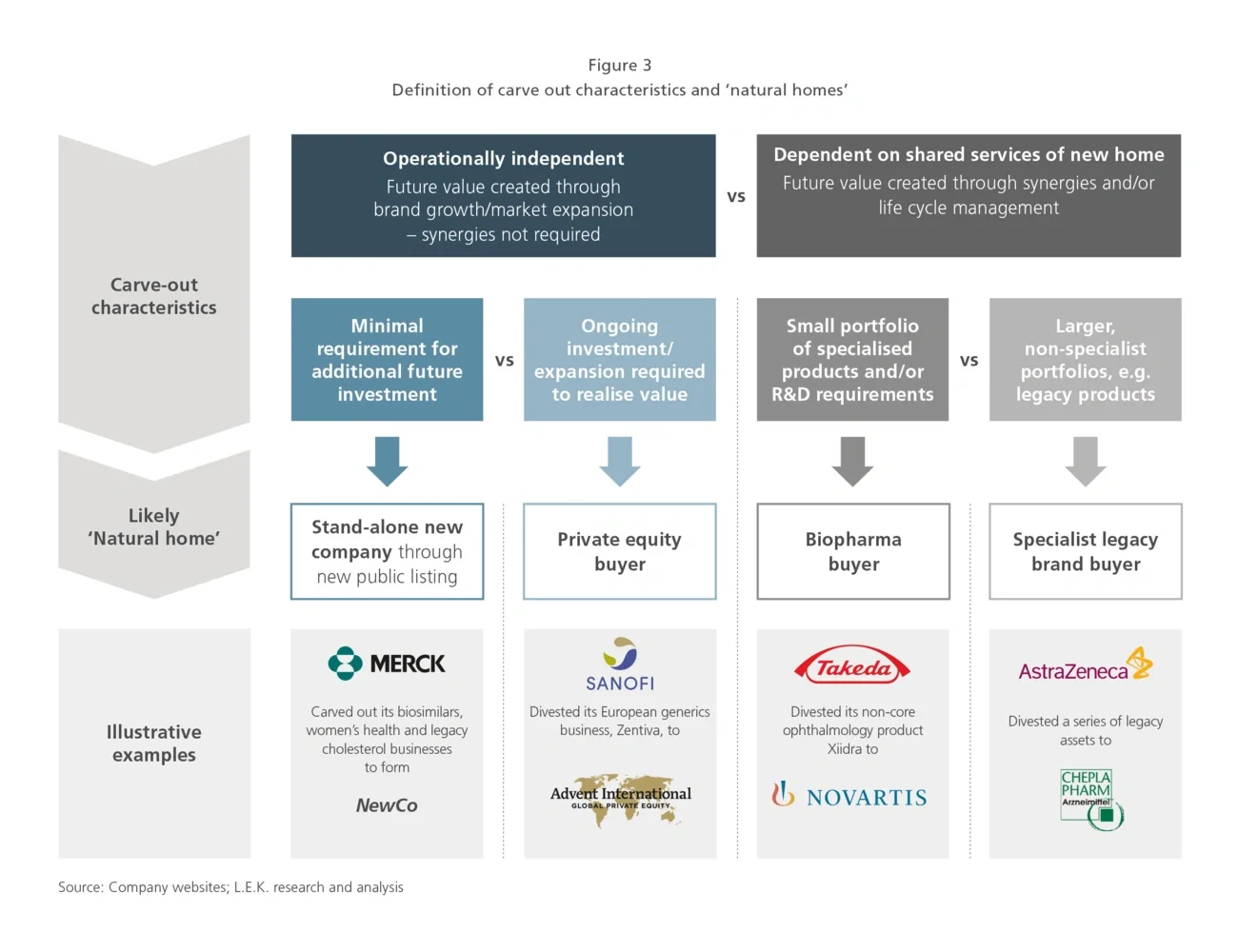
  • The carve-out’s operational independence, product mix and most likely route to value creation should be assessed to develop hypotheses for the buyer that would be a good fit. Figure 3 demonstrates how these characteristics can be considered together to identify the likely natural home for the carve-out, whether as an operationally independent business (more common for financial sponsors) or one integrated into the new owner (more common for corporates).
     
  • The landscape for potential acquirers should then be scanned to identify buyers (or archetypes of buyers) that are not expected to be interested in the asset, to rule them out (e.g. a financial buyer may be reluctant to invest significantly in capex to support or maintain manufacturing footprint).
     
  • The potential list of buyers can be narrowed down further by working out the strategic reasons that could underpin a possible transaction (e.g. ability to drive growth under new ownership vs a stable cash generator vs a platform for additional bolt-on acquisitions). The list may still be relatively long if the universe is wide — but could be segmented into acquirer types (e.g. corporate vs financial).
Image
carveout characteristics
Image
carveout characteristics

4. Optimise the carve-out’s equity story for its identified natural home
 

  • Once the carve-out’s natural home has been identified, the seller should refine its value proposition and promote the business to the most appropriate buyers/investors.
     
  • It is crucial to outline the benefits to buyers, in particular how they could gain from the addition of the portfolio (e.g. through synergies, cross-selling effects).
     
  • Where necessary, minimal scope/transaction perimeter refinements may be considered to reduce friction for a potential buyer (e.g. apportioning additional shared services with the carve-out to ensure operational independence is maintained).

5. Offer flexibility to potential buyers
 

  • Early management interaction should be offered to buyers to identify their specific needs and requirements and to keep them engaged throughout the process (e.g. often informal discussions or expressions of interest may precede the formal process or even prompt the seller to consider the carve-out).
     
  • Potential scope refinements and changes in the deal structure should be anticipated in advance (e.g. optionality around geographies or groups of products) and offered to buyers, if feasible, to maximise the chances of deal execution. However, care must be taken to ensure the remaining portfolio is attractive to other potential buyers.

Strategic focus before as well as during the carve-out process is vital

Many carve-outs or divestments do not materialise, require multiple attempts to achieve a sale or take several years to complete. The culprit is often faulty execution rather than a change in strategic direction.

External, strategic support is valuable throughout the carve-out journey to facilitate execution and ready the asset for formal due diligence scrutiny. Specifically, we find strategic support to have the most impact in five key areas: 

  • Asset strategic review and vendor due diligence to provide a third-party perspective and articulate the value proposition
  • Organisational planning to prepare for the transition
  • Identification of suitable buyers
  • Negotiation support
  • Deal terms modelling to understand the potential value creation for the carve-out 
English

Navigating the Evolving Sustainability Landscape — Key Observations for Investors

April 29, 2021

Sustainability1 is more important than ever. In just the past few months, we’ve seen growing political commitments to net zero, stricter developments in corporate sustainability reporting and a general acceleration of businesses’ sustainability plans.

Investing has exploded. Capital inflows to sustainable funds, the number of financial institutions committing to low-carbon investment and the value of sustainability funds launched are all at record levels. In part, this is due to a long-term evolution in investor attitudes and behaviours. ESG is also more important to society at large, particularly climate-conscious younger generations, and women — who are twice as likely as men to say it is ‘extremely important’ that their investment portfolio considers ESG factors. On top of this long-term trend, the coronavirus pandemic has further accelerated awareness of ESG in investing. 

But there is still no clear definition of what ‘sustainable investing’ means, and the market has attracted a lot of negativity. We’ve seen greater scrutiny of what sustainable funds invest in, growing scepticism about those with potentially harmful products like tobacco and sugary drinks, increasing controversy over the definition of ‘net zero’ and ‘creative carbon accounting’ (such as a high-profile debate over Mark Carney’s Brookfield claims), and even a US Securities and Exchange Commission (SEC) warning over ‘misleading’ claims by ESG fund managers. 

There has been particular confusion in the private markets. While 63% of UK private equity (PE) firms now take ESG principles into account in their investments, lower reporting requirements and accountability compared to the public markets has meant a wider variety of sustainability strategies and higher scepticism about their impact. As one report sums up, most PE ESG approaches are “nascent and superficial”. 

Our experience resonates with these issues. Since the pandemic struck, we have spoken to over 100 corporates, investors and experts on sustainability. We’ve learnt that there is a lack of consistency in how sustainability is defined, measured and reported, and many organisations are unsure how to pursue a strategy that maximises value for investors, investees and society at large — and takes far greater responsibility for the planet.

In this article, we aim to help PE investors as they approach ESG. We explain key elements of the sustainable investment landscape, share our core observations on future developments and highlight recommendations for a way forward.

Types of sustainable investing 

Image
responsible investing impact
Image
responsible investing impact

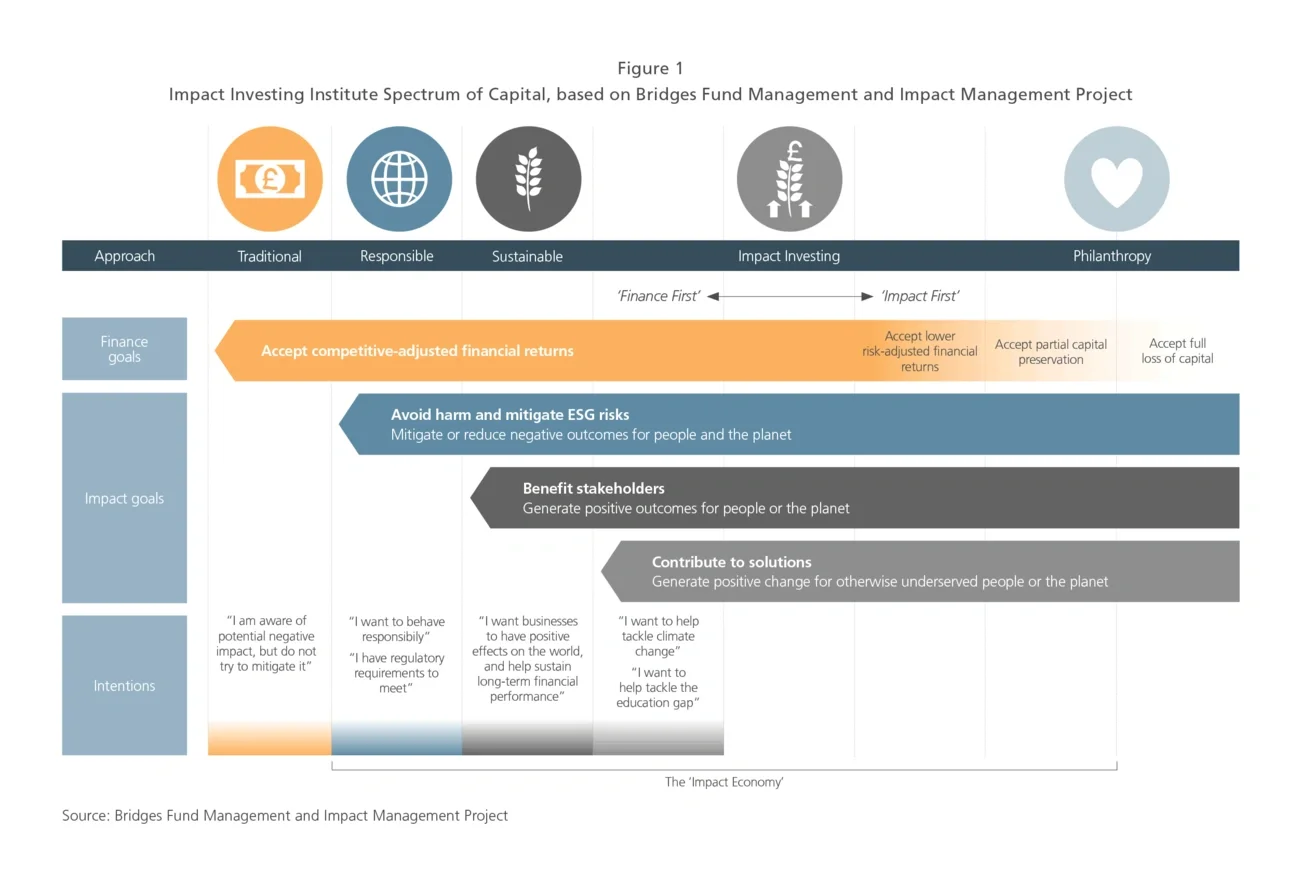
There is still a wide diversity of fund types within these categories, and new types of funds are emerging that do not always fit neatly within these labels. Therefore, as well as segmenting by these purpose labels, we suggest also analysing funds by investment approach: how do they actually make investment decisions based on sustainability? We have developed the following framework to lay out these different investment strategies.

Sustainability investment strategy framework

Exclusionary criteria

These are funds that use negative screening to avoid ‘objectionable’ sectors, such as ‘sin stocks’ (e.g. tobacco, alcohol, gambling) or questionable labour practices. This is the most common type of sustainable investing strategy allocated by institutional investors and probably represents the majority of PE firms today. The rationale for ESG integration is often viewed from a risk-management perspective: potentially damaging products or practices may face growing pressure from regulators and customers, limiting the company’s growth potential.

Thematic investing

Thematic investing selects sectors that are actively making a positive social and/or environmental impact. Examples could be renewable energy funds, emerging markets PE funds, or other types of impact funds that focus on one or more of the EU’s 15 Sustainable Development Goals (SDGs). These funds follow a ‘profit with purpose’ or ‘lockstep’ approach, in which the company’s products and services are inherently sustainable or impactful — therefore, increasing positive impact goes hand in hand with growing the company and increasing profits. 

Company-specific assessment criteria

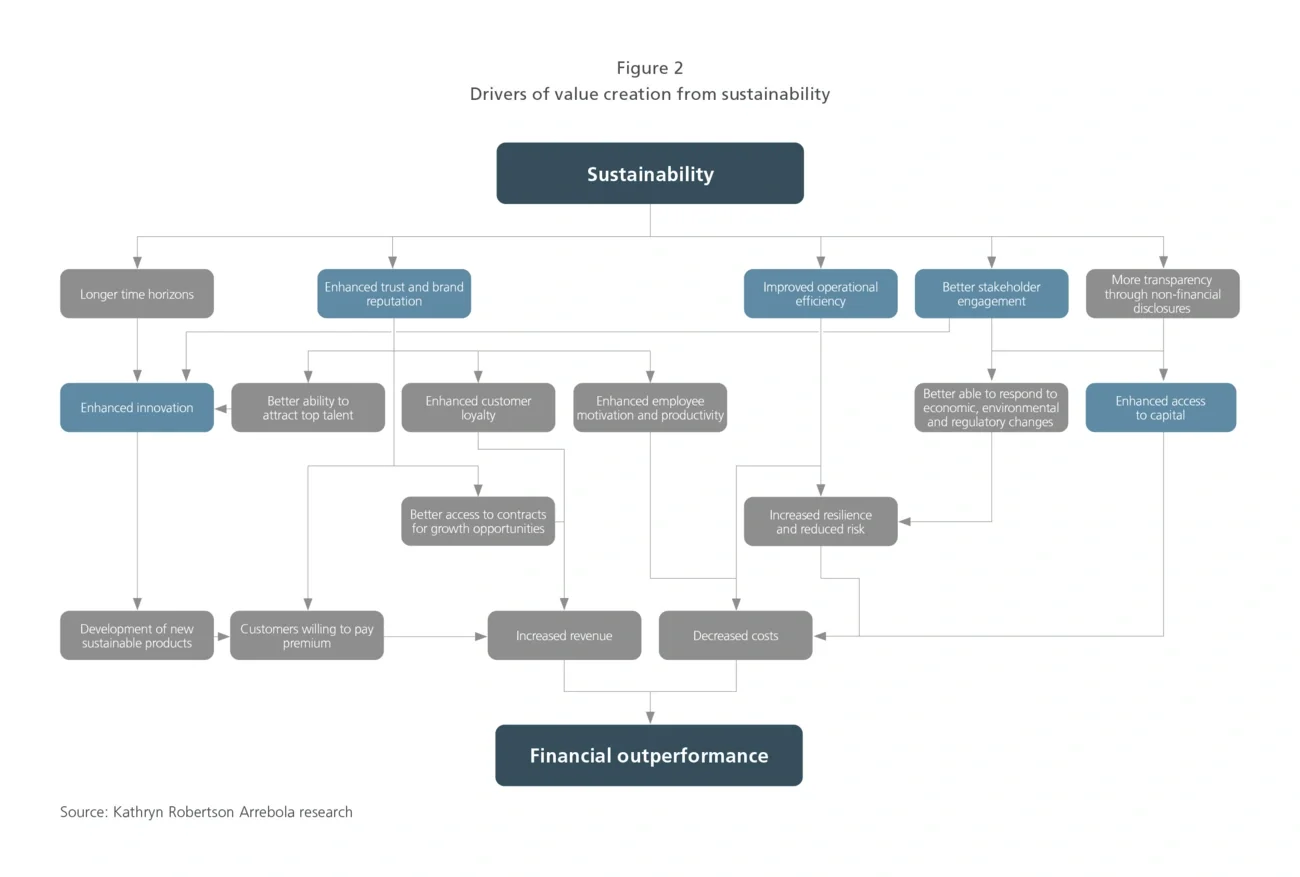
These are funds that use positive screening to seek out companies that have best-in-class sustainability credentials but are not necessarily in purely sustainable sectors. The rationale for this approach is a growing body of evidence that associates good sustainability performance with strong financial returns. The business case for sustainability has been made in detail elsewhere, but we summarise the main value drivers in Figure 2, below. Some PE firms have created a competitive advantage around strong sustainability selection criteria and management, including firms such as EQT, Palatine and Permira. 

Image
value investment finance
Image
value investment finance

Improvement potential

Finally, we are seeing the emergence of funds focused on the sustainability improvement potential of investments. PE companies have long been involved in helping to improve sustainability performance through ESG engagement and stewardship, and traditional impact investors have frequently focused on ‘additionality’: producing or helping to produce positive social or environmental outcomes that would not have otherwise occurred or would have been smaller without the investment.

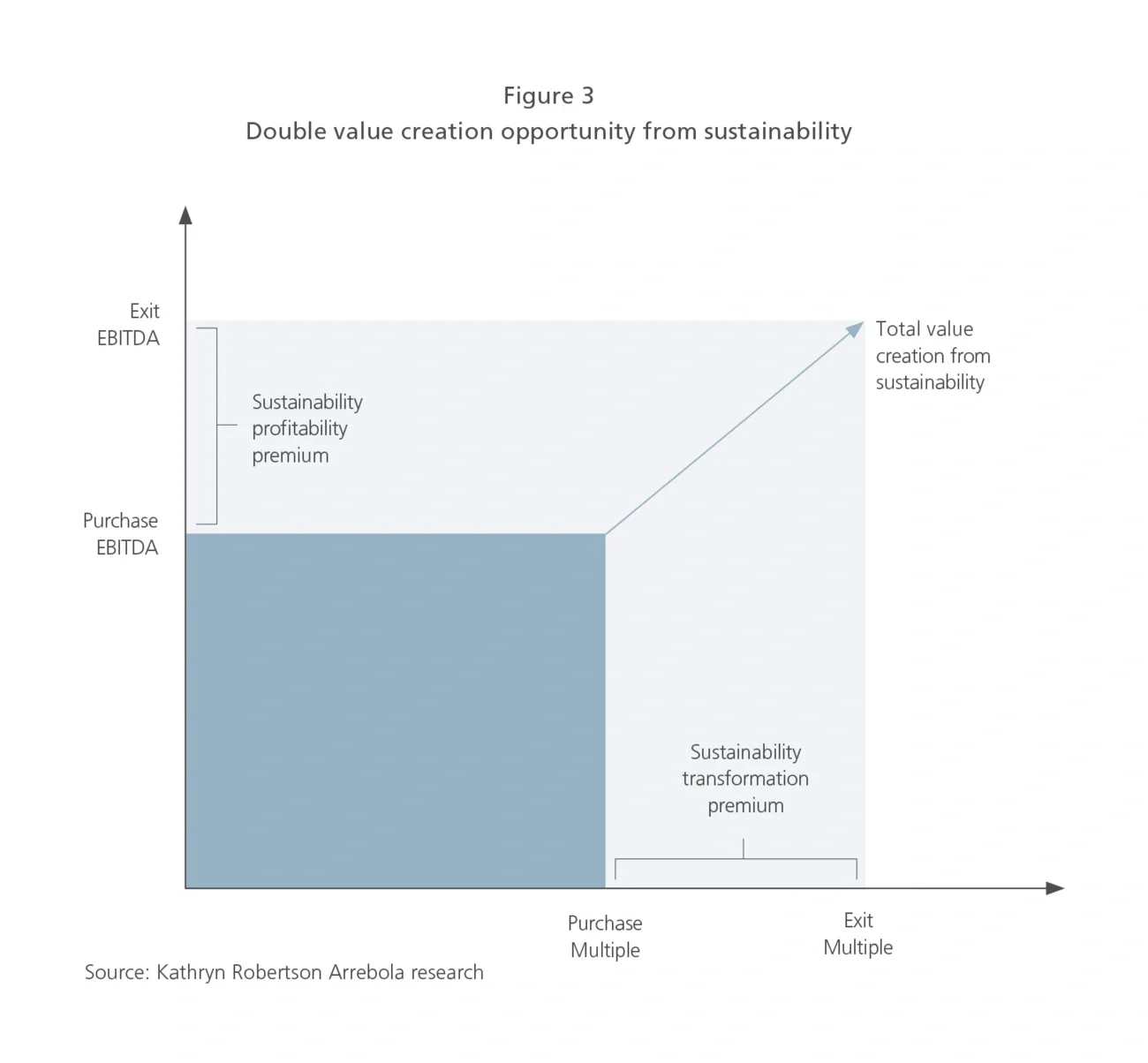
However, we are now seeing improvement potential (or additionality) become increasingly central to the core strategy of PE funds. One example is Brookfield’s Global Transition Fund, which targets investments that will “accelerate the world’s transition to a net-zero carbon economy”. The business case for these ‘sustainability transformation’ funds is compelling: improving a company’s sustainability could not only improve financial returns, as shown in Figure 2, above, but also enhance the transaction multiple at exit, given an ‘ESG premium’ — particularly if the purchase multiple is lower given an initially ‘unattractive’ carbon-intensive business. Figure 3 sketches this double opportunity for value creation from sustainability transformation.
 

Image
profitability multiple sustainable
Image
profitability multiple sustainable

Future developments

As the sustainability investing landscape grows and new types of funds emerge, we expect several trends to shape the industry going forward. 

  • Sustainable investing could become the norm. Given increasing investor demand for sustainable funds, it could be difficult for new funds to raise money without regard for ESG considerations. In addition, funds with more rigorous sustainability approaches (for example, positive screening or improvement potential compared to basic exclusionary criteria) could have a competitive advantage.
     
  • Impact funds could replace sustainability. There is growing investor attention on the ‘what’ of a business’s products and services as well as the ‘how’ of its operations. Similarly, industry-leading funds are getting better at defining and communicating their own impact in terms of the environmental and social value created or increased specifically by their investment.
     
  • Reporting requirements will become stricter. We have already seen the entrance of the EU’s Sustainable Finance Disclosure Regulation (SFDR) defining different categories of ESG investing, each with different disclosure requirements. Article 8 refers to funds that promote environmental and/or social characteristics and good governance, while Article 9 funds focus on economic activities that have a central sustainable investment objective. Although there will still be a wide variety of the types of funds captured by these categories, it is clear that more transparency and reporting will be required to back up sustainability claims.
     
  • Measurement systems could become more rigorous and financially integrated. We are seeing the emergence of new types of ESG and impact measurement and reporting systems, with some pioneering initiatives aiming to create holistic, financially integrated metrics. An example is Harvard’s Impact-Weighted Accounts project, which helps companies understand the financial costs of environmental and social damage. Tools like this could help fund managers better evaluate the sustainability performance of portfolio companies, and communicate results to limited partnerships.

What to do

As investors review their approach to ESG, at a minimum they should be considering the following questions to help frame a robust strategy:

  • What is your company’s level of ambition? Do you want to be a sustainability leader or take a compliance approach?
     
  • If there is a need or desire to incorporate sustainability more effectively into your investment approach, what strategies are available to you?
     
  • How do these different approaches align with your overall investment strategy, and therefore, what is the most suitable approach to take?
     
  • How will you embed sustainability into your organisation? What additional capabilities do you need?
     
  • Should you consider new opportunities, e.g. new sustainability transformation funds?

Importantly, an understanding of these approaches isn’t just needed for investors. For corporates responding to investor pressure (amongst other stakeholder demands), it is important to consider the strategies of key investors and implications for positioning to align with the different strategies we observe.

Endnotes
1In this article, we will refer to ‘sustainability’ and ‘ESG’ (environmental, social and governance) interchangeably. 

English
Subscribe to