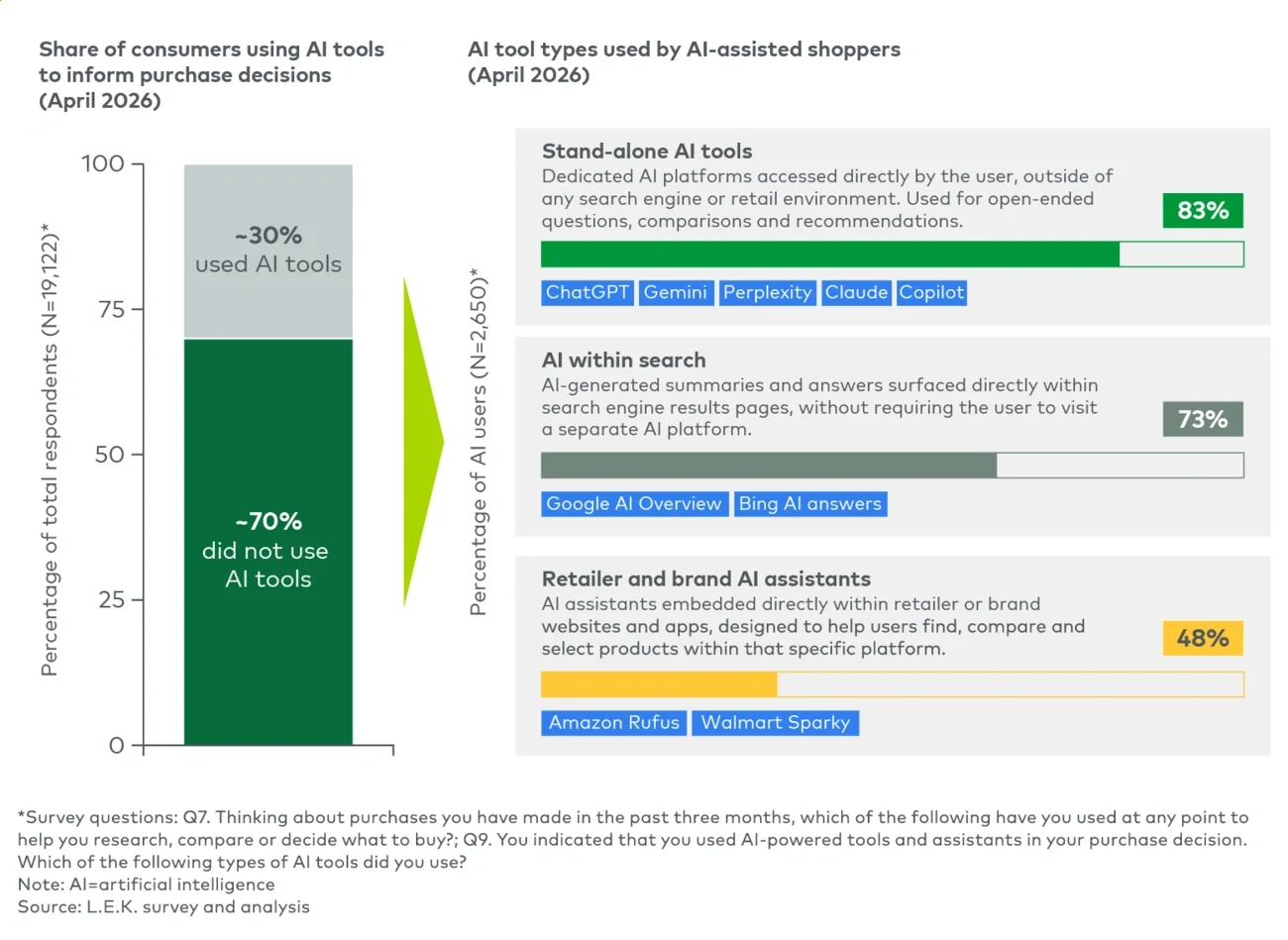


Artificial intelligence (AI) is fundamentally changing the way consumers across categories are discovering and shopping brands. Consumers are increasingly using AI to find products, especially Generation Z and millennials searching for travel, electronics and financial products. Some 30% of consumers have already used AI for product and service recommendations. For a channel that didn’t even exist some 36 months ago, that uptake is significant. And not only is that pace of change accelerating; it’s expected to continue picking up speed going forward.
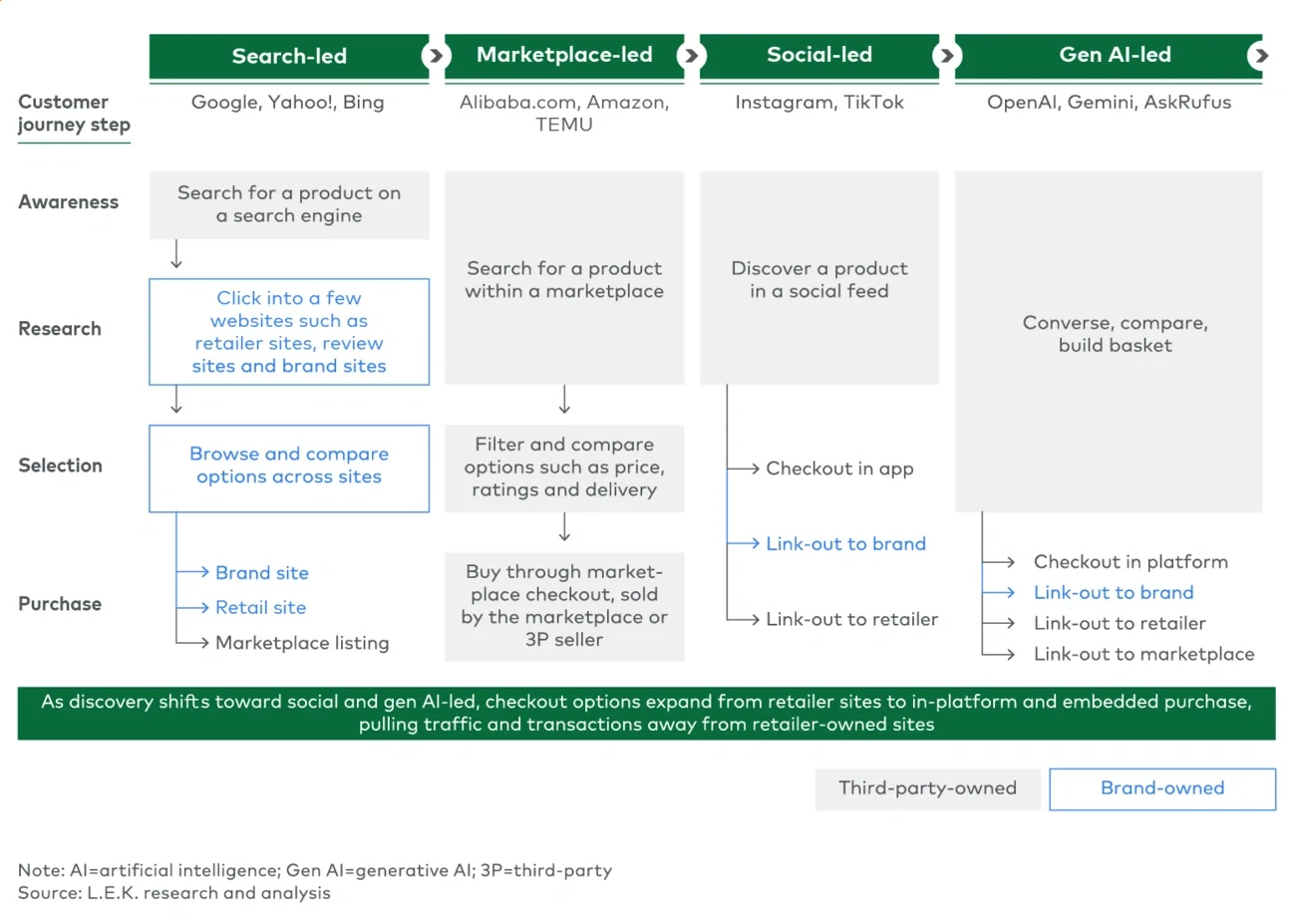
But brands and retailers still need to own authentic experiences, staying relevant and inviting to consumers while also showing up where AI agents are doing the searching on their behalf. That means brands need to market not only to the consumer but also to the agents, because it’s the agents that are building experiences through which the consumer discovers and buys brands’ products.
Agentic AI is becoming shoppers’ first destination
Consumers interact with brands via three core AI pathways, whose degree of ownership ranges from limited to full:
- Generative search for discovery of brands
Sites such as ChatGPT, Claude and Perplexity enable customers to research, compare and form preferences, shifting discovery and influence upstream of owned channels; brands cannot own the interface or control user behavior, but they can increase visibility and trust through targeted measures. - Agentic commerce experience across brands
Third-party platforms such as Shopify and Etsy orchestrate purchase actions (e.g., basket building, checkout) using brand or retailer integrations, creating new “routed demand” paths; brands can enable data and checkout via these platforms, trading off some ownership for new demand creation. - AI experiences developed by brands
Brand-owned sites and apps deliver innovative services and experiences to guide shoppers through discovery and decision-making, differentiating the customer journey while retaining proprietary data; brands own the experience design, data and measurement but cannot fully control how or where customers enter the funnel.
But while AI’s impact on the consumer journey is real, it’s also nuanced.
How AI is reshaping — but not replacing — shopping paths
AI is fundamentally reshaping discovery, influence and visibility. But it has not fully replaced traditional shopping paths.
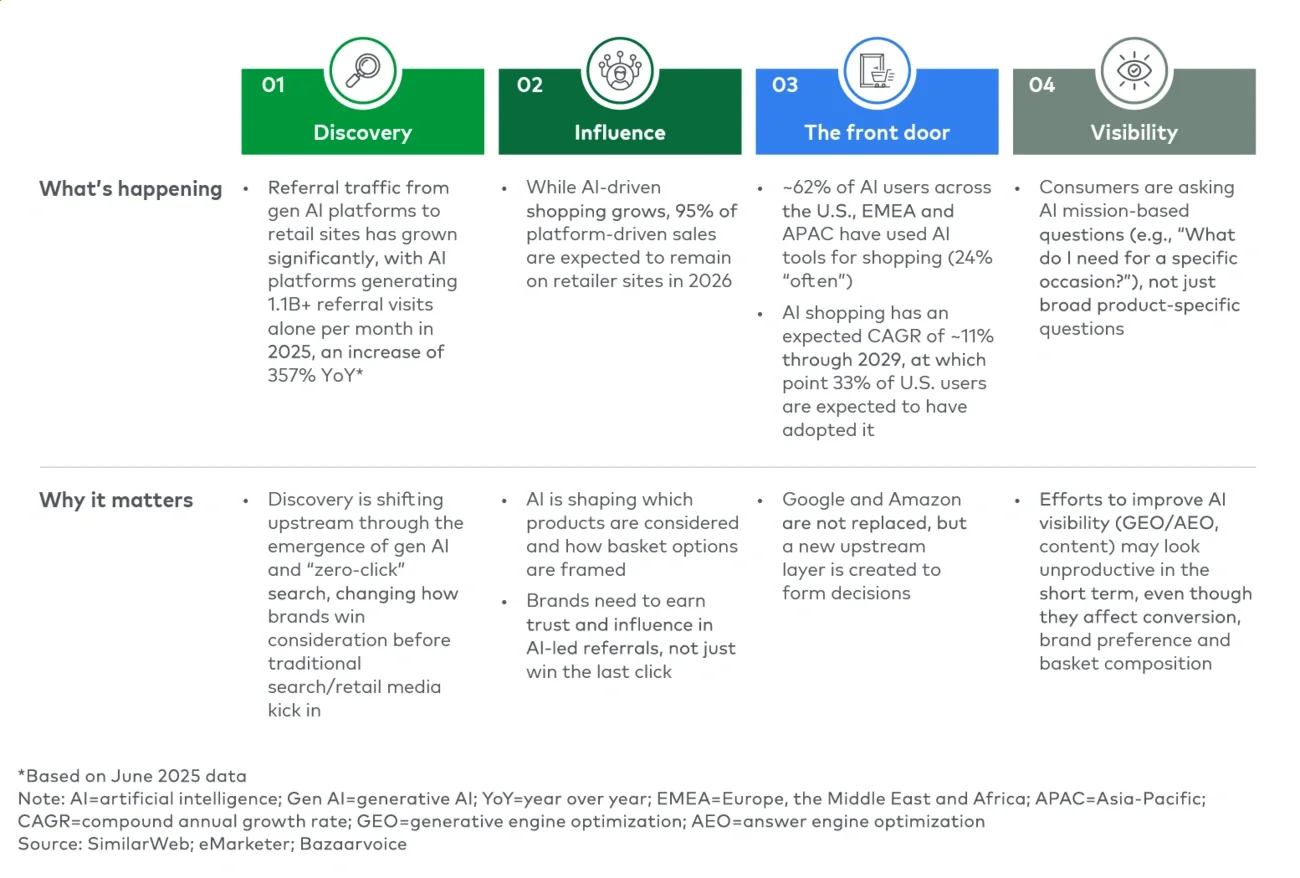
It starts with discovery. AI was responsible for more than 1.1 billion retail site visits a month in 2025, a year-over-year surge of 357%. Yet the story extends well beyond traffic. AI is shaping which products consumers consider and how they frame their basket options. Some 62% of users across the U.S.; Europe, the Middle East and Africa; and Asia-Pacific have already used AI to inform where they go next, making it a genuine front door. And consumers are increasingly framing queries around specific goals rather than broad product questions, making AI visibility efforts far more consequential than they might initially appear (see Figure 1).