

In premium home furnishings, the sale is increasingly shaped before the consumer ever sees the full range of options.
Interior designers are not just tastemakers. They curate the market. They determine which brands are credible, which products are worth presenting and which vendors can be trusted to deliver across a complex project. In many cases, designers narrow the field to a short list of just a few brands per category. Brands that do not make that list may never reach the client at all.
That makes designers far more than influencers. They are becoming a critical route to market for premium home brands and retailers — shaping what is shown, what is specified, what is ordered and what is reused across future projects.
The shift is being accelerated by a bifurcated home furnishings market. While many consumers have pulled back on discretionary home spending amid lower home turnover, inflation and higher interest rates, affluent households have remained more resilient. These consumers continue to invest in design, personalization and quality — the types of purchases where designers often play an outsize role.
For brands and retailers, the strategic question is no longer only “How do we reach the end consumer?” It is also “How do we become one of the brands designers want to show?”
A growing share of demand is becoming designer-addressable
The home furnishings market has become increasingly K-shaped. Middle- and lower-income consumers are trading down, delaying purchases or avoiding discretionary spend. Higher-income households, supported by greater asset wealth and more insulation from macroeconomic pressure, have continued investing in their homes.
This matters because affluent consumers are more likely to pursue larger, more complex and more designer-led projects. They are also more likely to value customization, elevated styling, craftsmanship and professional guidance. These are precisely the categories and purchase occasions where designers can have the greatest influence.
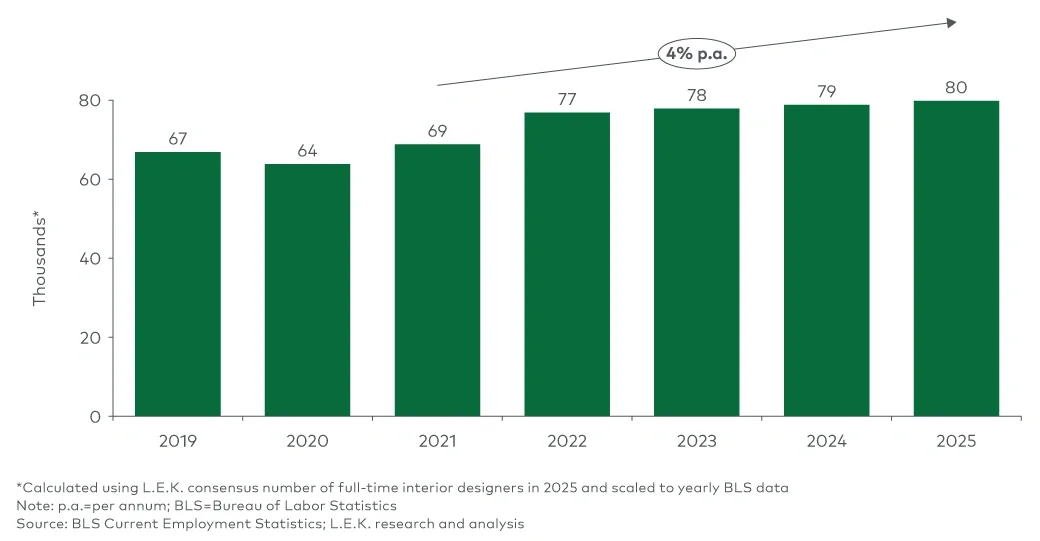
Designer use has also broadened beyond the traditional ultra-high-net-worth segment. As more affluent and upper-affluent consumers seek help curating their homes, the trade channel is becoming a larger and more important path to premium demand (see Figure 1).