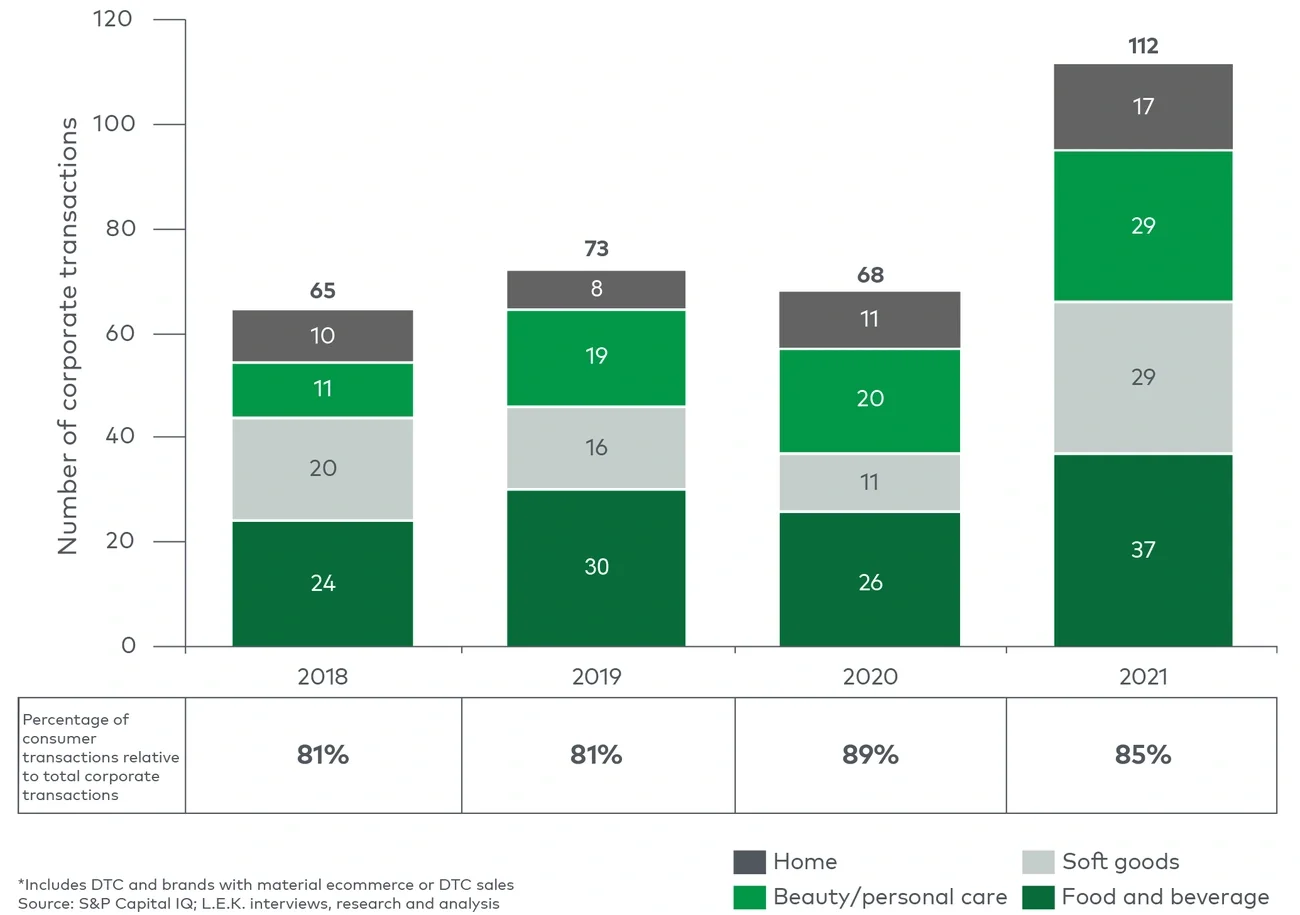



Corporates are stepping up acquisitions of DTC businesses, whose sales are forecast to grow a healthy 16%-18% p.a. for the next several years. The trend reflects corporates’ ambitions to expand their product offerings and cross-market to a new customer base. It also marks a shift in how consumer businesses are adapting to changing consumer preferences by blurring the lines between online and in-person experiences in order to meet consumers where they like to shop.
Corporates have always invested in small brands to further their growth. But DTC businesses are especially attractive because the absence of a middleman often means higher margins. They also tend to have a strong customer orientation, including a deep set of consumer data and a well-developed, wholly owned digital commerce experience — attributes that corporates often struggle to acquire organically.
At the same time, the acquisition trend has yielded several high-profile deals that fell short of expectations. It turns out that many DTC businesses have hidden pitfalls that can trip up even the most experienced of corporates.
In this Executive Insights, we’ll look at where deal activity for DTC businesses has been going and what the attractions are for both buyer and seller. Then we’ll outline some concrete steps you can take to know what you’re buying and increase the odds of a successful transaction.
A robust environment for acquisitions
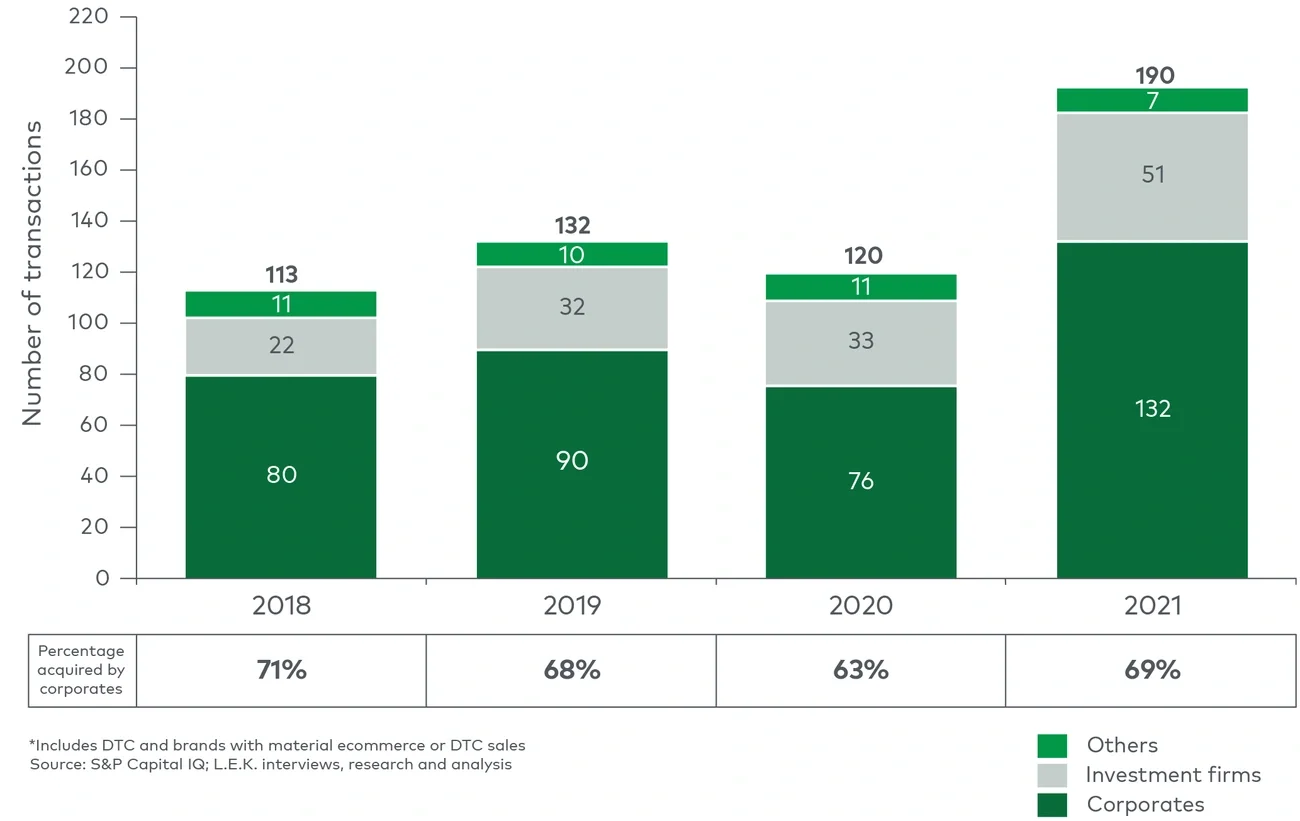
A growing number of DTC businesses have been hitting the M&A market in recent years. Most have been snapped up by corporates (see Figure 1).