



Executive Insights

L.E.K. Consulting’s Inaugural Clinical and eClinical Pharma Services Survey

September 27, 2022

Key takeaways

Several trends are changing the way sponsors think about clinical trial sites and patients, among them the increasing importance of site-sponsor relationships, a greater openness to distributed functions and a heightened emphasis on patient recruitment and diversity.

As they compete for bandwidth-constrained sites, and as establishing rapport with sites becomes critical to trial success, sponsors view being a “sponsor-of-choice” as more important than ever.

Sponsors expect the increased receptiveness to distributed functions, namely the reliance on decentralized locations for patient recruitment, engagement, and retention - all of which were catalyzed by the COVID-19 pandemic - to continue.

Patient recruitment, already a key area of focus and investment, remains a challenge going forward, as sponsors struggle to meet enrollment and diversity goals due to trials targeting a complex set of diseases with more specific target populations.

Research and development (R&D) costs incurred by biopharmaceutical companies to bring new therapies to market are extraordinarily high. The median pivotal trial cost per new molecular entity (NME) approved by the U.S. Food and Drug Administration (FDA) between 2015 and 2017 has been estimated at $48 million, and the median cost per patient per pivotal trial for those NMEs has been estimated at over $40,000, according to a recent analysis.1 In the midst of this, patients and the sites that recruit and enroll these patients are changing how trials are executed.  

Clinical trial sponsors, as noted in L.E.K. Consulting’s Executive InsightsLooking Ahead in Pharma Services: Key Trends Impacting the Industry,” often fail to reach their recruitment targets. There is also a lack of appropriate racial representation among study participants. On the other hand, while trial sites still play a critical role in the determination of trial outcomes, more activities today are taking place in distributed locations than they did before the onset of the COVID-19 pandemic. Together, these dynamics have led to a greater reliance on clinical trial partnerships for execution. 

In its inaugural Clinical and eClinical Pharma Services Survey (see Figure 1), L.E.K. asked biopharmaceutical, contract research organization (CRO) and trial site experts about these and other key emerging trends in clinical trials and how they are impacting the outsourced, clinical and eClinical pharmaceutical services market. This report also makes clear how sites and patients are changing the way trials are executed and how those changes are driving growth in the market.
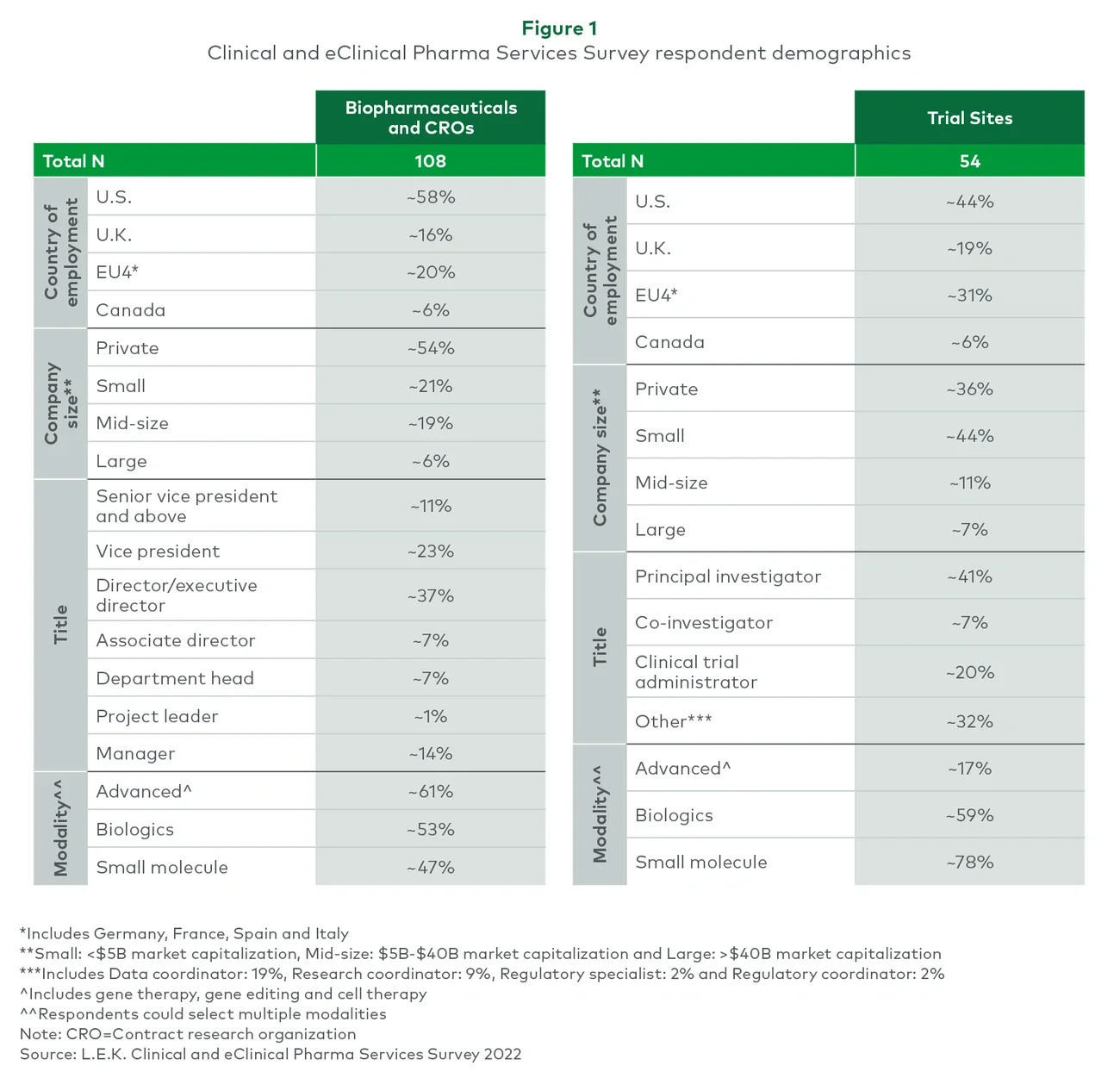
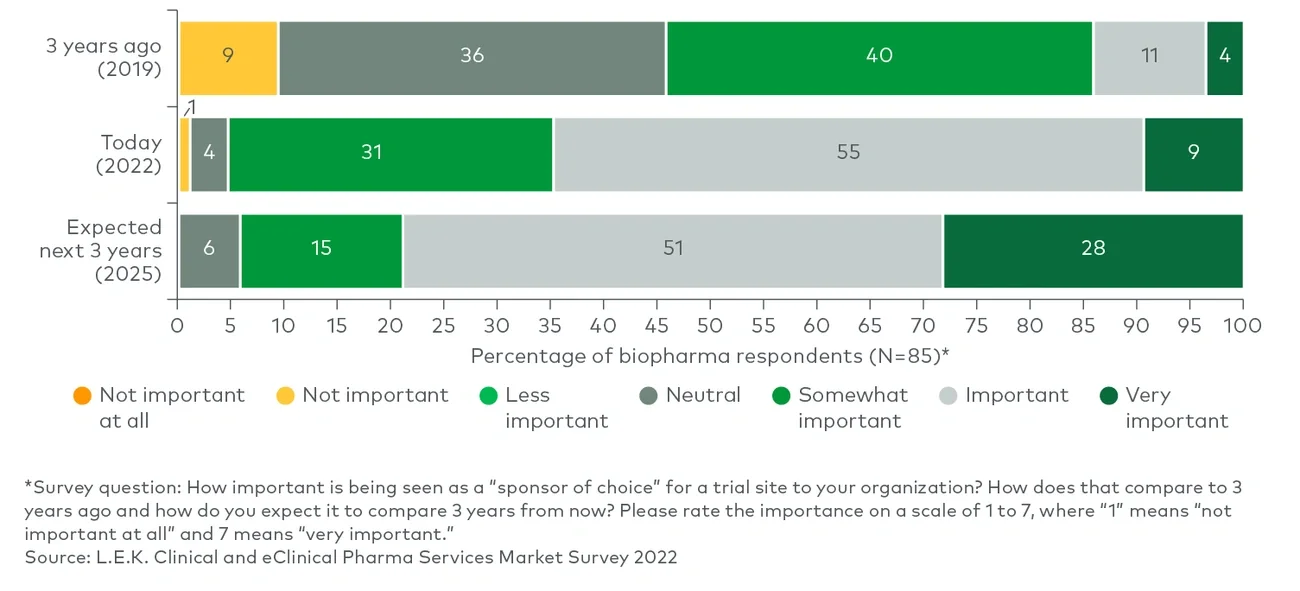
Figure 1

Clinical and eClinical Pharma Services Survey respondent demographics

Image
respondent demographics

Figure 1

Clinical and eClinical Pharma Services Survey respondent demographics

Image
respondent demographics

The site-sponsor relationship is becoming critically important 

While the relationship between the sponsor and the site is often overlooked in clinical trial settings, such relationships are critical to a trial’s success, as sites are at the center of patient recruitment and enrollment, data collection, and regulatory compliance. With that in mind, the percentage of biopharma survey respondents who believe it is very important to be seen as a “sponsor of choice” at sites soared to ~65% in 2022 from just ~14% in 2019, and a staggering ~79% of them anticipate it will continue to be very important over the next three years (see Figure 2). 

Figure 2

Importance of being seen as ‘sponsor of choice’ at trial sites

Image
Importance of ‘sponsor of choice’

Figure 2

Importance of being seen as ‘sponsor of choice’ at trial sites

Image
Importance of ‘sponsor of choice’

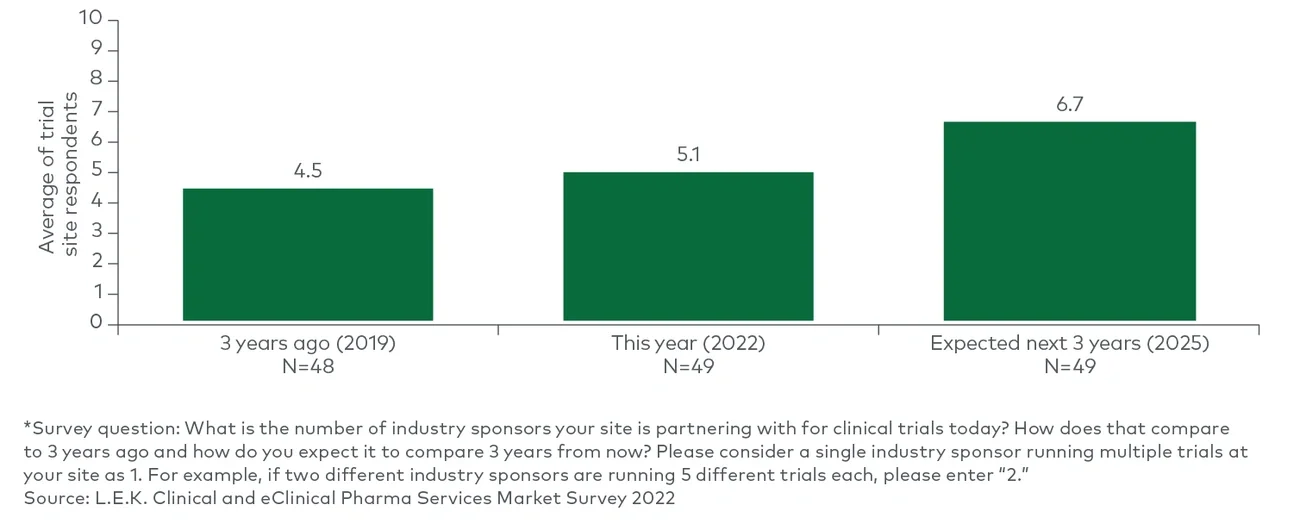
The desire to be seen as a sponsor of choice is largely fueled by the intensifying competition for a finite number of sites, of which there is a shortage. Indeed, with a growing pipeline of assets, the gap between the number of trials and the number of sites available is bound to widen in the future unless the industry makes significant strides in its site and patient recruitment efforts. As per the trial site survey respondents, the number of distinct industry sponsors running trials at sites is expected to increase from five per site today to about seven by 2025 (see Figure 3), making it important for individual sponsors to stand out as a sponsor of choice with whom sites can partner.

Figure 3

Number of distinct industry sponsors at trial sites over time

Image
distinct industry sponsors at trial sites

Figure 3

Number of distinct industry sponsors at trial sites over time

Image
distinct industry sponsors at trial sites

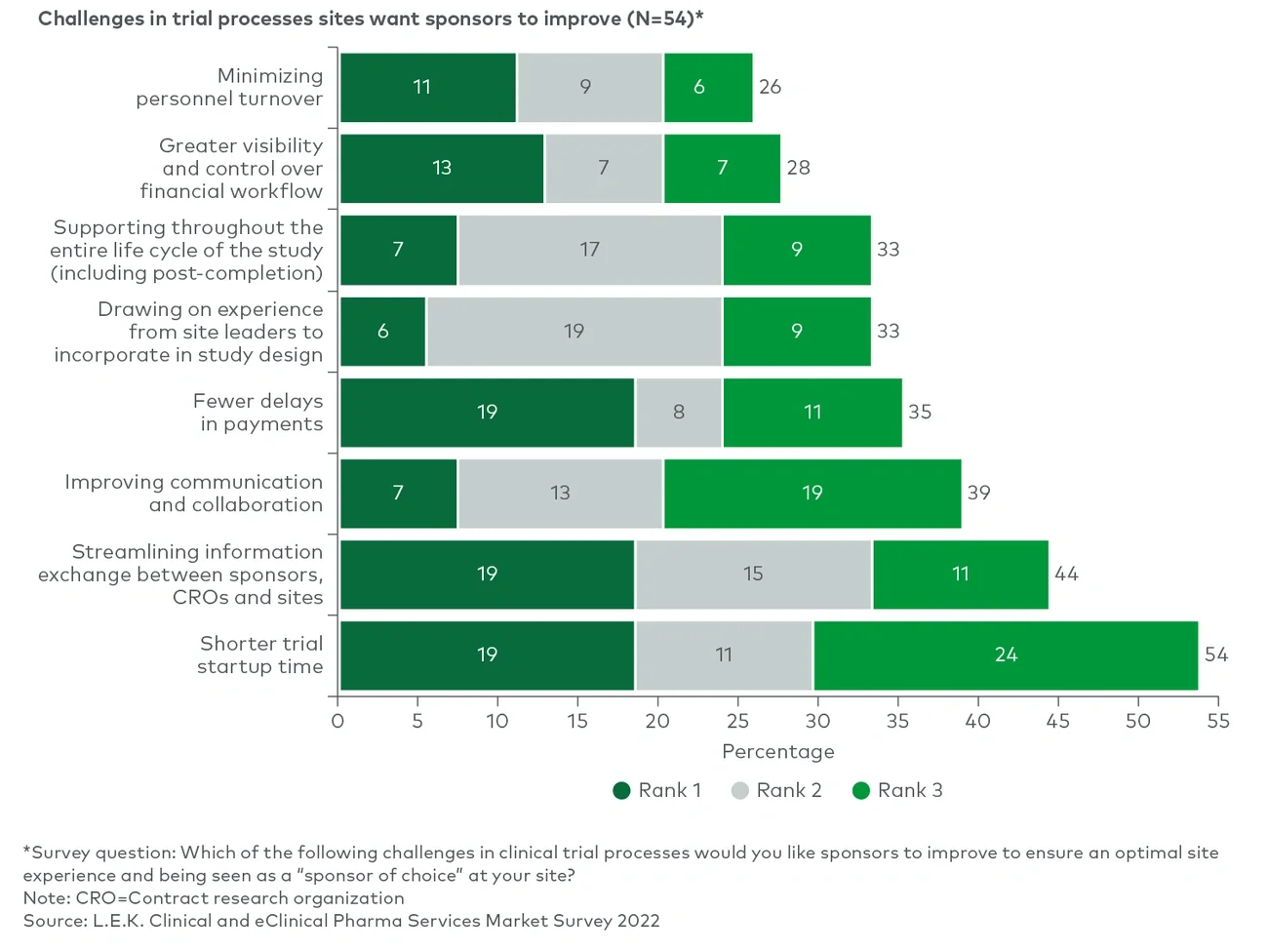
So, what does it take to become a sponsor of choice? Trial site experts cite shortening trial startup times, streamlining the exchange of information between different stakeholders, improving communication and collaboration, and ensuring payments are made on time as processes they most want sponsors to improve (see Figure 4). Additionally, sponsors should proactively try to improve the processes that cause the most frequent delays in trials: negotiating budgets, enrolling study participants and retaining participants.

Figure 4

Key trial processes sponsors must improve to be seen as a ‘sponsor of choice’

Image
processes sponsors must improve

Figure 4

Key trial processes sponsors must improve to be seen as a ‘sponsor of choice’

Image
processes sponsors must improve

Mitigating these site-based challenges may seem simple, but there is no one-size-fits-all approach. In order to identify key drivers of startup delays, sponsors must account for how these challenges uniquely impact them. They must also develop robust site training materials, establish clear guidelines for startup activities and provide careful coordination among the various stakeholders involved at each step. Only then will they be able to optimize trial execution and, ultimately, reduce the costs and prolonged timelines associated with delays.  

Use of distributed functions in trials is increasing 

The COVID-19 pandemic has helped solidify some of the benefits and increased acceptance of decentralized clinical trials (DCTs) and, as a result, many biopharmaceutical companies now see the execution of key trial functions at distributed locations as increasingly feasible. The expected benefits include expanded access to more potential participants, reduced time and cost for patients to participate in trials, improved rates of patient compliance, and ultimately, greater patient retention.  

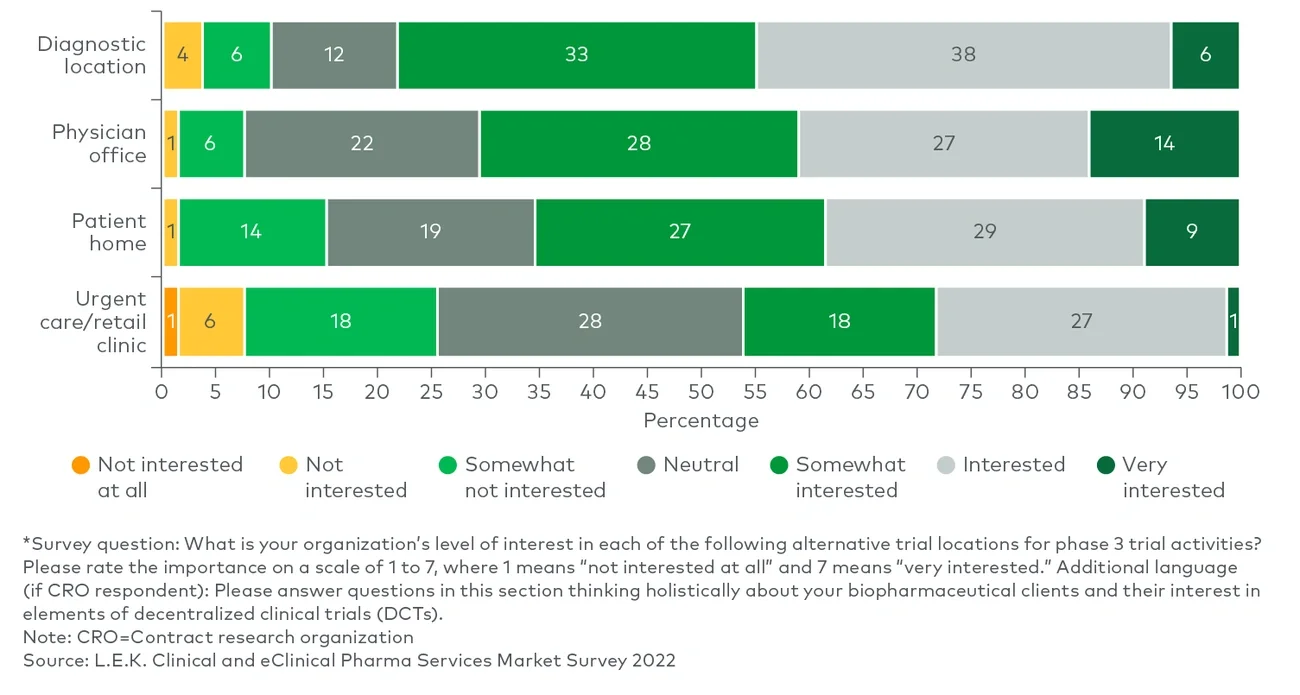
Of the biopharma and CRO respondents surveyed who are involved in conducting phase 3 activities, ~77% are interested in using diagnostic locations, ~70% are interested in physician offices, ~65% are interested in patient homes and ~46% are interested in urgent care/retail clinic locations (see Figure 5). Furthermore, more than a quarter of respondents are already adopting some of these alternative trial locations in at least some phase 3 trials, and an additional half are expected to adopt them within the next three years. 

Figure 5

Level of interest in alternative trial locations for phase 3 trial activities

Image
interest in alternative trial locations

Figure 5

Level of interest in alternative trial locations for phase 3 trial activities

Image
interest in alternative trial locations

As technology advances, sponsors will begin progressively adopting distributed locations and activities in trials. Doing so will require them to identify more sites, onboard different types of sites and optimize trial location to each trial’s activities to preserve the quality of the data being generated, all while ensuring patient compliance and engagement. Third-party service and solutions providers, on the other hand, will need to understand how geography, disease area, indication and target population will inform the most appropriate use of distributed locations, and be ready to offer point solutions that adequately address sponsors’ needs. 

Sponsors are focusing heavily on patient recruitment 

Patient recruitment remains one of the most challenging and costly activities of running a clinical trial. According to the FDA, only 3% of U.S. physicians and patients participate in clinical trials leading to new therapies, which has profound consequences for development timelines, including delaying market launches. As of 2019, a whopping 80% of trials were delayed due to recruitment difficulties. Moreover, reaching patients is becoming more challenging as biopharmas increasingly target a variety of complex diseases in their clinical trials and use precision medicine in their drug development, both of which result in smaller, highly specific patient populations. 

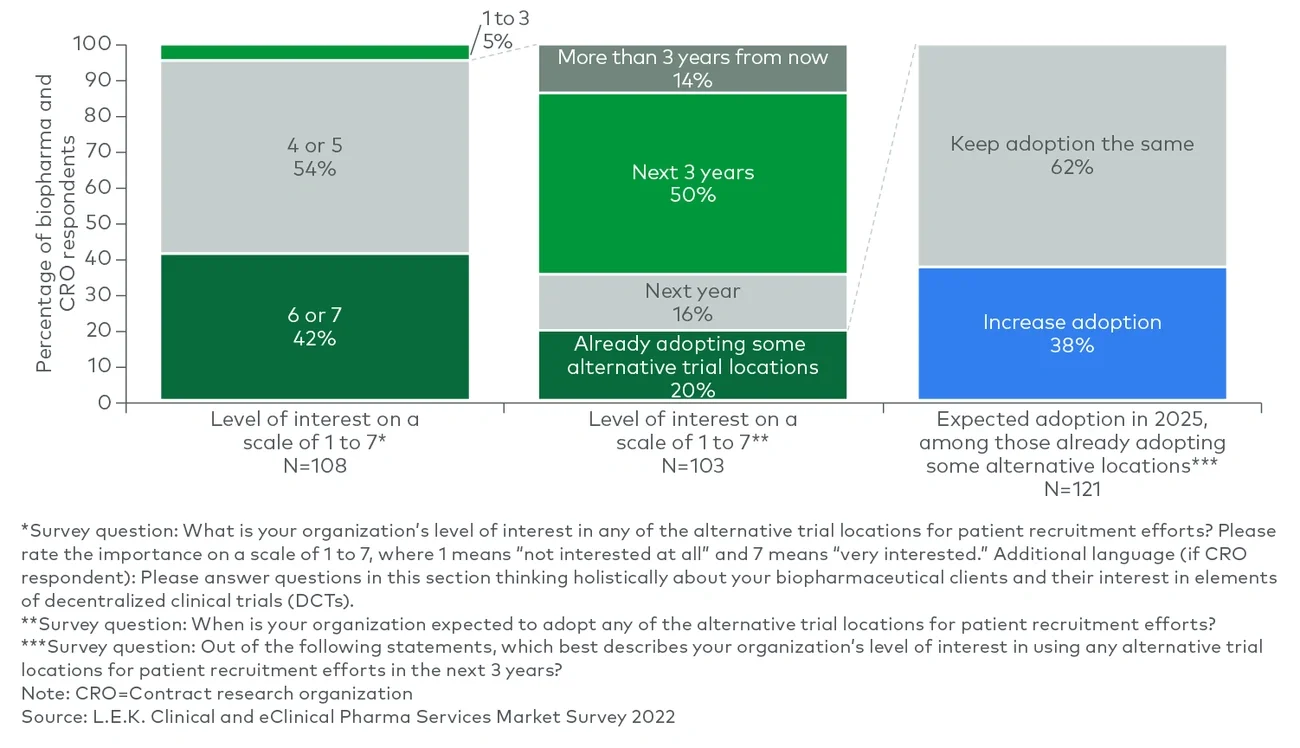
Biopharma companies are subsequently becoming more receptive to using new methods of recruiting patients, such as virtual and distributed recruitment. Among the biopharma and CRO survey respondents, ~95% are interested in alternative trial locations for patient recruitment. Of those interested, ~66% are likely to adopt such alternative locations for patient recruitment within the next three years while ~20% are already adopting them (see Figure 6). And of those already adopting, more than a third expect their adoption to increase over the next three years while the rest expect their level of adoption to remain the same. 

Figure 6

Interest in and expected timeline to adopt alternative trial locations for patient recruitment purposes

Image
timeline to adopt alternative trial locations

Figure 6

Interest in and expected timeline to adopt alternative trial locations for patient recruitment purposes

Image
timeline to adopt alternative trial locations

Sponsors must apply a holistic lens to patient recruitment to understand the various intricacies involved. An omnichannel approach that incorporates multiple initiatives and complements traditional channels can help overcome the exceedingly complex challenges that can arise. Such initiatives include integrating principal investigator perspectives on how to target patients and where to access them along the patient journey, developing digital tools to capture patients through support groups and self-referrals, and creating comprehensive databases of potential patients for both targeted and regular outreach.  

Patient diversity in clinical trials is a key focus 

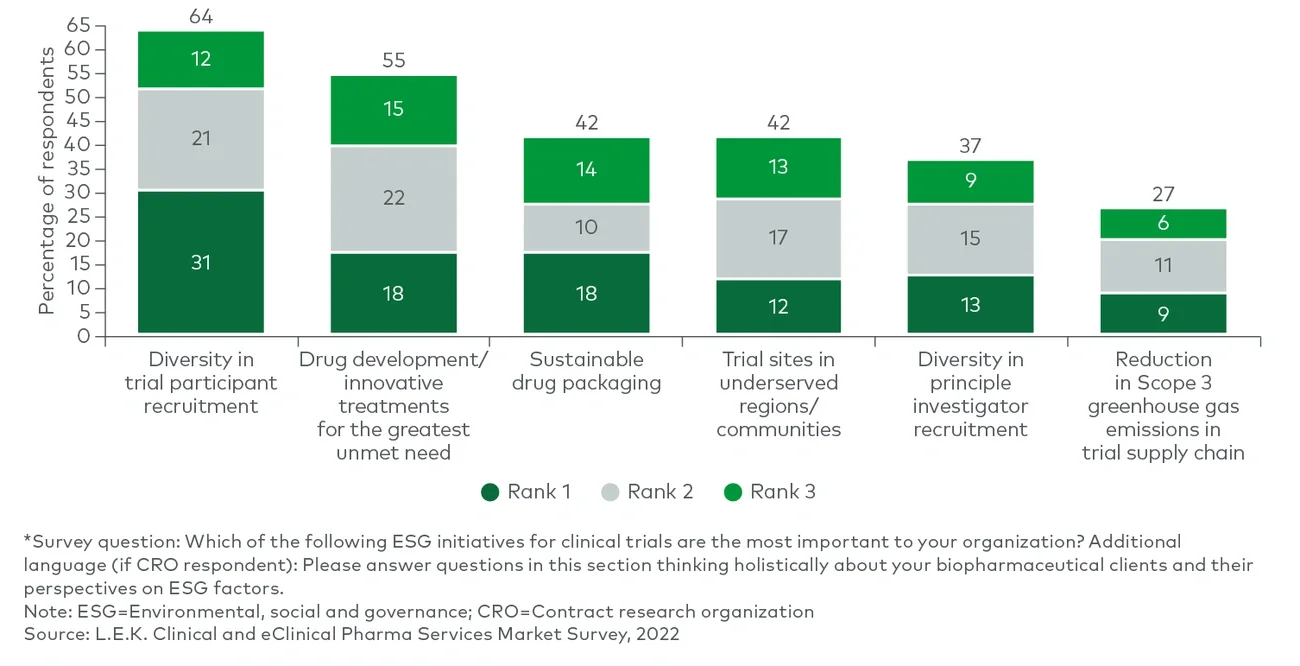
Figure 7

Importance of different ESG initiatives in clinical trials

Image
Importance of ESG initiatives in clinical trials

Figure 7

Importance of different ESG initiatives in clinical trials

Image
Importance of ESG initiatives in clinical trials

Companies are not only looking to broaden access to lifesaving therapies by tapping into a diverse pool of patients, but they are also realizing that widening recruitment efforts through diversity can help mitigate the No. 1 reason trials are halted: failure to reach enrollment targets. Identifying and subsequently removing any barriers that hinder underrepresented participants from joining their trials and selecting sites that are located near diverse communities are just two of the ways sponsors can improve clinical trial equity. 

Sponsors are increasingly outsourcing site- and patient-specific clinical and eClinical services  

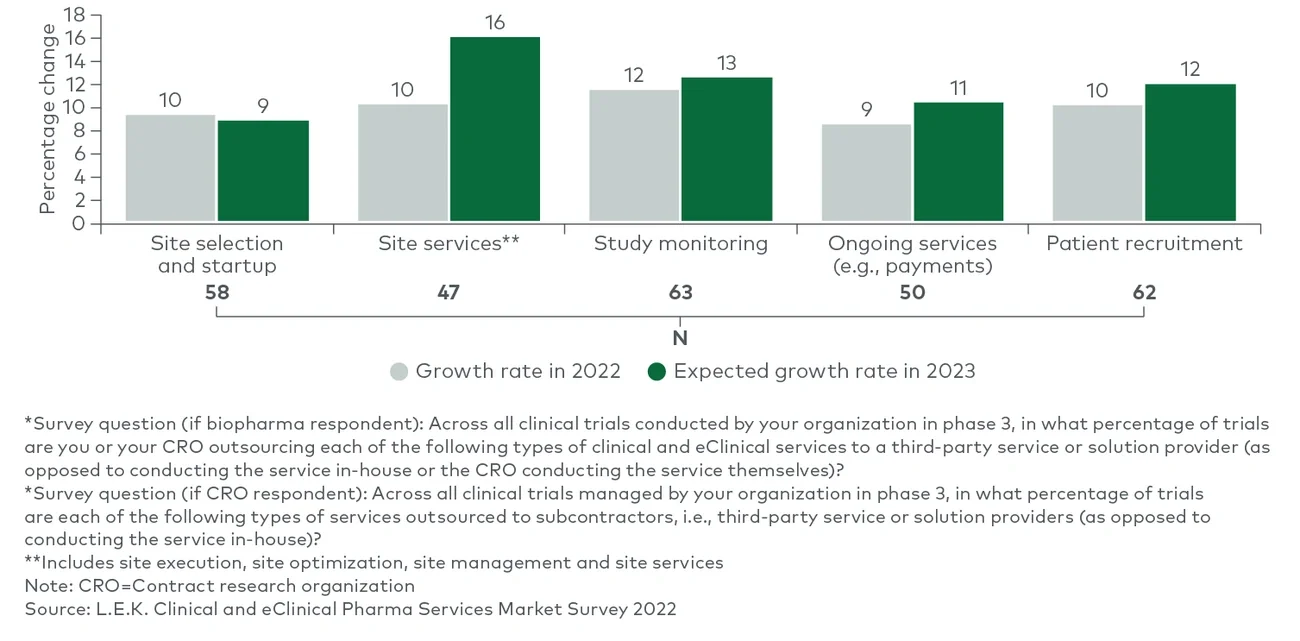
As competition for trial sites rises and more decentralized trial sites are being adopted, the reliance of sponsors on site-specific third-party service and solution providers is increasing. Biopharmas and CROs cite double-digit growth in their use of a range of third-party clinical services related to site management — including site selection and startup, site services, and study monitoring — for phase 3 activities in the past year. And as the importance of the site-sponsor relationship continues to grow, sponsors are expecting their use of these services to grow along with it, from ~9% to ~16% in the next year alone (see Figure 8).

Figure 8

Growth rate in outsourcing of site- and patient-specific clinical and eClinical services to third-party service and solution providers (excluding outsourcing to CROs) in phase 3

Image
Growth rate in outsourcing

Figure 8

Growth rate in outsourcing of site- and patient-specific clinical and eClinical services to third-party service and solution providers (excluding outsourcing to CROs) in phase 3

Image
Growth rate in outsourcing

Similarly, biopharma and CRO companies are investing substantially more in patient-related services than ever before, to both overcome the mounting complexity in patient recruitment and deliver on diversity targets. Sponsors indicate outsourced patient recruitment to third-party service providers grew ~10% in 2022 over 2021, and they expect it will grow ~12% in 2023 (see Figure 8). Moreover, in therapeutic areas (TAs) with more trial activity, such as oncology (solid tumors), immunology and neurology, outsourced patient recruitment services are expected to increase by some ~14%, ~15% and ~25%, respectively, above the aggregate average across all TAs forecast for 2023.  

A series of unprecedented opportunities 

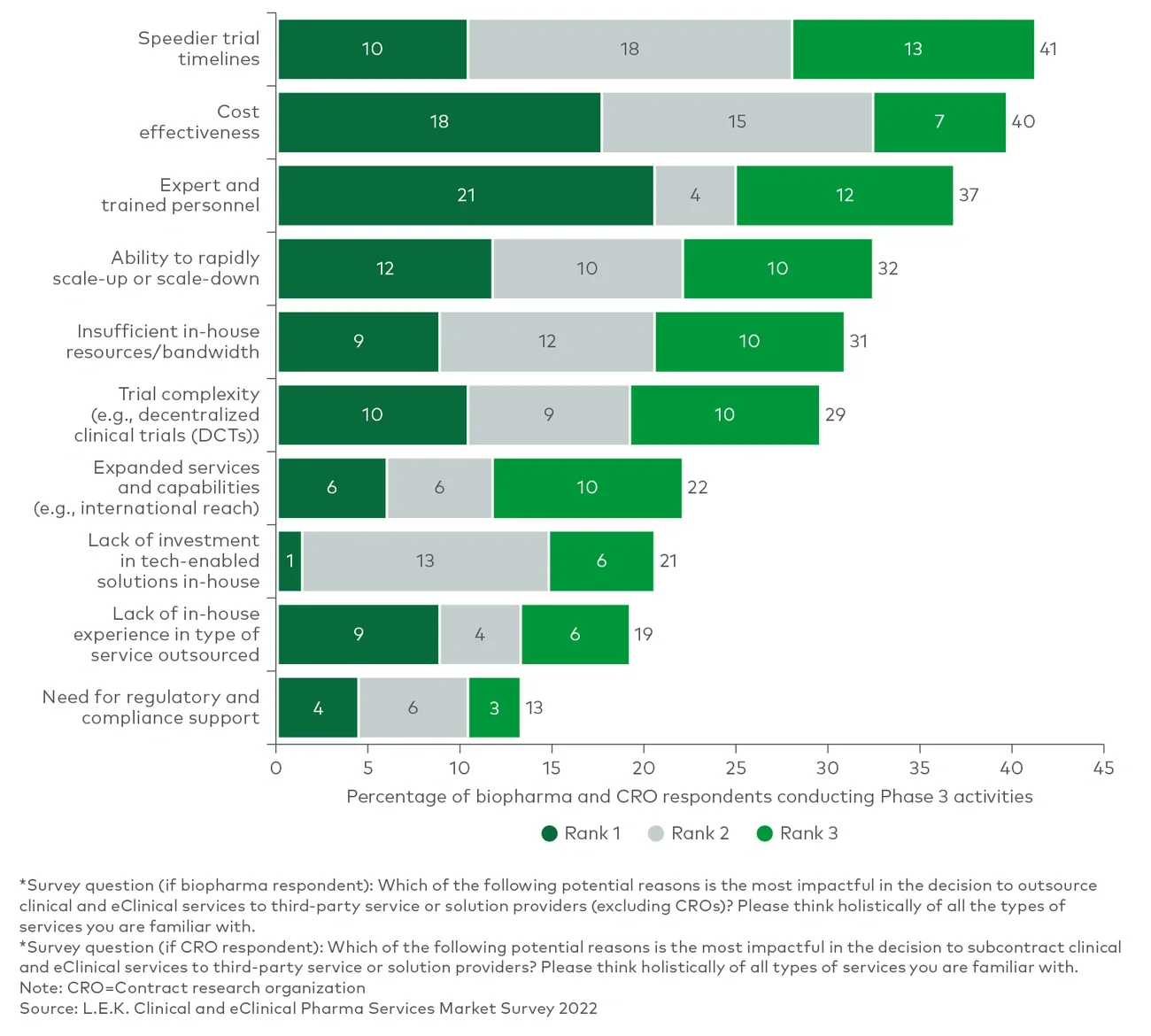
Third-party service and solution providers have several opportunities to expand their current offerings to meet the evolving needs of the market. However, providing the bar-raising point solutions in which sponsors are looking to invest will only become more difficult. Providers’ current value proposition — clinical development timeline speed, cost-effectiveness and expertise — will soon become table stakes for any player in the market. Sponsors will instead be looking for “nice-to-have” capabilities, such as the ability to rapidly scale up or down, and availability of point solutions that address the risks associated with increasing trial complexity (see Figure 9).

Figure 9

Reasons for outsourcing clinical and eClinical services to third-party service or solution providers (excluding outsourcing to CROs)

Image
Reasons for outsourcing

Figure 9

Reasons for outsourcing clinical and eClinical services to third-party service or solution providers (excluding outsourcing to CROs)

Image
Reasons for outsourcing

As sponsors continue to look for ways to enhance the trial experience for stakeholders, the service and solution providers that can ameliorate specific pain points related to patients and sites will further differentiate themselves and clearly demonstrate their value in this highly fragmented market.

Endnotes
1Moore, Thomas J. et al. “Variation in the estimated costs of pivotal clinical benefit trials supporting the US approval of new therapeutic agents, 2015-2017: a cross-sectional study.”

English