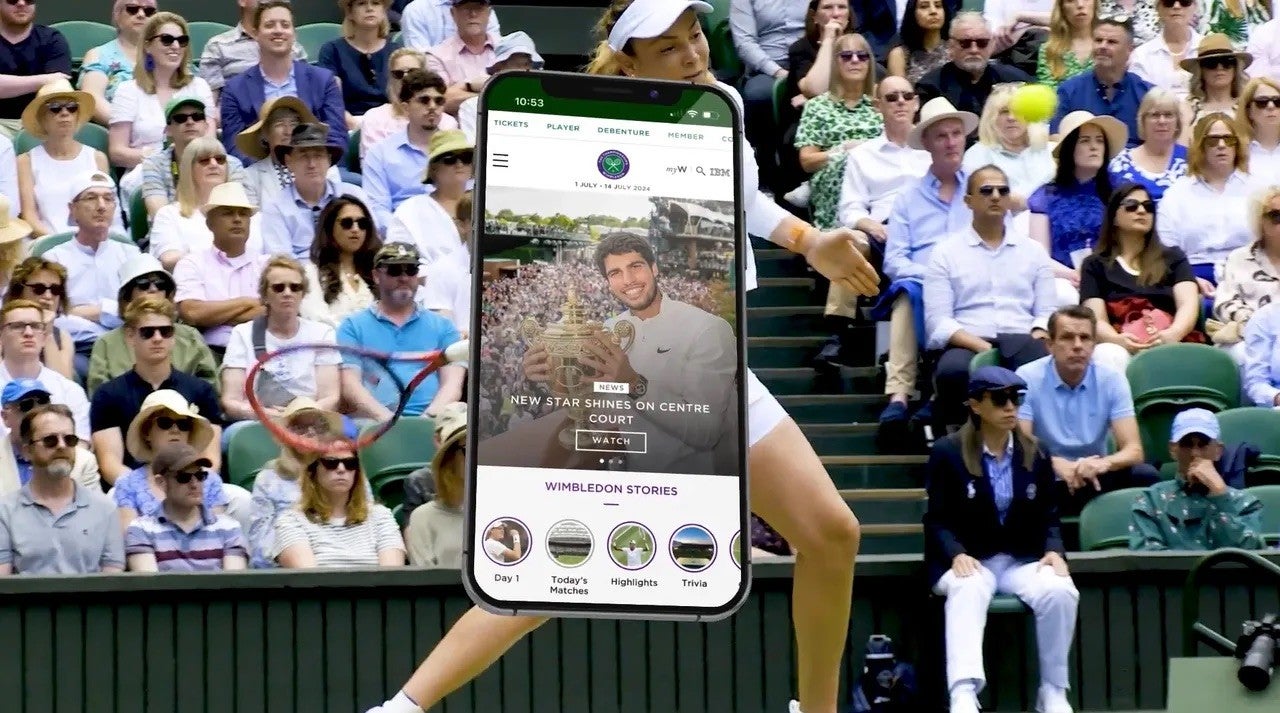
For a deeper look at how fans are engaging with sports content, see our latest Sports Fan Survey.
Monetization
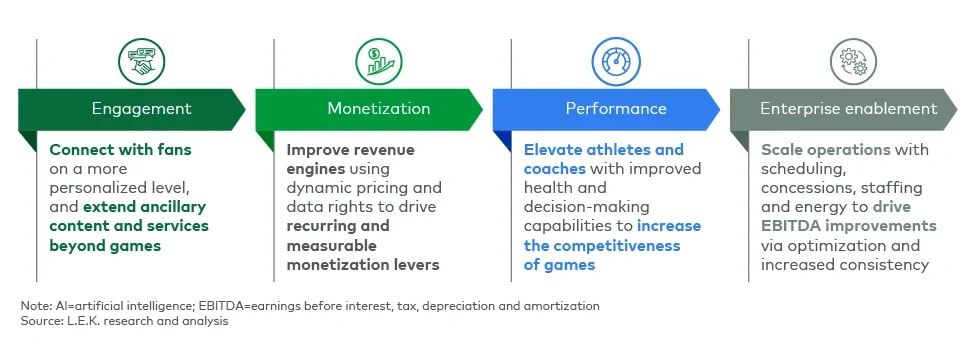
For many sports organizations, data and content have long been underutilized assets. AI is turning proprietary libraries and real-time streams into recurring revenue engines across multiple channels.
While early monetization efforts often focused on tactical wins like dynamic pricing, the current frontier is the commercialization of proprietary data and content rights. WWE used AI to tag decades of archived video, transforming a static library into a discoverable and licensable digital product. Sportradar monitors global betting markets in real time, turning integrity protection into a regulated, data-driven revenue stream.
The results can be striking. For example, the University of South Carolina projected a 40% increase in ticket revenue after adopting AI-driven dynamic pricing for its women’s basketball program.
Performance
On-field decisions have long relied on human intuition. AI now connects tracking data, video and sensor inputs to create a more empirical foundation for athlete management.
While baseline automation has already delivered efficiency (like Sevilla FC’s AI scouting tool that eliminates hundreds of hours of manual short-listing), the most compelling frontier involves predictive thinking partners that inform strategy and safety. The NFL’s Digital Athlete program aggregates league-wide data to predict injury risk and inform training loads and rule design. Similarly, Williams F1 has integrated Claude as an official “Thinking Partner” across race strategy and car development.
Enterprise enablement
For organizations managing multi-venue and multi-season complexity, AI is delivering meaningful operating leverage enterprise-wide by automating back-office functions where small efficiencies compound quickly.
The MLB, for example, uses AI-based optimization to generate season schedules that must balance competitive fairness, broadcast priorities and venue constraints. In team operations, the Denver Broncos have sharpened sales forecasting and optimized concession planning through AI-driven insights. Similarly, Chelsea FC is integrating AI agents across club operations to improve the fan experience at scale.
How sports organizations turn AI pilots into lasting results
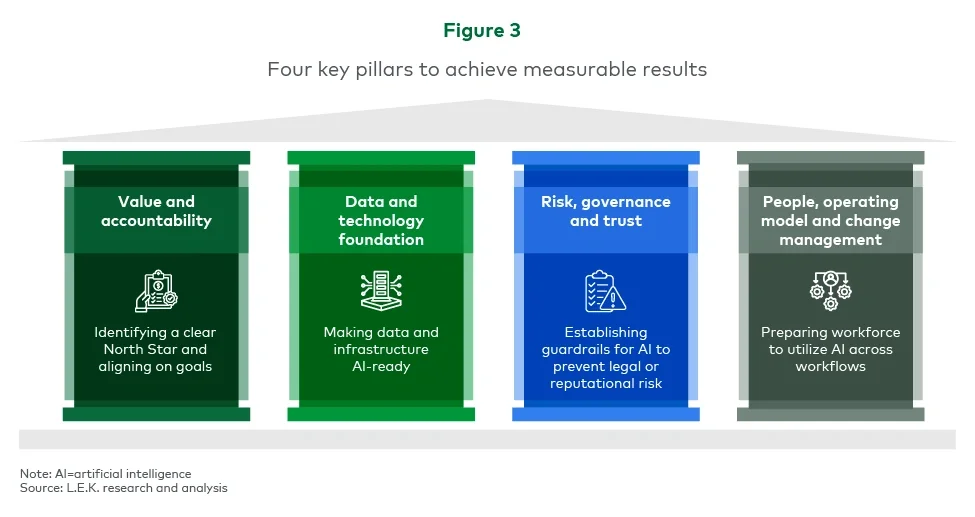
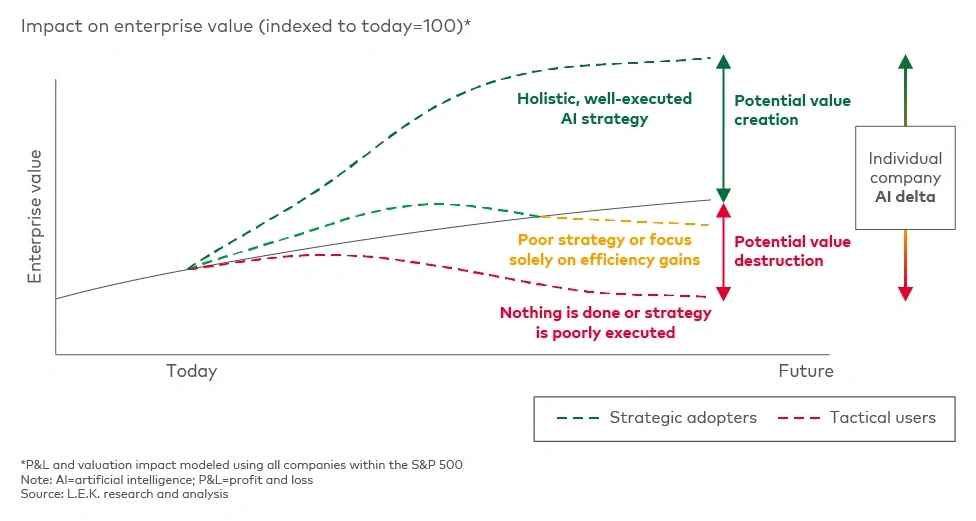
Across L.E.K. Consulting’s work with sports and live entertainment organizations, four pillars define whether AI investments deliver championship-level returns or quietly fade after the first season. Success requires a fundamental reimagining of the organization, including a ground-up rebuild of roles, tasks and the metrics used to measure victory.
These pillars give leadership a practical framework for moving from isolated pilots to organization-wide transformation (see Figure 3).




 Source: