

Digital commerce rose to new prominence during the disruption caused by COVID-19. At their peak, online sales reached 16.4% of seasonally adjusted sales during the second quarter of 2020.
Although a COVID bump was somewhat expected, the growth has been challenging to sustain. Online sales fell back to 14.3% of seasonally adjusted sales during the first quarter of 2022 as some shoppers returned to physical stores. Still, online sales were just 10.3% during the same quarter three years earlier.
That means digital commerce remains an even more important piece of the growth puzzle. For brands that have invested in establishing or shoring up digital commerce — and for many brands’ direct-to-consumer online sales channels — the focus now is on optimizing digital commerce via a consumer-centric approach.
But digital strategies aren’t one-size-fits-all. In this Executive Insights, we’ll discuss how the right approach varies by company, category, target consumer and a multitude of other variables that you need to consider.
The digital commerce landscape
The digital commerce landscape is dominated by three types of platforms: retail ecommerce, digital marketplaces and direct-to-consumer (DTC) websites.
Retail ecommerce providers offer consumers a wide variety of products from different brands similar to what is available in-store, although in some instances they only sell online.
These platforms typically act like a wholesale partner to the brands available on the website. For brands, retail ecommerce provides access to consumers familiar with the respective retailer — often a national retailer with wider consumer reach than any one brand has at its disposal. From the consumer’s perspective, retail ecommerce offers a wide assortment of goods tailored to a specific category or subcategory, making it easier for consumers to find the quality items they’re searching for.
For example, HomeDepot.com provides consumers with easy access to a wide assortment of home improvement-focused brands they otherwise might not find online. At the same time, brands get valuable exposure and consumer reach they otherwise might not attain, given the expense of marketing at that scale.
Digital marketplaces are platforms available to all brands and allow businesses widespread access to consumers.
A digital marketplace will likely offer a wide selection of categories or can provide shopping on social media sites. Amazon.com is the obvious and most relatable example. Amazon vendors have access to what may be the world’s largest pool of online consumers, plus a number of Amazon-provided services like pricing assistance and product fulfillment. For their part, consumers have access to a wide array of products and can readily compare product reviews, seller reviews, prices and more as they shop.
Digital marketplaces aren’t limited to consumer goods. UberEats, DoorDash and Grubhub are a blend of marketplace and retail ecommerce, fulfilling retailer demands as they partner with consumer packaged goods brands for advertising. The three platforms saw combined growth of 275% between 2019 and 2021, topping $15 billion in revenue with 140 million total users.
DTC websites include any brand-specific website offering its products directly to customers, often resulting in higher margins for the seller.
DTC websites allow the seller to have a more intimate connection with consumers. They can offer benefits to loyal customers, such as free shipping, member discounts or a tailored, virtual portfolio of items sent via email on a recurring basis.
WarbyParker.com is a good example of a well-designed DTC website. It offers a wide variety of eyeglasses and sunglasses, which consumers can try on virtually before they buy. Consumers can also have up to five frames delivered to their home for in-person try-on at no charge.
Creating a myriad of benefits
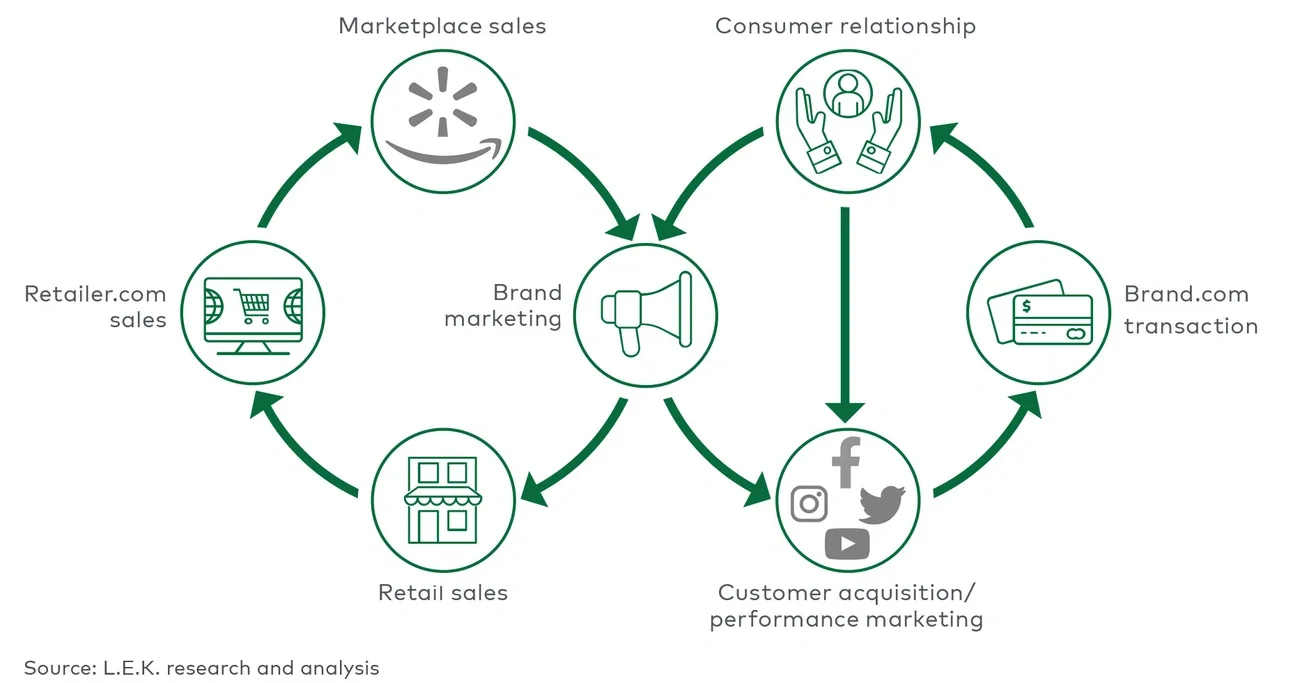
Digital commerce has a direct effect on customer sales and relationships. But the indirect effects may be even bigger. For instance, although just 11% of U.S. consumers say they’ve bought items via social media, 65% say they’ve bought items on other channels after being exposed to them on social media.
Even among avowedly brick-and-mortar shoppers, digital commerce can play a critical role in brand perception, loyalty and ultimate purchasing intent. Consider that 37% of consumers say they prefer to research online, then buy in-store. That’s more than twice the number (17%) who say they’d rather research online, then buy online. By one estimate, 56% of in-store purchases are influenced by digital transactions.
These realities are why an effective digital commerce strategy requires working across the spectrum of digital commerce. That way, you can create a myriad of benefits across all sales channels, not just digital ones (see Figure 1).