Software testing services constitute a substantial and expanding segment of the information technology (IT) services industry. These services have a long history of being employed by various businesses to ensure the quality and reliability of their software applications and have continued to adapt with emerging capabilities.
However, what does this mean for the current state of software testing services and the investment prospects for those seeking to capitalise on its next phase of growth?
Despite the well-established presence of software testing services, L.E.K. Consulting believes that the current landscape for such services presents ample opportunities for tapping into a new era of expansion, particularly given the surge in automation and AI’s increasing impact. In this Executive Insights, we delve into the primary trends and priorities steering the growth of software testing services and explore the implications for investors and businesses as they evaluate their strategies in this evolving market.
Software testing services represent a large, growing and resilient market
The software testing services market represents a substantial opportunity and has continued to thrive with promising growth potential. As digital transformation gains momentum across various sectors, there remains a persistent and substantial demand for quality assurance (QA) and testing services.
This upward trajectory is driven by several key factors, including:
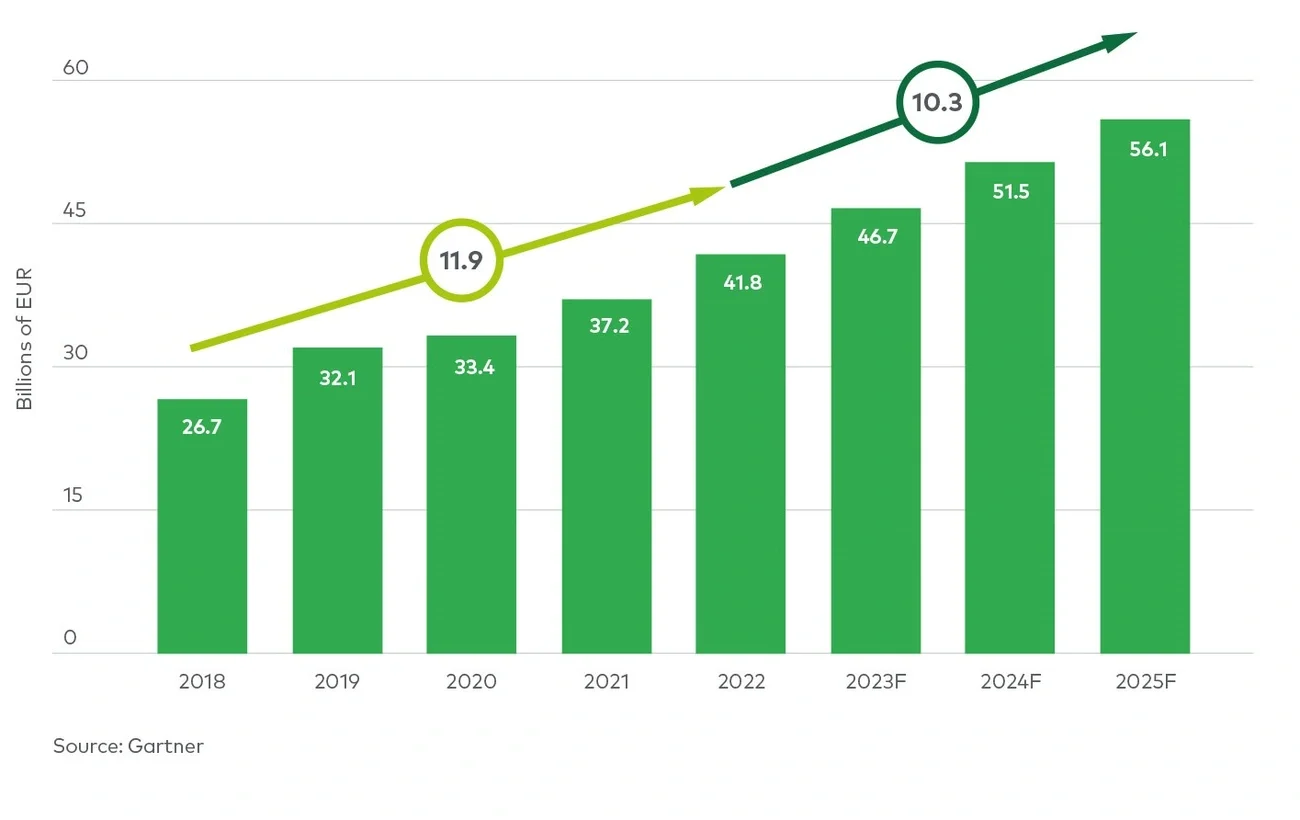
- Growing spend on software implementation contributing significantly to the sustained demand for testing services (see Figure 1)
- Greater software complexity necessitating thorough testing, fuelling the need for testing services
- Evolving regulatory standards and compliance mandates compelling organisations to invest in rigorous testing to ensure adherence
- Continued reliance on outsourcing to access specialised testing expertise and resources
- The shortage of skilled testing professionals further solidifying the importance of outsourcing for fulfilling testing needs