



Executive summary
The UK has a well-established, largely public healthcare system that offers a broad range of services and access to quality care. However, several economic factors have recently placed the system under significant strain. Hospitals have been under staffing pressure for many years, but this problem has reached unprecedented levels. Junior doctors and nurses have been on strike, the National Health Service (NHS) vacancy rate is high, and existing staff are being asked to work longer and harder to meet patient care demands. Long waits for some services at public hospitals have caused increased private insurance and self-pay uptake, which offered an opportunity for the private hospital market to grow. Simultaneously, inflation affecting the UK is driving up hospital costs, presenting an additional headwind to the primary focus on improving patient outcomes.
These challenges continue to reshape the UK hospital landscape. Today hospitals are focused on a wide-ranging set of improvement initiatives, including managing widespread staffing challenges and raising the quality of patient care; increasing outpatient services provision, especially in primary care; advancing digital health capabilities; achieving cost savings and efficiencies in hospital supply chains; implementing environmental, social and governance (ESG) initiatives; and exploring outcome-based pricing models.
In this Executive Insights, L.E.K. Consulting shares key findings from UK respondents in its 2023 European Hospital Survey and discusses some of the trends affecting UK hospitals.
Key findings
We have identified seven key themes from the European Hospital Survey that are of particular importance to hospitals in the UK:
-
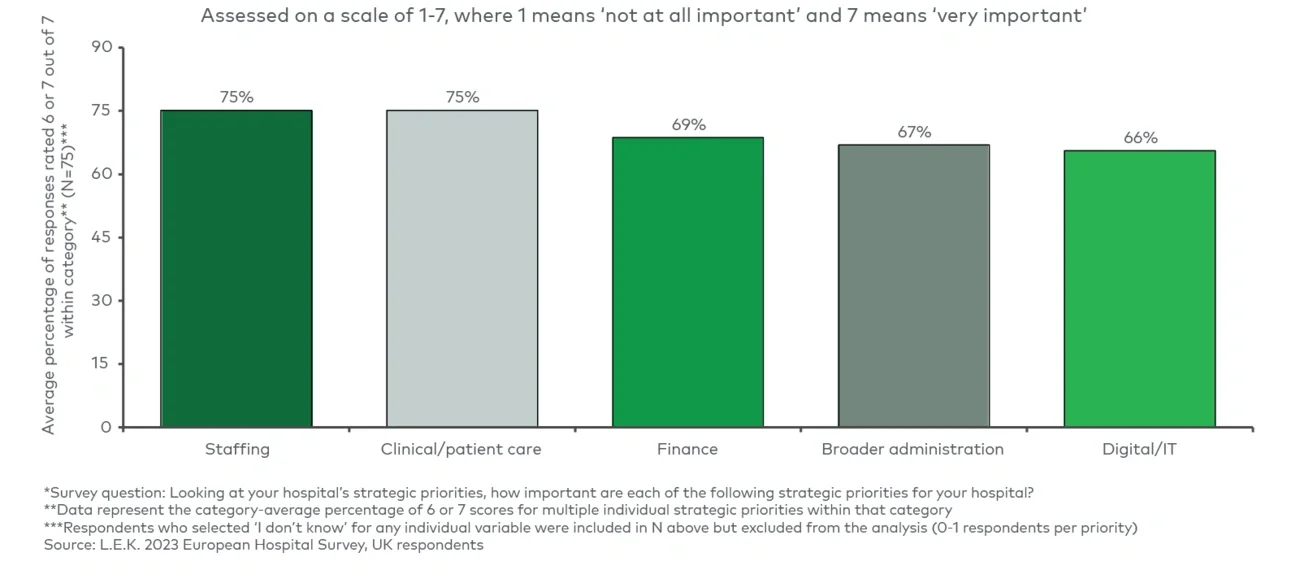
UK hospitals’ top strategic priorities are to attract and retain staff during the ongoing staffing shortage while continuing to improve patient outcomes and clinical care
-
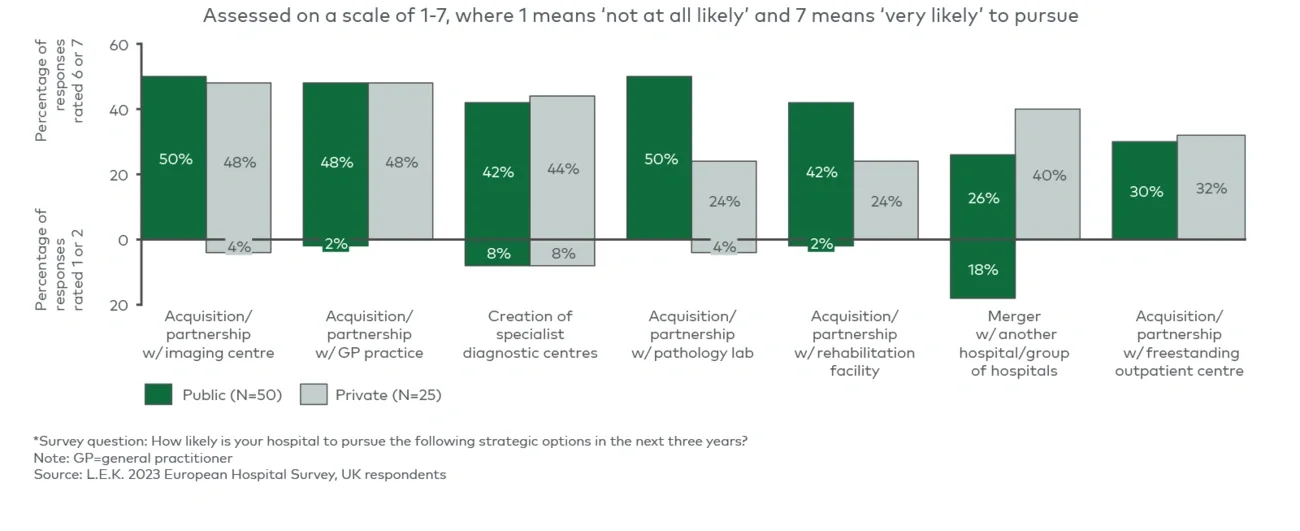
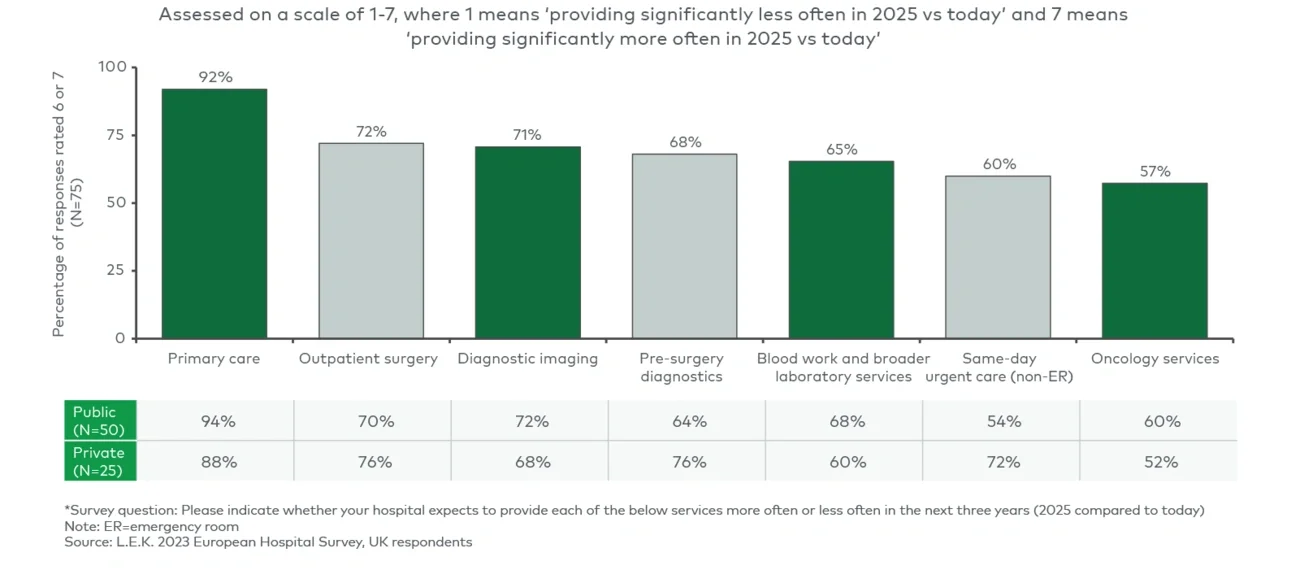
The majority of hospitals expect to provide outpatient services more often in the next three years, particularly in primary care, due to the current pressure on clinician capacity
-
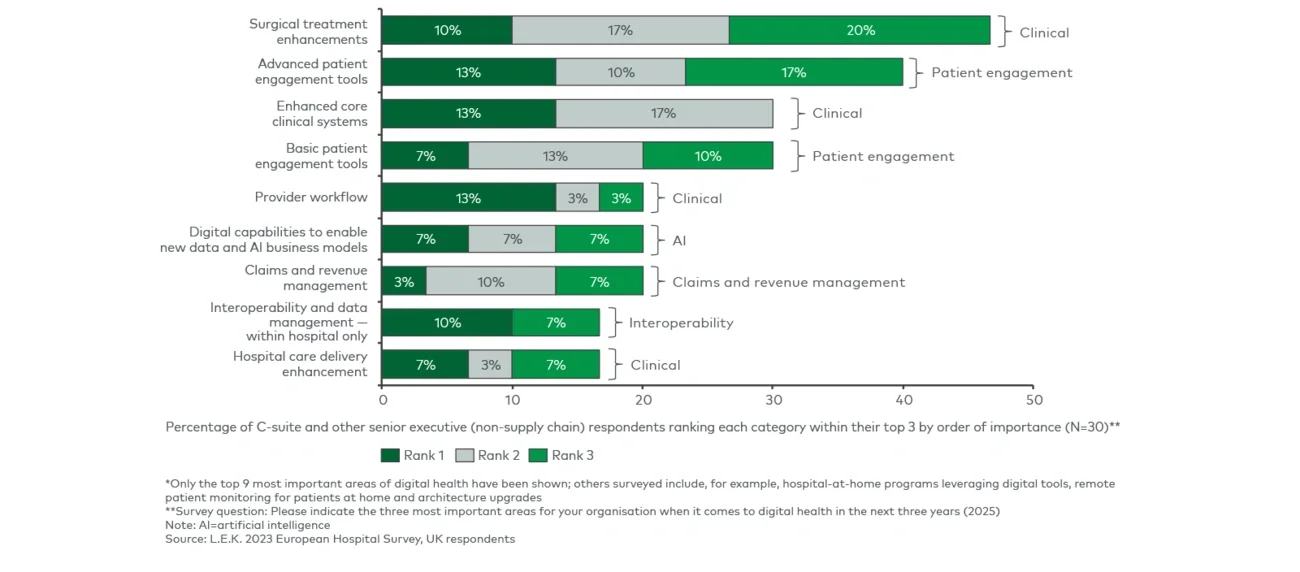
Deploying digital health tools to enhance surgical treatment and core clinical systems and enabling advanced patient engagement are top digital priorities for many hospitals
-
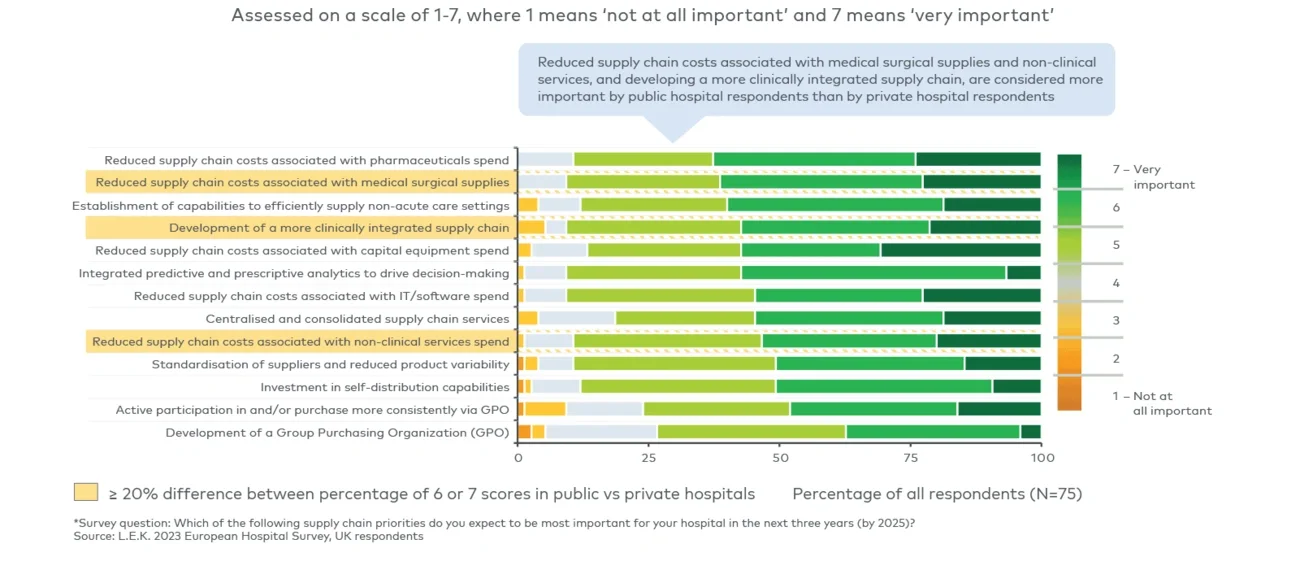
Supply chain priorities include cost reduction and efficient supply of products into non-acute settings
-
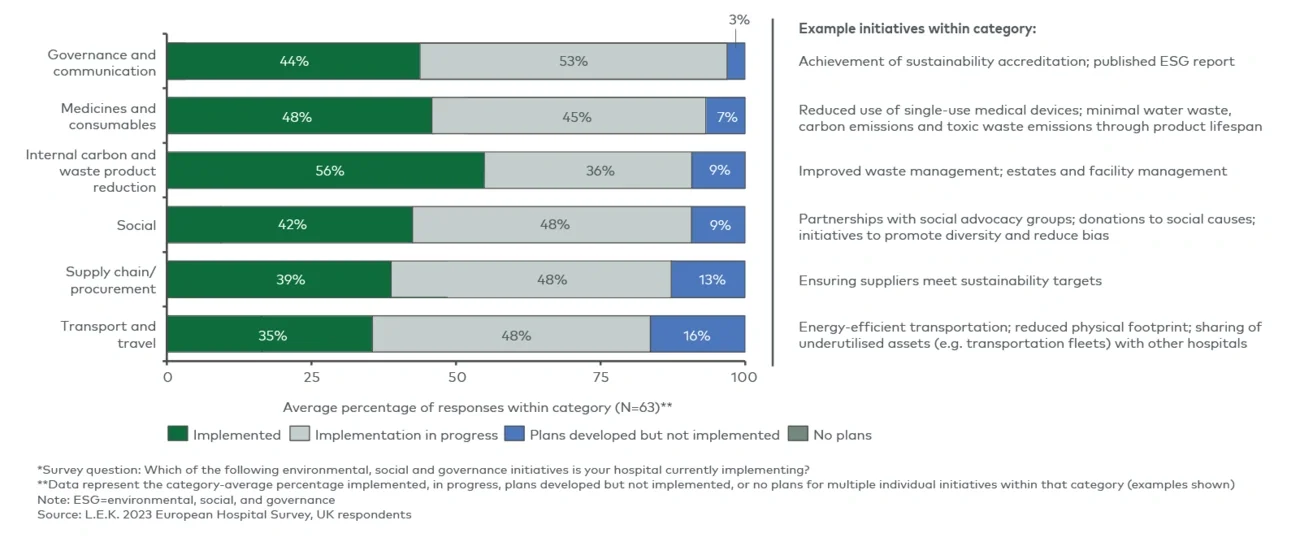
Hospitals have implemented (or are implementing) ESG initiatives, in particular those relating to governance and communication, and medicine and consumables usage
-
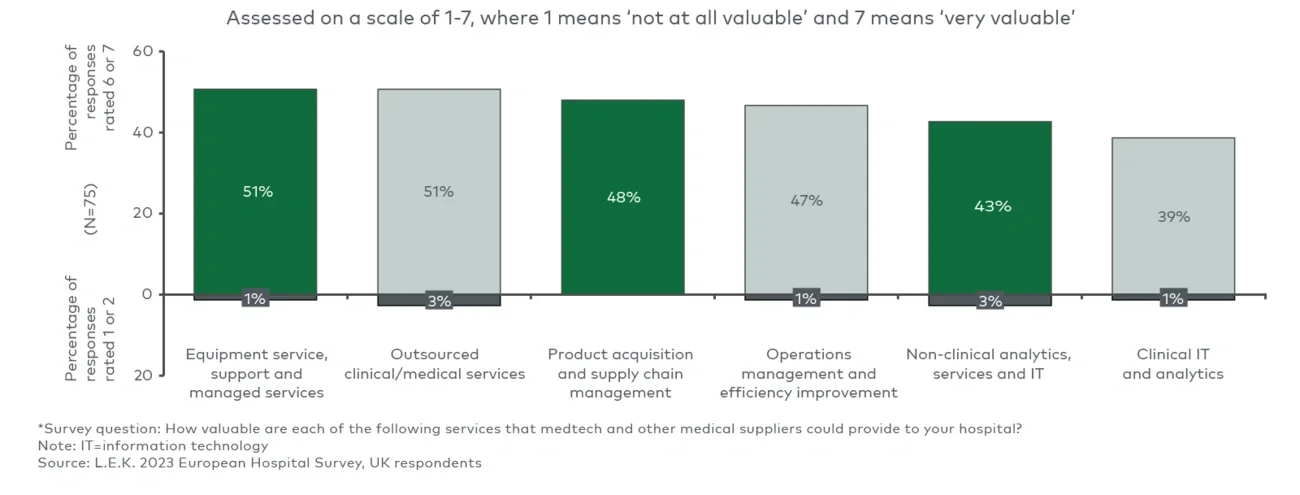
A significant proportion of hospitals is interested in services from medtech or other medical suppliers and sees value in a broad range of services including equipment support and outsourced clinical services
-
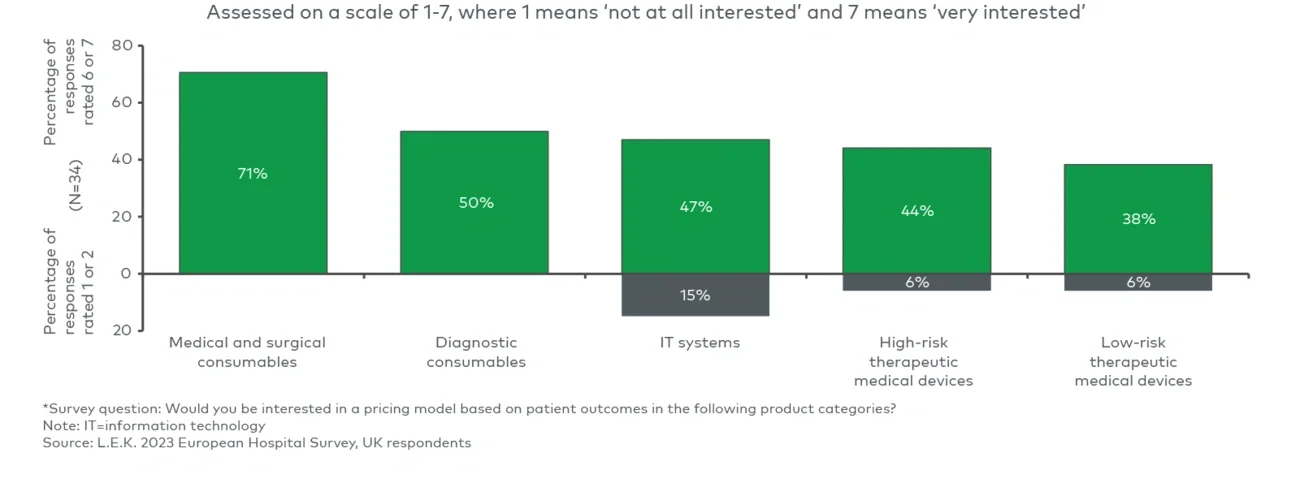
Clinical decision-makers at many hospitals are increasingly interested in exploring outcome-based pricing options for a range of products
1. UK hospitals’ top strategic priorities are to attract and retain staff during the ongoing staffing shortage while continuing to improve patient outcomes and clinical care
Hospitals in the UK are balancing a broad range of priorities across staffing, clinical and patient care, financial performance, administrative goals, and digital/ IT priorities, with staffing and clinical and patient care considered to be the most important (see Figure 1).