Generative AI, a form of artificial intelligence that can create high-quality content like human speech, images, music or other types of output, holds enormous potential for software-as-a-service (SaaS) companies. Not only can generative AI be used to enhance existing solutions and develop innovative new products, but it also opens up unprecedented opportunities for SaaS companies to generate revenue from these new capabilities.
Alongside building these advanced solutions, organizations must thoughtfully consider the monetization models that will allow them to effectively capitalize on generative AI capabilities. This article will explore key considerations for monetizing generative AI use cases, including the strategic role of pricing, the optimal price metric and broader monetization methodologies.
Strategic pricing considerations
When evaluating pricing models for generative AI solutions, organizations face several strategic, foundational considerations. Most importantly, should you begin with a low price to drive adoption as the market scrambles for product leaders, or should you price high to set the customer perception of premium value and establish a baseline for future pricing? This trade-off is especially important for generative AI given its nascency. While both approaches have merit, it’s crucial to weigh the implications when choosing the right model.
Promotional pricing
Driving initial adoption with a lower price point can fuel quick uptake but may limit future willingness to pay (and therefore limit the future total addressable market (TAM)). This can become an issue as the software achieves product-market fit and the path to long-term success becomes reliant on enterprise-level sales. Generative AI companies have followed the incumbent SaaS strategy of offering low initial prices to encourage user adoption, with the goal of upgrading users to enterprise-level offerings.
Three-tiered pricing in generative AI: Will it work?
It is yet to be determined whether this standard approach will be viable for the new wave of generative AI products and if these new entrants are differentiated enough to compete on an enterprise product level.
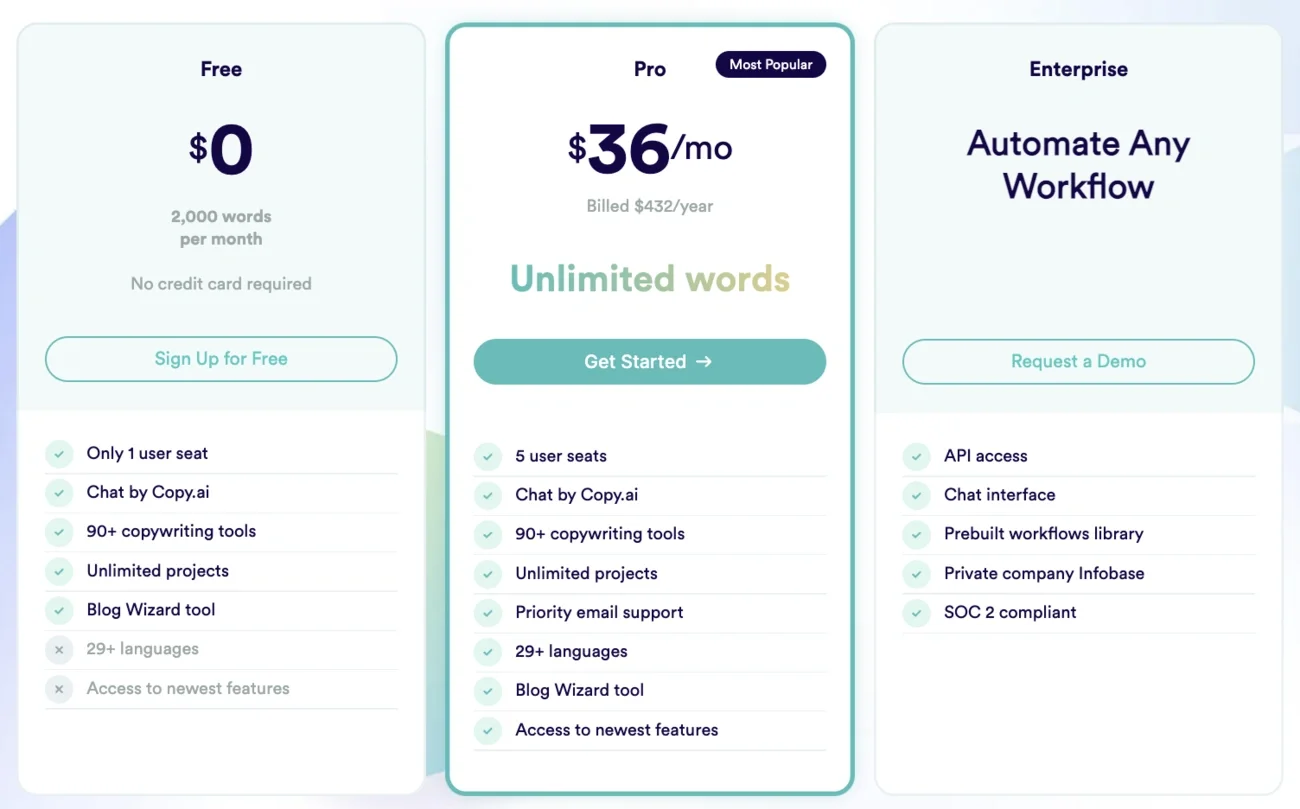
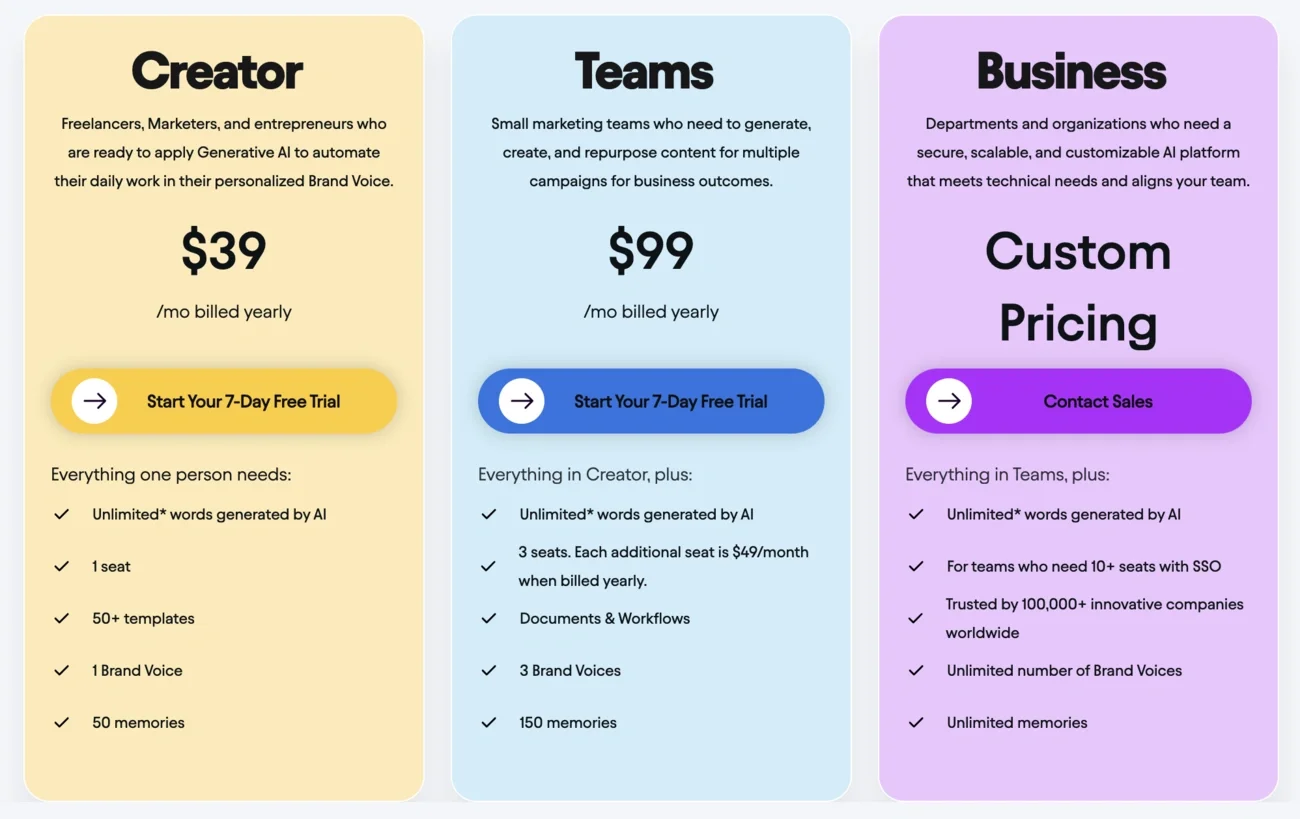
However, this approach has been a common strategy for new entrants to the generative AI market during a period of rapid growth and cutthroat customer acquisition. An illustration of this can be observed in Copy.ai, a prominent player in the generative AI content-writing toolbox, which adheres to this pricing structure (see Figure 1).