
As the global energy system continues its expansion of renewable resources, a new long-term and potentially sizable opportunity in energy is beginning to come into focus: geothermal. Geothermal energy represents a relatively small share of U.S. renewable energy consumption (current capacity is a mere 1,351 megawatts (MW) out of the total installed power generation infrastructure of approximately 258 gigawatts as of September 2023) and is forecast to experience modest growth of some 1% per year through 2035, in the most conservative scenario. But it’s gaining momentum as a result of underlying growth in renewable energy, a market with enormous potential for further expansion.
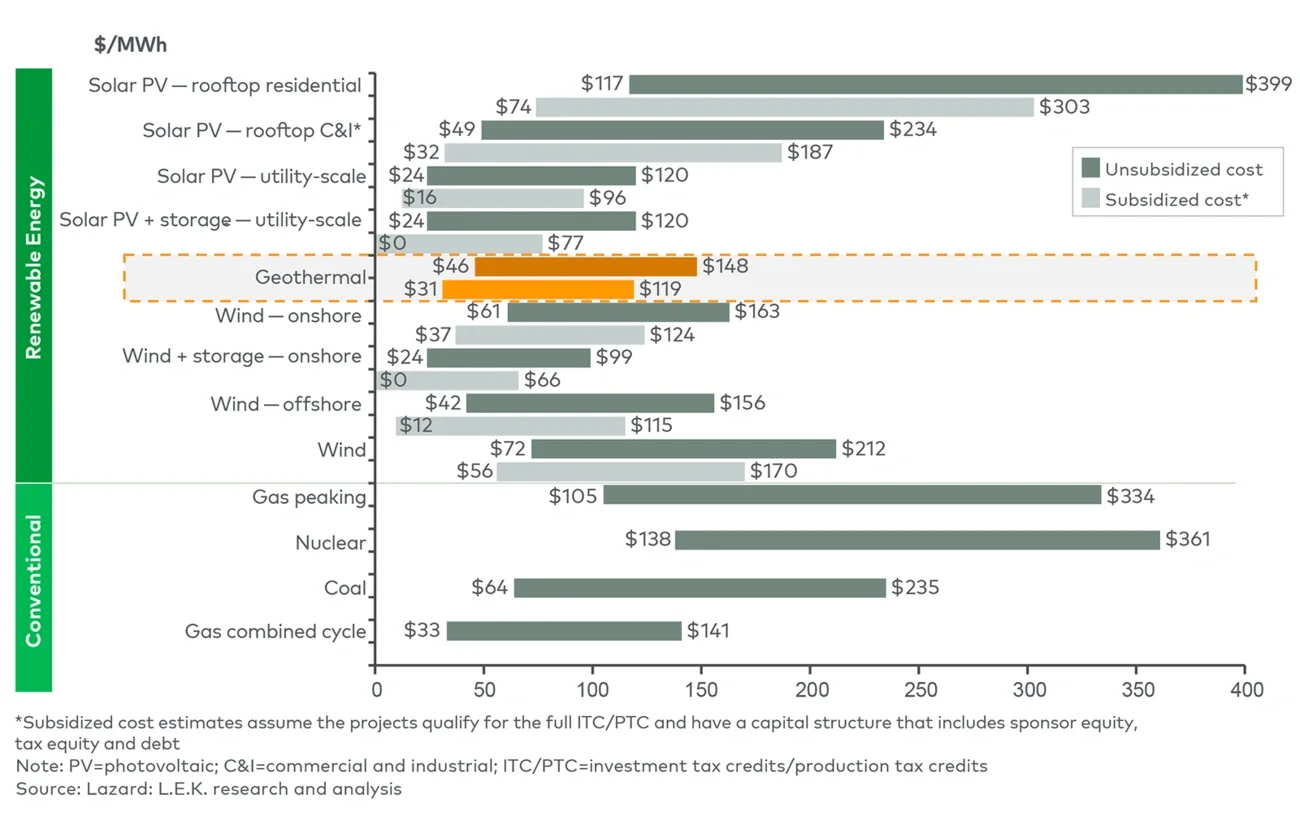
Indeed, the limited long-term feasibility of fossil-based resources, ongoing improvements in the economics of renewable technologies versus traditional oil and gas (O&G), and an increase in awareness around sustainability that has consumers looking for more environmentally friendly energy resources make geothermal an increasingly attractive area in which to invest. Other factors include technological advances, government regulations and policies that support renewable energy projects broadly and geothermal work specifically, and increased activity from geothermal-focused startup/tech companies. While geothermal energy development projects have historically been both lengthy and costly, technological advances, government regulations and increased interest from geothermal-focused startups have restored interest in the space.
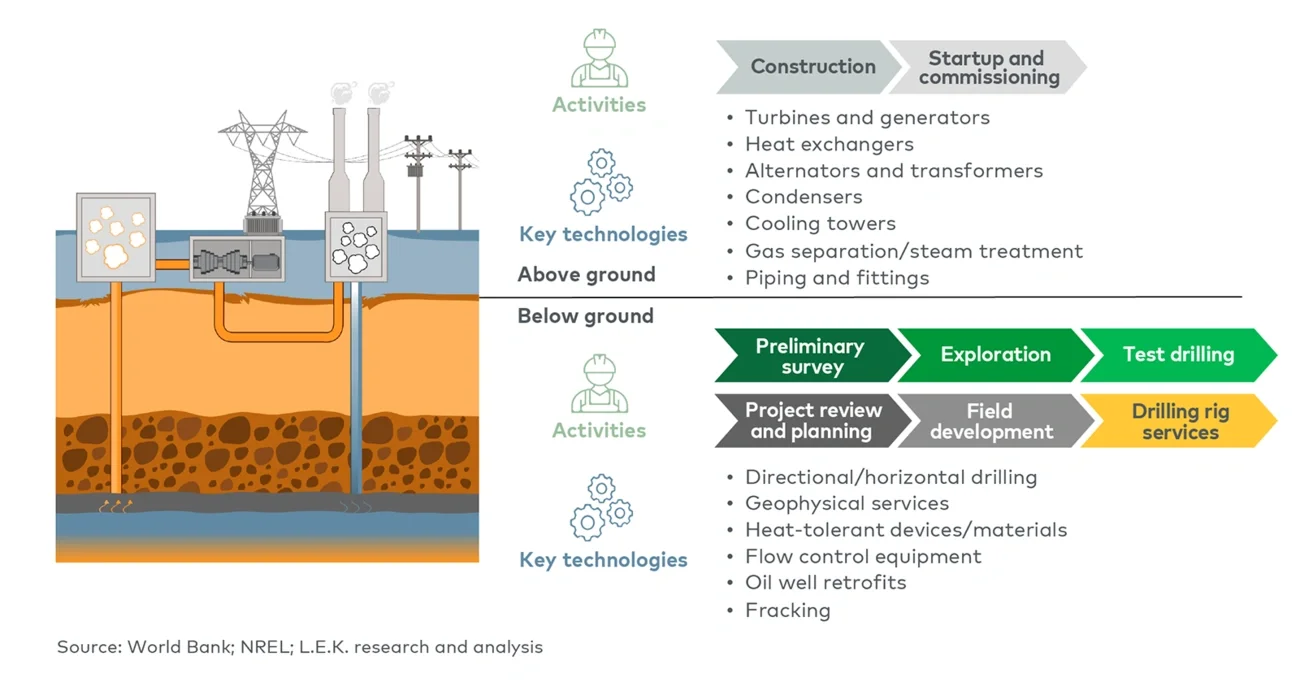
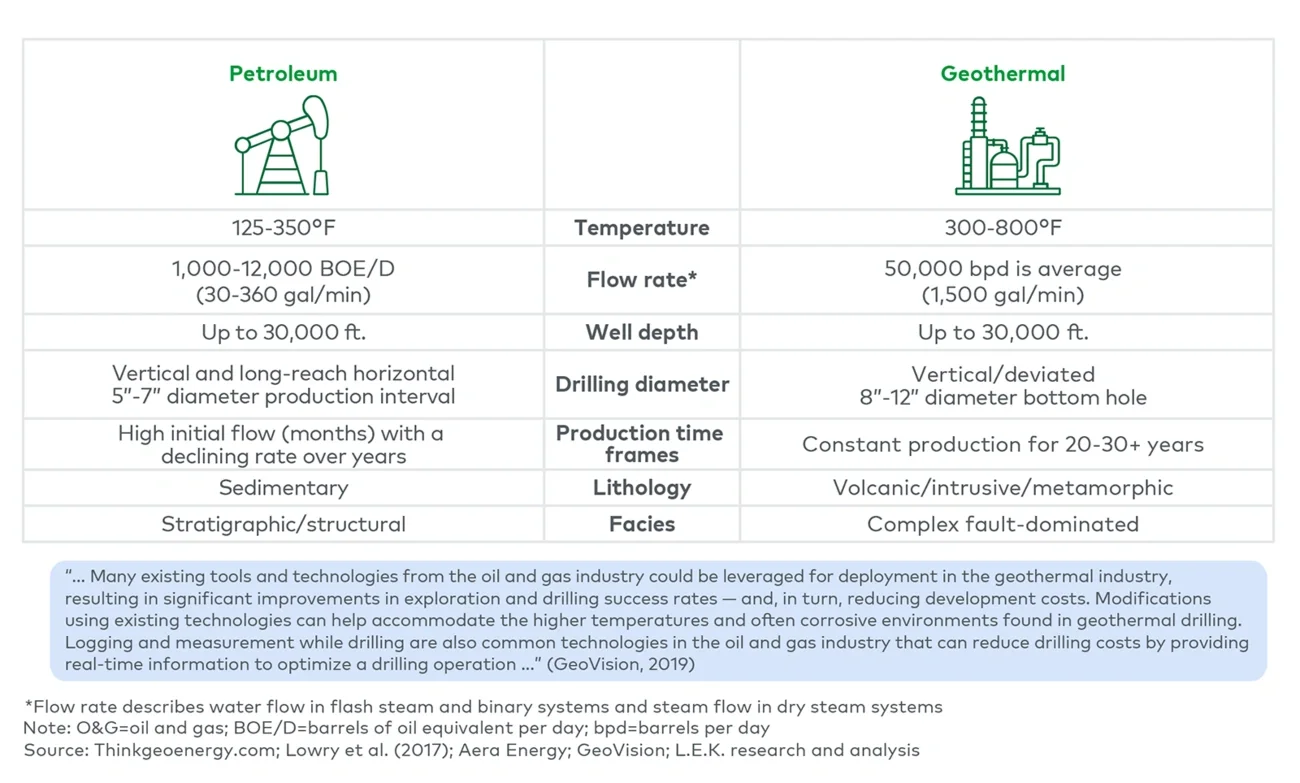
Moreover, geothermal is an area in which traditional energy companies have transferable proficiencies. O&G market participants, namely oil-field services and equipment (OFSE) providers, have expertise below ground (e.g., exploration, well construction, reservoir management) and related offerings that they can redirect to geothermal energy with minimal effort. Those focused on utilities, meanwhile, such as engineering and design firms; engineering, procurement and construction (EPC) companies; and equipment manufacturers can apply their aboveground skill sets and technologies to geothermal power plants. A shift to geothermal would be a natural — and lucrative — evolution of their skills and experience (and those of their investors).
How geothermal is used
Unlike biomass, wind, hydroelectric and solar, geothermal accounts for only 2% of U.S. renewable energy consumption. Geothermal power plants capture heat to generate steam and convert it to electricity, its primary use case, and geothermal energy can also be used to generate heat. Each use case has different infrastructure requirements. Geothermal power plants harvest energy 10,000 feet-30,000 feet below the Earth’s surface and force hot steam from the Earth’s interior through a turbine. Geothermal heat pumps, on the other hand, harvest energy from, at most, a few hundred feet below the Earth’s surface. Fluid is circulated through underground pipes that absorb heat, which is then extracted, compressed and circulated through buildings.
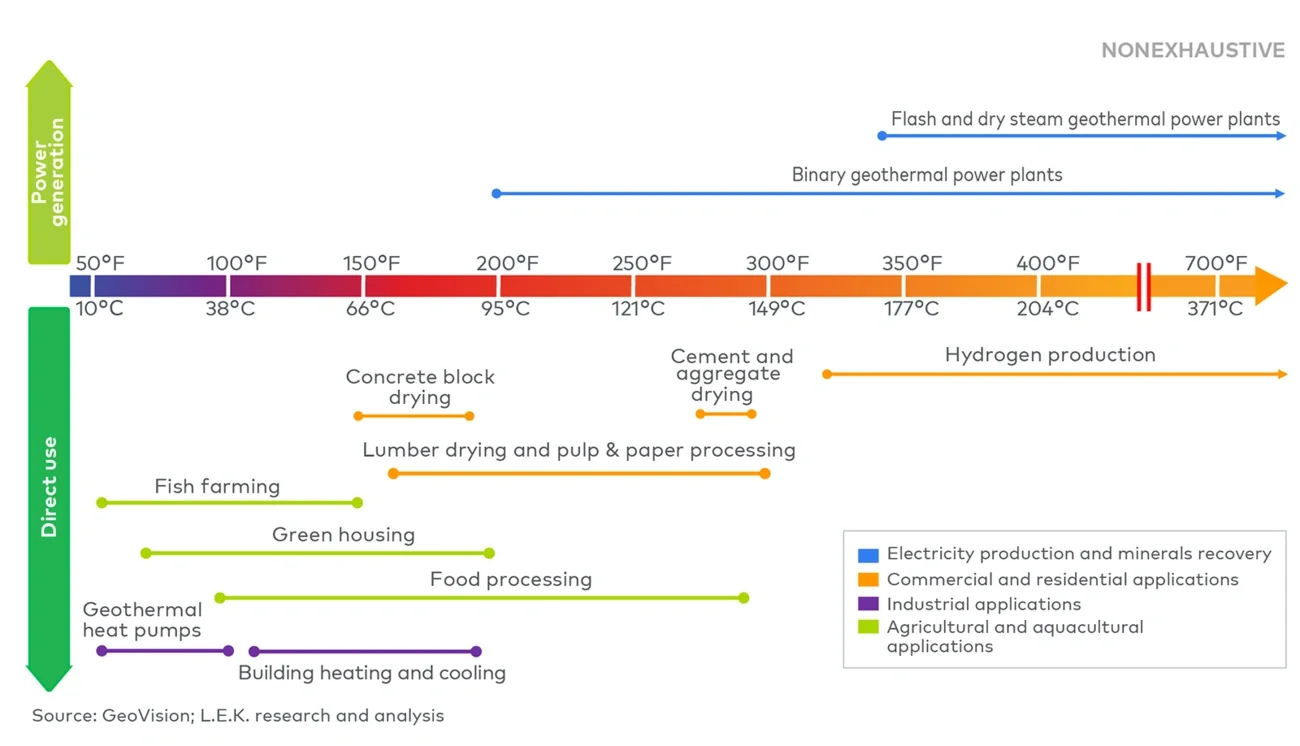
Specific applications/uses for a geothermal resource depend on the resource temperature. At the high end, roughly 320 degrees to more than 700 degrees Fahrenheit (roughly 160 degrees to more than 370 degrees Celsius), it can be used to produce hydrogen, for example. Indeed, renewable resources including geothermal are increasingly being promoted as ways to reduce the carbon footprint of hydrogen generation.
Meanwhile, at the low end, 50 degrees-200 degrees Fahrenheit (10 degrees-95 degrees Celsius), geothermal can be used for heat pumps and for heating and cooling both residential and commercial buildings, among other applications (see Figure 1).