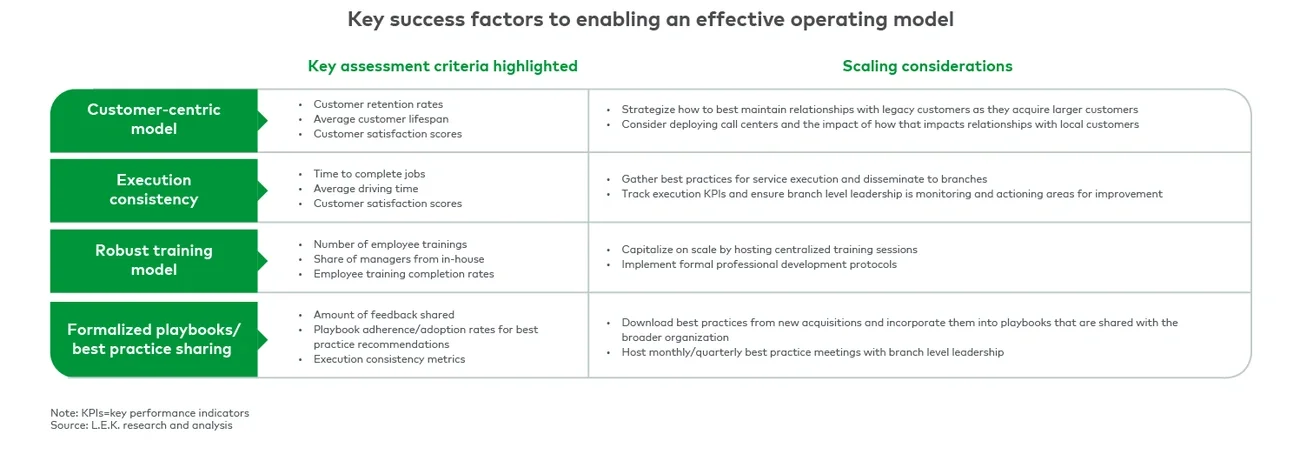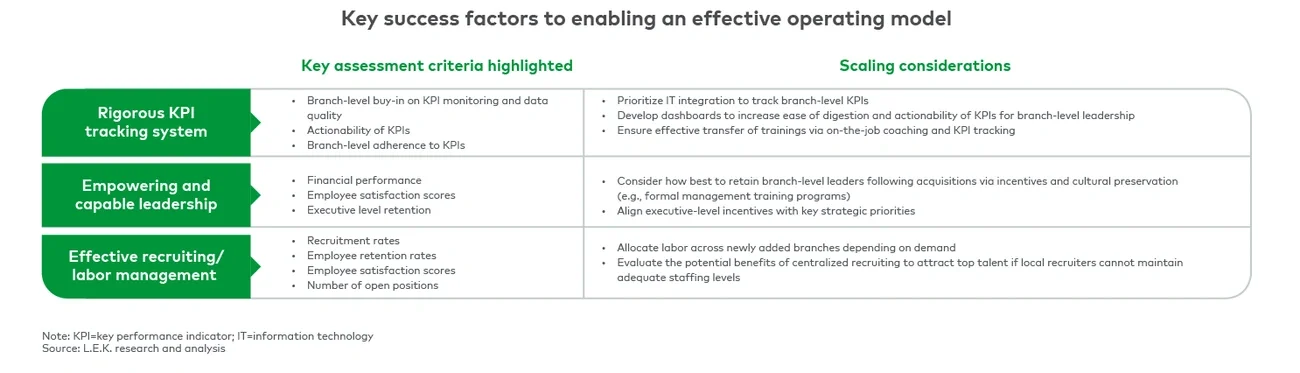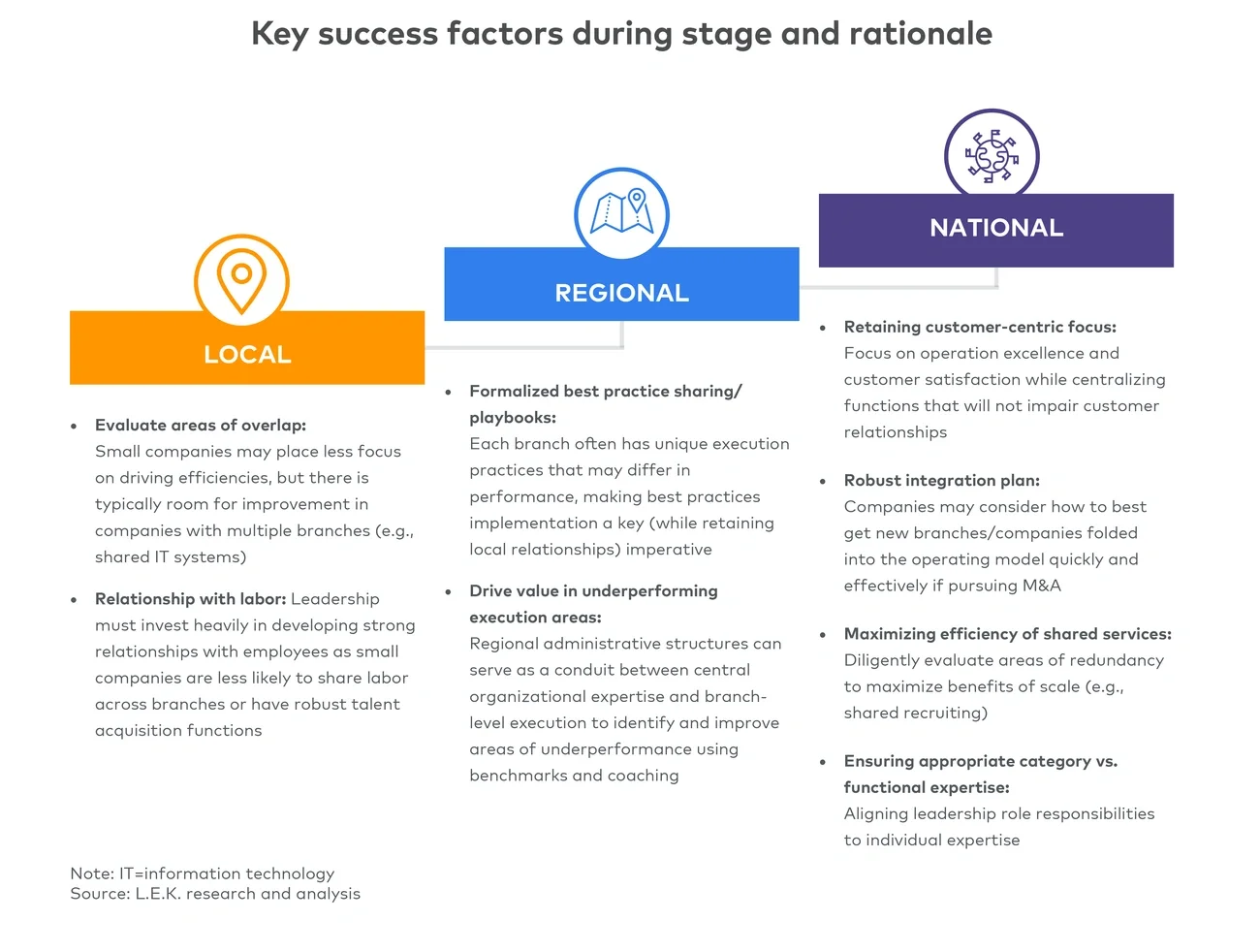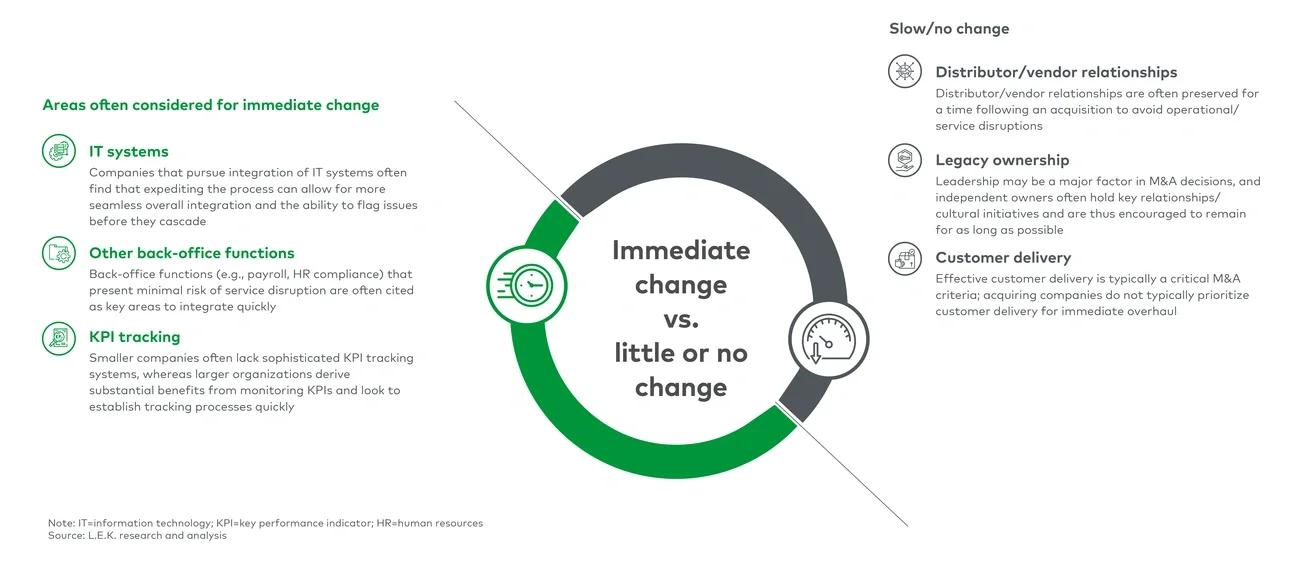



As service companies grow organically and through acquisition, be it of sole proprietor mom-and-pops, scaled local companies, or national-level providers, many find themselves struggling to settle on an optimal operating model. Indeed, many tend to approach operating model design in a way that is ad hoc at best.
This is a missed opportunity. Service companies with effective operating models generally have greater agility and higher levels of employee satisfaction. They also financially outperform service companies with less effective operating models.
That is what emerged from a series of in-depth discussions L.E.K. Consulting had with several branch-based service companies, both residential- and commercial-focused. Designed to identify common patterns that lead to successful operating models following a transition, these discussions made clear how important it is to align capabilities with bandwidth, ensure the accountability of leadership, and deploy effective sales strategies.
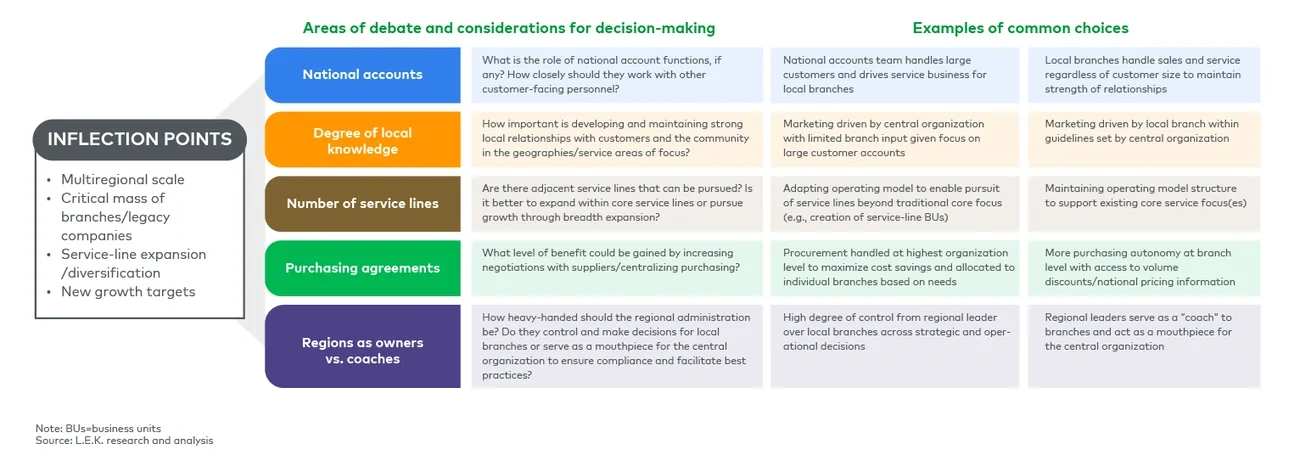
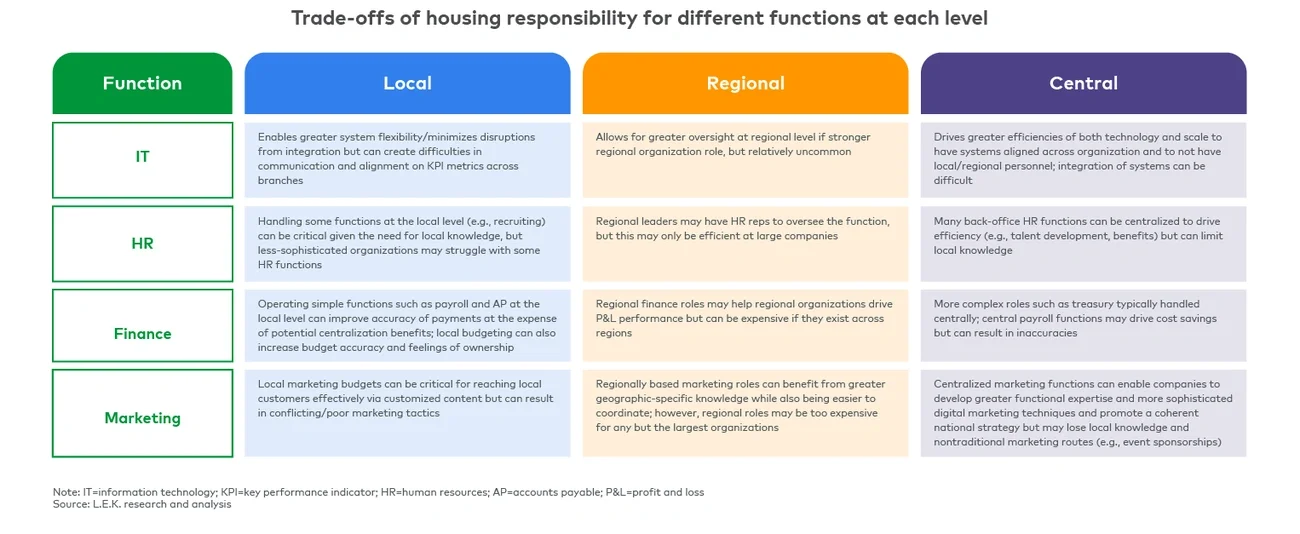
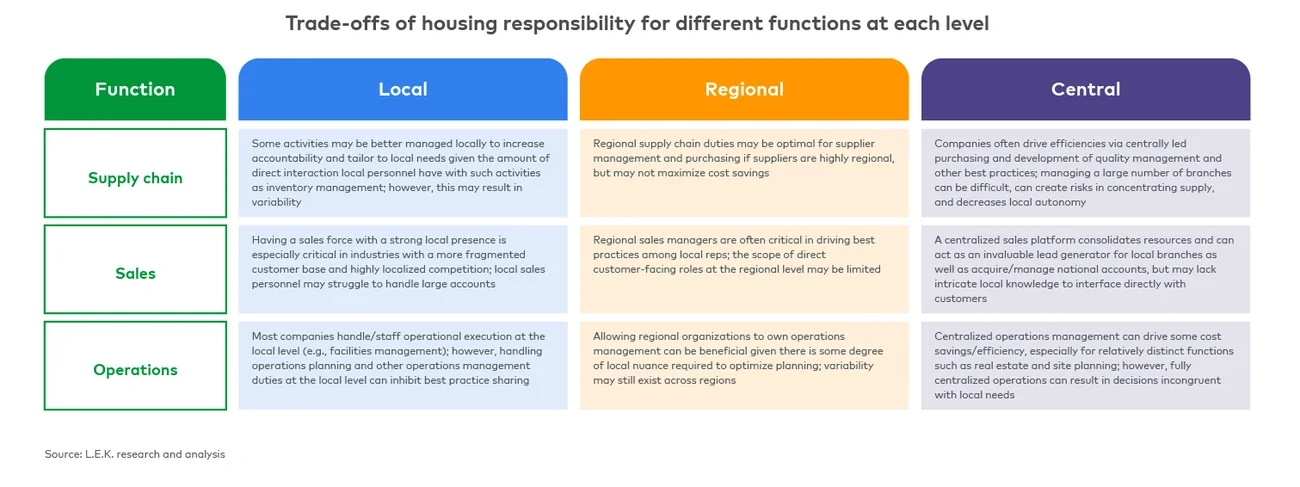
While there is no silver bullet, there are systematic tradeoffs, inflection points, and purposeful — as opposed to ad hoc — choices that branch-based services organizations should take into consideration along the way.
Many service organizations struggle to make operating model choices
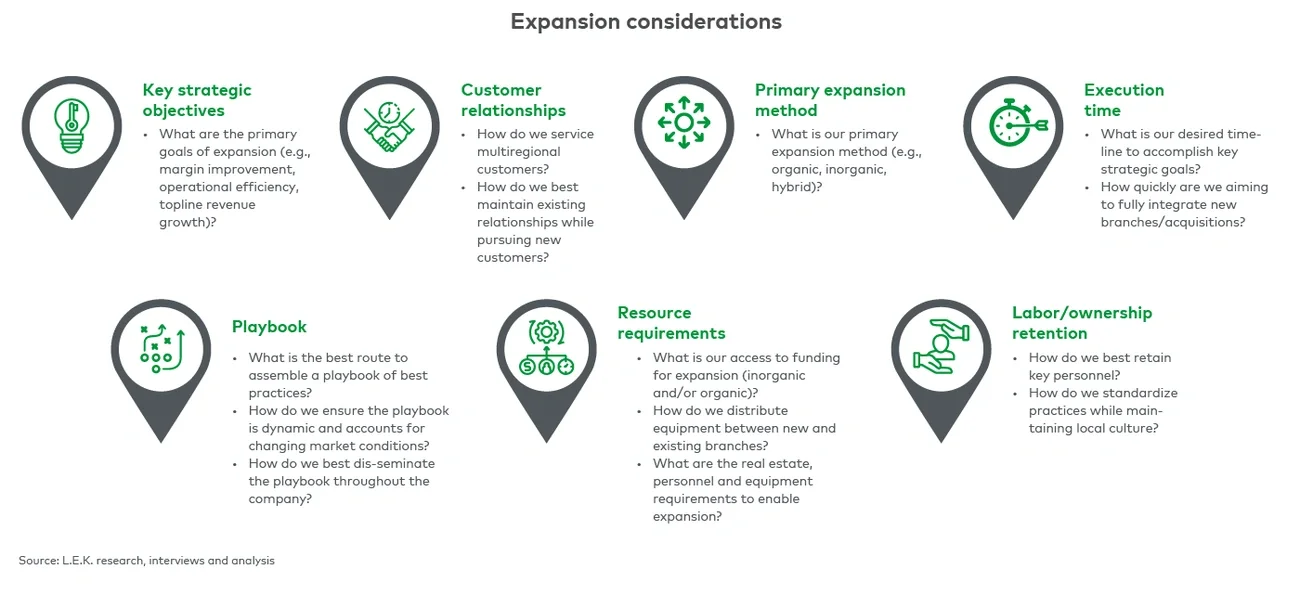
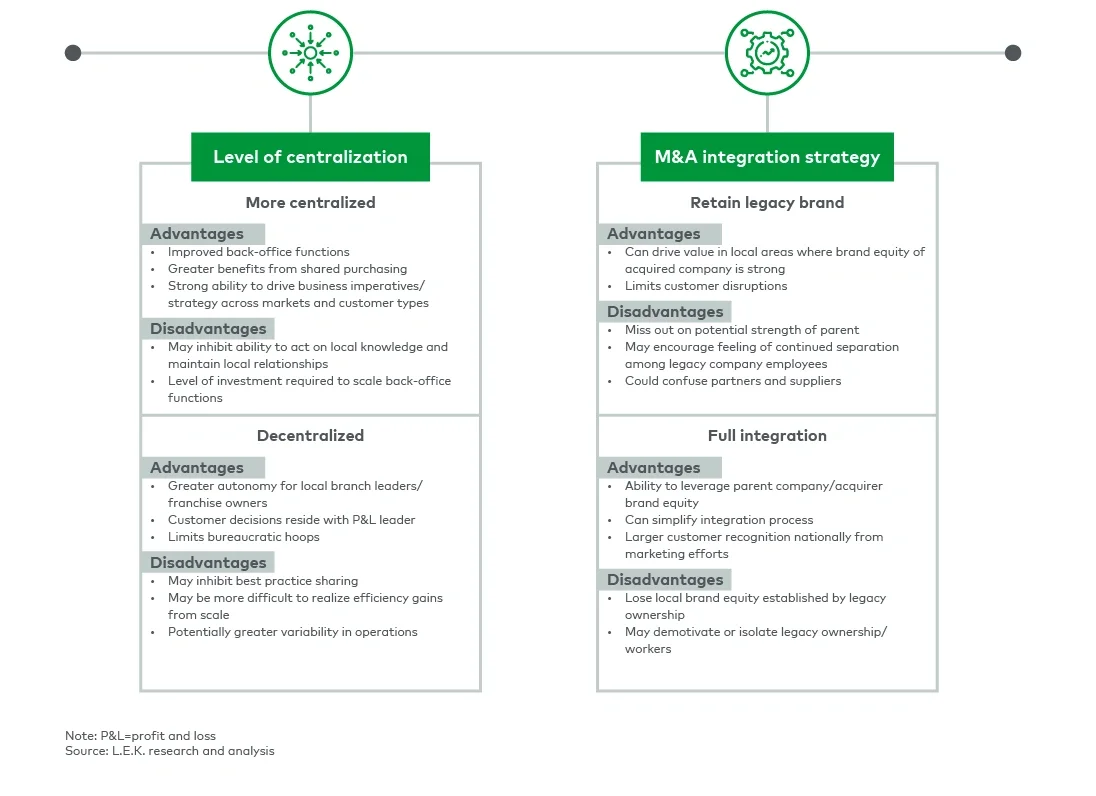
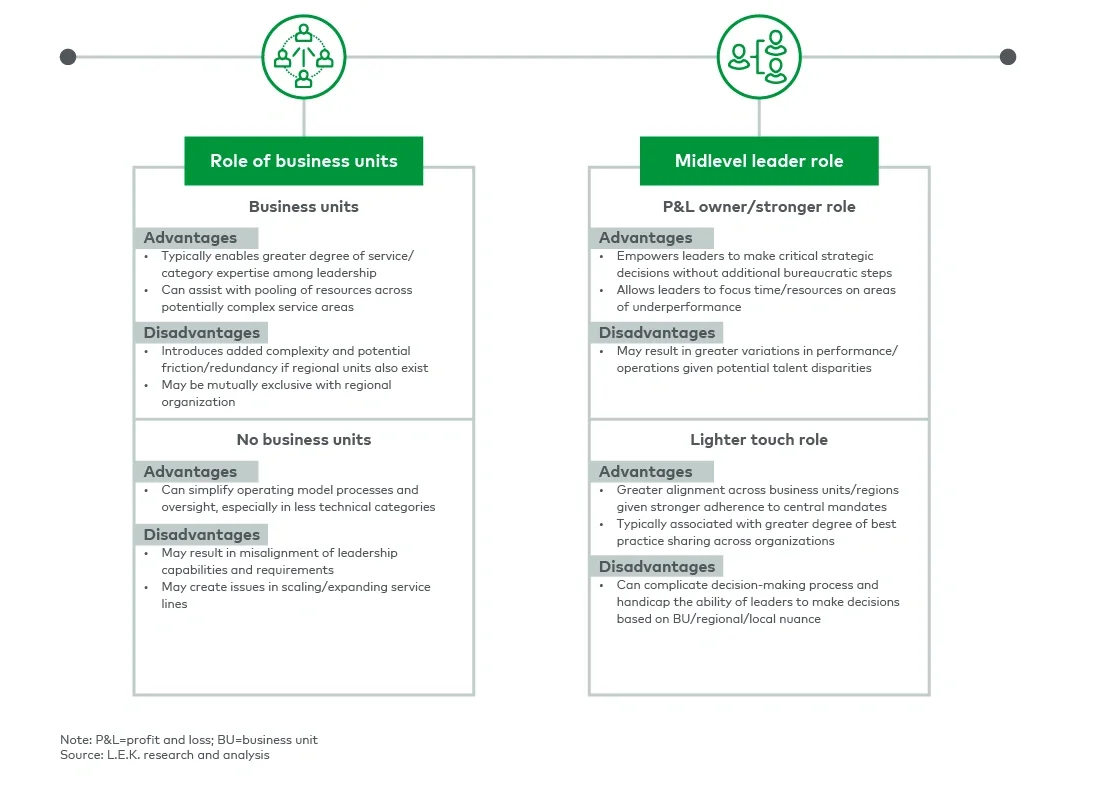
There are a number of key questions that service companies are faced with as they grow, the answers to which will ultimately determine what their ideal operating model should comprise. From strategic objectives (e.g., What are the primary goals we hope to achieve through expansion?) to the desired execution timeline (e.g., How quickly do we want to fully integrate new branches/acquisitions?) to labor retention (e.g., How do we ensure that we retain key personnel?), a successful operating model will provide satisfactory answers to all of these questions (see Figure 1).