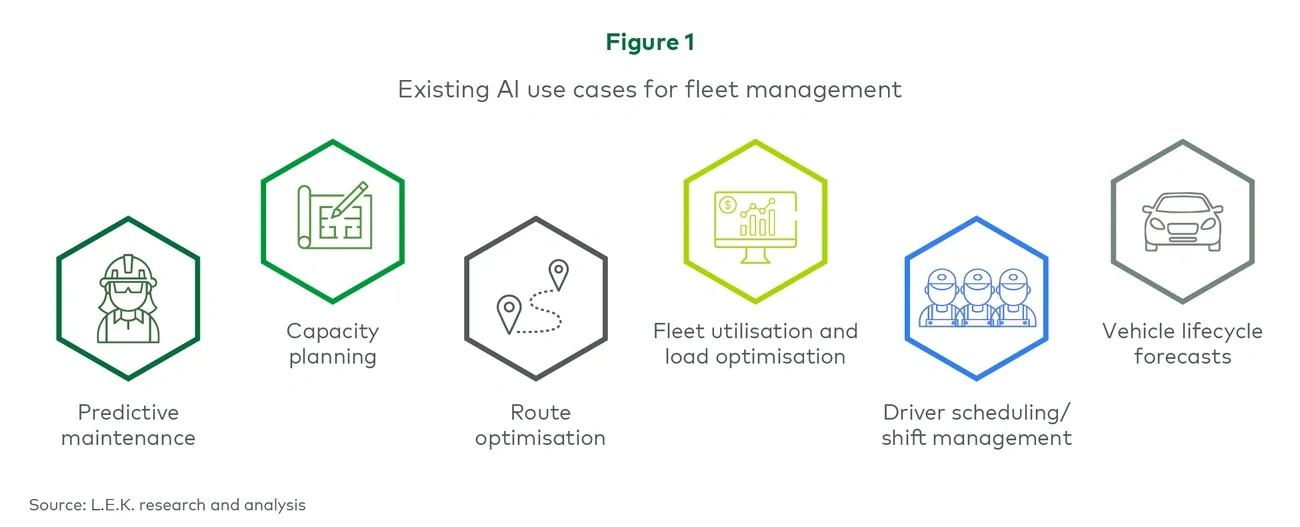
AI is already delivering tangible improvements, particularly in predictive maintenance – an established but continually evolving application. Initially reliant on structured data and predefined metrics, predictive maintenance is now benefiting from AI’s ability to incorporate and analyse less structured, real-time data sources such as driver behaviour logs or environmental conditions. This approach, analogous to techniques used in other high-risk industries, anticipates mechanical issues before they escalate.
By reducing downtime and avoiding costly breakdowns, these advancements are not only setting new benchmarks for operational efficiency but also translating directly into cost savings and positioning companies for long-term competitive advantage.
The rise of generative AI
The rise of generative AI introduces a new level of sophistication, allowing fleet managers to process vast amounts of unstructured data from diverse sources such as geopolitical events or commodity prices. This mirrors applications in industries like oil and gas, where timing and precision are critical, and decision-making must integrate a wide array of variables.
Generative AI offers fleet operators the ability to anticipate and plan for shifts in supply chains or market conditions well in advance. This foresight is invaluable in industries with tight margins, where a single disruption can have far-reaching effects.
By harnessing real-time insights from both structured and unstructured data, generative AI positions fleet managers to make strategic decisions weeks ahead, delivering an edge in a competitive landscape.
Targeting the right problems and data
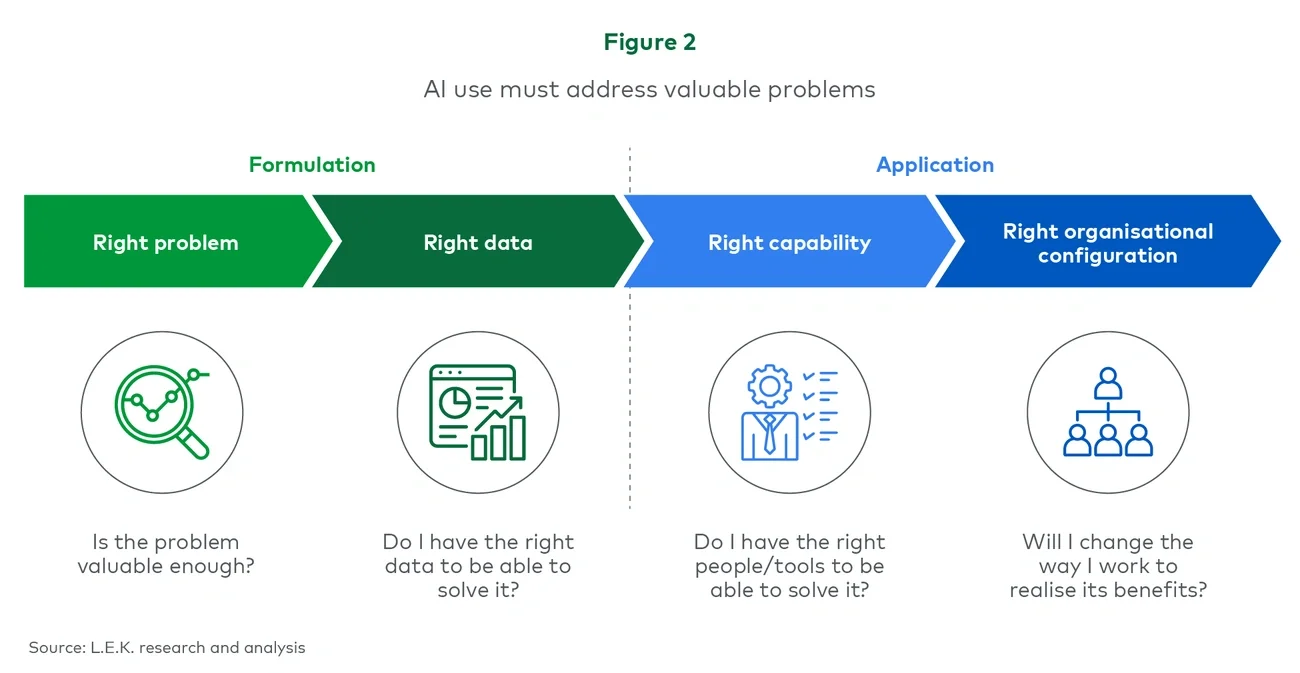
The key to successful AI adoption lies in identifying the right problems to solve (see Figure 2). Not all operational challenges are suited to AI. The technology excels in scenarios where complex decisions can be enhanced by analysing large datasets or automating processes with clearly defined patterns.
Fleet operators should similarly focus on areas where AI will have the greatest impact. By narrowing the focus to high-value problems, organisations can avoid unnecessary investments in technology that may not deliver meaningful returns.