


For many chief financial officers (CFOs), the working capital agenda begins with decisive action. Finance tightens cash governance, strengthens collections, challenges inventory targets and pushes on payment terms. Reporting becomes more rigorous, processes tighten and an initial wave of cash is released. Then momentum stalls.
The reality is, once finance has pulled the levers squarely within its direct control, further improvement becomes materially harder. Yet the remaining opportunity is not sitting in policies or dashboards; it is embedded in how the business operates: Inventory levels reflect network design, planning maturity, service ambitions and product complexity. Receivables performance is shaped by commercial strategy, customer mix and pricing architecture.
Payables outcomes depend on sourcing strategy, supplier power and resilience priorities.
Across industries with complex supply chains and long cash conversion cycles, this pattern is consistent. Initial working capital programs deliver incremental optimization, but step-change improvement requires something different. It demands cross-functional alignment and structural choices that sit at the intersection of finance, operations, supply chain and commercial leadership.
For CFOs under pressure to fund growth, protect margins and maintain balance sheet strength, the implication is clear: The next wave of working capital performance cannot be delivered by finance alone. It must be orchestrated across the enterprise.
Structural and cross-functional working capital opportunities
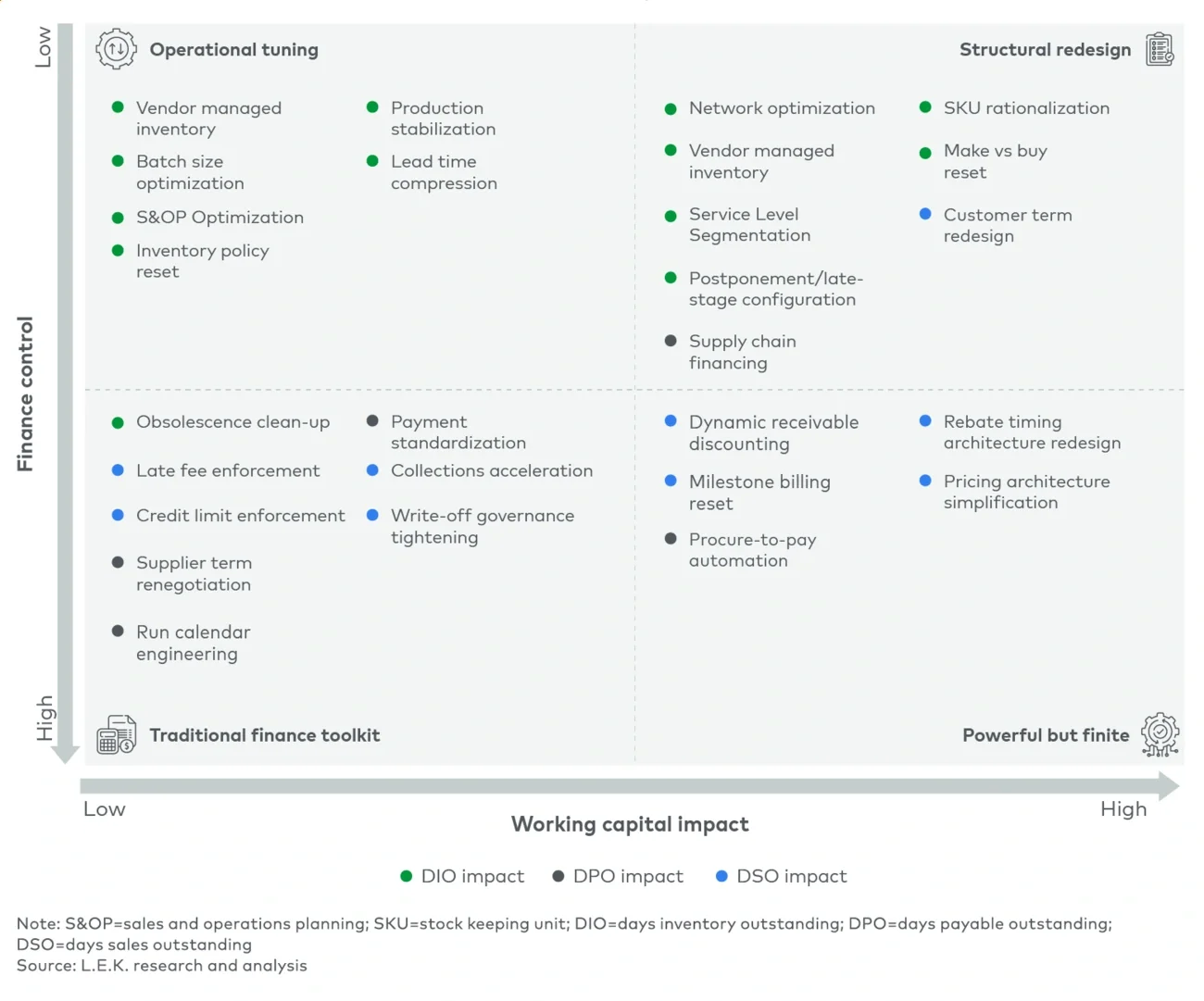
Not all working capital levers carry equal weight; nor do they sit within equal reach of finance. While traditional policy and governance actions remain necessary, their impact is inherently bounded. The most material liquidity opportunities occur where enterprise design meets cross-functional decision-making. This dynamic is best understood through the lens of impact versus control (see Figure 1).