



Industry leaders in medtech experienced significant market transformation during 2021, precipitated by events related to ongoing structural changes within healthcare, the evolution and juxtaposition of various technological innovations, and, of course, the impact of the COVID-19 pandemic. L.E.K. Consulting has identified four major shifts that are likely to have lasting implications for the entire industry:
-
Accelerated development of digital innovation for external offerings and internal efficiency
-
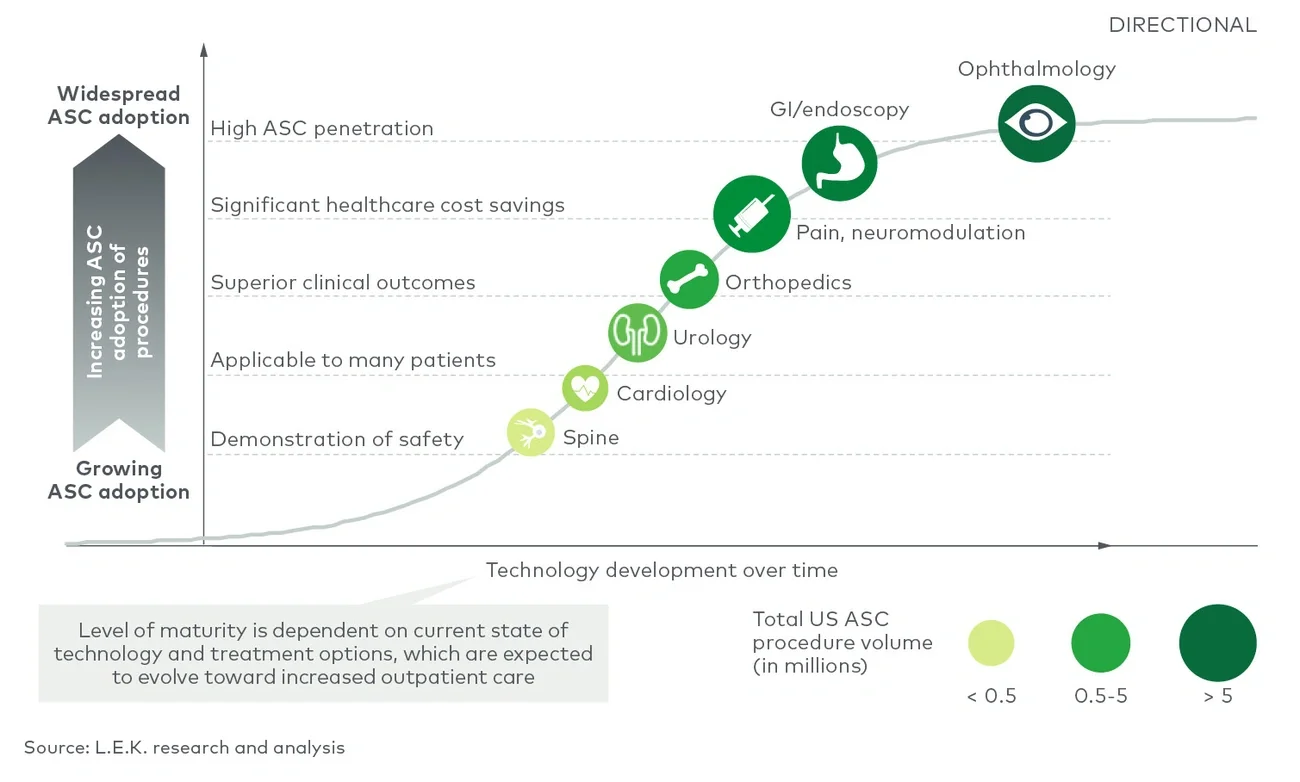
An increased focus on non-acute and less-acute settings
-
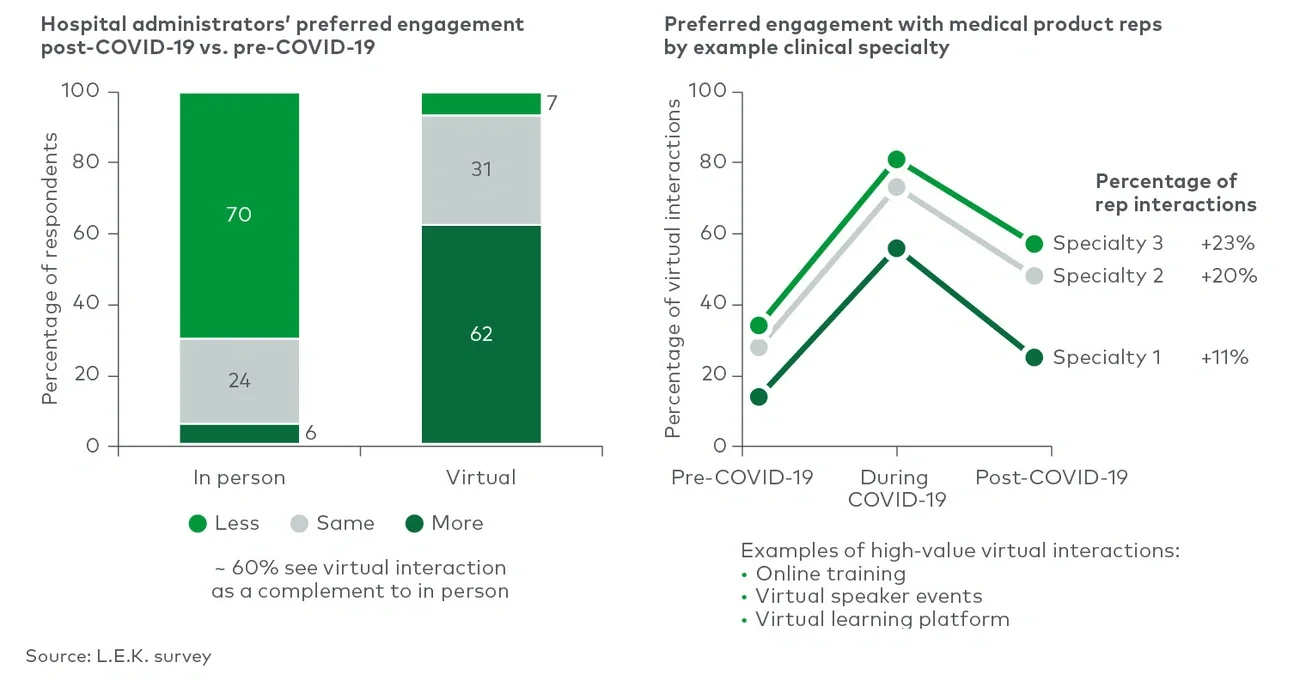
New demand for commercial excellence, including omnichannel engagement
-
Evolving healthcare supply chains and the need for effective provider supply chain strategies
These are just a few of the areas where transformation is already underway and will continue to shape medtech priorities throughout the industry. This report does not cover notable technology trends such as the rapid growth of robotic surgery and related advanced surgical technologies (e.g., augmented reality), the continued shift toward interventional and minimally invasive procedures and therapies, the growing reach of neurostimulation and neuromodulation, and others (which are covered in a separate thought leadership piece by L.E.K. Consulting).
Accelerated development of digital innovation for external offerings and internal efficiency
Every industry is in different stages of its “digital revolution,” but medtech specifically is witnessing a material point of inflection in this regard as digitalization impacts operations (commercial, supply chain, manufacturing, etc.) while also raising expectations from customers in terms of product connectivity and intelligence, as well as overall provider and patient engagement.
The shift to value-based care models has been an underlying driver of expanded digital healthcare for the past several years, as the healthcare system pivots to better manage patients across the care journey and continuum. In addition, greater availability of more sophisticated digital technologies (e.g., remote patient monitoring, home-based digital diagnostics and coaching, more robust artificial intelligence in clinical decision support tools, viable virtual case support platforms, and greater data integration across connected medical devices) has led healthcare providers to expect increased use of these technologies in their day-to-day practice, as well as during interactions with medtech suppliers. These drivers have only been accelerated by COVID-19, given the need to reduce in-person interactions, and the resulting changes in the reimbursement and regulatory frameworks.
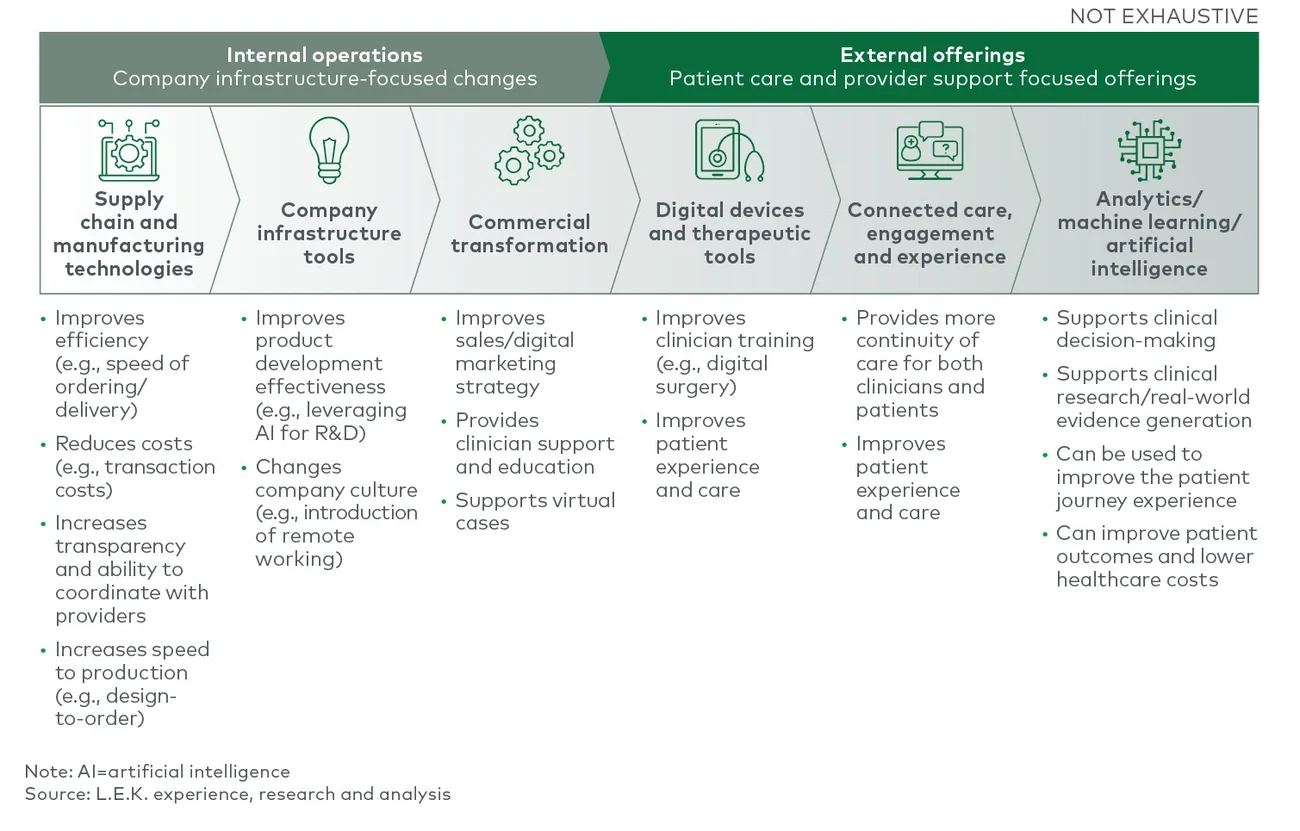
Digital evolution for medtech companies impacts their internal operations and processes and their external offerings (see Figure 1). Within their organizations, medtech companies have been focusing on the following:
-
Supply chain and manufacturing technologies to improve supply chain efficiency, reduce costs and increase production speed
-
Digital tools to transform fundamental company infrastructure (e.g., artificial intelligence, or AI, technologies for R&D purposes) and company culture (e.g., remote working)
-
Commercial transformation to ensure that sales and marketing capabilities are fortified to be able to leverage digital innovation and inform how they serve customers
Externally, medtech companies have been focused on the following:
-
“Smartifying” existing and pipeline product offerings to create digital devices and therapeutic tools that can generate data and produce new insights
-
Investing in solutions that use digital to tie together existing product offerings, enabling remote and connected care across hospital departments and care settings (e.g., Philips’ acquisition of BioTelemetry, Stryker’s acquisition of Vocera)
-
Leveraging analytics, machine learning (ML) and AI to aid in areas such as clinical decision support (e.g., AI algorithms for clinical decision-making in radiology)
In the future, we expect more acquisitions and/or partnerships between medtech companies and software providers, highlighting the important transition medtechs are making toward digital transformation.