

COVID-19’s Long Term Impact on Special Education Needs in the UK

June 17, 2021

Image
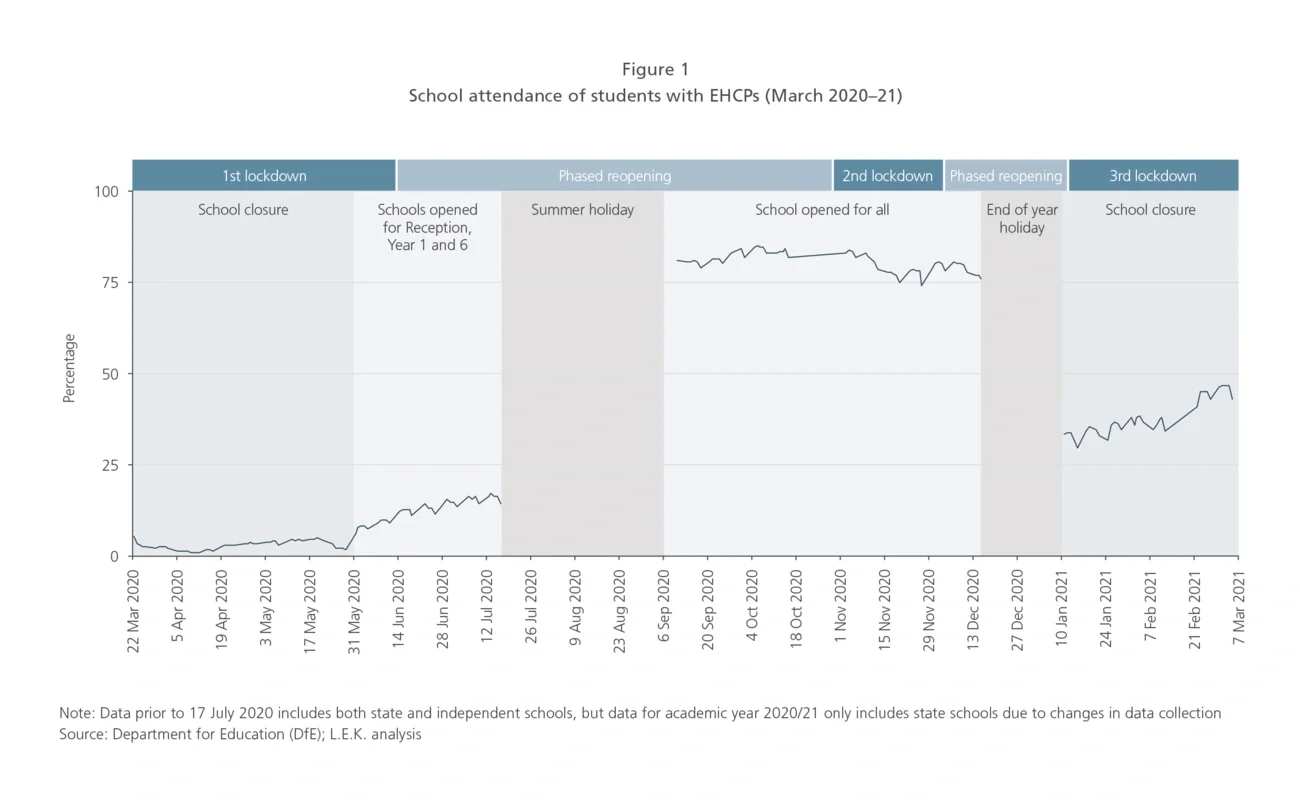
school attendance of students
Image
school attendance of students

There is a backlog of SEN assessments

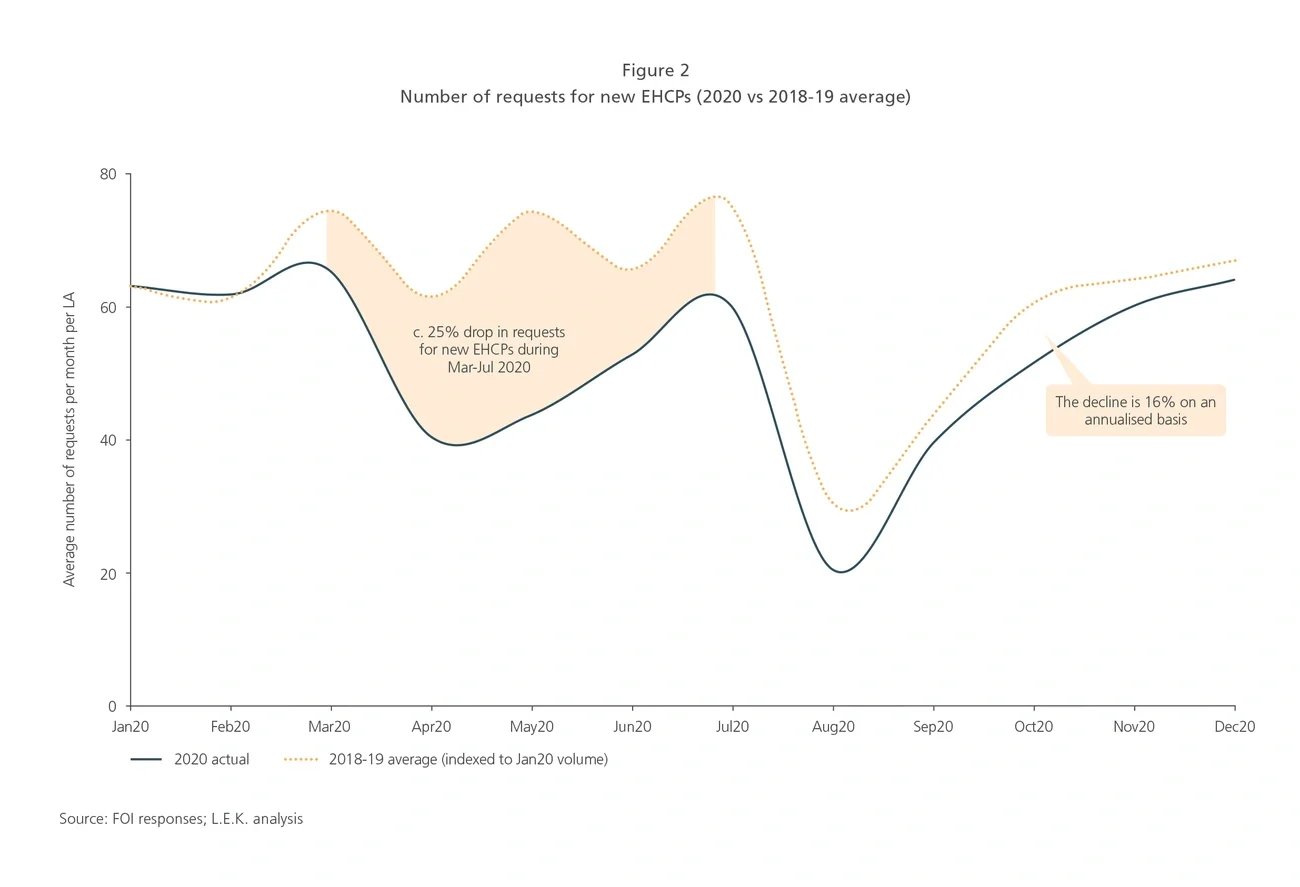
In many cases, systems came to a grinding halt, creating a significant backlog of children in need (see Figure 2). Compared to the 2018-19 average, the number of new EHCP requests dropped 25% during March-July 2020, 16% on an annualised basis — equating to around 10,000 children not getting an EHCP in a timely manner.2 The number is increasing, and we expect to see a wave of demand for places at special needs schools. We anticipate that up to 1,000 children from the current backlog will benefit from a place in the independent sector.
Image
new EHCPs requests
Image
new EHCPs requests

Reviews of existing EHCPs have also been delayed as LAs have struggled to conduct routine annual assessments during the pandemic, even remotely. When reviews did take place and a child’s needs assessed changed, requiring a change of school, parents and commissioners tended to keep the child in their existing school to avoid additional disruptions for them. Whilst this continuity offers some temporary relief, the child’s needs could escalate if the existing school cannot deliver the additional resources needed due to a lack of experience, expertise or bandwidth. The backlog of existing plan reviews is an extra burden for commissioners, and some of these delayed reviews will result in referrals to independent special needs schools rather than state operated schools — i.e. adding to demand from the identified backlog. 

What next?

However the build-up of children with EHCP needs is not the pandemic’s only major impact on special education. The pandemic has triggered deeper-rooted and longer-lasting dynamics — e.g. slower speech, delayed social and emotional development, mental health of young children, and loss of learning in the early years. The impact of these factors will not come as an immediate wave; indeed, these will more likely lead to a stronger and faster rising tide that needs to be managed in the future. In many regions of the UK, independent providers have become vital partners to commissioners to address the needs of youngsters, and those providers’ services will be in high demand — especially for those with high-quality propositions.

Endnotes
1SEN support for those of lower complexity and EHCPs for those with more significant needs
2Department for Education (DfE ); FOI responses; L.E.K. analysis 

English