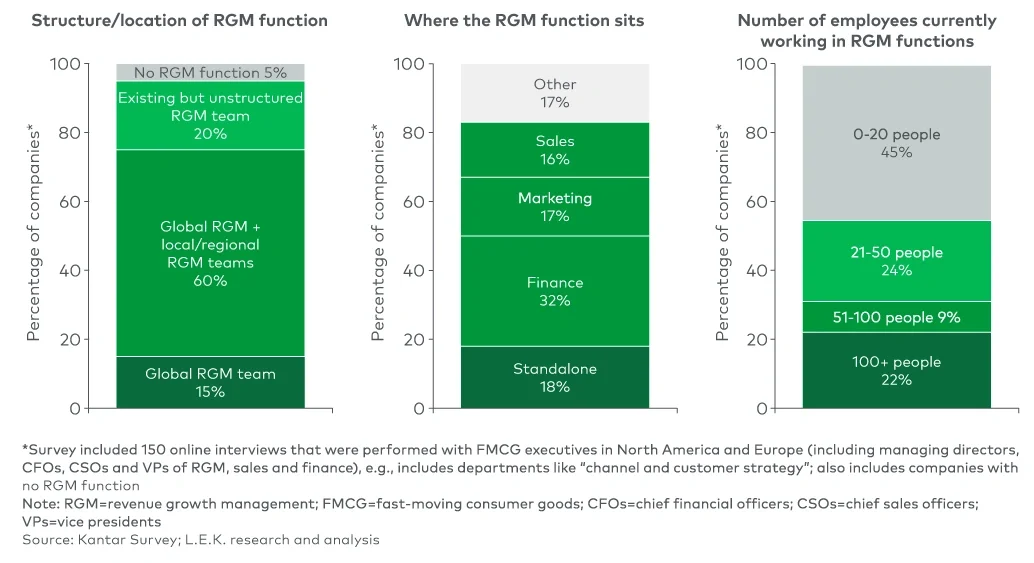
This variation is understandable. Each function brings a valuable perspective. Sales and commercial teams are closest to customers and execution. Finance brings margin discipline. Brand and marketing teams understand consumers, portfolio roles and brand equity. Strategy teams bring a longer-term enterprise view.
But RGM can become a secondary player when those perspectives are not connected through clear governance. The issue is not that RGM needs to replace brand owners, business leaders or commercial teams as decision makers. It is that RGM needs enough influence to ensure decisions reflect a consistent view of growth, margin, ROI and strategic trade-offs.
That influence matters because disconnected decisions can weaken results. A pricing move may be evaluated separately from its impact on promotion strategy. A trade investment may lift volume while weakening customer profitability. A price-pack architecture decision may improve channel fit but add complexity elsewhere in the system. Each decision may be reasonable in isolation, but the combined effect can move the business away from its broader margin and growth objectives.
Commercial decisions need RGM closer to the table
The core commercial levers of RGM are highly interdependent. Pricing, promotion, price-pack architecture, trade terms, assortment and portfolio choices are often managed through different processes, but the business does not experience them separately.
Those interdependencies make RGM most valuable when it is integrated into planning, customer negotiations and performance reviews, rather than brought in after key choices have already been made.
Sophisticated CPG companies are closing that gap by connecting these levers into a more coordinated decision model. They are not asking RGM to become the sole decision-maker. They are using RGM to bring a sharper fact base, clearer guardrails and more consistent trade-off analysis into the decisions that brand, finance and commercial leaders already make.
The difference between nascent and best-in-class organizations is significant. Nascent players often price reactively, using cost-plus logic or account-by-account negotiations. Promotion decisions may be judged on volume or sales lift without a full view of profitability. Best-in-class organizations use elasticity and competitive data to inform pricing, review stock-keeping unit (SKU)-level profitability regularly, evaluate trade investment across customers and channels, and connect price-pack architecture to consumer demand, retailer economics and margin objectives (see Figure 3).