

Shifting consumer attitudes towards sustainability are impacting the homecare industry; change is gradual but irreversible. Recent research confirms that consumers, particularly younger generations, are increasingly concerned about sustainability, although this has not yet become a key purchase criterion for homecare products and does not always translate into a willingness to pay a premium for more sustainable or eco-friendly products.
For leading manufacturers, the challenge is to invest in furthering their sustainability strategies while maintaining product efficacy and offering ‘better value’ to consumers. For sustainability-focused challenger brands, success lies either in emphasising that sustainability also equals economy or deploying premium offers focused on ‘forward thinking’ consumers.
Shifts in consumer behaviour
L.E.K. Consulting’s Global Consumer Sustainability Survey 2024 reveals some key consumer behaviour trends in the homecare industry:
- Growing concern for sustainability
Consumers are showing a heightened interest in sustainability, with 93% stating that it’s at least somewhat important to them and 67% viewing it as one of their ‘core values’. - Price sensitivity and product efficacy
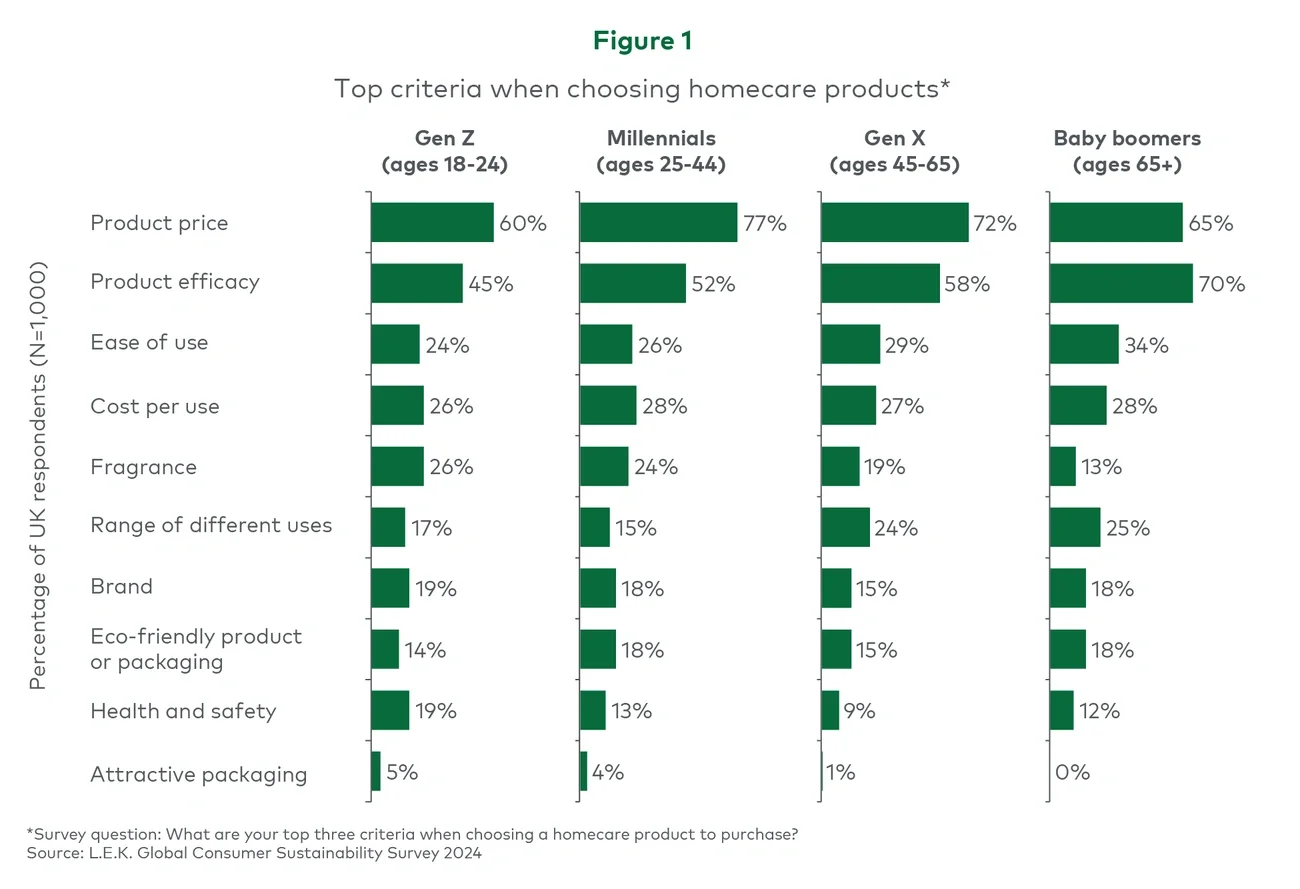
Price remains the primary influencing factor for many consumers, with c.65% ranking it as their primary purchase criterion. Product efficacy is also crucial, ranking as the No. 2 criterion, with consumers unwilling to compromise on performance (see Figure 1). - Decreasing loyalty to brands
Around 40% of consumers declare that they frequently change homecare brands and products depending on price. Only c.18% of consumers claim that they’re very loyal to specific brands of homecare products. - ‘Sustainability’ mostly means ‘health and safety’ for many consumers
When thinking about sustainability, c.50% of consumers primarily think of the health and safety of their families rather than broader sustainability issues. - When it comes to sustainability, product packaging is key
Beyond a product’s health and safety, consumers evaluate product packaging to determine whether a product is ‘sustainable’, including whether the packaging is recycled or biodegradable or can be refilled or reused. - Corporate reports and commitments are less important
Only 18% of consumers appear to consider information that a manufacturer publishes, such as B corporation status or emissions reports. - Limited willingness to pay a premium
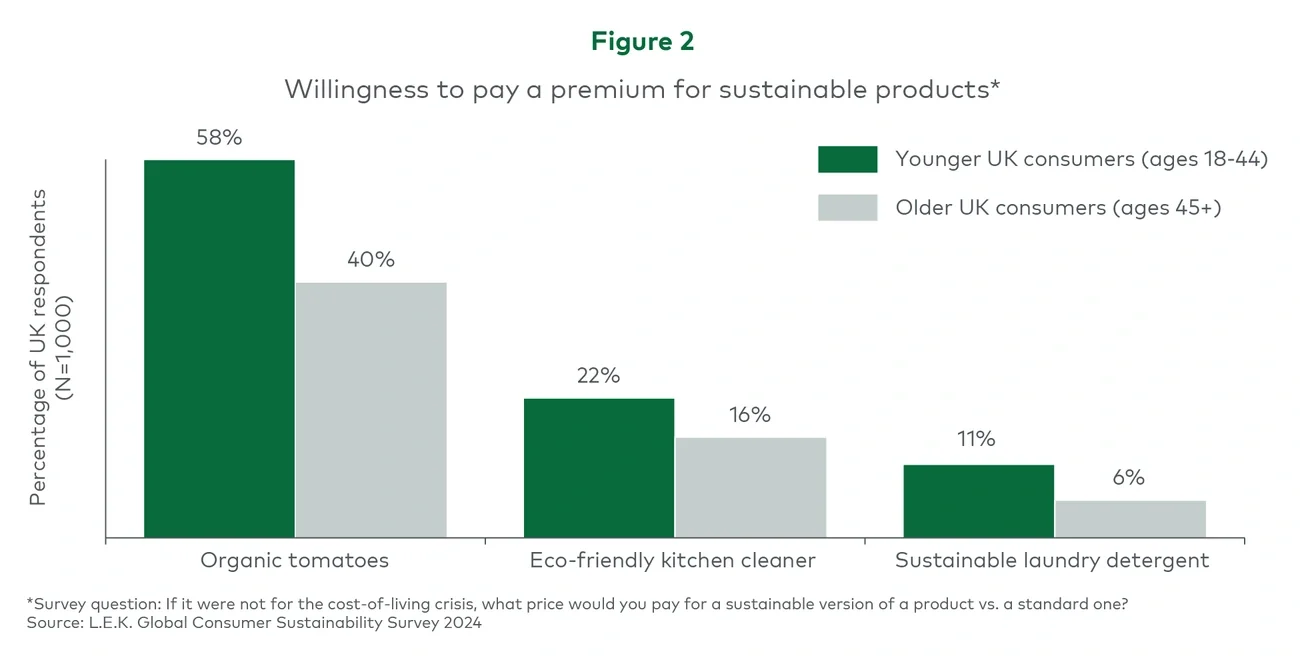
Consumers, particularly younger ones, declare a willingness to pay more for sustainable products, but the premium that they’re willing to pay for sustainable cleaning products versus standard versions is moderate, in the range of 6% to 22%. This is much lower than the premium that consumers are willing to pay for sustainable food products such as organic tomatoes (see Figure 2).