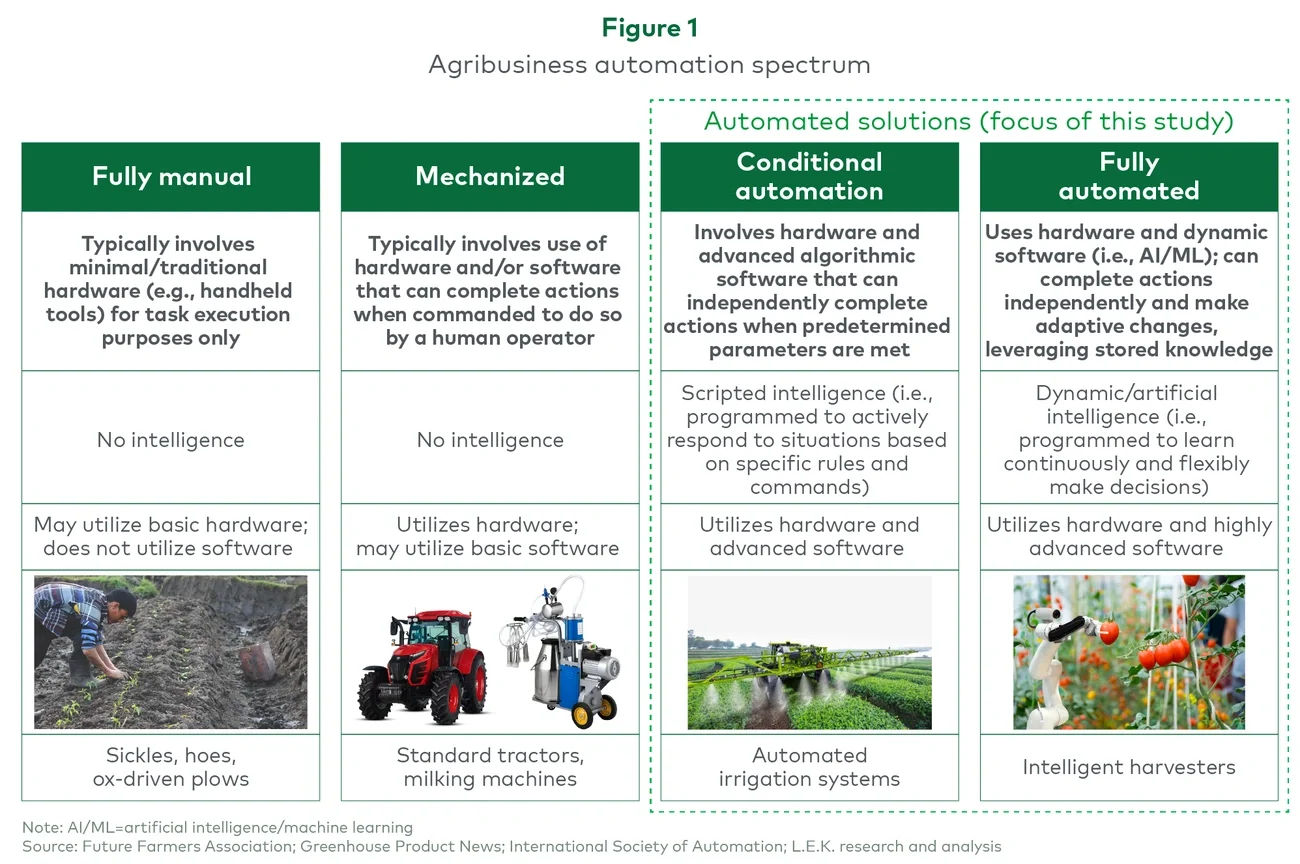
While fully manual and mechanized innovations boost farming efficiency, they still require a human in the driver’s seat. The real leap toward the future of farming begins with conditional automation, which means using advanced algorithms to let farming equipment work on its own, but only in certain situations. So, these systems can make decisions and act without needing a person to tell them what to do every step of the way, as long as the conditions are right.
Conditional automation has cleared the way for more advanced technologies, where farming equipment is able to operate independently through artificial intelligence and machine learning. This enables farmers to shift their focus to overseeing broader aspects of farm management, such as yield or harvest efficiency, even as combines navigate the fields autonomously. Transitioning from grain to grape, the same technology enables workers to focus on tasks like picking wine grapes while autonomously operated carts transport crates of grapes back to the tractor.
These fully automated technologies don’t just operate without human intervention; they continuously improve their performance over time by learning from past actions, significantly boosting the precision and productivity of agricultural operations. The foundation for this advanced automation includes high-tech equipment and software: Sensors and devices connected to the internet gather detailed information about all aspects of farming. Meanwhile, self-driving vehicles and robots take over the physical tasks, leading to less hands-on farming that still gets the job done (and then some).
It’s important to note that the adoption of such technologies is propelled by a complex web of factors, which we’ll explore in the next section.
Driving agricultural automation forward
Just as the internet’s emergence and widespread use has reshaped society, agricultural automation is working to gain adoption and transform the farming landscape. Here’s a glimpse of what is fueling this shift:
- Technological advancements: Many innovative automation technologies are in the initial stages of development or beginning to hit the market. Their growth and broader adoption over the next decade hinge on reaching full technological maturity and proving their worth.
- Infrastructure development: The success of agricultural automation heavily depends on underlying digital and physical support systems. Despite strides toward more affordable sensors and better internet access, the push for high-speed connectivity in remote areas remains critical for realizing the full potential of these innovations.
- Economic factors: The financial decisions of farmers are influenced by unpredictable market swings (e.g., in crop prices, fertilizer prices and interest rates), which significantly impact their farm-tech adoption rate. Larger growers, equipped with more resources and expertise, are often at the forefront of leveraging innovative technologies, aiming for a significant return on their investments.
- Labor dynamics: The agricultural sector is grappling with rising labor costs and dwindling workforce availability, especially in labor-heavy sectors like specialty crop production. This pressure is steering the industry toward automation not only to reduce costs but also to decrease dependence on scarce labor.
While the drivers pushing agricultural automation are strong, there are several barriers to widespread adoption. High initial costs can deter smaller farms, while the complexity of integrating new systems poses challenges for compatibility and requires extensive training. Regulatory hurdles may slow innovation and adoption rates, and reliance on new technologies introduces risks of system failures that could affect farm productivity. Together, these factors create a nuanced environment where the benefits of automation must be carefully weighed against its challenges.
Recognizing the drivers and obstacles of agricultural automation, let’s now explore how investment trends are influencing its technological progress.
Investing in agricultural automation
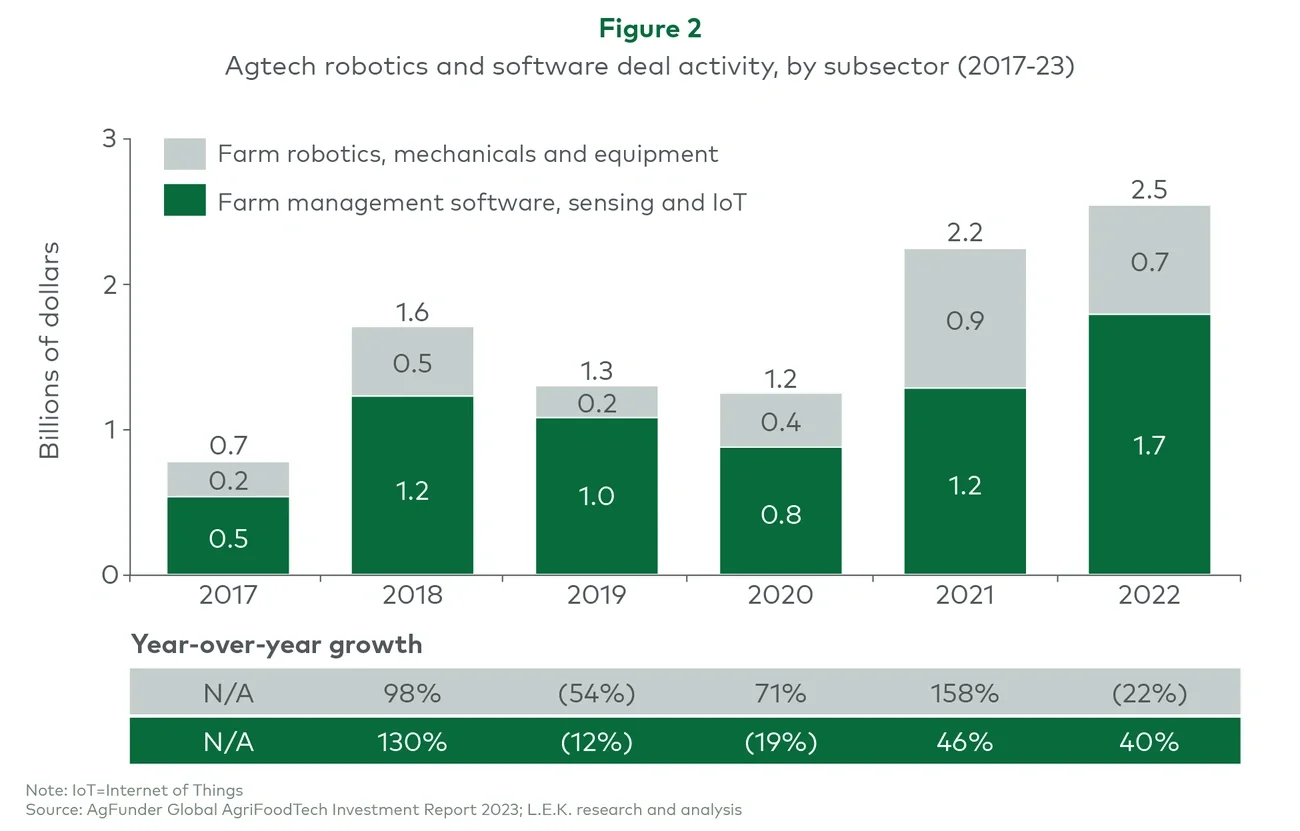
The landscape of investment in agricultural automation tells a story of dynamic growth and resilience. Since 2017, investments have grown, reflecting not only advancements in technology but also an increasing interest from the farming community. Despite investment declines of nearly 70% in the overall agrifoodtech sector from 2021 to 2023, the agricultural sector has fared better, with declines of only 35%. Although the challenges encountered in 2023 were similar to those in the broader tech investment sector (e.g., inflation and supply chain disruptions), agricultural automation is poised for a rebound, with anticipation building for 2024. Driving forces such as climate change concerns, labor shortages and rapid technological innovation suggest a sustained demand and further development in automation solutions.
While investment in areas like farm robotics and equipment remained relatively steady from 2021 to 2023, funding for farm management software, sensing technology and Internet of Things devices has declined nearly 60% from its peak in 2022 (see Figure 2). Despite this downturn, these segments continue to benefit from growing acceptance among farmers and the successful demonstration of startup concepts.