B2C pricing in European healthcare has not been particularly sophisticated historically, and for good reasons. As the markets shift towards more out-of-pocket pay (OOP), and in the current inflationary environment, providers increasingly need to ensure they are pricing competitively. As patients are self-paying, expectations are higher than before, and pricing is a key component of the value proposition.
Effective pricing in healthcare services has been a challenge in Europe historically, given the following factors:
Complicated funding mix and lack of B2C pricing expertise
Healthcare services in many European countries have traditionally been funded either publicly or by private insurance, and pricing for these payers is typically by with tariff, via a tendering process or business-to-business (B2B) negotiations. This is an entirely different approach to pricing for OOP payments, where the view from consumers (on perception, preference and affordability) are contributing factors.
Country-specific regulations
Payers in each country have specific reimbursement structures (particularly relevant for public and insurance payers) and preferences (e.g. preference for bundled prices). Several geographies also have tariffs in place, regardless of the source of funding. Depending on local country regulations, the ‘wiggle room’ for creativity in pricing can therefore vary.
Lack of pricing transparency
Healthcare pricing has historically been inconsistent and not well-documented, particularly in fragmented markets where individual/small clinics often provide variable rates to patients based on relationships. Moreover, in relatively immature markets, pricing data availability is limited. This has made price benchmarking tricky for providers who want to introduce pricing discipline at scale. However, with increased relevance of digital channels and the growing need for transparency (often imposed by regulators), providers have increasingly started publishing prices on their websites, making benchmarking easier than before.
The right pricing strategy
More recently, many of the European healthcare markets are seeing a rise in OOP payments, and that, coupled with the need to pass on inflation, has made it imperative for healthcare providers to build a rigorous approach to pricing across their networks. It is more important now than ever to have a well-thought-out pricing strategy due to factors outlined below:
Growing OOP and B2C aspects
Many healthcare systems in Europe are experiencing increased OOP expenditure driven by constrained public health systems, increased importance of preventive health and higher priority given to healthcare needs post-COVID. This can be seen both in regular healthcare interactions such as with dentists, GPs and ophthalmologists, as well as one-off secondary care such as hip and knee replacements. As patients become payers (and consumers) of the healthcare services, expectations and demand are higher than before, making pricing a key element of the value proposition.
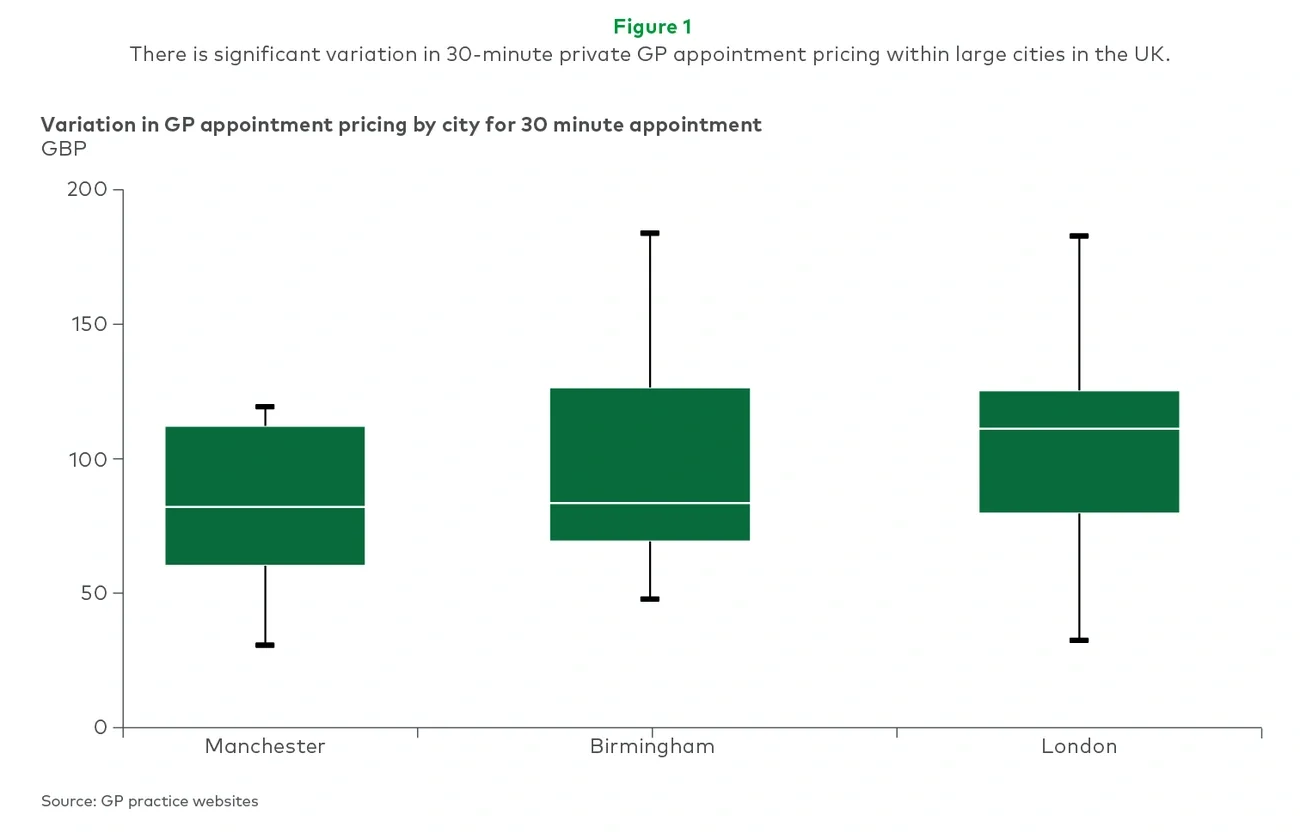
Given the increasing prevalence of self-pay in healthcare services, pricing has become an important value driver; however, services and procedures are still often priced inefficiently, as evidenced by significant price discrepancy across providers in the same location. For example, a 15-minute GP appointment in London for five mid-range private GP providers ranged anywhere from £80 to £180 (see Figure 1).