As the CEO of an influencer agency commented: “… the creation of an authentic brand story is crucial to a successful online brand image. If chosen well, an influencer becomes a successful ambassador for your brand, will tell your brand story and do the peer-to-peer marketing for you.” With the brand’s reputation and attractiveness relying to such a high degree on influencer partners, brands must pay close attention to the influencer’s image and level of engagement.
Star and macro influencers
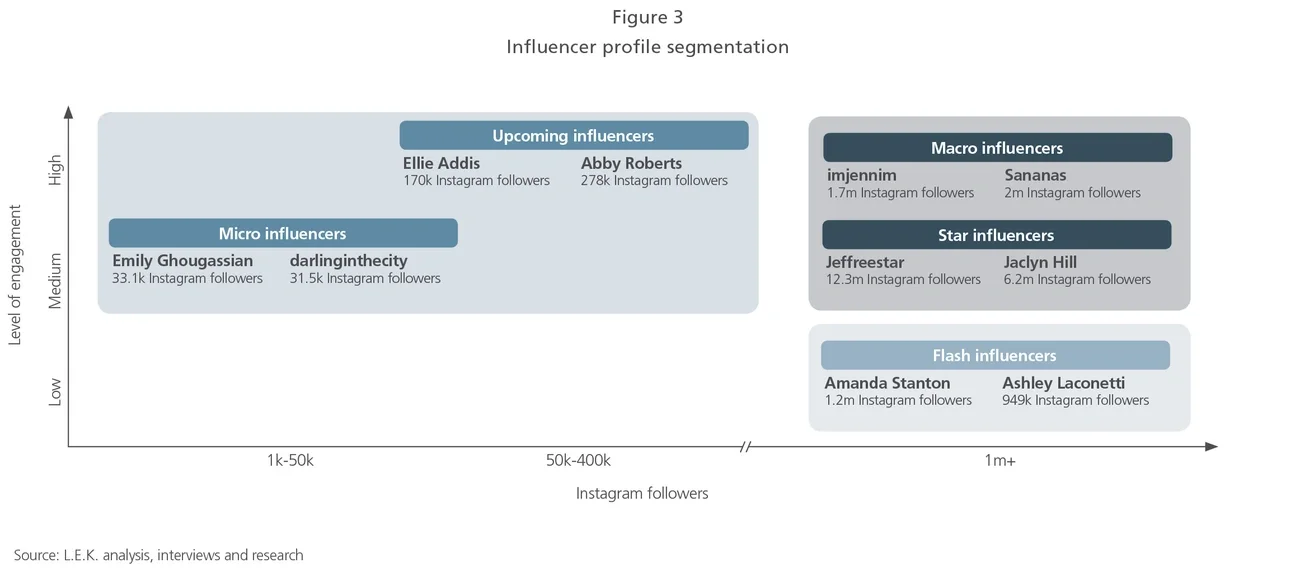
Mostly used to develop the brand image over time, star and macro influencers embrace the role of brand ambassador on social media and leverage their relatability to provide legitimacy. Through such partnerships, brands seek to foster a community feeling and create conversations that generate peer-to-peer marketing. The typical marketing operations undertaken by macro and star influencers include content creation (YouTube videos, blog posts), event engagement with fans and advertising campaigns.
ColourPop invested heavily in makeup collaborations with beauty star influencers such as Zoella (9.9 million Instagram followers) and Jenn Im (1.7 million Instagram followers). Morphe developed its reputation through partnerships with globally renowned beauty influencers such as Jeffree Star (12.3 million Instagram followers) and Jaclyn Hill (6.2 million Instagram followers).
Linked to the creative agency Milk Studio, Milk Makeup collaborated with famous artists such as Wu Tang Clan and Teyana Taylor to drive advocacy from a larger spectrum of consumers who are interested in the brand’s cosmetics and also have a foot in the music and culture industries.
By publishing a beauty blog while launching her own brand, Kattan maintained “influencer status” and is still strongly relatable to her followers. Today, she is one of the top 10 beauty influencers worldwide.
Flash influencers
Usually rising TV stars (especially from reality TV), flash influencers have quickly built notoriety outside social media. They did not start out as influencers, so they rarely create content but rather promote a brand through sponsored posts. However, these influencers tend to have lower consumer engagement because they are less recognized as cosmetics experts or true beauty advisers. Moreover, flash influencers can have a polarizing effect on consumers who associate the brand with the influencer’s personal image.
There are few examples of digitally native cosmetics brands that collaborate with flash influencers because they rely on beauty experts to promote their brands. Flash influencers such as Amanda Stanton (1.2 million Instagram followers) and Ashely Iaconetti (949,000 Instagram followers) typically collaborate with fashion and beauty brands such as FabFitFun and TRESemmé.
Jenner built her profile through a reality TV show. Her success on Instagram made her a star influencer with more than 130 million followers, thus acting as the ultimate influencer for her makeup brand.
Upcoming and micro influencers
Micro and upcoming influencers are active content creators with strong engagement from their following communities. They are recognized as legitimate experts in one domain (e.g., organic beauty) and develop recognition on social media by providing opinions on product testing (gifted by brands). Cosmetics brands typically collaborate with such influencers on spot operations, such as product posting (gifted or sponsored), affiliate links and discount codes.
Micro influencers also develop profiles through user-generated content or the publicity of “regular” Instagrammer posts on a brand page. This type of marketing is highly beneficial for brands, which develop a better understanding of customers’ behavior and opinions on products, benefit from free content generation, and optimize conversion rates and engagement from customers. “Regular” users’ opinions are generally more trusted, and customers feel valued by the rewarding publicity the brand offers them.
Glossier and Drunk Elephant leverage user-generated content marketing. The brands publicize posts and photos from customers on Instagram, converting regular customers into free micro influencers. It Cosmetics collaborates with a network of upcoming and micro influencers such as Emily Ghougassian (33,100 followers) who mainly publicize product effectiveness (e.g., before and after photos). This content is reposted on the brand’s Instagram page, which gives consistency to the brand’s claim of “Real Beauty. Real Results!”
Conclusion
Digital marketing channels have lowered barriers to entry into the cosmetics market, enabling the creation of these new digitally native vertical brands and disrupting a market that has long been dominated by billion-dollar corporations. Compared with traditional paid, media-intensive campaigns, social media requires only a modest investment to create an authentic and engaging consumer campaign. Brands can also operate “asset light” — accessing consumers directly via online shops and outsourcing product development and manufacturing. The flexibility this affords means that digitally native brands can offer an exciting, surprising and engaging customer experience from a much lower cost base.
While market entry may be easier, the task of winning in this fiercely competitive space remains a significant challenge. The core asset for long-lasting success in consumer markets is a robust brand reputation and consistently high levels of customer engagement. With the rise of influencer marketing, brand control is increasingly in the hands of third parties, and the risk of brand damage is real. As the number of influencers and brand agreements proliferate, consumers are becoming more suspicious of promoted content on social media and may be deterred if they suspect a lack of transparency. The “social” proof is one of trust, and the more authentic it is, the more beneficial for the sustainability of the brand.
Competitive pressure in the cosmetics market is building, forcing the big brands to further develop their direct-to-consumer channels and requiring digitally native brands to have a considered, consistent and controlled marketing strategy. As Jenner, who became the youngest-ever self-made billionaire less than five years after launching her cosmetics brand, can attest, the rewards of success are considerable.
Endnote:
1Sources: Lefty, Izea, Forbes, L.E.K. research and analysis