Technological barriers to automation. Not all tasks run the same risk of AI automation. The automation of three types of tasks has proven especially challenging: (i) perception and manipulation tasks, (ii) creative intelligence tasks, and (iii) social intelligence tasks. Even though it is beyond the scope of this paper to address these tasks (see “The Future of Employment” for a more complete discussion), the last type of task is the most relevant to the purpose of call center operations. Social intelligence is important to many call center functions, including negotiation, persuasion and care. Even though Watson can “learn” and can answer unstructured questions, it cannot comprehend or respond to emotion. As such, for the foreseeable future, it’s unlikely a computer will handle interactions that involve elements of emotion.
Beyond the challenges inherent in the automation of social intelligence tasks, other difficulties abound, including the following:
- There is a lack of transparency about how systems like Watson determine a certain answer. It may not be clear why the answer should be trusted, and in the case of a mistake, it may not be clear how to fix the problem so it does not happen again.
- Because Watson “learns” by itself, it is difficult to assign accountability for its mistakes to someone in the organization, which creates accountability challenges.
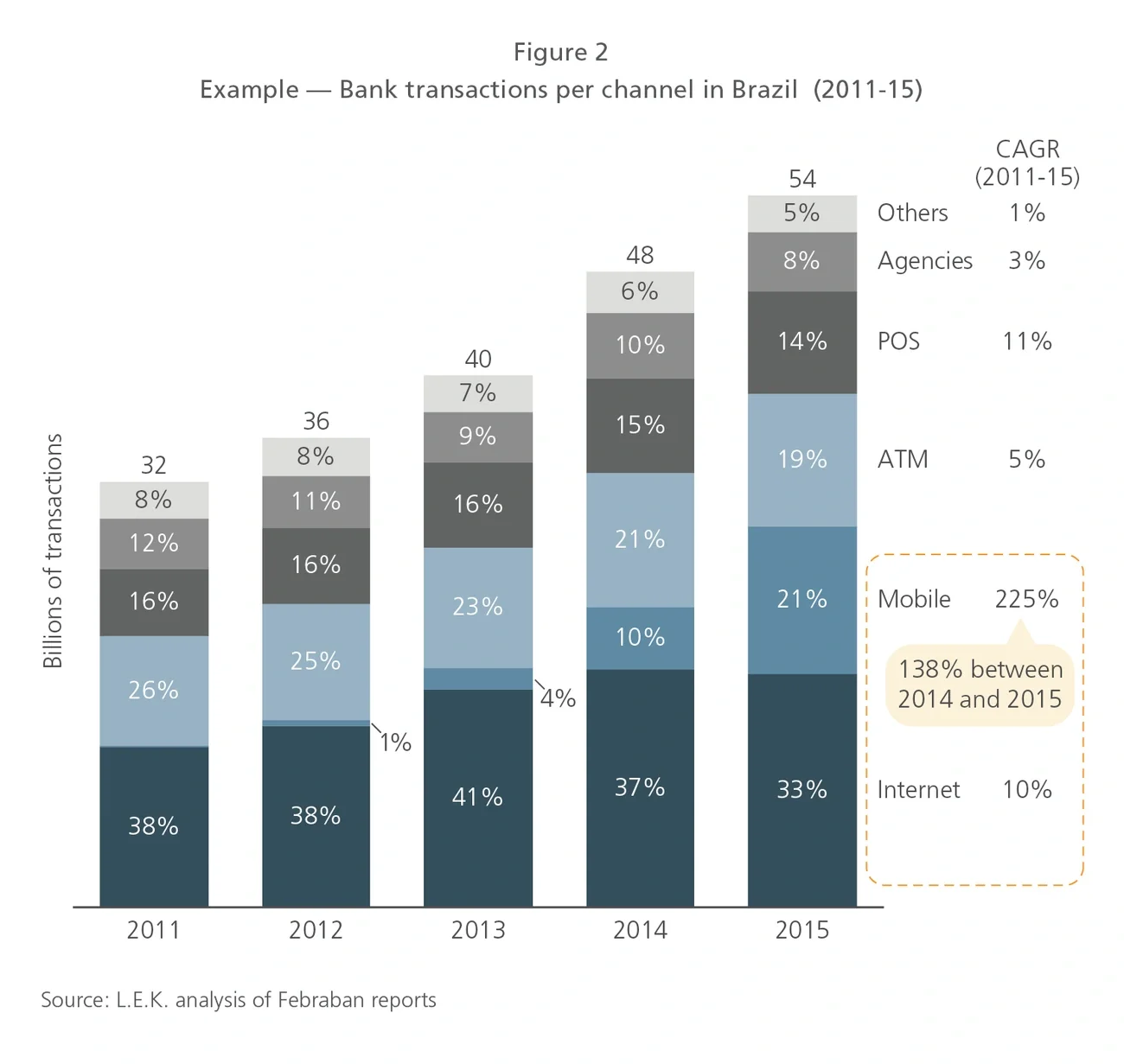
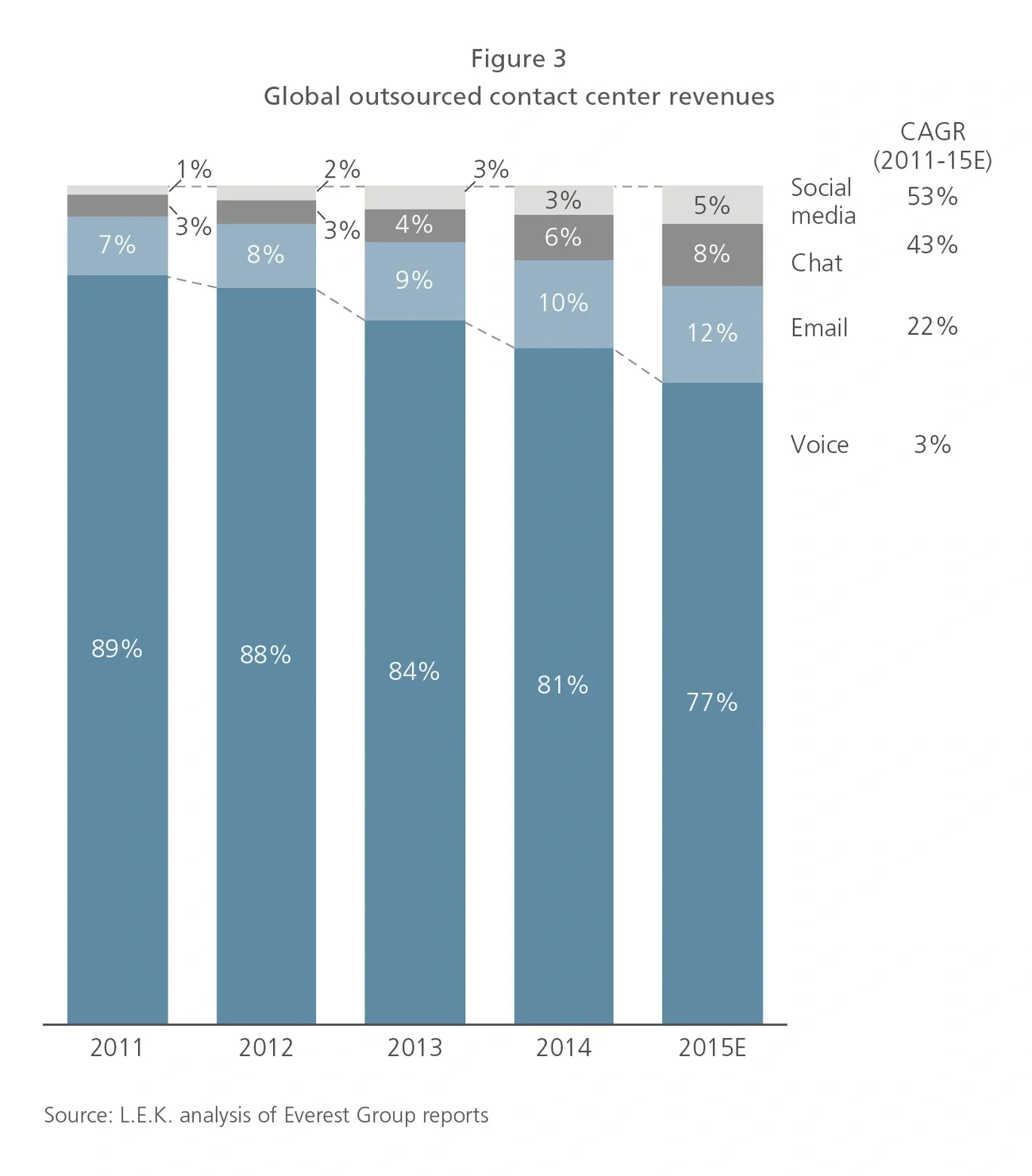
Continued proliferation of ecommerce as a source of additional call center demand. As commerce continues to move online, there is an increase in the demand for all types of remote interactions (voice, email, chat, social media), which were previously done face-to-face. This trend, which should continue in most of the world, will provide call center operations everywhere with sustainable demand growth for years to come.
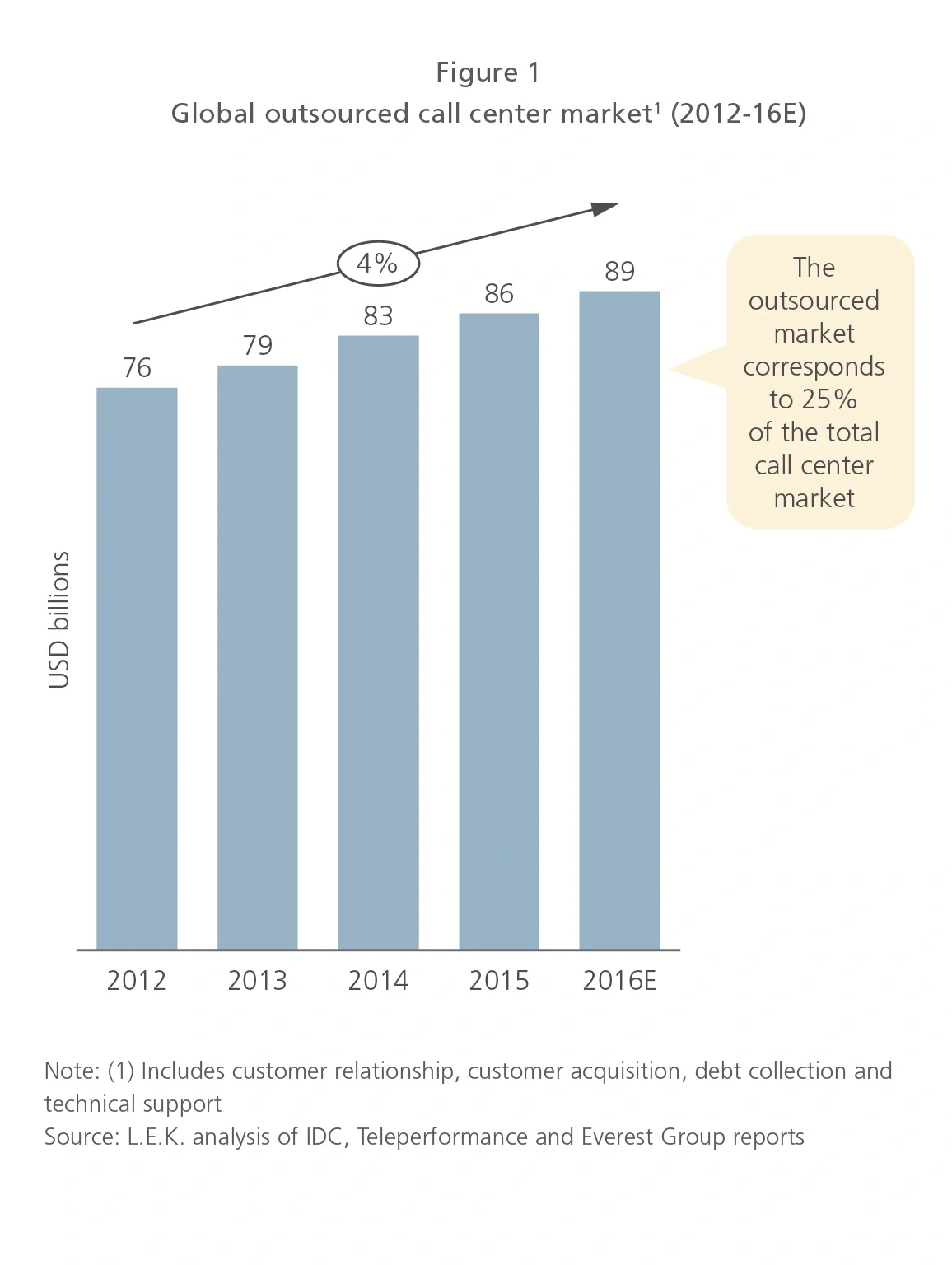
Outsourcing under-penetration. Even though the call center industry seems mature, most call center functions are still done in-house. The global outsourced call center market represents only 15–25% of the total call center market,5 but the rising complexity of call center operations and economies of scale are creating a clear trend toward outsourcing.
Implementation and organizational barriers. Even if the technology allowing for voice automation and AI were to be perfected, use of this technology would not necessarily be simple. For instance, in 2013, the University of Texas MD Anderson Cancer Center launched its Oncology Expert Advisor (OEA) R&D project to use Watson on its mission to eradicate cancer.6 In 2016, however, after having spent three years and more than USD 62 million on the project,7 MD Anderson decided to abandon it.
A case analysis seems to indicate three main problems with the project:
- The technology was experimental, with shifting expectations and goals, which caused project delays. A special review by UT System Administration noted that the project team missed several deadlines, and the MD Anderson Cancer Center later noted that “the research and development nature of the work inevitably led to goals and expectations that shifted over time.”
- Senior personnel at MD Anderson Cancer Center became overly committed to the project’s success, to the point of not following procurement policies (awarding projects without competitive bidding, with development costs set just below the amounts that would require board approval, and paying services in full without clear indications that the results were being achieved).
- The project had difficulty integrating with other MD Anderson systems (MD Anderson changed its system for medical records mid-project and OEA couldn’t handle the new system).
Although both IBM and MD Anderson consider the project technically successful (Lynda Chin, the scientist who ran the project, said “If the issue being raised is that OEA is a failure, I disagree”), it seems clear that the project did not deliver on its promises. Lynda left MD Anderson in April 2015.
Some of the most important call center clients, such as banks and telecom firms, have complex organization and myriad legacy systems. It is likely that, once AI and automation technology are ready, the migration process will be a difficult and lengthy one.
Conclusion
Many believe the call center industry is at a tipping point. Digitalization as well as voice automation and AI are seen as threats to the industry, harnessing the potential to destroy call centers in the long term. But investors and executives in the industry should not yet despair: In the short to medium term, call centers will likely continue to thrive. Automation and AI are real threats, but it will be a long time before they make a significant impact on the industry.
Sources
1 Private Automatic Branch Exchanges, which allowed calls to be routed internally in a company.
2 Automatic Call Distributor, a device that distributes calls to certain agents based on certain criteria.
3 ”Jeopardy!” is an American television game show created by Merv Griffin.
4 Carl Frey and Michael Osborne, “The Future of Employment,” Oxford University, September 2013.
5 2015 Global Contact Center Benchmarking Report – Dimension Data.
6 The University of Texas System Administration Special Review of Procurement Procedures Related to the MD Anderson Cancer Center Oncology Expert Advisor Project.
7 ”MD Anderson Benches IBM Watson in Setback for Artificial Intelligence in Medicine,” Forbes, February 2017.