Digital technology is revolutionizing the healthcare sector. The global digital health market was valued at approximately US$ 122.66 billion in 2017.1 Only investment in digital health startups2 reached US$ 11.78 billion globally in 2017 alone3, with 852 deals in total. Healthcare companies around the world are now taking advantage of these exciting changes to create value for patients, clinicians and shareholders alike.
From the widespread adoption of digital platforms connecting customers to practitioners to the vast potential of artificial intelligence (AI), digital technology is increasingly core to the future growth of medical technology firms all around the world.
While this digital revolution is taking place on a global scale, Asia’s underlying key structural and demographic needs and home-grown tech industries pose a unique opportunity for digital healthcare firms.
Asia’s aging population creates a higher disease burden in communities, and the urgency of meeting that burden will only continue to rise. This burden is exacerbated by underdeveloped healthcare infrastructure and clinical talent shortages, especially in China’s lower-tier cities.
Despite the challenges, Asia also provides a strong foundation for further digital growth. The growth of the internet and mobile-based technology has been encouraged with regulatory support from governments, and in China a legal framework is open to leveraging population scale data if for public benefits. There is also in China a menu of critical enablers that can underpin the coming revolution, including an openness to what might be termed “Agile innovation” (aka China pace), global centers of excellence in digital technologies such as AI and blockchain, and ready access to investment capital.
Much has been written globally and in recent years about the use of digital technology to support management of patients and interactions with them; in China, it’s BAT (Baidu, Alibaba, Tencent) consumer ecosystems, and an app culture (e.g., apps for recording sleep quality and heart condition, hospital registrations, and medical fee payments). Fewer column inches have been devoted to how the digital revolution will be delivered in the highly regulated world of medical devices and equipment, and the impact of that.
This Executive Insights seeks to redress that deficit and expand on how medtech companies — both in China and beyond — are seizing the initiative, and how medtech leaders can think about identifying opportunities in their own businesses.
A framework for digital innovation in medtech
In order to better understand how digitization is changing the medtech landscape, we will be taking a look at how other companies have entered the medtech space. These companies have made varying degrees of progress in their digital journeys; most are established medtech industry participants.
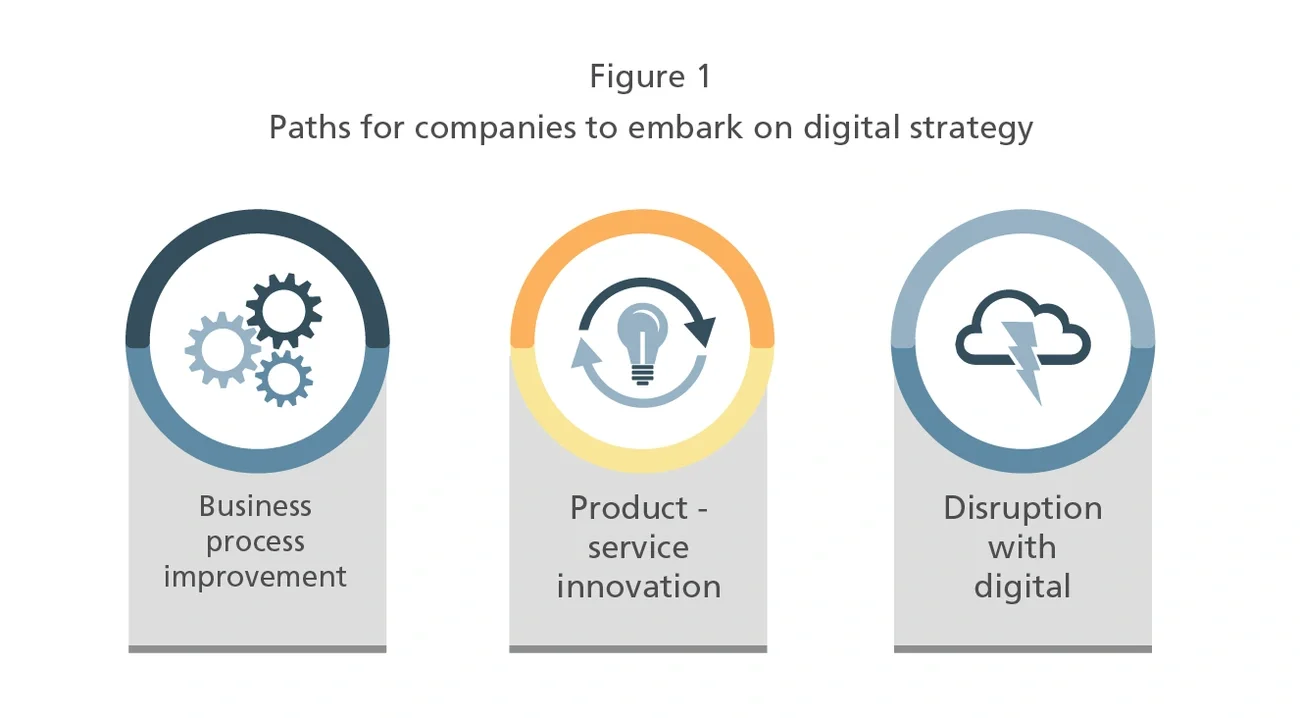
Even with the wide disparity in offerings and experience, digital technology is providing new tools to add to an ever-changing healthcare landscape. We will be looking at this digital revolution through the lens of a three-pronged framework, representing the different paths that companies have taken to add digital technology to their healthcare portfolios (see Figure 1).