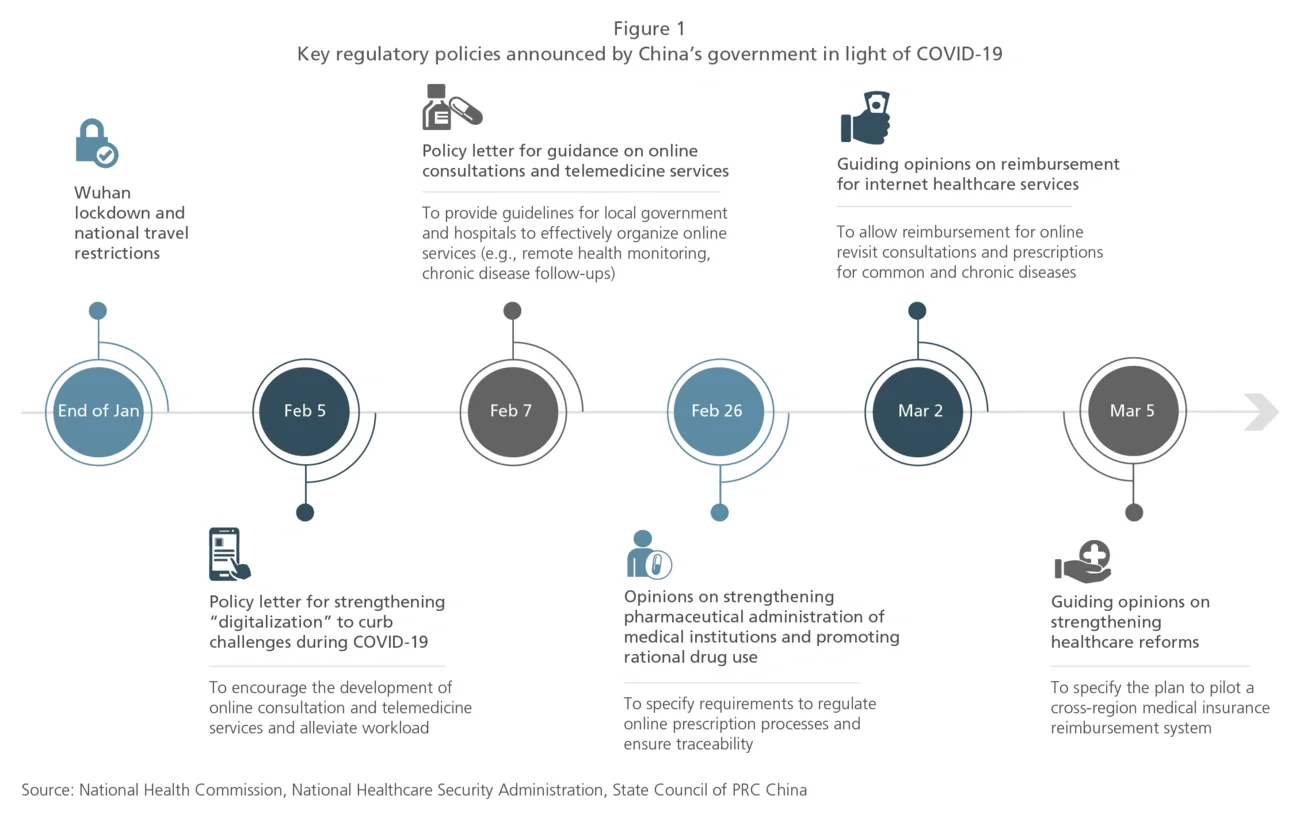
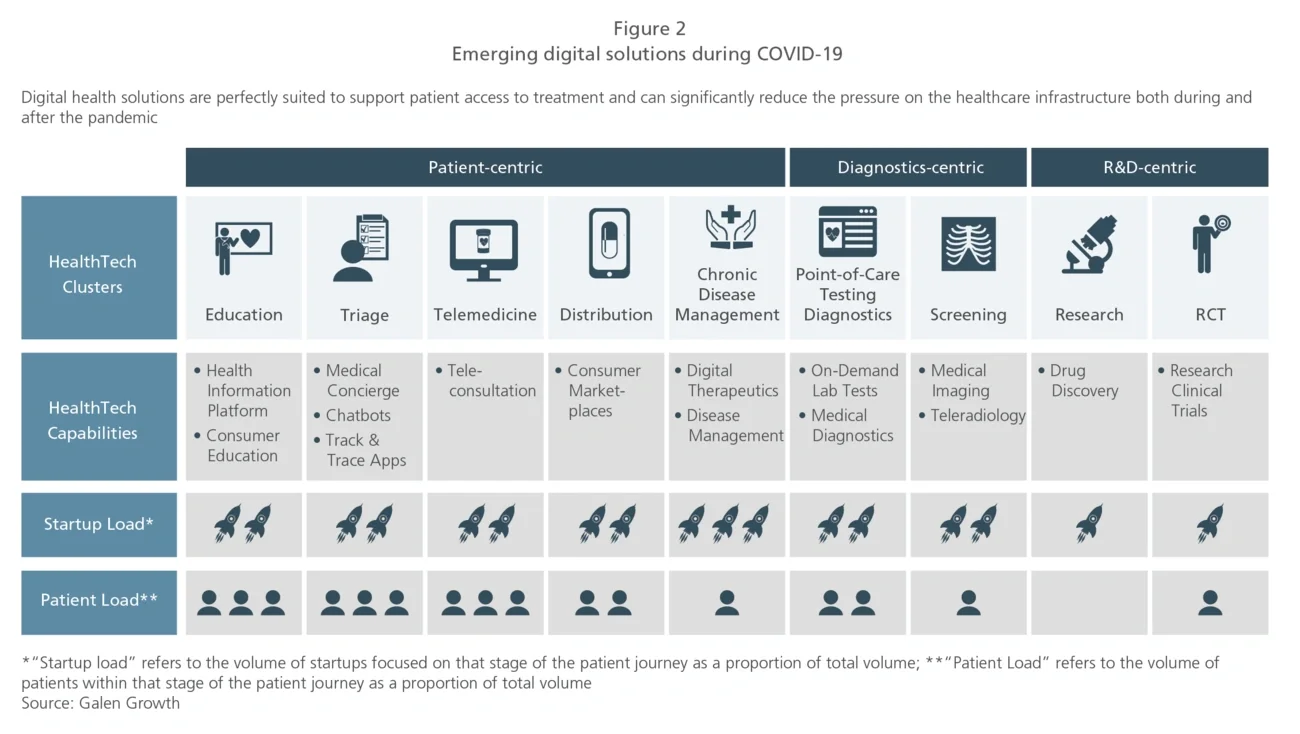
As the outbreak disrupts the ways in which providers, businesses and consumers alike operate, digital innovation is also being used to cushion the negative consequences of a global pandemic to supply chains and business-to-business ways of working across the healthcare value chain. After Wuhan commenced a lockdown, drone technology was used to transport quarantine materials, medical samples and medical supplies between hospitals, offering an efficient alternative to traditional transportation. Chinese automotive manufacturer SAIC-GM-Wuling reengineered its existing assembly lines to begin manufacturing medical face masks to help alleviate the nationwide medical gear shortage. Pharma companies also migrated their crucial sales force function online to enable employees to avoid face-to-face contact with frontline workers while sustaining physician engagement. Novartis, for instance, has ramped up remote academic support to physicians. At the same time, it is important to incorporate creative approaches to online interactions to prevent direct promotional fatigue.
A step change ― for good
While some may view digital health tools as a temporary plug-and-play option to alleviate the stress that COVID-19 has placed on the healthcare system, we predict many of these changes will remain for the long term, as shocks to health systems historically tend to be deeply ingrained. Take the 2003 Severe Acute Respiratory Syndrome (SARS) epidemic, which was a severely needed wake-up call to Asian nations that a proactive approach was vital for any future infectious disease outbreaks. Post-SARS, Taiwan established the National Health Command Centre, a central command post for public health authorities to disseminate information in a direct and transparent manner. Singapore and Australia have also realized the fundamental importance of streamlining exchange of information among different healthcare stakeholders. Both nations now offer COVID-19-related updates to residents via the popular mobile chat app WhatsApp, with the latter collaborating with software company Atlassian to implement a WhatsApp bot that can answer frequently asked questions.
Regulatory measures favorable toward digital health are unlikely to roll back easily after this crisis has passed, given that governments will look to step up health emergency preparedness for the future. The pandemic has shone a spotlight on some of the budgetary challenges with public healthcare systems, making digital an enticing means in the pursuit of more effective management and distribution of finite healthcare resources. Furthermore, as other stakeholders gradually adopt and increase their level of comfort with the vast plethora of digital health tools available in the market, we also expect to see enduring shifts in behavior for healthcare providers, physicians and consumers alike that will likely sustain a new “regulatory inertia” and mitigate any temptation to revert to old norms as the COVID-19 crisis passes.
Changing corporate priorities
Given that norms within digital health are evolving in response to COVID-19, companies can prime themselves for the upcoming digital revolution by rethinking strategies across product-service innovation, core organizational functions and ways of working. The previously nebulous “permission space” that constrained digital health players from operating freely in the healthcare industry is quickly being set aside, as governments and healthcare stakeholders have deployed all tools and resources available to fight this major public health and macroeconomic crisis.
As the world teeters on the cusp of digital transformation in the healthcare industry, key stakeholders can take proactive steps to evolve in tandem with the radically changing and increasingly digitalized healthcare landscape.
For product companies, including pharma as well as medical device and equipment manufacturers, the opportunity exists to embed digital in product-service innovation and across functional areas, including as part of customer engagement. For example:
- Pharma: Digital tools can be increasingly employed to improve patient and physician engagement by:
- Focusing on building digital patient pathways to enable patients’ access to physicians and drugs across the entire care pathway (awareness and prevention, effective triaging, diagnosis and treatment)
- Strengthening digital engagement with physicians by driving awareness (e.g., through key opinion leader webinars, online scientific communities, interactive clinical trial presentations) or by offering seamless delivery of crucial functions (e.g., remote ordering/inventory stocking)
There is also a valuable opportunity to concurrently assess the extent to which the reliance on traditional offline channels (e.g., Salesforce) can be decreased. While some progress has already been made in embedding digital into commercial models during the COVID-19 pandemic, the decisions post-pandemic to rein in face-to-face sales teams in favor of digital engagement will depend on how consistently or cyclically restrictions are placed on access to healthcare professionals.
- Medical devices: Digital presents medical device companies with an opportunity to seize key wins, either by embarking on innovation of new products and services or by leveraging technology to increase operational efficiencies. For example:
- Rethinking existing care management strategies in order to address shortages in manpower, reduce high provider costs and provide personalized care for more complex cases (e.g., Philips’ eICU software led to ~US$5 million in cost savings for Emory Healthcare in just 15 months)
- Leveraging cloud-based solutions to streamline inventory management and reduce cost inefficiencies (e.g., real-time updates of key performance metrics, 24/7 inventory visibility to anticipate stock shortages)
- Other opportunities also abound for medtech as customers increasingly gain comfort in a digital setting
Opportunities exist for other healthcare stakeholders as well:
- Providers: As care transitions out of the traditional hospital setting toward alternative sites to prevent overcrowding and provide better access to remote patients, there is an opportunity to use and integrate digital tools to manage and link different healthcare settings for providers:
- Triaging and outpatient remote engagement tools to alleviate load on currently stretched healthcare services and resources
- Increasing the use of electronic health records to allow clinicians better access to a patient’s medical history and provide more personalized care
- Adopting interoperable clinical management systems to ensure seamless integration and more effective management of workload across different types of healthcare facilities
- Payers: While payers have been relatively more proactive in adopting digital care management tools to ensure a hassle-free claims reimbursement process and improve the patient journey, there is still vast potential to replicate and expand existing service offerings:
- Deploying standardized codes for different procedures to reduce administrative workload for healthcare providers during billing and claims reimbursement process
- Increasing payee engagement by launching self-triaging digital tools for patients (through a website or mobile app feature) to use before seeking care
- Increasing digital engagement with consumers to raise awareness on the range of health insurance plans available
Gearing up for a digital future
In summary, the adoption of digital health tools in Asia Pacific has mirrored the exponential transmission of COVID-19 and has far-reaching impact that is here to stay. The digital “permission space” significantly expanded in a single quarter, with regulators, healthcare practitioners, institutions and consumers banding together to use all means possible to fight the crisis. These shifts in behavior will accelerate, giving rise to new models and “go-to” providers at this unique point in time. The COVID-19 crisis and the digital health acceleration that has followed have also offered a view into where key unmet needs lie for healthcare systems and consumers, and where most value could be generated through digital innovation.
Pharmaceutical companies, medical device companies, providers and payers need to act now to stay ahead of these changes in a quickly evolving and increasingly digitalized world. Pursuing new operating models in a planned and purposeful way can also enable industry players to leverage certain fundamental advantages that these new models may offer, including lower costs to deliver products and services, broader access to patients and customers, more scalability of operations, and rapid adaptability in times of crisis or surge/drop in demand, among others.
There are various ways too for future leaders to move forward, whether it be through internal product development and innovation, partnerships to leverage external capabilities and leverage synergies, or via mergers and acquisitions. The current momentum could also serve as a catalyst to activate “data plays” that often go hand in hand with a digital offering and can secure long-term value generation. Players that are not proactive in joining the current industry momentum and do not align themselves with the core needs and expectations of consumers, physicians, healthcare systems, and governments may find themselves without a seat at the table in the future.
It is likely that these observations and implications for Asia Pacific, where the virus first originated, will extend to other regions, as the pandemic has applied similar pressures on healthcare systems globally to curb disease spread and stretch health system capacity. L.E.K. Consulting is assessing the impact of the pandemic globally and will be exploring similar perspectives for the rest of the world in future publications.
Endnotes:
1World Health Organization — Strengthening the Health System Response to COVID-19: https://euro.sharefile.com/share/view/sbc0659718fd4c8aa
2https://images.philips.com/is/content/PhilipsConsumer/Campaigns/CA20162504_Philips_Newscenter/Philips_Future_Health_Index_2019_report_transforming_healthcare_ experiences.pdf
3APAC Hospital Priorities 2019 Survey: https://www.lek.com/sites/default/files/insights/pdf-attachments/2203-APAC-2019-Hospital-Priorities-Report.pdf