


This is the first in a series of articles that analyze key themes from L.E.K. Consulting’s eighth annual U.S. manufacturer survey. It discusses how aftermarket parts and services can be an important lever in driving OEMs’ profitability.
As U.S. manufacturers continue to navigate a challenging macroeconomic environment, executives have identified profitable growth as their most critical priority. One of the best ways to drive margin uplift and profitability is to develop, or expand, aftermarket parts and service capabilities.
An effective aftermarket parts and services offering can provide several strategic benefits to industrial manufacturers across end markets. They include incremental customer touchpoints, elevated margins and reduced reliance on capital goods sales cycles. Meanwhile, a shift toward greater service exposure can help mitigate the impact of an elevated tariff environment. Indeed, with margins in core operations under threat, it is increasingly beneficial for manufacturers to develop an aftermarket offering that diversifies and strengthens revenue sources, all while managing channel partner relationships to reduce potential conflict.
Increased customer engagement and better financials
A manufacturer with an aftermarket offering has incremental ways to engage with their customers. This can be a valuable avenue not only to drive incremental sales of parts or services, but also to identify customer pain points with existing products and, by extension, the potential need for replacement or for entirely new capital goods.
Aftermarket parts and services tend to provide manufacturers with elevated margins, as they can be priced more aggressively because they alleviate costly equipment downtime. They also frequently represent a small portion of operating budgets, which gives aftermarket providers a greater ability to push pricing. And an effective aftermarket organization helps to better balance and de-risk company revenues by shifting the sales mix away from capital expenditures and toward recurring maintenance, repair, and operations or operating expense-driven activities and decision-makers.
With initiatives come challenges
While there are many benefits to expanding aftermarket capabilities, establishing the necessary organizational muscle — or even extending its existing reach — requires managing a host of potential obstacles.
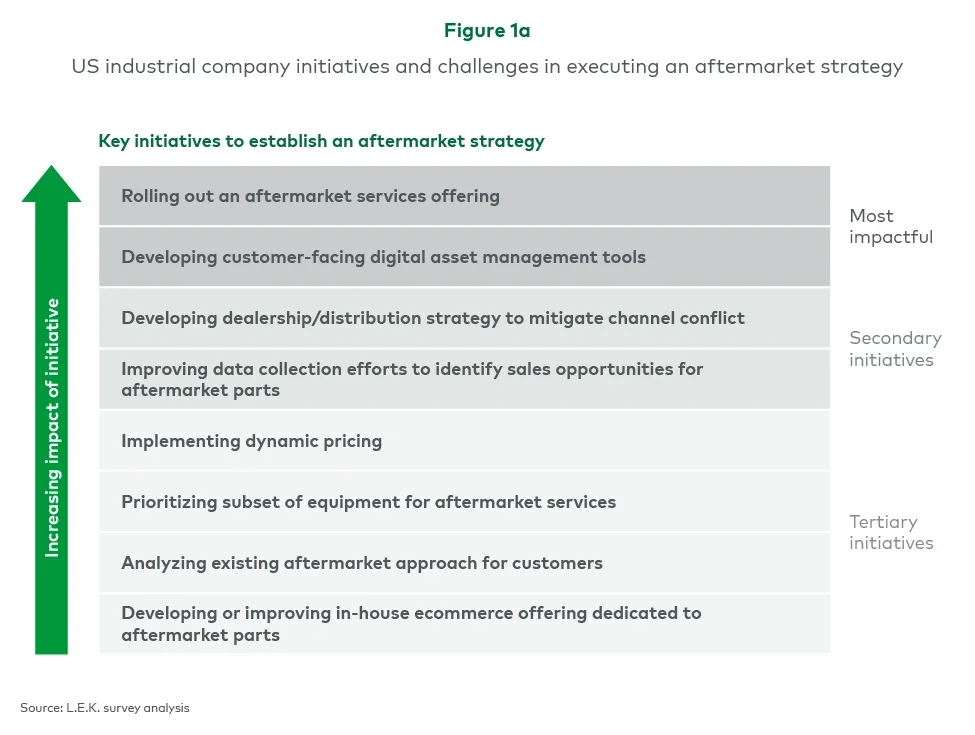
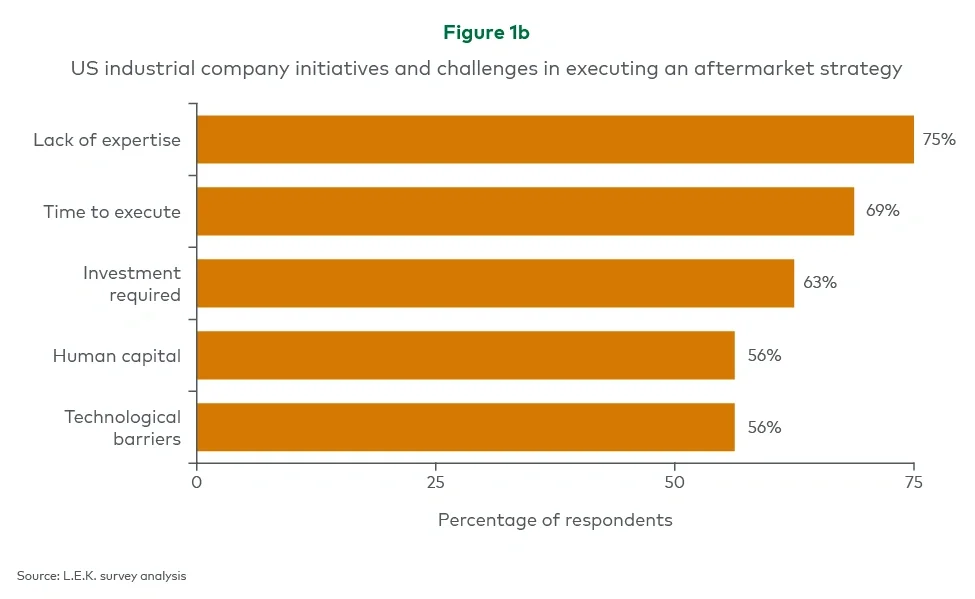
To start, some industrial companies find the expertise required to pursue aftermarket expansion (e.g., pricing strategy, marketing tactics) challenging given the need to balance core business functions with a new add-on service. This is particularly true in today’s environment, where managing tariffs, supply chains and persistent inflation requires a meaningful amount of executive leadership’s attention. Moreover, developing an aftermarket service offering requires investment and time to improve the data collection that will help identify opportunities, and incremental human capital and technology to execute on those opportunities. Add to that channel conflict, which isn’t easy to overcome (see Figures 1a and 1b).