

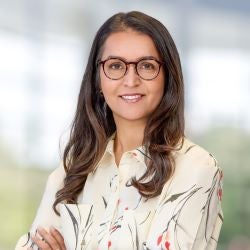
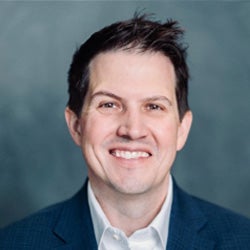
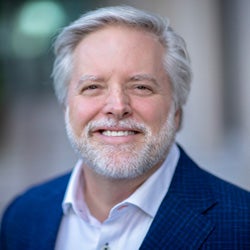
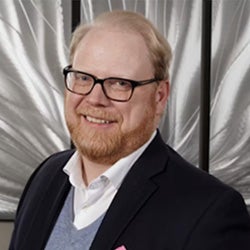
Functional medicine is rapidly gaining momentum as patients, providers, and investors look for more personalized, preventative, and outcomes-driven models of care. In this panel discussion, Rozy Vig, Ph.D., Managing Director in Healthcare Services at LEK Consulting, moderates a conversation on how functional medicine is evolving from a niche approach into a scalable, technology-enabled, and increasingly investable segment of the healthcare ecosystem.
Rozy is joined by Chris Dorn, Managing Director of HCIT at Fifth Third Securities, who brings an investor and deal-making perspective; Tom Blue, Founding Partner at Ovation Lab, a longtime leader in functional, integrative, and longevity medicine strategy; and Ryan Obermeier, Chief Commercial Officer of Evexia Diagnostics, who offers deep operational insight into the diagnostic infrastructure supporting functional medicine practices. Together, the panel explores what’s driving growth, where challenges remain, and how innovation, data, and AI may shape the next phase of the market.
“Functional medicine is fundamentally about looking beyond symptoms and asking what the underlying cause really is; it’s how we solve problems everywhere else in life, and it’s finally arrived in healthcare.” — Tom Blue
“We’re still in the early innings, but interest from investors, providers, and consumers has accelerated dramatically over the past few years.” — Chris Dorn
-
View Transcript
Rozy Vig [00:00:04]:
Welcome everyone and thank you for joining us today. My name is Rozy Vig. I'm a partner and managing director at LEK Consulting. In today's session, we'll focus on how functional medicine is evolving and gaining traction as part of a broader shift towards preventative, integrative and longevity focused care. With chronic disease continuing to rise and consumers seeking more personalized approaches, functional medicine is drawing interest across the healthcare ecosystem, including from providers, diagnostic and digital health companies, as well as investors. I'm pleased to be joined today by three panelists who are well versed in this space. Tom Blue, founding partner at Ovations Lab Ryan Obermeier, chief Commercial officer at Avexia Diagnostics, and Chris Dorn, managing director at Fifth Third Securities. I'll invite each of them to briefly introduce themselves before we begin.
Rozy Vig [00:01:01]:
Tom?
Tom Blue [00:01:02]:
Well, thanks, Rozy. I am, yeah, like you said, I'm Tom Blue. I'm the founding partner of Ovation Lab. This is I have a really long history in the functional, integrative and concierge medical space, which is increasingly evolving into the longevity medicine space, setting up some of the very first practices in the country on a concierge medical model and then working.
Tom Blue [00:01:25]:
As a part of the leadership team of the Institute for Functional Medicine on practice implementation and industry strategy. And now we work with companies that are trying to build their valuations in this space and sometimes even prepare for exit events. And so it's great to be with you.
Rozy Vig [00:01:43]:
Thanks, Tom.
Ryan Obermeier [00:01:44]:
Ryan, well, thank you for having me. Certainly excited to have this conversation. I'm Ryan Obermeyer. I'm the chief Commercial officer currently at Avexia diagnostics. I have 27 years in this integrative functional medicine space. So really, all the terms that Tom just laid out there for you, the integrative, functional, anti aging, longevity medicine space. When I first started in the industry 27 years ago, it certainly wasn't when the industry started, but it is when the industry started taking traction. And what I mean by that, a lot of the organizations at that time, both in diagnostics, consumables, so on and so forth, were very regional.
Ryan Obermeier [00:02:20]:
It was at that time when these companies started to take on more of a national reach. And what I would say is the space is still currently highly fragmented, meaning if I go into a practice in southern Florida, my experience might not be the same as it would be where I'm originally from in central Wisconsin. So my time at particular organizations would be able to take best practices from the west coast north to the east coast, north of the border, south of the border. I Also had the opportunity to do the first roll up in the integrative functional medicine space where I bought 40 medical practices. I was employee number one on day one and was the vice president of mergers and acquisition at that organization. And as I started off, I am currently the chief commercial officer at Avexia Diagnostics where we deliver laboratory service, laboratory services to the integrated functional medicine practice.
Rozy Vig [00:03:13]:
Great. Thanks Ryan and Chris.
Chris Dorn [00:03:16]:
Thanks Rozy. Great to be here. I'm Chris Dorn. I'm managing director on the healthcare investment banking team at Fifth Third Securities. We're the investment banking arm of Fifth Third bank, which is a very large bank based in Cincinnati. And you know, honestly, Tom and Ryan are who I call to get more educated on the space. I was not, I had not heard the term functional medicine until I think Covid 2020, 2021 sometime in there. And just we've been spending so much more time in this space and hearing about it.
Chris Dorn [00:03:48]:
Functional medicine, precision, health, longevity, wellness, you know, all those terms. We're hearing a lot more from investors and hearing from more people who are looking to raise capital or sell their business. And so it's been very interesting in the past year or two as it's really accelerated.
Rozy Vig [00:04:06]:
Great. Well, thank you all for those intros. You all have referenced a variety of different terms in talking about this market, so maybe that's where we start. Tom, can you begin by telling us what is functional medicine and how does the ecosystem work to really drive better health outcomes?
Tom Blue [00:04:25]:
Sure, yeah. That's a great place to start. So, so the simplest way of understanding functional medicine is it is a, an approach to managing your health and things that may go wrong with your health by deviating from the, you know, from the, the conventional way of identifying symptoms and, and applying the, the healthcare system to suppressing those symptoms, but rather looking beyond the symptoms to ask the question what might be the underlying cause. So functional medicine is fundamentally about, about approaching health issues, be it from health restoration all the way to optimization and, and health span extension by way of the root cause drivers of dysfunction and, and then assessing health in terms of, instead of, in terms of the absence of symptoms, of disease, in terms of, of actual function, which of course it's, it's, it has such a common sense resonance that when any, most any consumer would hear about that, it's like who would prefer to manage their health in some other way? You know, it's, I mean applying root cause principles is how we solve problems in business and in life and, and it's finally has arrived in the, in the world of, of, of how we manage our health.
Ryan Obermeier [00:05:38]:
Yeah, my, my two cents on that if I could jump in really quickly is as I mentioned, I've been in the space for 27 years and the space has not served itself at all. It's probably had 27 different names in 27. In 27 years. When I started the the, the nomenclature being used was natural, holistic, complimentary and over time in functional medicine certainly grabbed or gained some significant traction. I think the current nomenclature, that's the kind of the hot and sexy thing right now is personalized and precision medicine. But I can only imagine probably, you know, in the next couple of years we're going to cling on to some new nomenclature. I would just say, I would agree with Tom. I would say integrative functional medicine is really medicine outside of conventional care.
Ryan Obermeier [00:06:25]:
It's really trying to discover and treat root cause versus just masking symptoms which is classic in the more of the conventional medicine route.
Rozy Vig [00:06:34]:
Great. And Chris, maybe you can sort of speak to who the main players are within the functional medicine ecosystem.
Chris Dorn [00:06:41]:
Yeah, I was certainly lucky to have Ryan and representative Axia here. I think you hear a lot of providers are leaving big practices, want to start up their own functional medicine clinic. And so Avexia helps connect a lot of those doctors to all the different diagnostic lab labs that are available in the space. When you think about the diagnostic labs, obviously LabCorp and Quest are the two biggest labs in the country, but there's just so many more esoteric tests that functional medicine providers might order. So Mosaic Diagnostic is a big name in that space. And then on the provider side, I think Lifespan has been very acquisitive recently in trying to gain scale and form. Healthcare is out there as well as more of these larger practices, more of a nationwide footprint, but I think it's pretty early. On the provider side we haven't seen a lot of consolidation like we have in the PPM space in the last couple years.
Chris Dorn [00:07:43]:
In conventional medicine, Ortho and GI have been rolled up pretty pretty well, but they're outside of those two names I just mentioned. There haven't been a lot of roll ups there. And then on the tech technology side it's so early. There really isn't a great practice management system that's solely for functional medicine, but a number of names have really been started. And then obviously I guess last but not least, I'd have to mention Function Health is out there as having raised a significant amount of venture capital to, to bring diagnostic testing direct to consumer. So I think that name in particular has gotten a lot of people very excited about this space and what it can be. So it remains to be seen, you know, how all how successful they can be. But it's a really exciting name right now.
Rozy Vig [00:08:32]:
Great, thank you for that. I guess. Ryan, turning back to you, help us understand what changes have driven the recent growth and investor interest in functional medicine.
Ryan Obermeier [00:08:42]:
Well, I think it's the end user patient, if I'm being honest with you. I think currently today, what we are experiencing, and we've been experiencing this for quite some time, it is really what I would say, a perfect storm. The end user patient is dramatically educated compared to my parents generation where they would walk in and anything that their physician said, they would hold it as truth. Where that's not the inpatient user these days, the inpatient user is looking for someone to join them on their journey to health and wellness. And, and I think what's so I think a lot of the pressure or the levers that are getting pulled in this space is really the end user patient looking for a different experience than conventional care can offer, which is the seven and a half minute meeting. They're looking for someone to join them on the journey and not basically tell them exactly what to do. They want to be a part of that journey and making their own decisions, but having that guidance from a health care professional. And then I think from the physician side, I think there's a lot of pressure too for physicians, physicians who are on the conventional side of care.
Ryan Obermeier [00:09:45]:
I would say probably over the course of my career where I've worked with probably 5,500 physicians, I'd say 80% of them have pursued integrative functional medicine because they themselves a family member or friend, they didn't get well with conventional care. And so they tried something outside of the box of conventional care. And lo and behold, they got results. And then they start trickling in just these other things outside of conventional care, within their patient base when they're working with their patients. And, and ultimately they couldn't deny the results. And so I think that there's interest from the patient side, the physician side, and I think just in general, the general public, I think we're, you know, this all probably started in the late 70s and has certainly gained traction since the 2000s have kicked in. And it's a very, very exciting space right now.
Rozy Vig [00:10:32]:
Great. Tom, anything to add on that front and in particular, anything to add when it comes to technology innovation as well?
Tom Blue [00:10:41]:
Well, yeah, I have to say I think that the emergence of AI has inspired a lot of people to believe that this is finally the time to start managing their health differently. So if you kind of combine something like function, health and the fact that we're all wearing oura rings and whoop bands and Apple watches and I think consumers are becoming more and more aware of just the sheer volume of data that their bodies emit and can be captured about their health and the impossibility of managing that of a single provider in a human brain trying to synthesize it all and draw conclusions and find insights. And now here we have the emergence of AI as creating extraordinary plausibility that we're going to have new insights, much more precision and personalization at a much more affordable price. And so, you know, I would say if you think from a technological standpoint, we have a lot of these sort of data collection technologies, be it on the imaging side or the lab side or sequencing on, on sort of these, you know, they're exponential technologies that get cheaper, cheaper, cheaper every year. And, and yet we have on the other end of it, the, you know, the analytical capability is, is on the exponential in the other direction creating, you know, creating a really, really exciting time. And, and you don't have to be, you know, particularly geeked out on this as a consumer anymore. It used to be this was sort of the domain of people that were quantified self people or whatever that were, or that were very sick and had taken a very deep dive to try and restore their own health. Now the everyday consumer can hardly, can hardly avoid coming into contact with media coverage of the, of the booming longevity industry and begin to cultivate an appetite for this type of medicine.
Tom Blue [00:12:30]:
And yeah, we have to remember the, in a way, our evolution as health care consumers really, you know, started to accelerate with the introduction of high deductible health plans and people reaching the conclusion that it's like, yeah, I have an insurance card in my wallet, but I'm still a cash pay patient unless something goes dreadfully wrong. And every year, you know, we become a little bit more inclined to behave as real consumers shopping for the flavor of health care that we actually want. And that works very much in favor of the, of, of, of root cause focused longevity, focused health care practitioners and service providers.
Rozy Vig [00:13:07]:
So you've mentioned quite a few different types of, of end consumer segments. Is there a certain patient group or segment consumer segment that you think is showing the fastest uptick when it comes to functional medicine?
Tom Blue [00:13:21]:
Sure. The, I mean the earliest adopters of, of functional medicine were as, as you would, as you might imagine, people that were suffering from, from Chron. So I can remember we did a large study of, I don't know, probably 100,000 patients in the, in a functional medicine health record system. Looking at what that patient looked like, it was a, on average a 44 year old female, 75% were female, reporting six diagnoses and something along the lines of 32 symptoms or medical complaints. And so what, what strikes you? Like if I remove the age from that, you know, from that descriptor, you would have assumed I'm talking about a senior citizen with six diagnoses and all these symptoms and what have you. Instead it is, you know, these are autoimmune patients, patients with GI issues, ibs, ibd. You know, people that are going to be, you know, they have a lot of life yet in front of them to live that is being enormously jeopardized by the burden of chronic conditions. Not that they're going to die tomorrow, but they're just, their quality of life is miserable.
Tom Blue [00:14:24]:
And so as sort of Mark Hyman famously described himself as a resort doctor, he said, I'm the doctor of last resort. And so in the early days of functional medicine, the early adopter had tried everything else and finally found their way after a lot of research into this type of care and then became excited about the results that they got. Today you don't have to be dreadfully ill in order to discover this. You have things like function, health and you know, a massive network of practitioners that today have been trained. Whereas, you know, every year the supply of practitioners that have this capability grows and it becomes easier and easier for, for patients to, you know, to find routes into, into this type of care. Most recently the scaling of virtual care delivery and, and the, and making of course available diagnostics in a direct to consumer, in a direct to consumer mode.
Ryan Obermeier [00:15:19]:
So I would agree with Tom, exactly. I think the way he laid it out is perfect. And the way that I would look at this space is really three distinct patient groups or you could even look at it as clinic types. The first one I would say is the anti aging longevity practice. The way that you would identify this practice is patients probably aren't battling a disease per se, and they don't really feel ill, but they just don't feel like they felt two years ago and they're looking for some help to get them to feeling how they felt a couple years ago. The second practice I would say is kind of the run of the mill conventional integrative functional medicine practice. And Tom alluded to that a lot of These patients have GI complaints. Could be maybe with a disease he had rattled off, Inflammatory bowel disease, irritable bowel syndrome.
Ryan Obermeier [00:16:06]:
A lot of it, though, is also cardiometabolic disease. Right. So these are patients who may have diabetes or pre diabetes, and then the third type of patient type or the third type of practice. I would say that these patients are very ill. They're on the deep end of the pool. The providers that they're seeing are somewhat geniuses. This could be Lyme disease. This could be chronic inflammation, you know, chronic inflammatory response syndrome.
Ryan Obermeier [00:16:34]:
This could be a wealth of diseases that are, quite frankly, very difficult to treat in conventional care. So those would be my couple statements on what Ed Tom had mentioned with regards to the different types of patients that are consuming this type of medicine. So the headwinds for the integrative functional medicine space is 100% is awareness.
Chris Dorn [00:16:56]:
Right.
Ryan Obermeier [00:16:56]:
I would say this is the biggest thing. It's just becoming aware. And I would say, you know, everybody probably knows about Whole Foods as an example of a grocery store, but how many people are actually shopping at Whole Foods? I would venture, guess maybe 10% of the population. And a lot of this has to do with, with the patients who are pursuing this type of medicine is this industry really was back in the day for patients with high amounts of disposable income. Right. So if you didn't have a lot of money, guess what? You probably weren't pursuing a different type of medicine. You're probably pursuing conventional care. But as Tom alluded to earlier, it's this idea of high deductible health care plans.
Ryan Obermeier [00:17:38]:
And gosh darn it, I'm paying a monthly premium that could be thousands of dollars, and then I have to hit a deductible before my insurance even kicks in. And then almost always attached to a high deductible health care plan are what HSAs and FSAs. Well, this opens up the opportunity for, for patients to pursue a different type of medicine. And it's kind of like what Tom mentioned. It's, it's the floor flavor that they're pursuing. They, they might not be looking for that seven and a half minute visit to address a certain condition. They want to sit down with someone for an hour or 90 minutes, someone who's going to listen to them go all the way back to, believe it or not, how they were birthed, were they birthed C section where they birthed vaginal delivery. All this is important to someone who's really looking for what we had previously mentioned looking for the root cause of what's going on with these patients.
Ryan Obermeier [00:18:29]:
So I would say the prevailing head would certainly is just awareness.
Tom Blue [00:18:34]:
You know, I might throw in another, another expansion on that. The, you know, and Ryan touched on it. There is of course the fact that there is a cash pay component to this and not everybody has yet crossed the threshold of being comfortable with that. The other thing that Brian, Brian touched on in terms of just the visit length is just the scalability of the model. Functional medicine is incredibly efficient in the long term but in the short term with a patient relationship it does involve, it's very time inefficient. There's a lot of discovery work that has to occur. We did a study one time looking at the patient throughput in a full time functional medicine practitioner's office and we found that where a typical conventional primary care doctor might see 25 or 30 patients in a day, the average functional medicine physician who was practicing full time was seeing about seven and a half patients a day day. And a lot of that time when you, when we peel back that onion went into time spent teaching patients about, about things.
Tom Blue [00:19:37]:
In order to act on root causes, you have to make changes in your life. You need to learn to do those. So there's a skill development component, the analysis of data, the gathering and assimilation of data. There's a lot of work to be done. So I think we're going to find that, that again the, the, you know, emerging technologies are going to, are going to lighten the load on that and relieve a good bit of the headwinds and, and should also bring down the, you know, bring down costs. I mean you can only imagine, as Ryan was saying, it's, it's been primarily the domain of affluent patients to this point for, for these inefficiency reasons.
Ryan Obermeier [00:20:09]:
Yeah. And I would, I would actually double down on what Tom said. It is a scalability issue. As I mentioned during my introduction of myself, this industry is still highly fragmented. My experience in southern Florida practice is going to look nothing like and experience in central Wisconsin. So the idea is how do you scale that? And quite frankly they're up until just recently there really isn't any bodies of education where people are walking out.
Ryan Obermeier [00:20:40]:
Addressing disease in a certain fashion. You could throw a hundred providers that are practicing a different type of medicine that we're talking about today and say you have a patient with XYZ condition. What are you going to do? You're probably going to get a hundred different answers. But the difference between that and conventional care, which I would say conventional care a Lot of times providers are practitioners, maybe they're working for a hospital system. Well, that hospital system is going to tell them, hey, patient, with X, Y and Z, this is what you're going to do. You're going to do 1, 2, 3. That doesn't exist in the integrative functional medicine space. So scaling just that concept of how do I get a group of providers all agree on, hey, this is the way that we're going to treat a patient.
Ryan Obermeier [00:21:21]:
Because a lot of times providers who are pursuing this type of mention, as I mentioned in one of my previous examples, is they're trying to run away from conventional care, right? So conventional care, you're going from a practitioner to now you're really become what I would define a physician. You have all the creativity in the world to address this disease state versus being kind of told what to do as a practitioner. In my example of maybe working for.
Chris Dorn [00:21:46]:
A healthcare system, thinking about awareness, right? The biggest, I think the biggest change of bringing more awareness is more capital coming to these businesses so they can advertise and get the word out there, right? And I think Functional Health is, is doing a lot of that lifting for a lot of people right now. But it's also, that's the biggest challenge for investors right now is, is trying to do diligence on these businesses and, and seeing maybe too many cowboys of, you know, what is the clinical evidence to say that we're going to prescribe this or recommend this supplement, right? I think that's the biggest challenge for a lot of investors to put money into these businesses is they don't want to have a million lawsuits on their hand because every doctor is treating every patient so differently. Right? But at the same time, like 2021, you heard a lot of these functional medicine doctors talking about peptides. And I had never heard of a peptide, but now, you know, the greatest drug of all time, it seems like, is, is GLP1, where the P stands for peptide. So are those related? You get a lot of consumers asking for different treatments, different understanding of what's out there. And so, you know, capital is going to bring awareness. But I think we have to help educate investors of what is the clinical evidence behind some of these treatments that, that these doctors will recommend that they're safe and applicable for, for the patient.
Ryan Obermeier [00:23:08]:
Chris, I agree with you 100%. The one thing that I just comes to my mind when you're talking about what that is, you know, the medical industry thought that fat made people fat not too many years ago, where today we know it Certainly is sugar. So I don't know if the medical industry is the end all be all on answers either.
Rozy Vig [00:23:26]:
Great. Well I'm going to pivot here a bit and Chris, I want to turn to you. Let's talk about deal activity in the functional medicine space. Can you speak to recent deals, exits, strategic partnerships that are really shaping the competitive landscape?
Chris Dorn [00:23:41]:
Absolutely. We've mentioned Function Health a number of times. I think their newest round of capital was last week. Nine digits, right? 200 plus million dollar capital raise. Lifespan MD is a pretty significant provider roll up. They're out there acquiring practices. They raised a new round of capital as well. You know, Analyte Health traded recently to Bright Star Capital.
Chris Dorn [00:24:08]:
Revelstoke just started more of a concierge medicine practice. I believe we're seeing more concierge medicine practices come to market in 25 and I expect 26. I think we're still waiting for, for what are some of the big headline deals in more functional medicine and Longevity Health, at least within the private equity community. You know, EBITDA backed businesses really scaling. I think we're pretty, it's, it's early, right? It's very early. And a lot of these functional medicine doctors, they don't need an emr, you know, they don't need an EPIC or an Oracle because those things are really built for, for billing and so they're all cash pay businesses. So it's more of just a practice management solution. And how do I get patients in there? What are the marketing efforts? I need you to get in front of those patients.
Chris Dorn [00:24:54]:
So there's more VC backed funding in some of the technology businesses right now. But I think in the next couple of years we'll really see some of those maybe consolidation among the tech platforms or maybe the tech platforms trade into a more mature PE backed model. But I think that's why people are so excited and why investors are always looking to understand these businesses and how they can invest is there's more and more people looking into these practices wanting to, to use their high deductible health plan or their, their HSA rather to go see the type of doctor that they want to see. And I think people are very excited about what's going to happen in the near term for this industry.
Tom Blue [00:25:34]:
Fullscript, which is the, you know, the marketplace that serves more than 100,000 of these practitioners now to enable them to drop ship rather than have inventories of supplements in the office, is now more than a billion dollars a year in revenue and has raised an awful lot of money and Then of course there's the, you know, the acquisition of the supplement companies themselves which has been, you know, which has been very, very active and seems to continue to be. Supplements are really a staple in the, you know, in the sort of the functional medicine intervention world.
Ryan Obermeier [00:26:06]:
I, I would agree. I have 19 years experience in nutraceuticals or dietary supplements. The supplements are highly predictable. If you have a good sales force out there, you can pretty much, you know where the next five years of revenue is going to be. It's highly, highly predictable. Certainly a competitive, much more competitive space than when I was there. But certainly if you can hit your wagon to a great company, there is some significant growth out there to be had, especially in what I would say is the physician distributed model. Currently today you have two primary or let's say three different distribution models.
Ryan Obermeier [00:26:45]:
You have a multi level marketing model, a retail channel and then the physician distributed channel. The physician distributed channel is, you can really predict where revenue is going to be where. I think in the retail channel there's, you just, you have to catch lightning in the bottle. You got to get viral. It becomes much more difficult to predict where that revenue is going to head. However, with the physician distributed model, you certainly can set yourself up for some significant growth.
Rozy Vig [00:27:16]:
Right. I guess rounding out the discussion around deal activity, what, Chris, for you, what are some viable liquidity pathways for founders and investors in this space?
Chris Dorn [00:27:28]:
You know, there's so many people looking to invest in the space right now from family offices, venture capital, private equity. I think, I think all of them are, we're talking to all of them who are saying, how do we, how do we play in this space? How do we find the right pathways to, to invest in these businesses? But I think what we continue to see is the growth is there. They need to get at, the investors need to get more educated on, on what are all those different, you know, retail channels as an example that Ryan's talking about. I don't, I don't think all of them know that all those different pathways are there for them. But I think, you know, venture capital continues to try and invest in something that has sort of that 0 to 100 very quickly. But there's a lot of private equity firms and a lot of capital still sitting on the sidelines looking to invest. So I wouldn't, you know, if, if you're a founder looking to scale your business, always happy to talk, but I think, you know, you should be having meetings with anyone who says that they're looking to invest in the space right now.
Rozy Vig [00:28:30]:
Great. All right, well I'd like to kind of pivot again here and, and end with really hearing your guys view on future state. So we've talked about, you know, defining the market, we've talked about challenges, we've talked about deal activity. But Tom, I'll start with you. How do you see the outlook for functional medicine evolving over the next three to five years?
Tom Blue [00:28:54]:
I would say that we're going to continue to see just a migration of consumers into this, into the space. I think finally people are realizing and adopting. I sometimes describe this as a mass shift in our health locus of control, meaning that historically we've assumed that sort of our health happens to us. And I think going forward we have finally hit a tipping point in people realizing the degree of influence they have over the future of their health. And so I would say that we're, and I think we're going to see that with the continued evolution of AI, the continued price prices coming down on diagnostics, things ranging from whole body MRI to, to sequencing and novel large lab panels, we're going to see more and more patients accumulating more and more data. And I would bet in 2026, I have a feeling we're going to see the very first legitimate kind of clinical copilots for doctors that go well beyond what a consumer can do on his or her own. With ChatGPT, I think we're going to see, I think we're going to see real tools made for doctors that have enormous contacts windows so you could put your whole genome into it. One company that comes immediately to mind on, that's coming to market now is called bioscope.
Tom Blue [00:30:14]:
That has really caught my attention.
Tom Blue [00:30:17]:
And I think we're going to start to see more and more exciting virtual practice offerings because there's so many, you know, again functional medicine service providers tend to be in larger cities and the interest in it is nationwide. And I think we're going to start to see more and more really well done virtual offerings. Another one that's going to be a big driver is the removal of the whole black box warnings on, on, on hormone replacement for women. I think we're going to see, I mean that's already a big area but I think we're going to see hormone replacement therapy become even bigger as a result of that.
Rozy Vig [00:30:52]:
Great. Ryan, Chris, your views on future state.
Ryan Obermeier [00:30:56]:
I would actually piggyback on what I think Tom is actually spot on. I would use the language decentralization. I think life in general is getting decentralized. Back in the day, if I needed to buy a pair of shoes, I'd have to go to the Nike store to buy some tennis shoes. Now I can go to Amazon. In fact, my wife is probably going to order some groceries and have them delivered to the store or delivered to our door, excuse me, from the store. And I just think that is where medicine is headed too. And I would, I would say probably what Tom had mentioned, I would use the word augment the physician and not compete against the physician.
Ryan Obermeier [00:31:36]:
I think is super important. And I think that's, I think that's where we will see with the, the play of AI in the integrative functional medicine space. The other thing that I would say too is in one of my previous answers, I said probably 80% of providers who pursue this type of medicine, they themselves, a family member, a friend, got ill, didn't see results in conventional care, tried something different, worked little by little, they introduced it to their patients, and at some point they could not deny the results. Today though, there are providers going into school wanting to walk out with a diploma in integrative anti aging functional medicine. And I think that that's a big change. So again, one of my previous answers was there's a lot of pressure coming from the end user patient for multiple reasons that they're either sick, sick, they didn't feel like they felt two years ago. But I also think that there's this significant growth in interest on the provider side as well. And then I think the marriage between all that is this idea of technology and AI and what Tom's mentioned on a couple occasions, just the cost has gone down.
Ryan Obermeier [00:32:47]:And this isn't a medicine for those which is simply disposable income. Because we had this juncture, nearly every American is working with a high deductible health care plan. So it's out of pocket anyway. So I think that the future for integrative functional medicine in the next three or five years will be significant and I think the growth curve will be nearly vertical.
Chris Dorn [00:33:08]:
Yeah, I'd agree with a lot of, a lot of what was said. I think at the end of the day, this is just an area where people are getting more and more educated, right? Every day they're talking to AI, they're, they're asking their doctor's question. I think the doctors are more accessible for that longer visit, but I also think they're more accessible over email or through a phone call or a virtual visit where they can ask more questions more often. But people are experimenting with their health, right? We're hacking our health. We're we're sleeping differently. Seeing, trying to see our metrics after sleep, trying to see our metrics after a workout. I think we're just, to Ryan's point of almost vertical growth. I think we're really in the early, early innings of this space, taking over more and more of, of the consumer spend.
Chris Dorn [00:33:54]:
And as more and more companies are moving towards a higher and higher, high deductible health plan, you have more people having more disposable income to put towards their health. So, you know, it's a really exciting time for this space, for sure.
Rozy Vig [00:34:10]:
Great. Well, thank you to our panelists for this excellent discussion today, and thank you to everyone who joined us. We hope the session offered some clear, practical insights into how functional medicine is evolving and where the most meaningful opportunities are really emerging. And thank you all for being with us.
Related Practice
02272026160237