

The Southeast Asia (SEA) medtech market is growing rapidly, driven by an expanding middle class, aging populations, and increasing healthcare investments. Despite these promising macro trends, MNCs face persistent challenges including fragmented regulations, complex procurement mechanisms, and heterogenous market opportunity across the region.

In this context, distributor partnerships have emerged as critical enablers of market access and sustainable growth, offering an effective alternative to direct market entry by companies. Distributors offer MNCs local regulatory knowledge, access to fragmented markets, and the flexibility to tailor commercial models to specific market conditions. These partnerships extend across the value chain, spanning importation, logistics, registration and commercialization support, allowing medtechs to scale effectively while managing risk.

In this paper, LEK Consulting aims to provide a structured view of distributor partnerships in SEA, examining the drivers, trade-offs of different partnership models, and key questions/considerations to inform a resilient and scalable commercialization strategy mediated by distributor partnerships.

Section 1: Drivers of distributor partnerships in SEA

The diverse nature of SEA markets requires a flexible and customized approach to market entry and expansion. Local distributors, with their in-depth market knowledge and networks, play a crucial role in this strategy. Key factors driving the increasing reliance on distributor partnerships include:
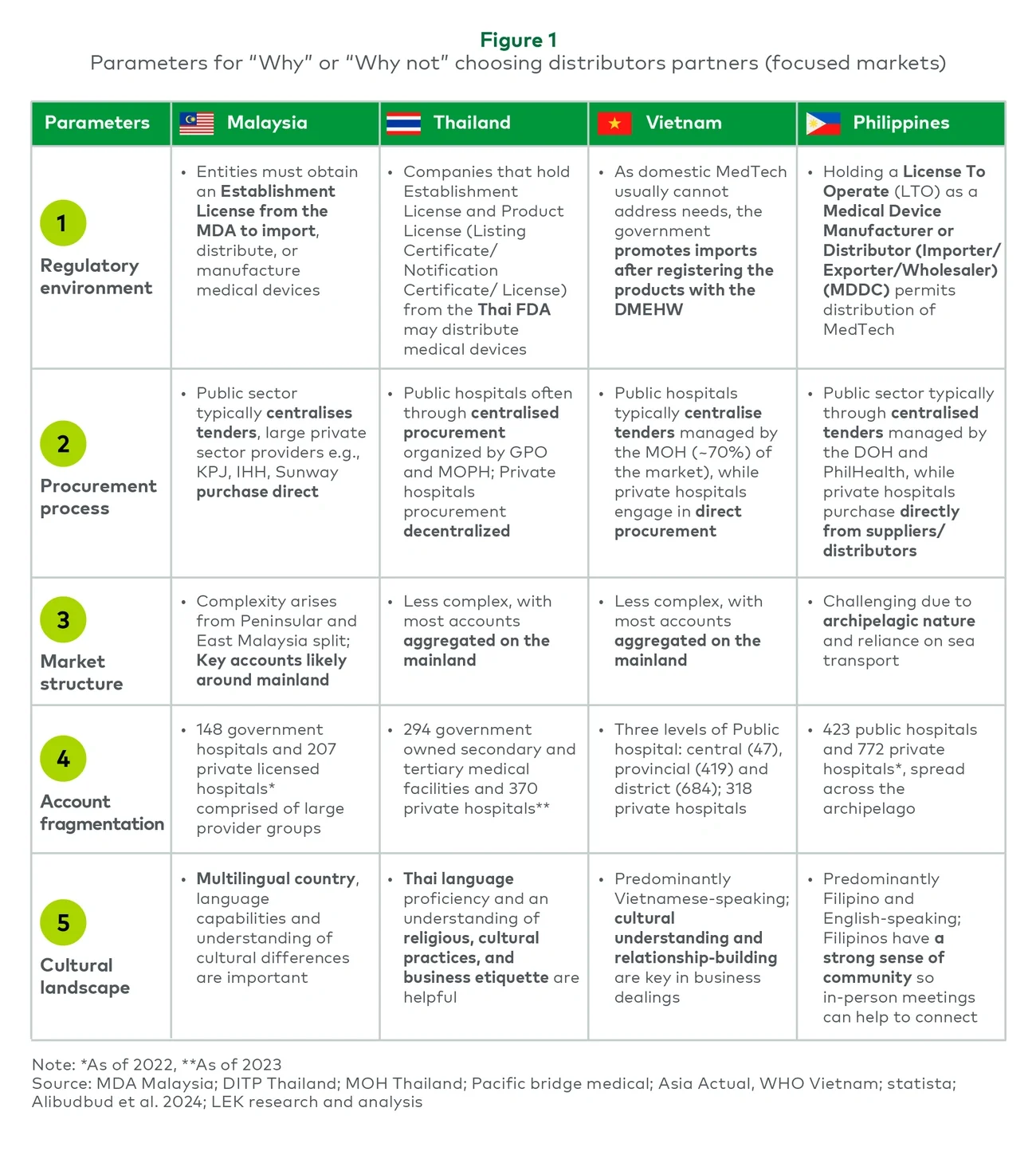
While understanding market dynamics is crucial, MedTech MNCs must also evaluate internal factors to make informed decisions about partnering with distributors. These company-specific considerations ensure that the chosen partnership model aligns with the organization’s capabilities, resources, and strategic objectives. Below are the additional key factors to consider:

  1. Strategic Alignment
    Evaluate whether distributor partnerships support long-term strategic objectives such as market penetration, brand positioning, and growth targets.
  2. Internal capabilities and resources
    Assess whether your company has the resources and expertise to manage distribution independently. If lacking distribution capabilities but possessing a robust in-house sales team, consider leveraging third-party logistics (3PL) for logistical support rather than pursuing complex partnerships.
  3. Cashflow considerations
    Consider the potential impact of delayed payments from hospital accounts on cash flow. Distributor partnerships can provide financial stability by mitigating the risks associated with delayed payments, especially in markets with insufficient public financing.
  4. Portfolio priorities
    Limited in-market experience and a focus on specific product segments drive the need for distributor partnerships. High-volume, repetitive-use products that do not require strong clinical engagement are particularly well-suited for local distribution.

With varying regulations, healthcare spending, economic conditions, and customer preferences, SEA demands flexible, market-specific strategies. Local distributors support this need with deep market insights and established networks.

Key factors driving increasing need for distributor partnerships include:
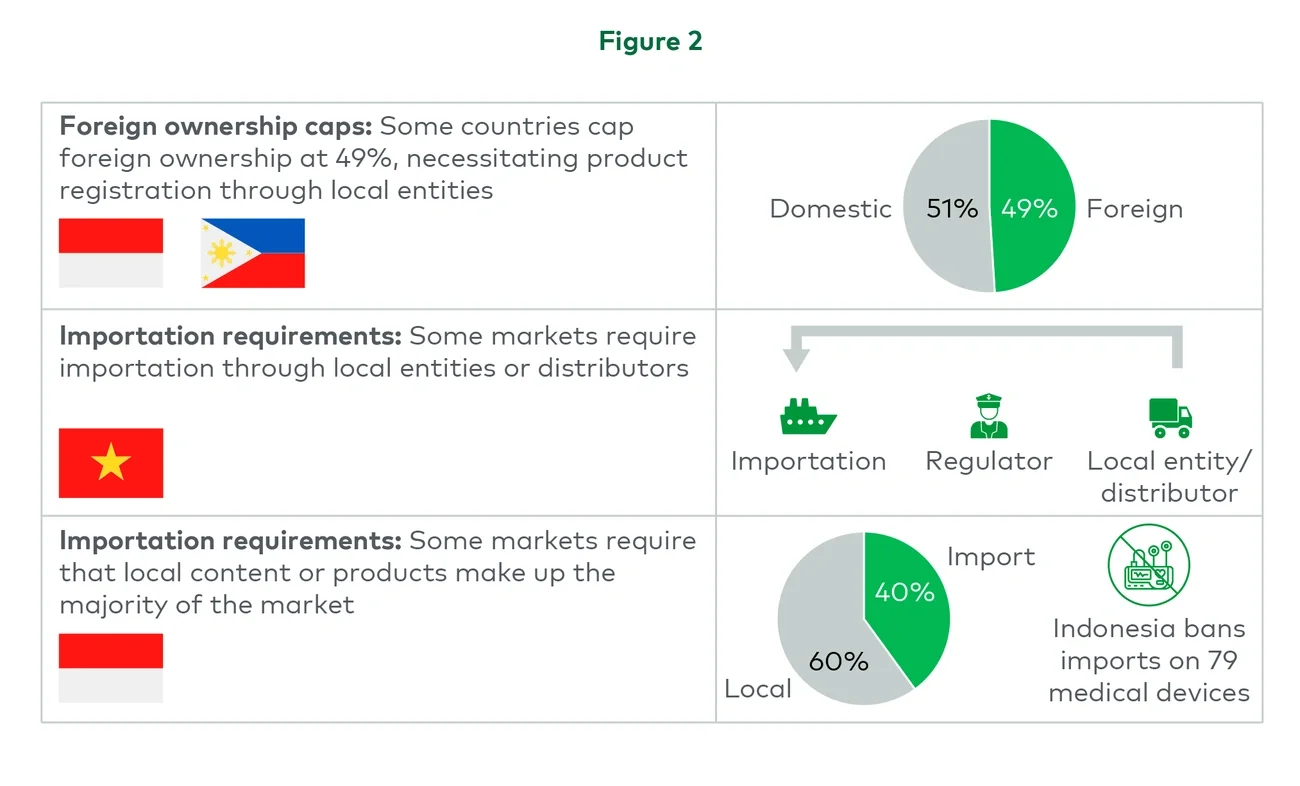
  1. Protectionist regulatory environment 
    Many SEA countries maintain protectionist policies, requiring MNCs to work with local agents or legal entities for market entry, particularly in government procurement processes.

Figure 2

  1. Decentralized procurement processes 
    Most SEA countries, except Singapore, Procurement is often fragmented, requiring local agents to access tenders. In countries, like Thailand and Philippines, local agents adeptly handle the administrative requirements of government tenders
  2. Complex logistics
    Geographical challenges (e.g., Indonesia, Philippines, Vietnam) and inadequate transport infrastructure make it costly for companies to build in-house distribution capabilities beyond major cities particularly ensuring reliable last mile deliveries in remote areas
  3. Account fragmentation
    The market landscape in SEA involves navigating both public and private healthcare systems, each with distinct procurement procedures and regulatory requirements. Tailored strategies are necessary to effectively serve
    each segment.
  4. Cultural sensitivity and language requirements
    Local agents/distributors are increasingly playing a role to ensure cultural nuances are considered to enable better communication with healthcare providers and regulators, improving marketing efforts in the local context. For example, in Vietnam, regulatory documents must be submitted in Vietnamese, and face-to-face interactions with hospital administrators and Ministry of Health officials are often expected as part of relationship-building

Section 2: Types of partnership models and decision framework

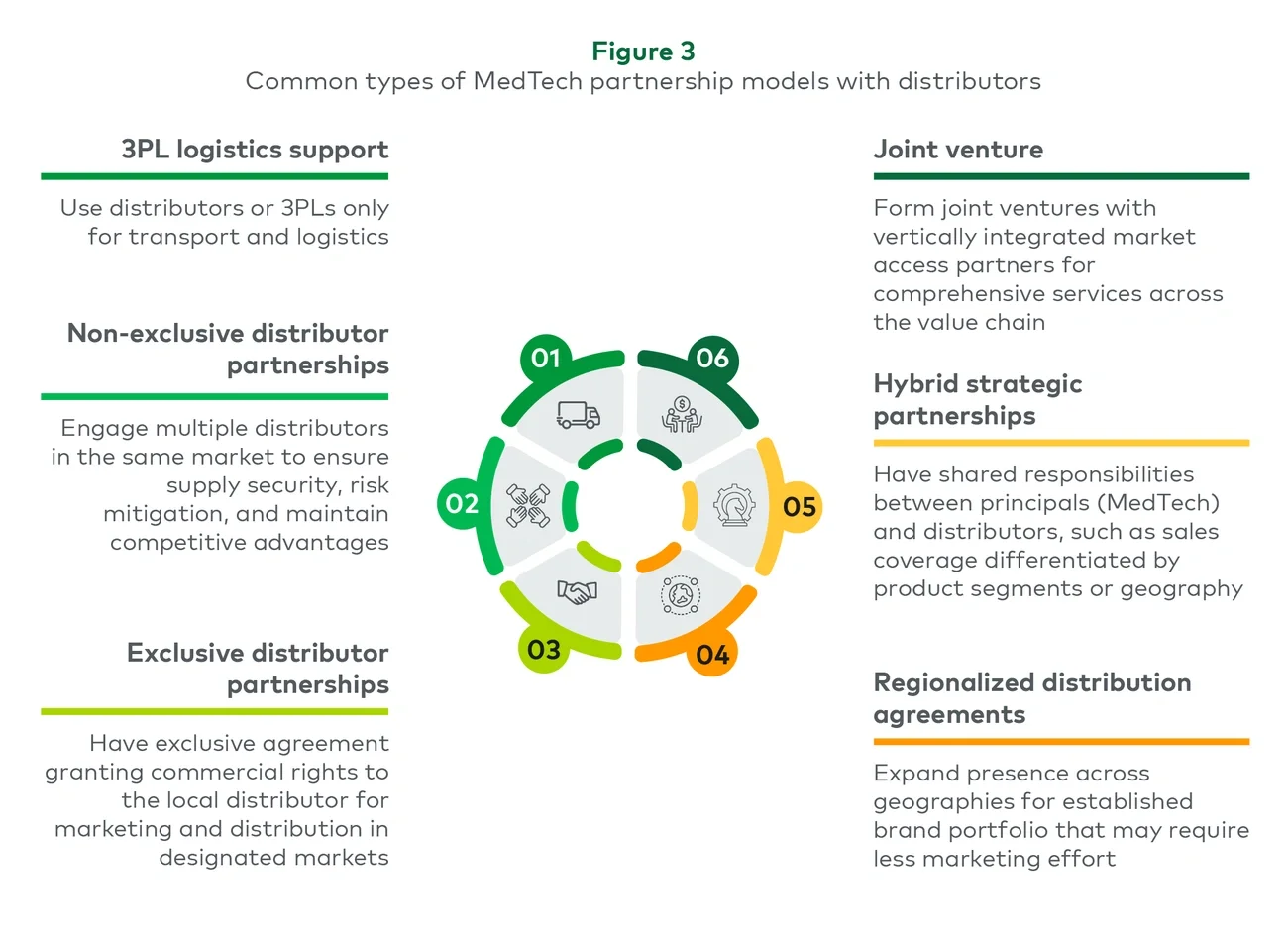
The choice of partnership model hinges on several factors, including the degree of ownership of commercial rights, internal capabilities, product portfolio complexity, and local market intricacies. Common models include:

Figure 3

  1. Logistics only partnerships
    Medtechs with an established brand and local presence (e.g., HQ or marketing office) often retain commercial control while outsourcing only logistics to 3PL providers. Companies like Medtronic, GE Healthcare, Shimadzu, and Siemens Healthineers manage sales and marketing directly from regional hubs in Singapore, while appointing 3PLs for warehousing and transport
  2. Non-exclusive distributor partnerships
    Multiple distributors are appointed in the same market to ensure supply continuity, coverage breadth, and risk mitigation—especially in markets with fragmented healthcare systems or procurement channels. Principals tend to engage 1-3 local distributors for the same portfolio, as each has their strengths in different regions and local relationship is often required to secure tenders
  3. Exclusive distributor partnerships
    These are single partner models where commercial rights are granted to the local distributor for marketing and distribute on of agreed upon MNC product portfolio. Local distributors may further engage sub-distributors (with services limited to sales and invoicing) to achieve deeper penetration in provincial tenders and better local navigation. For example, in the Philippines, RBGM Medical acts as an exclusive partner for brands like Medtronic and Zeiss enabling deep market coverage across both public and private sectors via its 4PL capabilities
  4. Regionalized distribution agreements
    Medtechs often engage regional distributors to handle commoditized or well-established product lines across multiple countries, optimizing scale and consistency in execution. With strong financials to hold inventory and nationwide logistic infrastructure, regional distributors are often engaged by
    principals for mature and established brand portfolio that require less marketing (e.g., J&J sutures, Roche diagnostics) for 4PL services For example, IDS Med partners with Bioptimal to distribute critical care consumables across Singapore, Malaysia, Thailand, Vietnam, and the Philippines—leveraging Bioptimal’s regional infrastructure and hospital network
  5. Hybrid strategic partnerships
    In SEA, medtechs often use hybrid distribution models—managing tier 1 cities in-house while outsourcing to local partners elsewhere. This allows them to retain control over key accounts and clinical engagement in major urban centers. In countries like Vietnam, local distributors are essential for navigating provincial tenders and extending reach beyond Hanoi and Ho Chi Minh City
  6. Joint venture
    medtechs may establish JVs with local market access players to accelerate penetration, often combining regulatory, manufacturing, and commercial capabilities. For example, Shockwave Medical entered a JV with Genesis medtech in China to localize registration, manufacturing, and commercialization of its Intravascular Lithotripsy platform—gaining faster market entry and supply-chain integration 

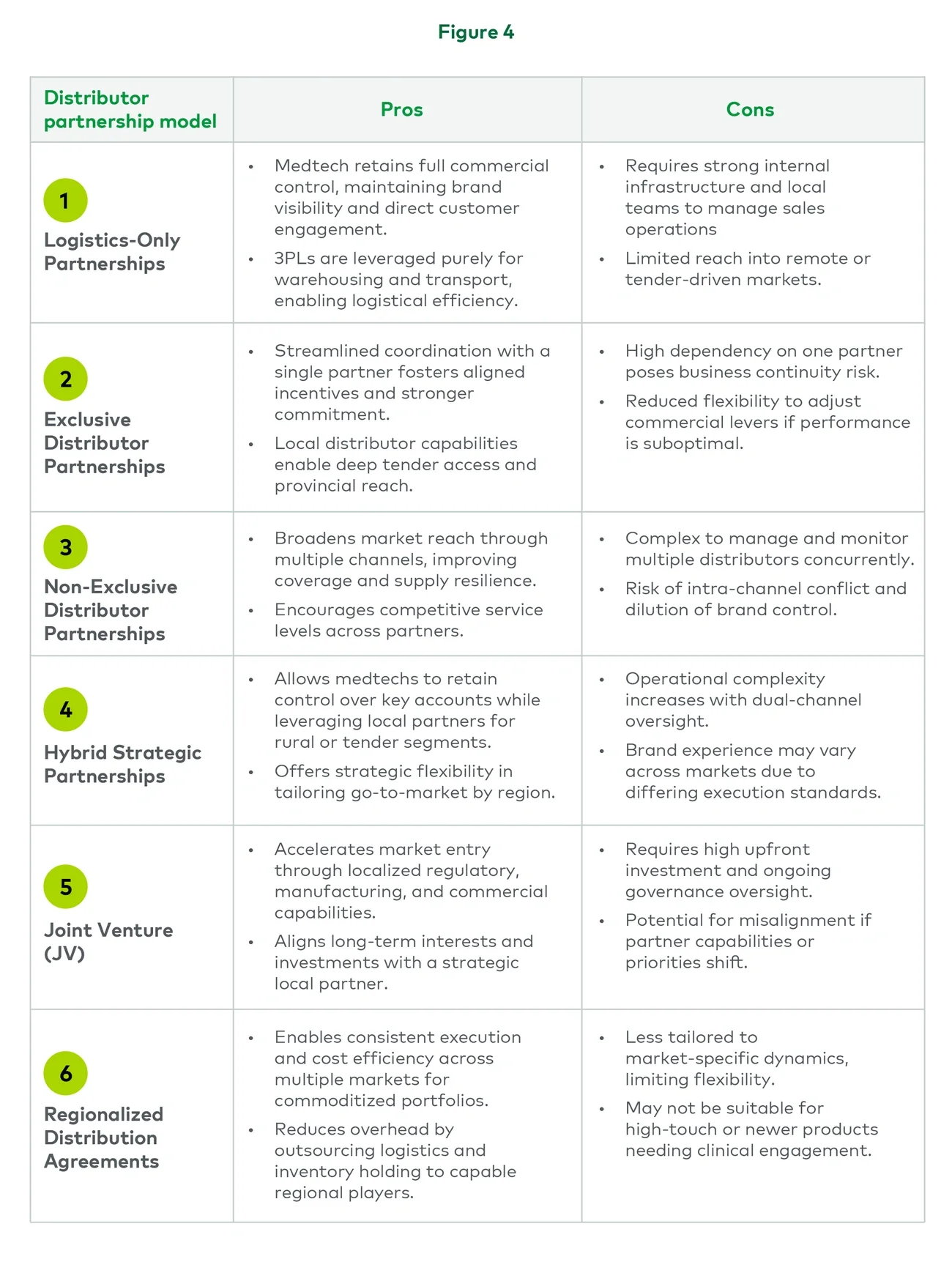
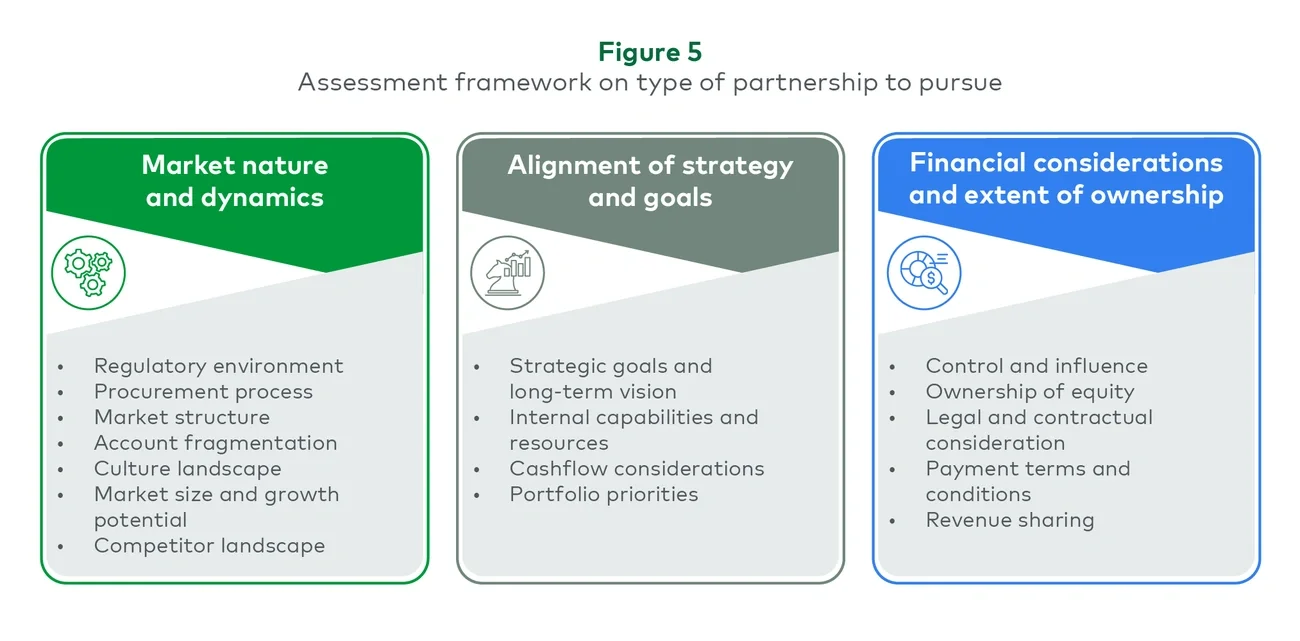
Each model brings trade-offs between control, cost-efficiency, and speed-to-market. medtechs must evaluate local market size, regulatory hurdles, competition intensity, distributor capabilities, and their own strategic priorities to deter mine the most suitable structure.

The choice of partnership model is closely tied to the capabilities and characteristics of the distributors. In SEA, the diversity of markets—ranging from developed economies with established healthcare infrastructure to emerging markets with unique logistical challenges—necessitates careful consideration of the types of distributors engaged.

Distributors in SEA can be classified by two key dimensions: geographic coverage (global, regional, national, or sub-national) and service breadth (ranging from core distribution to full-service offerings including regulatory, logistics, marketing, and after-sales support).

  • Regional full-service distributors operate across multiple SEA markets, integrating regulatory, commercial, and operational support. They are essential partners for scaling across the region. For instance, IDS Med offers end-to-end services in SEA, supporting OEMs with compliance, technical services, and customer engagement
  • Regional core distribution distributors focus on logistics and supply across multiple markets but offer limited support in regulatory or marketing functions. MedAid exemplifies this model, ensuring product availability in SEA and Hong Kong while relying on OEMs for customer-facing activities
  • National full-service distributors serve as strategic local partners, especially for high-touch products needing deep market access. Medi-Life in Malaysia, for example, builds strong relationships with key accounts, enhancing competitiveness in public tenders
  • National core distribution distributors provide efficient, cost-effective logistics within a single market, typically for low-touch products. Enseval Medika Prima (EMP) in Indonesia distributes medical consumables nationwide, ensuring broad access even in remote areas through a strong logistics network

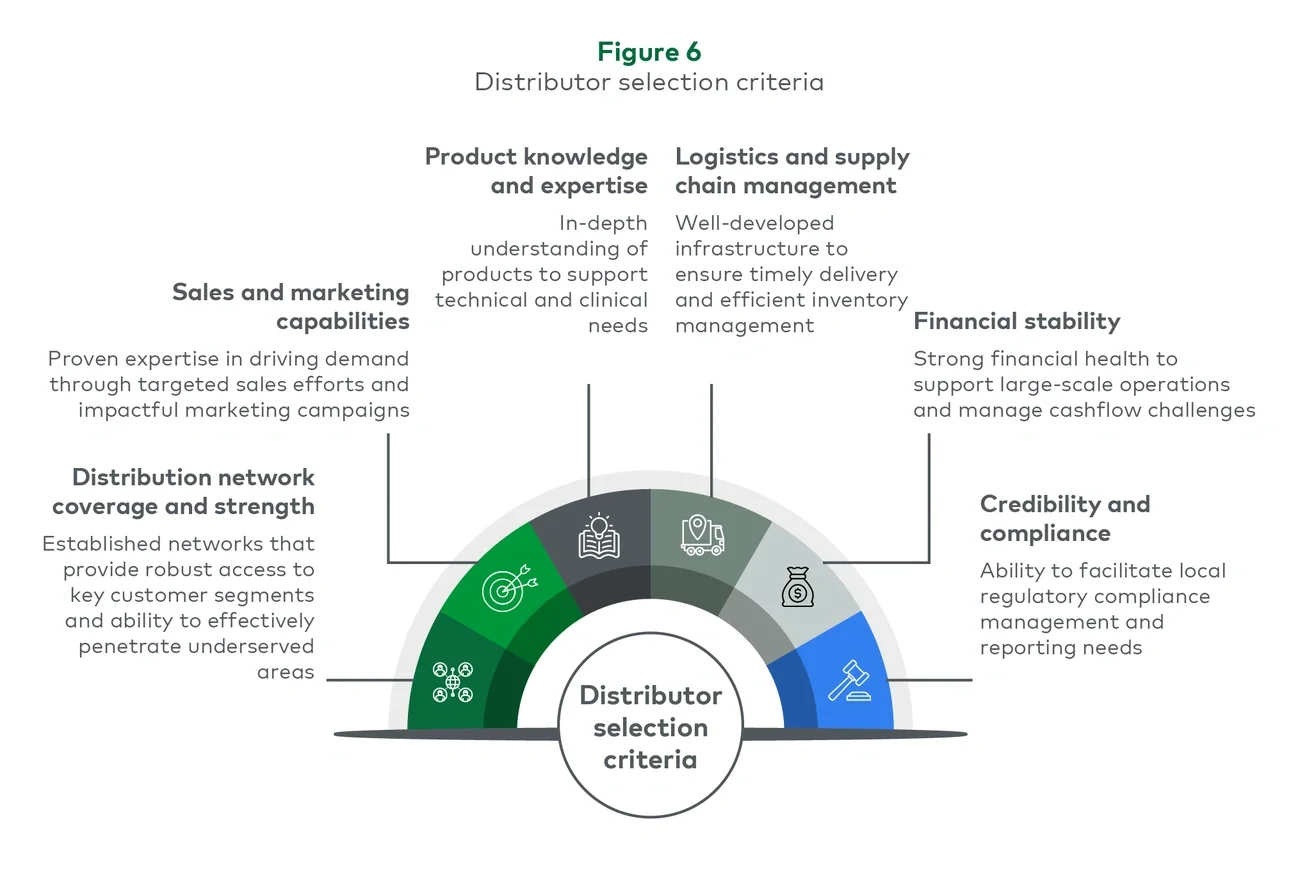
Leveraging this multi-perspective decision-making framework ensures a comprehensive and informed approach to determining the type of partnership and selecting the right distributor for MedTech companies in SEA.

Section 3: Key Lessons for Successful Execution

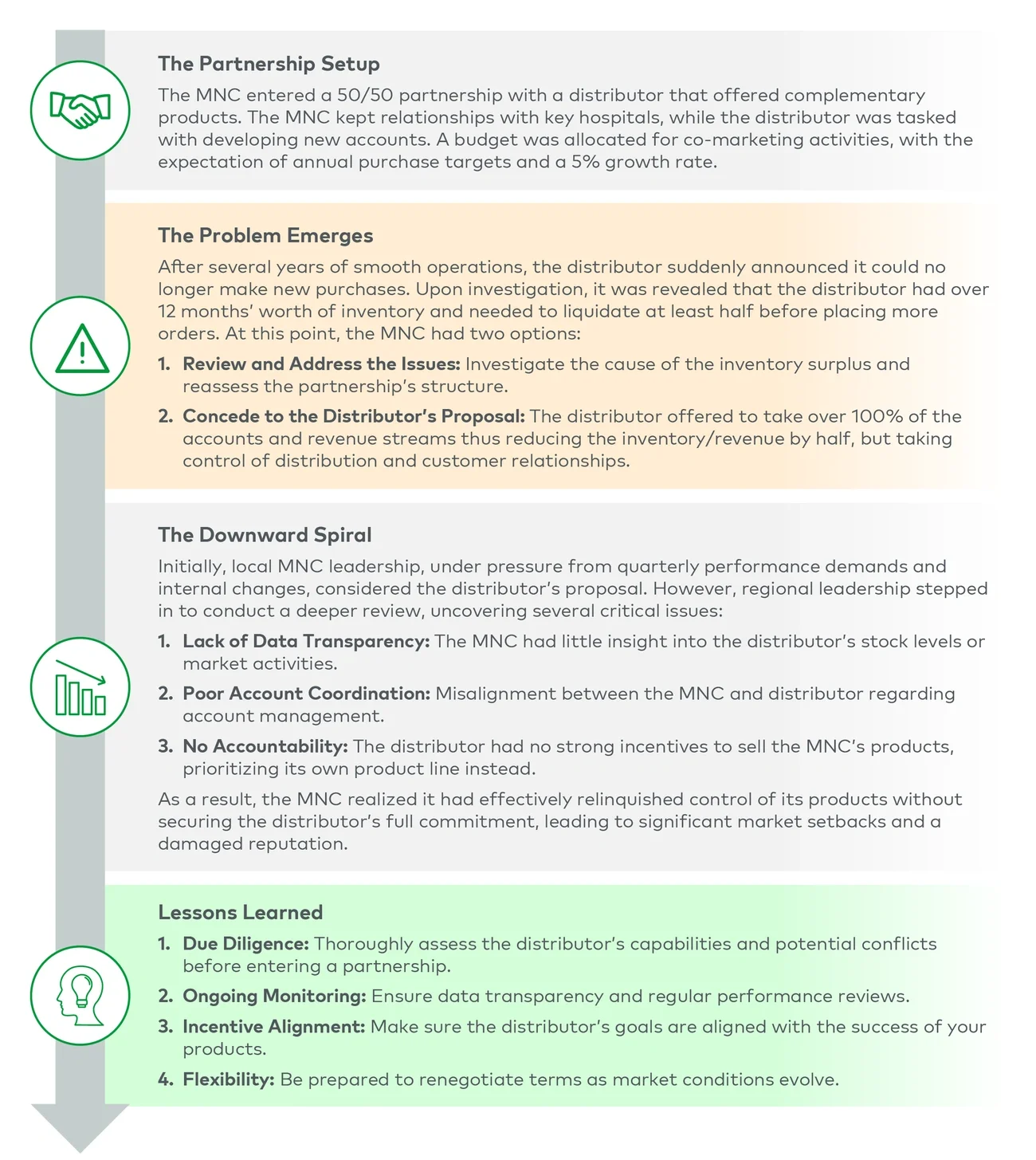
The challenges faced by the MNC in its partnership with the distributor highlight key vulnerabilities that can arise when critical operational aspects like inventory management, market coordination, and accountability are not closely monitored. This example illustrates the importance of ongoing oversight and adaptability in maintaining successful distributor relationships, especially in a competitive market like MedTech. Drawing from these lessons, we can see how strategic management of partnerships is essential for MedTech companies operating in SEA.

Case Study: A MedTech Partnership Gone Wrong

In the competitive MedTech industry, partnerships with distributors are critical to market success. This case study examines how a global medical device company (MNC)
encountered major issues in its partnership with a large distributor, which also operated as an original equipment manufacturer (OEM) in the endoscopy space.

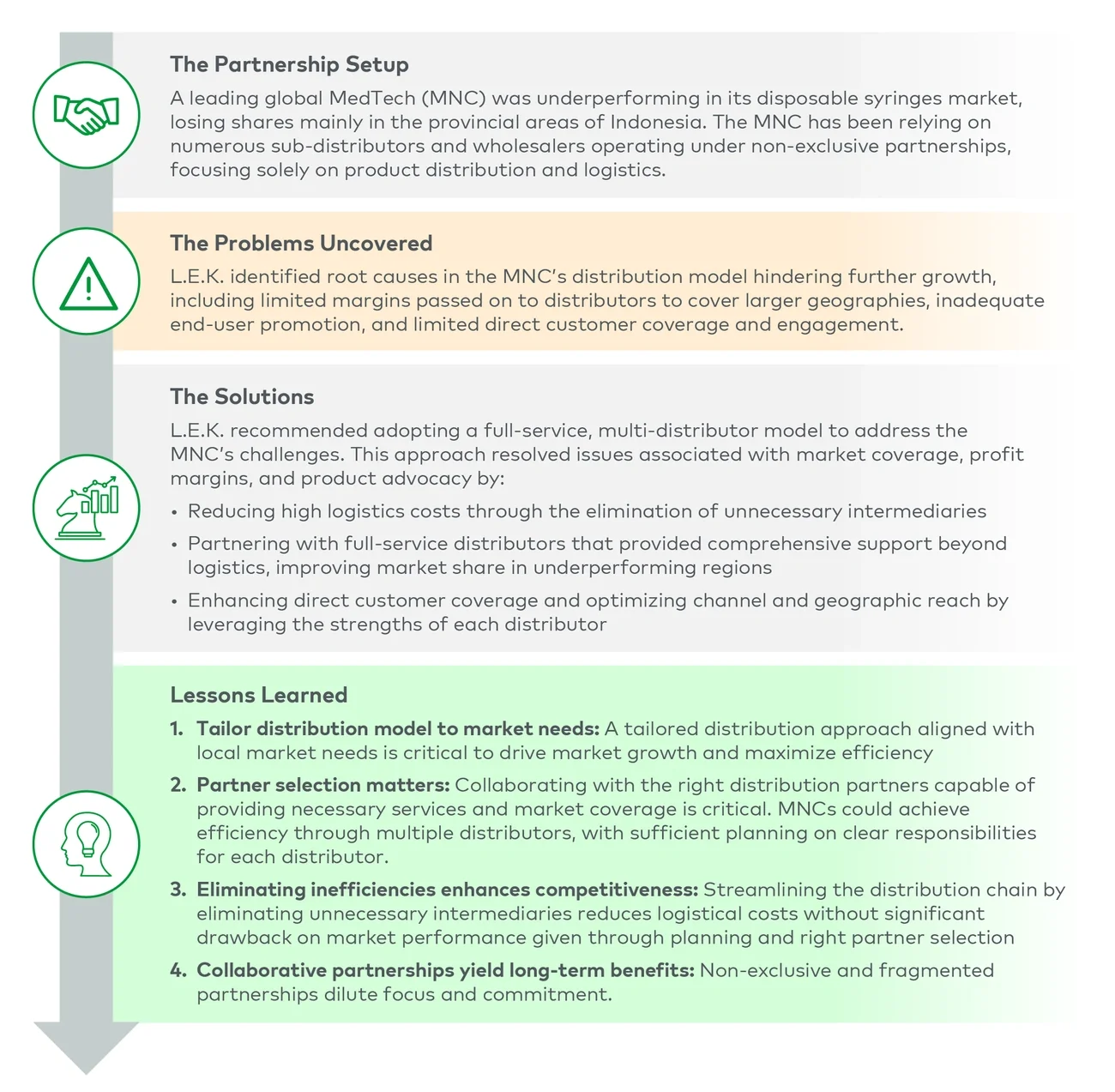
Case Study: Distribution model revision for a global medical device company in the disposable syringes space in Indonesia

In a highly competitive and logistically complex market such as Indonesia, the strategic distribution planning, deliberate partner selection, and the design of an effective distribution model is critical for effective market penetration.

Closing thoughts

SEA offers vast potential for medtech growth, but its fragmented markets and complex regulations demand flexible, locally attuned strategies. Distributor partnerships are central to this effort, providing the reach, expertise, and agility that multinational companies need to succeed.

Building resilient distribution models require careful due diligence, strategic alignment, and ongoing performance oversight. The rise of hybrid approaches, regionalized agreements, and full-service partnerships underscores the importance of flexibility and local adaptation. By carefully selecting and managing these partnerships, MNCs can navigate the complexities of SEA markets and achieve sustainable growth.

Additional reference:

  1. Unlocking Future Growth: APAC Medtech Outlook 2025
  2. Southeast Asia Hospital Insights Survey (2025)
  3. Fueling the APAC Medtech Innovation Engine: An Ecosystem Investment

L.E.K. Consulting is a registered trademark of L.E.K. Consulting LLC. All other products and brands mentioned in this document are properties of their respective owners. © 2025 L.E.K. Consulting LLC

Related Insights