


Volume XXVII, Issue 82 |

Within building and infrastructure services, commercial excellence is how teams turn day-to-day activity into steady growth. To separate signal from noise, L.E.K. Consulting surveyed and interviewed U.S. sales executives and frontline sellers across HVAC distribution, HVAC commercial services and AEC firms. Three insights stood out, along with practical implications for leaders.

1.    High-growth organizations deepen, rather than dilute, their customer mix and focus on productivity

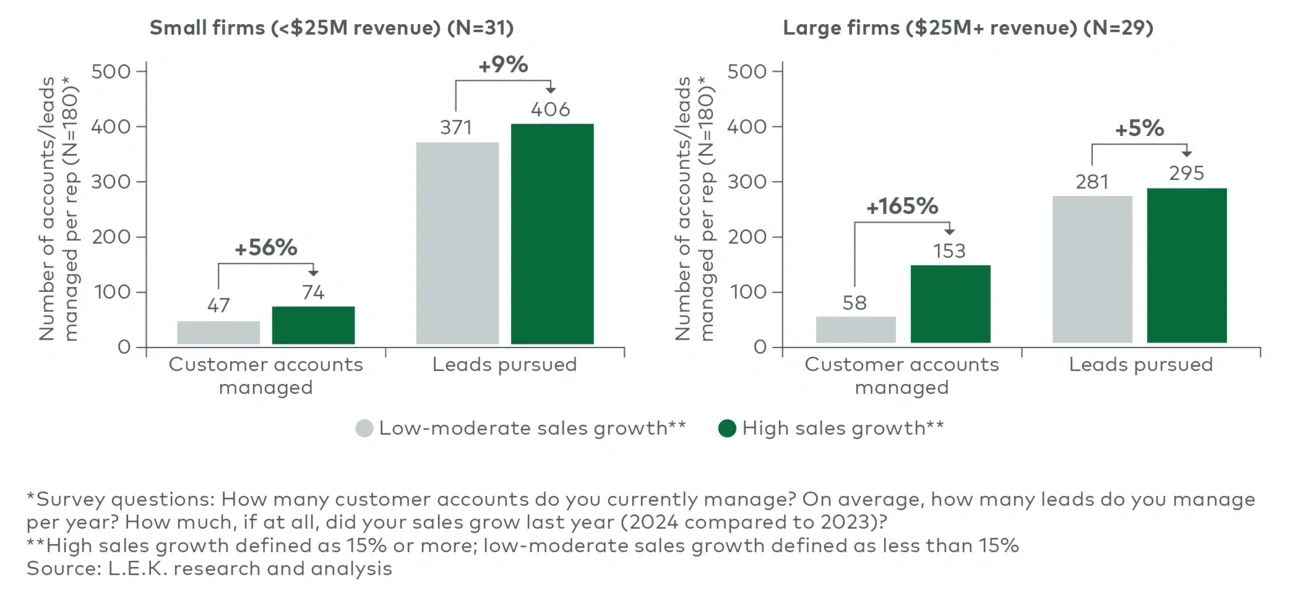
High-growth firms (defined as those with growth at or greater than 15% annually) reflect a similar balance between new and existing customer contributions. However, while the source of growth looks the same, execution makes the difference. Teams that spend time on the right prospects, strip out low-value tasks and follow up consistently generate greater revenue as a result (see Figure 1).
Productivity sets the pace
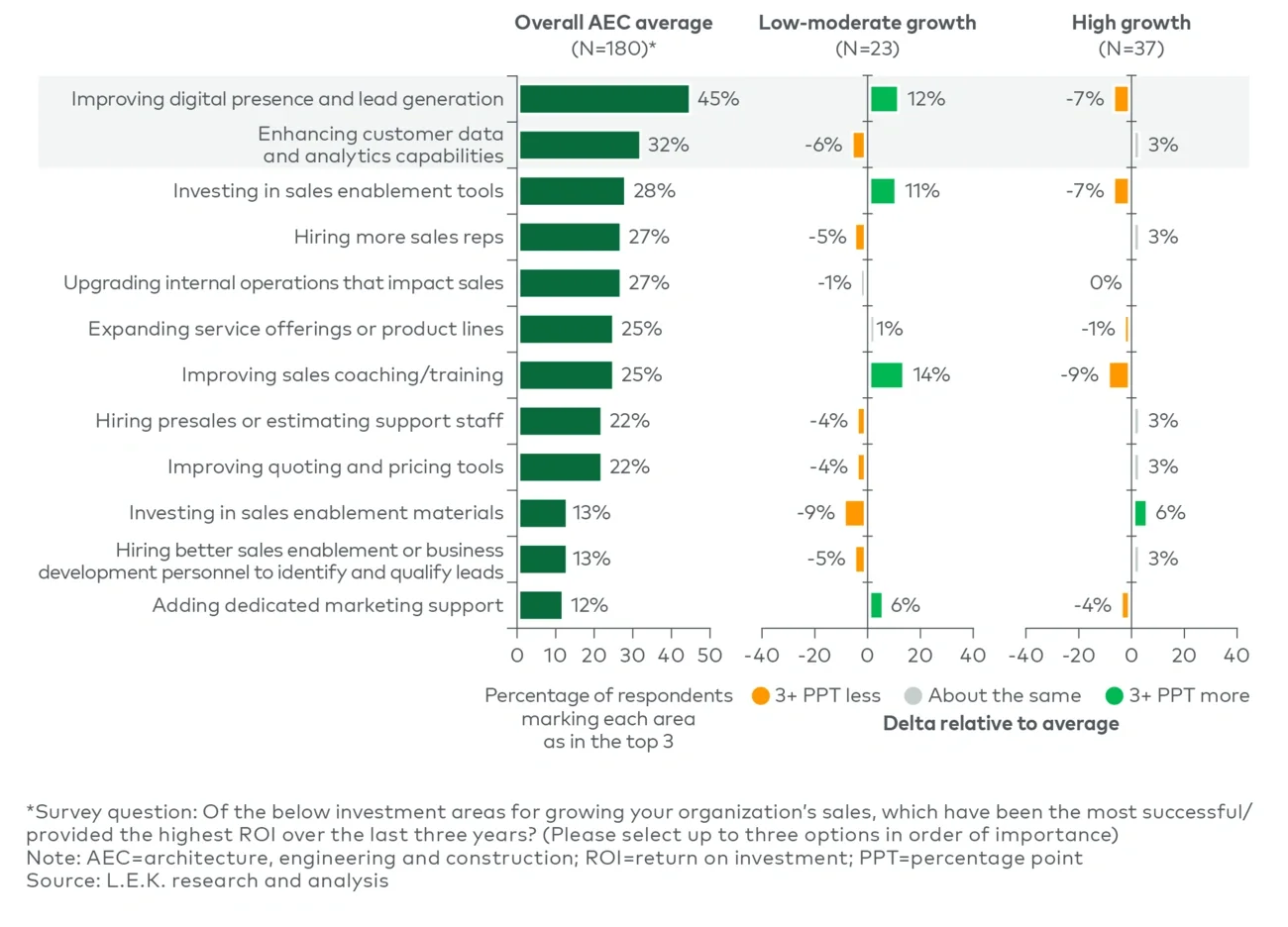
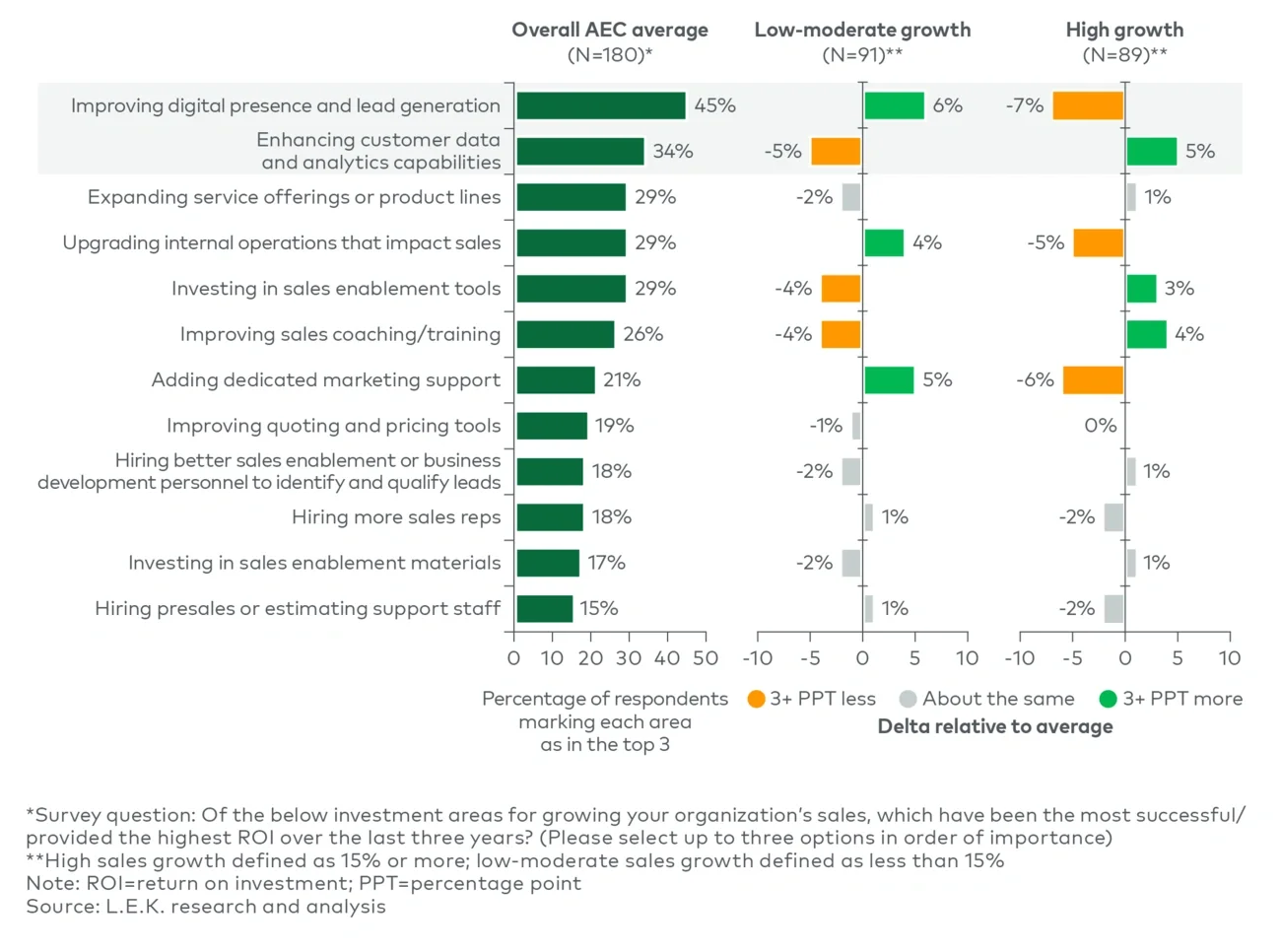
High-growth companies manage more accounts and more leads per rep. They invest in capabilities that raise conversion and help sellers focus on the next best action. Teams use analytics to identify and rank opportunities, then apply training, coaching and enablement so sellers spend more time selling and less time searching. Leaders also devote less time to internal process upgrades that do not directly support sales performance. As a result, coverage widens, focus tightens and movement through the funnel becomes more predictable (see Figure 2).

These dynamics show up in the data. Enablement, analytics and fewer internal distractions link to stronger representative capacity and better lead handling across the pipeline. Analytics points to where to work, while enablement makes the work easier to execute.

The pattern repeats across categories. Even with differences by sector that reflect sales models and resource choices, the theme holds. When teams cover more ground without losing quality, growth rates improve and the mix between new and existing customers stays steady (see Figure 3).

HVAC distribution
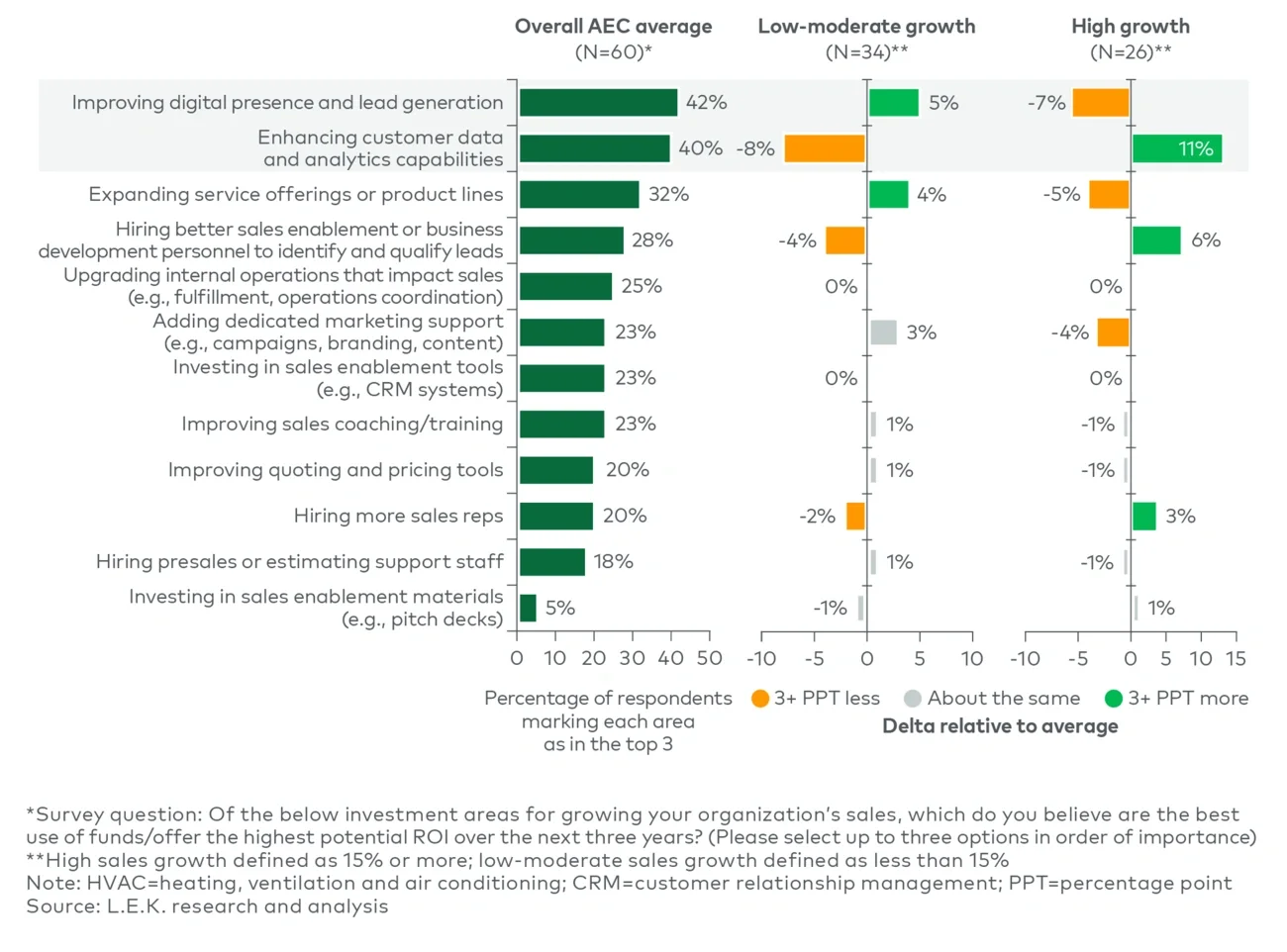
Data analytics and sales enablement are important. Higher-growth distributors also highlight hiring additional salespeople, which supports broader coverage and faster response when quality leads surface. Adding head count sits alongside analytics and enablement rather than replacing them (see Figure 4).

HVAC commercial services
Analytics and enablement matter here as well. Leaders also emphasize hiring more salespeople and expanding product lines with supporting marketing. Expansion often reflects a broader service scope — for example, more electrical. HVAC and the broader MEP portfolio include a larger number of services that can be more complex than in many other categories, so clear communication helps customers see where the provider can help and when to engage.

AEC firms
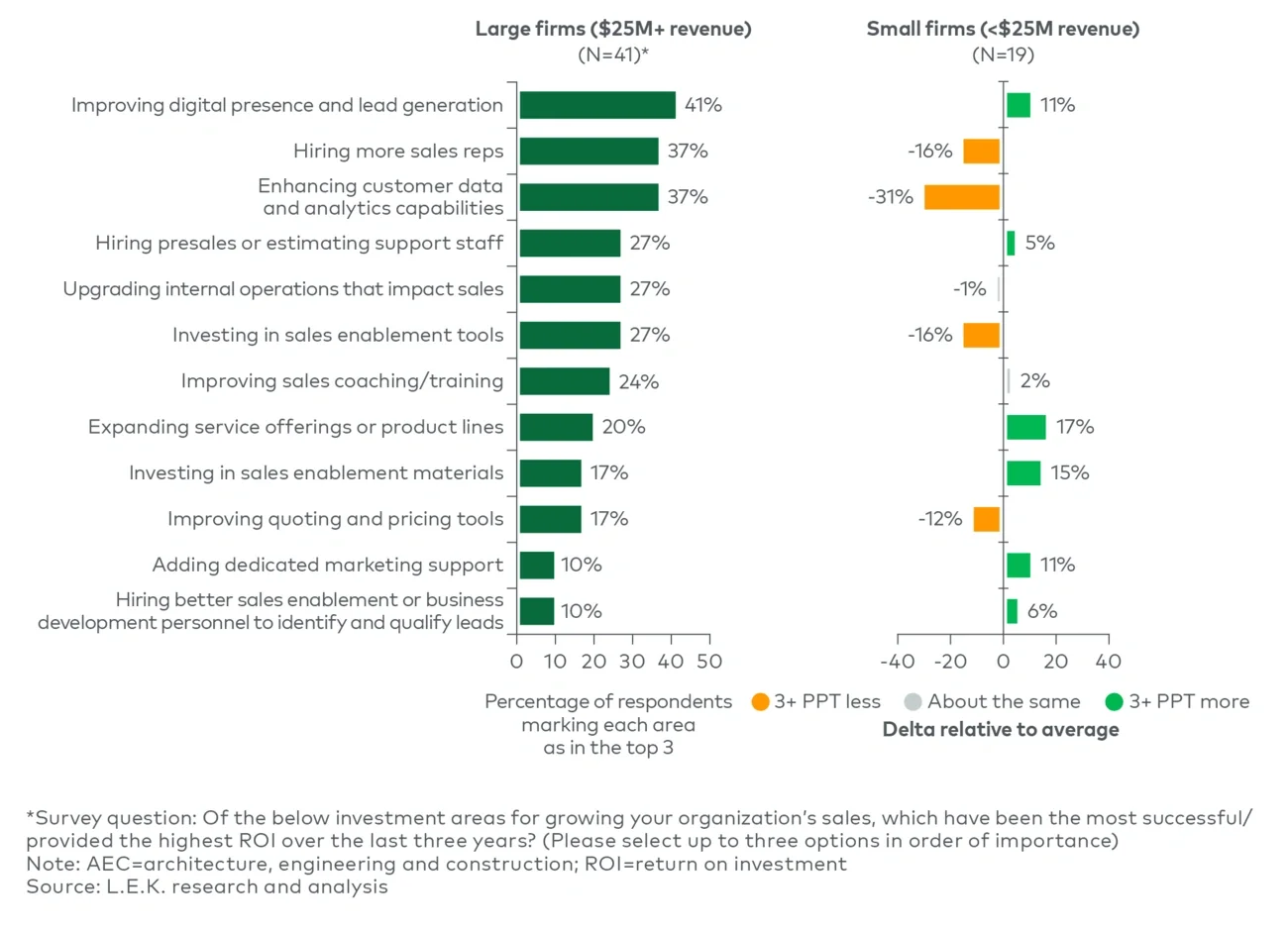
Data and digital analytics are key differentiators. Sales enablement is less prominent because many AEC firms use a “seller-doer” model, in which technical practitioners both deliver and sell. Size differences are meaningful. Compared with large firms, small firms place much less emphasis on adding sales reps or investing in customer data and analytics. Emphasis on these disciplines positions larger firms for the longer term (see Figure 5).

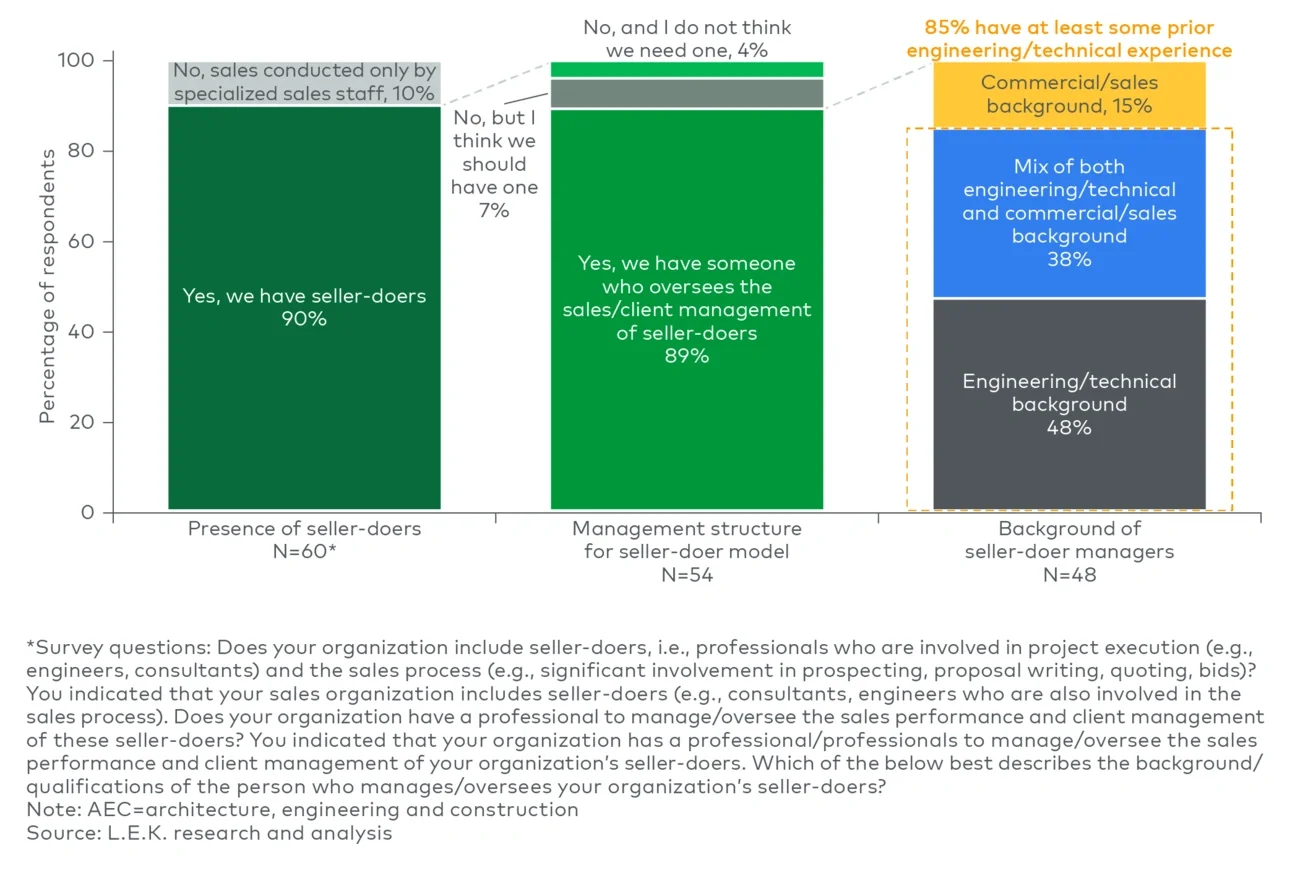
Sales resources in AEC are often led by managers with engineering or technical backgrounds, which shapes how teams adopt analytics and business development processes and how seller-doers are supported (see Figure 6).

Success ties to the capacity to work more accounts and more leads. Better tools and analytics enable that capacity. Depending on the industry and the company setting, expanding the service offering and the number of sales reps may also be required.

2.    Variable-heavy pay structures are accelerating

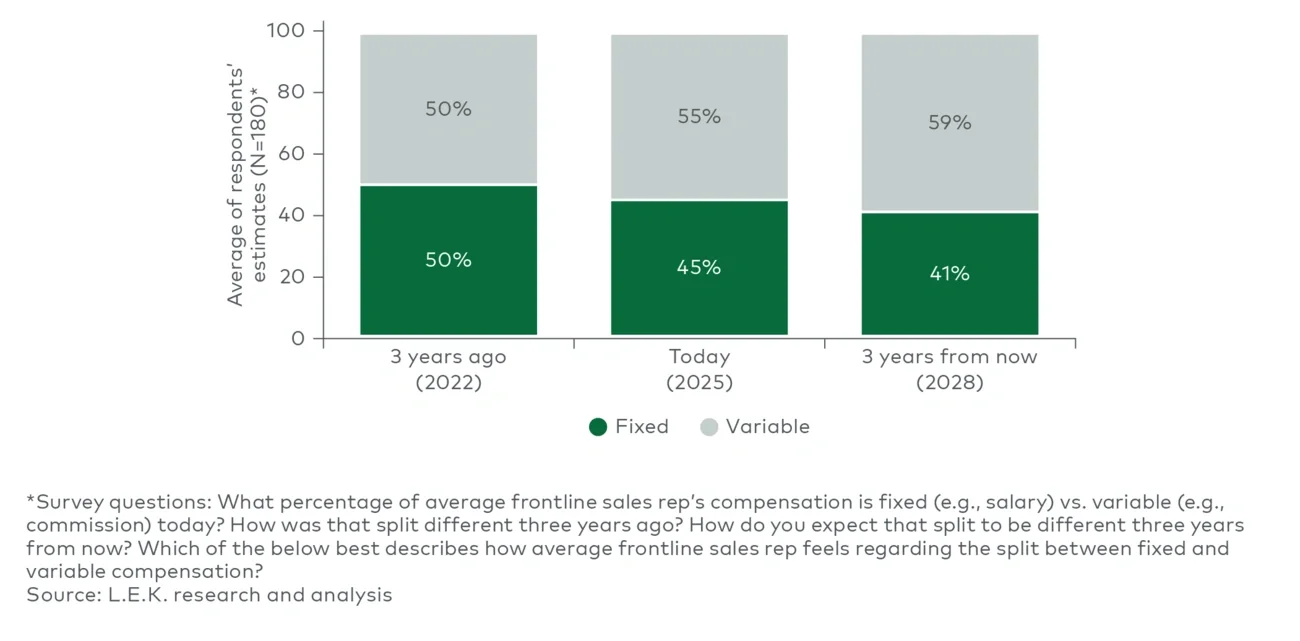
Companies are shifting compensation toward performance-based pay. Across all segments, fixed pay as a share of total compensation declined from 50% in 2022 to 45% in 2025 (see Figure 7). It is expected to slide to 41% by 2028. HVAC distributors are moving fastest. By 2028, 66% of compensation is expected to be variable. The trajectory points to a steady increase in the portion of pay tied to measurable results as organizations refine plan mechanics and clarify performance expectations.

Sales compensation structures are expected to keep shifting toward variable pay over the next three years, with respondents projecting a steady increase in the share tied to performance-based incentives. The aim is tighter alignment between sales incentives and outcomes as organizations emphasize growth, accountability and results-driven performance. In many cases, plans are being adjusted so effort, outcomes and pay are more visibly connected within the field.

Companies should direct more commission upside to the behaviors that matter most. Priorities include digital lead stewardship, AI adoption and strong data hygiene. Organizations should also maintain enough base pay to retain talent during slower cycles, so teams remain stable and ready to respond when demand strengthens.

3.    Industry sales teams highlight significant room for improvement in sophistication of customer segmentation, organization of commercial resources and deployment, lead generation, and supporting processes and tools

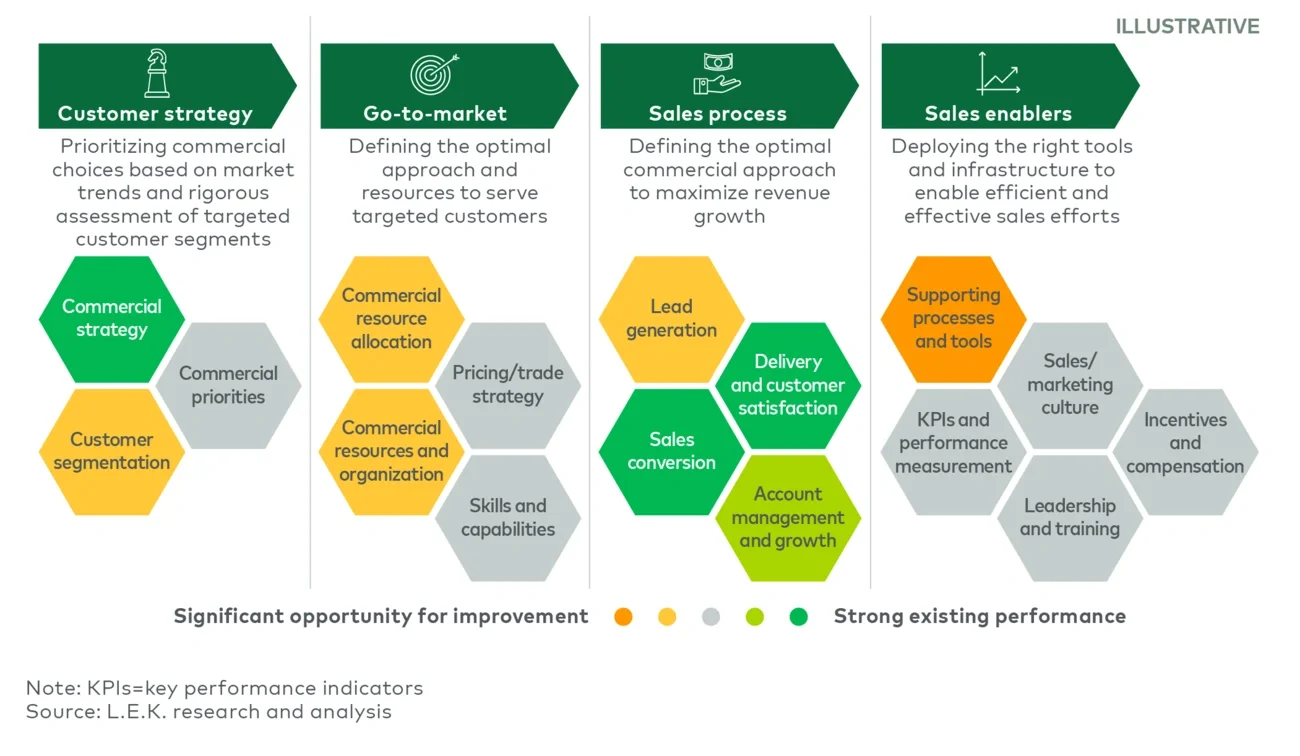
We asked sales teams and sales leaders across HVAC distribution, HVAC commercial services and AEC firms to rate their organizations’ commercial capabilities. The results signal significant room for improvement, especially around commercial team design, deployment, and providing stronger support around targeting and lead flow so sellers can spend more time with customers.

Across companies, the sales force is asking for more central support. Priority areas are customer segmentation, resource allocation, lead generation, and the processes and tools that connect these activities. Results vary by industry, but the message is consistent: Sharper targeting, better leads and smoother workflows help the frontline operate at a higher level. When support functions provide cleaner data and clearer handoffs, sellers can spend more time with customers and less time on administration, which reinforces the productivity focus described above. (See Figure 8).

Outside of these broad themes across companies, we saw divergence in the data among respondents: Many companies had a particular “blind spot” in their overall support that can be a distracting gap for the sales force.

Our Commercial Fitness Assessment Survey helps organizations benchmark performance against market averages and focus attention where it matters. Even when sales force effectiveness is generally strong, it is important to identify gaps and their root causes, and then address them in a deliberate sequence, so improvements directly enhance conversion or coverage.

Implications

Commercial excellence in the built environment is not about adding more feet on the street. Progress depends on smarter digital funnels, data-driven prioritization and rewards tied to performance. With that in mind, leaders should gauge the voice of the frontline at a regular cadence to surface bottlenecks and support gaps, and then turn those insights into targeted enablement and marketing support.

Leaders should focus on sales enablement, including tools and training supported by powerful analytics, and on hiring better sales enablement or business development personnel to identify and qualify leads, so representatives can manage more opportunities without harming the customer experience. In some instances, companies may need to hire more representatives to support activity. Compensation design should align pay with outcomes by reflecting the growing role of variable pay and directing the strongest upside to the behaviors that sustain growth.

For more information, please contact us.

L.E.K. Consulting is a registered trademark of L.E.K. Consulting LLC. All other products and brands mentioned in this document are properties of their respective owners. © 2025 L.E.K. Consulting LLC

Related Insights