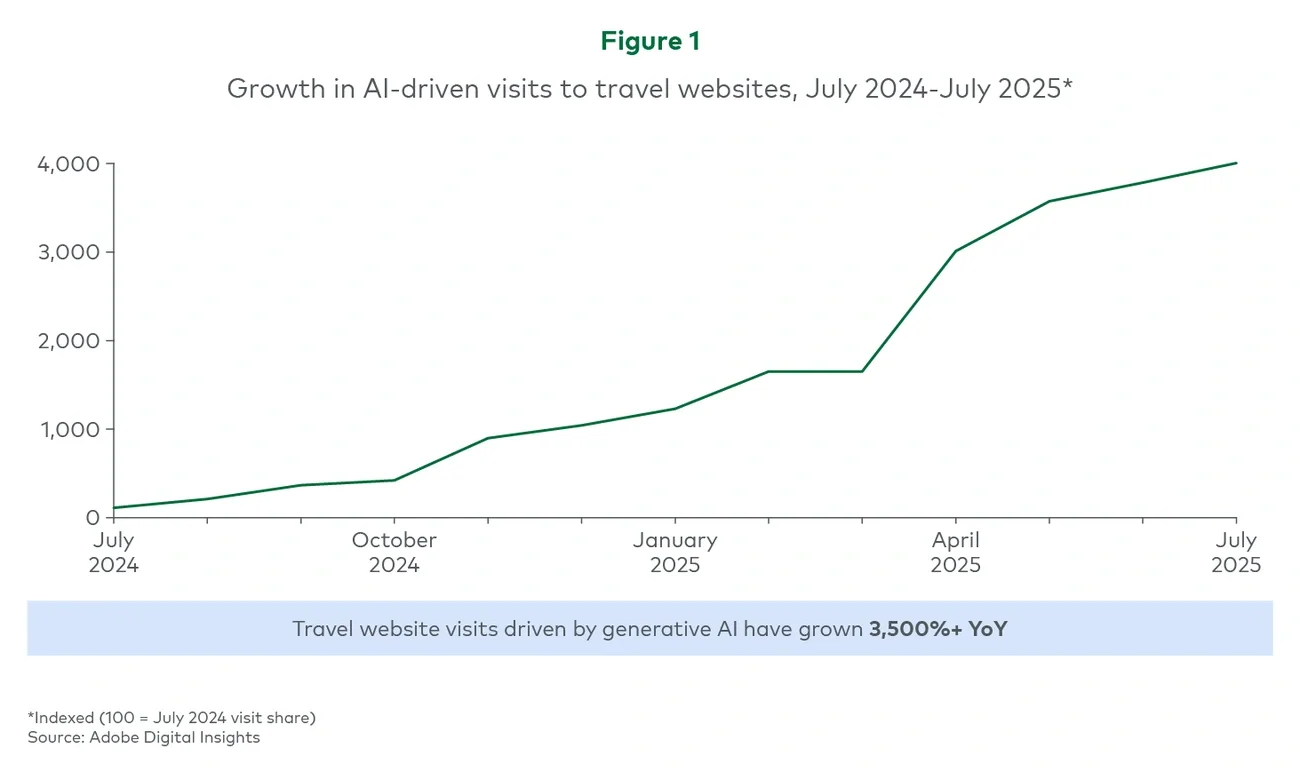
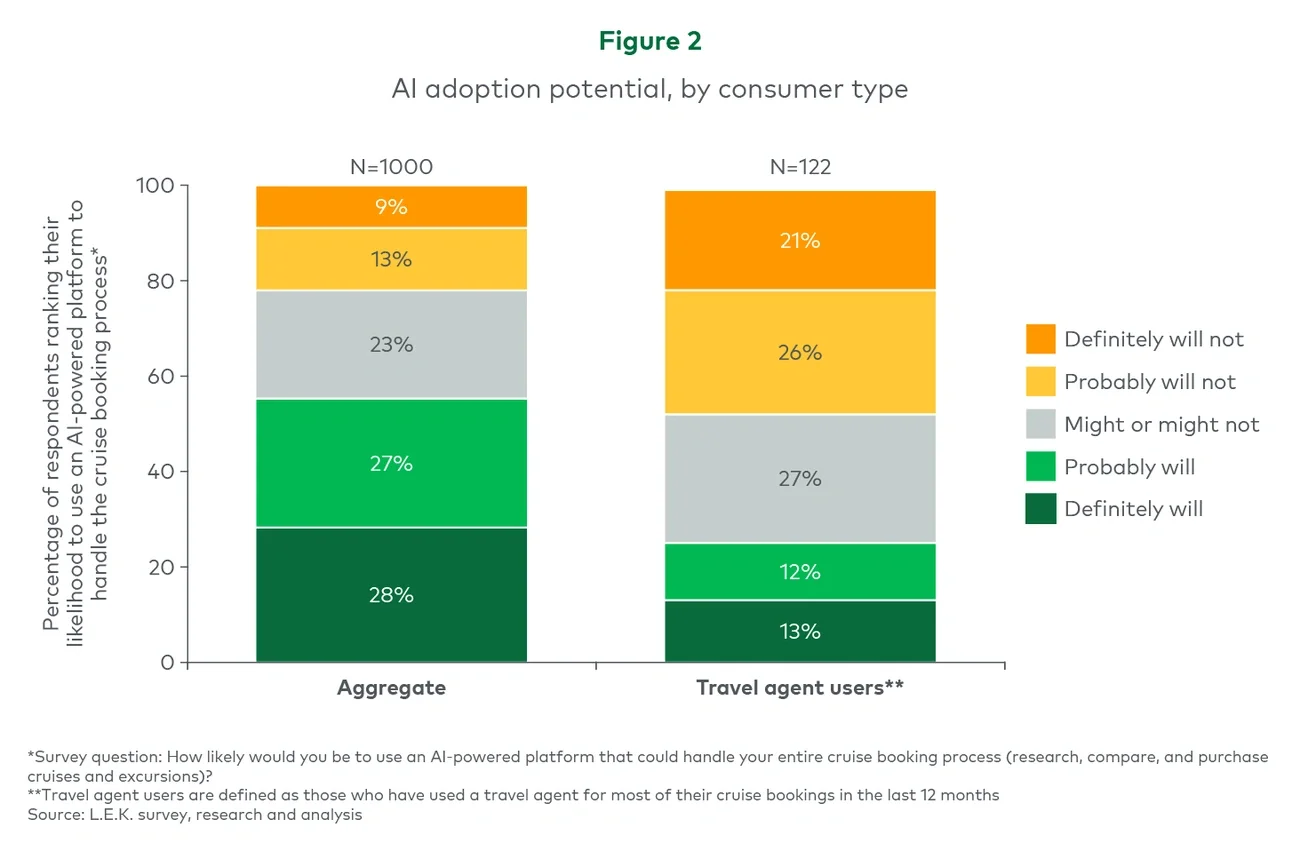
Furthermore, 85% of consumers stated that they would continue to use their travel agent even if they employed AI tools, demonstrating how generative AI may strengthen, rather than replace, traveler-agent relationships.
Consumers increasingly value travel advisors for their ability to save time, avoid stress and secure experiences. In our survey, 66% of respondents considered the price they paid when planning trips with a travel agent or advisor as a good bargain relative to their personal threshold. Many also express interest in subscription or membership models that provide continuous personalized service — mirroring trends across financial and lifestyle sectors.
Tour operators: The human advantage
AI may enhance self-guided research for travelers, but guided tours and local operators provide meaningful value that AI cannot replicate. Travelers continue to seek out the real-world expertise and connection with local culture that human-guided experiences can offer. In L.E.K.’s consumer survey, 28% of respondents reported an increase in the number of tours taken compared with a year ago.
Rather than replacing traditional tour operators, AI may present an opportunity for operators to increase online visibility. Well-structured data, detailed Google Business Profiles and compelling content can attract more traffic directly from AI search tools, reducing their dependence on online travel agents (OTAs) such as Viator and GetYourGuide. This is particularly important since OTAs can capture up to 30%-40% of booking revenue, based on L.E.K. research.
Even during recessions, travelers remain unwilling to cut experiences. Shore excursions and walking tours represent a small share of total vacation cost but deliver outsized emotional value, making them relatively recession-resilient travel segments. This creates tailwinds for the industry, as well as opportunities to create more value through dynamic pricing and other levers.
Closing thoughts
Within travel, the path forward will involve leveraging both AI and agents, something that forward-thinking travel companies are already accomplishing by blending generative AI into their workflows. The most common use cases include:
- AI triage tools to handle simple requests and free up advisors’ time for high-value clients
- Generative search optimization to ensure curated offerings are prioritized in AI-driven trip planning results
L.E.K. research suggests that firms combining human expertise with AI-enabled efficiency can capture the best of both worlds by maintaining trust and personalization while simultaneously scaling operations and responsiveness.
As travelers embrace new tools to plan their journeys, the value of connection and local expertise remains critical. AI may change how we search, compare and transact; however, the desire for authentic experiences and trusted guides to shape them ensures that travel agents and tour operators will continue to thrive in the age of AI.
Contact us to find out more.
Methodology
L.E.K. conducted two consumer surveys in September 2025. The Services Pricing Survey screened a nationally representative demographically balanced sample of 3,000 U.S. adults aged 18 or older. The AI, Travel Agency, and Tour Guide Survey screened a nationally representative demographically balanced sample of 1,000 U.S. adults aged 18 or older.
L.E.K. Consulting is a registered trademark of L.E.K. Consulting LLC. All other products and brands mentioned in this document are properties of their respective owners. © 2026 L.E.K. Consulting LLC.