
From a PhD in chemistry to healthcare consulting in Shanghai, Yudong Liu’s path to L.E.K. Consulting
Yudong Liu
February 26, 2026
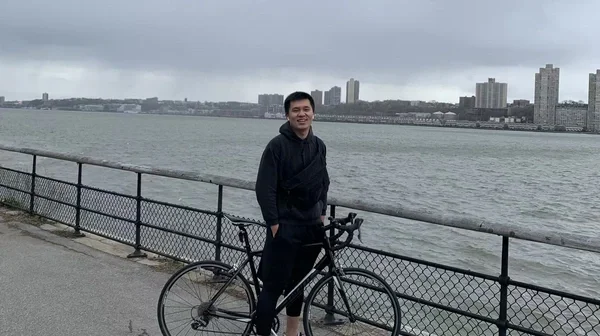
From a PhD in chemistry to healthcare consulting in Shanghai, Yudong Liu’s path to L.E.K. Consulting reflects persistence, global experience, and a deep interest in life sciences. In this Q&A, Yudong shares his background, insights into China’s healthcare market, and what makes the Shanghai office a special place to work.
Can you tell me a little bit about your background and how you found your way to L.E.K.’s Healthcare Practice?
I was born and raised in China and completed all my education through undergrad in my hometown. After that, I went to New York , where I earned my chemistry PhD from New York University in 2023. Around that time, I received an offer from L.E.K.’s Shanghai office as a Life Sciences Specialist. However, due to the economic environment and market conditions, it wasn’t a good time to join consulting directly. Instead, I spent about two and a half years at IQVIA in their New York office before moving back to China to be closer to my family. Having remained very passionate about L.E.K., I decided to join the firm’s Shanghai office after a two-year wait. It was a long journey, but once I joined, I immediately felt how friendly, collaborative, and supportive the people here are. The firm encourages me to leverage my scientific background on projects, and it truly feels like home.
What are some exciting trends or challenges you’re seeing in China’s healthcare sector today?
Over the recent years, one of the biggest trends in China has been the growth of China-to-global business development and licensing deals, where local Chinese biotech companies license assets to international biopharma or multinational companies. Since joining L.E.K., I’ve worked on several cases related to this trend, either helping biotech companies understand international market dynamics and identify ideal buyers or supporting service companies that help Chinese and global firms make these deals more efficient. Another important factor is that the Chinese government is facing budget pressure, which has led to multiple rounds of healthcare system reforms. These changes create uncertainty for clients, and L.E.K.’s strong market expertise helps them better navigate and mitigate risks during this transition. These two areas—global licensing and healthcare reform—are the main trends I see and the ones I’m most excited to work on.
Can you share a project or experience that illustrates what it’s like to work in healthcare consulting at L.E.K.?
I’ll share my first project after joining i. We were helping a life science tool company—not a traditional pharma client—that provides clinical services and equipment. They wanted to understand how they could help Chinese biotech and MNC companies make licensing deals more efficient. Because this wasn’t a typical case, we had to go deep into the nature of the business, how it works, and how different stakeholders are involved at each step. The work was detail-oriented and interview-driven, and we conducted many interviews to understand the clinical, operational, supply and medical aspects of licensing deals. What stood out to me is how strong L.E.K. is at being very specific and grounding recommendations in real case studies. This approach aligns closely with my scientific training and allows people with PhD, MD, or scientific backgrounds to leverage their education in consulting.
How would you describe the culture of the Shanghai office, and what makes it unique within L.E.K.’s global network?
Even though I’ve only been here for a few months, the culture in the Shanghai office is very supportive. People actively support one another, from leadership to junior team members, and we work closely together day to day. Unlike in the U.S., where hybrid work is more common, most of us come into the office regularly, sit together, and spend time together, which creates a very family-like environment. Partners are highly involved in cases and provide clear guidance and direction. Outside of work, we also have frequent social and sharing events. The Shanghai office is relatively small compared to other global offices, but that actually makes the culture more close-knit and collaborative.
What advice would you give to someone interested in building a career in healthcare consulting at L.E.K.?
If possible, I would highly recommend joining L.E.K. directly. It’s an ideal place to build your network and develop consulting skills from the ground up. The training, mentorship, and career coaching here provide a strong foundation, whether it’s problem-solving, communication, or storytelling skills. These are core skills in consulting, and L.E.K. offers an excellent platform to start learning from day one. You’re constantly exposed to new challenges and new learnings, and you grow quickly as you transition from a junior role to more senior responsibilities. The supportive culture here is something that’s truly hard to find elsewhere.
Related blog posts
You might also be interested in these posts.


