Mapping the supply chain for deeper insights
We identified two fundamental principles that would guide this analysis:
- Supply chain duration: Ensuring produce moves quickly from farm to store
- Supply chain integrity: Ensuring produce arrives in high-quality condition by maintaining proper temperature, storage and logistical controls at every stage
With these principles as the framework, we built a network flow model to analyze each stage of the produce supply chain, from harvest to delivery (see Figure 1). This model detailed time spent and risk of storage failure at each stage, including processing, transit and warehousing.
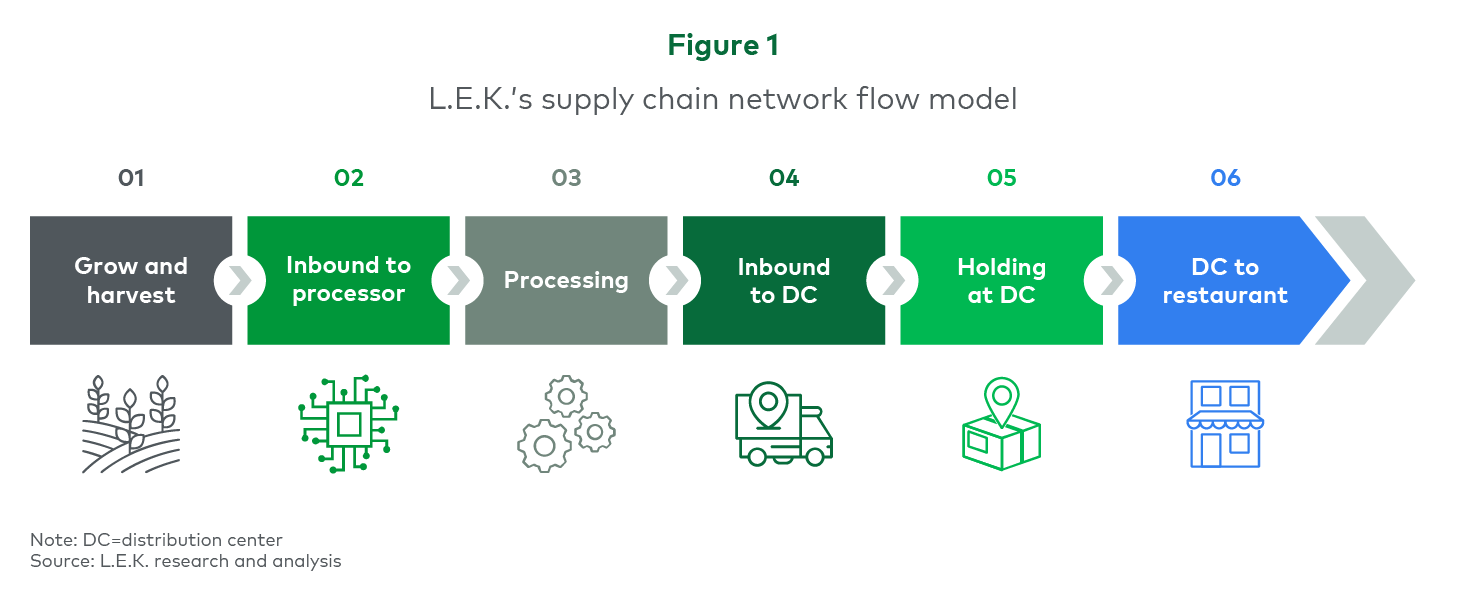
The analysis revealed long transit times to stores, with significant risk of improper storage. Many DCs were found to be at risk of delivering produce with an insufficient shelf life, and there was limited temperature tracking for DC-to-store transit.
Through this detailed mapping, we identified four critical points where quality degradation occurred:
- Post-processing delays: Produce often remained at processors longer than optimal, putting the supply chain behind schedule and creating a ripple effect that made it harder to maintain freshness and meet timelines.
- Transit times: The geographic distance between processors and DCs extended transit times, reducing the remaining shelf life.
- Inventory turnover at DCs: Extended storage periods at DCs further diminished freshness.
- Temperature control: Inconsistent temperature maintenance during transit and storage accelerated quality deterioration.