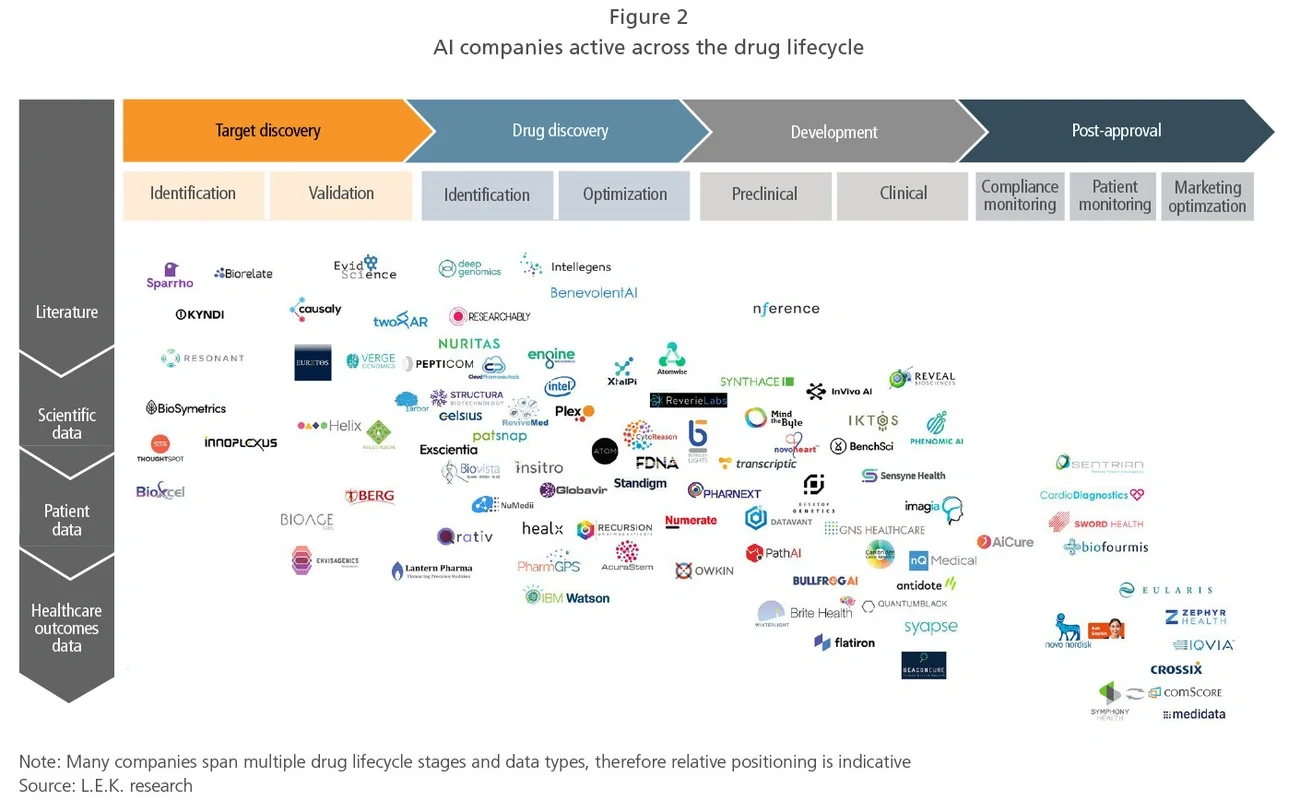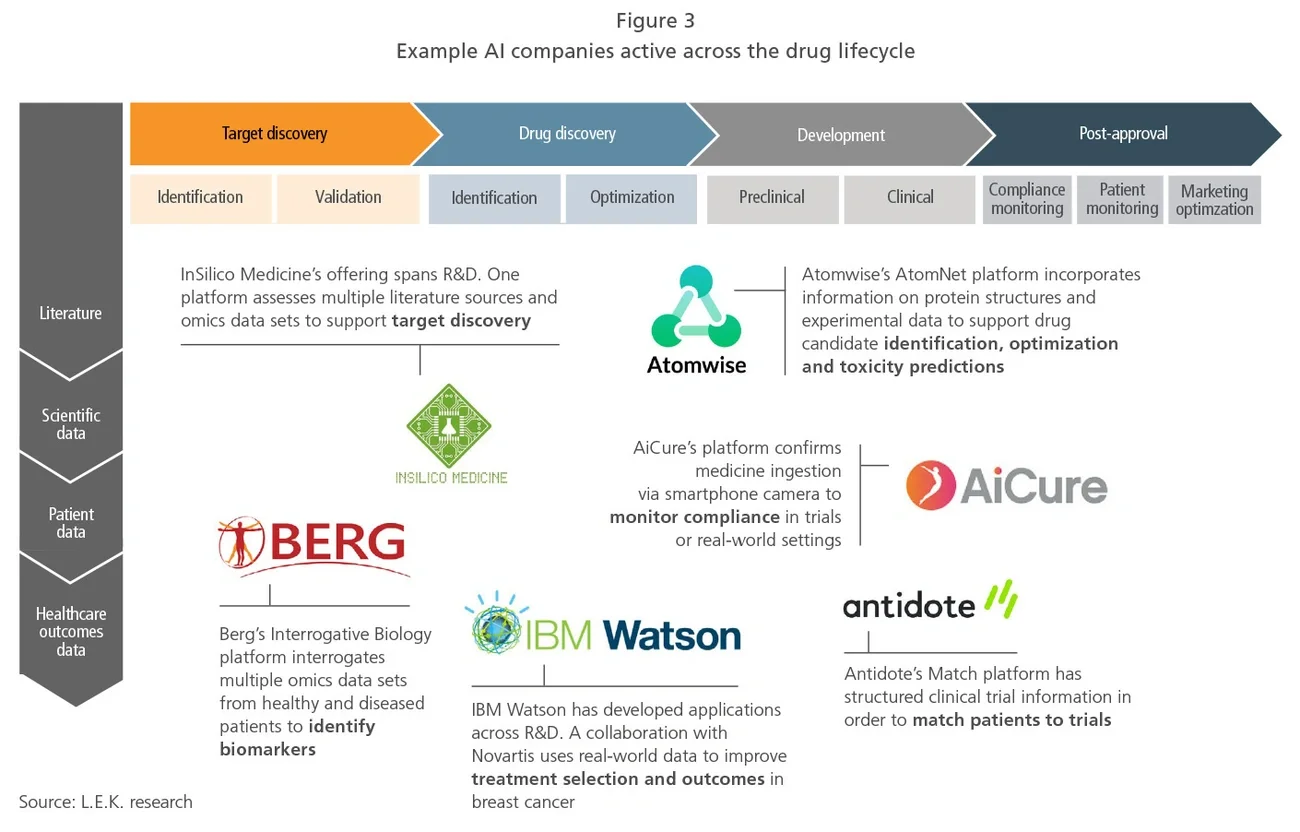


Artificial intelligence (AI) has the potential to transform the pharmaceutical industry. Each of the major pharma players is investing in the technology at some level, and there are a growing number of applications that address target and drug discovery, preclinical and clinical development, and post-approval activities. With AI comes the potential to improve drug approval rates, reduce development costs, get medications to patients faster and help patients comply with their treatments.
Industry executives surveyed by L.E.K. Consulting expect that AI applications will become standard in the pharma operating model over the next five to 10 years. However, at present, the landscape of AI providers and technologies is fragmented, with no clear winners in any application. Creating the right AI strategy will be complex and will often have a steep learning curve, especially given the nascent stage of the industry’s development and the relative lack of case studies documenting success.
This Executive Insights reviews the opportunities that artificial intelligence can bring for pharma companies and four key factors that players should address when developing their AI strategy.
The potential of artificial intelligence
While there is no universal definition for AI, it broadly refers to systems that are able to function with a degree of autonomy and iteratively optimize their processes. Within life sciences, we apply the term “AI” to four major approaches:
- Machine learning: Processes that analyze input data and then repeatedly optimize their methods based on generated outputs
- Deep learning: A machine-learning-based approach that utilizes a logic structure akin to biological neural networks
- Natural language processing: A refined automatic speech recognition system that is able to interact with people through dialogue, going beyond simple reactions to well-stylized user requests
- Robotics and the internet of things: Integration of devices to collect, combine and share different types of information
Using these four approaches, artificial intelligence is set to speed up or replace steps in the drug development process, with the objectives of significantly improving approval rates and reducing the very high level of associated costs. Currently, approximately 90% of all clinical drug candidates fail to reach approval, driving the associated costs of drug development to an estimated $1.4 billion. AI has wider potential to cut the costs of the industry’s research and development (R&D) spend, which for the largest 10 pharmaceutical companies is $67 billion (equivalent to 40% of the sector’s total R&D bill).
AI’s ability to reduce drug development times is already starting to be realized by big pharmaceutical companies. Novartis, for example, used the technology to combine clinical trial data from a variety of internal sources to predict and monitor trial enrollment, cost and quality. As a result, the company has reported a 10%-15% reduction in patient enrollment times in pilot trials.
Accelerated drug development and approval rates can also unlock profits from more years of patent-protected market exclusivity. In addition, AI has the ability to optimize patient support efforts after drugs have been approved.
Big pharma investment in AI
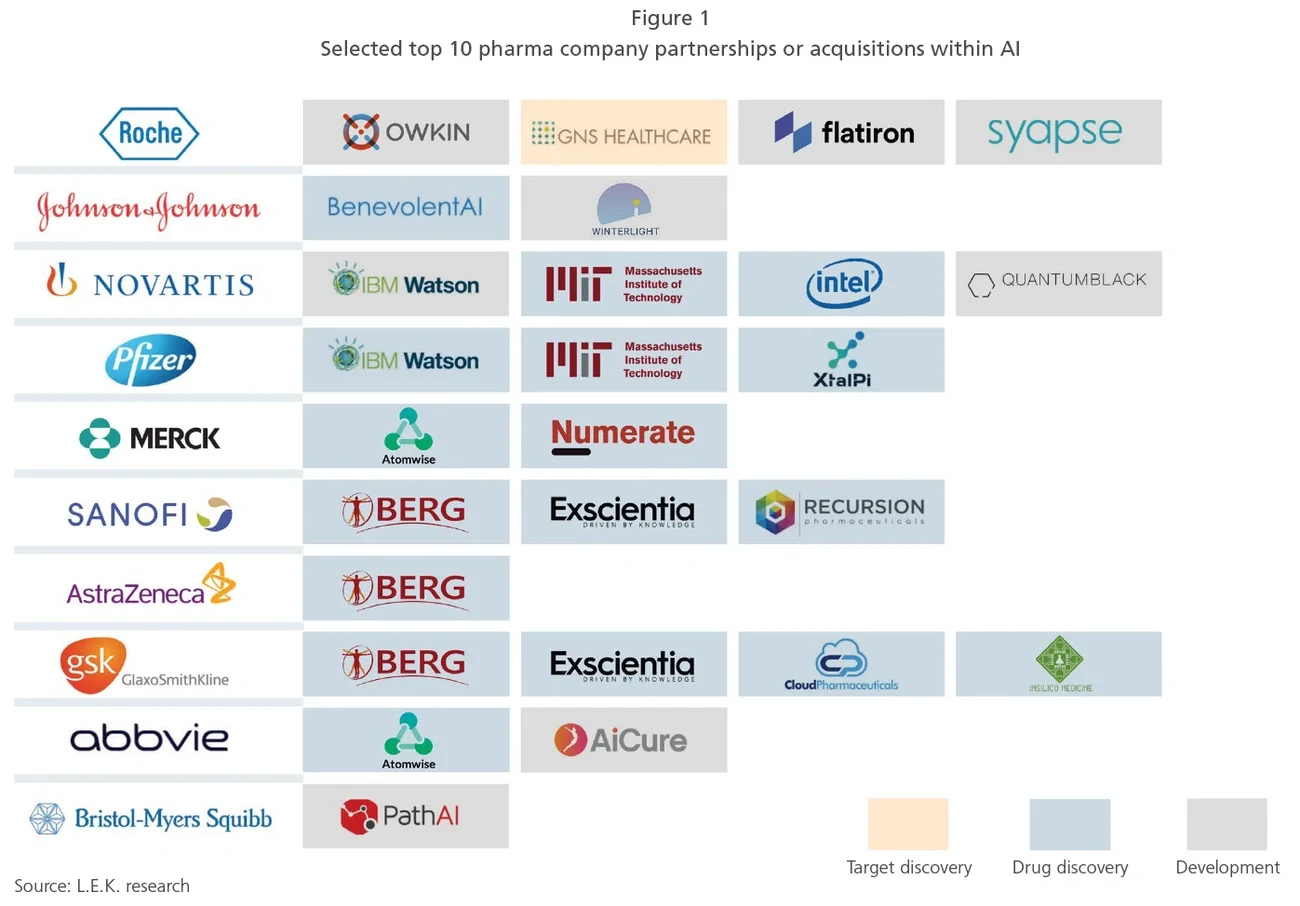
All of the largest 10 pharmaceutical companies (by revenue) have either partnered with or acquired AI companies to leverage the opportunities the technology presents (see Figure 1).